
Mastering the Perfect Steak: Your Guide to Quick, Delicious, and Effortless Meals
When asked about his most frequently enjoyed dish, Tommy, with a chuckle, confessed it was steak. He admitted it sounded incredibly luxurious, yet there was nothing he savored more than concluding a demanding work week with a perfectly cooked steak and a fine glass of red wine on a Friday night. And he’s certainly not alone in this culinary preference! Steak offers a remarkably quick and straightforward path to crafting a delicious meal in a surprisingly short amount of time, giving the impression that considerable effort has been made without the accompanying fuss. It’s the ultimate weeknight hero, capable of transforming a simple dinner into a special occasion.
The Allure of Quick and Flavorful Dishes
I share Tommy’s enthusiasm for dishes that are not only quick to prepare but also burst with flavor, taste delightful, and come together with relative ease. Steak, in my opinion, epitomizes this culinary ideal. It’s a canvas for countless flavors and a testament to the fact that gourmet doesn’t have to mean complicated. One of my personal favorite steak accompaniments comes from a vintage Nigella Lawson recipe, where she pairs steak with what she calls a ‘bean mash’. The name might not immediately spark excitement, but believe me, it’s utterly delicious and surprisingly comforting.
The premise of Nigella’s bean mash is elegantly simple: warm a touch of olive oil in a saucepan, add a crushed garlic clove to infuse the oil, then stir in a can of drained cannellini beans. Season generously with salt and pepper. After just a minute or two, the beans become tender enough to be gently mashed with a wooden spoon. The result is a creamy, satisfying side that offers all the comfort of traditional mashed potatoes, but with significantly less preparation time and often, less butter – a welcome detail if you’ve been feeling a bit indulgent lately. It’s a brilliant example of how simple ingredients can create something truly special and nutritious.
Embracing the Extravagance: Surf and Turf Dreams
Tommy’s idea for a final ‘desert island dish’ truly captured my imagination: the iconic surf and turf, a luxurious pairing of steak and lobster. While I’m certainly familiar with the concept, I must confess I’ve never had the pleasure of indulging in it myself. However, I can absolutely envision why it would work so beautifully together. The rich, savory notes of a perfectly cooked steak find a sublime complement in the sweet, delicate succulence of lobster. It sounds like an appropriately extravagant and unforgettable final meal, the kind of culinary dream one might conjure when imagining the ultimate feast. Perhaps I hinted that I’d be footing the bill – a sigh-worthy prospect for such a lavish selection!
The surf and turf combination is a testament to culinary ingenuity, bringing together two distinct textures and flavor profiles that somehow elevate each other. It’s a celebration of indulgence, often reserved for special occasions or moments when one truly wants to treat themselves. The robust earthiness of beef, particularly a tender cut like a fillet or ribeye, creates a delightful contrast with the pristine, slightly briny taste of fresh lobster. This duality offers a truly unique dining experience, balancing richness with lightness, and land with sea. It speaks to a desire for the very best of both worlds on a single plate, making it a perennial favorite for those seeking an opulent culinary adventure.
The Intricacies and Intimidations of Gourmet Cooking: Why Not Beef Wellington?
For today’s column, I momentarily considered presenting a recipe for Beef Wellington. Don’t misunderstand, I adore Beef Wellington; it’s a magnificent dish. However, it can be notoriously intimidating, particularly for home cooks. Its traditional preparation often calls for fillet of beef, a premium cut that comes with a hefty price tag, adding an extra layer of stress to the cooking process. The pastry encasing the beef makes it incredibly challenging to gauge the doneness of the meat, leading to a precarious game of trial and error – a nerve-wracking situation when you’re handling such an expensive ingredient.
I vividly recall my first attempt at cooking fillet of beef for a large party back when I was just beginning my culinary journey. The hostess had proudly informed me that the beef, intended to feed around 30 guests, had cost a staggering £250. My stomach instantly churned with a mixture of excitement and dread. My heart sank even further when I was ushered into the kitchen only to discover an Aga cooker. Cooking a delicate fillet in a conventional oven is one thing, but attempting it in an Aga, a powerful and often unpredictable beast with which I had no prior experience, was truly terrifying. Mercifully, as is often the case with such kitchen dramas, everything turned out perfectly in the end. This experience, however, solidified my appreciation for simpler, less stressful dishes that still deliver immense flavor and satisfaction, much like the steak recipe I’m sharing today.
The Beauty of Simplicity: Elevating Steak with Classic Pairings
My father’s favorite restaurant from my childhood days always served the most exquisite steak, accompanied by nothing more elaborate than a simple jacket potato, a dollop of pungent horseradish, and a scattering of fresh watercress leaves. This enduring memory beautifully illustrates a fundamental culinary truth: you don’t need an exhaustive list of ingredients to create something truly effective and memorable. The magic often lies in the quality of a few key components and their harmonious combination.
This philosophy is precisely what I’ve aimed to embody in the steak dish presented here. While it pairs wonderfully with a side of crispy chips or another baked potato, I confess a particular fondness for serving it as a hearty yet light salad. This approach makes it feel satisfying without being overly heavy, and it comes together with impressive speed – a quality I deeply appreciate in any recipe. The vibrant green beans, crunchy pistachios, and zesty horseradish create a dynamic interplay of textures and flavors that complement the steak without overshadowing it. It’s a dish that proves elegance and efficiency can indeed coexist on the plate, making it perfect for both quick weeknight dinners and relaxed weekend meals.
The Golden Rules for a Flawless Steak
In my humble opinion, the true secret to cooking a truly great steak boils down to two fundamental principles: a searingly hot pan and a disciplined approach to avoid overcooking the meat. It sounds deceptively simple, yet mastering these two elements will elevate your steak game significantly. Let’s delve deeper into these critical steps to ensure your steak is perfectly cooked every time.
Choosing Your Cut and Preparation
While our recipe features flank skirt steak, the principles apply to various cuts. Ribeye offers rich marbling and tenderness, sirloin provides a robust beefy flavor, and tenderloin (fillet) is known for its buttery texture. Regardless of your choice, always bring your steak to room temperature for at least 30 minutes before cooking. This ensures even cooking from edge to edge. Pat it thoroughly dry with paper towels; moisture on the surface prevents a good sear. Season generously with coarse salt and freshly ground black pepper. Some chefs advocate for a simple salt and pepper crust, while others prefer a more complex dry rub, but salt is paramount for flavor and tenderization.
The Power of the Hot Pan
This is arguably the most crucial step. A cast-iron skillet or a heavy-bottomed stainless-steel pan are your best allies. Place your chosen pan on high heat and let it preheat until it’s smoking hot – literally. When you add a drizzle of high smoke-point oil (like grapeseed, canola, or avocado oil), it should shimmer and almost immediately begin to smoke. This intense heat creates the Maillard reaction, a complex chemical process that browns the surface of the meat, developing those desirable rich, savory flavors and a beautiful crust. Without a smoking hot pan, you’ll steam the steak rather than sear it, resulting in a lackluster grey exterior.
Mastering the Searing Technique
Once your pan is screaming hot, carefully place the seasoned steak into the dry pan (or lightly oiled if you prefer). It should immediately produce a very satisfying, loud sizzle. Resist the urge to move it! Let it sear undisturbed for 2-3 minutes to develop that deep brown crust. Then, flip the steak every minute or so. This technique, advocated by many culinary experts, helps to cook the steak more evenly and build a magnificent crust on both sides. For thicker cuts, after searing both sides, you might want to finish it in a preheated oven (around 400°F/200°C) for a few minutes, or hold it vertically with tongs to sear the edges.
Doneness and Temperature
The cooking time will vary significantly based on the thickness of your steak and your desired level of doneness. A meat thermometer is your best friend here. Aim for these internal temperatures (measured in the thickest part of the steak, away from any bone):
- Rare: 120-125°F (49-52°C)
- Medium-Rare: 130-135°F (54-57°C)
- Medium: 135-140°F (57-60°C)
- Medium-Well: 140-145°F (60-63°C)
- Well-Done: 150°F+ (65°C+)
Remember that the steak will continue to cook a few degrees after it’s removed from the heat – this is known as carryover cooking.
The Crucial Resting Period
This step is non-negotiable. Once your steak reaches the desired internal temperature (or slightly below, accounting for carryover cooking), remove it from the pan and place it on a cutting board or a warm plate. Tent it loosely with foil. Let it rest for at least 5-10 minutes, depending on its thickness. Resting allows the juices, which have been pushed to the center of the meat during cooking, to redistribute throughout the steak. Skipping this step will result in a dry steak, with all the flavorful juices pooling out onto your plate when you cut into it. Patience here is rewarded with a tender, juicy steak.
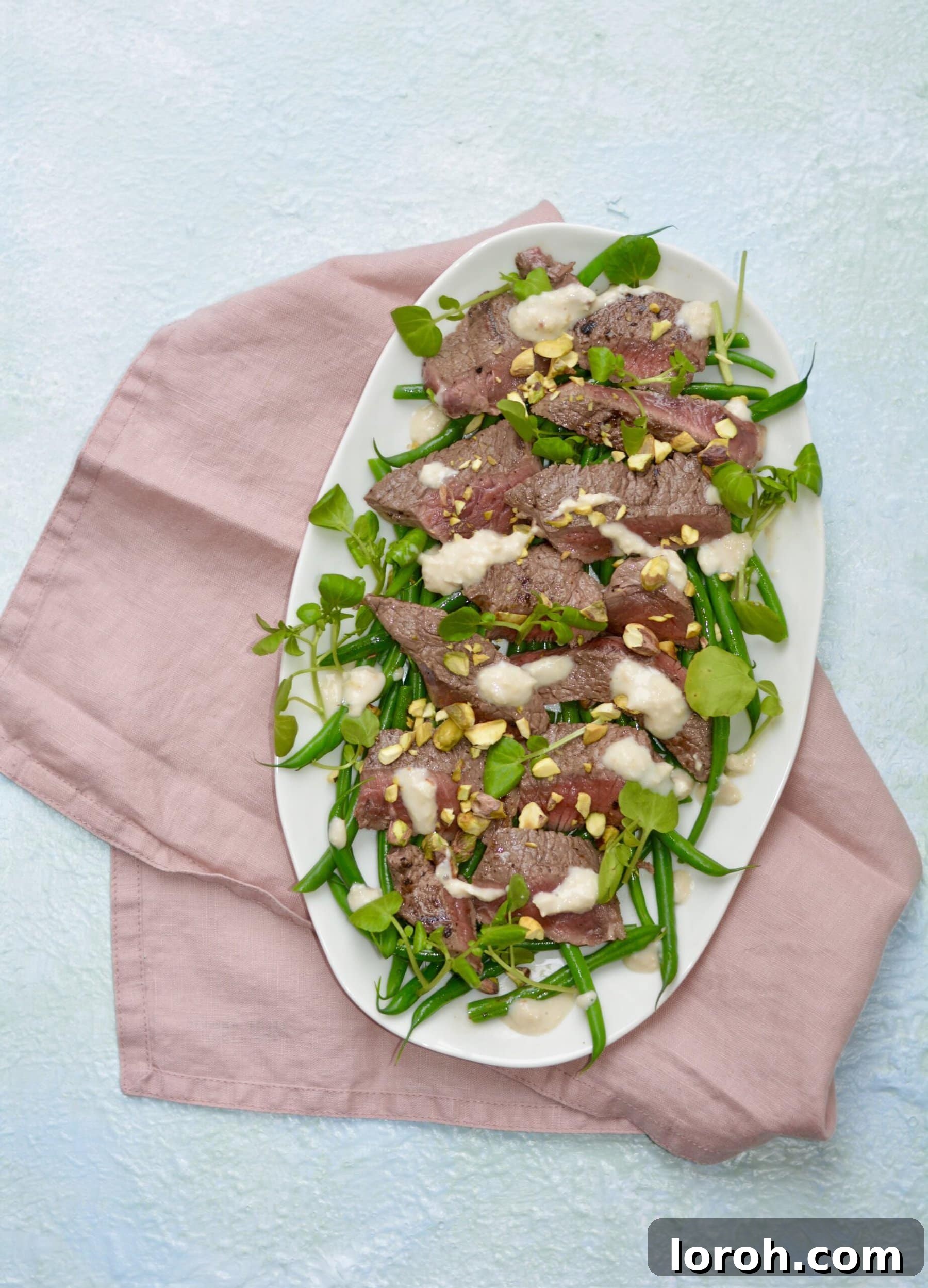
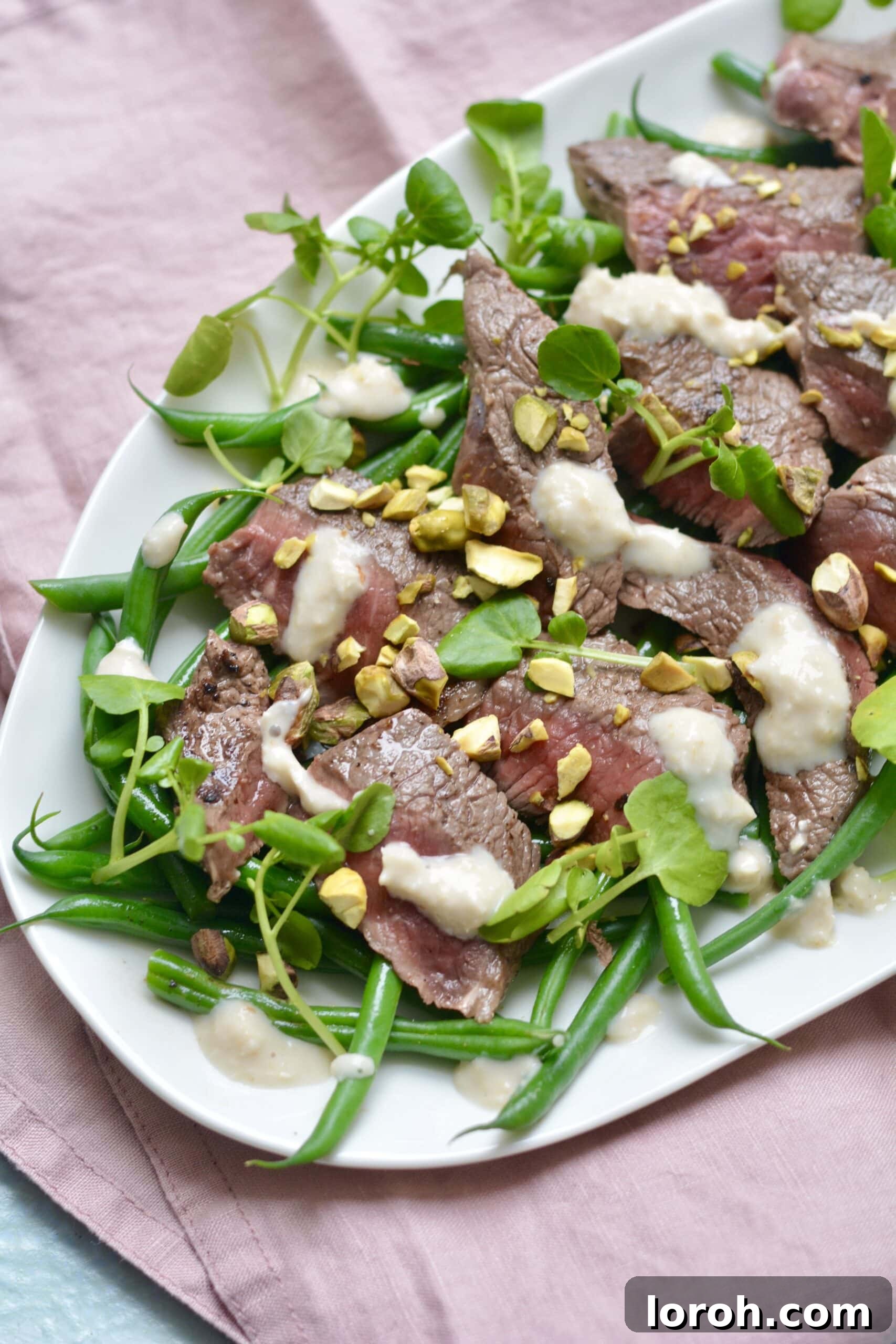
Steak With Garlicky Green Beans, Pistachios & Horseradish Inspired By Tommy Clarke
Margie
5
15
20
2 servings
Print Recipe
Ingredients
- 250 g green beans
- 300 g flank skirt steak, or any steak you like
- 1 handful of shelled pistachios
- Olive oil
- 1/2 tbsp horseradish sauce
- Squeeze of lemon
- 1 garlic clove
- Handful of watercress
- Salt and pepper to taste
Instructions
-
Season the steak well on both sides with salt and pepper, then rub it generously with olive oil. Get your pan (preferably cast iron) really hot over high heat until it starts smoking. Once smoking, carefully add the steak. It should make a very satisfying sizzle. Cook for about 4-5 minutes in total, depending on the thickness of the steak, turning it over every minute to ensure even searing and crust development. Remove the steak from the heat and transfer it to a cutting board to rest for at least 5-10 minutes. This resting period is crucial for a juicy steak.
-
While the steak rests, cook the green beans. Bring a pot of salted water to a rolling boil. Add the green beans and cook for just a few minutes until they are tender-crisp – soft to the bite but still retaining a slight snap. Be careful not to overcook them, as limp green beans can be unappetizing. Drain the beans thoroughly. In a small bowl, whisk together 1 tablespoon of fresh olive oil, one crushed garlic clove, and a pinch of salt and pepper. Drizzle this garlicky dressing over the drained green beans, tossing gently to coat.
-
Prepare the horseradish dressing: in a small bowl, loosen the horseradish sauce with a little squeeze of fresh lemon juice and a splash of water until it reaches a pourable consistency. Season with salt and pepper to taste.
-
To assemble your dish, artfully scatter the dressed green beans across your serving plate. Thinly slice the rested steak against the grain and arrange it over the beans. Generously sprinkle a handful of chopped shelled pistachios over the steak and beans, adding a delightful crunch and nutty flavor. Finish by drizzling the prepared horseradish dressing over the top and garnishing with a scattering of fresh watercress leaves for a peppery finish. Serve immediately and enjoy this quick, flavorful, and satisfying meal.
Like this? Leave a comment below!
Conclusion: The Enduring Appeal of a Simple Steak
Whether you’re celebrating a successful week, seeking a comforting meal after a long day, or simply craving something undeniably delicious, steak remains an unparalleled choice. It’s a dish that effortlessly combines elegance with ease, proving that exceptional flavors don’t require hours of intricate preparation. By focusing on quality ingredients, a blazing hot pan, and the indispensable resting period, you can achieve restaurant-quality steak right in your own kitchen.
This recipe for Steak with Garlicky Green Beans, Pistachios & Horseradish, inspired by Tommy Clarke’s simple pleasure, is a testament to the power of thoughtful pairings. It transforms a familiar cut of meat into a vibrant, texturally rich, and deeply satisfying meal that feels both wholesome and indulgent. So, next time you’re contemplating dinner, remember the simplicity and profound satisfaction a perfectly cooked steak can bring. It’s an invitation to treat yourself, to enjoy the journey of cooking, and to savor every delightful bite.