
Spargel, often affectionately dubbed ‘White Gold’ in Germany, is much more than just a vegetable. It’s a culinary phenomenon that captivates the nation, sending Germans into a frenzy of anticipation and celebration each year during its remarkably short season. This treasured white asparagus is a symbol of spring, heralding warmer days and a vibrant period known as “Spargelzeit” – the asparagus time.
The swift, highly anticipated Spargel season typically runs from late March, gaining momentum through April and May, until it culminates precisely on June 24th. This specific end date, coinciding with St. John’s Day, a traditional national holiday and the official start of summer, marks a cultural observance that ensures the delicate crop is enjoyed at its peak. While white asparagus varieties can be found in other European countries, particularly France, and are increasingly appearing in the UK and US markets, no other nation embraces this pale delicacy with the same passion and dedication as Germany.
Table of Contents
- The Unique Cultivation of Spargel
- Why is Spargel So Prized and Expensive?
- The Culinary Allure: How to Use and Enjoy Spargel
- Frequently Asked Questions About Spargel
- Recipe 1: Classic German Spargelsuppe (White Asparagus Cream Soup)
- Recipe 2: Spargel Mimosa with Crispy Pancetta – A Vibrant Starter
The Unique Cultivation of Spargel
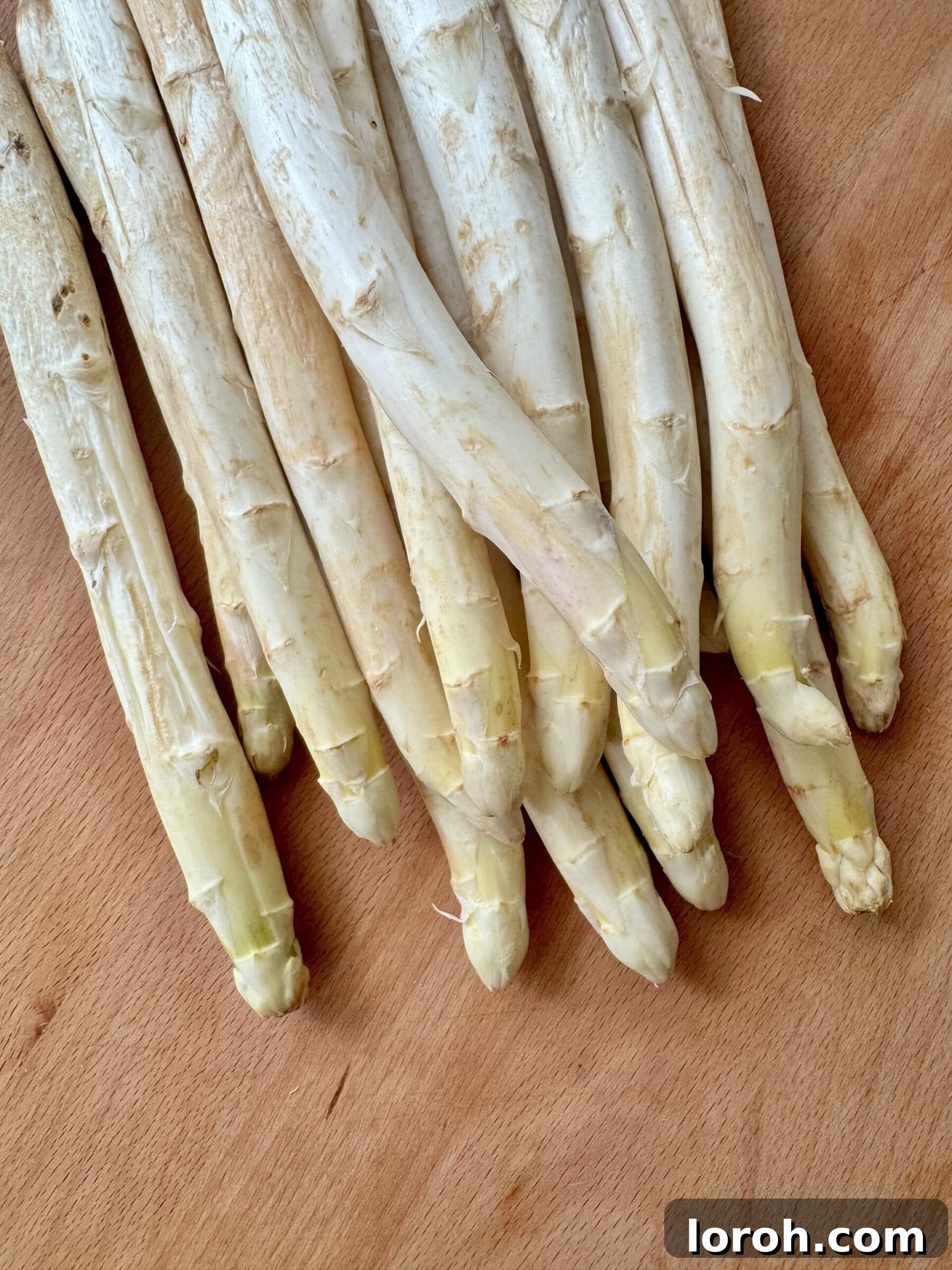
The distinct appearance and delicate flavor of white asparagus stem directly from its unique growing method. Unlike its green cousin, Spargel is cultivated entirely underground, or at least shielded from direct sunlight. Farmers create meticulous dirt mounds, often covering them with dark tarps, to ensure the asparagus spears never develop chlorophyll, the pigment responsible for the green color in plants. This continuous darkness is the secret to its characteristic pale, almost ivory hue.
As the Spargel spears grow and gently push through the soil, only their very tips might briefly emerge, signaling to the skilled harvesters that they are ready for picking. These distinctive dirt mounds line fields across Germany throughout the spring and early summer, transforming rural landscapes. The abundance during Spargelzeit allows consumers to purchase this sought-after vegetable directly from local farms, roadside stands, or bustling farmers’ markets. Its seasonal prominence also means it graces the menus of traditional German restaurants, from rustic inns to fine dining establishments, making it an inescapable part of the spring culinary experience. So significant is the harvest that German news outlets often announce the official start of the Spargel season, underscoring its cultural importance. While the word “Spargel” in German refers to both green and white asparagus, the distinction is typically made by adding “grüner” (green) before “Spargel” for the green variety. In contrast to the UK or US, where green asparagus is the default, white asparagus is, by default, the Spargel in Germany.
Why is Spargel So Prized and Expensive?
Despite its seasonal abundance, Spargel commands a relatively high price, often rivaling or even exceeding the cost of premium meats per kilogram. This premium price tag is a direct reflection of the labor-intensive and incredibly delicate cultivation and harvesting process. White asparagus must be grown without exposure to sunlight; even a brief encounter with the sun’s rays can cause the spears to develop a bitter taste and an undesirable violet discoloration, rendering them unsellable. This necessity dictates the laborious process of creating and maintaining the dirt mounds, frequently supplemented by tarps to ensure complete darkness.
However, the most significant factor contributing to its expense is the harvest itself, which must be performed almost entirely by hand. Highly skilled workers meticulously scour the fields, identifying ready-to-pick spears often by just a slight crack in the soil. They then use a specialized, curved, sharp tool to carefully cut each individual spear clean from its roots, deep within the mound, without damaging the delicate stalk or disturbing neighboring spears. This precision cannot be replicated by machinery, which would inevitably damage the sensitive crop, leading to significant losses. The sheer manual effort, combined with the limited harvest window and intense consumer demand during Spargelzeit, transforms this seasonal delicacy into a truly valuable “White Gold,” justifying its higher cost compared to more easily cultivated and machine-harvested green asparagus varieties.
The Culinary Allure: How to Use and Enjoy Spargel
The delicate flavor and tender texture of Spargel make it a versatile ingredient, but its traditional preparation methods in Germany highlight its unique qualities best. Before cooking, proper preparation is key. Begin by gently snapping off the woody, fibrous ends of each spear; they will naturally bend and break at the right point. Then, using a vegetable peeler, carefully peel away the tougher outer layer, starting just beneath the tip and working your way down. This reveals the more tender, succulent inner core. For exceptionally fresh Spargel, some connoisseurs, like my German friends, suggest that extensive peeling might not always be necessary, as the outer layer is less fibrous. They often confess a preference for the nuanced flavor of white asparagus over its green counterpart!
The most common and beloved way to cook Spargel is remarkably simple: either steamed gently in a pan with a knob of butter and a lid, or blanched in simmering salted water until fork-tender. Once cooked, it’s frequently served with just a generous drizzle of melted butter, a truly heavenly experience that allows its subtle sweetness and earthy notes to shine. For a slightly more elaborate yet equally classic presentation, Spargel is often paired with rich hollandaise sauce, slices of cured ham (like Black Forest ham or raw ham), and tender boiled potatoes. The creamy, luxurious hollandaise perfectly complements the delicate asparagus, and the potatoes provide a comforting base, making for a quintessential German spring meal.
Beyond these classic preparations, Spargel lends itself beautifully to a variety of other dishes. It can be transformed into elegant soups, incorporated into light spring salads (both warm and cold), added to risottos for a creamy indulgence, or even featured in quiches and tarts. Its mild, slightly nutty flavor pairs wonderfully with dry white wines such as Riesling or Sauvignon Blanc, enhancing the overall dining experience. Whether enjoyed simply or as part of a more complex dish, Spargel embodies the taste of German spring.
Frequently Asked Questions About Spargel
While both varieties originate from the same plant species, their distinct appearances and flavors result from different cultivation methods. Spargel (white asparagus) is grown completely underground, or under opaque coverings, to prevent exposure to sunlight. This absence of light inhibits chlorophyll production, keeping the spears white and preventing bitterness. Green asparagus, conversely, grows exposed to sunlight, allowing it to photosynthesize and develop its characteristic green color, often with purple tips. For a delightful green asparagus dish, consider trying a Creamy Asparagus and Mint Risotto.
In Germany, Spargelzeit, the celebrated white asparagus season, typically commences in late March or early April and strictly concludes on June 24th. This traditional end date, coinciding with St. John’s Day, is a deeply rooted cultural practice ensuring that the plants have enough time to recover and produce a good yield the following year. The harvest is so culturally significant that the entire period is officially named “Spargelzeit” – a testament to Germany’s profound love for this vegetable!
Spargel’s premium price is primarily due to its labor-intensive cultivation and harvesting. The spears must be grown in complete darkness and are painstakingly hand-harvested by skilled workers who use specialized tools to cut them individually from deep within the soil. This meticulous process prevents damage and ensures quality, making machine harvesting impractical. Additionally, its short, highly anticipated season creates significant demand, further contributing to its higher market value compared to its green counterpart.
Spargel is not only delicious but also boasts several health benefits. It is a low-calorie vegetable rich in vitamins (especially A, C, E, and K), folate, and minerals like potassium and iron. It’s also a good source of dietary fiber. Asparagus is well-known for its diuretic properties, which can help flush toxins from the body. Its delicate flavor makes it an excellent choice for a healthy and enjoyable meal.
Recipe 1: Classic German Spargelsuppe (White Asparagus Cream Soup)
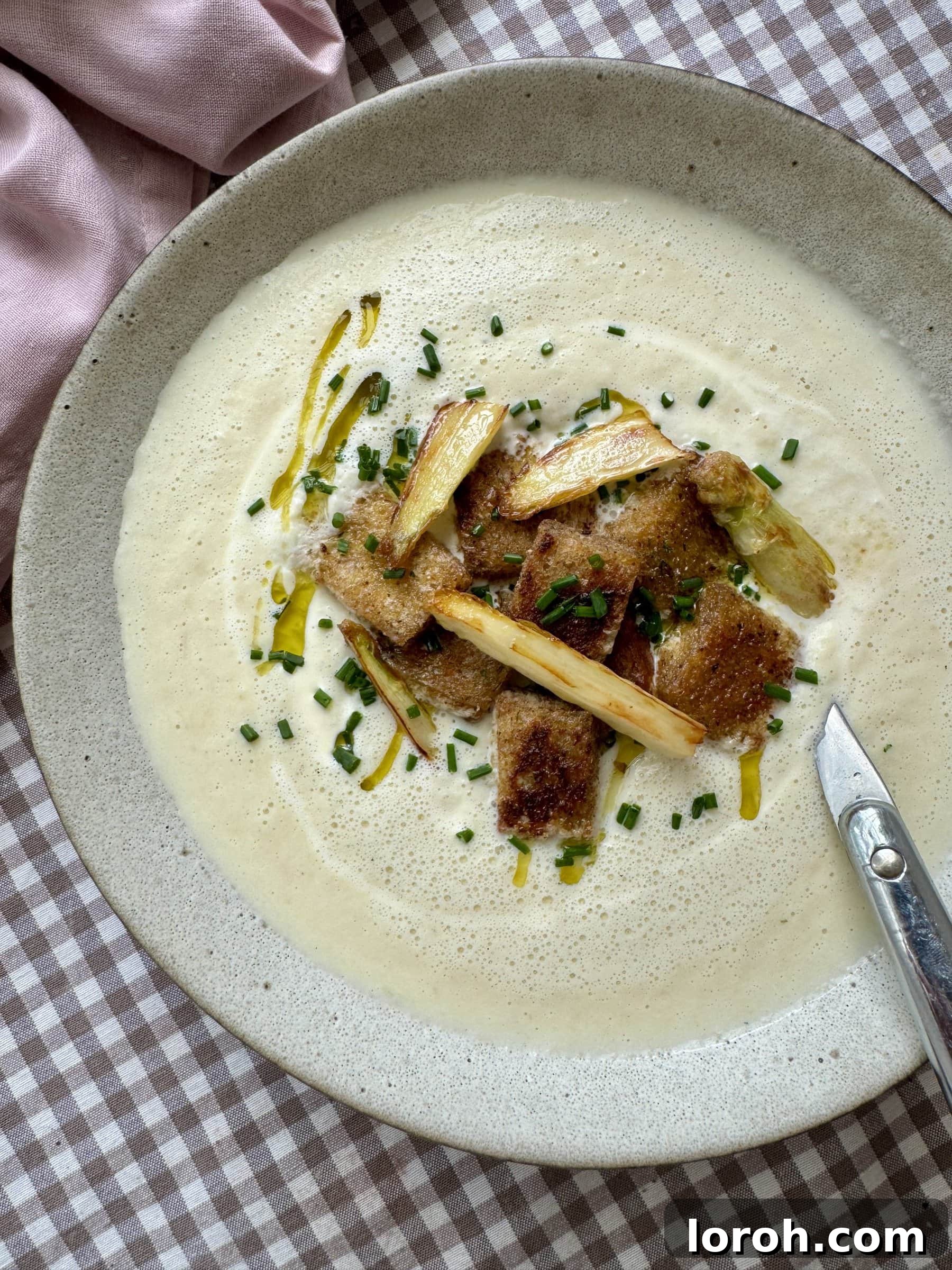
This exquisite Spargelsuppe is a hallmark of German spring cuisine. It’s a silky, earthy, and utterly comforting soup made from fresh white asparagus, blended until smooth with cream and savory stock. While Spargel is often served simply with butter or hollandaise, this soup offers an elegant and hearty alternative, allowing the delicate flavor of the ‘White Gold’ to truly shine. Topped with extra asparagus pieces, crunchy croutons, and fresh chives, it’s a bowl of pure seasonal bliss.
Serves 4
Prep & Cook Time: Approximately 40 minutes
Ingredients
- 1 shallot, finely chopped
- Generous knob of unsalted butter (about 2-3 tablespoons)
- 750g fresh Spargel (white asparagus)
- 750ml good quality vegetable stock
- 100ml double or single cream (heavy or light cream)
- 1 teaspoon fresh lemon juice
- Salt, to taste
- Freshly ground black pepper, to taste
- Fresh chives, finely snipped, for topping
- Optional: Croutons for topping
Method
- Begin by preparing the Spargel. Gently snap off the woody, tough ends of each spear; they will naturally break where the tender part begins. Using a vegetable peeler, carefully peel the thin outer layer of the Spargel, starting just below the tip and working downwards. This fibrous outer layer can be tough, and peeling ensures the asparagus is beautifully tender and sweet in the soup. Many farmers at market stands will offer to peel Spargel for you, saving time!
- Once peeled, chop the Spargel into approximately 5cm (2-inch) pieces. Set aside.
- In a large, heavy-bottomed pot or Dutch oven, melt the generous knob of butter over medium heat. Add the chopped shallot and season lightly with salt and pepper. Sauté gently until the shallot becomes soft and translucent, about 3-5 minutes, being careful not to brown it.
- Add the chopped Spargel to the pot. Stir to coat the asparagus in the butter and shallots. Cover the pot with a lid and cook for about 5-7 minutes, allowing the Spargel to soften slightly and its flavors to meld. At this stage, carefully remove a few of the more attractive asparagus heads or smaller pieces from the pot and set them aside; these will be used later as a garnish for the finished soup.
- Pour in the vegetable stock and bring the mixture to a boil. Once boiling, reduce the heat to a gentle simmer and let it cook for approximately 20 minutes, or until the Spargel pieces are completely tender when pierced with a knife.
- Carefully remove the pot from the heat. Using an immersion (hand) blender, blend the soup directly in the pot until it is completely smooth and creamy. If you do not have an immersion blender, allow the soup to cool slightly before transferring it in batches to a classic blender. Be cautious when blending hot liquids, as pressure can build up and cause splatters; ensure the blender lid is vented.
- Once blended to your desired smoothness, stir in the double or single cream and the fresh lemon juice. Season the soup very well with additional salt and freshly ground black pepper to taste. Mix thoroughly and taste, adjusting the seasonings as necessary to achieve a perfect balance of flavors.
- Ladle the hot Spargelsuppe into warm bowls. Garnish each serving with the reserved Spargel pieces, a sprinkle of crispy croutons (if using), and a generous scattering of freshly snipped chives. Serve immediately and enjoy the quintessential taste of German spring!
Recipe 2: Spargel Mimosa with Crispy Pancetta – A Vibrant Starter
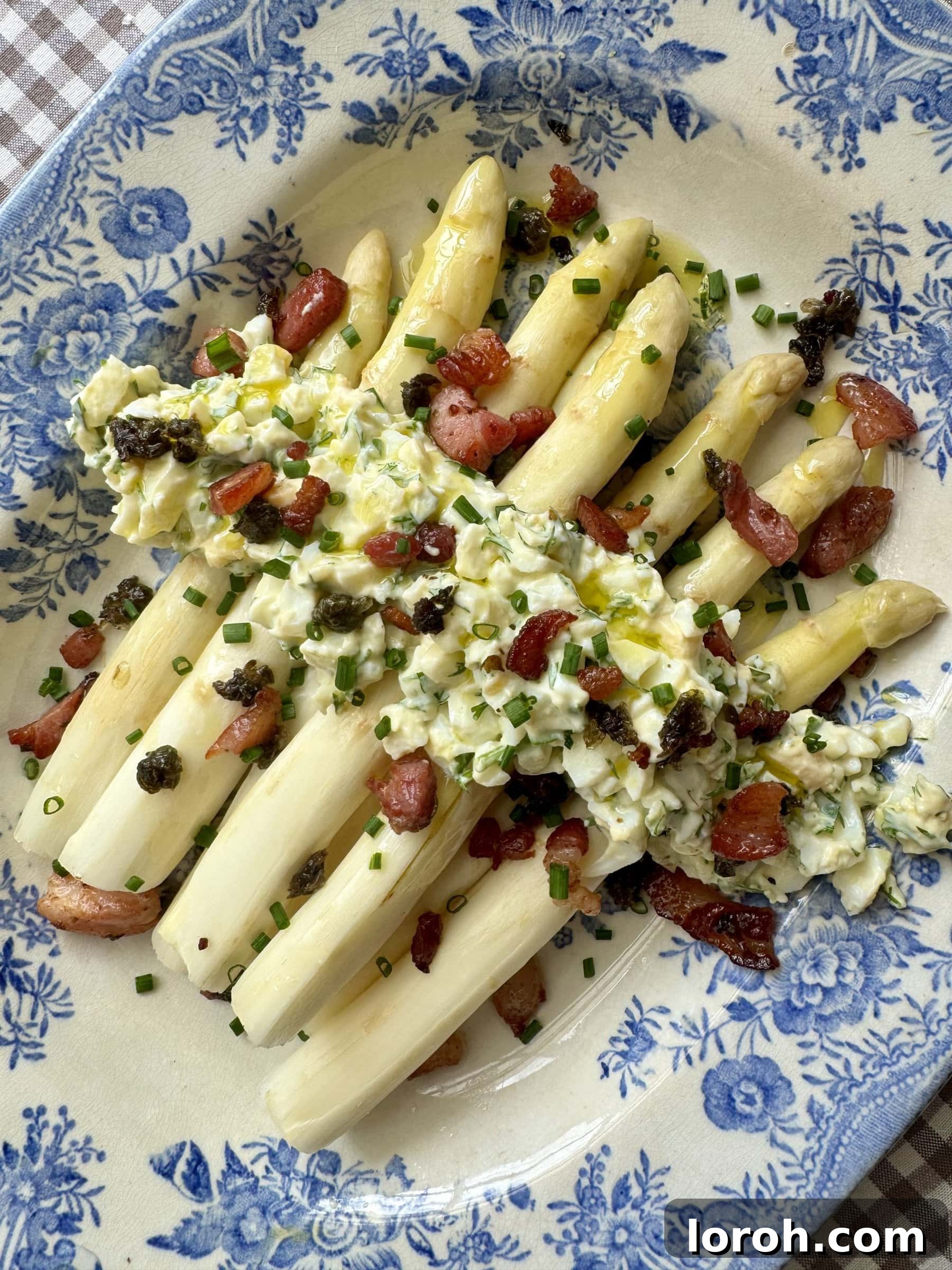
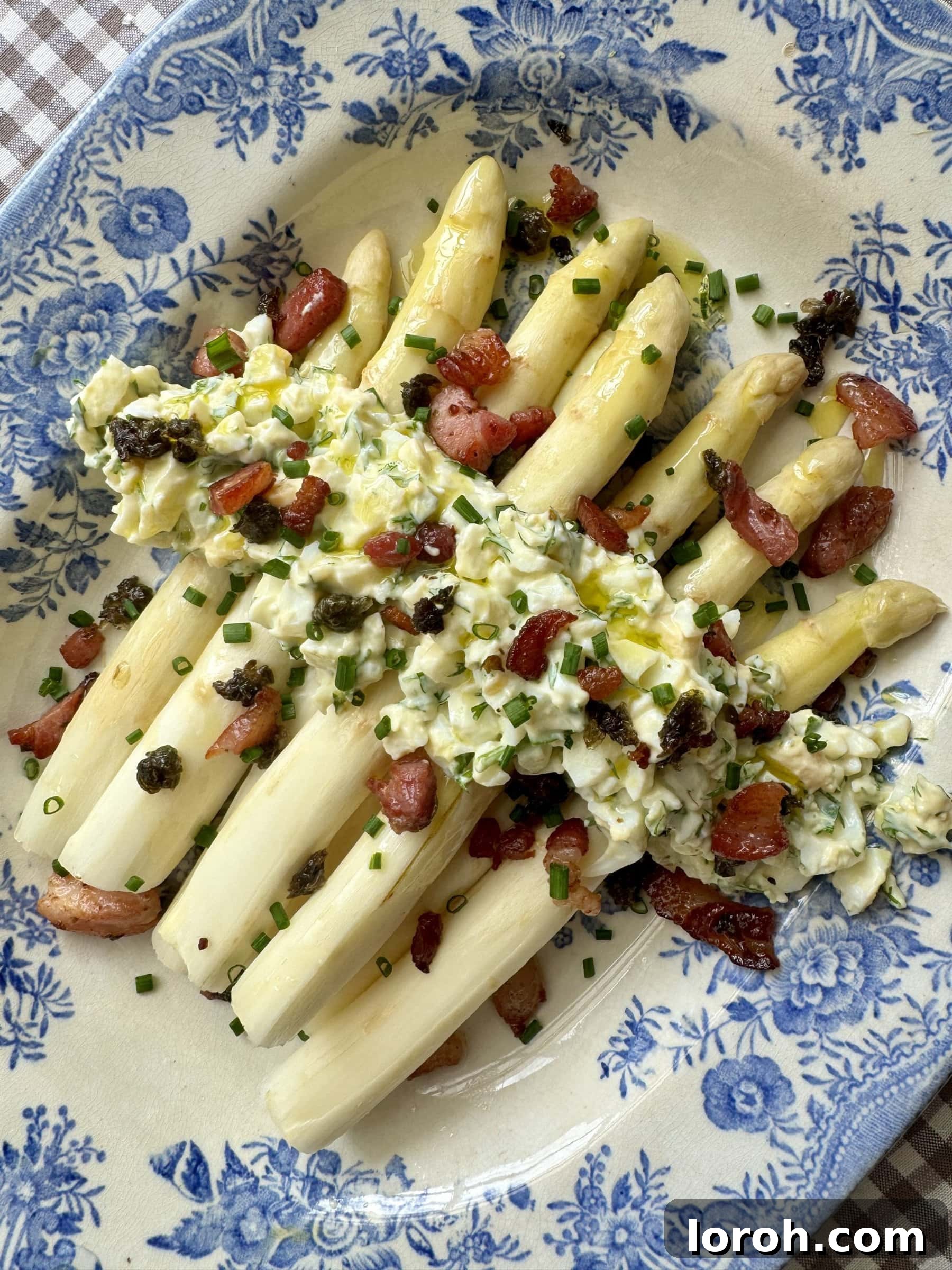
This Spargel Mimosa offers a delightful and visually appealing way to celebrate white asparagus season. The “mimosa” name comes from the finely chopped hard-boiled egg, which resembles the delicate yellow flowers of the mimosa plant. This dish features a bright and tangy egg vinaigrette dressing that beautifully complements the delicate sweetness of the Spargel. While often made with green asparagus, I find it truly exceptional with the more subtle flavor of white asparagus. Paired with savory crispy pancetta and briny capers, it creates a symphony of textures and tastes, making it an ideal starter or a light, elegant side dish.
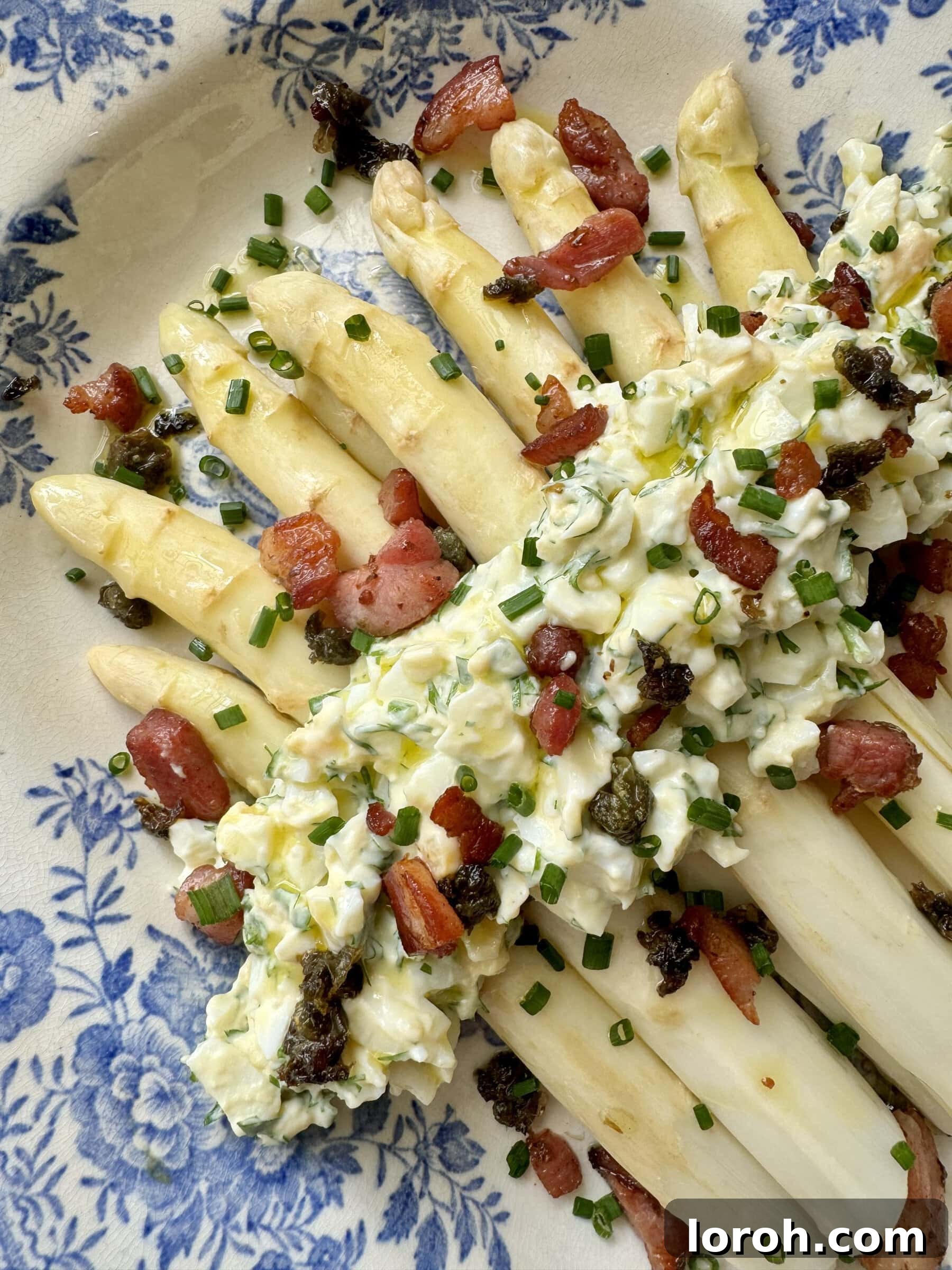
Serves 4 as a side or starter
Prep & Cook Time: Approximately 30 minutes
Ingredients
- 500g fresh Spargel (white asparagus)
- Salt, for cooking water and seasoning
- 2 large hard-boiled eggs
- 150g pancetta (or streaky bacon), diced or sliced into lardons
- 2 tablespoons capers, drained
- 3 tablespoons extra virgin olive oil
- 2 tablespoons fresh lemon juice
- 1 teaspoon Dijon mustard
- 1/2 teaspoon honey (or maple syrup)
- Fresh chives, finely chopped, for garnish
- Freshly ground black pepper, to taste
Method
- Heat a medium-sized pan over medium-high heat. Add the diced pancetta (and a teaspoon of olive oil if using lean bacon). Fry for about 8-10 minutes, stirring occasionally, until the pancetta is beautifully crispy and golden brown. For the last few minutes of cooking, add the drained capers to the pan. Cook until they “burst” open and turn slightly golden and crisp. Remove the crispy pancetta and capers from the pan with a slotted spoon and set aside on a paper towel-lined plate to drain excess fat.
- While the pancetta cooks, prepare the Spargel. Gently snap off the woody ends of each spear; they will naturally break at the tender point. Then, using a vegetable peeler, carefully peel the fine outer layer of the Spargel from just below the tip downwards. This ensures the spears are tender and sweet. As mentioned, many market vendors offer to peel Spargel for convenience.
- Bring a large pot of generously salted water to a rolling boil. Ensure the pot is wide enough to accommodate the Spargel spears lying down. Add the peeled Spargel to the boiling water. Reduce the heat slightly and simmer for 10-15 minutes, or until a knife can be easily inserted into the thickest part of a spear with no resistance. White asparagus typically takes longer to cook than green asparagus, so don’t be alarmed; simply keep testing until they reach perfect tenderness. If your spears are particularly thick, they may require a few extra minutes.
- While the Spargel is cooking, prepare the vibrant mimosa dressing. Peel the hard-boiled eggs and chop them very finely, almost to a crumbly texture. Transfer the chopped egg to a medium-sized bowl. Add the olive oil, fresh lemon juice, Dijon mustard, and honey (or maple syrup). Season generously with salt and freshly ground black pepper. Gently stir the ingredients together until just combined, being careful not to mash the egg too much – you want distinct pieces for the “mimosa” effect.
- Once the Spargel is perfectly cooked, carefully drain it and arrange the warm spears attractively on a serving plate or individual plates. Spoon the prepared egg mimosa dressing generously over the asparagus.
- Finally, scatter the crispy pancetta and capers over the dressed Spargel. Garnish with plenty of freshly chopped chives. For an extra touch of richness, you might drizzle a little more olive oil over the dish. Serve immediately as a stunning starter or a delightful side dish to complement your spring meal.