
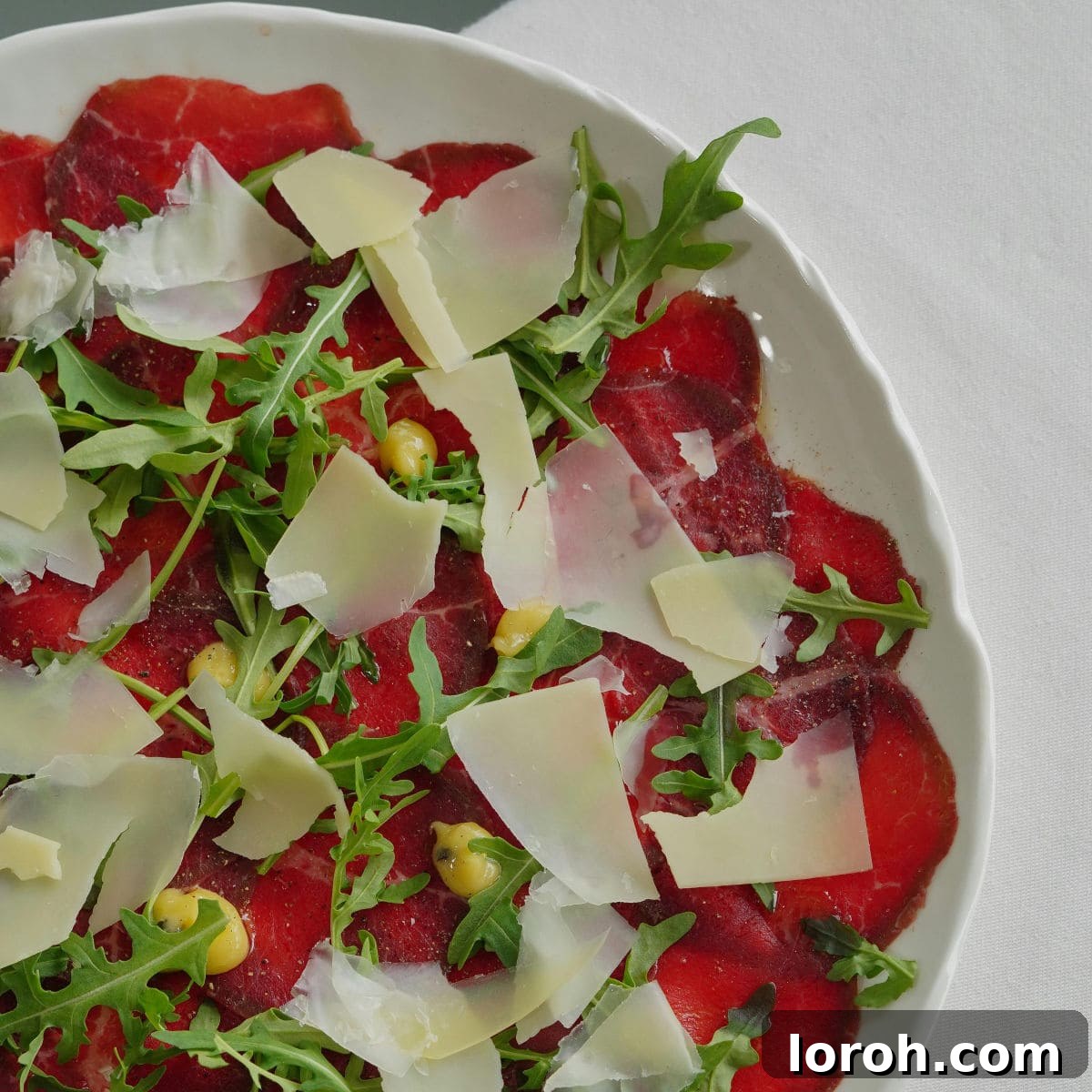
If you’ve ever dreamt of serving a dish that’s both breathtakingly elegant and surprisingly simple to prepare, then carpaccio is your answer. Often perceived as a gourmet enigma, this Italian classic is, in fact, incredibly straightforward to create at home, offering a sophisticated starter or light main course that delights the senses. At its heart, carpaccio involves thinly slicing raw meat, fish, or even vegetables, then delicately dressing them with a few pristine ingredients like high-quality olive oil, a squeeze of fresh citrus, and sometimes a scattering of vibrant toppings such as peppery rocket (arugula) and nutty Parmesan cheese. Hailing from the romantic canals of Venice, this timeless dish captivates with its stunning presentation and the sheer freshness of its simple flavours. It’s a testament to Italian culinary philosophy: let exceptional ingredients speak for themselves.
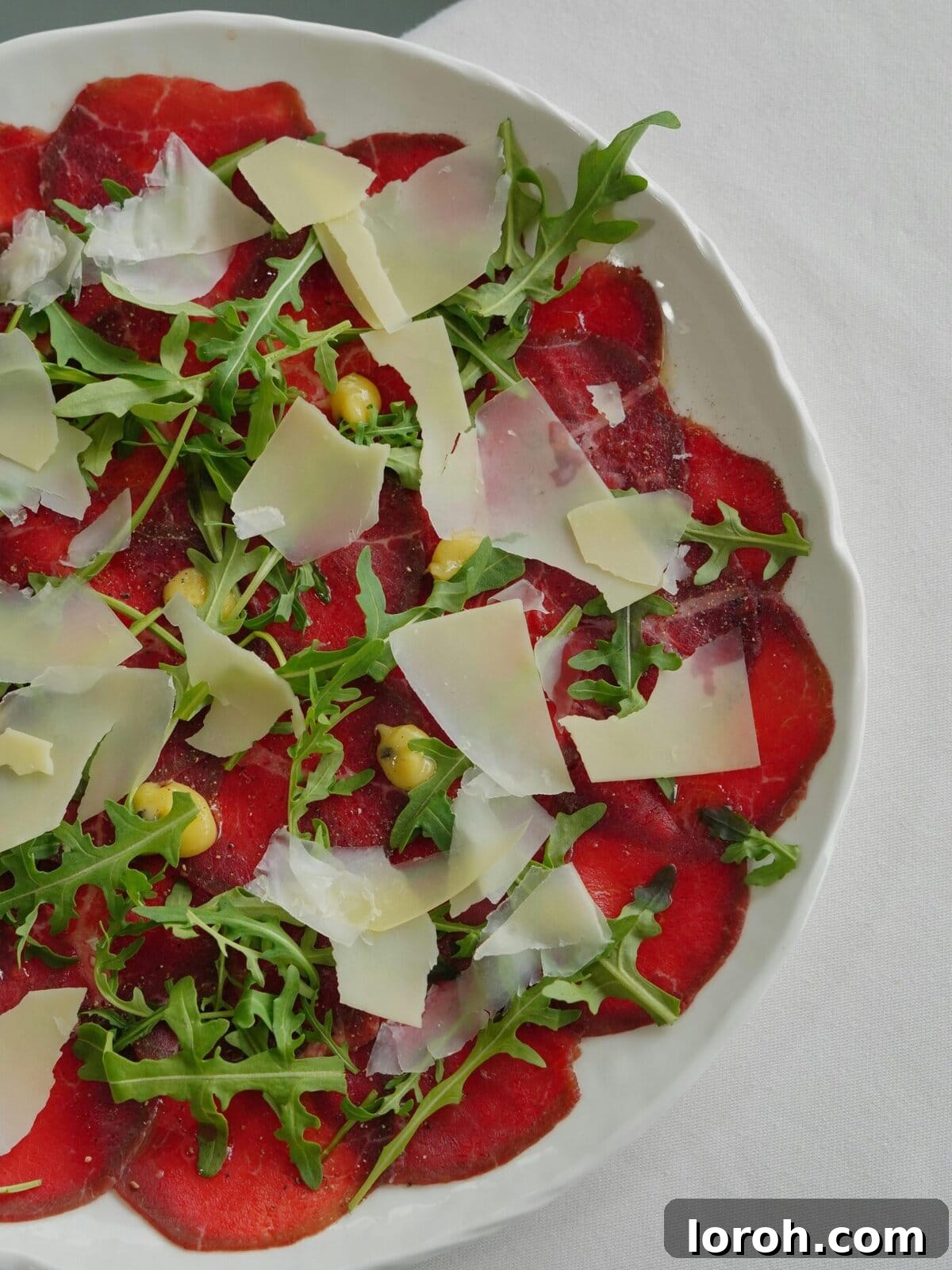
Table of Contents
- What Exactly is Carpaccio?
- The Distinguishing Elements of Carpaccio
- Is Carpaccio Raw Meat or Fish?
- Carpaccio vs. Tartare: What’s the Difference?
- Mastering Carpaccio: Expert Tips for Home Cooks
- Traditional Beef Carpaccio Recipe
- Creative Carpaccio Variations to Explore
- Frequently Asked Questions About Carpaccio
What Exactly is Carpaccio?
Carpaccio refers to extremely thinly sliced raw beef or fish, traditionally dressed with a drizzle of premium extra-virgin olive oil, a splash of fresh lemon juice, and simple seasonings. The dish owes its iconic status and name to a fascinating origin story from 1950. It was invented by Giuseppe Cipriani, the owner of the world-renowned Harry’s Bar in Venice, for Countess Amalia Nani Mocenigo. Her doctor had prescribed a diet of raw meat, and Cipriani, ever the innovator, created this elegant solution. He named it after Vittore Carpaccio, a Renaissance painter whose works were exhibited in Venice at the time, particularly because the dish’s vibrant red meat against white sauce and plate echoed the painter’s signature red and white tones.
From its humble, yet aristocratic, beginnings with beef, the concept of ‘carpaccio’ has gracefully expanded to encompass a wide array of ingredients. Today, you can find exquisite versions made with raw tuna, delicate salmon, rich venison, and even vibrant vegetarian alternatives like thinly sliced beetroot or zucchini. Regardless of the core ingredient, the defining principles remain constant: ultra-fine slices that allow the ingredient’s natural flavour to shine, minimalist seasoning to enhance rather than overpower, and a captivating presentation that is as much a feast for the eyes as for the palate.
The Distinguishing Elements of Carpaccio
While many dishes feature thinly sliced ingredients, carpaccio stands apart due to a trifecta of characteristics that define its essence and appeal:
- Ultra-Thin Slicing: The Heart of Carpaccio: This is arguably the most critical element. Whether it’s beef, fish, or vegetables, the ingredient must be sliced to a near paper-thin transparency. This extreme thinness is not just for aesthetics; it fundamentally alters the texture, allowing the meat or fish to practically melt in your mouth, absorbing the dressing beautifully. Achieving this requires either a very sharp knife and a steady hand, a professional meat slicer, or careful pounding between sheets of parchment paper for uniform thickness.
- Minimalist Seasoning: A Celebration of Pure Flavour: Unlike dishes that rely on complex sauces and marinades, carpaccio embraces simplicity. The traditional dressing typically involves only a high-quality extra-virgin olive oil, fresh lemon juice, sea salt, and freshly ground black pepper. These elements are chosen to complement and elevate the natural taste of the main ingredient, not mask it. Fine additions like tiny capers, delicate Parmesan shavings, or a sprinkle of fresh herbs are used sparingly, serving as subtle flavour enhancers.
- Elegant Presentation: An Edible Work of Art: Carpaccio is as much a visual delight as it is a culinary one. The thin slices are meticulously arranged flat on a chilled plate, often overlapping in beautiful circular patterns. This thoughtful presentation, sometimes garnished with a few sprigs of rocket or a colourful edible flower, transforms the dish into an edible work of art, enhancing the dining experience even before the first bite.
Is Carpaccio Raw Meat or Fish?
Yes, carpaccio is inherently a raw dish. Traditionally, it features raw beef, specifically high-quality cuts like tenderloin or sirloin, sliced so thinly that it’s almost translucent. This raw preparation is central to its distinct texture and flavour profile. However, as the culinary world evolves and adapts, the term ‘carpaccio’ has broadened its scope. You’ll now frequently encounter versions made with raw, sushi-grade fish like tuna or salmon, which offer a different, equally delicate experience. Furthermore, the concept has even extended to various vegetables, like beetroot or zucchini, where they are also prepared in paper-thin slices and dressed similarly. While the ingredient may vary, the fundamental raw and thinly sliced nature remains the defining characteristic of any dish called carpaccio.
Carpaccio vs. Tartare: What’s the Difference?
While both carpaccio and tartare are celebrated raw meat or fish dishes, they diverge significantly in their preparation and textural experience. The key distinction lies in how the main ingredient is handled:
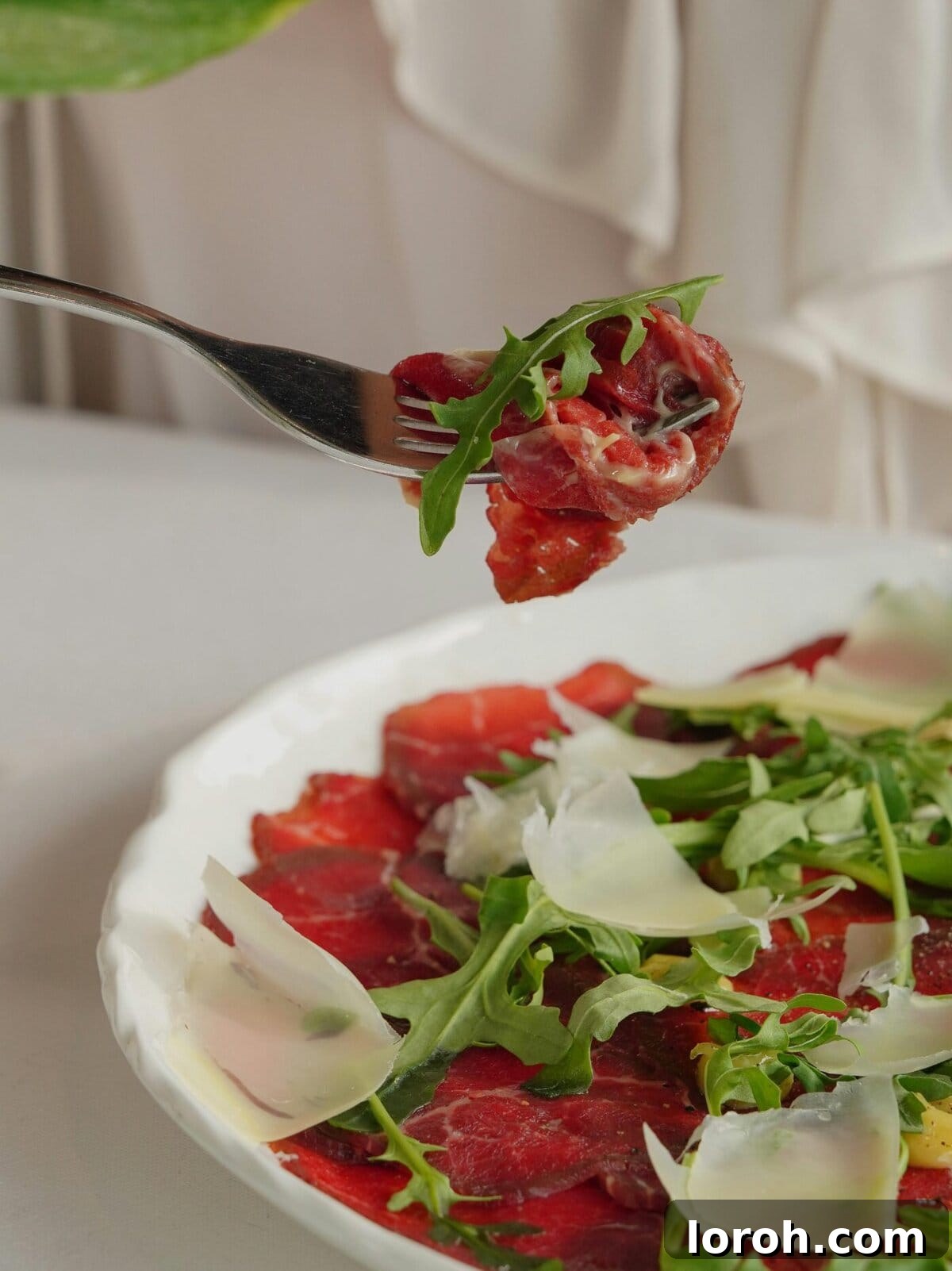
- Carpaccio (Italian Origin): Characterized by its incredibly thin slices, almost transparent like paper. The meat or fish is typically kept whole, then sliced or pounded to achieve its signature delicate form. This method preserves the integrity of the muscle fibres, offering a smooth, melt-in-your-mouth texture that showcases the quality of the cut.
- Tartare (French Origin): In contrast, tartare features finely chopped, almost minced, raw meat or fish. The ingredient is cut into small, uniform cubes, creating a distinct texture that is more substantial and granular. Tartare is often mixed with various seasonings and binders like capers, shallots, mustard, and egg yolk before being shaped and served.
Both dishes are exquisite in their own right, but they offer fundamentally different culinary experiences—one focused on delicate slices, the other on a more robust, diced presentation.
Mastering Carpaccio: Expert Tips for Home Cooks
Crafting perfect carpaccio at home is entirely achievable with a few key considerations. Follow these expert tips to ensure your dish is both delicious and safe:
Selecting the Best Ingredients
- For Beef Carpaccio: The choice of cut is paramount. Beef tenderloin (filet mignon) or sirloin are classic choices due to their tenderness and relatively low fat content. Always select a premium, butcher-grade cut that is exceptionally fresh and has good marbling for optimal flavour and texture. Discuss your intentions with your butcher; they can often recommend the best cut for raw consumption.
- For Fish Carpaccio: Opt for sushi-grade fish such as tuna (ahi) or salmon. The term “sushi-grade” indicates that the fish has been handled and processed in a way that makes it safe for raw consumption, often involving specific freezing techniques to eliminate parasites. Ensure your fishmonger can guarantee its suitability for raw preparations.
- For Vegetable Carpaccio: Choose firm, fresh, and unblemished vegetables. Beetroot, zucchini, asparagus, and even mushrooms can make delightful vegetarian carpaccio. Their inherent crispness and subtle flavours are ideal for this preparation style.
Achieving Paper-Thin Slices
The hallmark of carpaccio is its extreme thinness. Here’s how to achieve it:
- Partial Freezing: For beef or fish, place the piece of meat or fish in the freezer for about 45-60 minutes before slicing. This firms up the muscle fibres, making it much easier to cut incredibly thin, even slices without tearing. It should be firm but not completely frozen solid.
- The Right Tool: A very sharp chef’s knife, a dedicated slicing knife, or even an electric meat slicer (if you have one) are your best friends. A dull knife will only tear the delicate fibres.
- Pounding Technique: If slicing isn’t yielding the desired thinness, lay the already thin slices between two sheets of cling film or parchment paper. Gently pound them with a meat mallet or the bottom of a heavy pan until they reach the desired transparency. Work from the centre outwards.
Safety & Storage Considerations
Since carpaccio involves raw ingredients, food safety is paramount:
- Source Wisely: Always buy the highest quality meat or fish you can afford from a reputable butcher or fishmonger who can confirm its suitability for raw consumption. Don’t hesitate to ask questions about its freshness and handling.
- Prompt Preparation and Serving: Carpaccio should be prepared and served immediately. Raw meat and fish are highly perishable and should not be left at room temperature for extended periods. The colder, the better for both safety and flavour.
- Consider Your Guests: Be mindful of who you are serving. Certain groups, including pregnant women, young children, the elderly, and individuals with compromised immune systems, should generally avoid raw meat and fish due to the risk of foodborne illness.
- Storage of Leftovers: If you have undressed raw meat/fish slices, they can be stored in the refrigerator for a very short period (ideally no more than 12-24 hours) in an airtight container. Once dressed with oil and lemon, carpaccio should be consumed within an hour or two for optimal quality and safety. It does not store well as leftovers.
Traditional Beef Carpaccio Recipe
This recipe brings the classic flavours of Venetian beef carpaccio to your table. Simple yet refined, it’s a dish that truly impresses.
Ingredients (Serves 2)
- 200–300g (approximately 7-10 oz) premium beef sirloin or tenderloin
- 2 tablespoons high-quality extra-virgin olive oil
- Juice of ½ fresh lemon (about 1 tablespoon)
- Flaky sea salt (such as Maldon)
- Freshly ground black pepper
- For garnishing: Thin shavings of Parmesan cheese, a handful of baby arugula (rocket), and a teaspoon of tiny capers, drained.
Method
- Prepare the Beef: Place the whole piece of beef in the freezer for approximately 45-60 minutes. This partial freezing will firm the meat, making it significantly easier to slice paper-thin.
- Slice the Beef: Using a very sharp knife (or a butcher’s slicer if available), carefully cut the beef against the grain into slices as thin as possible – ideally translucent. Aim for uniformity.
- Pound to Perfection (Optional): Lay the beef slices flat on a cutting board, covered with a sheet of cling film or parchment paper. Gently use a meat mallet or the flat side of a rolling pin to lightly pound the beef slices even thinner until they are almost transparent. Be gentle to avoid tearing.
- Arrange on Plates: Arrange the ultra-thin beef slices in a single layer on two chilled serving plates, slightly overlapping them to create an elegant circular pattern. Chilling the plates beforehand helps keep the beef fresh and firm.
- Dress the Carpaccio: Just before serving, drizzle the extra-virgin olive oil evenly over the beef. Follow with a squeeze of fresh lemon juice. Season generously with flaky sea salt and freshly ground black pepper to taste.
- Garnish and Serve: Artfully scatter the Parmesan shavings, baby arugula (rocket), and capers over the dressed beef. Serve immediately, ensuring the carpaccio is fresh and cold for the best experience.
Creative Carpaccio Variations to Explore
The beauty of carpaccio lies in its adaptability. While beef remains the classic, the underlying concept of thinly sliced, simply dressed ingredients opens up a world of culinary exploration. Don’t be afraid to experiment!
Fish and Seafood Alternatives
- Tuna or Salmon Carpaccio: These are incredibly popular alternatives. Use only sushi-grade fish. Slice the fish razor-thin and arrange it beautifully. Instead of traditional lemon, consider dressing with a vibrant yuzu dressing, a touch of soy sauce and sesame oil for an Asian twist, or even a hint of chilli oil for a subtle kick. Garnish with thinly sliced radishes, avocado cubes, microgreens, or toasted sesame seeds for added texture and visual appeal.
- Scallop or Octopus Carpaccio: For a truly gourmet experience, try thinly slicing raw, fresh scallops or pre-cooked, chilled octopus. Dress scallops with lime juice, olive oil, and a sprinkle of chilli flakes. Octopus can be paired with parsley, garlic, and a red wine vinaigrette.

Vibrant Vegetable and Fruit Carpaccio
- Vegetable Carpaccio: A fantastic option for vegetarians and vegans. Thinly sliced zucchini (courgette), beetroot, asparagus (blanched or raw, depending on preference), mushrooms, or even celeriac work wonderfully. Dress them similarly to meat carpaccio with olive oil, lemon or lime juice, and a pinch of salt and pepper. Enhance with optional toppings like toasted pine nuts, fresh herbs (mint, basil), crumbled feta (for non-vegan), or citrus zest. A drizzle of balsamic glaze can also add a delightful complexity.
- Fruit Carpaccio: For a refreshing appetizer or light dessert, thinly slice firm fruits like melon (cantaloupe, honeydew), pineapple, strawberries, or even peaches. Dress with a light syrup of honey or maple, a squeeze of lime juice, and fresh mint leaves. A sprinkle of crumbled pistachios or a dollop of mascarpone can elevate it further.
Fusion and Sauce Twists
- Creamy Mayo-Style Drizzle: For a richer, more indulgent take, whisk together an egg yolk, Dijon mustard, a touch of olive oil, lemon juice, and a dash of Worcestershire sauce. This creates a luxurious, slightly tangy dressing that complements beef particularly well.
- Mediterranean Medley: Elevate your carpaccio with sun-dried tomatoes (finely chopped), toasted pine nuts, and briny black olives. These ingredients introduce a delightful textural contrast and a burst of Mediterranean flavours.
- Asian-Inspired Infusion: For a bold flavour profile, swap the lemon and olive oil for a dressing made with soy sauce, sesame oil, a hint of rice vinegar, and a sprinkle of ginger. Garnish with spring onions, finely sliced chilli, and toasted sesame seeds. This works exceptionally well with tuna or salmon carpaccio.
- Truffle Elegance: For a truly decadent experience, finish your beef carpaccio with a whisper of truffle oil or, for ultimate luxury, a few shavings of fresh black or white truffle.
Frequently Asked Questions About Carpaccio
Yes, absolutely! Freezing the meat or fish for about 45-60 minutes (until it’s firm but not fully frozen) is a highly recommended technique. This partial freezing stiffens the meat’s fibres, making it much easier to slice it into the ultra-thin, almost translucent sheets required for professional-looking carpaccio. Just ensure it’s a quality cut suitable for raw consumption.
For the best quality, flavour, and safety, carpaccio should ideally be prepared and served immediately. Once the raw meat or fish is dressed with oil and lemon, its shelf life significantly diminishes. It should be consumed within 2 hours for optimal freshness, and absolutely within 24 hours if kept refrigerated in an airtight container. Undressed, very fresh raw slices might keep a little longer in the coldest part of your fridge, but prompt consumption is always best.
Certainly! Vegetarian and fruit carpaccios are not only possible but incredibly delicious and versatile. For vegetables, thin slices of beetroot, zucchini (courgette), celeriac, or even mushrooms work beautifully. Dress them with olive oil, lemon or lime juice, salt, pepper, and perhaps some fresh herbs or toasted nuts. For fruit, consider thinly sliced melon, pineapple, or peaches, dressed with a light drizzle of honey, citrus juice, and fresh mint. These offer refreshing and visually appealing alternatives to traditional meat carpaccio.
A very sharp, long, thin-bladed knife is ideal. A chef’s knife or a carving knife that has been freshly sharpened will work best. The key is sharpness; a dull knife will tear the meat instead of slicing cleanly. Some home cooks also use an electric meat slicer for perfectly uniform, paper-thin results.
For traditional beef carpaccio, lighter-bodied red wines are excellent choices. A crisp Italian Valpolicella or a young, fruity Pinot Noir would complement the delicate flavours without overpowering them. If you prefer white wine, a dry, mineral-driven Sauvignon Blanc or a light Pinot Grigio can also work beautifully, especially if there are fresh herbs or a citrusy dressing involved.
Explore More Delicious Recipes
Easy Beef Recipes
Slow Cooked Beef Short Ribs Ragu
Easy Beef Recipes
Red Wine Braised Beef Short Ribs
Helpful Tips
Rump Steak Explained: Perfect Cooking & Tips
Helpful Tips