
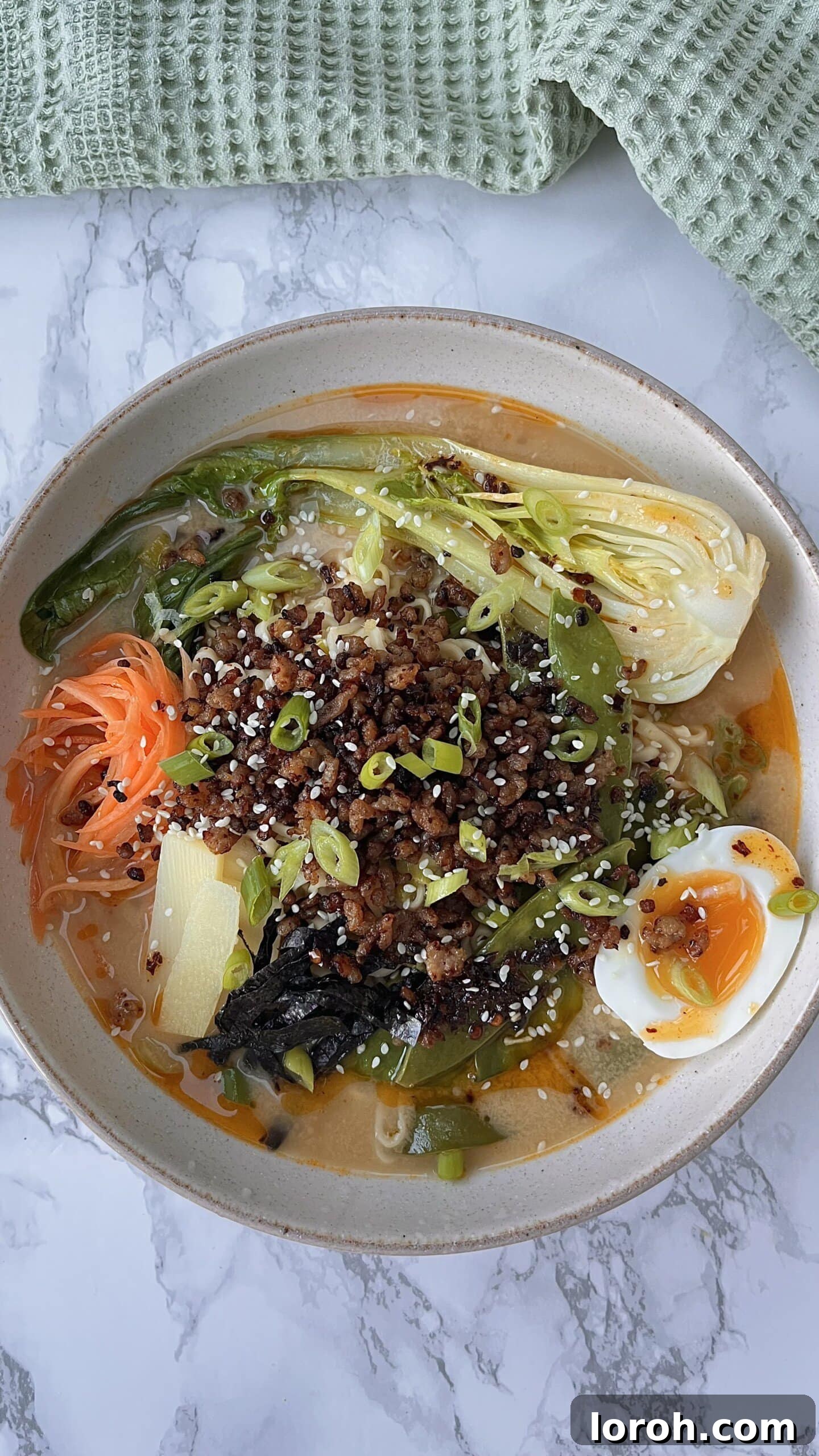
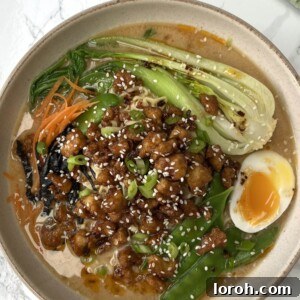
Craving a warm, comforting bowl of goodness that’s both quick to prepare and incredibly satisfying? Look no further than this delightful Tofu Noodle Soup. It’s the perfect answer for a busy weeknight when you desire the rich, deep flavors of homemade ramen without the extensive cooking time. In just about 30 minutes, you can create a wholesome, flavor-packed meal that will warm you from the inside out. The magic lies in a meticulously crafted, umami-rich broth, perfectly crispy pan-fried tofu, and a medley of fresh, vibrant toppings.
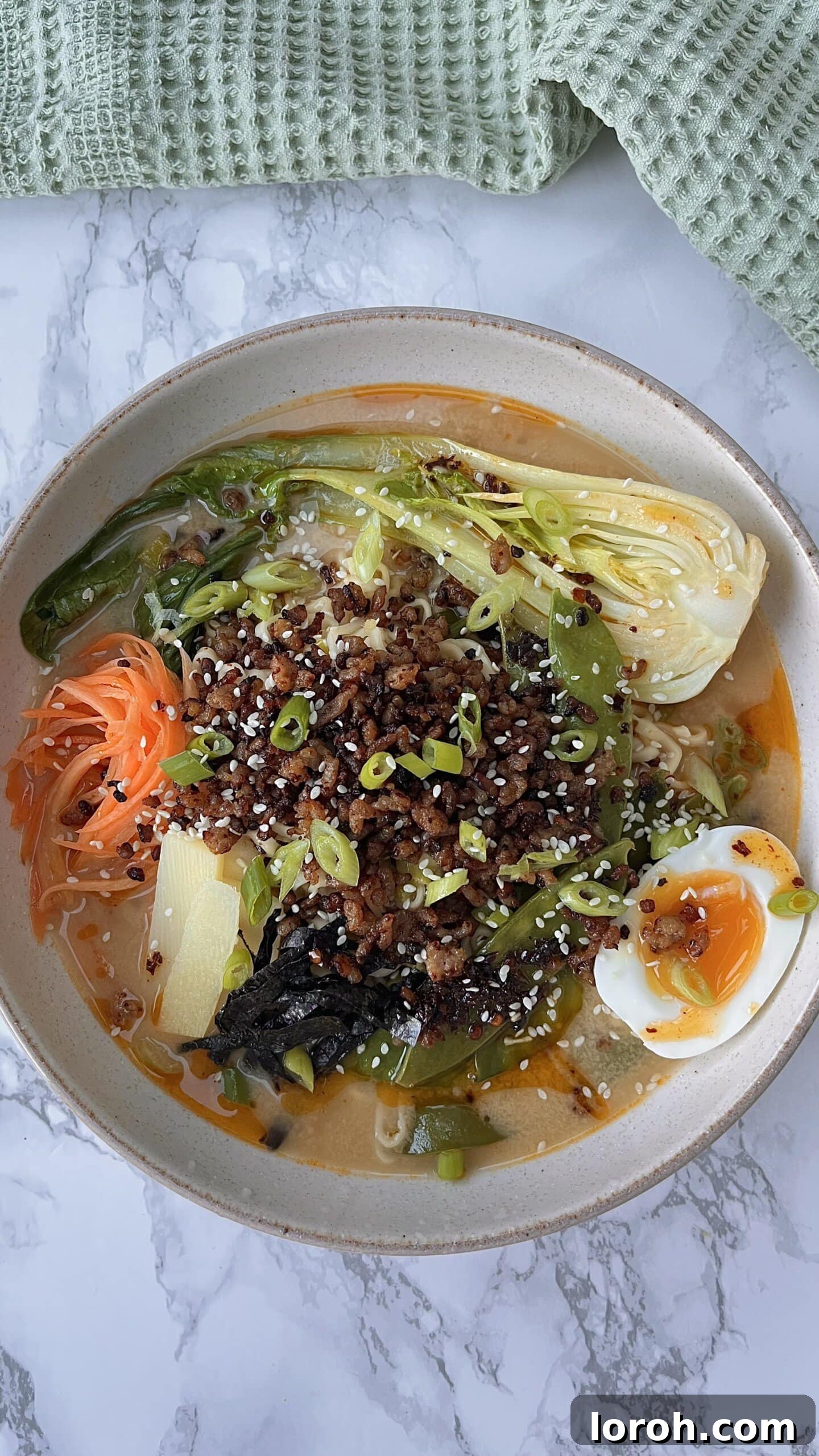
While there are countless ways to approach a tofu noodle soup, this particular recipe stands out for its simplicity and exceptional depth of flavor. Often, the robust umami profile in noodle soups is derived from meat, but this recipe skillfully achieves that same profound savoriness using entirely plant-based ingredients. The star of the show, beyond the broth, is the golden-crisp tofu. We employ a special technique to ensure the tofu remains beautifully crunchy, never soggy, providing a delightful textural contrast to the silky noodles and rich broth. This method guarantees a perfect bite every time, elevating the entire dish. I particularly love using extra-firm tofu for its ability to crisp up beautifully, a quality I also appreciate in my Curry Udon with Tofu recipe.
Why You Will Absolutely Love This Tofu Noodle Soup Recipe
This Tofu Noodle Soup isn’t just another meal; it’s a culinary experience designed for convenience, nutrition, and incredible taste. Here’s why it’s bound to become a staple in your kitchen:
- Explosion of Flavor from Pantry Staples: The broth is the heart of any great noodle soup, and ours is no exception. It’s built on a foundation of readily available ingredients, transforming everyday pantry essentials into a complex, savory, and incredibly satisfying base. You’ll be amazed at the depth of flavor achieved with minimal effort and common household items. This clever combination of ingredients layers umami, sweetness, and a hint of spice, creating a restaurant-quality broth right in your own kitchen.
- A Wholesome, Hearty, and Plant-Powered Meal: This soup is a nutritional powerhouse, making it an ideal choice for a healthy and hearty lunch or dinner. Packed with plant-based protein from the tofu, fiber from the noodles and vegetables, and an array of essential vitamins and minerals, it offers a balanced meal that leaves you feeling satisfied and energized. It’s naturally vegetarian and easily adaptable for vegan diets, making it a fantastic option for anyone looking to incorporate more plant-based meals into their routine without compromising on taste or satiety.
- Endlessly Versatile and Customizable: One of the greatest joys of cooking is the freedom to personalize dishes, and this tofu noodle soup is exceptionally forgiving and adaptable. While the core recipe is fantastic, it serves as a wonderful canvas for your culinary creativity. Feel free to experiment with your favorite seasonal vegetables, different types of noodles, or even alternative protein sources. This flexibility ensures that you can enjoy a unique and exciting bowl of soup every time, tailoring it to your preferences or whatever ingredients you have on hand.
Table of Contents
- Why You Will Absolutely Love This Tofu Noodle Soup Recipe
- Essential Ingredients for Your Tofu Noodle Soup
- Smart Substitutions and Exciting Variations
- Step-by-Step Guide to Making Easy Tofu Noodle Soup
- Pro Cooking Tips for Perfect Tofu Noodle Soup
- Frequently Asked Questions About Tofu Noodle Soup
- Other Delicious Noodle Recipes You Might Enjoy
- Share Your Love for This Recipe!
- Tofu Noodle Soup Full Recipe Card
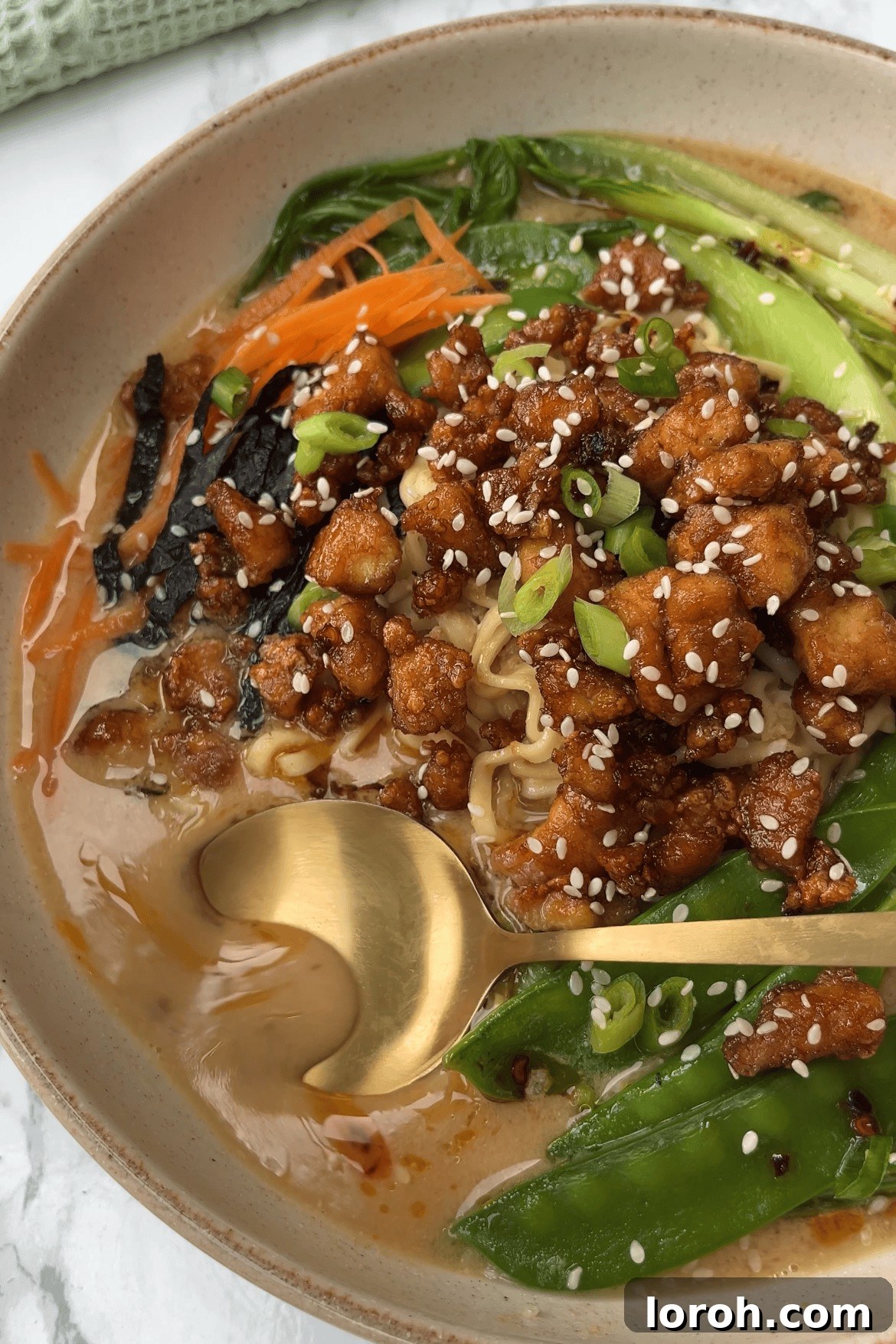
Essential Ingredients for Your Tofu Noodle Soup
The magic of this recipe lies in its carefully selected ingredients, each playing a vital role in building complex layers of flavor. Below, you’ll find a detailed breakdown of what you’ll need. For precise measurements and the full recipe, please scroll down to the printable recipe card at the bottom of this post!
- Dashi powder: This is a cornerstone of Japanese cuisine, a delicate yet profound savory seasoning made from dried seaweed (kombu) and dried fermented skipjack tuna (bonito flakes). It’s the secret to an authentic umami bomb, providing a clean, oceanic depth that forms the backbone of our broth. You can typically find it in small packets or granules in the international aisle of most supermarkets or Asian grocery stores.
- White miso paste: A fermented soybean paste, white miso (shiro miso) is milder and sweeter than its darker counterparts. It contributes a wonderful salty, earthy, and umami richness to the broth, adding a fermented tang and body that’s essential for a well-rounded flavor profile. It’s packed with probiotics and nutrients.
- Tahini: Often associated with Middle Eastern cuisine, tahini is a smooth, nutty paste made from ground sesame seeds. In this soup, it acts as a creamy emulsifier, lending a subtle nutty flavor and luxurious body to the broth, making it incredibly silky and satisfying, much like a milder, more sophisticated peanut butter.
- Soy sauce: An indispensable seasoning in East Asian cooking, soy sauce brings essential saltiness and umami. I prefer using a good quality dark soy sauce for a deeper color and slightly richer flavor, but any good all-purpose soy sauce will work perfectly. Always taste and adjust for saltiness.
- Sesame oil: This intensely fragrant oil, derived from toasted sesame seeds, is used sparingly but makes a huge impact. Its distinct, nutty aroma and flavor add a layer of warmth and complexity that truly elevates the dish. Be sure to use toasted sesame oil for maximum fragrance.
- Fresh ginger: Zesty, pungent, and slightly spicy, fresh ginger adds a vibrant kick and aromatic warmth to the soup. I highly recommend grating it fresh as needed; a knob of ginger lasts well in the fridge. If fresh isn’t available, a good quality ginger paste can be a convenient substitute.
- Garlic cloves: The aromatic foundation of many savory dishes, garlic provides a pungent, sweet, and essential flavor. You’ll need a few cloves for this recipe: two for the rich depth of the soup broth and one specifically for flavoring the crispy tofu.
- Extra firm tofu: The ideal choice for this recipe! Extra firm tofu has the lowest water content, making it incredibly dense and perfect for achieving that desirable golden-brown crispiness without becoming soggy. If you can only find firm tofu, a simple pressing method (detailed in the tips section) will help remove excess moisture.
- Cornstarch: Also known as cornflour in some regions, this fine powder is crucial for creating that irresistible crispy coating on the tofu. When tossed with the tofu before frying, it forms a light crust that becomes wonderfully golden and crisp.
- Olive oil: A reliable cooking oil, olive oil is used primarily for frying the tofu until it’s perfectly golden and crisp. There’s no need for your finest extra virgin olive oil here; a standard cooking olive oil will do the job perfectly.
- Mirin: A sweet Japanese rice wine, mirin is a key ingredient for authentic Japanese flavor. Its delicate sweetness balances the savory and salty notes of the miso and soy sauce, adding a beautiful glaze and depth to the tofu sauce.
- Sugar: A touch of granulated sugar works alongside the mirin to provide balance to the intense saltiness of the miso and soy sauce, ensuring a harmonious and well-rounded flavor profile in both the broth and the tofu glaze.
- Baby pak choi: A wonderfully mild, crisp, and slightly peppery green, baby pak choi is an excellent addition to soups. Its delicate leaves and crunchy stems cook quickly, adding freshness, texture, and a boost of nutrients to your bowl.
- Ramen noodles or egg noodles: The star carbohydrate of our soup! You can use traditional ramen noodles (discarding any seasoning packets if using instant ones) or easily found egg noodles from your local supermarket. Both provide a satisfying chew and absorb the delicious broth beautifully.
- Mange tout (Snow Peas): These crisp, sweet, and vibrant green pods maintain their satisfying crunch even when lightly cooked, making them a perfect addition for texture and a burst of freshness. They also add a lovely visual appeal to the finished dish.
- Eggs: A classic ramen topping, soft-boiled eggs with their jammy yolks add richness, creaminess, and an extra boost of protein. My ideal cooking time for a perfectly soft-boiled egg is precisely 5.5 minutes.
- Spring onion: Sliced thinly, fresh spring onions (scallions) add a mild, oniony bite and a beautiful garnish, completing the presentation and offering a final layer of fresh flavor.
Smart Substitutions and Exciting Variations
This Tofu Noodle Soup recipe is wonderfully flexible, allowing you to adapt it based on your pantry, dietary needs, or personal preferences. Here are some excellent ideas for substitutions and variations to inspire you:
- Dashi powder: If traditional dashi powder is difficult to source, don’t fret! You can substitute it with a high-quality vegetable stock for a fully plant-based option, or fish stock for a similar oceanic depth if you’re not strictly vegetarian. Chicken stock can also work, lending a different but still delicious savory base. For an extra umami boost, consider adding a dried shiitake mushroom or a piece of kombu (dried kelp) to your stock as it simmers, then remove before serving. Knorr Stock Pots are a convenient and flavorful choice for a quick broth base.
- Tahini: No tahini on hand? No problem! Creamy peanut butter is an excellent substitute, particularly 100% natural varieties that are looser and less sweetened. It will impart a similar nutty flavor and creamy texture to the broth, making it equally rich and satisfying. Just be mindful of any added sugars in conventional peanut butter.
- Tofu: While this recipe champions extra-firm tofu for its amazing crispiness and plant-based appeal, it’s easily adaptable for meat-eaters. For a carnivorous twist, try browning pork mince (ground pork) or chicken mince (ground chicken) in the pan until golden and crispy, then add the sauce ingredients as you would for the tofu. For other vegetarian options, consider pan-fried tempeh or marinated and sautéed mushrooms (like shiitake or oyster) for their robust flavor and texture.
- Mirin: If mirin isn’t available, you can create a suitable substitute. Combine 1 tablespoon of rice wine vinegar with an additional dash of sugar (or a small amount of maple syrup) to achieve a similar sweet-tart balance that complements the savory elements of the broth and tofu glaze. A splash of dry sherry or white wine can also work, with a bit of added sugar.
- Cornstarch: Also known as cornflour, cornstarch is ideal for crisping tofu. However, if you’ve run out, an equal amount of plain all-purpose flour or potato starch will also work effectively to create that delightful crispy coating.
- Mangetout/Pak Choi: The beauty of this soup lies in its adaptability with vegetables. Feel free to use whatever quick-cooking, crunchy greens or vegetables you have in your fridge. Great options include thinly sliced cabbage, tenderstem broccoli florets, sliced bell peppers, spinach (add at the very end to wilt), baby corn, green beans, or even rehydrated dried shiitake mushrooms for an extra umami kick.
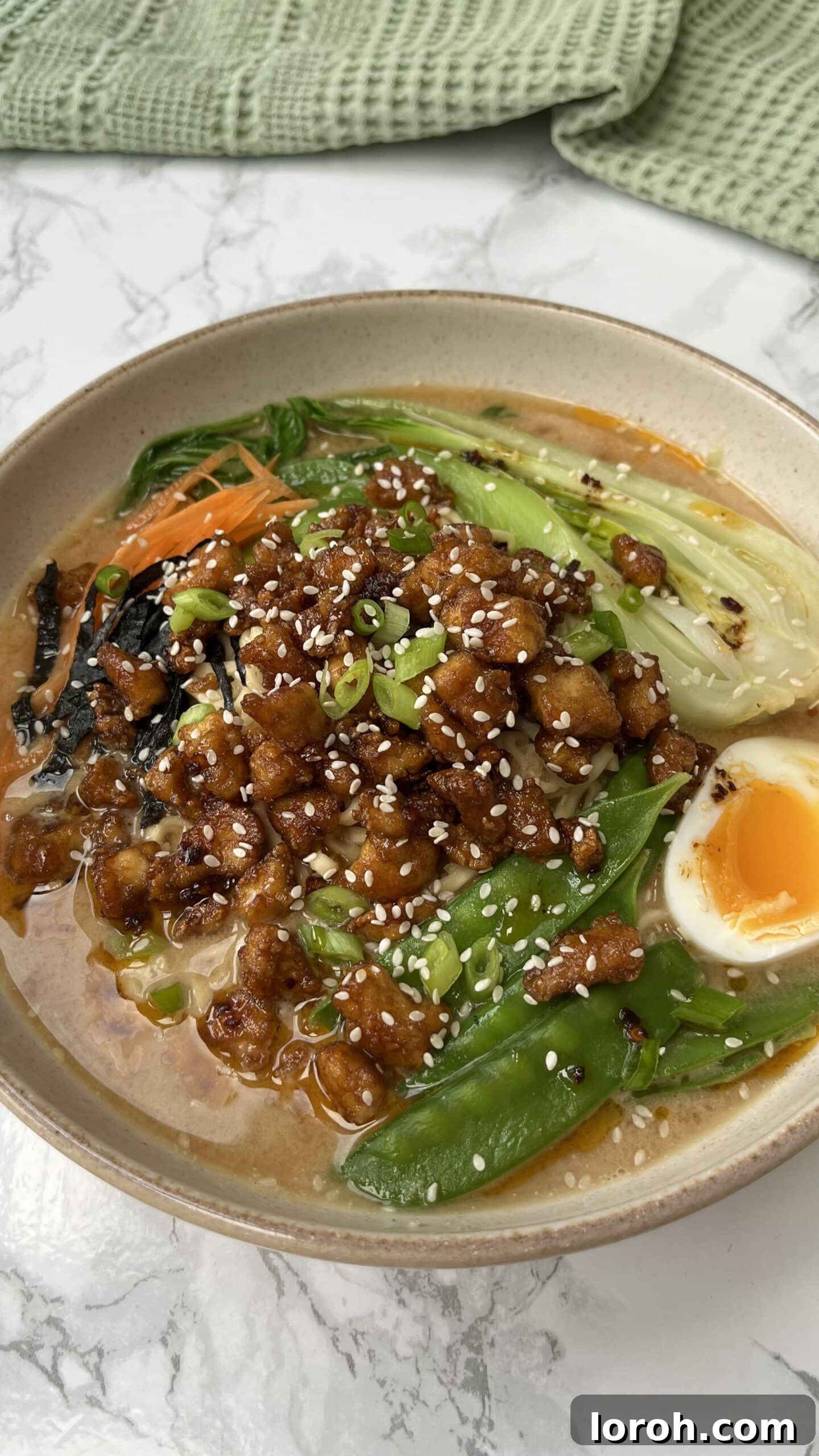
Step-by-Step Guide to Making Easy Tofu Noodle Soup
Get ready to create a truly delicious and incredibly satisfying Tofu Noodle Soup with these straightforward steps. While this is a concise guide, remember you can find the comprehensive, detailed instructions in the full recipe card at the bottom of the page.
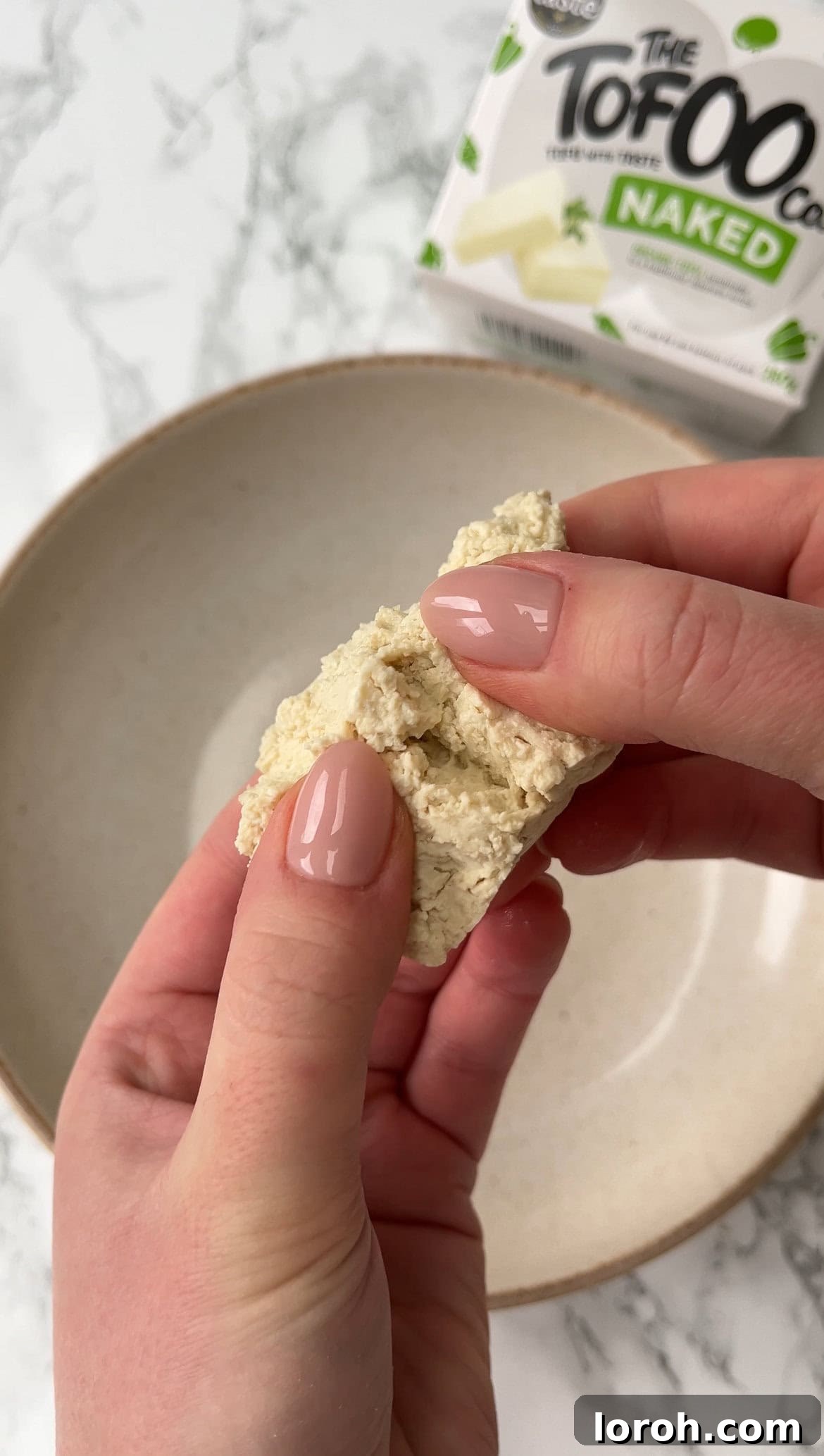
STEP ONE: Begin by preparing your extra firm tofu. Instead of neat cubes, gently pull the block into small, rustic chunks using your hands. This creates irregular, craggy surfaces that will beautifully crisp up and hold onto the delicious sauce even better, adding wonderful texture to your soup.
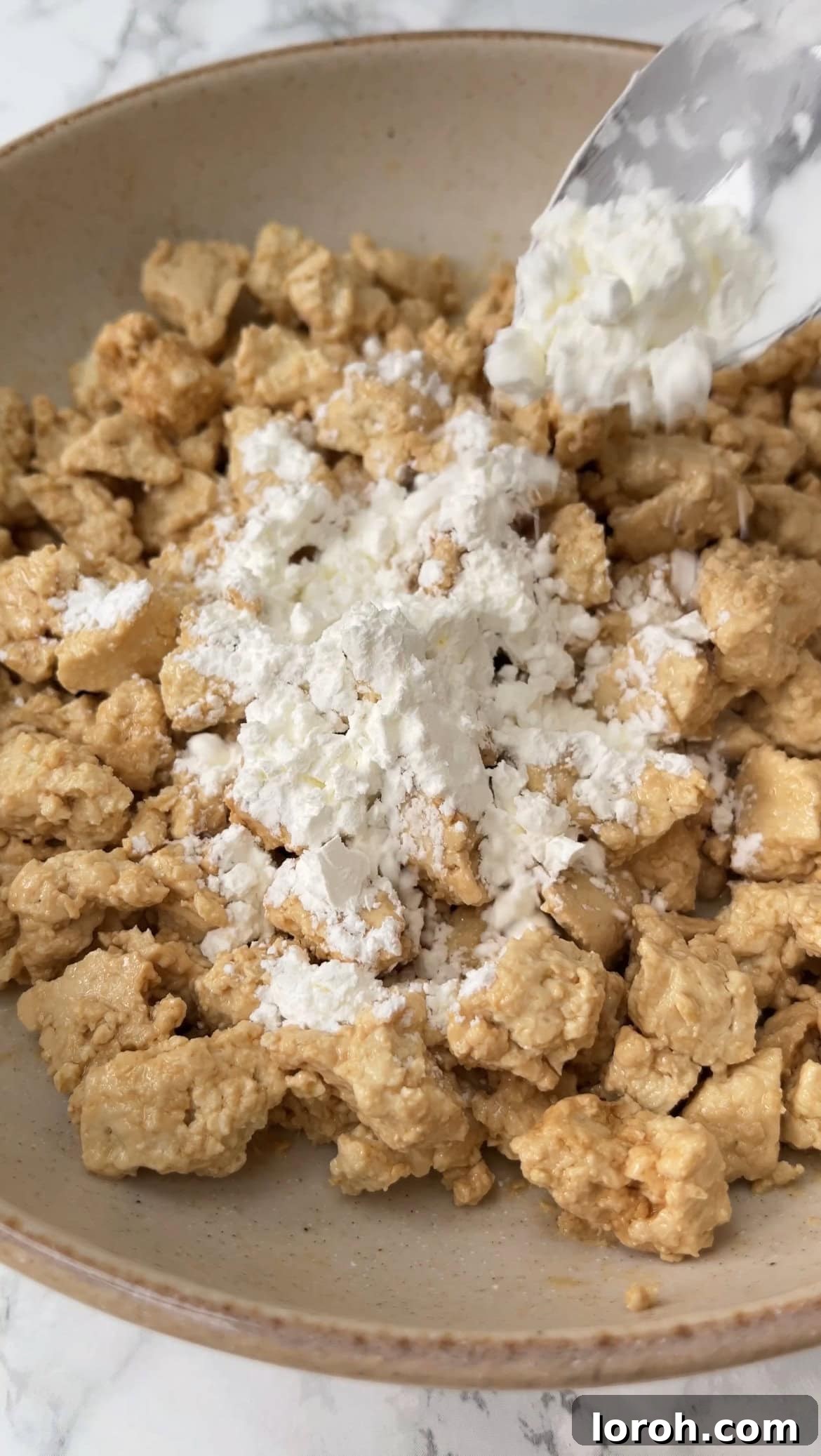
STEP TWO: Transfer the torn tofu chunks into a bowl. Evenly sprinkle them with cornstarch (or cornflour). Give the bowl a few gentle tosses or use a spoon to lightly coat each piece. This starchy layer is key to achieving that desirable golden-brown crisp exterior.
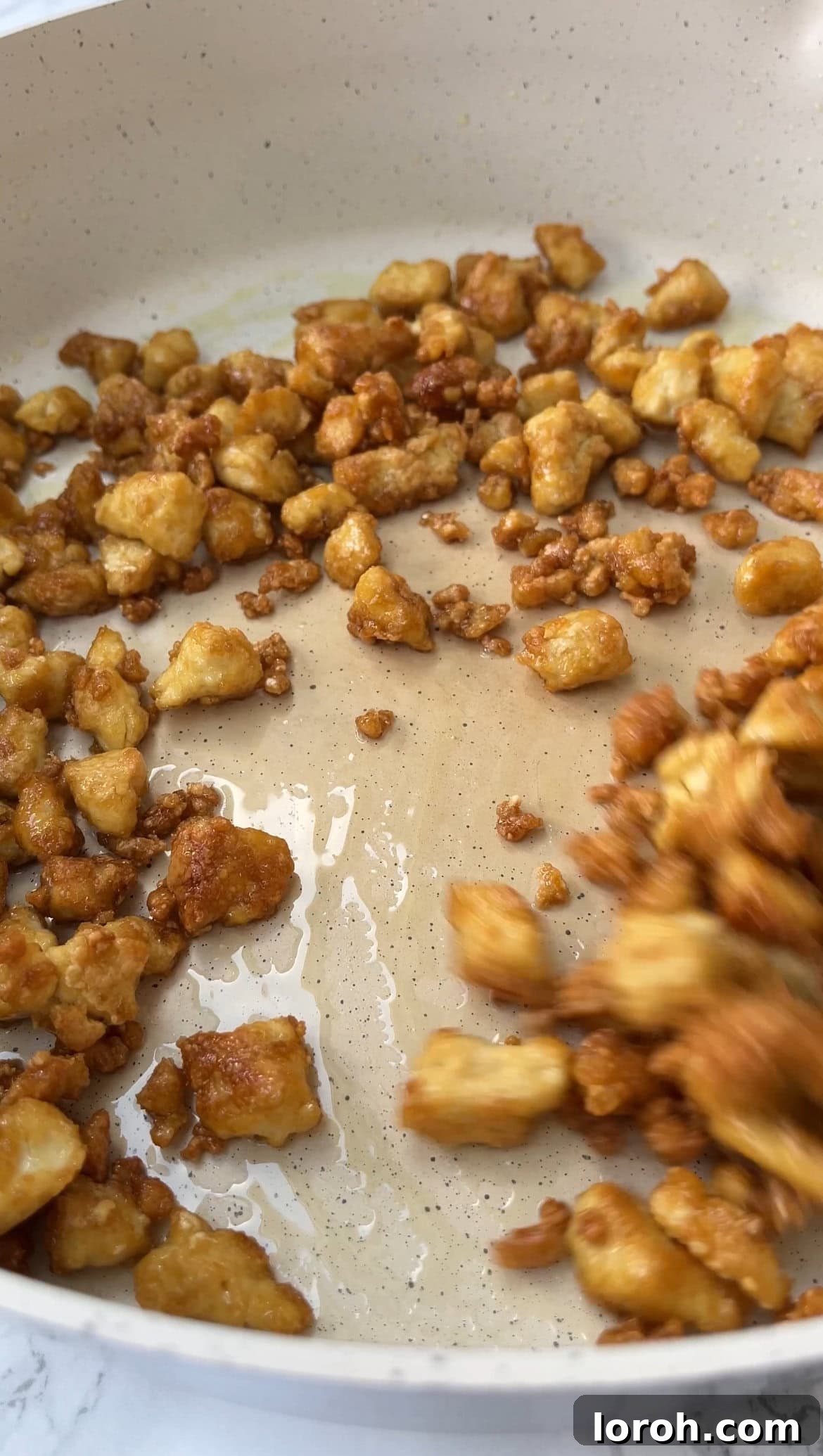
STEP THREE: Heat the olive oil in a nonstick pan over medium-high heat until shimmering. Carefully add the cornstarch-coated tofu pieces in a single layer, ensuring not to overcrowd the pan. Allow them to cook undisturbed for several minutes until a beautiful, golden-brown crust forms on the bottom. Resist the urge to flip them too soon!
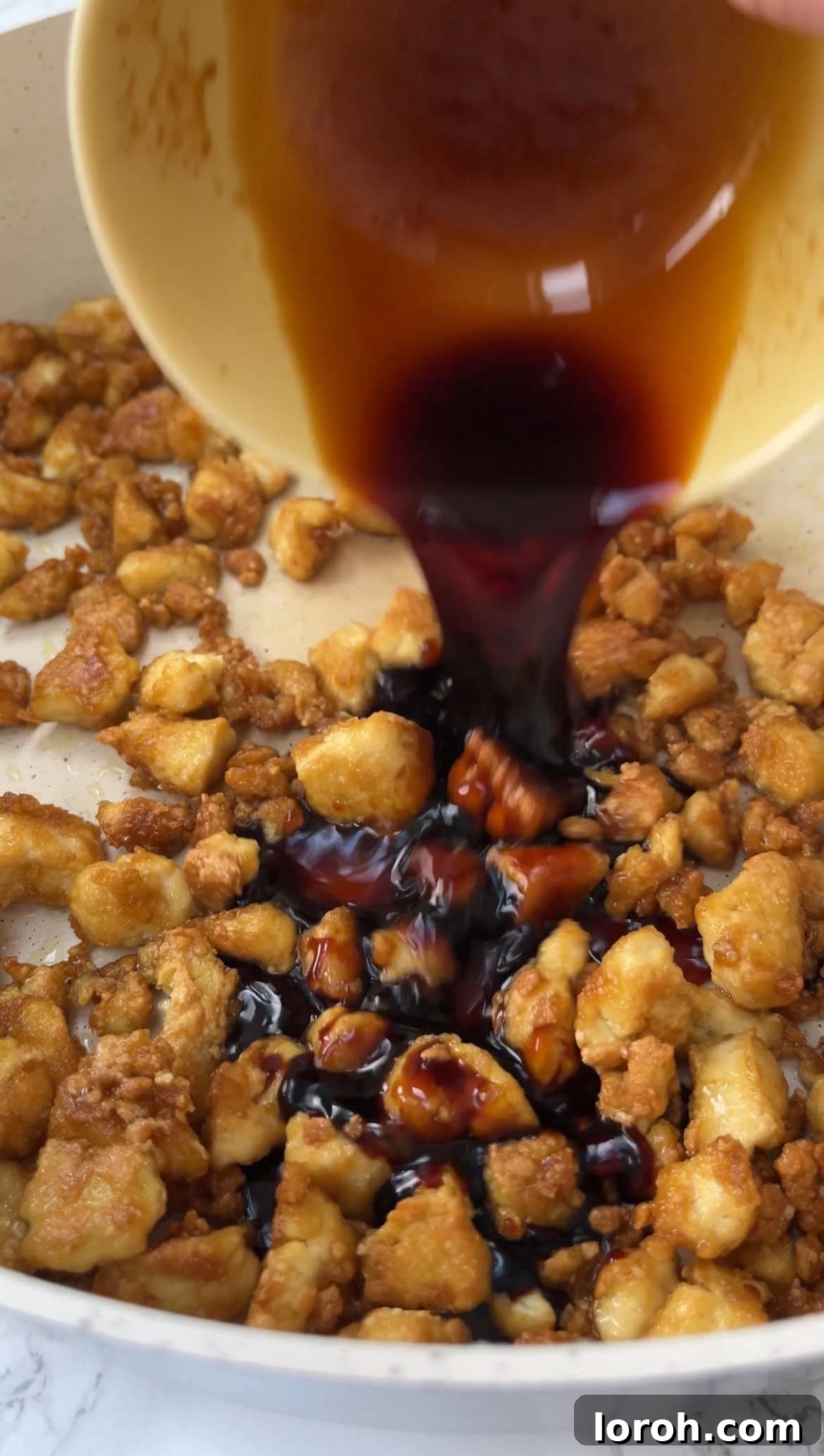
STEP FOUR: Once one side is golden and crispy, flip the tofu pieces and continue frying until all sides are uniformly browned and crisp. Now, add the soy sauce, minced garlic, sugar, and mirin to the pan. Let the sauce bubble and reduce for a few minutes, stirring occasionally, until it beautifully coats the tofu pieces, turning them wonderfully sticky and glossy.
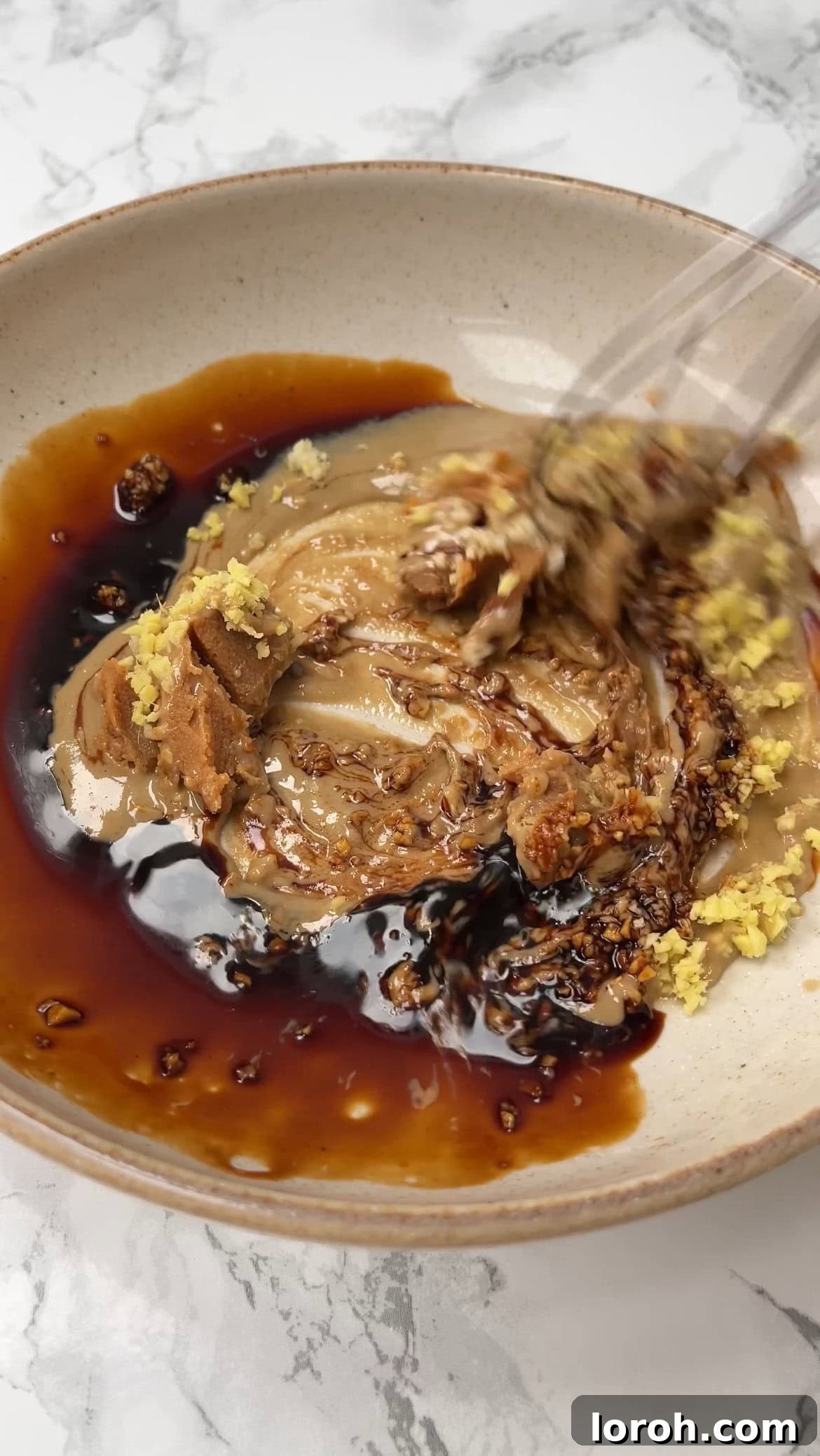
STEP FIVE: While the tofu is cooking, prepare your flavor base for the broth. In a separate bowl, combine the white miso paste, soy sauce, tahini, grated fresh ginger, and grated garlic. Mix thoroughly until you have a smooth, rich paste. This concentration of aromatics and umami will be the soul of your soup.
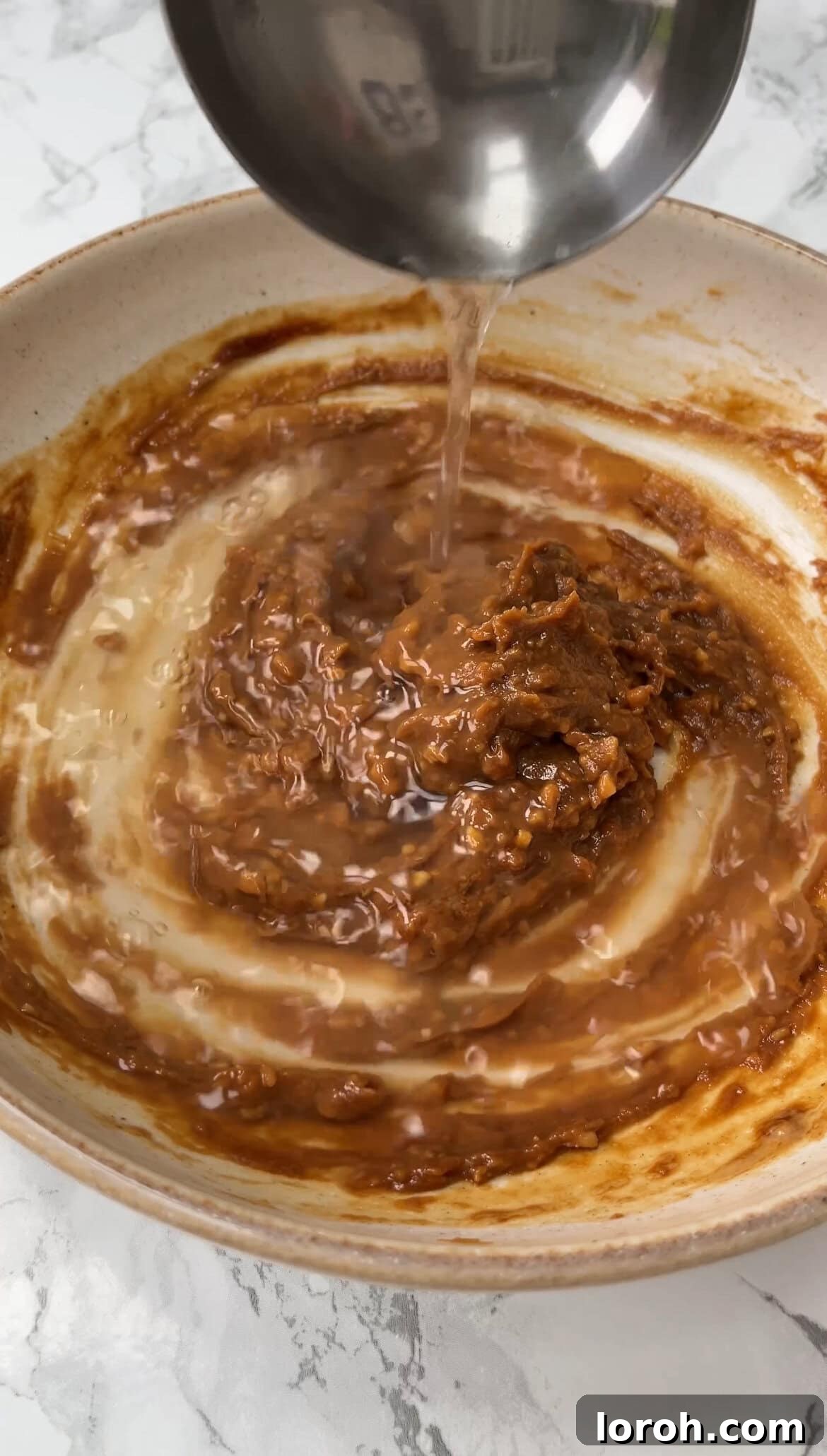
STEP SIX: In a separate pot, bring your dashi stock (made with dashi powder and boiling water) to a gentle simmer. Once simmering, ladle a few large spoonfuls of the hot dashi stock into your bowl of miso-tahini paste. Whisk vigorously until the paste is fully dissolved and smooth, creating a creamy, concentrated slurry. This tempering step prevents the miso from clumping.
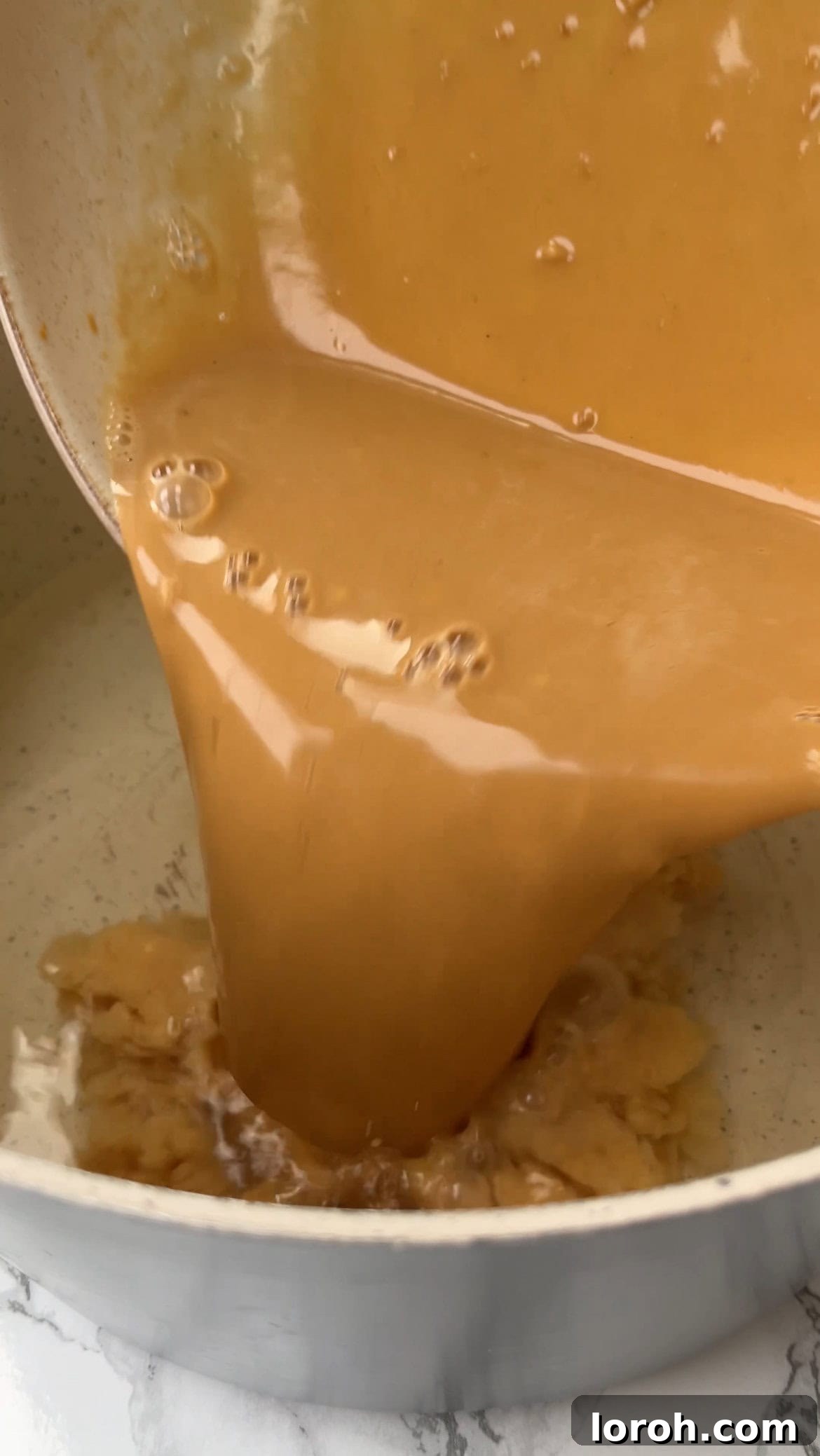
STEP SEVEN: Pour the whisked miso-tahini mixture back into the pan with the remaining dashi stock. Stir well to combine. Taste the broth and adjust the seasoning as needed, adding a splash more soy sauce if you prefer it saltier, or a pinch of sugar for sweetness. Bring the broth back to a gentle simmer, then add your noodles, pak choi, and mange tout. Cook for just a few minutes until the vegetables are tender-crisp and the noodles are perfectly cooked through.
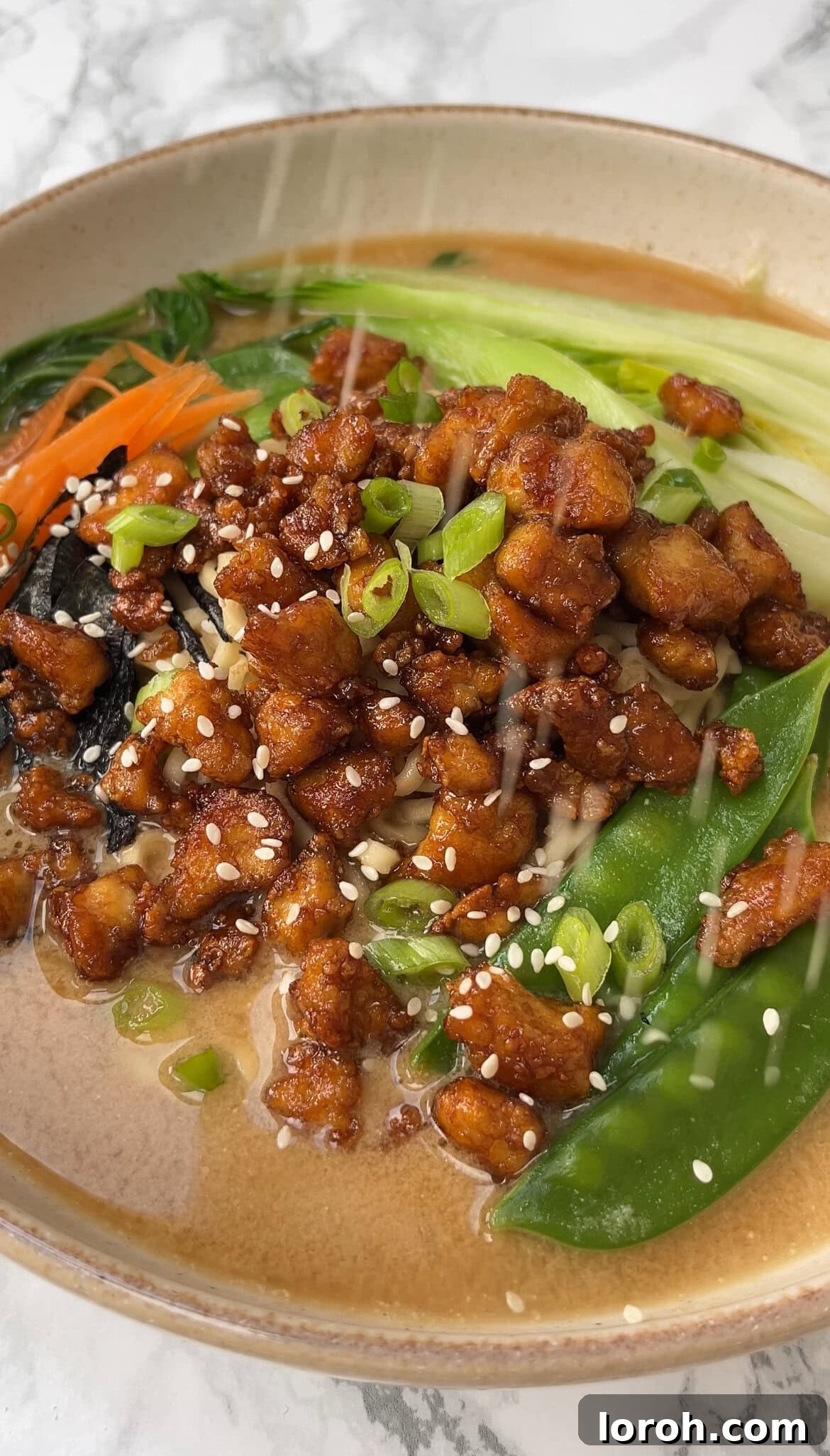
STEP EIGHT: To serve, divide the cooked noodles and vegetables evenly into two large bowls. Ladle over the hot, aromatic broth. Top generously with the sticky, crispy tofu you prepared earlier, and add your desired garnishes. A perfectly soft-boiled egg (cooked for 5.5 minutes) is my absolute favorite, adding a creamy richness that beautifully complements the soup. Garnish with fresh spring onions for a final flourish and enjoy your exquisite homemade Tofu Noodle Soup!
Pro Cooking Tips for Perfect Tofu Noodle Soup
Achieving a truly exceptional bowl of Tofu Noodle Soup is easier than you think with these expert tips:
- Don’t Skimp on the Flavor Base: In a quick ramen-style dish like this, the depth of flavor entirely relies on the foundation of your broth. Each ingredient in the flavor base—dashi, miso, tahini, soy sauce, ginger, and garlic—plays a critical role in layering umami, sweetness, and savoriness. Do not omit any of these ingredients unless absolutely necessary, and always refer to the substitution suggestions if you need alternatives. This combination is what transforms simple hot water into a rich, complex, and deeply satisfying soup.
- Press the Tofu If Needed: The key to truly crispy tofu is removing as much moisture as possible before cooking. While extra firm tofu is ideal because of its naturally low water content, if you can only find firm tofu, a quick pressing will make all the difference. To do this, wrap the block of tofu in a clean tea towel or several layers of paper towels. Place it on a plate and then position a heavy object, like a cast-iron pan or a stack of cookbooks, on top. Let it press for at least 15-30 minutes (or even longer for very soft tofu) to squeeze out excess water. This simple step ensures your tofu achieves that desired golden crispiness, preventing it from becoming soggy during frying and absorbing the sticky glaze beautifully.
Frequently Asked Questions About Tofu Noodle Soup
For this recipe, extra firm tofu is highly recommended. Its inherently low moisture content means it crisps up beautifully and achieves that appealing golden-brown exterior much more easily than softer varieties. If extra firm tofu isn’t available, and you can only find firm tofu, don’t worry! You can still achieve great results by pressing it. Simply wrap the block of tofu in a clean tea towel or paper towels and place a heavy pan or weighted object on top for at least 15-30 minutes to extract as much excess water as possible. This critical step prevents sogginess and ensures a delightful crispy texture.
Absolutely! This recipe is incredibly versatile when it comes to noodles. While I typically use ramen noodles or egg noodles for their classic texture and absorbency, you have many options. Udon noodles provide a thicker, chewier bite, while delicate rice noodles or vermicelli noodles offer a lighter alternative. Soba noodles (buckwheat noodles) can also be used for an earthier flavor. Just be sure to follow the cooking instructions on your chosen noodle packet, as cooking times can vary. Remember to skip any seasoning packets if using instant ramen.
To maintain the best texture and prevent the noodles and vegetables from becoming overly soggy, it is ideal to store the broth separately from the cooked noodles, tofu, and vegetables. Store them in airtight containers in the refrigerator for up to 4 days. If you’ve already mixed them, don’t worry – it will still be delicious, just potentially softer. To reheat, gently warm the broth in a saucepan until piping hot. Add the cooked noodles, tofu, and vegetables to the hot broth and heat through for a few minutes. If the broth seems a little thick or has reduced, add a splash of water or extra stock to achieve your desired consistency.
Other Delicious Noodle Recipes You Might Enjoy
If you loved this Tofu Noodle Soup, you’re in for a treat with these other incredible noodle and Asian-inspired dishes. They are perfect for expanding your culinary repertoire:
- For a fantastic prep-ahead lunch that’s both simple and packed with flavor, these Mason Jar Noodles are an absolute winner. Just add boiling water, and you’re good to go!
- Dive into a comforting bowl of my flavorful Wonton Noodle Soup, a classic that never disappoints.
- Experience a unique fusion with this creamy and rich Udon Carbonara, an unexpected delight.
- Master a takeaway favorite at home with this quick and easy Weeknight Pad Thai recipe.
- And for a delightful side dish or an additional plant-based element, my Miso Aubergine is absolutely scrumptious.
More Recipes to Explore
Chicken Recipes
Shrimp and Chicken Fried Rice
Weeknight Supper
Quick and Easy Shin Ramen with Crispy Pork
Soups
Chicken and Prawn Tom Yum Soup
Less Than 20 Minutes
Korean Spicy Ramen Noodles with Cheese
Share Your Love for This Recipe!
If you’ve tried this Tofu Noodle Soup recipe and enjoyed it as much as I do, I would absolutely love to hear from you! Please consider leaving a review in the comments section below. Your feedback, whether it’s about changes you made, cooking tips you discovered, or the story behind why you chose this recipe, truly makes my day.
And if you’re sharing your delicious creation on Instagram, please don’t forget to tag me @desertislanddishes. Seeing your amazing food photos is always such a joy!
Tofu Noodle Soup
Margie Nomura
10
15
25
2
servings
Rate Recipe
Print Recipe
Ingredients
For the soup base:
- 1 x 5g packet of dashi powder
- 750 ml boiling water
- 1 1/2 tbsp white miso paste
- 1 tbsp good-quality tahini
- 1 tsp soy sauce
- 1 tsp sesame oil
- 1 cm fresh ginger, grated
- 2 garlic cloves, finely grated
For the tofu:
- 1 block of extra firm tofu
- 2 tablespoons cornstarch
- 2 tablespoons olive oil
- 2 tbsp soy sauce
- 1 tbsp mirin
- 1 tbsp sugar
- 1 clove garlic, crushed
For the rest:
- 2 baby pak choi, halved lengthways
- 200 g ramen noodles or egg noodles
- mange tout
- spring onion
- 2 soft boiled eggs – 5 1/2 minutes
Instructions
-
For the broth, add the dashi powder to the boiling water in a pan. Bring to a gentle simmer.
-
In a bowl, mix together the miso paste, soy sauce, tahini, ginger, and garlic to form a paste. When combined, add a few large spoonfuls of the simmering dashi from the pan, whisk until smooth, and then pour the entire mixture back into the pan. Taste and adjust the seasoning, adding more soy sauce if needed. Add the noodles, pak choi, and mange tout to the broth and cook for a few minutes until the vegetables are tender-crisp and the noodles are cooked through.
-
For the tofu, gently pull it into small, rustic chunks with your hands to create unique shapes and textures that will hold onto the sauce well. Place the chunks in a bowl, sprinkle with cornstarch, and give it a few gentle tosses to coat each piece evenly.
-
In a nonstick pan over medium-high heat, heat the olive oil. Add the tofu pieces and leave them undisturbed for a few minutes to develop a beautiful golden-brown and crispy crust. Flip and continue frying until all sides are browned and crispy.
-
Finally, add the soy sauce, crushed garlic, sugar, and mirin to the pan with the crispy tofu. Allow the sauce to bubble and reduce for a few minutes until it thickens and coats the tofu, making it wonderfully sticky and glossy.
-
To serve, divide the cooked noodles and broth into two bowls. Top with the sticky crispy tofu, sliced spring onions, and your favorite toppings, such as perfectly soft-boiled eggs, and enjoy your delicious Tofu Noodle Soup!
Notes
To store: If possible, store the broth separately from the vegetables and noodles to prevent them from becoming soggy. If mixed, it will still be delicious. It will last up to 4 days in an airtight container in the refrigerator.
To reheat: Reheat in a pan over medium heat until piping hot. If the broth appears too thick or dry, add a splash of water or vegetable stock to adjust the consistency.
Nutrition
Carbohydrates: 68 g,
Protein: 29 g,
Fat: 34 g,
Saturated Fat: 5 g,
Polyunsaturated Fat: 11 g,
Monounsaturated Fat: 17 g,
Trans Fat: 0.01 g,
Cholesterol: 164 mg,
Sodium: 1798 mg,
Potassium: 222 mg,
Fiber: 3 g,
Sugar: 10 g,
Vitamin A: 880 IU,
Vitamin C: 8 mg,
Calcium: 352 mg,
Iron: 5 mg
Nutrition information is automatically calculated, so should only be used as an approximation.
Like this? Leave a comment below!