
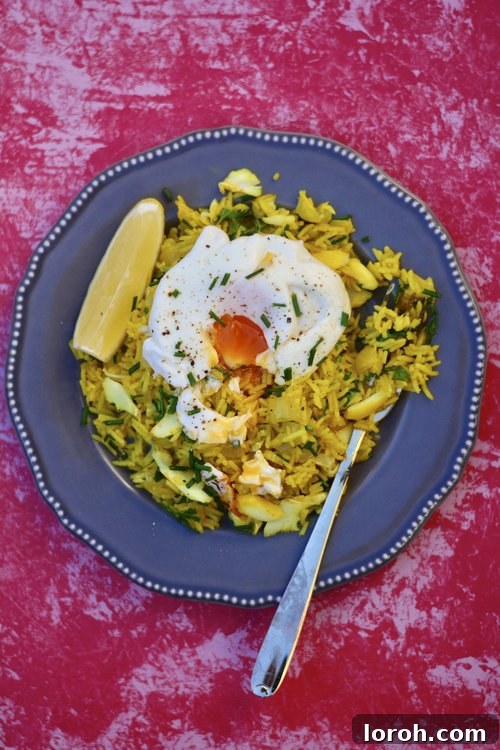

Kedgeree Topped With Poached Egg: A Comforting Classic Inspired By Georgie Coleridge Cole
By: Margie
There are some dishes that transcend mere sustenance, becoming a warm embrace, a culinary hug that transports you back to simpler times. Kedgeree is unequivocally one of them. During a delightful conversation with Georgie Coleridge Cole, a mutual appreciation for this iconic British-Indian classic blossomed. She fondly recalled her mother’s version, just as I cherish memories of my own mother’s rendition. This shared sentiment highlights Kedgeree’s enduring status as a quintessential home-cooked meal, radiating comfort and a profound sense of homeliness.
Georgie aptly describes Kedgeree as one of her all-time “desert island dishes” – a testament to its irresistible appeal and lasting impression. It’s often a dish we don’t think about regularly, but once it graces our table, often prepared by a loved one, we’re instantly reminded of its magic and become utterly re-obsessed. My personal experience echoes this sentiment, particularly during my time cooking in various lodges across Scotland. Serving Kedgeree for breakfast, in its traditional glory, was an absolute joy. On those crisp, blustery mornings, it presented the perfect, warming start to a day before venturing into the rugged hills. It feels wonderfully decadent, almost evocative of a leisurely morning in Downton Abbey.
What’s more, Kedgeree holds a surprising charm as a crowd-pleaser, making it an excellent choice for a Friday night supper with friends. Imagine presenting a steaming pot of this fragrant, spiced rice, flaked smoked haddock, and vibrant eggs to your guests – their eyes are sure to light up with anticipation. Pair it with a crisp green salad, dressed simply with a bright vinaigrette, and you have an effortlessly elegant and deeply satisfying meal. In my culinary philosophy, when in doubt, “pop an egg on it!” While traditionally served with boiled eggs, the addition of a perfectly poached egg on top elevates the experience further. For the ultimate indulgence, I often combine both: roughly chopping boiled eggs into the kedgeree itself, then crowning each serving with a luscious poached egg. Don’t forget the essential garnish of a fresh lemon wedge and a generous sprinkling of vibrant chives. These not only enhance the dish’s visual appeal but also contribute bursts of fresh flavour that truly complete the experience.
Servings: 4
Rate Recipe
Print Recipe
The Comforting Legacy of Kedgeree: A Dish for Every Occasion
Kedgeree is more than just a meal; it’s a testament to culinary fusion and the power of food to evoke deep comfort. Originating from the Indian subcontinent, where ‘khichri’ referred to a dish of rice and lentils, it was adapted by the British during the colonial era to incorporate smoked fish and hard-boiled eggs, transforming it into the iconic breakfast staple we know today. This rich history makes every bite a journey, connecting us to generations who have cherished its unique blend of savory, spicy, and satisfying textures. It’s a dish that gracefully straddles the line between hearty breakfast, elegant brunch, and surprisingly sophisticated dinner.
Its adaptability is one of Kedgeree’s greatest strengths. While traditionally lauded as a breakfast dish, particularly in Scotland where its warming qualities are especially appreciated on cold mornings, it shines equally bright as a main course for lunch or dinner. The delicate smokiness of the haddock, combined with aromatic spices and fluffy basmati rice, creates a harmonious flavour profile that appeals to a wide range of palates. It’s a dish that feels special without being overly complicated, offering a touch of old-world charm and understated elegance to any meal.
Essential Ingredients for Authentic Kedgeree
Crafting the perfect Kedgeree begins with selecting quality ingredients. Each component plays a vital role in building the layered flavours that make this dish so irresistible. From the fragrant rice to the fresh herbs, paying attention to these details will ensure a truly memorable culinary experience.
Ingredients
- 50 g butter: Essential for sautéing and enriching the rice.
- 1 medium onion: Finely chopped for a subtle sweetness and aromatic base.
- 1 tbsp curry powder: Choose a good quality, mild to medium curry powder to provide the characteristic warm spice. Adjust to your preferred heat level.
- 1/4 tsp turmeric: Not just for its beautiful golden colour, turmeric adds an earthy depth and numerous health benefits.
- 450 g basmati rice: The long, slender grains of basmati rice cook up light and fluffy, perfect for absorbing the aromatic flavours without becoming sticky. Rinsing the rice thoroughly before cooking is key to achieving this texture.
- 1 litre / 1 3/4 pints haddock cooking water: This is a crucial flavour booster. Poaching the haddock in water and then using that infused liquid for the rice ensures no flavour is wasted and adds incredible depth.
- 500 g smoked haddock: The star of the show. Opt for undyed smoked haddock if possible for a more natural flavour. Its delicate, smoky notes are what define Kedgeree.
- 2 hard-boiled eggs: Chopped and stirred through the rice, these add a creamy texture and extra protein.
- Plus one poached egg per serving (optional): For that ultimate indulgence and visual appeal, a soft-yolked poached egg on top is highly recommended.
- 50 g extra butter: Stirred in at the end to add richness and gloss to the finished dish.
- Small handful of fresh parsley: Roughly chopped, it adds a burst of freshness and a vibrant green colour.
- Small handful of fresh chives: Roughly chopped, chives offer a delicate oniony flavour and a beautiful garnish.
- 1 lemon: Cut into wedges for serving. A squeeze of fresh lemon juice brightens all the flavours in the dish.
Crafting Your Perfect Kedgeree: Step-by-Step Instructions
Follow these detailed steps to create a Kedgeree that is both traditional and utterly delicious. Each stage is designed to build flavour and ensure a perfect result, from perfectly cooked fish and rice to beautifully prepared eggs.
Instructions
-
Step 1: Prepare the Eggs
Begin by boiling your eggs. Gently lower the eggs into a pot of rapidly boiling water. Cook for precisely 8 minutes for a firm, yet not rubbery, hard-boiled egg. Once cooked, immediately transfer them to a bowl of ice water or run them under cold tap water to halt the cooking process. This prevents a green ring from forming around the yolk and makes them easier to peel. Peel them carefully once they are cool enough to handle, then set them aside. If you plan to serve with poached eggs, you can prepare these just before serving for the freshest result.
-
Step 2: Cook the Smoked Haddock
Next, focus on the fish. In a large, shallow pan, bring enough water to a gentle simmer to cover the smoked haddock. Carefully place the haddock fillets into the simmering water. Poach for approximately 5 minutes, or until the fish is opaque throughout and flakes easily when tested with a fork. Overcooking will dry out the fish, so keep a close eye on it. Once cooked, remove the fish from the water with a slotted spoon and gently transfer it to a plate. Cover it loosely with foil to keep it warm. **Crucially, do not discard the poaching water!** This flavourful liquid is essential for cooking the rice and is key to the authentic taste of Kedgeree.
-
Step 3: Build the Aromatic Rice Base
In a separate large, heavy-bottomed pan with a tight-fitting lid, melt the first 50g of butter over a medium-low heat. Add the finely chopped onion and sauté gently until it becomes soft and translucent, but without taking on any colour. This slow cooking method brings out the onion’s natural sweetness. Season lightly with salt and pepper. Stir in the curry powder and turmeric, cooking for another minute until fragrant. This toasting of the spices unlocks their full aroma and flavour. Add the rinsed basmati rice to the pan and stir well to ensure every grain is coated in the spiced butter. Pour in exactly 1 litre (or 1 3/4 pints) of the reserved haddock cooking water. Bring the mixture to a rolling boil, then immediately reduce the heat to the lowest setting, cover the pan tightly with its lid, and cook for roughly 12-15 minutes. The rice should be tender and all the liquid absorbed. Avoid lifting the lid during cooking to trap the steam effectively.
-
Step 4: Combine and Finish the Dish
Once the rice is perfectly cooked, gently flake the warm, poached haddock directly into the pan with the rice. Add the remaining 50g of butter, which will melt into the warm rice, adding a luxurious sheen and flavour. Roughly chop the hard-boiled eggs that you prepared earlier and fold them into the Kedgeree along with the chopped fresh parsley. Stir everything together gently to combine, being careful not to break up the fish too much. Taste and adjust seasoning if necessary.
-
Step 5: Serve with Flair
Serve the Kedgeree immediately, garnished with a generous wedge of lemon and a liberal sprinkling of fresh chives. For an extra touch of indulgence, and following my ‘double egg’ philosophy, prepare a fresh poached egg for each serving and delicately place it on top of the Kedgeree. The runny yolk will mix beautifully with the spiced rice and fish, adding another layer of richness. A simple side salad with a vinaigrette complements the dish wonderfully.
Kedgeree Variations and Expert Tips
Kedgeree is a forgiving dish that lends itself well to customization. Don’t be afraid to experiment with different ingredients and techniques to make it truly your own.
Customize Your Kedgeree
- Fish Alternatives: While smoked haddock is traditional, you can try smoked cod, salmon, or even a mix of white fish. For a richer flavour, a combination of smoked and fresh fish works beautifully.
- Spice Level: Adjust the amount of curry powder to your preference. For a milder flavour, use less; for a spicier kick, add a pinch of chili flakes or a hotter curry powder. Garam masala can also be added at the end for an extra aromatic touch.
- Vegetable Boost: Enhance the nutritional value and texture by stirring in some thawed frozen peas or wilted spinach in the last few minutes of cooking the rice. This adds colour and freshness.
- Herb Power: Beyond parsley and chives, consider adding fresh coriander for an extra layer of authentic Indian flavour.
- Creamy Twist: For an even more luxurious Kedgeree, stir in a dollop of crème fraîche or double cream at the very end, just before serving.
- Dietary Adaptations: For a dairy-free version, use olive oil or a plant-based butter alternative. To make it gluten-free, simply ensure your curry powder is certified gluten-free.
Tips for Success
- Rinse Your Rice: Always rinse basmati rice under cold water until the water runs clear. This removes excess starch, preventing the rice from becoming sticky and ensuring light, separate grains.
- Gentle Flaking: When flaking the haddock, be gentle. You want tender, moist pieces, not a mush.
- Don’t Overcrowd the Pan: Give your ingredients space, especially when sautéing the onions, to ensure even cooking.
- The Lid is Your Friend: For perfectly cooked rice, a tight-fitting lid is crucial to trap steam. Resist the urge to peek during cooking!
- Taste and Adjust: Always taste your food as you go. Adjust salt, pepper, and spices to suit your palate before serving.
Storage and Reheating
Leftover Kedgeree can be a delicious treat, but proper storage and reheating are important to maintain quality and safety.
- Storage: Allow the Kedgeree to cool completely within one hour, then transfer it to an airtight container. Store in the refrigerator for up to 2 days.
- Reheating: Gently reheat Kedgeree in a pan over low heat, adding a splash of water or stock to prevent it from drying out. Stir occasionally until thoroughly heated through. Alternatively, microwave it in short bursts, stirring between each, until hot. Ensure it’s piping hot before serving.
- Freezing: While possible, freezing Kedgeree is generally not recommended as the rice can become mushy and the fish texture can degrade. It’s best enjoyed fresh or within a couple of days from the refrigerator.