
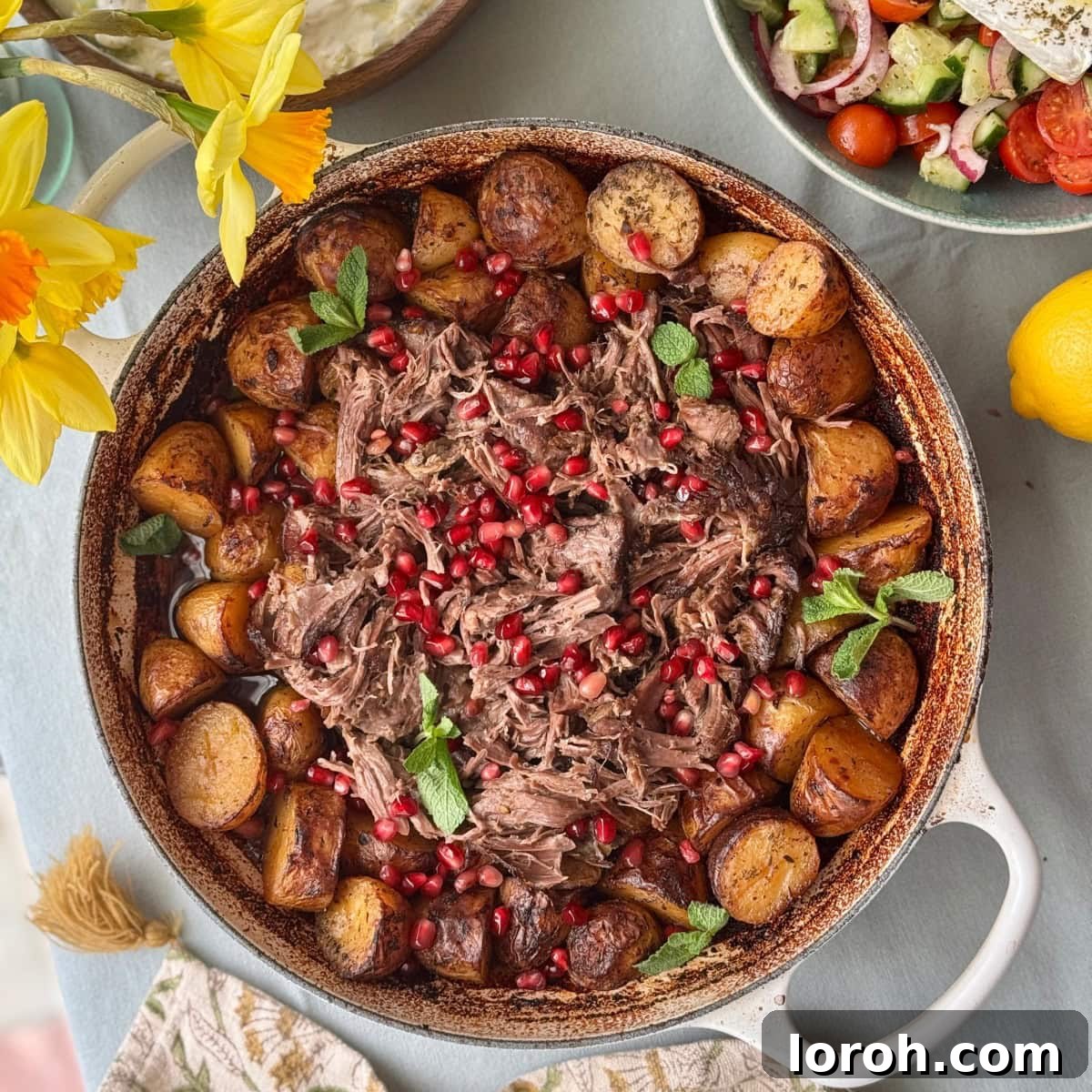
Prepare to experience one of the most rewarding and unbelievably delicious meals you can create with minimal effort: our one-pan Slow Cooked Lamb Recipe. This dish transforms a humble leg of lamb into a tender, melt-in-your-mouth masterpiece, requiring just a few minutes of active preparation before the oven takes over. It’s the perfect recipe for those seeking impressive results without the culinary gymnastics, making it ideal for family dinners, special occasions, or a cozy weekend feast.
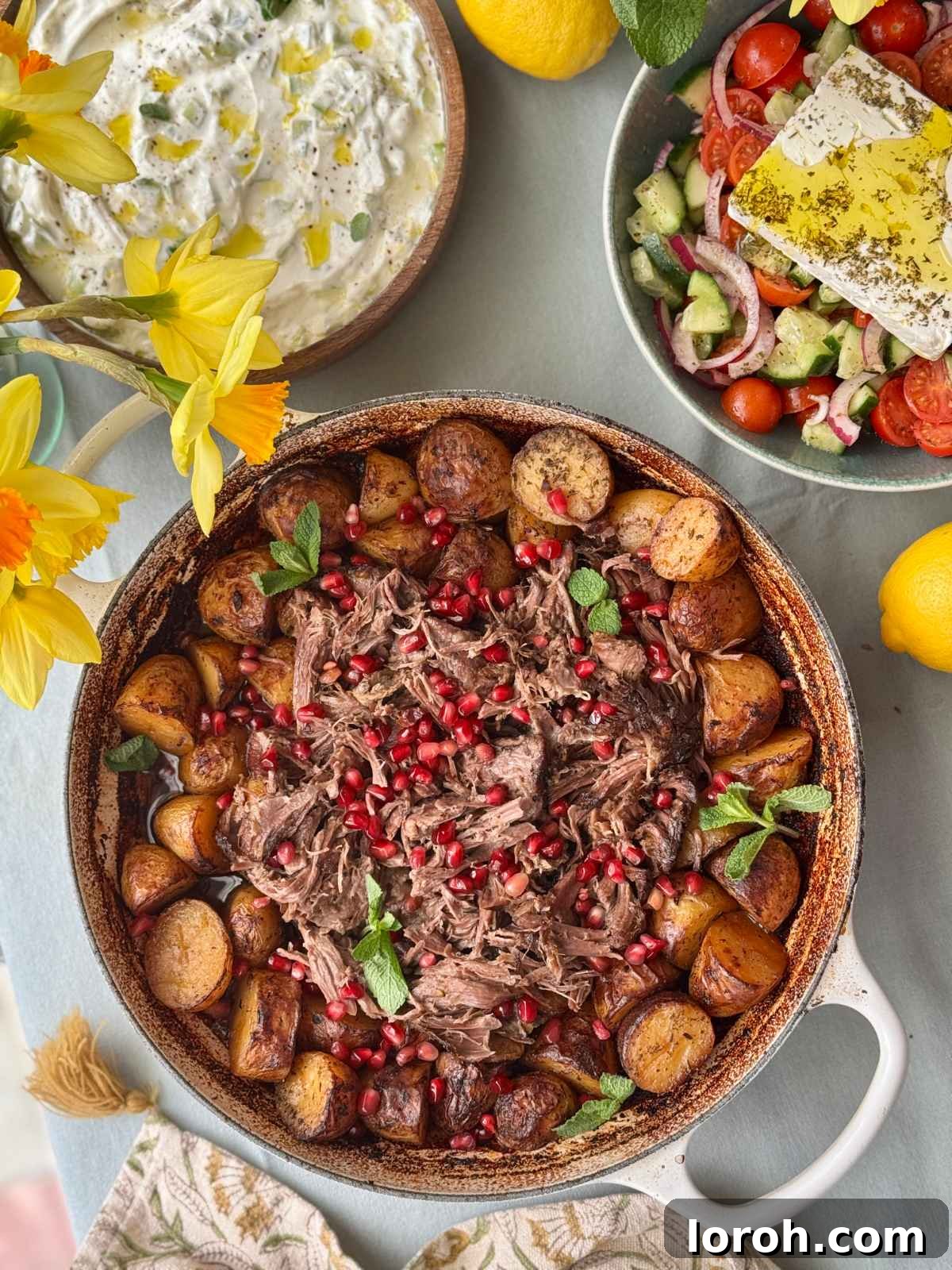
We specifically recommend using a leg of lamb for this recipe, as its robust structure and inherent marbling lend themselves beautifully to the low-and-slow cooking method. A prolonged, gentle roast effectively breaks down the tough connective tissues and renders the fat, ensuring every bite is incredibly juicy, succulent, and infused with deep flavor. Cuts like the leg and shoulder are well-exercised parts of the lamb, which initially makes them tougher, but it’s precisely why they benefit so immensely from a long, slow cooking process that tenderizes them to perfection.
In this comprehensive guide, you’ll master the art of making the perfect slow-cooked lamb. We’ll cover everything from selecting the right cut of meat and infusing it with incredible flavor, to expert tips for preventing dryness and achieving that coveted fall-apart texture. Get ready to elevate your cooking with a dish that’s as simple to prepare as it is unforgettable to taste.
Table of Contents
- Why You Will Love This Recipe
- Ingredients for Unforgettable Flavor
- Customizing Your Slow Cooked Lamb: Substitutions and Variations
- Step-by-Step: Crafting Your Perfect Slow Cooked Lamb
- Expert Tips for Flawless Slow Cooking
- Frequently Asked Questions About Slow Cooked Lamb
- Serving Suggestions and More Lamb Recipes
- Recipe Card: One Pan Slow Cooked Lamb with Baby Potatoes & Oregano
Why You Will Love This Recipe
This slow-cooked lamb isn’t just a meal; it’s an experience. Here’s why this recipe will quickly become a cherished favorite in your culinary repertoire:
- Unbelievably Tender, Fall-Apart Meat: The magic of slow cooking at a low temperature works wonders, breaking down collagen and muscle fibers to deliver lamb that literally falls off the bone. Every bite is meltingly soft and juicy, a testament to patient cooking.
- Minimal Active Prep, Maximum Flavor: Forget about endless stirring or complex steps. This recipe requires just a few minutes of hands-on preparation to create a vibrant marinade, then the oven takes over. It’s the ultimate set-it-and-forget-it dish, leaving you free to enjoy your day while dinner slowly simmers to perfection.
- Exquisite, Aromatic Flavor Profile: Infused with the bright, tangy notes of preserved lemons, the pungent warmth of garlic, and the earthy essence of dried oregano, this lamb boasts a deeply savory and aromatic character. These Mediterranean-inspired flavors penetrate the meat during the long cooking time, resulting in a rich and unforgettable taste.
- Effortless One-Tray Cooking: This is truly a ‘one-pan wonder.’ The baby potatoes cook directly alongside the lamb in the same dish, soaking up all the incredible pan juices and fat, becoming incredibly flavorful and tender. This not only simplifies the cooking process but also makes cleanup a breeze – a huge win for any home cook!
- Perfect for Any Occasion: While it feels luxurious enough for a holiday feast or special gathering, its ease of preparation makes it equally suitable for a comforting Sunday dinner. It’s a versatile dish that impresses every time.
Ingredients for Unforgettable Flavor
The complete ingredient list and detailed measurements can be found in the printable recipe card at the bottom of this page.
Achieving outstanding flavor and texture begins with quality ingredients. Here’s a closer look at what you’ll need and why each component is crucial:
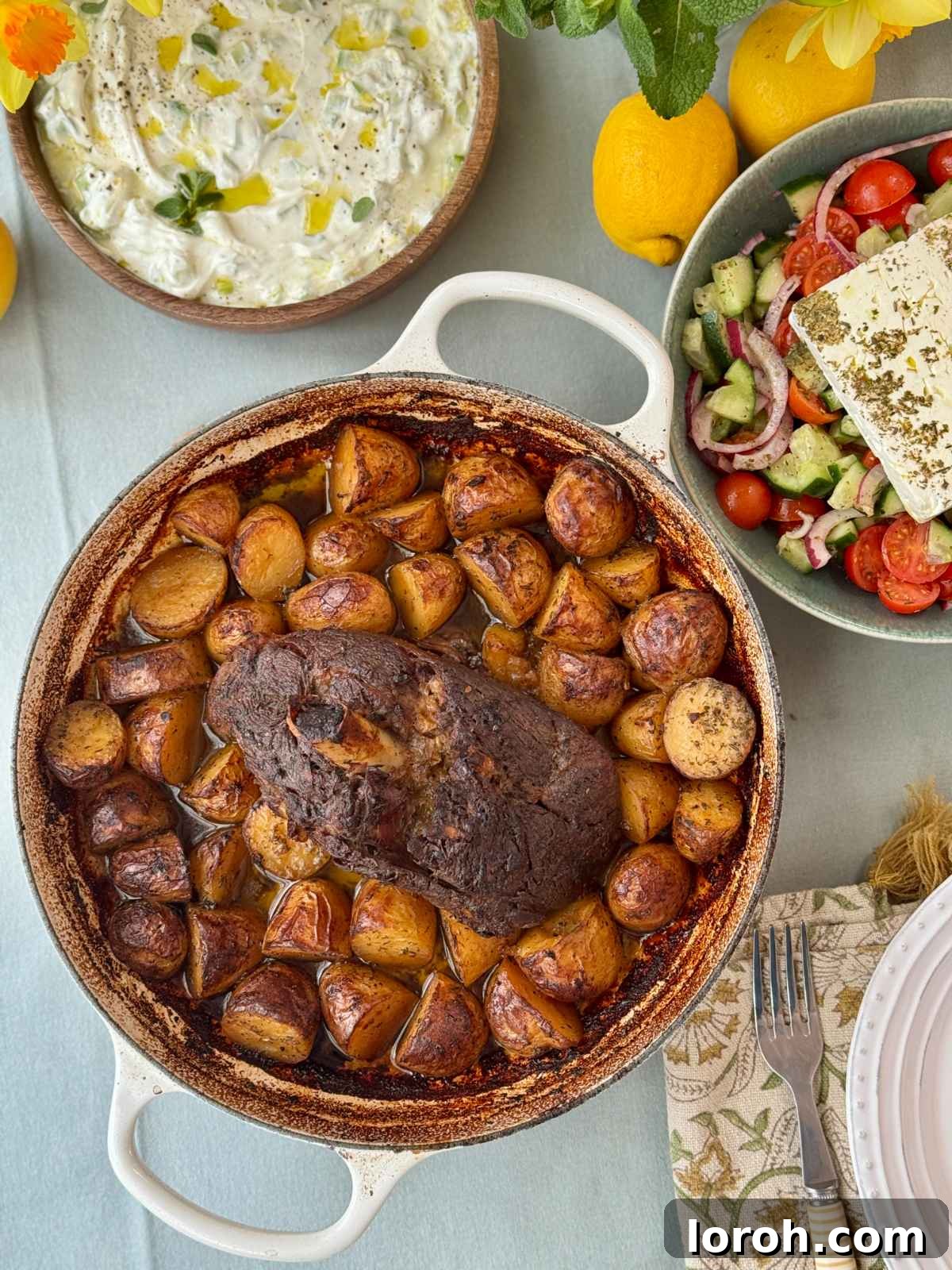
Leg of Lamb: For this recipe, we typically use a half leg of lamb, which is readily available in most supermarkets and perfectly sized for 4-6 servings. If you’re feeding a larger crowd, feel free to scale up to a whole leg; just increase the initial cooking time by about 30-60 minutes to ensure it reaches ultimate tenderness. Bone-in lamb leg is preferred as the bone adds extra flavor and moisture during the long cooking process. Look for a cut with a decent fat cap, as this will render down, self-basting the meat and contributing to its incredible juiciness.
Preserved Lemons: These are the secret weapon for an unparalleled depth of flavor. Unlike fresh lemons, which can be sharply acidic, preserved lemons offer a mellow, intensely citrusy, salty, and slightly fermented tang that is incredibly complex and hard to replicate. You can often find them in specialty food stores, larger supermarkets, or Middle Eastern grocery stores. They are small lemons cured in brine, and their unique taste is essential to this recipe’s distinct character. If absolutely unavailable, a small amount of fresh lemon zest and juice, coupled with a pinch of sea salt, could be a very distant substitute, but we highly recommend seeking out the preserved variety.
Baby Potatoes: Using small baby potatoes ensures they cook evenly and become wonderfully tender at the same rate as the lamb. They absorb all the delicious pan juices, turning into savory, melt-in-your-mouth morsels. No need to peel them; a good scrub is all that’s required.
Dried Oregano: This classic Mediterranean herb brings an earthy, peppery, and slightly bitter note that complements lamb beautifully. Dried oregano is often more potent than fresh when subjected to long cooking times, allowing its flavors to truly meld and deepen into the dish.
Extra Virgin Olive Oil: The foundation of our flavorful marinade, good quality olive oil helps carry the flavors of the herbs and spices into the lamb, while also contributing to a beautiful golden crust when the lamb finishes roasting.
Garlic Cloves: Minced garlic adds a pungent, aromatic kick to the marinade, a classic pairing with lamb that builds a strong flavor base.
Dijon Mustard: Just a tablespoon of Dijon adds a subtle tang and helps emulsify the marinade, ensuring it adheres well to the lamb and adds another layer of savory depth.
Salt & Pepper: Season generously! A large cut of meat like a leg of lamb requires a good amount of seasoning to ensure flavor permeates throughout. Flaky sea salt is excellent here for its clean taste and texture, while freshly ground black pepper adds a necessary gentle spice.
Chicken Stock: Adding stock to the roasting pan provides crucial moisture during the slow cooking process, preventing the lamb from drying out and creating a flavorful base for the potatoes and pan juices.
White Wine (optional): A splash of dry white wine, like Sauvignon Blanc or Pinot Grigio, introduces acidity and further complexity to the pan juices. It’s optional but highly recommended for an extra layer of gourmet flavor.
Customizing Your Slow Cooked Lamb: Substitutions and Variations
While this recipe is perfect as written, it’s also incredibly versatile. Feel free to experiment with different cuts and flavor profiles to suit your taste or what you have on hand.
Other Lamb Cuts:
If a leg of lamb isn’t available, or you simply prefer a different cut, here are some excellent alternatives:
- Lamb Shoulder: This cut is renowned for its richness and slightly higher fat content, making it incredibly flavorful and juicy when slow-cooked. It will yield similar melt-in-your-mouth results to the leg, perhaps even more succulent for those who appreciate a fattier cut. Cooking times will be very similar.
- Lamb Shanks: With their deep, concentrated flavor, shanks are fantastic for slow cooking. They work best when fully braised in ample liquid. If using shanks, ensure your roasting pan has higher sides, and increase the amount of chicken stock and wine to almost cover them, ensuring they are submerged for optimal tenderness and flavor extraction.
- Lamb Neck or Breast: These more economical cuts are also excellent for slow cooking. Lamb neck, when boneless, can be rolled and tied. Lamb breast is quite fatty and benefits from long, slow cooking to tenderize the meat and render the fat. Adjust cooking times slightly based on the size and shape of the cut.
Herb Swaps:
While dried oregano provides a quintessential Mediterranean flavor, you can easily alter the aromatic profile:
- Substitute dried oregano with other robust dried herbs like rosemary or thyme for a more classic roast flavor.
- For a brighter, more fragrant twist, use fresh herbs like sprigs of rosemary, thyme, or even lemon thyme. Add fresh herbs during the last hour of cooking to prevent them from becoming bitter.
- A blend of herbes de Provence can also add a wonderful complexity.
Exciting Flavor Twists:
Transform your slow-cooked lamb with these global-inspired variations:
- Moroccan Lamb: Infuse your lamb with exotic spices. Alongside salt and pepper, rub the lamb generously with a blend of ground cumin, cinnamon, paprika, coriander, and a pinch of turmeric. Add chickpeas to the pan when you introduce the potatoes, allowing them to absorb the rich juices. Finish with a scattering of fresh parsley or cilantro and a handful of dried apricots or prunes for a touch of sweetness.
- Red Wine & Herb: For a deeper color and richer, more robust flavor, swap the white wine for a full-bodied red wine (like a Cabernet Sauvignon or Merlot). This creates a more intense pan sauce, perfect for a hearty meal. Consider adding a few bay leaves to the liquid for extra depth.
- Asian Fusion Lamb: Create a delectable Asian-inspired marinade by combining soy sauce, honey, grated fresh ginger, minced garlic, and a touch of chili paste (such as gochujang or sriracha). Skip the preserved lemons and instead use fresh lime zest and juice. Replace traditional herbs with fresh chives and cilantro for garnish. Serve with fluffy jasmine rice instead of potatoes for a complete Asian-inspired feast.
- Greek Inspired Lamb: Embrace classic Greek flavors by adding pitted Kalamata olives, sun-dried tomatoes, and a sprinkle of crumbled feta cheese to the roasting pan during the last hour of cooking. Finish with fresh dill and a squeeze of fresh lemon.
Using a Slow Cooker:
If you prefer using a dedicated slow cooker, this recipe can be adapted. Place the marinated lamb in your slow cooker. For a 1.1 kg (2.4 lb) half leg, cook on low for 6-8 hours or on high for 4-5 hours. Since a slow cooker creates a moister environment, the potatoes won’t crisp up as well. We recommend roasting the baby potatoes separately in a hot oven for the last 30-40 minutes of the lamb’s cooking time, then serving them together for the best texture contrast.
Step-by-Step: Crafting Your Perfect Slow Cooked Lamb
This is a visual and descriptive step-by-step guide. For exact measurements and concise instructions, please refer to the detailed recipe card at the bottom of the page.
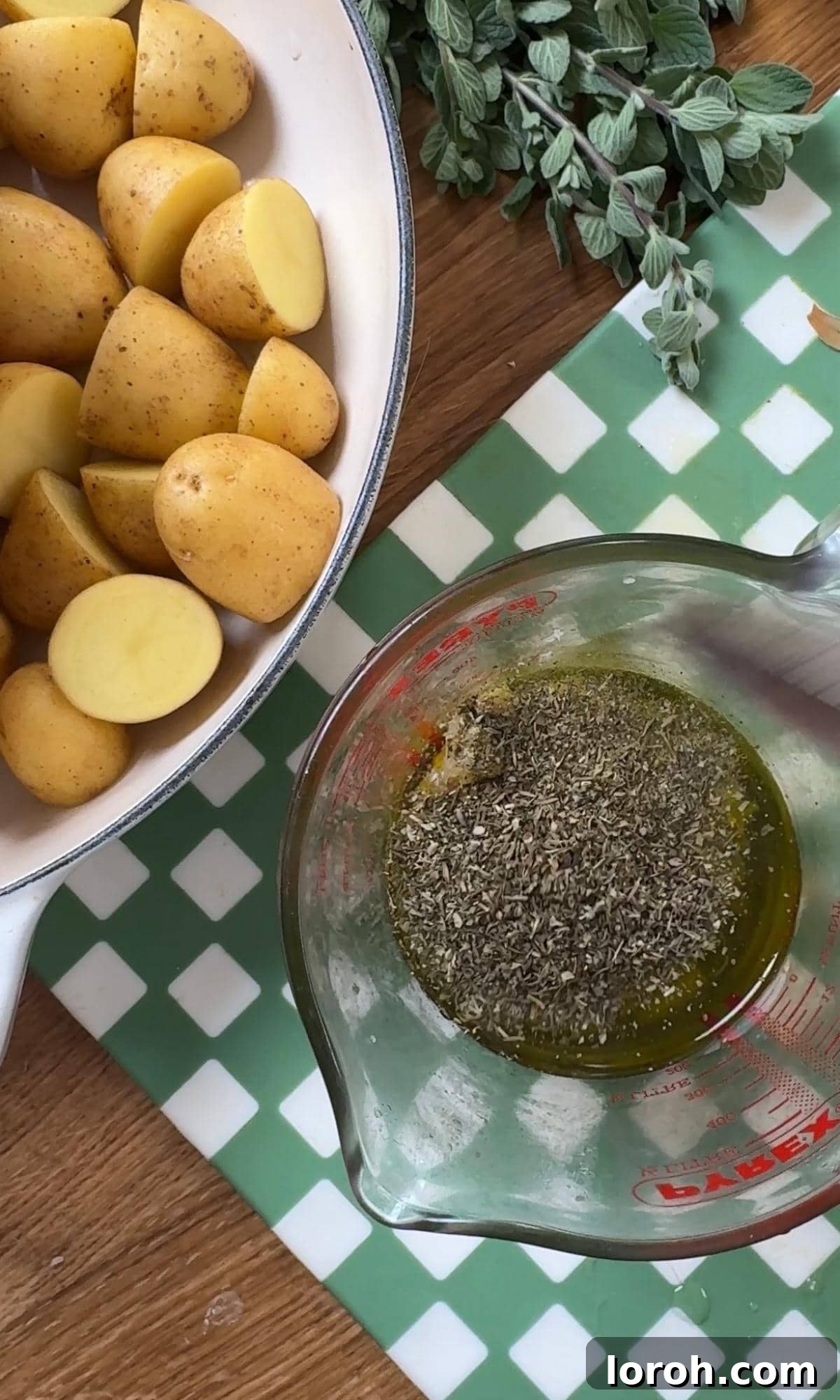
Step One: Prepare the Aromatic Marinade. Begin by preheating your oven to 170°C/150°C fan/350°F. In a large measuring jug or bowl, combine 80ml of good quality extra virgin olive oil, two minced garlic cloves, two finely chopped preserved lemons, one tablespoon of dried oregano, one tablespoon of Dijon mustard, and generous amounts of salt and freshly ground black pepper. Whisk these ingredients together thoroughly until well combined, creating a fragrant and potent marinade that will infuse your lamb with incredible flavor.
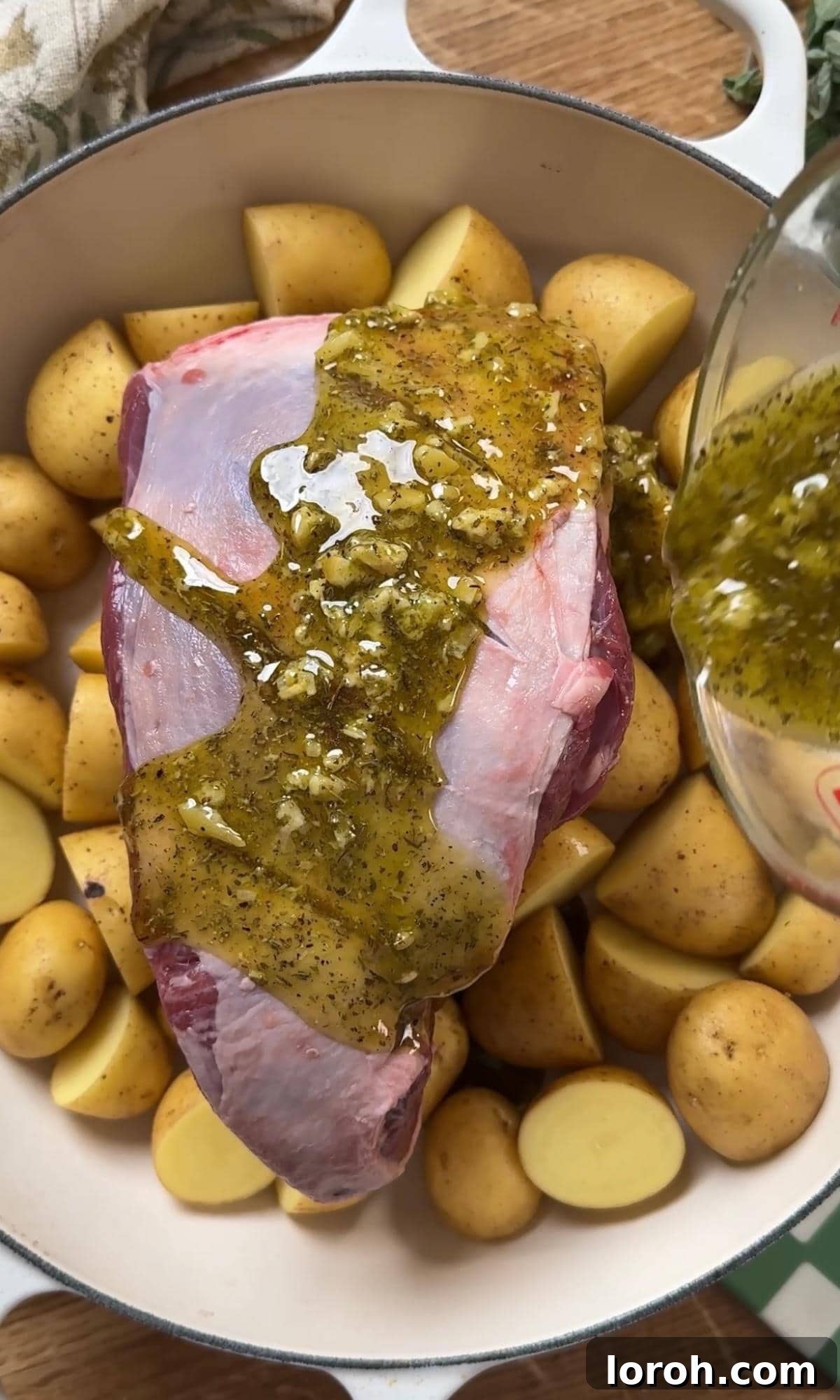
Step Two: Prep the Lamb and Potatoes. Halve your baby potatoes and arrange them evenly across the bottom of a large Dutch oven with a lid, or a sturdy, deep roasting tin. This creates a bed for the lamb and ensures they cook beautifully in the pan juices. Next, place the half leg of lamb directly on top of the potatoes. Using a sharp knife, carefully score the fatty side of the lamb in a crisscross pattern. This scoring helps the fat render down, allows the marinade to penetrate deeper into the meat, and eventually creates a wonderfully crispy crust. Pour the prepared marinade generously over the lamb, then use your hands to massage it thoroughly into all the crevices, ensuring the lamb is completely coated for maximum flavor absorption.
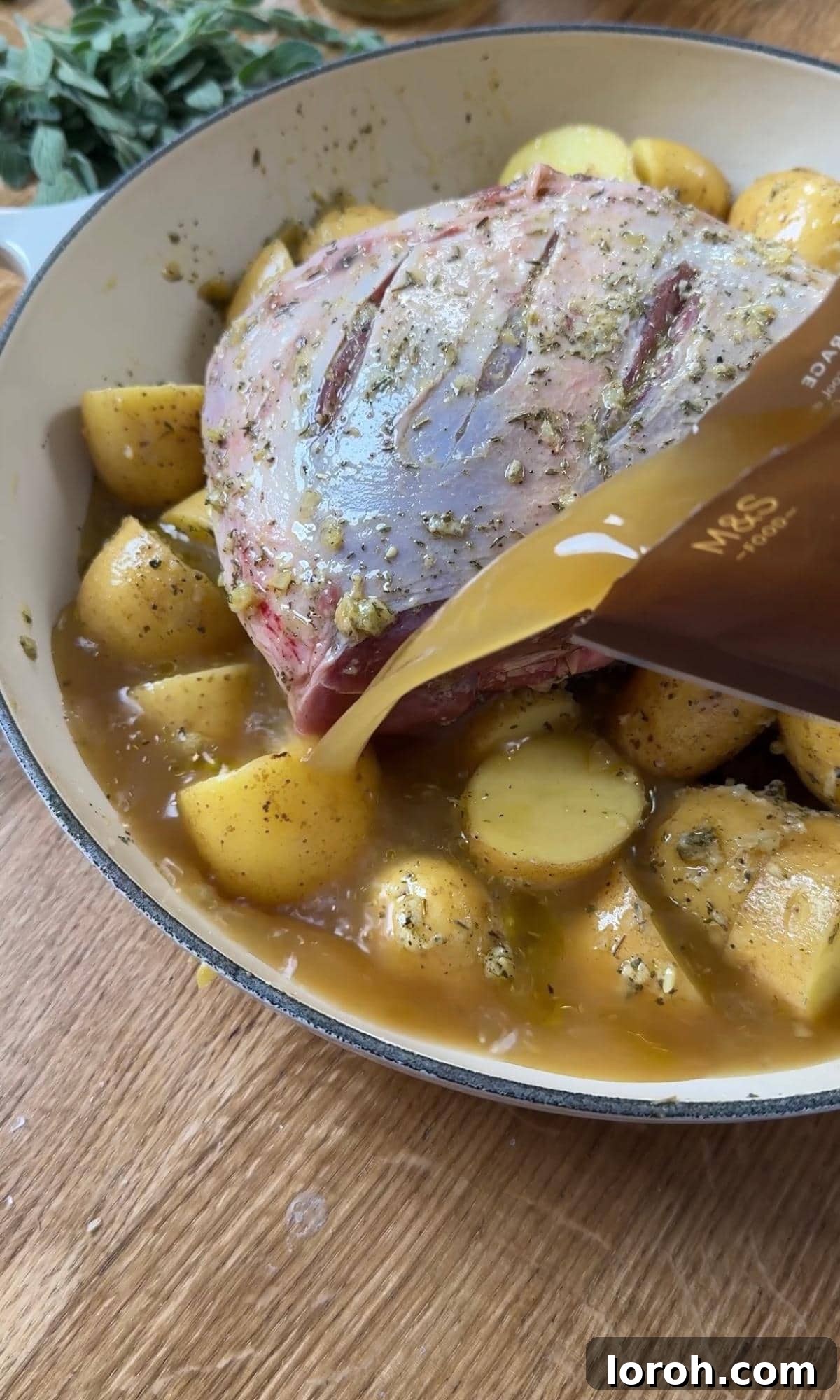
Step Three: Add the Braising Liquids. Carefully pour the 500ml of chicken stock and 50ml of white wine (if using) into the dish, directing the liquid around the lamb and over the potatoes. It’s important to avoid pouring the liquid directly over the top of the lamb, as this can wash away some of the marinade and prevent the fat from eventually browning properly. The liquids will create a steamy environment for slow cooking and infuse the potatoes with incredible flavor.
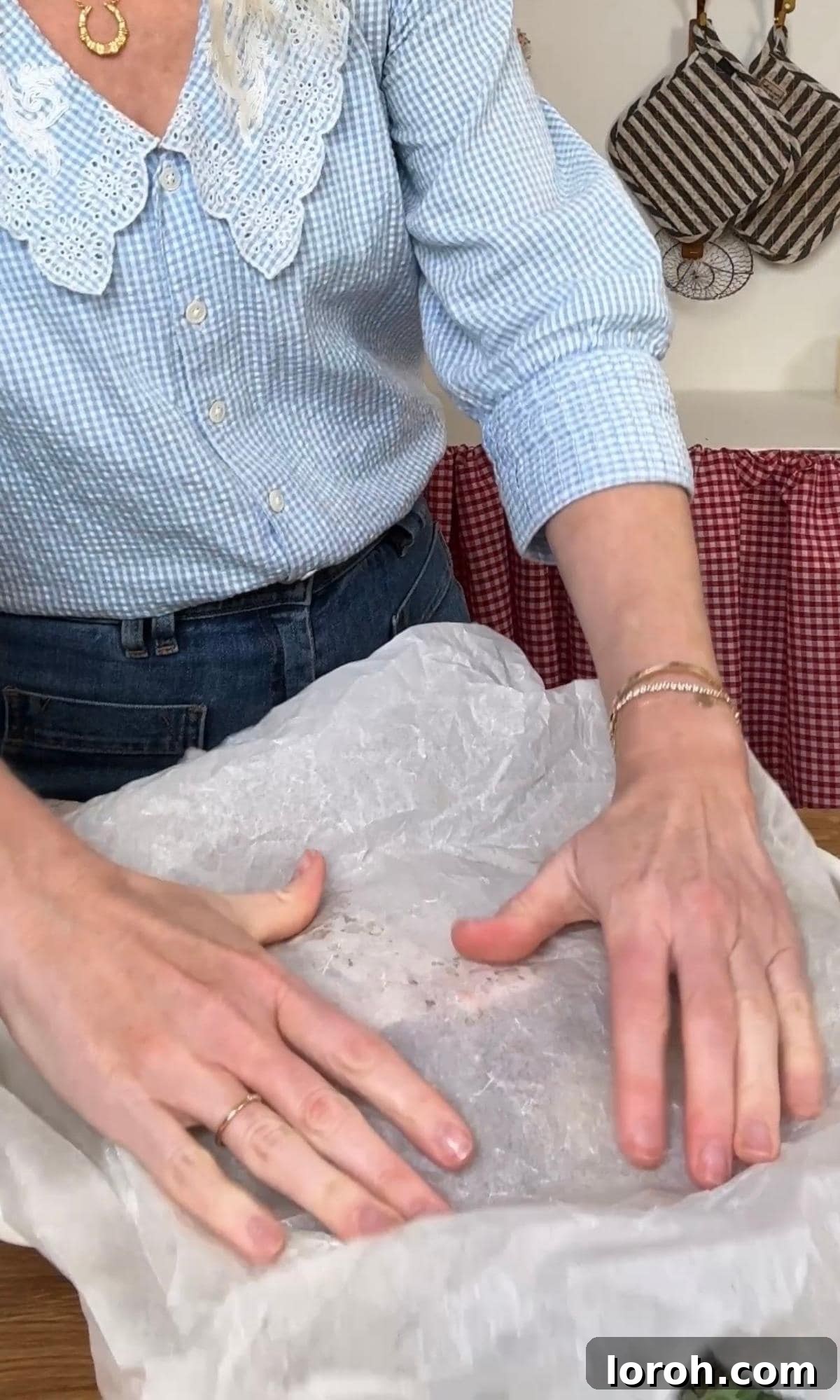
Step Four: Cover and Begin the Slow Roast. Take a large sheet of parchment paper, scrunch it up gently (this makes it more pliable and helps it conform to the lamb), then use it to cover the lamb directly. This acts as an additional layer of moisture retention, preventing the top of the lamb from drying out. Now, cover the entire roasting dish tightly with its lid. If you don’t have a lid, use heavy-duty aluminum foil to create a tight seal, ensuring no steam escapes. Place the covered dish into your preheated oven and roast for an initial 4 hours. At the two-hour mark, gently remove the lid and parchment, carefully flip the lamb over, then re-cover and continue cooking. This ensures even cooking and tenderness on all sides.
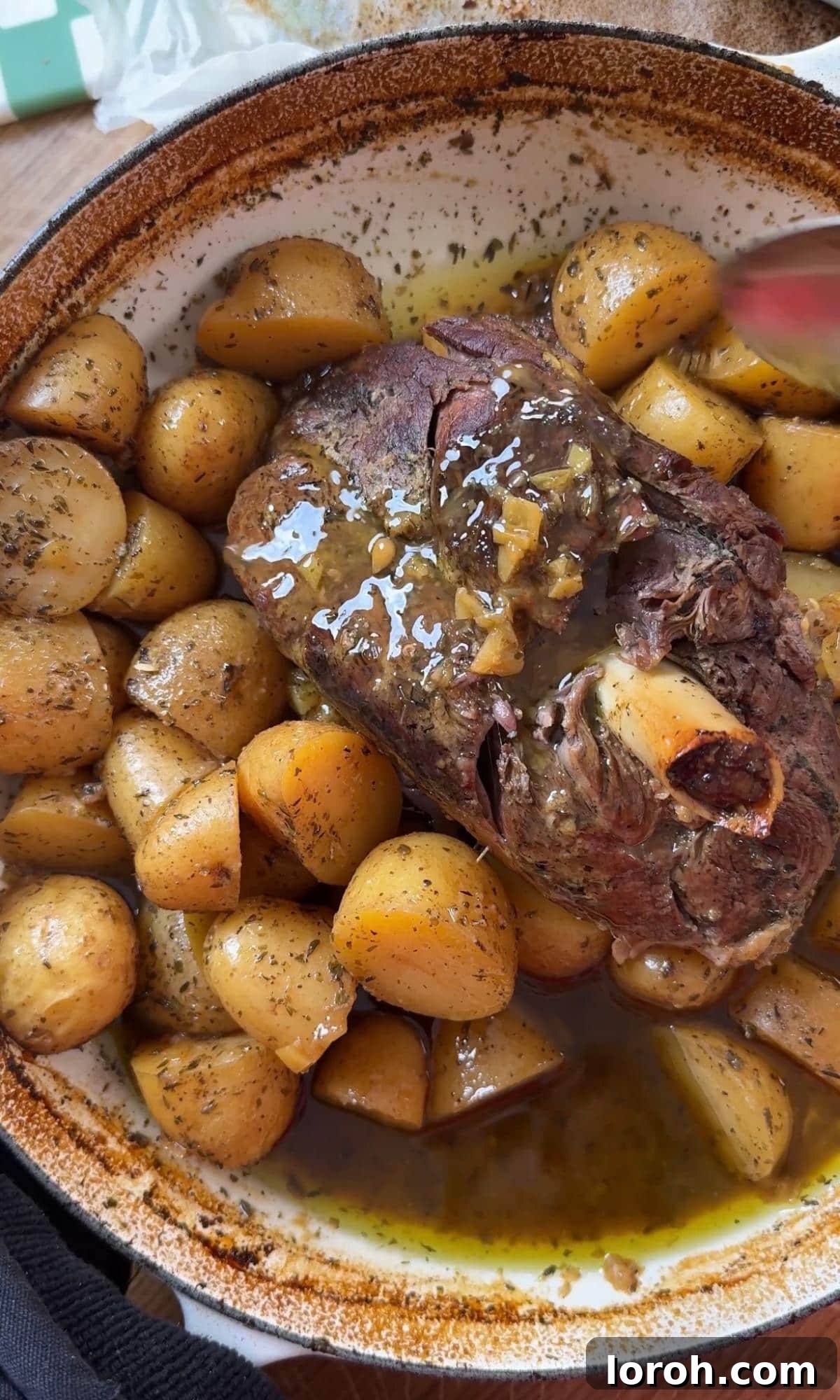
Step Five: Uncover, Brown, and Crisp. After 4 hours, your lamb should be meltingly soft. You can test this by gently poking it with a fork; if it resists, give it another 30 minutes, covered, and check again. Once tender, remove both the lid and the parchment paper. Increase your oven temperature to 240°C/220°C fan/460°F. Flip the lamb one final time and generously baste it with the rich, flavorful juices accumulated in the pan. Return the uncovered dish to the oven for approximately 20 minutes. This higher heat will allow the lamb’s surface to turn a beautiful golden brown and crisp up, while the potatoes will also develop a lovely color and enhanced texture.
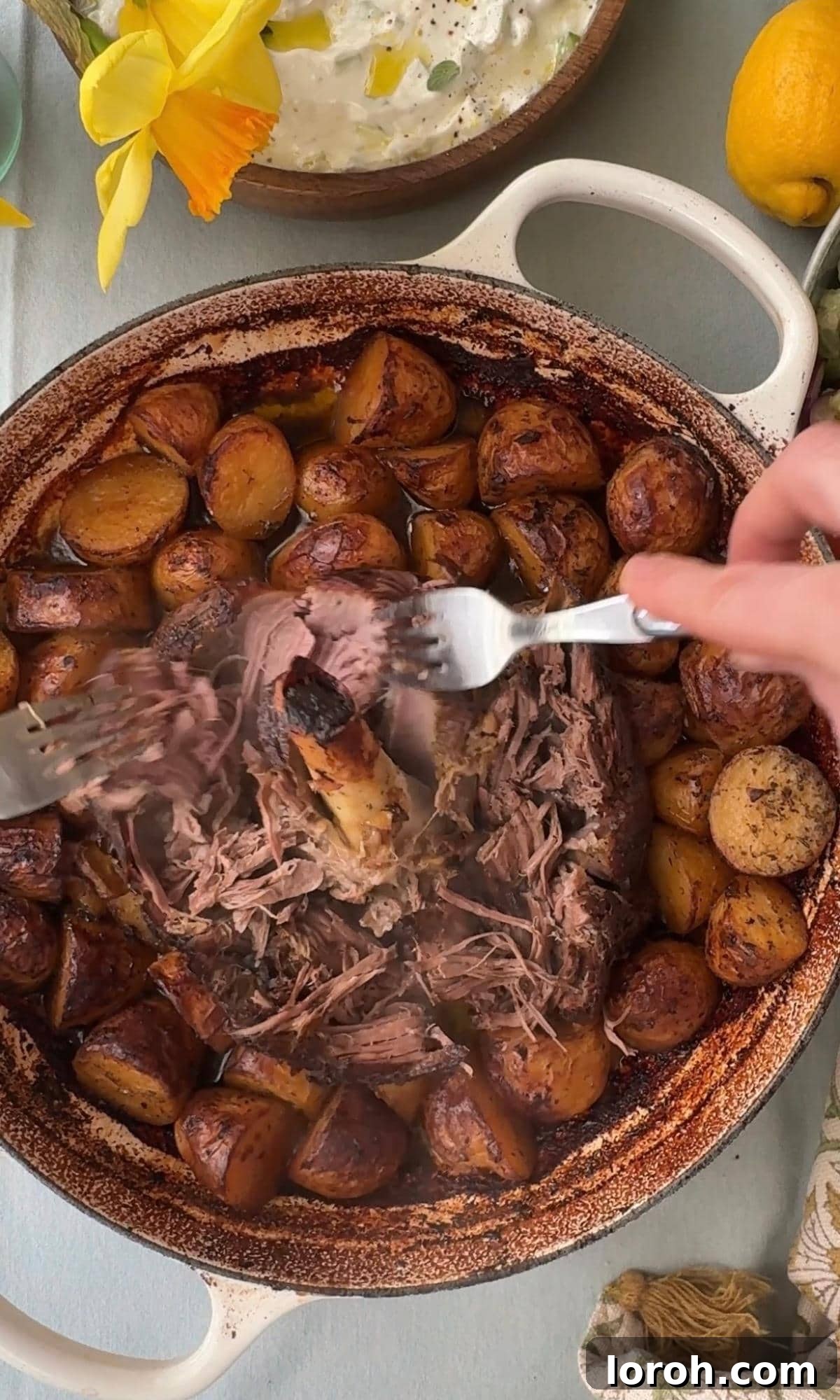
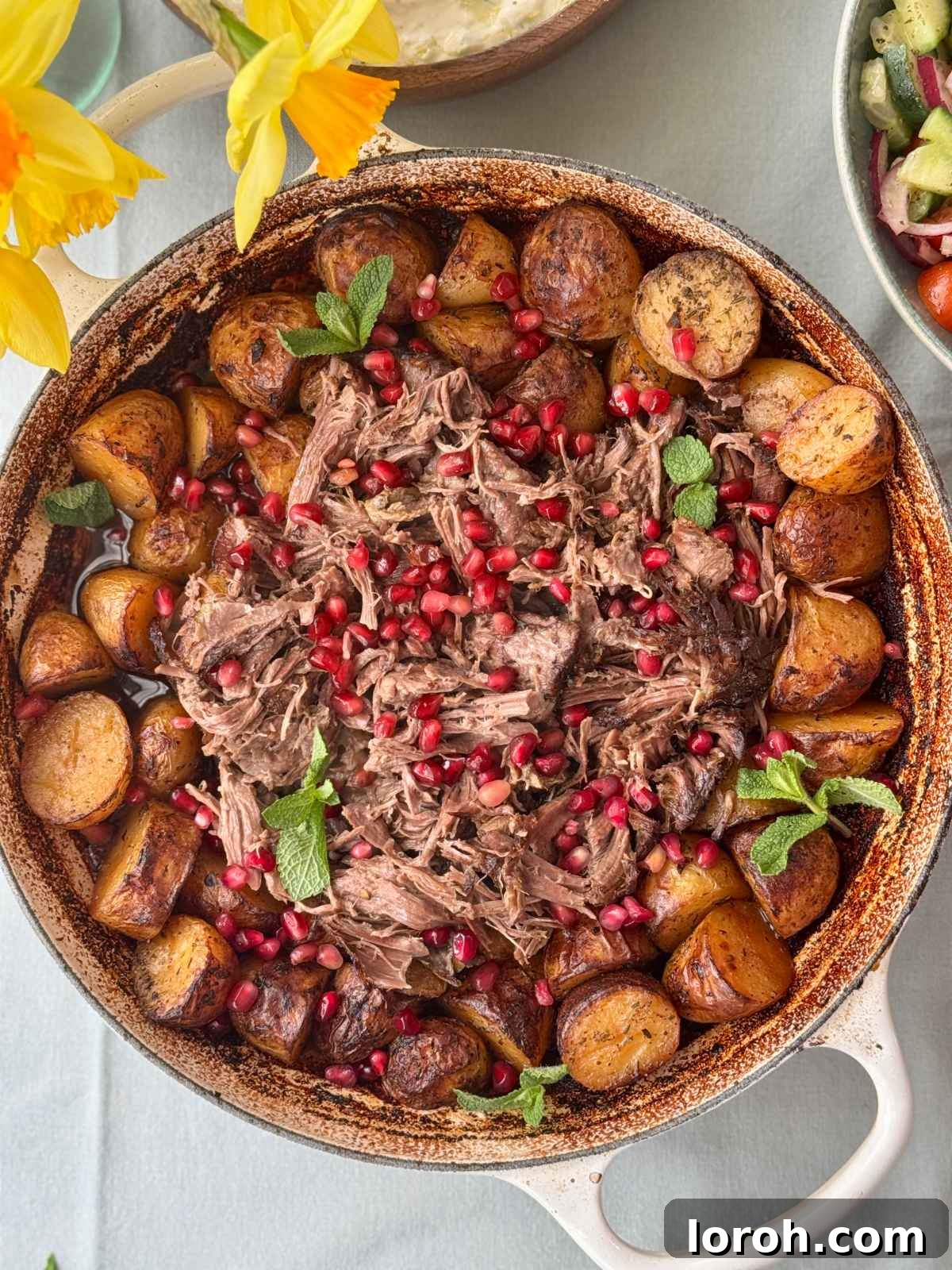
Step Six: Rest, Serve, and Garnish. Once the lamb has reached its desired tenderness and golden-brown exterior, remove the roasting pan from the oven. Allow the lamb to rest in the pan for at least 15-20 minutes. This crucial resting period allows the juices to redistribute throughout the meat, ensuring maximum succulence. After resting, the lamb should be so tender that you can easily pull it apart around the bone using two forks. Baste the pulled lamb generously with the delicious pan juices and garnish with fresh pomegranate seeds for a burst of sweet-tart flavor and vibrant color, and fresh mint leaves for a refreshing aromatic finish. Serve immediately with the roasted baby potatoes and any desired side dishes.
Expert Tips for Flawless Slow Cooking
Achieving perfectly tender, flavorful slow-cooked lamb every time is easy with these insider tips:
- Choose a Cut with Good Fat Marbling: Don’t shy away from lamb with visible fat marbling and a decent fat cap. As the lamb slow cooks, this fat will gradually melt, rendering down to self-baste the meat. This process is essential for keeping the lamb incredibly moist, tender, and deeply flavorful. Leaner cuts can sometimes result in drier meat, so embrace the fat for the best texture and taste!
- Embrace the “Low and Slow” Method; Don’t Rush It: Patience is truly a virtue when it comes to slow-cooked lamb. If you find your lamb is still tough after the recommended cooking time, it likely hasn’t had enough time to break down its connective tissues, or the oven temperature might have been too high, shocking the meat. Resist the urge to crank up the heat significantly. Instead, simply re-cover the dish and return it to the oven for another 30-60 minutes at the same low temperature. The extra time allows the collagen to fully dissolve, transforming toughness into succulent tenderness. Sometimes, an extra hour can make all the difference!
- Direct the Liquid Around the Lamb, Not Over It: When adding chicken stock and wine to the roasting pan, pour it carefully around the base of the lamb, focusing on the potatoes. Avoid dousing the top of the lamb with liquid. Keeping the top exposed (before covering with parchment/lid) and away from too much liquid allows the marinade to caramelize and the fat to render effectively, contributing to that beautiful golden-brown finish we aim for at the end.
- Rest the Meat for Ultimate Juiciness: Once the lamb is cooked and beautifully browned, resist the immediate urge to carve or pull it apart. Transfer the entire roasting pan from the oven and let the lamb rest for at least 15-20 minutes, loosely covered with foil. This resting period allows the muscle fibers to relax and reabsorb the juices, ensuring your lamb is incredibly moist and succulent when served. Skipping this step can lead to drier meat.
- Invest in a Good Roasting Dish: A heavy-bottomed Dutch oven or a quality roasting tin that distributes heat evenly is key. This prevents hot spots that can cause some parts of the meat to cook faster or burn, ensuring a consistent, gentle cook across the entire leg of lamb. A tightly fitting lid is also crucial for trapping steam and moisture.
- Know Your Oven: Oven temperatures can vary significantly. If you suspect your oven runs hot or cold, an inexpensive oven thermometer can be a valuable tool to ensure you’re cooking at the precise temperature required for tender results.
Frequently Asked Questions About Slow Cooked Lamb
For achieving that perfect fall-apart tenderness and rich flavor, a leg of lamb is an excellent choice due to its ideal balance of meat to fat. The bone-in variety adds even more depth. A lamb shoulder is another fantastic option; it tends to be a bit fattier than the leg, which can result in an even more succulent and moist outcome for those who prefer it. Both cuts are robust enough to withstand long cooking times and truly shine with the low-and-slow method.
Absolutely! Our recipe demonstrates how to achieve incredible slow-cooked lamb in a conventional oven, no special slow cooker required. The key is to ensure your roasting dish is well-sealed to trap moisture. Cover your lamb with a sheet of scrunched parchment paper and then a tightly fitting lid (or heavy-duty foil). Roasting it at a low temperature of 170°C/150°C fan/350°F for approximately 4 hours (for a half leg) allows the meat to tenderize beautifully. Scroll down to the full recipe card for detailed, step-by-step instructions on the oven method.
If your slow-cooked lamb is tough, don’t worry, it’s a common issue that’s usually fixable. The primary reasons for toughness are often:
- Insufficient Cooking Time: The most frequent culprit. Lamb needs significant time for its connective tissues (collagen) to break down into gelatin. If it’s still tough, it simply hasn’t cooked long enough.
- Oven Temperature Too High: Cooking at too high a temperature can cause the meat to seize up and dry out before it has a chance to tenderize properly. Low and slow is always best for these cuts.
- Too Low Fat Content: While some fat is important, if your cut was exceptionally lean, it might struggle to retain moisture and achieve that melt-in-your-mouth texture.
The Solution: The best remedy is usually to continue cooking it! Cover the lamb again, ensure it’s tightly sealed, and return it to the oven for another 30-60 minutes at the same low temperature. Patience is key; it will eventually become meltingly tender.
Yes, absolutely! You can prepare the marinade a day or two in advance and store it in an airtight container in the fridge. You can also marinate the lamb itself up to 24 hours before cooking. Simply rub the lamb with the marinade, cover it tightly, and refrigerate. When ready to cook, just halve the potatoes, place them in the roasting pan, lay the marinated lamb on top, add the liquids, and proceed with the roasting instructions. This makes for even quicker prep on cooking day!
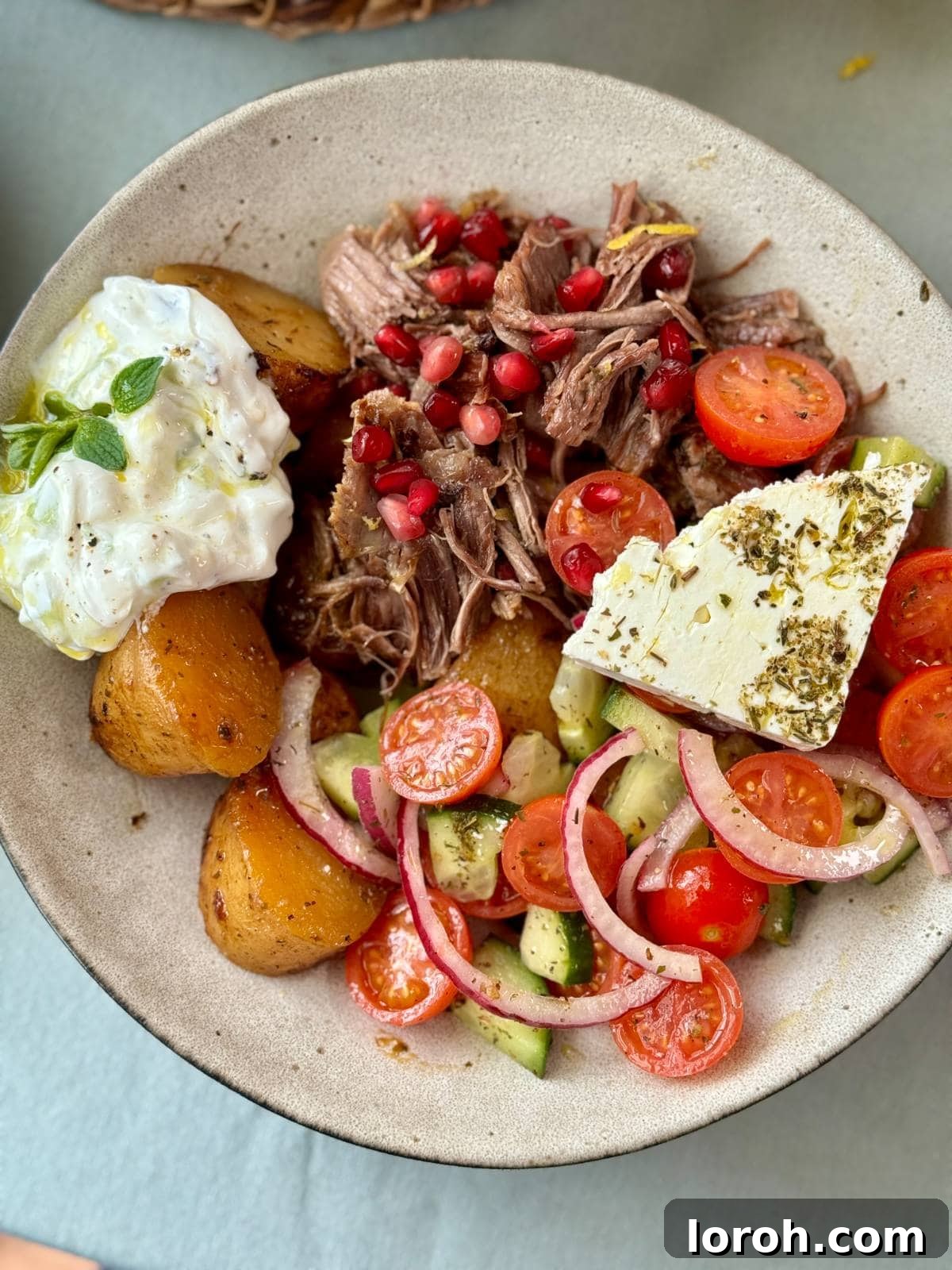
Besides the delicious roasted baby potatoes included in this one-pan recipe, slow-cooked lamb pairs wonderfully with a variety of sides. Consider a fresh Greek salad (as pictured), steamed green beans or asparagus, a creamy polenta, couscous (especially if opting for a Moroccan twist), or a simple rice pilaf. A homemade tzatziki or a fresh herb relish also makes an excellent accompaniment.
Serving Suggestions and More Lamb Recipes
This slow-cooked lamb is a meal in itself with the roasted potatoes, but it truly shines when accompanied by fresh, vibrant sides. A crisp green salad, perhaps with a lemon-herb vinaigrette, offers a lovely contrast. For an authentic Mediterranean experience, serve it with a dollop of cooling tzatziki or a side of refreshing cucumber and tomato salad. The rich pan juices are perfect for spooning over the lamb and potatoes, soaking into every delicious morsel.
If you’re looking for other lamb recipes that are perhaps more suited for a quick weeknight dinner, explore these delicious options:
- My Lamb Burgers with Salsa Verde offer a zesty and flavorful twist on classic burgers.
- For a light yet satisfying meal, try my Crispy Lamb Mince Rice Bowls, packed with texture and fresh ingredients.
- And for a surprisingly quick and juicy option, my Juicy Lamb Chops in the Air Fryer are a game-changer for speed and tenderness.
More Seasonal & Festive Recipes to Try
Easy Lamb Recipes
One-Pan Slow Cooked Lamb with Baby Potatoes & Oregano
Easy Baking Recipes
Cornflake Dream Cake with Mini Eggs
Vegetarian Dishes
Spinach and Feta Filo Bows
Comfort Food
Crispy Potato Tart with Filo, Brie & Pancetta
If you tried this Slow Cooked Lamb Recipe or any other recipe on the site, please do leave a rating or comment below to let us know how it went! Your feedback is greatly appreciated.
One-Pan Slow Cooked Lamb with Baby Potatoes & Oregano
This one-pan Slow Cooked Lamb with Baby Potatoes & Oregano is so unbelievably delicious, and it’s incredibly simple. With just a few minutes of prep, the oven does all the hard work to give you a tender, melt-in-the-mouth texture that everyone will love.
Rate Recipe
Print Recipe
Ingredients
For the lamb:
- 1 kg baby potatoes
- 1.1 kg Half Leg of Lamb (see above for substitutions)
- 80 ml extra virgin olive oil
- 2 garlic cloves, minced
- 2 preserved lemons, finely chopped
- 1 tbsp dried oregano
- 1 tbsp Dijon mustard
- Salt, to taste
- Pepper, freshly ground, to taste
- 500 ml chicken stock
- 50 ml white wine, optional
For the yogurt accompaniment:
- 200 g thick Greek yogurt
- 1 cucumber, peeled, deseeded, diced
- ½ lemon, zest and juice
- 1 garlic clove, grated
To serve:
- Fresh mint leaves
- Pomegranate seeds
Instructions
For the lamb:
- Preheat the oven to 170°C/150°C fan/350°F.
- In a measuring jug, add 80ml extra virgin olive oil, the minced garlic, finely chopped preserved lemon, dried oregano, Dijon mustard, and generous amounts of salt and pepper. Mix well to combine.
- Halve the baby potatoes and arrange them at the base of a Dutch oven with a lid or a large roasting tin. Lay the Half Leg of Lamb on top of the potatoes. Score the fat of the lamb with a sharp knife, then pour the prepared marinade over it. Massage the marinade into the lamb, ensuring it’s thoroughly coated.
- Add the chicken stock and white wine (if using) to the dish, pouring it around the potatoes and avoiding direct contact with the lamb itself.
- Tear a large sheet of parchment paper, scrunch it up, and then use it to cover the lamb. Cover the entire dish tightly with a lid (or use heavy-duty foil if a lid is unavailable).
- Roast in the preheated oven for 4 hours. At the 2-hour mark, carefully remove the lid and parchment, flip the lamb over, then re-cover and continue cooking.
- After the initial 4 hours, if the lamb isn’t meltingly soft when poked with a fork, re-cover it and give it another 30 minutes. Repeat if necessary until fork-tender.
- Once the lamb is meltingly soft, remove the lid and parchment. Increase the oven temperature to 240°C/220°C fan/460°F. Flip the lamb once more, and baste generously with the delicious pan juices.
- Place the uncovered dish back in the oven for 20 minutes to allow the lamb to turn golden brown and the potatoes to crisp up and gain some color.
- Remove from the oven and allow to rest for 15-20 minutes. Once rested, the lamb should be soft enough to pull apart around the bone. Baste again with the pan juices. Garnish with fresh pomegranate seeds and fresh mint leaves before serving.
For the yogurt accompaniment:
- In a small bowl, mix the Greek yogurt, chopped cucumber, lemon zest, lemon juice, and grated garlic clove. Season with salt, pepper, and a drizzle of olive oil to taste. Serve alongside the lamb.
Notes
- Scroll up for a step-by-step visual guide on how to make this slow cooked lamb recipe.
- To store: Store any leftover lamb and potatoes in an airtight container in the fridge for up to 3 days.
- To reheat: Gently warm leftovers on the hob over medium heat with a lid until piping hot, or heat in the microwave on high, stirring occasionally.
- Make ahead: The marinade can be mixed ahead of time, covered, and refrigerated. When ready to cook, simply halve the potatoes, score the lamb, pour over the marinade, and cook as usual. The lamb can also be marinated overnight for deeper flavor.
- Whole leg of lamb: If cooking a whole leg of lamb (typically 2-2.5 kg or 4.5-5.5 lbs) rather than a half leg, we recommend an initial cooking time of 4.5 to 5 hours, then checking for tenderness and proceeding with the browning steps.
Nutrition
, Carbohydrates: 55g
, Protein: 47g
, Fat: 30g
, Saturated Fat: 7g
, Polyunsaturated Fat: 3g
, Monounsaturated Fat: 18g
, Cholesterol: 121mg
, Sodium: 372mg
, Potassium: 1920mg
, Fiber: 7g
, Sugar: 8g
, Vitamin A: 139IU
, Vitamin C: 60mg
, Calcium: 146mg
, Iron: 6mg
Nutrition information is automatically calculated, so should only be used as an approximation.