
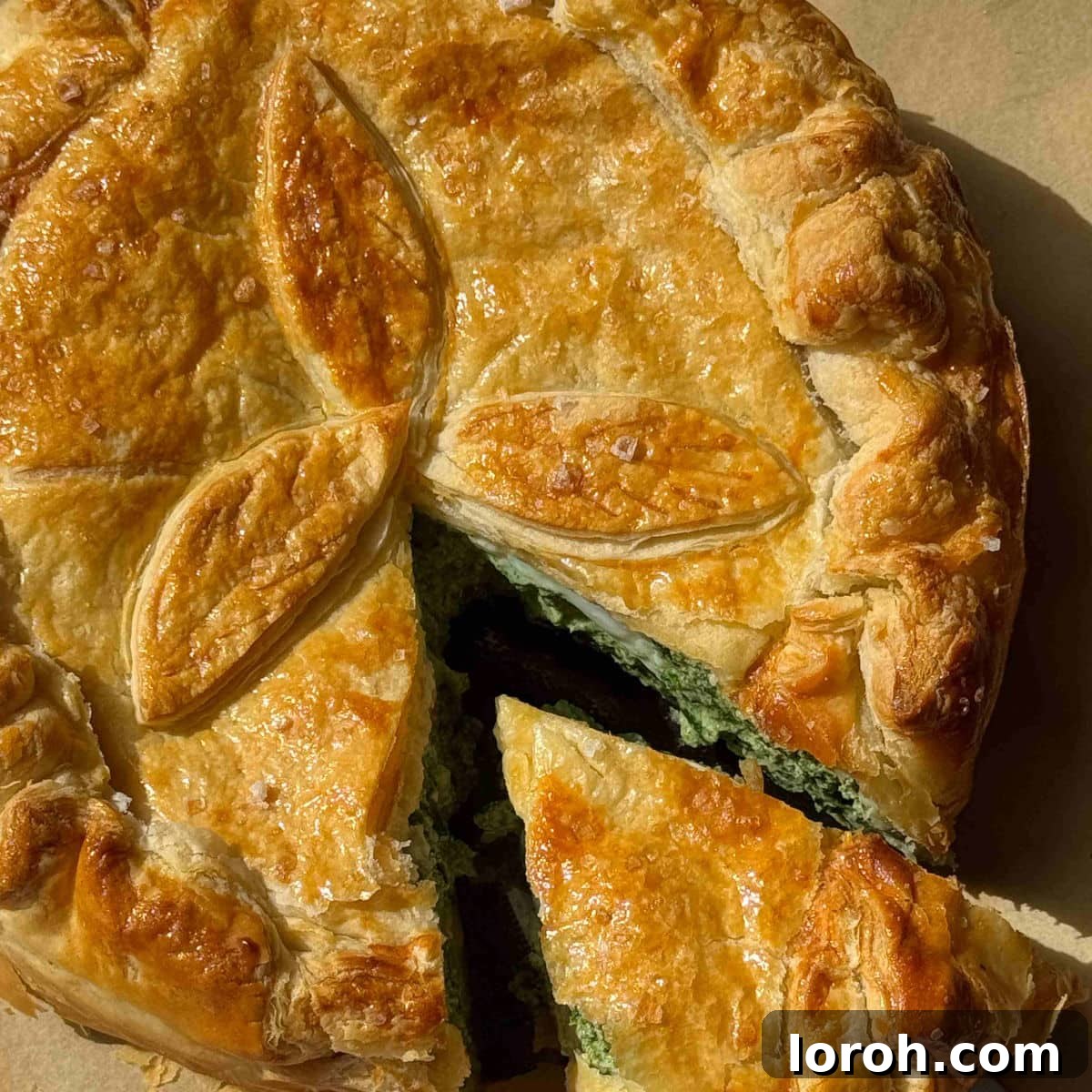
Authentic Torta Pasqualina: Your Guide to the Perfect Italian Easter Pie
Step into the heart of Italian culinary tradition with this magnificent Torta Pasqualina. A true masterpiece often gracing tables during the Easter season, this savory pie is a cherished classic, especially in Italy’s Liguria region. While some may already be familiar with its charm, others are in for a delightful discovery. Imagine layers of golden, flaky puff pastry encasing a rich, creamy filling of ricotta and vibrant spring greens, punctuated by whole, perfectly baked eggs that reveal themselves only when sliced. It’s more than just a dish; it’s an edible celebration, making it the ideal centerpiece for your Easter weekend and a wonderful addition to any spring or summer gathering.
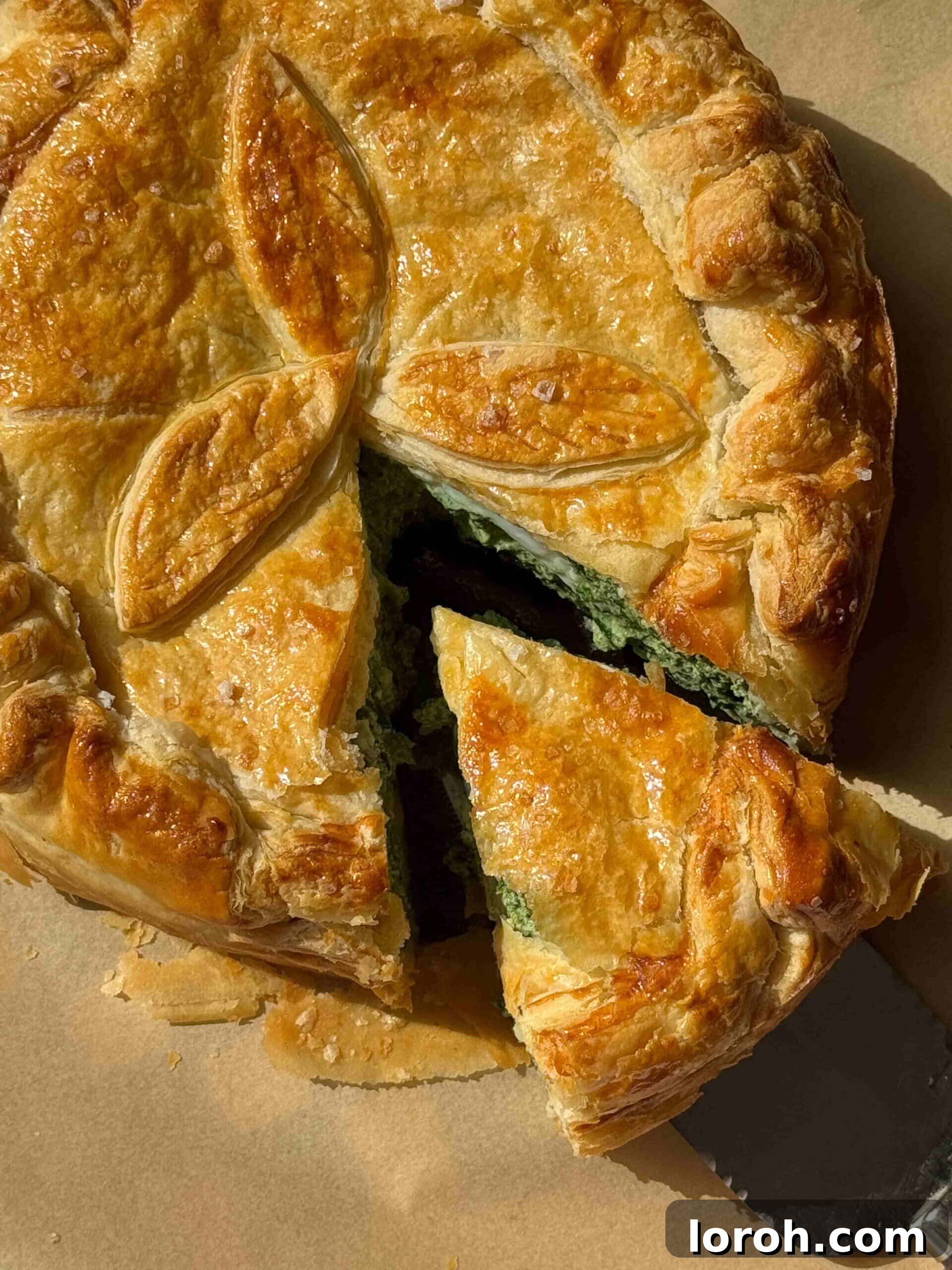
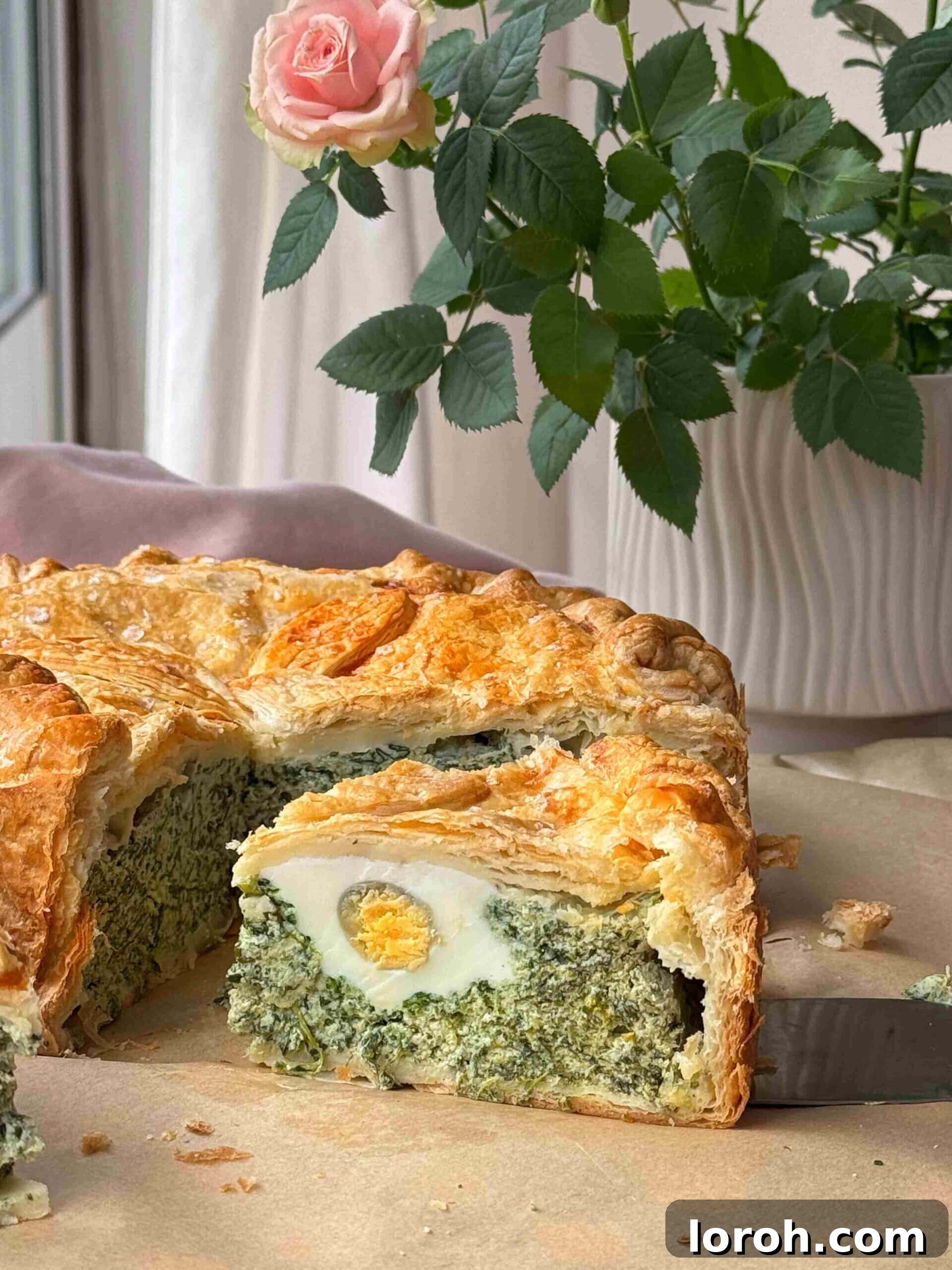
For those new to its allure, Torta Pasqualina translates directly to ‘Easter Pie,’ a name that speaks volumes about its traditional significance. Originating from the picturesque region of Liguria, this pie has since become a beloved staple throughout Italy. Its signature features include a tender, buttery puff pastry shell (historically crafted with an impressive 33 layers, symbolizing the years of Jesus’ life) embracing a delectable mixture of creamy ricotta and fresh spring greens. While spinach is a popular choice, variations often include chard or tender artichokes, reflecting the bounty of the season. The true marvel, however, lies within: a layer of whole eggs, baked right into the filling, which are beautifully unveiled as each slice is cut, adding an element of surprise and visual delight to this already stunning dish.
Table of Contents
- Why You Will Adore This Recipe
- The Essential Ingredients
- Substitutions and Creative Variations
- Crafting Your Italian Torta Pasqualina: A Step-by-Step Guide
- Step 1: Prepare the Spinach & Ricotta Filling
- Step 2: Assemble the Pie
- Step 3: Bake to Golden Perfection
- Expert Cooking Tips for Success
- Frequently Asked Questions
- Other Delightful Recipes You Might Enjoy
- Torta Pasqualina Full Recipe Card
Why You Will Adore This Recipe
This Torta Pasqualina isn’t just another pie; it’s a culinary experience waiting to impress. Here’s why it’s destined to become a staple in your kitchen:
- Visually Stunning Presentation: With its gorgeous golden puff pastry and the delightful surprise of whole eggs tucked inside, this pie is an absolute showstopper. It effortlessly elevates any meal, making it ideal for special occasions or when you simply want to add a touch of elegance to your table.
- Perfect for Make-Ahead Meals: Planning a party or a holiday feast? This Torta Pasqualina can be prepared in advance, freeing up your time to enjoy your guests or other festive preparations. It’s equally delicious served warm or at room temperature, making it incredibly convenient for easy entertaining.
- Celebrates the Best of Spring: Embracing the fresh flavors of the season, this recipe highlights vibrant spring greens and creamy ricotta. It’s a wonderful way to enjoy the fresh produce available during this time of year, bringing a taste of springtime goodness to every bite.
- Easily Adaptable for Dietary Needs: Naturally vegetarian-friendly, this recipe can be easily modified to suit various preferences. By choosing a vegetarian-friendly hard cheese, you ensure everyone can enjoy this delightful pie. Its versatility allows for endless customization, ensuring it fits perfectly into your meal plan.
- Rich in Flavor and Texture: From the crisp, flaky exterior of the pastry to the smooth, savory filling and the tender, protein-rich eggs, every mouthful offers a delightful contrast of textures and a harmonious blend of flavors that truly satisfies.
The Essential Ingredients
Creating an authentic Torta Pasqualina relies on a few key ingredients that deliver its signature taste and texture. While the full, detailed recipe is provided in the printable recipe card below, let’s highlight some of the star components:
Ricotta Cheese
This delicious Italian cheese, typically made from the whey byproduct of mozzarella or provolone production, is the heart of our creamy filling. Its light, fluffy texture and subtle sweetness provide the perfect balance to the savory greens. When selecting ricotta, opt for a full-fat version for the richest flavor and most luxurious consistency. High-quality ricotta will make a noticeable difference in the final product, contributing to that melt-in-your-mouth experience. Beyond this pie, ricotta is incredibly versatile, excellent in everything from lasagna to sweet pastries, or even in homemade pasta like triangoli.
Pecorino Romano Cheese
A sharp, salty, and wonderfully tangy Italian hard cheese made from sheep’s milk, Pecorino Romano adds a robust depth of flavor to the filling. Its pungent notes beautifully complement the mild ricotta and earthy spinach. If Pecorino is unavailable, grated Parmesan cheese makes an excellent substitute, offering a similar salty and umami profile. For those seeking slightly different nuances, other hard, aged cheeses like Gruyère or Comté can also work well, lending their unique nutty undertones to the pie.
Ready-Rolled Puff Pastry
While traditional Torta Pasqualina often involves making homemade pastry with many delicate layers, using ready-rolled puff pastry simplifies the process without compromising on taste or flakiness. For the best results, look for an all-butter puff pastry. The higher butter content not only contributes to a superior flavor but also ensures a wonderfully crisp and airy texture when baked. This convenience allows you to focus on crafting the perfect filling, making this impressive dish much more accessible for home cooks.
Substitutions and Creative Variations
One of the joys of Torta Pasqualina is its adaptability. Feel free to get creative with your ingredients and make this recipe truly your own:
Green Vegetables
While spinach is a fantastic choice for its mild flavor and tender texture, don’t hesitate to explore other sautéed greens. Swiss chard is a traditional alternative, offering a slightly earthier flavor and robust texture that stands up beautifully to baking. Artichokes, either fresh (steamed and chopped) or canned (well-drained and chopped), also feature in many classic Ligurian versions, adding a distinct sweet and tangy note. This pie is also a perfect opportunity for a “fridge forage”—consider adding thinly sliced leeks (sautéed until tender), kale, or even a mix of spring onions for added depth and variety. Ensure any greens you use are thoroughly cooked and excess moisture is squeezed out to prevent a soggy crust.
Herbs
The classic Torta Pasqualina often includes marjoram, an herb known for its warm, earthy, and slightly sweet aroma, which pairs exquisitely with the ricotta and greens. If marjoram isn’t readily available, or if you prefer a different flavor profile, fresh oregano or basil can be wonderful substitutes. Simply chop the fresh herbs finely and stir them directly into the ricotta filling for an aromatic boost. A sprinkle of fresh parsley or chives could also add a bright, fresh finish.
Ricotta Alternatives for a Lighter Touch
For a lighter filling with a subtle tang, you can substitute a portion of the ricotta with full-fat sour cream or thick Greek yogurt. This will alter the texture slightly, making it perhaps a bit creamier and less dense, but still utterly delicious. Ensure you use full-fat varieties for the best consistency and to prevent the filling from becoming too watery during baking.
A Hint of Citrus
To brighten the flavors of your Torta Pasqualina, consider adding the zest of half a lemon (or more, to taste) to the ricotta filling. The delicate citrus aroma beautifully cuts through the richness of the cheese and pastry, adding a refreshing and vibrant lift to the overall taste. Be sure to use a microplane for fine zest, avoiding the bitter white pith.
Adding Meats (Non-Traditional but Delicious)
While traditionally vegetarian, a creative variation for meat-lovers could include adding finely diced and cooked prosciutto, pancetta, or even crumbled Italian sausage to the spinach and ricotta filling. This would introduce a savory, salty dimension, transforming the pie into an even heartier meal. Just ensure any added meat is pre-cooked and drained of excess fat before mixing.
Crafting Your Italian Torta Pasqualina: A Step-by-Step Guide
This section provides a detailed step-by-step guide to help you create a perfect Torta Pasqualina. For precise measurements and a comprehensive ingredient list, please refer to the recipe card at the bottom of this page.
Step 1: Prepare the Spinach & Ricotta Filling
- Preheat and Prepare: Begin by preheating your oven to 200°C (180°C Fan / 400°F). Lightly grease a 20 cm (8-inch) springform tin with a little olive oil or melted butter, ensuring it’s ready for the pastry. Thoroughly rinse 500g of fresh baby spinach in a colander, removing any large, tough stems. Set the clean spinach aside.
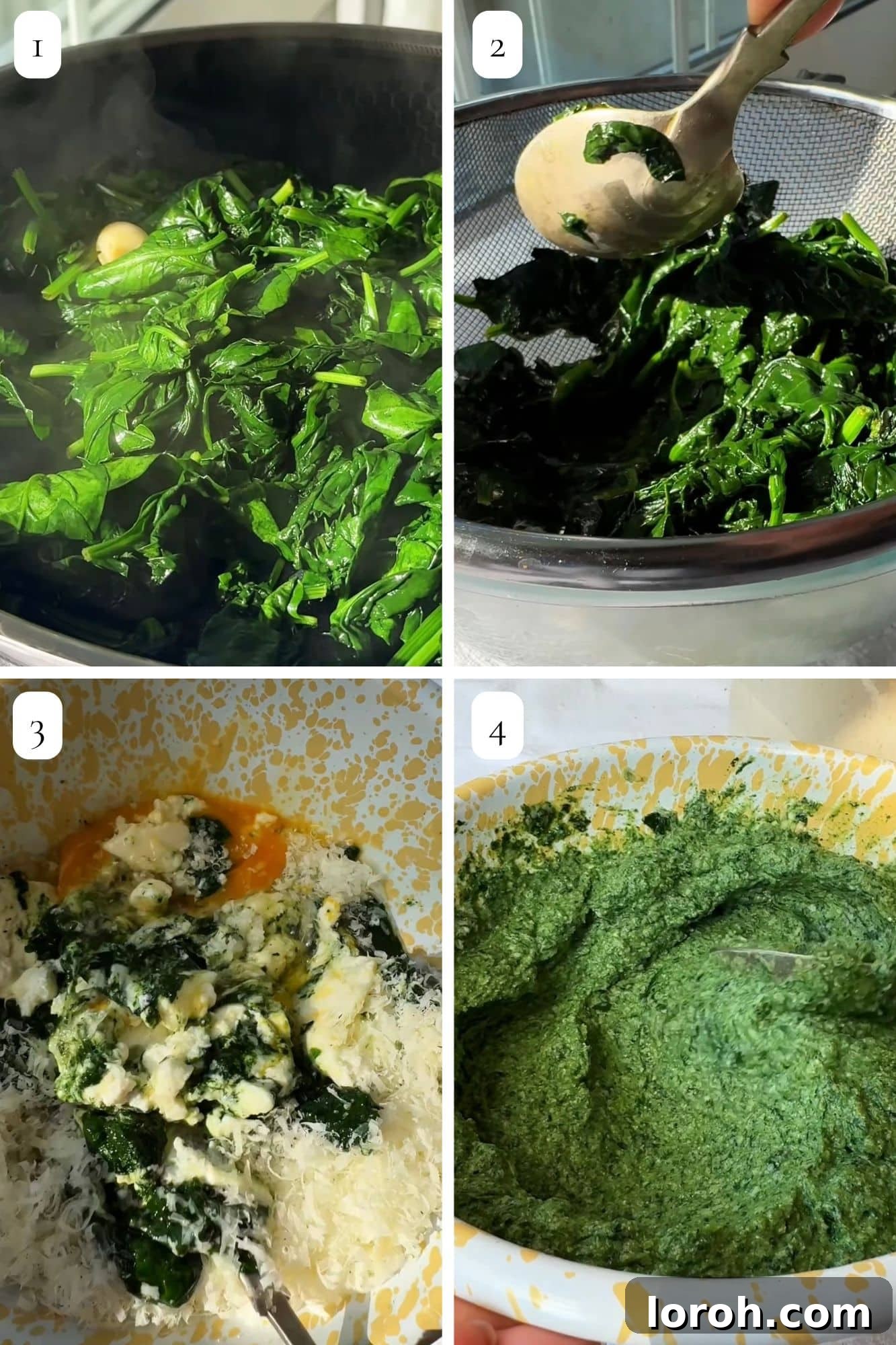
- Sauté the Spinach: Heat a light drizzle of olive oil in a large non-stick frying pan over medium heat. Add one crushed large garlic clove and cook for about 30 seconds, stirring constantly to prevent burning, until it becomes fragrant. Add the rinsed spinach to the pan. You might need to add it in batches if your pan is not large enough, as fresh spinach takes up a lot of space initially. Cook for 2-3 minutes, stirring occasionally, until all the spinach has completely wilted and reduced significantly in volume.
- Cool and Drain: Once wilted, transfer the cooked spinach into a bowl and allow it to cool completely. If you’re pressed for time, you can place the bowl in the freezer for a few minutes to speed up the cooling process. This step is crucial.
- Remove Excess Moisture: When the spinach is cool, it’s absolutely vital to squeeze out as much excess moisture as possible. You can do this by hand, pressing it firmly in a sieve, or wrapping it in a clean kitchen towel and twisting firmly to extract the water. This prevents a soggy bottom crust, ensuring your pie remains crisp and delightful. Do not skip this important step!
- Create the Filling Base: Either finely chop the well-drained spinach with a sharp knife or briefly pulse it in a blender until finely chopped (avoid over-blitzing to a paste). Transfer the spinach to a large mixing bowl. Add 500g of full-fat ricotta, 60g of grated Pecorino cheese, and two of the large eggs.
- Season and Mix: Mix all the ingredients thoroughly until well combined and homogenous. Stir in ¼ teaspoon of ground nutmeg, then season generously with salt and freshly ground black pepper to taste. The nutmeg adds a classic Italian warmth to the spinach.
Step 2: Assemble the Pie
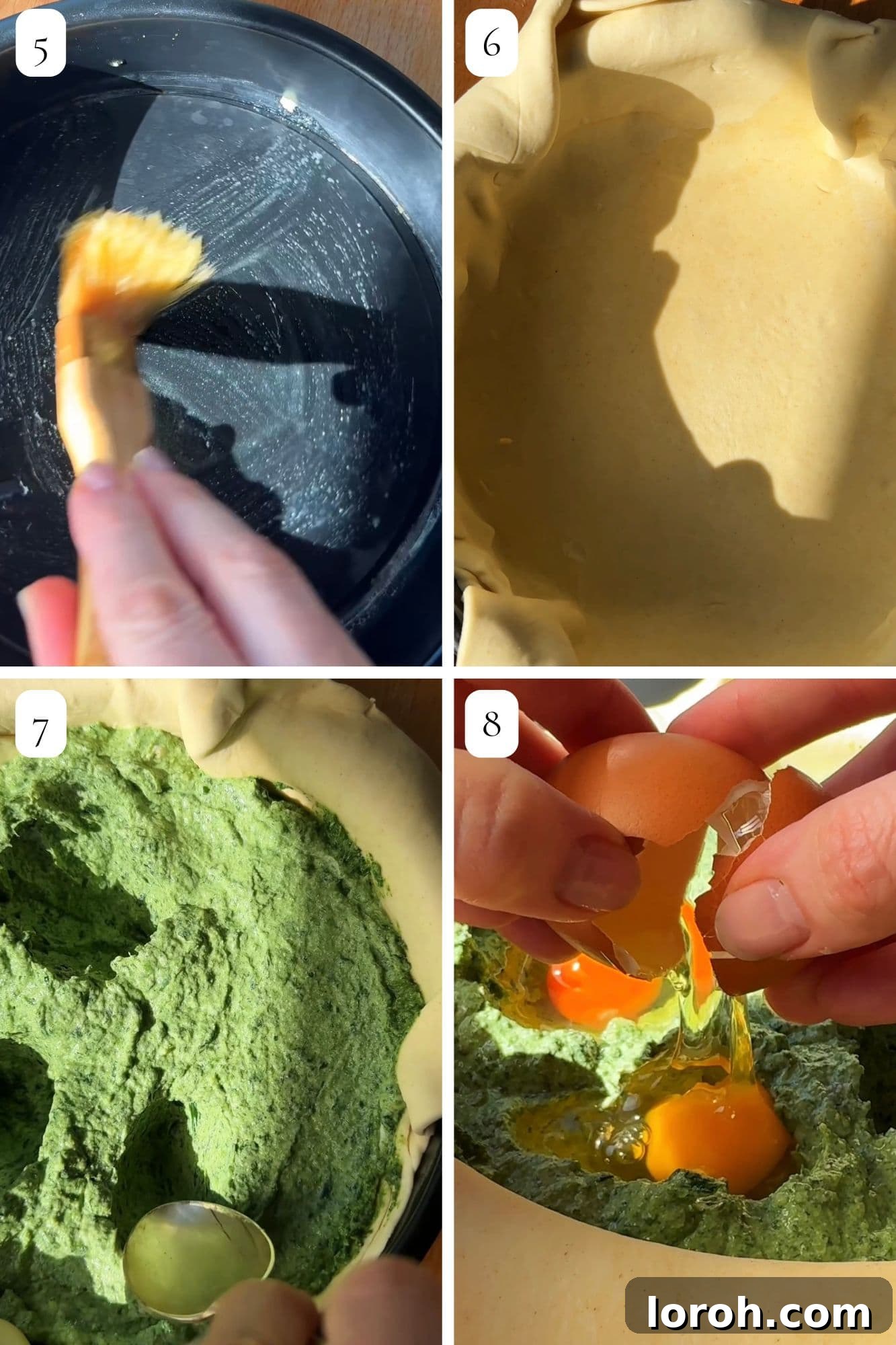
- Prepare the Pastry Base and Lid: Lightly dust your work surface with plain flour. Unroll one of the 25 cm (8-inch) square sheets of ready-made puff pastry. Using your greased springform tin as a guide, cut out a large circle for the pie’s lid. Set this aside. Use the second sheet of pastry to line the base of the prepared springform tin, allowing the sides to generously overhang the edges. Carefully trim a little of the excess pastry, using any offcuts to patch up small gaps if necessary, but remember to leave a good amount of overhang for sealing the lid.
- Fill the Pie: Spoon the spinach and ricotta filling evenly into the pastry-lined tin, spreading it into a smooth, level layer.
- Create Egg Wells: Using the back of a tablespoon, gently make four small, equally spaced indentations (wells) in the surface of the filling.
- Add the Eggs: Carefully crack one of the remaining large eggs into each indentation, taking great care not to break the yolks. A broken yolk can make the presentation less appealing, so be gentle. Sprinkle a tiny pinch of salt over each exposed egg yolk to enhance their flavor.
Step 3: Bake to Golden Perfection
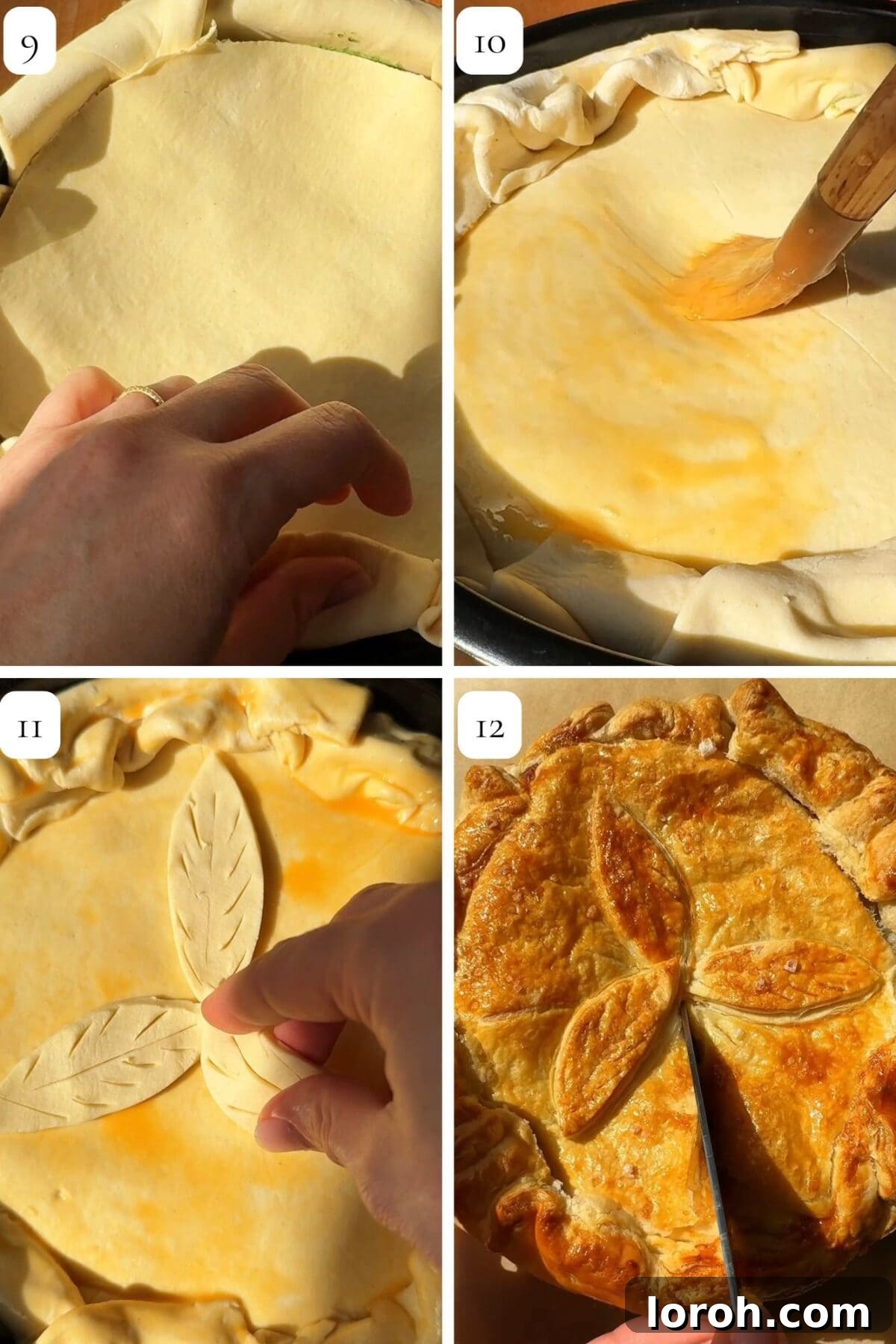
- Seal the Pie: Gently place the prepared pastry circle (the ‘lid’) over the filling, aligning it carefully. Fold the overhanging sides of the bottom pastry up and over the lid, pressing the edges together firmly to create a secure seal. This ensures the filling stays contained and the pie bakes beautifully.
- Egg Wash and Season: Whisk the remaining large egg in a small bowl to create an egg wash. Lightly brush the top of the pastry with this beaten egg, which will give it a beautiful golden sheen. Sprinkle a pinch of flaky sea salt over the top for extra flavor and visual appeal.
- Vent for Steam: Using a sharp knife, gently pierce several small holes in the pastry lid. Be careful not to plunge too deep and break the egg yolks underneath. These vents are crucial for allowing steam to escape during baking, preventing the pastry from bursting and ensuring even cooking. Optionally, use pastry offcuts to create decorative leaves or shapes to adorn the top before baking.
- Bake the Pie: Bake the Torta Pasqualina for approximately 45-50 minutes, or until the pastry is puffed, deeply golden brown, and the filling feels firm when gently pressed (though you’ll mostly confirm the firmness upon cutting). The eggs inside should be fully set, similar to a hard-boiled egg. Resist the urge to pull it out too early, even if the pastry looks done at 35 minutes, as the eggs may still be too soft.
- Cool Before Serving: Once baked, remove the pie from the oven and place it on a wire rack. It is absolutely essential to let it cool for at least 30 minutes (or even longer) before attempting to remove it from the springform tin and slicing. This cooling time allows the filling to set properly, preventing it from collapsing when cut.
- Serve: Slide the cooled Torta Pasqualina onto a serving plate. Cut into generous slices and serve warm or at room temperature. It’s truly delightful either way!
Expert Cooking Tips for Success
Achieving the perfect Torta Pasqualina is simple with a few insider tricks. Keep these tips in mind for a consistently delicious result:
- Thoroughly Drain the Spinach: This cannot be stressed enough! Excess moisture from the spinach is the leading cause of a soggy bottom crust. After wilting and cooling, vigorously squeeze out every last drop of water from the spinach. Whether you use your hands, a sieve, or a clean kitchen towel, be relentless. This step is non-negotiable for a crisp, flaky base.
- Don’t Forget to Vent: The small slits you make in the top pastry lid are crucial. They act as steam vents, allowing moisture to escape during baking. Without them, the steam can build up, potentially causing the pastry to burst and the filling to erupt, leading to an unevenly cooked and less attractive pie.
- Prevent Over-Browning: If your Torta Pasqualina starts browning too quickly on top before it’s fully cooked through, don’t panic. Simply loosely cover the pie with a sheet of aluminum foil and return it to the oven. This will protect the crust from further browning while allowing the filling and eggs to continue cooking evenly.
- Embrace the Standing Time: We know the aroma of a freshly baked Torta Pasqualina is incredibly tempting, but patience is key! Allowing the pie to stand and cool for at least 30 minutes after baking (preferably longer) is essential. This crucial resting period allows the creamy filling and baked eggs to set completely, ensuring clean, beautiful slices that hold their shape perfectly when cut.
- Alternative Egg Wash: If you’ve used all your eggs for the filling and don’t want to crack another just for the egg wash, a simple brush of milk (dairy or non-dairy) on the pastry lid will also help it achieve a lovely golden hue. While it might not be as glossy as an egg wash, it still works effectively.
- Quality of Ingredients: While ready-made pastry is convenient, opting for good quality, all-butter puff pastry will significantly enhance the flavor and flakiness. Similarly, using fresh, full-fat ricotta and a good quality Pecorino (or Parmesan) will contribute to a richer, more authentic taste.
Frequently Asked Questions
What is Torta Pasqualina?
Torta Pasqualina is a celebrated Italian Easter pie, originating from the beautiful coastal region of Liguria. It’s a savory tart characterized by its distinct multi-layered, flaky pastry crust (traditionally made with 33 thin sheets to symbolize the years of Jesus’ life, though modern versions often use two sheets of puff pastry). The pie is generously filled with a creamy mixture of ricotta cheese, sautéed spring greens (most commonly spinach or chard), and whole, perfectly baked eggs that are revealed when the pie is sliced. It’s a festive and flavorful dish, cherished for its impressive appearance and delightful taste, perfect for seasonal celebrations.
How do you pronounce Torta Pasqualina?
While I am not a native Italian speaker, the most common and accepted pronunciation for Torta Pasqualina is ‘tor-tah pah-skwah-LEE-nah’. Practicing it a few times will help you say it with confidence!
When should I serve this Torta Pasqualina?
Traditionally, Torta Pasqualina is a quintessential Easter dish in Italy, often enjoyed as part of the festive weekend celebrations. Embracing this beautiful tradition, it’s a perfect addition to any Easter brunch, lunch, or supper. Beyond Easter, its fresh, seasonal ingredients make it an excellent choice throughout spring and even into early summer. It’s a wonderful alternative to quiche for lunch or a light dinner, and its ability to be served at room temperature makes it a fantastic option for picnics, potlucks, or casual outdoor gatherings.
What should I serve with Torta Pasqualina?
Torta Pasqualina is quite substantial on its own, but it pairs beautifully with light, fresh sides. A simple green salad is always a winner; try rocket (arugula) with a drizzle of extra virgin olive oil, a sprinkle of Parmesan shavings, and toasted pine nuts for added texture. A classic Insalata Caprese (fresh mozzarella, ripe tomatoes, and basil leaves) also complements the pie wonderfully. If you’re looking for something more filling, new potatoes, especially seasonal Jersey Royals when they are at their best, are a delicious accompaniment. A glass of crisp white wine or a light prosecco would also be a lovely pairing.
Can I make this Torta Pasqualina in advance?
Absolutely! Torta Pasqualina is one of those dishes that truly benefits from being made ahead of time. In fact, it is traditionally served cold or at room temperature in Italy, allowing the flavors to meld beautifully and the filling to set perfectly. Once baked and cooled completely, cover it tightly and store it in the refrigerator for up to 3 days. If you prefer to prepare components separately, the spinach and ricotta filling can be made up to 4 days in advance and stored in an airtight container in the fridge. When ready to bake, simply assemble the pie with fresh pastry and eggs, then bake as directed.
Is Torta Pasqualina suitable for freezing?
Due to the high moisture content of the spinach and the texture of the baked eggs, freezing the finished Torta Pasqualina is generally not recommended. The texture of both the filling and the pastry can suffer upon thawing and reheating, becoming watery or less pleasant. It’s best enjoyed fresh or chilled within 3 days.
Can I make my own puff pastry for Torta Pasqualina?
Yes, absolutely! While the recipe uses ready-rolled puff pastry for convenience, making your own puff pastry from scratch will undoubtedly elevate the pie to another level of flakiness and flavor. If you enjoy baking and have the time, it’s a rewarding process. Historically, Torta Pasqualina was made with numerous very thin layers of homemade dough, creating an incredibly delicate crust. If you opt for homemade, ensure your pastry is chilled and handled carefully to maintain its delicate layers.
Other Delightful Recipes You Might Enjoy
If you’ve enjoyed the delightful experience of crafting and tasting this Torta Pasqualina, you’ll surely appreciate these other savory and sweet creations:
- For another impressive puff pastry dish, try my Camembert en croute (whole baked Camembert in puff pastry). It’s perfect for entertaining!
- If you’re looking for more Easter-themed treats, don’t miss my festive mini egg cookies, the indulgent mini egg cheesecake, or the comforting hot cross bun bread and butter pudding.
Lunch Recipes
Puff Pastry Tart with Fresh Tomato and Ricotta
Lunch Recipes
Caramelised Onion Galettes with Goats Cheese and Cherry Tomatoes
Easy Dessert Recipes
No-Bake Chocolate Cheesecake
Easy Baking Recipes
Biscoff Blondies
If you made this Torta Pasqualina or any other recipe on the site, please do leave a rating or comment below and let us know how it went! Your feedback is always appreciated.
Torta Pasqualina Recipe
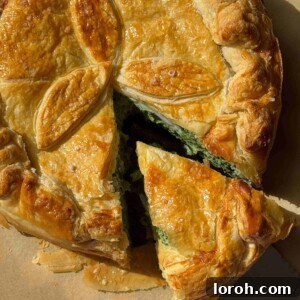
This torta pasqualina is the perfect savory Easter recipe. Imagine a buttery, flaky puff pastry pie with a creamy, cheesy spinach and ricotta filling, and a delightful hidden egg surprise in every slice.
By: Margie Nomura
Prep Time: 30 mins
Cook Time: 1 hr
Total Time: 1 hr 30 mins
Servings: 6 servings
Pin Recipe |
Rate Recipe |
Print Recipe
Ingredients
Main Filling:
- 500 g fresh baby spinach
- Olive oil (for sautéing)
- 1 large garlic clove, crushed
- 500 g full-fat ricotta
- 60 g Pecorino cheese, grated (or vegetarian hard cheese)
- 6 large eggs (2 for filling, 4 for baking whole)
- ¼ tsp ground nutmeg
- Salt and freshly ground black pepper, to taste
- Plain flour, for dusting work surface
- 2 x 25 cm square sheets ready-made puff pastry, approximately 330 g each
To Glaze:
- 1 large egg, beaten (for egg wash)
- Sea salt, for sprinkling
Instructions
- Preheat the oven to 200°C (180°C Fan / 400°F). Grease a 20 cm (8-inch) springform tin with olive oil or melted butter and set aside.
- Rinse the baby spinach thoroughly in a colander and remove any large stems. Set aside.
- Heat a drizzle of olive oil in a large non-stick frying pan over medium heat. Add the crushed garlic and cook for about 30 seconds, stirring to ensure it doesn’t catch and burn, until fragrant. Add the spinach and cook for 2-3 minutes, stirring occasionally, until wilted. You may need to gradually add the spinach in batches depending on your pan size; it will reduce significantly.
- Once the spinach has wilted, spoon it into a bowl and leave to cool completely. If in a rush, you can place it in the freezer to chill rapidly.
- Once the spinach has cooled, squeeze out any excess moisture. Do this thoroughly by hand, pushing through a sieve, or wrapping it in a clean kitchen towel and squeezing out the excess water. This is crucial to prevent a soggy crust.
- Next, either blitz the spinach briefly in a blender or finely chop it with a sharp knife. Transfer it to a large bowl and add the ricotta, grated Pecorino, and 2 of the large eggs. Mix well until thoroughly combined, then add the nutmeg and season with salt and freshly ground black pepper to taste.
- Lightly dust a work surface with flour and lay out one sheet of puff pastry. Using the greased springform tin as a template, cut out a large 20 cm (8-inch) circle; this will be the torta pasqualina lid.
- Use the second sheet of pastry to line the base of the tin, letting the sides generously overhang. Trim off a little of the excess pastry, using any offcuts to fill in any gaps if needed. Ensure you leave enough overhang to seal over the lid of the pie.
- Spoon the spinach and ricotta filling into the pastry-lined tin and spread it in a smooth, even layer. Then, using a tablespoon, make four small, equally spaced wells in the filling.
- Carefully crack one of the remaining eggs into each indentation, being cautious not to break the yolk. Add a tiny sprinkle of salt to each exposed egg.
- Gently place the pastry circle ‘lid’ on top, taking care not to break the yolks. Fold the overhanging sides of the bottom pastry over onto the lid and press the edges together firmly to seal.
- Brush the top of the pastry with the beaten egg (egg wash) and sprinkle with a pinch of flaky sea salt.
- Use a sharp knife to gently pierce several holes in the lid to let the steam out. Be careful not to plunge too deep and break an egg yolk. (Optional: decorate with small pastry leaves made from offcuts).
- Bake for about 45-50 minutes, or until the pastry is golden brown and puffed up, and the filling is firm. The eggs inside should be set like a hard-boiled egg.
- Remove from the oven and leave to cool for at least 30 minutes before carefully removing it from the springform tin.
- Slide onto a plate, cut into slices, and serve warm or at room temperature.
Notes
Scroll up for a step-by-step guide with images on how to make torta pasqualina.
To Store: The torta pasqualina can be made ahead, left to cool completely, then covered and chilled in the fridge for up to 3 days. Its flavor often improves overnight.
To Reheat: It is best not to reheat this torta pasqualina. Instead, enjoy any leftovers at room temperature or cold, as it is traditionally served this way in Italy.
To Freeze: It is generally not recommended to freeze this torta pasqualina due to the spinach and eggs, which can alter texture upon thawing.
Make Ahead Components: If you wish to prepare parts in advance, the spinach and ricotta filling can be made up to 4 days ahead and stored in an airtight container in the fridge. Assemble with fresh pastry and eggs when ready to bake.
Make it Vegetarian: This recipe uses Pecorino cheese, which typically contains animal rennet. To make it strictly vegetarian, use a vegetarian Italian-style hard cheese, or alternatives like a strong mature Cheddar or Old Winchester.
Piercing the Pastry: Do not skip adding the slits to the pastry lid. These allow steam to escape, which ensures even baking and prevents the filling from bursting out.
Nutrition
Nutrition information is automatically calculated, so should only be used as an approximation per serving:
- Calories: 581 kcal
- Carbohydrates: 31 g
- Protein: 25 g
- Fat: 40 g
- Saturated Fat: 16 g
- Polyunsaturated Fat: 4 g
- Monounsaturated Fat: 18 g
- Trans Fat: 0.02 g
- Cholesterol: 244 mg
- Sodium: 466 mg
- Potassium: 668 mg
- Fiber: 3 g
- Sugar: 1 g
- Vitamin A: 8504 IU
- Vitamin C: 24 mg
- Calcium: 397 mg
- Iron: 5 mg
Enjoyed this recipe?
We’d love to hear from you! Please leave a comment or rate the recipe below if you tried making this Torta Pasqualina. Your feedback helps us grow and share more delicious recipes.