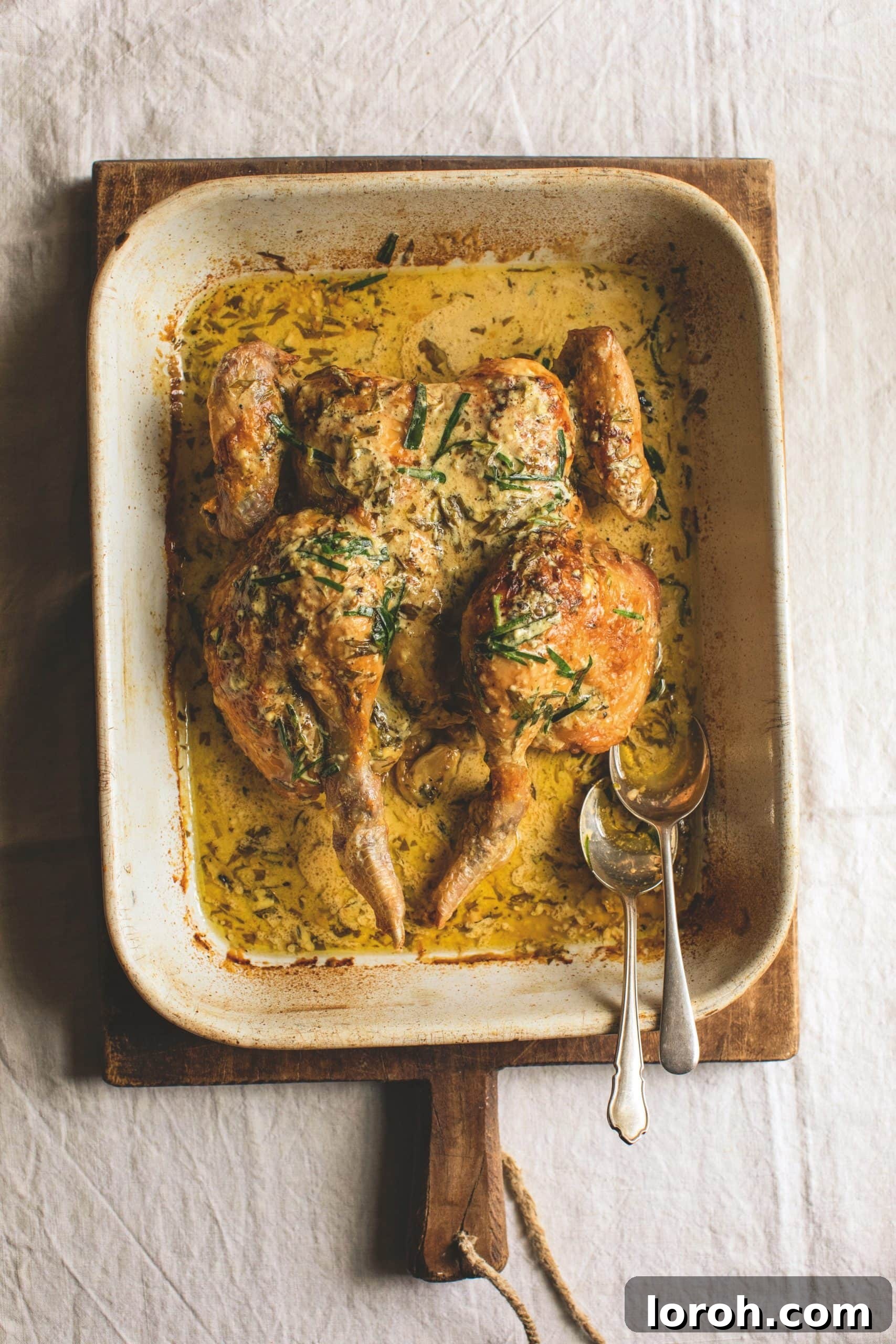
Prepare to be amazed by this extraordinary Roast Chicken in White Wine, a recipe that elevates a classic comfort food to gourmet levels with surprising simplicity. This isn’t just a meal; it’s a culinary experience waiting to unfold in your kitchen. Utilizing only a handful of common ingredients, this dish promises an incredible depth of flavor with minimal effort. The beauty lies in its one-pan approach: the chicken roasts to golden perfection in the oven, simultaneously creating the most divine, creamy white wine sauce right in the same pan. This ingenious method guarantees a succulent chicken, a rich accompanying sauce, and the added bonus of significantly less washing up. Perfect for a cozy weeknight dinner, an impressive gathering, or a traditional Sunday roast, serve it with generous slices of thick, crusty bread to savor every last drop of the exquisite sauce. This recipe truly is the ultimate, foolproof way to serve roast chicken.
The Ultimate One-Pan Roast Chicken in White Wine Sauce
This recipe, drawing inspiration from the renowned chef Julius Roberts, redefines what a roast chicken can be. It’s designed to be effortlessly delicious, focusing on technique and quality ingredients to deliver maximum flavor with minimal fuss. From the initial salt treatment to the final resting period, every step is crafted to ensure a moist, tender chicken enveloped in a luscious, aromatic sauce.
How to Create This Culinary Masterpiece
The journey to this magnificent roast chicken begins with a crucial step often overlooked: generous salting. Begin by seasoning your chicken liberally on both sides with high-quality salt. Allow it to rest at room temperature for at least an hour before roasting. This vital resting period isn’t merely about bringing the chicken to temperature; it allows the salt to penetrate deep into the meat, effectively dry-brining it. This process tenderizes the chicken from within, ensuring every bite is seasoned throughout, preventing blandness that can plague improperly prepared poultry. If you’ve ever wondered why restaurant food often tastes superior, perfectly balanced seasoning is frequently the answer, and salt plays a starring role.
Once the chicken has come to temperature, prepare it for its initial roast. Drizzle it generously with olive oil, massaging it into every crevice of the skin to ensure even browning and crispiness. Then, take a whole head of garlic, lightly smash the cloves (no need to peel them!), and nestle them beneath the chicken. As the chicken roasts, the garlic will slowly confit in its juices, imparting a sweet, mellow aroma and flavor to the entire dish. The chicken then enters a preheated oven at a higher temperature, designed to achieve that coveted golden-brown, crispy skin we all desire. This initial blast of heat kickstarts the Maillard reaction, developing a beautiful crust and sealing in juices.
After this initial browning phase, the magic truly begins. The oven temperature is lowered significantly, creating a gentler cooking environment. This is when you introduce the key liquid components that will transform the pan drippings into an unparalleled sauce. Pour over the rich cream, tangy Dijon mustard, fragrant fresh tarragon, and, of course, the all-important dry white wine. As the chicken continues to roast at the lower temperature, the rendered chicken fat, caramelized bits (fond) from the pan, and the added liquids meld together. The wine deglazes the pan, releasing all the incredible flavors accumulated during the initial roast. The cream adds luxurious body, the Dijon mustard provides a subtle sharpness, and the tarragon infuses the sauce with its distinct, slightly anise-like aroma. The result is a profoundly flavorful, creamy white wine sauce that collects at the bottom of the pan, constantly basting the chicken as it cooks.
When your roast chicken is perfectly cooked, with clear juices running when pierced, remove it from the oven. Resist the urge to carve immediately; allowing the chicken to rest, loosely covered with foil, for 10-15 minutes is crucial. This resting period allows the muscle fibers to relax and reabsorb the juices, ensuring a supremely moist and tender bird. For an added layer of flavor integration, carve the chicken directly in the roasting tin, letting all the freshly released juices mingle with the already divine white wine sauce. Every slice will then soak up this exquisite concoction, making each bite an absolute delight.
Essential Ingredients for Your Perfect Roast Chicken
Crafting this incredible dish requires just a few quality ingredients. Opt for the best organic chicken you can find, as its flavor will shine through. Fresh tarragon is key for the unique aromatic profile of the sauce, and a good quality dry white wine is indispensable.
- 1 organic whole chicken (approx. 1.5-2 kg)
- 3 tbsp olive oil
- 1 whole head of garlic
- 250 ml quality double cream
- 20 g fresh tarragon, stalks removed, roughly chopped
- 1 heaped tbsp Dijon mustard
- 250 ml dry white wine (such as Sauvignon Blanc or Pinot Grigio)
- Generous amount of sea salt and freshly ground black pepper
Step-by-Step Cooking Instructions
- Prepare the Chicken: Preheat your oven to 220°C (425°F) fan. If desired, spatchcock the chicken (butterfly it by cutting along one side of the backbone and flattening it). This helps the chicken cook more evenly and provides more crispy skin. Lay the chicken in a large, high-sided roasting tray. Season generously with sea salt on both sides, then let it sit at room temperature for an hour to remove the chill from the fridge and allow the salt to penetrate.
- Initial Roast: Once ready, generously drizzle the chicken skin with olive oil, rubbing it in thoroughly. Smash the entire head of garlic (no need to peel individual cloves) and tuck the cloves underneath the chicken in the tray. Roast in the preheated oven for 20-30 minutes, or until the skin turns a beautiful golden brown and begins to crisp.
- Prepare the Sauce Base: While the chicken roasts, combine the double cream, chopped fresh tarragon, and Dijon mustard in a bowl. Season well with a pinch of salt and freshly ground black pepper.
- Lower Temperature Roast & Sauce Creation: After the initial browning, reduce the oven temperature to 140°C (285°F) fan. Carefully remove the chicken from the oven. Pour the dry white wine into the roasting tray around the chicken, allowing it to sizzle and deglaze any delicious browned bits. Then, pour the tarragon cream mixture evenly over the chicken. Return the tray to the oven and continue roasting for another 30-40 minutes.
- Check for Doneness: The chicken is cooked when its internal temperature, measured at the deepest part of the thigh, reaches 65-70°C (150-160°F). If you don’t have a meat thermometer, pierce the thigh with a skewer; the juices should run clear.
- Rest and Serve: Once cooked, remove the chicken from the oven and loosely tent it with aluminum foil. Let it rest for 10-15 minutes. This resting period is crucial for the juices to redistribute, ensuring a tender and moist chicken. Carve the chicken directly in the roasting tray to allow all the succulent juices to blend with the creamy white wine sauce. Serve generously, ensuring each portion gets a good spoonful of the rich sauce, along with the tender confit garlic cloves and a vibrant green salad.
Frequently Asked Questions About This Roast Chicken
Do I need to make a separate gravy for this dish?
Absolutely not! This is one of the many beauties of this recipe. There’s no need to fuss with a separate gravy because the magic happens right in the roasting pan. As the chicken roasts, its flavorful juices blend seamlessly with the cream, white wine, tarragon, and Dijon mustard, creating the most exquisite creamy white wine sauce imaginable. It’s wonderfully rich and luxurious, yet balanced with a delightful sharpness from the wine and mustard, making it a complete and utterly satisfying accompaniment to your chicken without any extra work.
What is the best oven temperature to roast a chicken?
The ideal oven temperature for roasting chicken is often a topic of lively debate among chefs, but this recipe employs a smart, two-stage temperature approach designed for foolproof results. The initial high temperature of 220°C (425°F) is essential for achieving that beautifully browned, crispy skin we all crave. This intense heat sets the crust and locks in initial moisture. After 20-30 minutes, once the skin has developed its desired color, the temperature is significantly lowered to 140°C (285°F). This lower, gentler heat ensures the chicken cooks through slowly and evenly without drying out the meat, leaving it incredibly tender and juicy. This combination yields perfectly cooked chicken every time.
Is there an alternative for tarragon if I don’t like it?
Tarragon is undeniably a star in this recipe, lending a unique, subtle anise-like flavor that pairs exceptionally well with chicken and cream. However, if its distinctive taste isn’t to your liking, or if it’s simply unavailable, you can certainly adjust. The simplest alternative is to omit it entirely, and the sauce will still be incredibly delicious. For a different fresh herb profile, finely chopped fresh parsley makes an excellent substitute. Parsley offers a bright, verdant flavor that complements the richness of the cream and chicken beautifully. If using parsley, add it right at the very end of the cooking process, stirring it through the hot sauce just before serving to preserve its freshness and vibrant color.
What type of white wine should I use for this recipe?
For this dish, a dry white wine is paramount. Varieties like Sauvignon Blanc, Pinot Grigio, or an unoaked Chardonnay work beautifully. Their crisp acidity helps to cut through the richness of the cream and chicken, balancing the flavors and preventing the sauce from becoming too heavy. Avoid sweet wines, as they will alter the intended savory profile of the sauce. Always choose a wine that you would enjoy drinking on its own, as its quality will directly impact the final taste of your sauce.
Serving Suggestions & Wine Pairing
This Roast Chicken in White Wine is a truly versatile dish that pairs wonderfully with a variety of sides. The rich, creamy sauce begs to be soaked up, so make sure to have plenty of crusty artisan bread on hand. For a complete meal, consider serving it alongside fluffy mashed potatoes, roasted seasonal vegetables like asparagus or green beans, or a vibrant green salad dressed with a simple vinaigrette to add a fresh counterpoint to the rich sauce. When it comes to wine pairing, complement the dish with the same dry white wine you used for cooking, such as a crisp Sauvignon Blanc or a light-bodied Pinot Grigio. For red wine enthusiasts, a lighter-bodied Pinot Noir could also make a delightful pairing, offering a fruity contrast without overpowering the delicate flavors of the chicken and tarragon.
Tips for Success
- Quality Chicken Matters: As the chicken is the star, investing in a good quality, organic bird will make a noticeable difference in flavor and texture.
- Don’t Skip the Salting: The pre-roast salting is not just about seasoning; it’s a dry brine that tenderizes and moistens the meat.
- Resting is Key: Always allow the chicken to rest after roasting. This ensures the juices redistribute throughout the meat, resulting in a more succulent and tender chicken.
- Pan Choice: Use a sturdy, high-sided roasting pan. This will contain all the delicious juices and prevent spills as the sauce develops.
- Fresh Herbs: While dried tarragon can be used in a pinch, fresh tarragon truly makes the sauce sing with its vibrant aroma.
For Leftover Chicken (or not!), You Might Also Like These Recipes:
Should you be fortunate enough to have any glorious leftovers from this roast chicken, they can be transformed into equally delicious meals. Here are some fantastic ideas to make the most of every morsel, or even inspire your next chicken dish:
- Roast Chicken & Tarragon Pappardelle: This pasta dish is a fantastic way to utilize leftover chicken, combining it with tarragon and cream for a truly comforting meal, inspired by a Nigella recipe.
- Roast Chicken, Bacon And Pesto Sandwich: Elevate your sandwich game with layers of succulent roast chicken, crispy bacon, and flavorful pesto.
- Garlic Butter Chicken Thighs with Roasted Tomatoes: If you’re craving another effortless chicken dish, this one-pan recipe delivers rich garlic butter flavors with sweet roasted tomatoes.
- Crispy Brown Butter Gnocchi with Sage and Parmesan: A delightful vegetarian option, this gnocchi dish is perfect for those who appreciate rich, earthy flavors.
Like this recipe? We’d love to hear your thoughts and see your creations! Please leave a comment or rate the recipe below to share your experience with our community.
About Chef Julius Roberts
This incredible recipe comes to us from the talented chef Julius Roberts, whose journey from London’s bustling restaurant scene to the tranquility of farm life is as inspiring as his food. Julius began his culinary career as a chef, spending a transformative year at the acclaimed Noble Rot in London. While the work was challenging and rewarding, he soon realized that the demanding pace of city life and professional kitchens was not sustainable for him in the long term.
Driven by a deep connection to nature and a desire for a more harmonious way of living, Julius made the courageous decision to leave London. What started as a modest smallholding with just four pigs quickly blossomed into a thriving farm, now home to over 40 goats and more than 100 ewes. His philosophy centers around respecting the land, understanding where food comes from, and celebrating seasonal produce, all of which profoundly influence his cooking.
In 2023, Julius Roberts released his debut cookbook, “The Farm Table,” which beautifully encapsulates his farm-to-table ethos. The book is a treasure trove of gorgeous recipes, deeply rooted in the rhythms of nature and the bounty of his farm. This Roast Chicken in White Wine is a shining example of his culinary style: simple, honest, and utterly delicious, proving that the best food often comes from the purest ingredients and a heartfelt approach to cooking.