
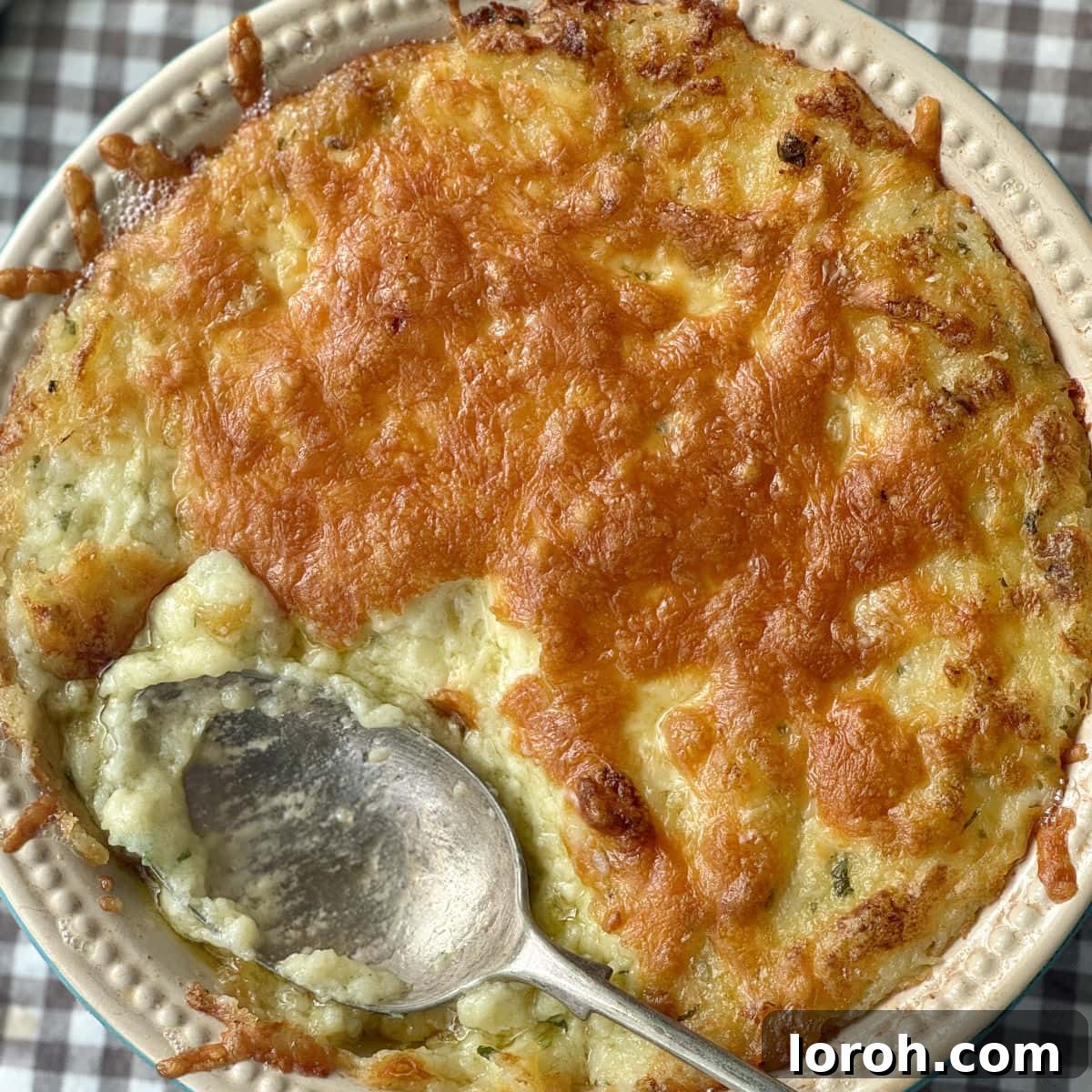
Twice Baked Mashed Potatoes: The Ultimate Comfort Food Side Dish
Prepare to elevate your side dish game with the irresistible charm of Twice Baked Mashed Potatoes, often affectionately known as twice-baked mash or a hearty potato casserole. This dish isn’t just a side; it’s a culinary experience that promises to be the star of any meal, captivating palates with its luxurious creaminess and tantalizing textures. Imagine perfectly roasted potatoes, chosen specifically for their fluffy, dry characteristics, transformed into a smooth, rich mash. This isn’t just any mash; it’s infused with aromatic garlic butter, blended with milk and a touch of egg yolk for unparalleled richness, then crowned with a golden, bubbly layer of crispy, melted cheese before its glorious second bake. The result? A symphony of flavors and textures that is as comforting as it is decadent. Every spoonful delivers a delightful contrast: the velvety interior giving way to a savory, crunchy topping that will leave everyone clamoring for more.
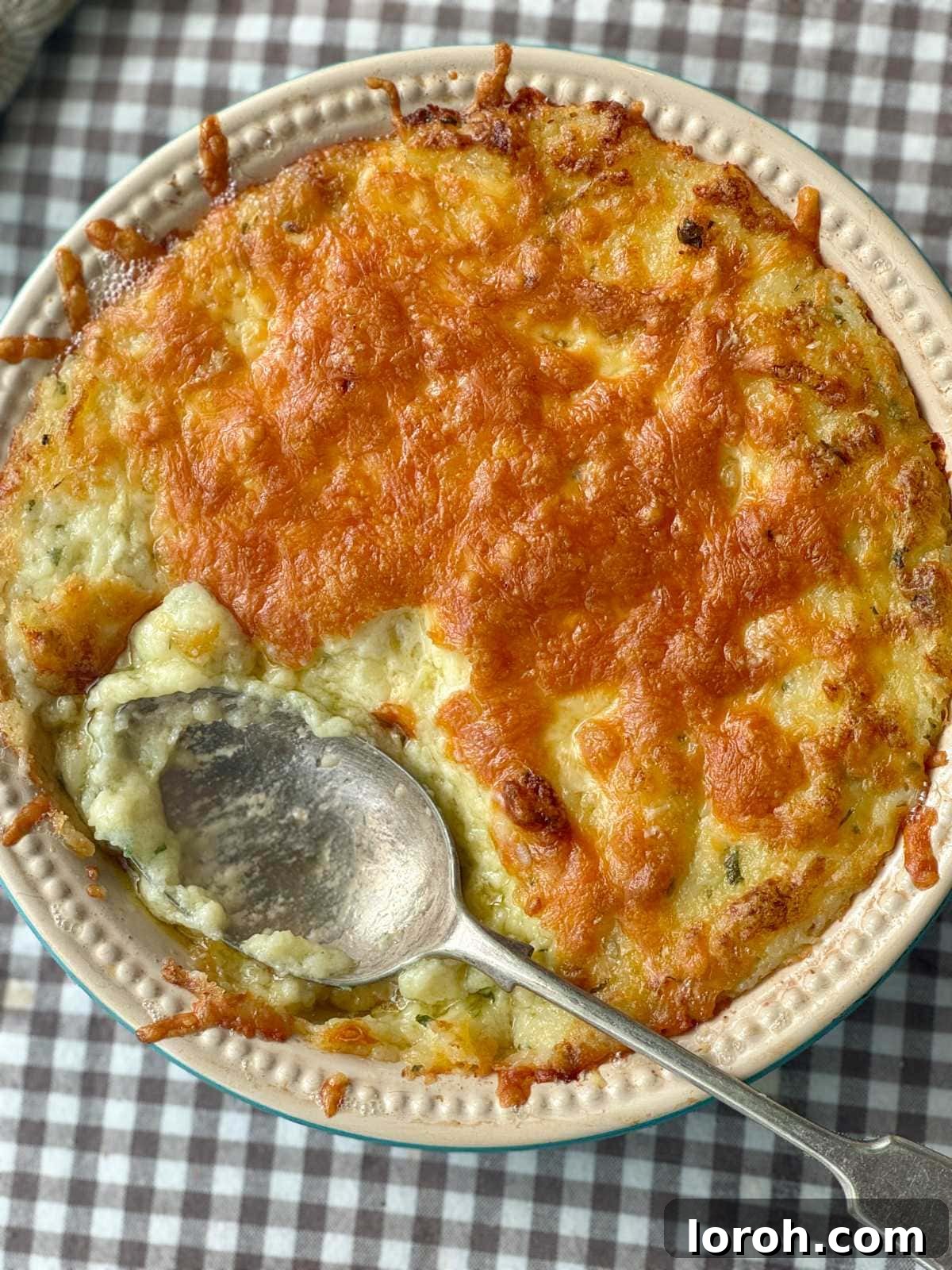
This comprehensive guide will take you through every step of crafting the perfect twice-baked mashed potatoes, from selecting the best spuds to achieving that coveted golden-brown crust. We’ll delve into essential cooking tips, clever make-ahead strategies, and indispensable freezing instructions to ensure your potatoes are always ready to impress. Whether you’re a seasoned chef or a kitchen novice, you’ll discover troubleshooting advice and exciting variations to customize this classic to your taste. By the time you finish reading, you’ll possess all the knowledge and confidence needed to consistently create the most delicious, crowd-pleasing twice-baked mashed potatoes imaginable, making every meal a special occasion.
Table of Contents
- Why You Will Love This Recipe
- Key Ingredients for Perfection
- Essential Equipment for This Recipe
- Substitutions and Mouthwatering Variations
- Step-by-Step: How to Make Twice Baked Mashed Potatoes
- Expert Cooking Tips for Success
- Frequently Asked Questions
- Other Recipes You Might Enjoy
- Twice Baked Mashed Potatoes Recipe Card
Why You Will Love This Recipe: A Culinary Masterpiece
Twice baked mashed potatoes are more than just a side dish; they are a celebration of comfort food, offering a delightful blend of textures and flavors that make them incredibly versatile and universally loved. Here’s why this recipe deserves a permanent spot in your culinary repertoire:
- Effortlessly Fuss-Free Preparation: Forget the tedious task of peeling potatoes before boiling! This recipe champions simplicity by recommending you roast the potatoes whole. Not only does this save significant hands-on time, but roasting also enhances their natural flavor and reduces water content, leading to a much fluffier, drier mash. Minimal effort yields maximum flavor and superior texture, making your cooking experience enjoyable from start to finish.
- A Dream Come True for Make-Ahead Meals: Planning a dinner party or a busy weeknight meal? This dish is your best friend. You can fully assemble the casserole a day or two in advance, storing it in the refrigerator, and simply pop it into the oven when you’re ready to bake. This make-ahead friendly aspect frees up valuable time on the day of serving, allowing you to focus on other dishes or simply relax and enjoy your guests. It’s perfect for holidays like Thanksgiving or Christmas when kitchen efficiency is key.
- Ultimate Comfort Food Indulgence: At its heart, this is the epitome of comfort food. Each bite is a luxurious experience, starting with the fragrant garlic-parsley butter that permeates every creamy strand of potato. The generous blanket of crispy cheese topping, melted and browned to perfection, adds another layer of indulgence, creating a dish that warms the soul and satisfies even the deepest cravings for hearty, wholesome goodness. It’s the kind of food that brings smiles to faces and joy to the table.
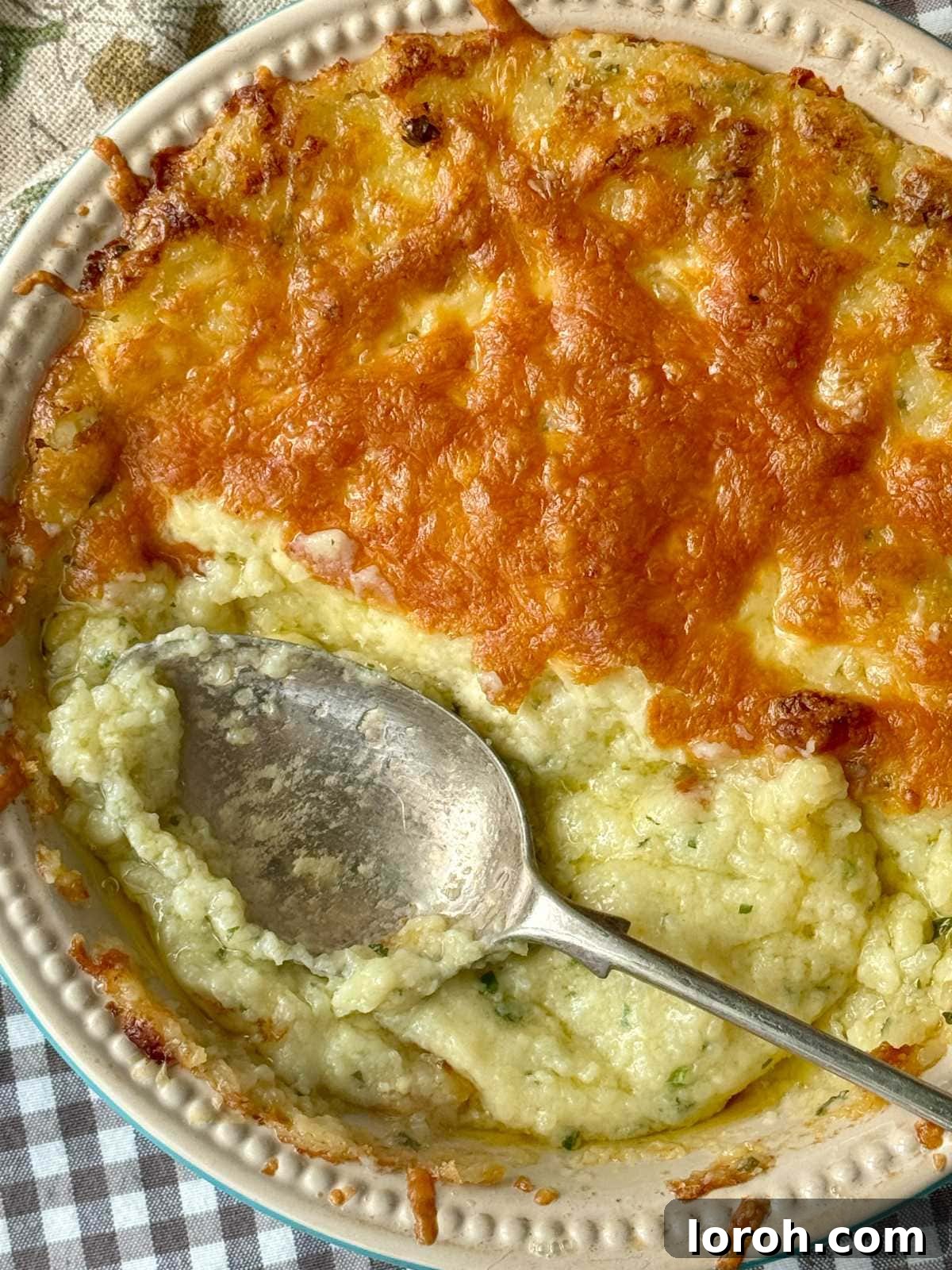
- Irresistible Contrast of Textures: One of the defining characteristics of truly exceptional twice-baked mashed potatoes is the incredible textural interplay. The ridged, cheese-topped surface crisps beautifully in the oven, creating a golden, crunchy exterior that provides a stark yet harmonious contrast to the silken, creamy mash beneath. This delightful interplay of crispiness and creaminess elevates the dish from a simple side to a captivating culinary delight, ensuring every forkful is exciting and utterly satisfying.
- Versatile for Any Occasion: Whether it’s a casual family dinner, a festive holiday feast, or a sophisticated gathering, these potatoes fit right in. They pair wonderfully with a wide array of main courses, from roasted meats to grilled vegetables, making them an incredibly adaptable dish for any menu.
Key Ingredients for Perfection: Building the Flavor Foundation
The full recipe with precise measurements can be found in the detailed recipe card at the bottom of this page.
Crafting the best twice-baked mashed potatoes starts with understanding the role of each ingredient. Here’s a deeper dive into what you’ll need and why:
- Potatoes: The Heart of the Dish
For the ultimate fluffy, creamy mash, selecting the right potato variety is crucial. Starchy potatoes are preferred because they break down easily, absorb flavors well, and result in a drier, lighter mash.- Maris Piper (UK): Widely available in the UK, these are highly recommended for their fluffy, dry texture and excellent flavor when roasted.
- King Edward (UK): Another fantastic UK option, similar to Maris Piper, offering a desirable fluffy interior.
- Russet (US/Elsewhere): If you’re in the US or other regions, Russet potatoes (also known as Idaho potatoes) are your best bet. Their high starch content and low moisture make them ideal for baking and mashing, yielding an incredibly fluffy result.
- Avoid waxy potatoes like New Potatoes or Red Bliss, as they tend to become gummy when mashed.
- Butter: The Golden Elixir
We use a generous amount of butter to create the rich, smooth texture and decadent flavor.- Salted Butter: Often preferred for its balanced seasoning. If using unsalted, be sure to adjust the added salt to taste.
- Garlic Butter: This recipe elevates standard butter by infusing it with fresh garlic and fragrant parsley, creating an aromatic base that permeates the entire dish.
- Garlic Cloves: The Aromatic Powerhouse
Freshly chopped garlic is essential for that vibrant, savory depth that distinguishes this recipe. Sautéing it briefly in butter mellows its sharpness and brings out its sweet, nutty notes. - Fresh Parsley: A Pop of Freshness
Finely chopped fresh parsley adds a beautiful bright green color and a subtle, herbaceous note that perfectly complements the rich flavors of garlic and butter. Flat-leaf (Italian) parsley is generally preferred for its robust flavor. - Milk: For Creaminess and Smoothness
Hot milk is incorporated to achieve that coveted creamy, smooth consistency.- Whole Milk: Recommended for the richest, most luxurious mash due to its higher fat content.
- Semi-Skimmed Milk: A good alternative if you prefer a slightly lighter option without sacrificing too much creaminess.
- Ensure the milk is heated before adding to prevent cooling down the potatoes and making them less receptive to blending.
- Egg Yolk: The Secret to Silky Richness
Adding a single egg yolk is a game-changer. The fats and natural emulsifiers in the yolk bind the ingredients together, creating an even smoother, richer, and more stable mash. It enhances both the texture and the overall flavor profile, adding a subtle eggy richness without making the potatoes taste like eggs. While optional, it’s highly recommended for the best results. - Cheese: The Crispy, Melty Topping
The cheese provides the ultimate golden, crispy crust and adds a crucial layer of savory flavor.- Grated Cheddar: A classic choice for its sharp flavor and excellent melting qualities. Use a good quality sharp or medium cheddar for the best taste.
- Gruyere: For a more sophisticated flavor profile, Gruyere offers a nutty, earthy depth that pairs beautifully with potatoes.
- Parmesan: A sprinkle of finely grated Parmesan can add a salty, umami kick to the topping.
- Using a blend of cheeses can often yield the most complex and satisfying flavor.
- Sea Salt and Freshly Ground Black Pepper: The Essential Seasoning
Proper seasoning is vital. Roasting potatoes concentrates their flavor, but they still need a generous hand with salt and pepper to bring everything to life. Taste and adjust as you go!
Essential Equipment for This Recipe
To ensure a smooth cooking process and the best possible results, gather these basic kitchen tools:
- Large Baking Tray: For roasting the potatoes evenly.
- Small Saucepan: For melting butter and infusing garlic.
- Large Mixing Bowl: To combine the potato flesh with other ingredients.
- Potato Ricer or Potato Masher: A ricer is highly recommended for the smoothest, fluffiest mash. If you don’t have one, a sturdy potato masher will also work, just be mindful not to over-mash.
- Spatula or Wooden Spoon: For mixing.
- Small Baking Dish (approx. 20cm diameter): To bake the assembled mashed potatoes. An oven-safe gratin dish or casserole dish works perfectly.
- Fork: For piercing potatoes and creating decorative ridges on top.
- Clean Tea Towel: For safely handling hot roasted potatoes.
- Grater: For grating cheese.
Substitutions and Mouthwatering Variations: Customize Your Mash!
While the classic recipe is undeniably delicious, these twice-baked mashed potatoes are incredibly versatile. Feel free to experiment with these ideas to tailor them to your preference or whatever ingredients you have on hand:
- Simplify with Plain Butter: If time is of the essence or you prefer a simpler flavor, you can easily skip the garlic-parsley butter step. Simply use plain melted (or softened) salted butter in its place. The result will still be wonderfully rich and comforting, allowing the natural potato flavor to shine through.
- Vegetarian Delights:
- Colcannon Inspiration: Embrace a classic Irish twist by folding in sautéed leeks, finely chopped crispy cabbage, or spring onions into the mash. These additions add a wonderful texture and a mild, sweet oniony flavor that’s incredibly satisfying.
- Mushroom Magic: Sautéed mixed mushrooms (like cremini, shiitake, or oyster) with a touch of thyme can add an earthy, umami depth.
- Caramelized Onions: Slowly caramelized onions bring a sweet, savory richness that pairs beautifully with potatoes and cheese.
- Bacon & Chive Perfection: For a truly loaded experience, incorporate crispy cooked chopped bacon bits and thinly sliced fresh chives (or spring onions/scallions) into the mash. The smoky, salty crunch of bacon perfectly complements the creamy potatoes and sharp cheese, while chives add a fresh, oniony bite.
- Creamy & Tangy Style: For an extra layer of richness and a subtle tangy note, replace part of the milk (about half) with crème fraîche, sour cream, or even cream cheese. This adds a delightful complexity and makes the mash even more indulgent.
- Herbaceous Infusion: Beyond parsley, consider fresh rosemary, thyme, or chives folded into the mash for different aromatic profiles. A blend of herbs can add a beautiful complexity.
- Spicy Kick: For those who love a bit of heat, finely diced jalapeños (deseeded for less heat), a pinch of cayenne pepper, or a dash of hot sauce can be mixed into the mash.
- Dairy-Free Adaptation: Creating a dairy-free version is straightforward. Use a high-quality plant-based butter (such as almond or oat butter) and unsweetened plant milk (oat milk or almond milk work well). If you need to make it completely vegan, skip the egg yolk. Nutritional yeast can be added for a cheesy flavor substitute if you’re also omitting dairy cheese.
- Cheese Blend Extravaganza: Don’t limit yourself to just cheddar! Experiment with a blend of cheeses like sharp cheddar, nutty Gruyere, a touch of Parmesan for umami, or even some mozzarella for extra stretch and mildness. The topping can be a mix of your favorites.
Step-by-Step: How to Make Twice Baked Mashed Potatoes
Follow this detailed guide for a perfectly prepared dish. For specific measurements, refer to the full recipe card at the bottom of the page.
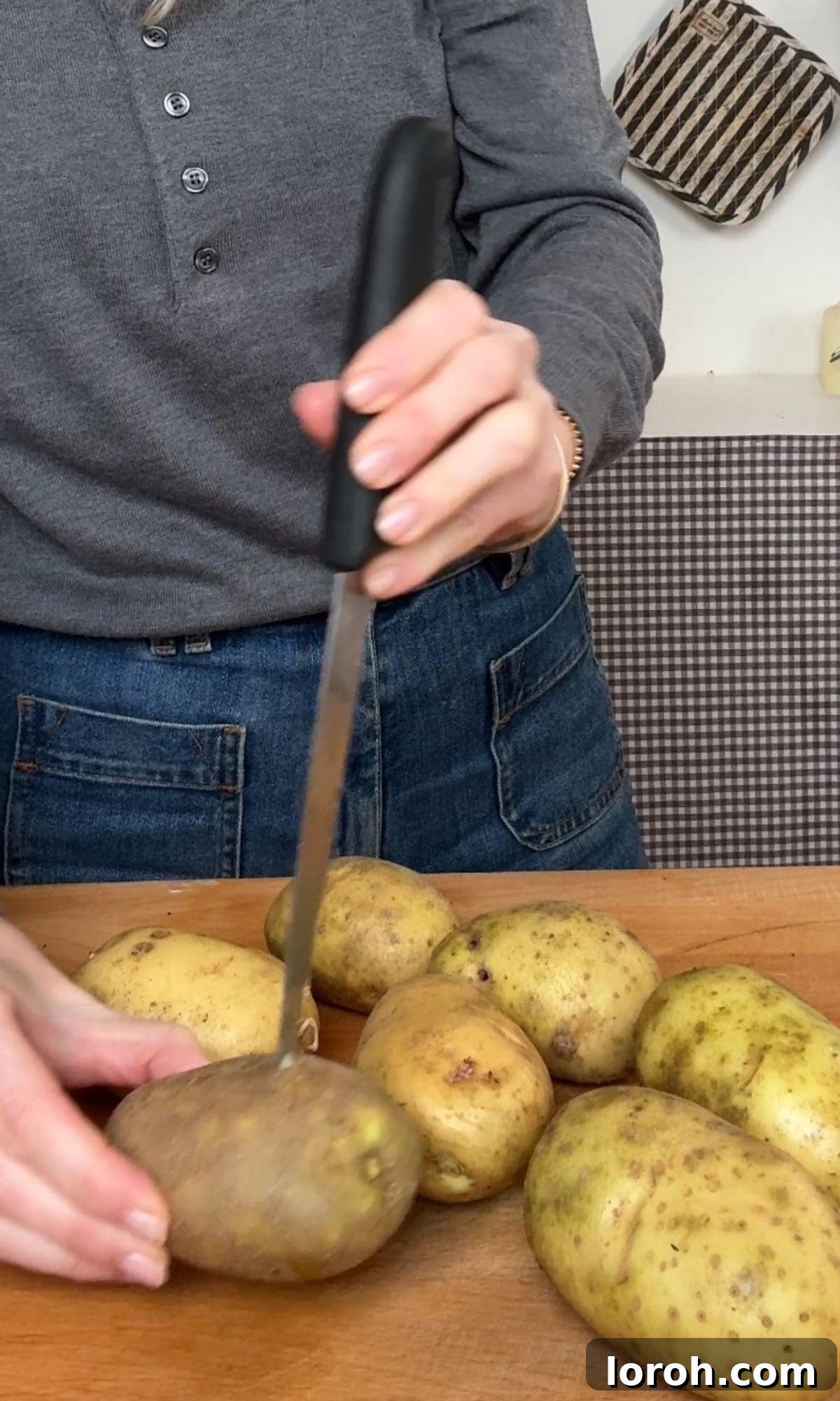
ONE: Prepare and Roast the Potatoes. Preheat your oven to 180°C fan / 200°C / 400°F. This initial roasting step is crucial for developing flavor and drying out the potatoes, which prevents a watery mash. Wash your potatoes thoroughly and pierce them all over with a fork. This allows steam to escape during baking, preventing them from bursting. Place them on a baking tray – you can line it with parchment paper for easier cleanup. Roast the potatoes for 1 hour to 1 hour 10 minutes, or until they are very soft when gently squeezed. A knife should slide into them with no resistance. Roasting them whole with their skins on also means no peeling required later, making this step truly fuss-free.
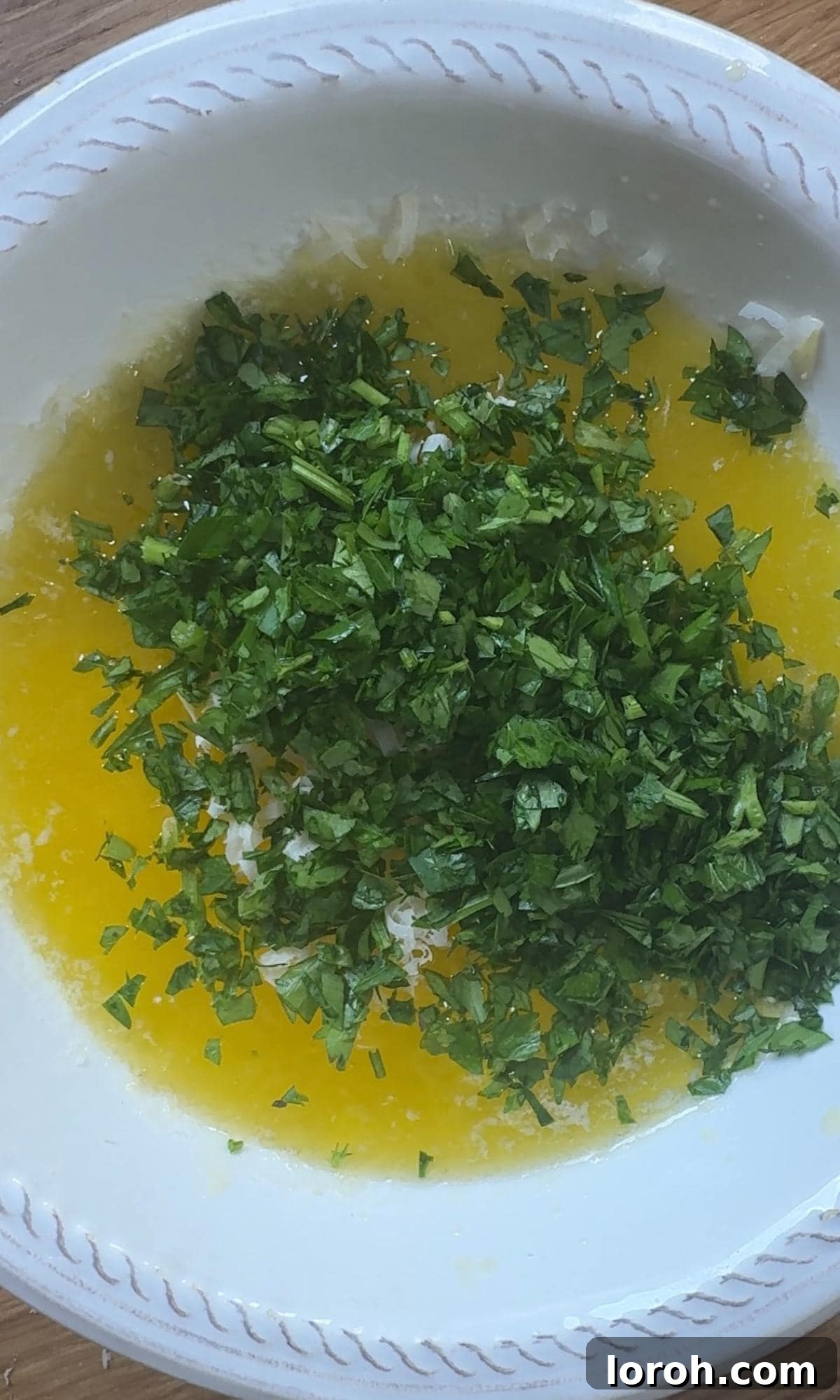
TWO: Prepare the Aromatic Garlic-Parsley Butter. While the potatoes are roasting, you can prepare this flavorful infusion. In a small saucepan, melt the butter over low heat. Add the finely chopped garlic and let it gently swirl in the butter for just a few seconds – be careful not to brown or burn the garlic, as this can make it bitter. Immediately remove the saucepan from the heat to stop the cooking process. Stir in the freshly chopped parsley. This garlic-parsley butter will add a wonderful depth of flavor to your mash. Set it aside, keeping it warm if possible, or gently reheat just before adding to the potatoes.
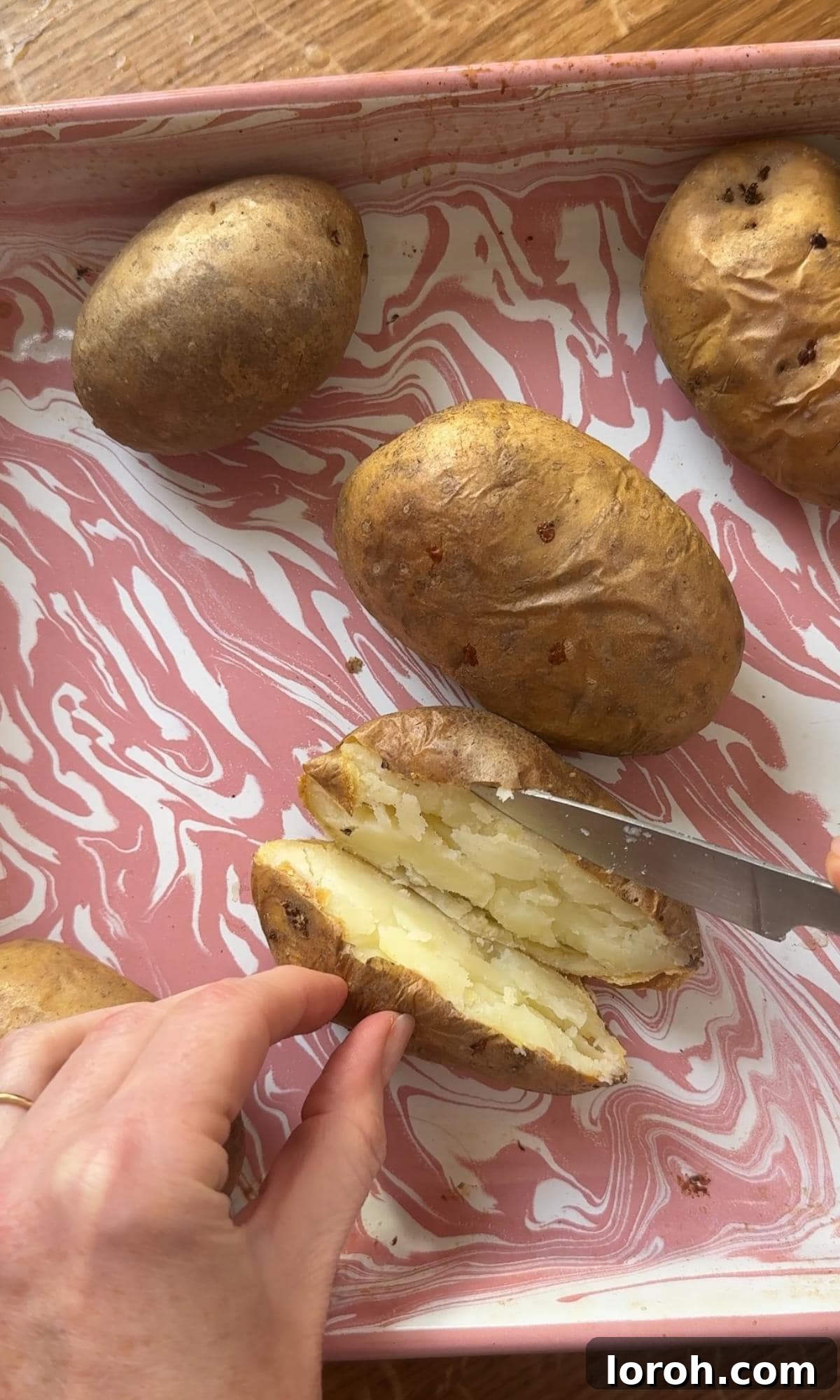
THREE: Cool and Halve the Roasted Potatoes. Once the potatoes are perfectly cooked and soft, carefully remove them from the oven. Let them cool for about 5 minutes. This brief cooling period makes them easier to handle and allows the internal structure to set slightly. Once cooled enough to touch, slice each roasted potato in half lengthwise. The skins should be slightly crisp, and the flesh inside incredibly tender.
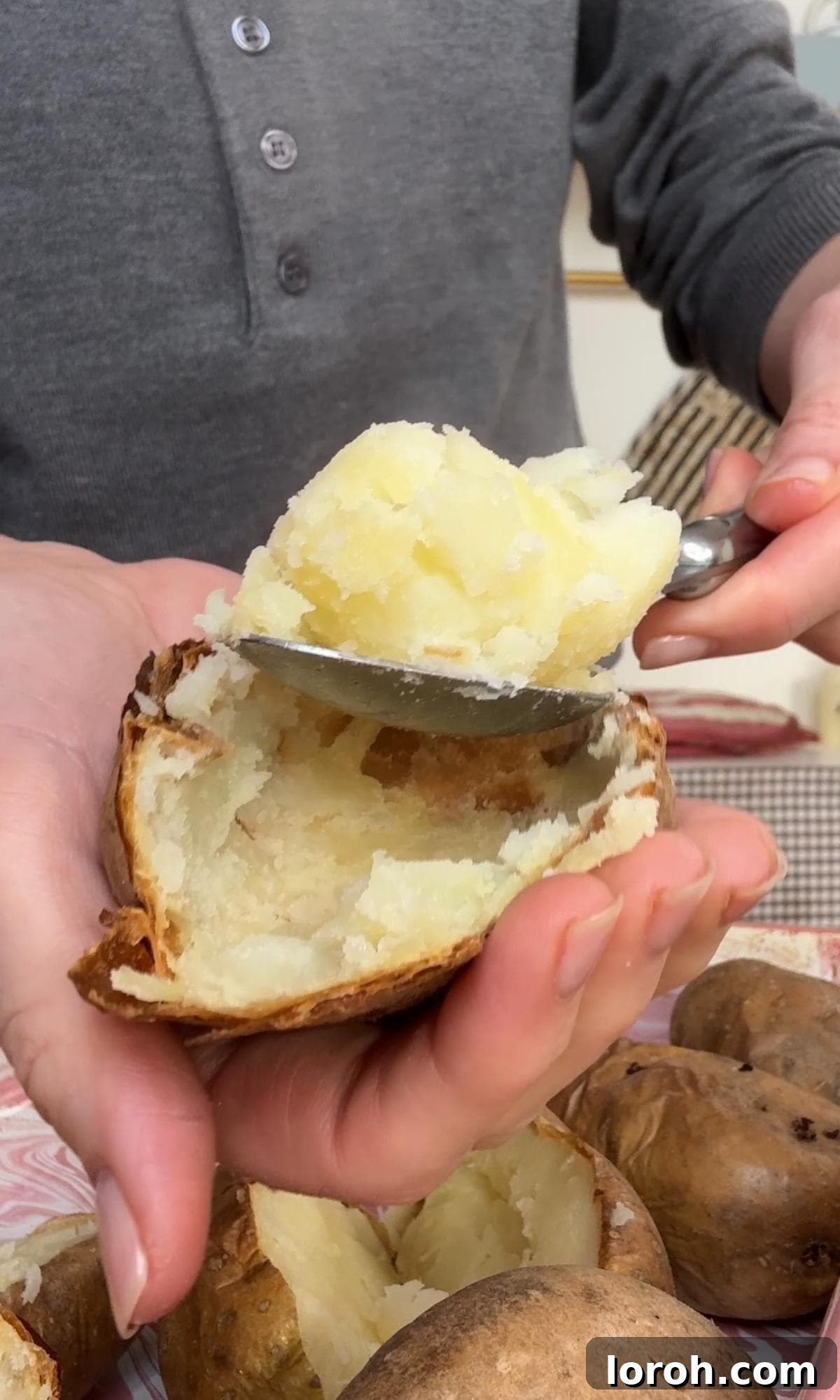
FOUR: Scoop Out the Potato Flesh. This step requires a bit of care. Hold one half of a warm potato with a clean tea towel or oven mitt to protect your hand. Using a spoon, carefully scoop out the soft potato flesh into a large mixing bowl, trying to leave a thin layer of potato attached to the skin if you plan to use the skins for another recipe (or simply scrape clean for this recipe). Repeat this process with all the potato halves until all the fluffy interior is collected in your bowl. Discard the skins or save them for crispy potato skin snacks!
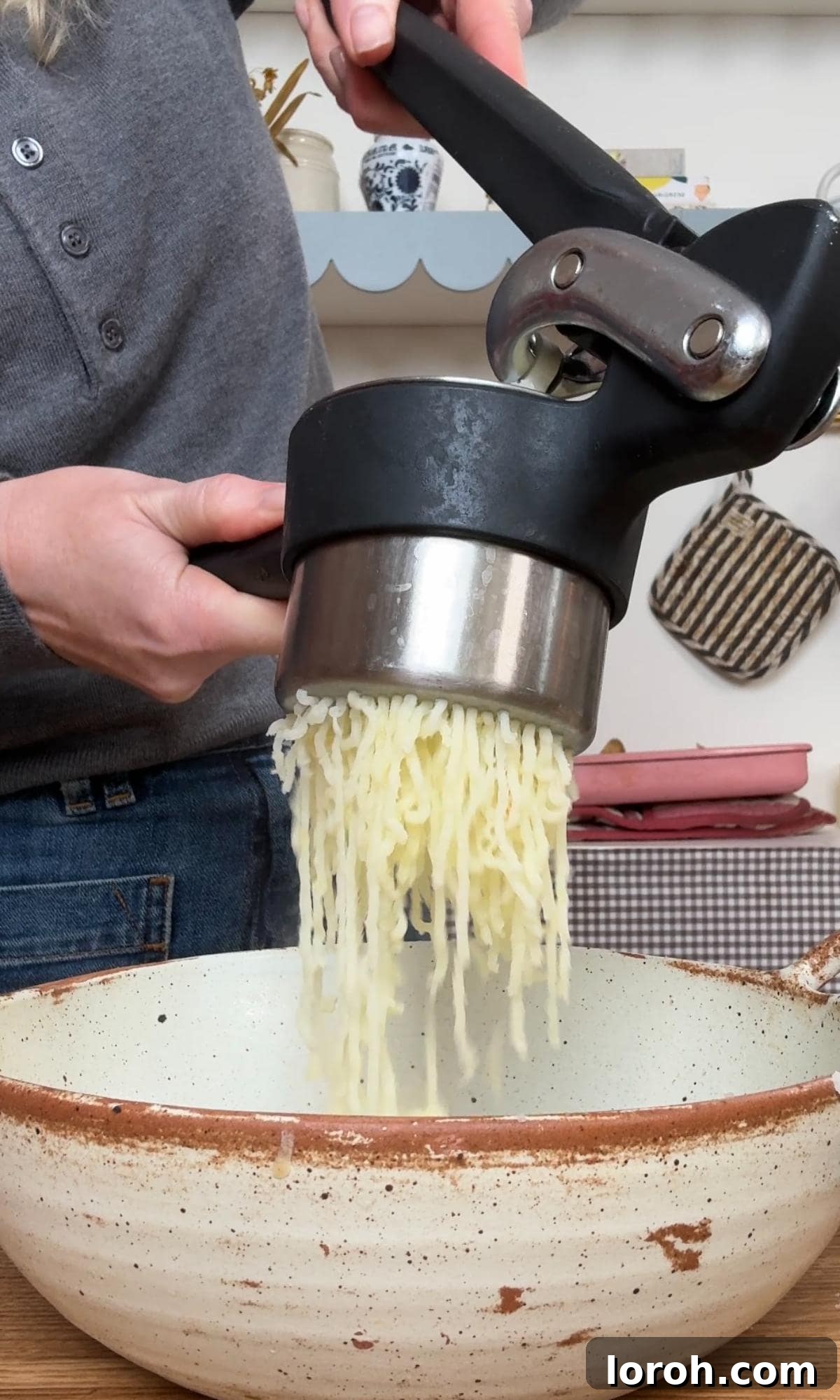
FIVE: Rice or Mash for Ultimate Smoothness. For the silkiest, fluffiest mash, pass the scooped potato flesh through a potato ricer directly into your mixing bowl. This breaks down the potato cells without overworking them, preventing a gummy texture. If you don’t have a ricer, use a sturdy potato masher and mash until the potatoes are completely smooth, taking care not to over-mash which can release too much starch. The goal is a uniform, lump-free consistency.
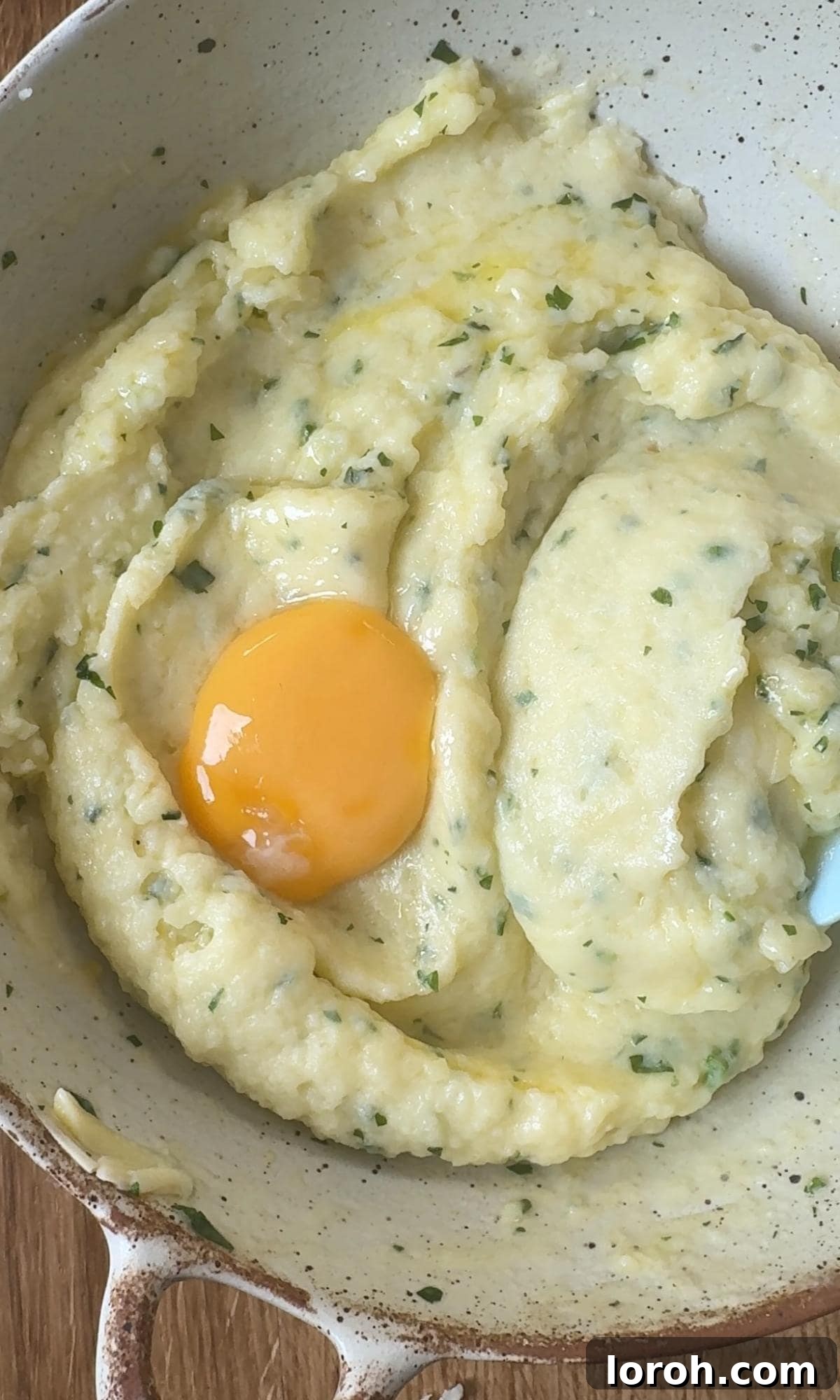
SIX: Combine and Season the Mash. Add the warm garlic-parsley butter to the mashed potatoes. Pour in the hot milk, starting with 100ml and gradually adding more if needed to reach your desired creamy consistency. Mix gently until everything is smooth and perfectly blended. Now, stir in the egg yolk; its emulsifying properties will add richness and a beautiful silky texture. Finally, fold in the grated cheese and season generously with sea salt and freshly ground black pepper. Taste and adjust seasonings – potatoes absorb a lot of salt, so don’t be shy!
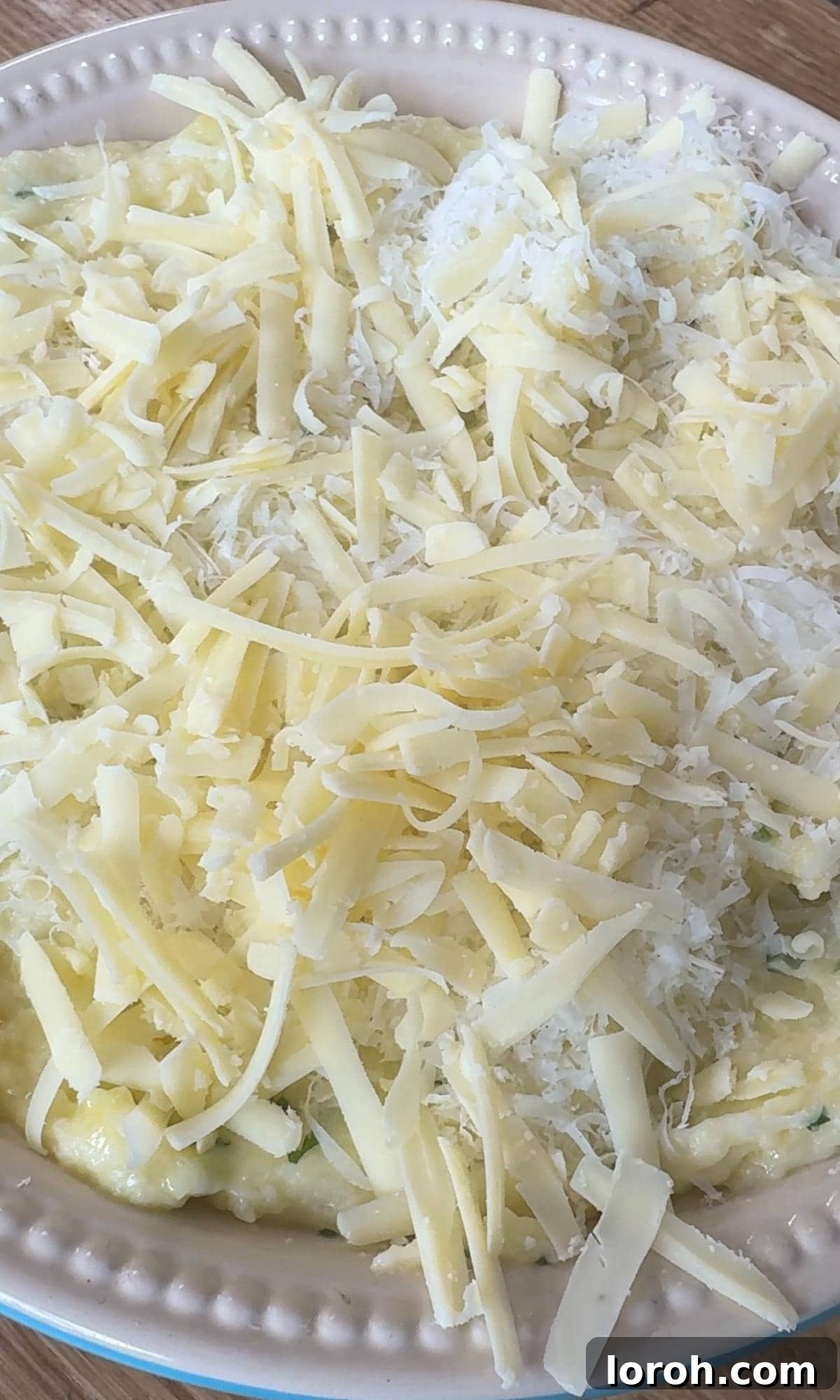
SEVEN: Assemble for the Second Bake. Lightly grease a small baking dish (approximately 20cm diameter is ideal). Spoon the creamy, seasoned mash into the prepared dish, spreading it evenly. Next, take a fork and create attractive ridges on the surface of the mash. These craggy edges are not just for aesthetics; they provide more surface area for the cheese to crisp up, leading to a fantastic textural contrast. Generously scatter an extra layer of grated cheese over the entire ridged surface.
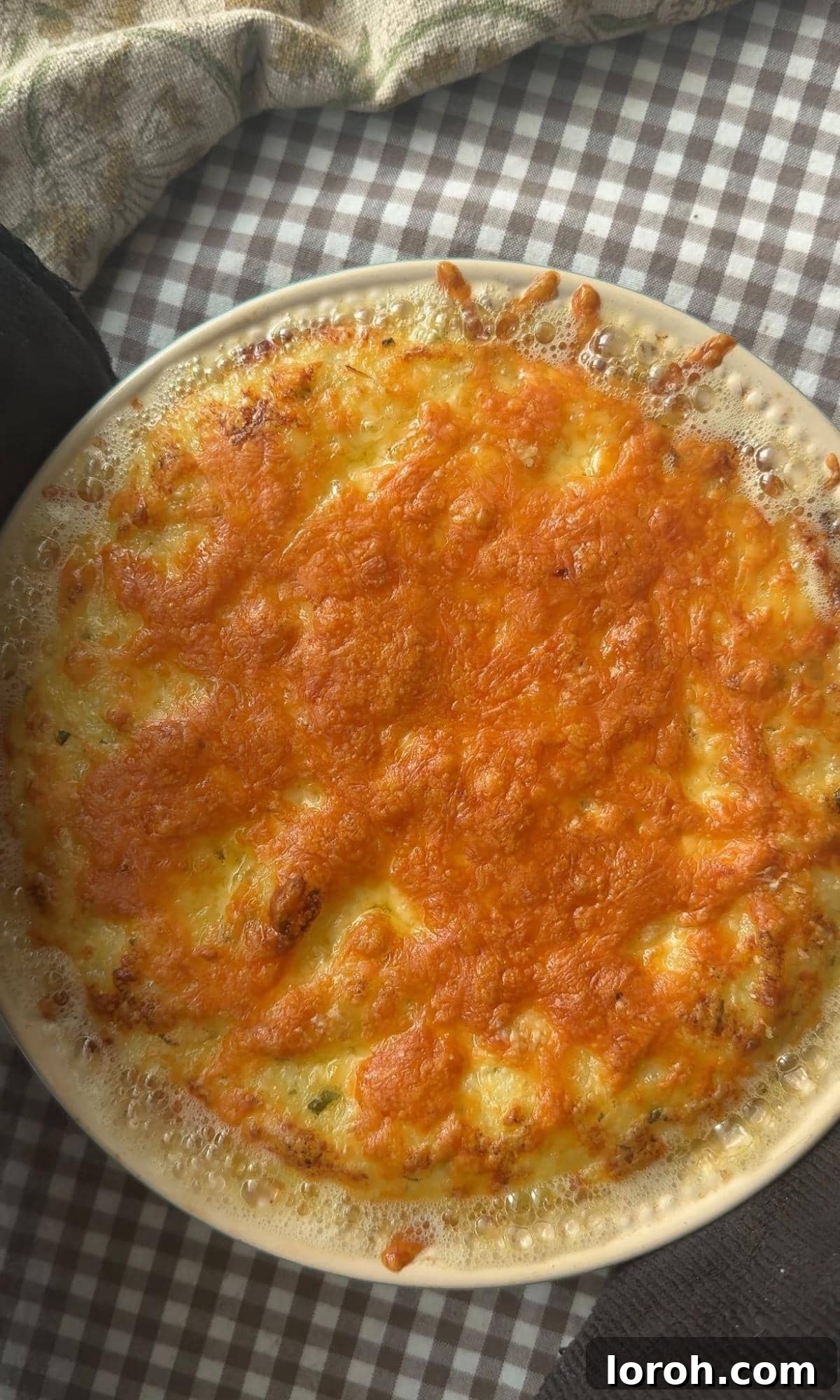
EIGHT: The Grand Finale – Bake Until Golden and Crisp. Place the baking dish into your preheated oven. Bake for approximately 20 minutes, or until the cheese topping is beautifully melted, bubbly, and golden brown. The ridges should be crisp and slightly browned, indicating the perfect contrast to the creamy interior. If you desire an extra crispy, deeply golden finish, you can carefully place the dish under a hot grill (broiler) for 1-2 minutes, watching it very closely to prevent burning. Serve immediately and enjoy the ultimate comfort food!
Expert Cooking Tips for Success: Achieve Perfect Twice Baked Mashed Potatoes Every Time
Mastering twice-baked mashed potatoes is simple with a few key techniques. These tips will help you create a dish that’s consistently creamy, fluffy, and bursting with flavor:
- Choose the Right Potato: As mentioned, starchy potatoes like Russet (US), Maris Piper or King Edward (UK) are paramount. Their low moisture content and fluffy texture after cooking are essential for a light, airy mash that won’t become gummy. Waxy potatoes, conversely, will result in a dense, gluey consistency.
- Roast, Don’t Boil: Roasting potatoes whole, as instructed, is superior to boiling for this recipe. Roasting intensifies their flavor and, more importantly, reduces their water content. Less water means a drier, fluffier mash that better absorbs the richness of butter and milk without becoming soggy. It also makes peeling unnecessary, saving you time!
- Ricer vs. Masher – The Texture Debate:
- Potato Ricer: For the ultimate fluffy, lump-free, and incredibly smooth mash, a ricer is the gold standard. It separates the potato cells without crushing them excessively, resulting in a lighter texture.
- Potato Masher: If you don’t have a ricer, a good quality masher works well. Be careful not to over-mash, as vigorous mashing can release too much starch, leading to a gluey or gummy texture. Mash just until smooth.
- Warm Ingredients are Key: Ensure your milk and garlic butter are warm when adding them to the hot mashed potatoes. Cold ingredients can cool down the potatoes, making them less receptive to blending and resulting in a denser mash. Warm liquids integrate more smoothly and maintain the creamy consistency.
- Don’t Overmix: After adding the milk, butter, egg yolk, and cheese, mix just enough to combine everything thoroughly and achieve a smooth consistency. Overmixing will develop the starches in the potatoes, making them tough and gluey.
- Season Generously and Taste as You Go: Potatoes are notorious for needing a good amount of salt to bring out their flavor. Season the mash generously with sea salt and freshly ground black pepper. Always taste a small spoonful before spooning it into the baking dish and adjust as needed. You can always add more salt, but you can’t take it away!
- Achieve the Perfect Crispy Top with Ridges: Don’t skip creating those craggy ridges with a fork before sprinkling the cheese! These textured peaks provide more surface area for the cheese to melt and crisp up, resulting in a delightful contrast between the crunchy top and the creamy interior.
- Broiler Boost for Extra Browning: If your cheese topping isn’t as golden and crispy as you’d like after the second bake, carefully place the dish under a preheated grill (broiler) for 1-2 minutes. Watch it continuously, as cheese can burn quickly. This quick burst of high heat will give you that irresistible browned crust.
- Serve Immediately: While these potatoes are fantastic make-ahead, they are at their absolute best when served fresh from the oven, with the cheese still bubbling and the mash steaming.
Frequently Asked Questions
If you’ve assembled your twice-baked mashed potatoes ahead of time and refrigerated them, they will need a slightly longer baking time than if they were at room temperature. For a dish straight from the fridge, bake at 180°C fan / 200°C / 400°F for approximately 25-35 minutes, or about 5-10 minutes longer than the initial suggested baking time. The goal is for the entire dish to be heated through and the top to be golden and bubbly. To check for doneness, carefully insert a butter knife into the center of the mash. Touch the knife gently to the back of your hand; if it feels hot, your potatoes are ready to serve. If not, return them to the oven for a few more minutes, checking again.
Absolutely! Twice-baked mashed potatoes are an excellent dish for freezing, making them perfect for meal prep or future busy nights. To freeze them, assemble the entire dish up to the point of the second bake, but do not add the final layer of cheese. Allow the assembled mash to cool completely to room temperature. Then, wrap the dish tightly with plastic wrap, followed by a layer of aluminum foil to prevent freezer burn. You can freeze them for up to 3 months. When you’re ready to enjoy, thaw the frozen casserole overnight in the refrigerator. Once thawed, uncover, add your layer of grated cheese, and bake at 180°C fan / 200°C / 400°F for 25-35 minutes, or until heated through and the cheese is golden and bubbly.
The egg yolk plays a subtle yet significant role in enhancing the texture and richness of your mashed potatoes. Its fats and natural emulsifiers act as a binding agent, helping to hold the ingredients together and creating a remarkably smoother, creamier, and more stable texture. It also contributes to a richer flavor profile without imparting a distinct “eggy” taste. While you can certainly skip the egg yolk if you prefer, or if you’re making a vegan version, the resulting mash might be slightly less creamy and rich. For the best, most luxurious twice-baked mashed potatoes, the egg yolk is a secret weapon!
Yes, you can! This is a fantastic way to repurpose leftover mashed potatoes. Ensure your leftover mash is plain or minimally seasoned, as strong existing flavors might clash with the garlic-parsley butter. If your mash is already creamy, you might need less milk. Adjust the butter, milk, and cheese amounts accordingly, tasting as you mix. The key is to start with a good base that isn’t too wet.
A small (approximately 20cm or 8-inch) oven-safe baking dish, such as a gratin dish, casserole dish, or even a pie plate, works perfectly. Ensure it’s deep enough to hold the mash comfortably and leave some space for the cheese topping to bubble up. The material (ceramic, glass, cast iron) doesn’t significantly impact the cooking, but ceramic or glass will hold heat well for serving.
Other Recipes You Might Enjoy: Perfect Pairings and Potato Delights
These creamy, cheesy twice-baked mashed potatoes are a versatile side that pairs wonderfully with a variety of main courses. Consider serving them alongside hearty dishes like tender red wine braised short ribs, crispy-skinned air fryer pork belly, or savory garlic butter steak bites. If you have any holiday leftovers, my indulgent turkey ham pie with garlic butter would also make an excellent companion.
If you’re looking for more delicious potato-centric dishes or exciting side options, explore these other recipes:
Side Dishes
Potato Salad with Dill and Pickles
Recipes
Hasselback Potatoes with Salsa Verde and Labneh
Side Dishes
Cheesy Smashed Potatoes with Roasted Garlic Aioli
Smoked Salmon Recipes
Smashed Potatoes with Crème Fraîche & Smoked Salmon
If you tried these Twice Baked Mashed Potatoes or any other recipe on the site, please do leave a rating or comment and let us know how it went! Your feedback is always appreciated.
Twice Baked Mashed Potatoes Recipe
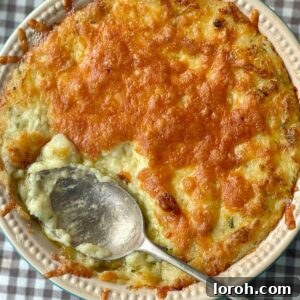
Twice Baked Mashed Potatoes are the ultimate make-ahead, crowd-pleasing side. Creamy, fluffy mash meets a crispy, cheesy topping for an irresistible comfort food experience.
Prep Time: 15 mins
Cook Time: 1 hr 30 mins
Total Time: 1 hr 45 mins
Servings: 4 servings
Ingredients
- 1 kg Maris Piper potatoes (or Russet/King Edward potatoes)
- 180 g butter
- 3 garlic cloves, finely chopped
- Small bunch of parsley, finely chopped
- 100-150 ml hot milk (whole or semi-skimmed)
- 1 egg yolk (optional, for extra richness)
- 75-100 g grated cheddar or Gruyere, plus extra for topping
- Sea salt and black pepper, to taste
Instructions
- Preheat the oven to 180°C fan / 200°C / 400°F.
- Pierce the potatoes all over with a fork and place them on a baking tray.
- Roast for 1 hour to 1 hour 10 minutes, or until very soft when squeezed.
- While potatoes roast, melt the butter in a small saucepan. Add the chopped garlic, swirl for a few seconds, then remove from the heat. Stir in the chopped parsley and set aside.
- Once the potatoes are cooked, remove from the oven and slice in half. Cool for 5 minutes.
- Hold a potato half with a clean tea towel, and scoop the flesh into a large bowl. Repeat until all halves are scooped.
- Pass the potato through a ricer, or mash until completely smooth.
- Add the warm garlic-parsley butter. Pour in the hot milk (start with 100ml and add more if needed). Mix until smooth and creamy, then stir in the egg yolk (if using). Add the cheese and season generously with salt and black pepper. Taste and adjust seasoning.
- Spoon the mash into a small baking dish (approx. 20cm diameter). Smooth the top, then create ridges with a fork. Scatter over a generous layer of grated cheese.
- Bake for 20 minutes, or until golden and crisp. If desired, finish under a hot grill/broiler for 1-2 minutes for extra browning. Serve hot.
Notes
- Scroll up for a step-by-step guide with photos on how to make twice baked mashed potatoes.
- To store: Store any leftovers in an airtight container for up to 4 days in the fridge.
- To reheat: Reheat individual portions in the microwave until piping hot. For larger amounts, reheat in the oven at 180°C / 160°C fan (350°F) for about 15-20 minutes, or until heated through.
- To freeze: Assemble the dish up to the point of the second bake, but do not add the final cheese topping. Cool fully, wrap airtight, and freeze for up to 3 months. Thaw overnight in the fridge. When ready to bake, add the cheese and bake uncovered for 25-35 minutes, or until golden and heated through.
- Make ahead: Prepare entirely up to the final bake, then cover and refrigerate for up to 24 hours. When ready to serve, bake straight from the fridge (you may need an extra 5-10 minutes).
- Plain butter option: If you don’t want to make garlic butter, you can skip that step and just add plain melted (or softened) salted butter in its place.
Nutrition
Calories: 625kcal
Carbohydrates: 46g
Protein: 12g
Fat: 45g
Saturated Fat: 28g
Polyunsaturated Fat: 2g
Monounsaturated Fat: 12g
Trans Fat: 1g
Cholesterol: 167mg
Sodium: 439mg
Potassium: 1130mg
Fiber: 6g
Sugar: 3g
Vitamin A: 1424IU
Vitamin C: 50mg
Calcium: 215mg
Iron: 2mg
Nutrition information is automatically calculated and should only be used as an approximation.
Like this recipe? Leave a comment below!