
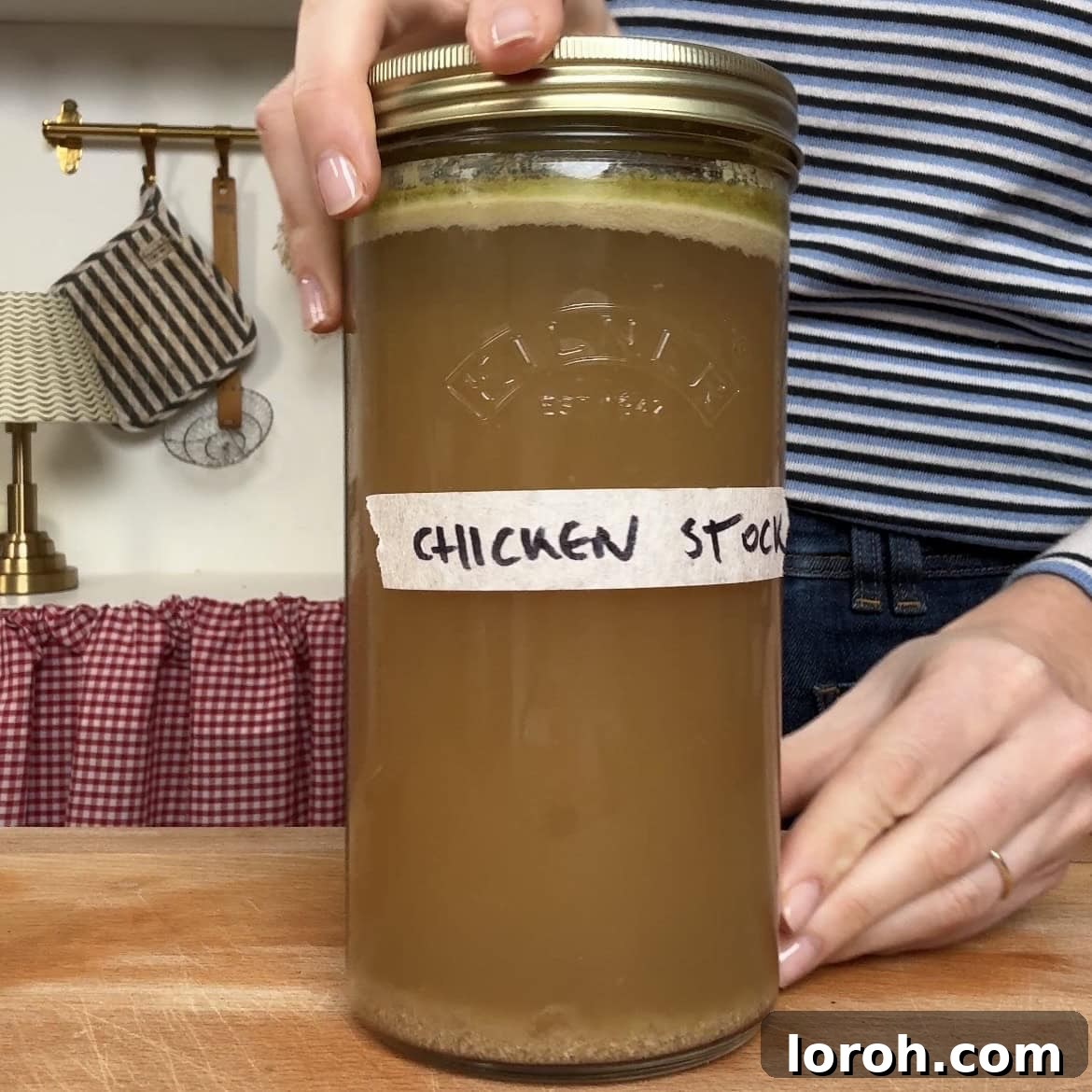
While the idea of crafting homemade stock might initially seem daunting or overly elaborate, I assure you, few culinary endeavors will transform your home cooking as profoundly as a truly exceptional homemade chicken stock. Far superior to any store-bought alternative, a well-made stock is a foundational pillar of delicious cuisine – rich, deeply nourishing, bursting with complex flavors, and incredibly versatile. It’s also surprisingly straightforward to prepare, primarily requiring patience for a slow simmer. Best of all, it offers a fantastic opportunity to repurpose a leftover chicken carcass from your weekly roast, turning what might be waste into liquid gold.
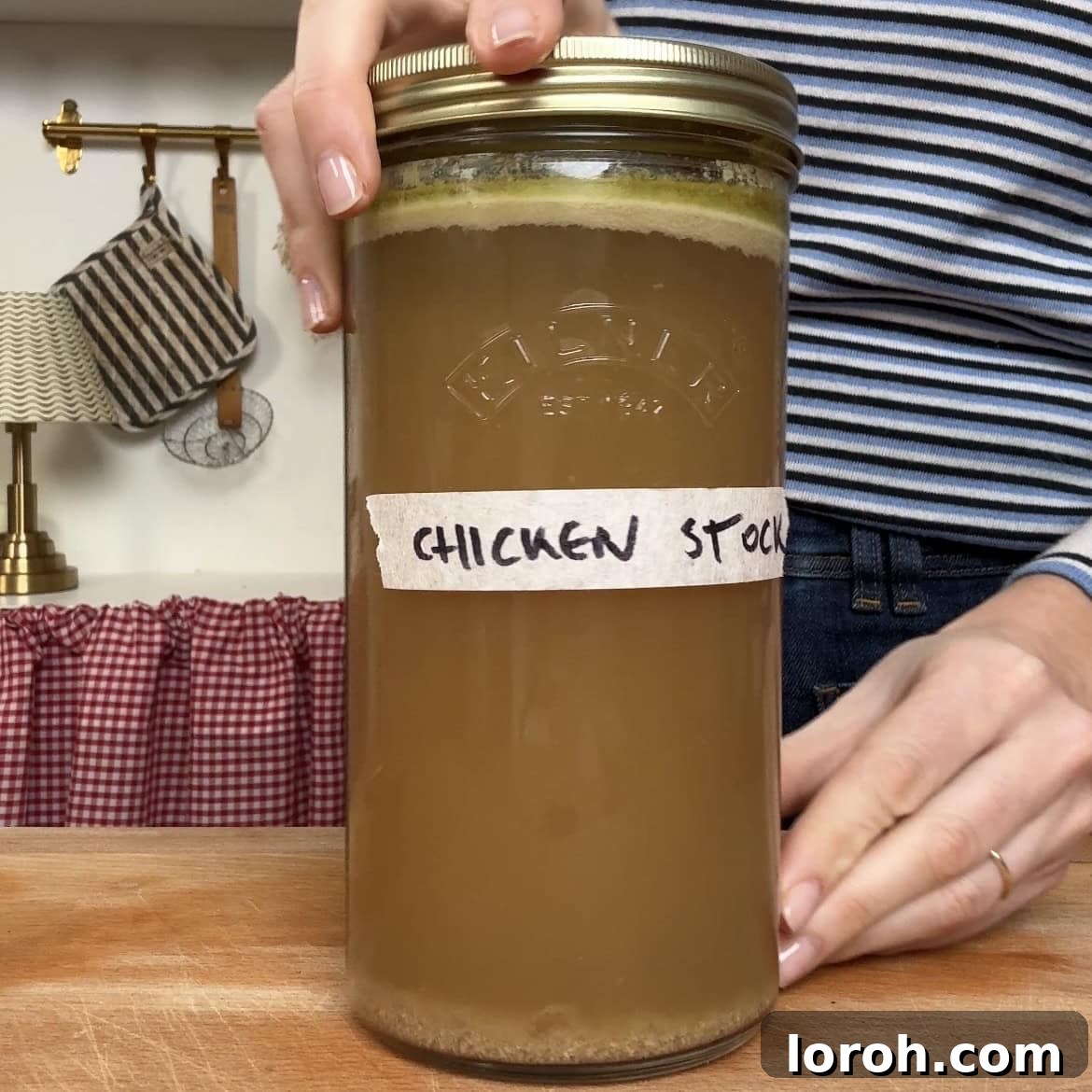
The true beauty of homemade chicken stock lies in its immense versatility. Not only can you customize its flavor profile with various aromatics during the cooking process, but its application in the kitchen is boundless. Imagine the comforting depth it adds to a bowl of pastina, the aromatic base it provides for a fragrant chicken tom yum soup, or the authentic richness it brings to a classic French chicken in a pot. Beyond these examples, it’s the secret ingredient in countless risottos, gravies, sauces, and braises. This comprehensive guide will walk you through everything you need to know to make homemade chicken stock, offering a simple step-by-step process and invaluable tips to ensure your stock is consistently rich, crystal clear, and wonderfully jiggly – a sign of its collagen-rich goodness!
Table of Contents
- Why You Will Love This Homemade Chicken Stock Recipe
- The Essential Ingredients for Superior Stock
- Flavorful Substitutions and Creative Variations
- What to Avoid for Perfect Chicken Stock
- Step-by-Step Guide: How to Make Homemade Chicken Stock
- Expert Cooking Tips for the Best Stock
- Frequently Asked Questions About Chicken Stock
- Recipes Elevated by Homemade Chicken Stock
- Homemade Chicken Stock Recipe Card
Why You Will Love This Homemade Chicken Stock Recipe
Creating your own chicken stock at home is more than just a cooking task; it’s an investment in the flavor and nutrition of every meal you prepare. Here’s why you’ll be making it again and again:
- Unmatched Richness and Depth of Flavor: Unlike the often bland, one-dimensional profiles of store-bought cartons, homemade stock boasts an incredible depth of flavor. The slow simmering process extracts a complex symphony of tastes from the chicken bones and vegetables, resulting in a savory base that elevates any dish to gourmet status. This rich, umami-packed liquid forms the heart of truly unforgettable meals.
- Sustainable and Economical: This recipe is a champion of zero-waste cooking! It provides an excellent opportunity to utilize kitchen scraps – primarily leftover chicken carcasses, but also vegetable trimmings like onion skins and carrot peels. By transforming these would-be discards into a valuable ingredient, you significantly cut down on food waste and save money on purchasing ready-made stocks. It’s a win for your wallet and the planet.
- The Ultimate Culinary Foundation: Think of homemade chicken stock as the canvas for your culinary masterpieces. Its robust flavor serves as the perfect foundation for an endless array of dishes, from hearty soups and comforting stews to silky gravies and sophisticated sauces. Good stock doesn’t just add liquid; it imbues every component of your dish with a layer of flavor that simply cannot be replicated.
- Packed with Nutrients and Health Benefits: Beyond its delicious taste, homemade chicken stock is a powerhouse of nutrition. It’s naturally rich in protein and beneficial nutrients, including collagen and gelatin, which are extracted from the bones during the long simmer. These compounds are believed to support gut health, joint function, and even skin elasticity, making your homemade stock a nourishing elixir for overall well-being.
- A Sense of Accomplishment and Control: There’s immense satisfaction in knowing exactly what goes into your food. With homemade stock, you control the ingredients, avoiding artificial flavors, excessive sodium, and preservatives often found in commercial products. The process itself, while simple, feels incredibly rewarding, deepening your connection to the food you prepare.
The Essential Ingredients for Superior Stock
The full, detailed recipe can be found in the printable recipe card at the bottom of this post – simply scroll down!
Crafting exceptional chicken stock requires only a handful of readily available ingredients, allowing the natural flavors to shine through. Here’s a closer look at what you’ll need and why each component is vital:
Chicken Carcass (1-2 cooked or raw): This is the star of our stock. I primarily use leftover cooked chicken carcasses after roasting a whole chicken, making it an ideal way to reduce food waste. Roasting the chicken first imparts a deeper, more robust flavor to the stock. However, you can absolutely use raw chicken carcasses or a mix of raw bones and chicken pieces. If using raw chicken, consider breaking down the chicken first to use the meat in other dishes. The bones, especially those from the back and wings, are rich in collagen, which gives homemade stock its characteristic gelatinous texture when chilled.
Onions (2, halved, skin on): Onions are a fundamental aromatic for any stock. Halving them exposes more surface area for flavor extraction, and leaving the skin on is a crucial tip! The onion skins contribute a beautiful golden hue to your finished stock, adding to its visual appeal without affecting the taste.
Carrots (2, roughly chopped): Carrots lend a subtle sweetness and a pleasant earthy note to the stock, complementing the chicken flavor without overpowering it. There’s no need to peel them; a rough chop is sufficient as they will be strained out later. The peels also contain beneficial nutrients and add to the overall flavor complexity.
Herbs (Small bunches of thyme and rosemary): Fresh herbs are indispensable for imparting a fragrant aroma and savory depth. I particularly love the combination of thyme and rosemary for chicken stock, as they offer classic, comforting flavors. You can also experiment with other herbs like fresh parsley stems (which add a clean, green note) or a bay leaf for an additional layer of traditional stock flavor. Use whole sprigs; there’s no need to chop them.
Garlic Cloves (8, unpeeled): Garlic adds a pungent, savory element that deepens the overall flavor of the stock. Simply smash the unpeeled cloves with the side of your knife to release their aroma and flavor. Leaving the skin on means less prep work and still extracts plenty of garlic essence.
Black Peppercorns (6-10, whole): Whole black peppercorns provide a gentle, subtle warmth and a hint of spice without making the stock overtly peppery. Using whole peppercorns prevents the stock from becoming cloudy, which can happen with ground pepper.
Cold Water (Enough to cover): Always start with cold water. This is a critical step because as the water slowly heats, it gradually draws out impurities, proteins, and flavors from the bones and vegetables. If you start with hot water, it can cause the proteins to seize up and prevent proper extraction, leading to a less flavorful and potentially cloudy stock.
Flavorful Substitutions and Creative Variations
While the basic recipe yields an outstanding all-purpose chicken stock, don’t hesitate to customize it to suit your specific culinary needs or to utilize ingredients you have on hand. Here are some excellent substitutions and variations:
For an Asian-Inspired Stock: If you’re planning to use your stock for dishes like a homemade ramen, pho, or other Asian soups, consider adding:
- Ginger & Spring Onion: A few slices of fresh ginger and a couple of whole spring onions (scallions) will infuse the stock with a wonderfully aromatic and slightly pungent flavor that is characteristic of many Asian cuisines.
- Dried Shiitake Mushrooms: These are a secret weapon for adding a profound umami depth to your stock. Just a few dried shiitake mushrooms, added whole, can transform the flavor profile, making it richer and more savory. Rehydrate them slightly first, or add them dry directly to the pot.
- Star Anise & Cinnamon Sticks: For an even more authentic Asian aroma, add one or two star anise pods and a small cinnamon stick. Use sparingly, as their flavors are potent.
Additional Herbs and Aromatics:
- Parsley: I highly recommend adding a small bunch of fresh parsley, including the stems. Parsley contributes a fresh, clean, and slightly peppery note, and the stems are packed with flavor.
- Bay Leaves: A classic addition to most stocks, one or two bay leaves will add a subtle, herbaceous depth.
- Celery: While not in the base recipe, one or two celery stalks, roughly chopped, are a traditional mirepoix component and will add a clean, vegetal note.
Adding Natural Sweetness: If you desire a slightly sweeter stock, certain vegetables can enhance this quality naturally:
- Leeks: The white and light green parts of leeks offer a mild, onion-like sweetness. Be sure to clean them thoroughly to remove any grit.
- Fennel: A small bulb of fennel, roughly chopped, will impart a delicate, anise-like sweetness that is surprisingly appealing in chicken stock.
- Parsnip: Similar to carrots, parsnips contribute a noticeable sweetness and a slightly earthy flavor.
Other Bone Types: While this recipe focuses on chicken, feel free to use a mix of poultry bones or even turkey bones after a holiday meal for a similar, flavorful stock. You can also add chicken feet for an extra collagen boost, which will make your stock even more gelatinous.
What to Avoid for Perfect Chicken Stock
Just as important as knowing what to add is understanding what ingredients can detract from the quality of your homemade chicken stock. Avoiding these items will ensure a clean, flavorful, and appealing final product:
- Cruciferous Vegetables: Steer clear of vegetables like broccoli, cauliflower, cabbage, and Brussels sprouts. When simmered for extended periods, these can release sulfurous compounds that impart an unpleasant, bitter, or overly strong odor and taste to your delicate chicken stock, making it less appetizing.
- Potatoes: Potatoes are very starchy. Adding them to your stock can release excess starch into the liquid, making it cloudy and potentially thick and gummy rather than clear and light. Their flavor also doesn’t contribute positively to a traditional chicken stock.
- Courgette (Zucchini): Courgettes have a very high water content and offer minimal flavor contribution to a long-simmered stock. Furthermore, when overcooked for hours, they can become mushy and even impart a slightly bitter taste to the liquid.
- Salt: This is a crucial rule for stock making! Do NOT add salt to your chicken stock during the simmering process. By keeping the stock unsalted, you maintain complete control over the seasoning of your final dishes. Imagine using a pre-salted stock in a recipe that already calls for salt – you risk over-salting and ruining your meal. It’s always easier to add salt later than to remove it.
- Strong Flavors that Don’t Mellow: While some strong flavors work (like ginger for Asian stock), be cautious with very pungent or dominant spices that don’t meld well with a chicken base or could easily overpower the delicate chicken flavor (e.g., too much chili, heavily smoked ingredients unless intended for a specific application).
- Too Much Tomato: A small amount of tomato paste or a quartered tomato can add depth and color, but too much tomato can turn your stock red and give it an acidic, vegetable-broth-like flavor that isn’t ideal for a classic chicken stock.
Step-by-Step Guide: How to Make Homemade Chicken Stock
Here’s a simple, visual step-by-step guide to making incredible homemade chicken stock. For detailed instructions and precise measurements, please refer to the full recipe card at the bottom of the page.
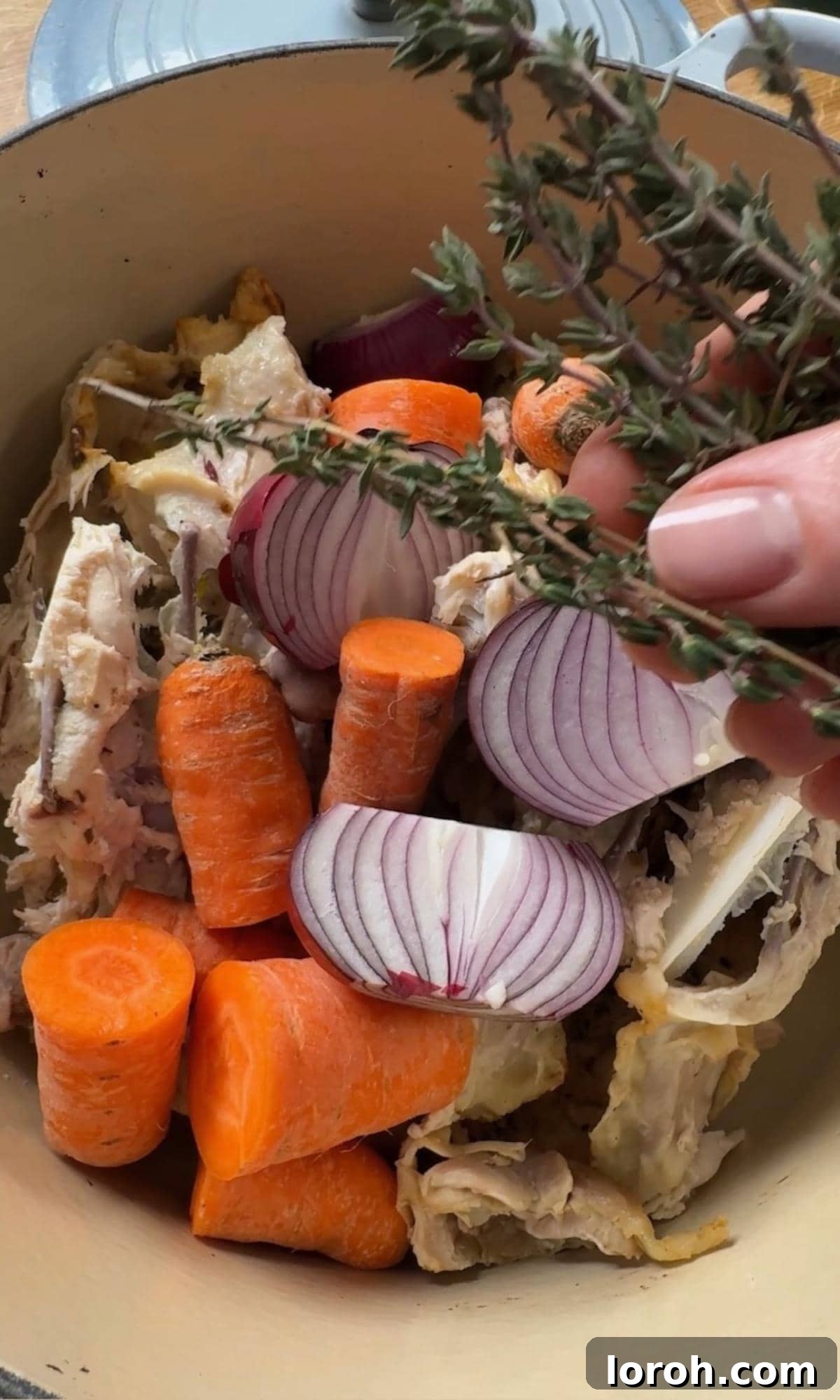
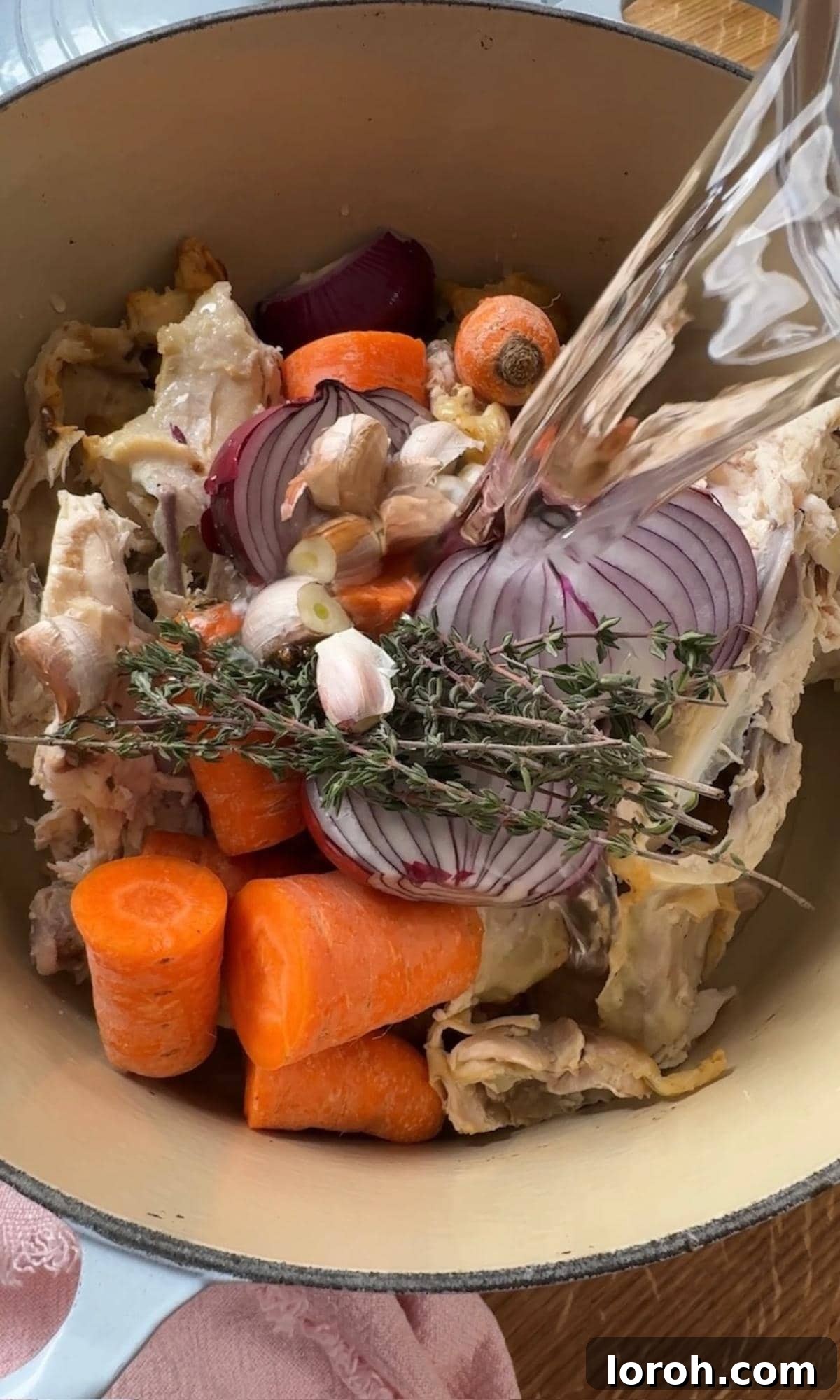
ONE: Assemble Ingredients in Pot. Begin by placing your chicken carcasses, roughly chopped carrots, halved onions (with skin), garlic cloves, peppercorns, and fresh herbs into a very large stockpot. Once all the solids are in, pour over enough cold water to completely submerge everything by about 1-2 inches. Starting with cold water is crucial for gradually extracting flavors and impurities.
TWO: Bring to a Gentle Simmer and Skim. Cover the pot with a lid and slowly bring the contents to a gentle simmer over medium heat. As it heats, you will notice foam and scum rising to the surface. Using a large spoon or a fine-mesh skimmer, carefully skim off and discard these impurities. This step is vital for achieving a clear and clean-tasting stock.
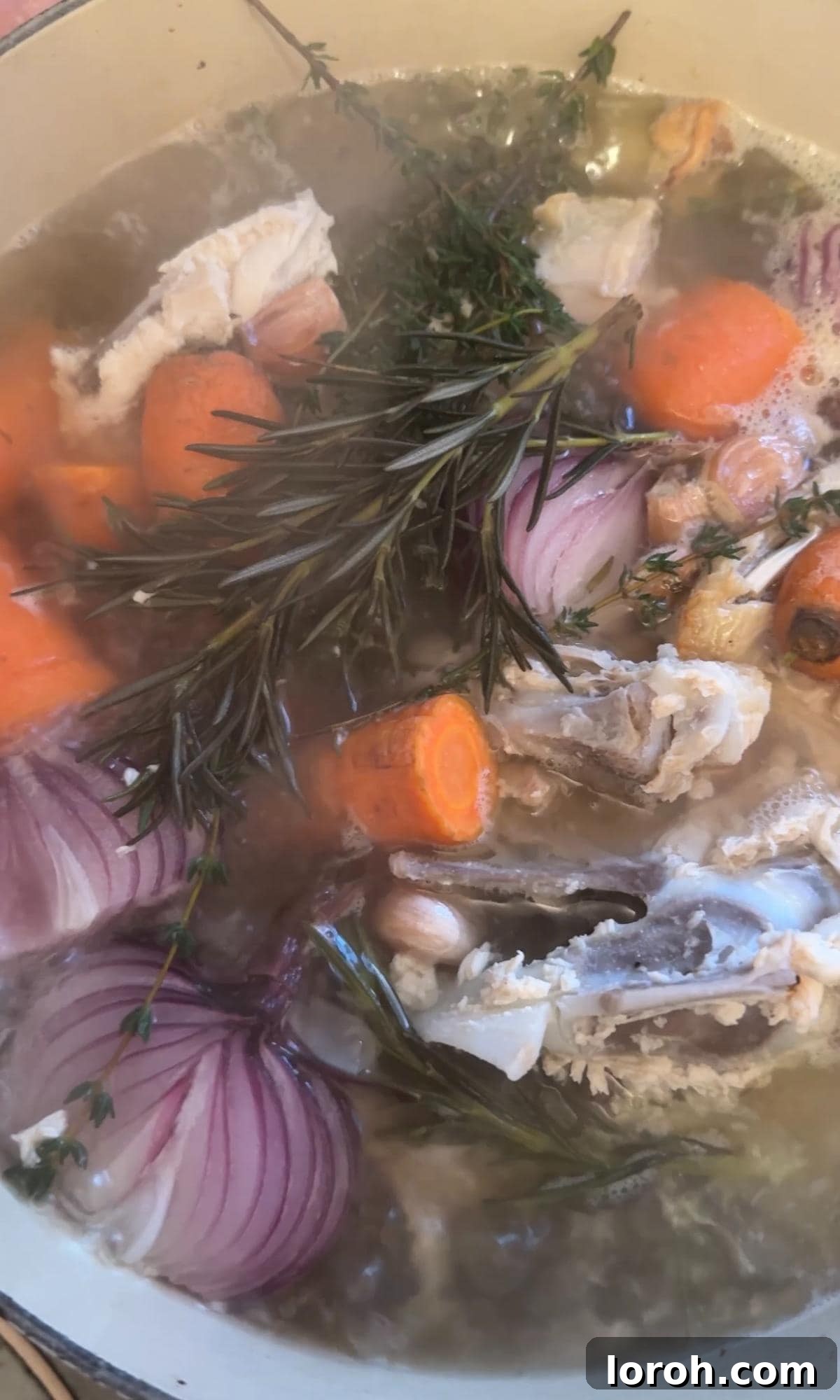
THREE: Long, Slow Simmer. Once the stock has reached a gentle simmer and you’ve skimmed the initial impurities, reduce the heat to the lowest setting. Let the stock simmer very gently, uncovered or slightly ajar, for a minimum of 3 hours. For maximum flavor and gelatin extraction, you can simmer it for up to 5 hours. Remember, the key is a very gentle simmer, not a rolling boil, which can emulsify fats and lead to a cloudy stock.
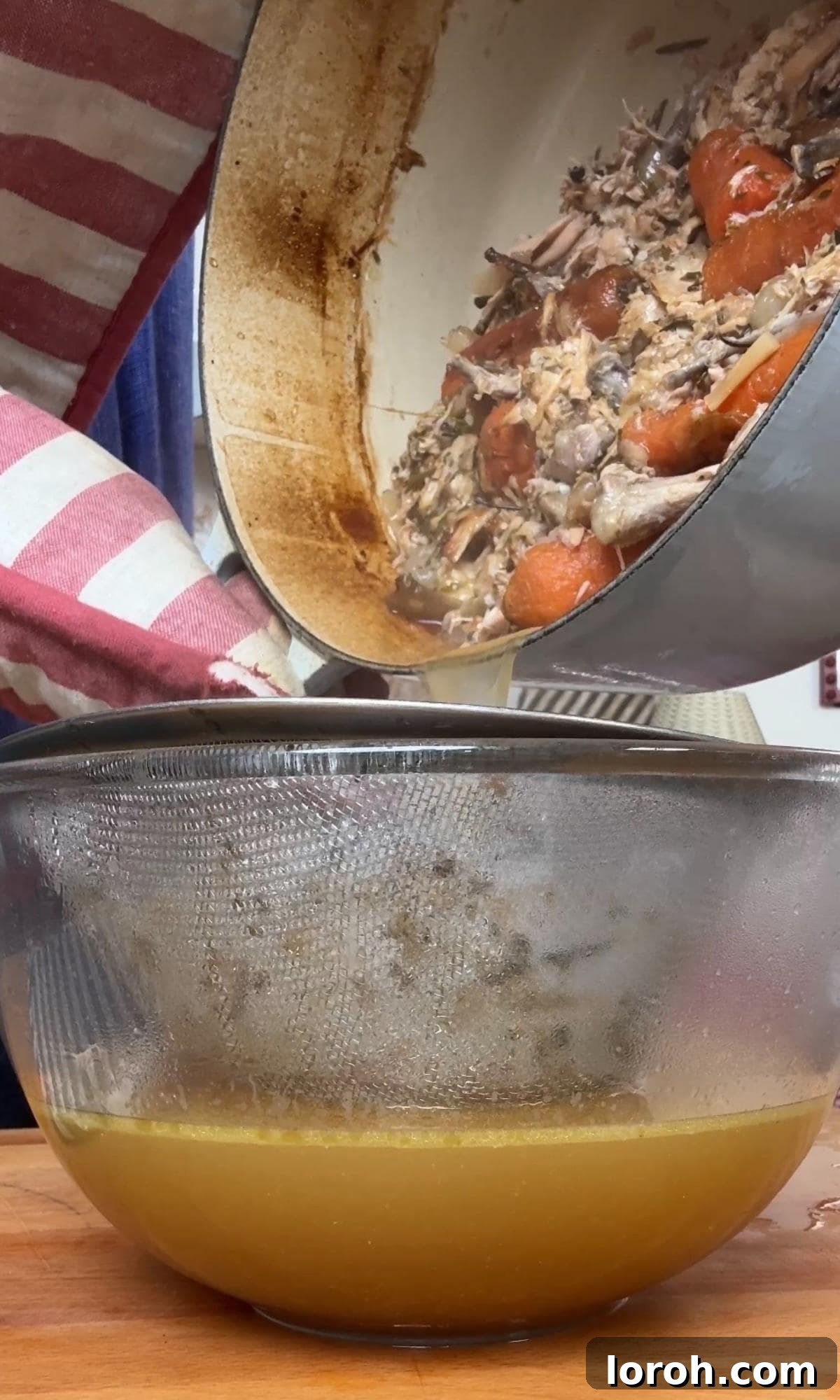
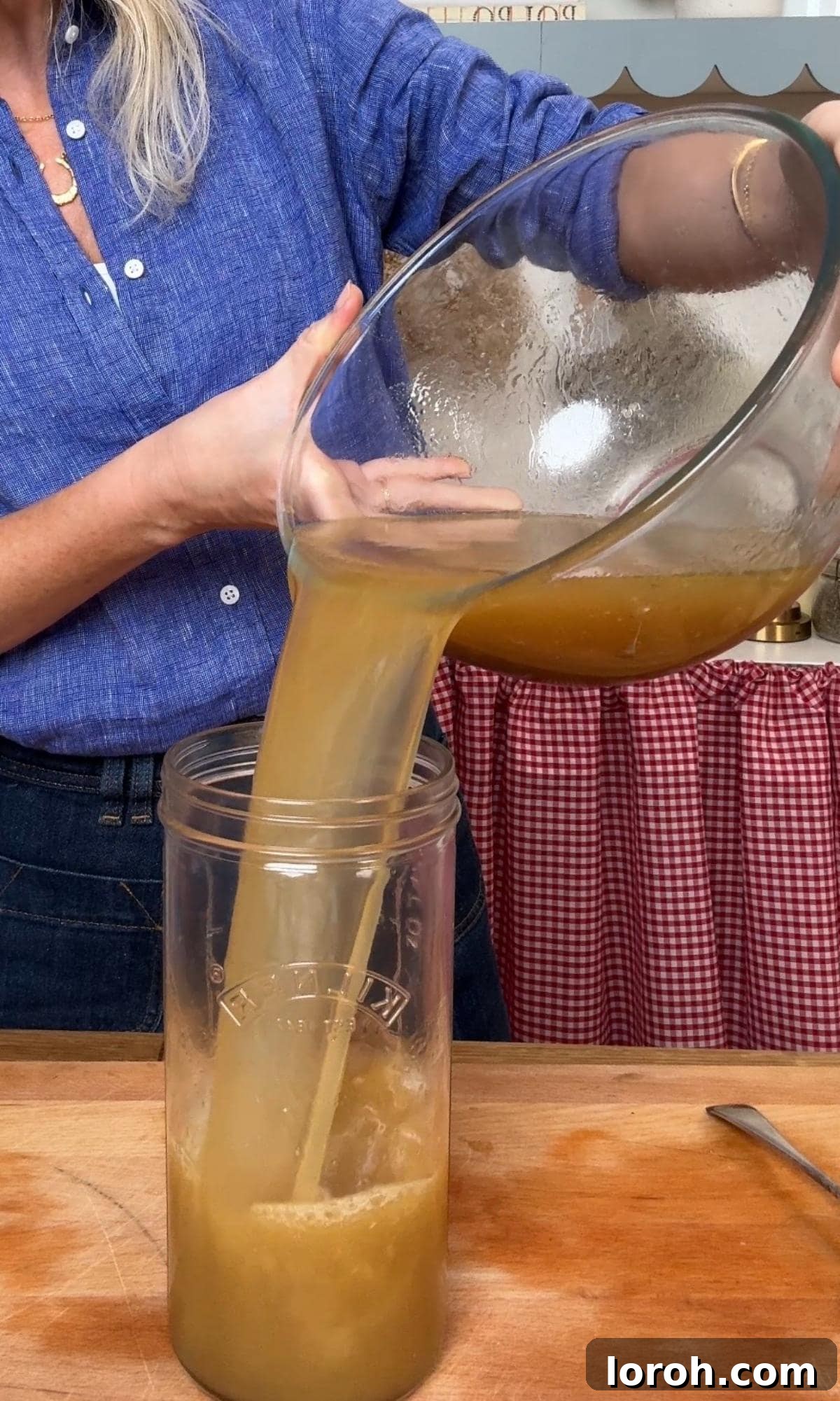
FOUR: Strain the Stock. After the simmering time is complete, carefully remove the pot from the heat. Place a fine-mesh sieve (or a colander lined with cheesecloth for extra clarity) over a large heatproof bowl or jug. Carefully ladle or pour the entire contents of the pot through the sieve, allowing the liquid to collect below. Discard all the solids caught in the sieve – their work is done!
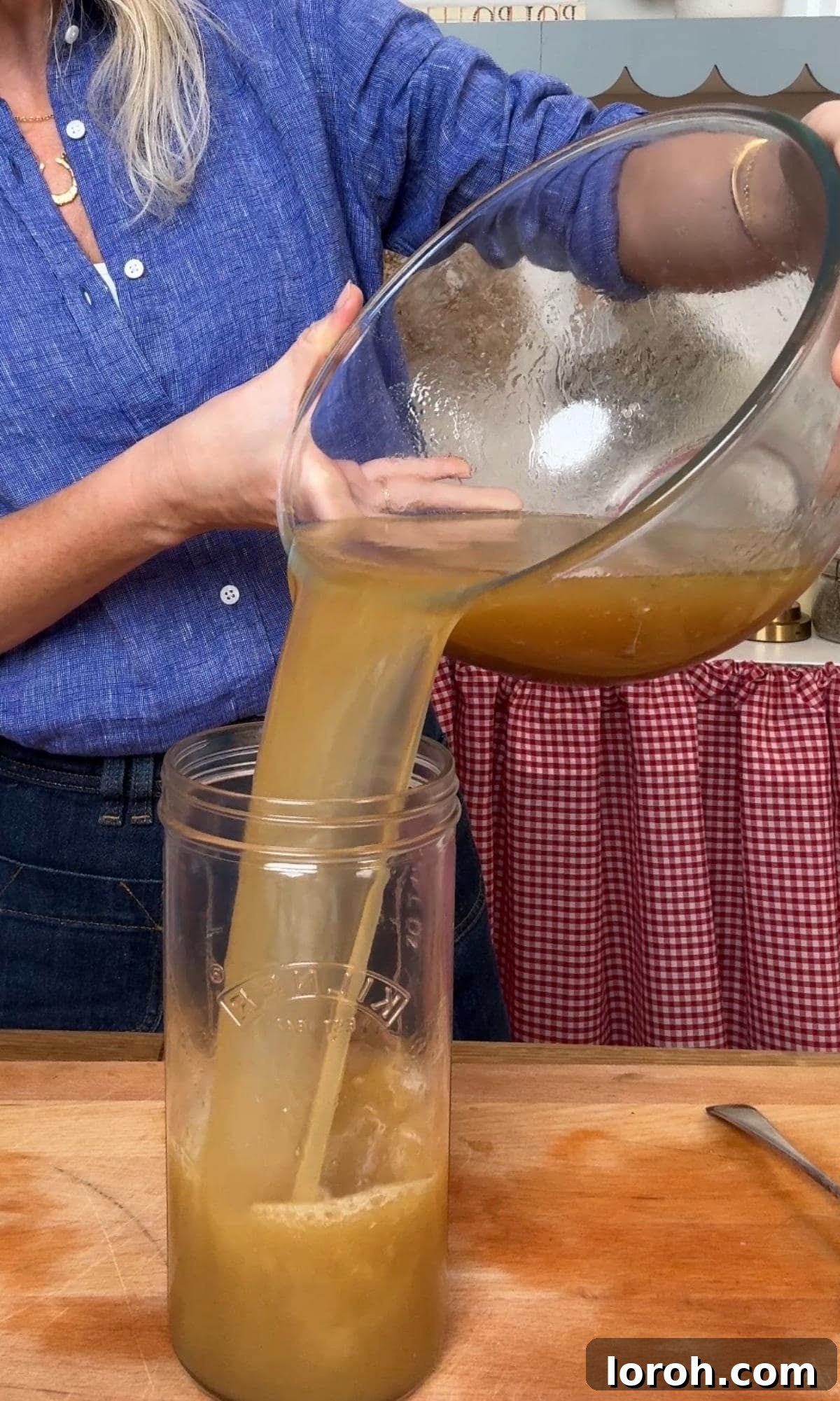
FIVE: Cool and Store. Allow the strained stock to cool significantly at room temperature (but do not leave it out for more than 2 hours). Once cooled, transfer it to airtight containers or glass jars. You can then store it in the refrigerator for immediate use or freeze it for longer storage. Ensure containers are suitable for freezing if going that route.
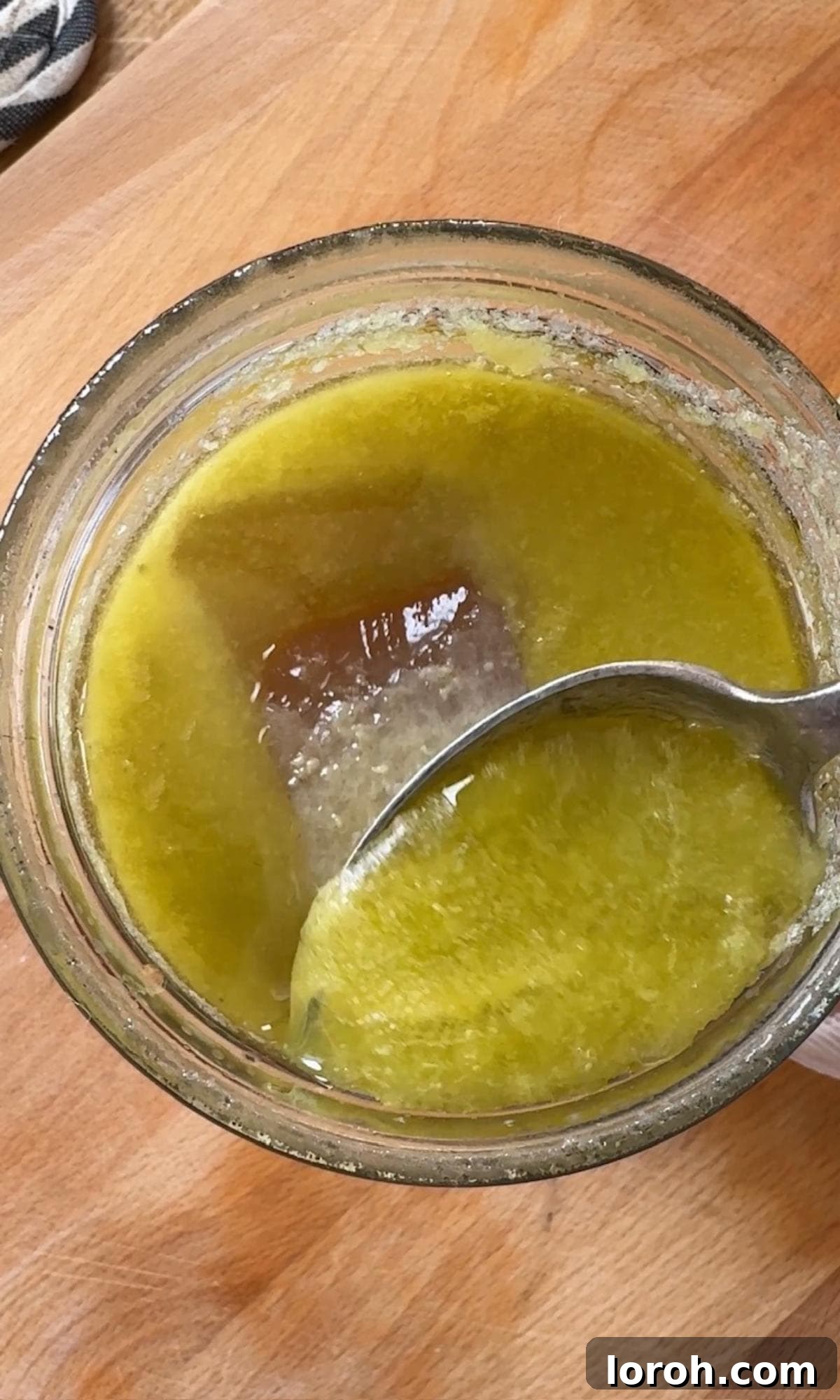
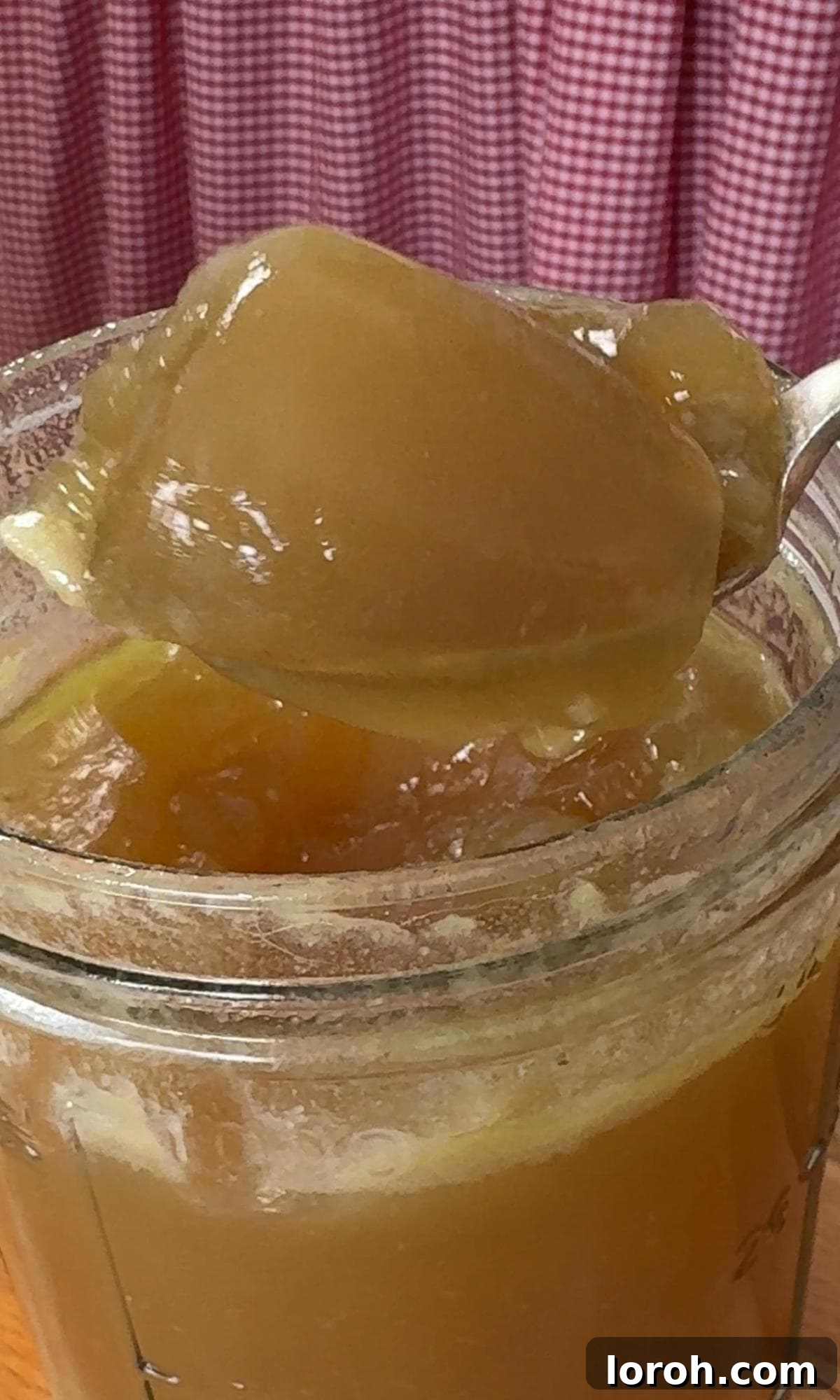
SIX: Skim the Fat (Optional but Recommended). Once the stock has been chilled in the refrigerator, any fat will solidify and rise to the surface, forming a solid layer. Use a spoon to easily skim off and discard this unwanted fat. This step results in a lighter, clearer stock, though some fat can be left for extra richness if desired.
Expert Cooking Tips for the Best Stock
Achieving a consistently clear, rich, and delicious homemade chicken stock is simple with a few key techniques. Keep these tips in mind as you embark on your stock-making journey:
- Control the Heat: The most crucial rule for clear stock is to maintain a very gentle simmer. A rolling, aggressive boil can cause the fat and impurities to emulsify into the liquid, resulting in a cloudy or greasy stock. Slow and low is the way to go for maximum flavor extraction and clarity.
- Build a Freezer Scrap Bag: Adopt a smart, waste-reducing habit by keeping a dedicated “stock scrap bag” in your freezer. Throughout the week, add leftover chicken bones (from roasted chicken, drumsticks, or wings), onion peels, carrot tops, parsley stems, and any other suitable vegetable trimmings. When the bag is full, you’ll have all the essentials ready to make a huge batch of delicious stock without extra cost or effort.
- Don’t Skip Skimming the Scum: As the stock slowly comes to a simmer, a layer of foam and impurities (often referred to as scum) will rise to the surface. It’s essential to skim this off carefully with a ladle or fine-mesh spoon. These impurities can make your stock cloudy and impart off-flavors if left in the pot. Continue skimming until the surface is mostly clear.
- Optimal Storage for Freshness:
- Refrigeration: Store your homemade chicken stock in airtight containers (like Tupperware or glass jars) in the refrigerator for up to 5 days. Ensure it’s completely cooled before refrigerating to prevent bacterial growth.
- Freezing: For longer storage, freeze portions of your stock. Ice cube trays are excellent for small quantities, perfect for sautéing vegetables or making pan sauces. For larger portions, use freezer-safe containers or sealed freezer bags (lay them flat to freeze for easy stacking). Frozen stock will last for up to 6 months. Always label with the date! Defrost overnight in the fridge before use.
- Roast Bones for Deeper Flavor: While raw chicken bones work fine for a lighter stock, roasting your chicken bones or starting with a cooked carcass (like from a roast chicken) will yield a stock with a much deeper, richer, and more complex flavor profile. The caramelization from roasting adds incredible depth.
- Mind the Vegetable Ratio: While vegetables are essential aromatics, avoid overcrowding your pot with too many or too strong-flavored vegetables. The goal is chicken stock, not vegetable broth. A balanced ratio ensures the chicken flavor remains the star.
- Resist Excessive Stirring: Once your stock is gently simmering, try to avoid stirring it too much. Agitating the ingredients can disturb impurities that have settled at the bottom and cause them to re-enter the liquid, contributing to a cloudy appearance.
- Embrace the Gelatinous “Jiggle”: A truly excellent homemade chicken stock, when chilled, should have a gelatinous, jiggly consistency. This is a sign of high collagen content, extracted from the bones, which indicates a rich, flavorful, and nutrient-dense stock. Don’t worry, it melts back into liquid gold when heated!
Frequently Asked Questions About Chicken Stock
Cloudy chicken stock is a common occurrence, usually stemming from a few key factors. The primary reason is boiling the stock too aggressively rather than maintaining a gentle simmer. A rapid boil can cause fats and impurities to emulsify into the liquid, leading to a cloudy or greasy appearance. Additionally, not thoroughly skimming off the foam, impurities, and scum that rise to the surface in the initial stages of simmering can also contribute to cloudiness. While a cloudy stock might not look as appealing as a crystal-clear one, rest assured that there is nothing inherently wrong with it – it’s still delicious and will perform exactly the same way in your cooking.
Whether to roast chicken bones before making stock depends on your preference and what you have available. I personally often use leftover roasted chicken carcasses because I roast two chickens almost every Sunday, ensuring I always have a ready supply. Unroasted bones or a raw chicken carcass will typically create a lighter, fresher-tasting stock. In contrast, roasted bones undergo caramelization, which imparts a deeper, more robust, and complex flavor profile to the stock. If you’re aiming for maximum richness and a darker color, roasting the bones first is recommended. If you prefer a milder stock, or are pressed for time, raw bones are perfectly fine. It truly comes down to the flavor you’re trying to achieve.
Absolutely! Both an Instant Pot and a slow cooker are excellent, hands-off methods for making homemade chicken stock, especially when you want to minimize active cooking time or reduce monitoring.
– Instant Pot (Pressure Cooker): This method significantly speeds up the process. Add all your ingredients and sufficient cold water to the Instant Pot. Pressure cook on high for 45-60 minutes, then allow the steam to release naturally for at least 15-20 minutes (or until the pressure valve drops) before opening the lid. This natural release prevents the stock from becoming cloudy.
– Slow Cooker: Ideal for set-it-and-forget-it convenience. Combine all ingredients and cold water in your slow cooker. Cook on low for 8 to 10 hours, or even up to 12 hours for a very rich stock. The low and slow temperature is perfect for gentle extraction and a clear result.
The terms “stock” and “broth” are often used interchangeably, but there’s a subtle yet significant distinction. Stock is traditionally made by simmering bones (often roasted), sometimes with a small amount of meat still attached, along with vegetables and aromatics for an extended period (typically 3-6 hours, or even longer). The key characteristic of stock is the use of bones, which release collagen. This collagen breaks down into gelatin, giving homemade stock its signature rich mouthfeel and gelatinous texture when chilled. Stock is generally unsalted, making it a versatile base for other recipes.
Broth, on the other hand, is primarily made by simmering meat (with minimal or no bones), vegetables, and aromatics for a shorter duration (usually 1-2 hours). Because it relies less on bones, broth tends to be lighter, clearer, and less gelatinous. It’s also typically seasoned with salt and can be enjoyed on its own as a light soup. In essence, stock is a foundational cooking ingredient, while broth can be a standalone beverage or a lighter base.
Properly stored, homemade chicken stock can last for about 4-5 days in the refrigerator. Make sure it’s kept in an airtight container once completely cooled. For longer storage, freezing is your best option. Frozen chicken stock can maintain its quality for up to 6 months. Always label your containers with the date to keep track of freshness.
Recipes Elevated by Homemade Chicken Stock
Homemade chicken stock is a versatile hero in the kitchen, forming the flavor backbone for an incredible array of dishes. Once you’ve made your own, you’ll find countless ways to incorporate its rich goodness. Here are just a few ideas for how to use your liquid gold:
Risotto is undoubtedly one of the best ways to showcase the depth of homemade chicken stock. Its creamy texture and delicate flavors truly sing when made with a high-quality stock. Try my asparagus risotto, a comforting pumpkin risotto, or a fresh zucchini risotto. It would also be absolutely delicious as the base for my spicy wonton soup, adding unparalleled depth to the broth.
Beyond these, consider using your stock in:
- Soups and Stews: Any soup or stew recipe will be transformed by homemade stock, adding a layer of flavor that powdered bouillon simply can’t match.
- Sauces and Gravies: Deglaze pans for rich gravies or build luscious pan sauces with your stock for roasted meats.
- Grains: Cook rice, quinoa, or couscous in chicken stock instead of water for extra flavor.
- Braises: Use it as the liquid base for braising meats or vegetables, infusing them with savory goodness.
- Casseroles: Elevate the liquid component of any casserole, bringing a gourmet touch to everyday comfort food.
Easy One Pot Dishes
Easy Tomato Bean Stew with Cavolo Nero
Easy Pasta Recipes
Creamy Mushroom and Spinach Pasta
Vegetarian Dishes
Tofu Noodle Soup
Soups
Grilled Cheese and Tomato Soup
If you tried this homemade chicken stock recipe or any other recipe on the site, please do leave a rating or comment below and let us know how it went! Your feedback is always appreciated.
Homemade Chicken Stock Recipe
A rich, flavourful homemade chicken stock made from a leftover chicken carcass and simple aromatics, perfect for elevating any dish.
Prep Time: 10 mins
Cook Time: 3 hrs (up to 5 hours)
Yields: Approx. 1 litre (adjustable)
Ingredients
- 1-2 cooked chicken carcasses (or raw chicken bones)
- 2 large onions, halved (skin on for color)
- 2 carrots, roughly chopped (unpeeled)
- Small bunch of fresh thyme
- Small bunch of fresh rosemary
- 6-10 whole black peppercorns
- 8 garlic cloves, unpeeled and lightly smashed
- Cold water, enough to cover all ingredients
Instructions
- Add the chicken carcasses, onions, carrots, thyme, rosemary, black peppercorns, and garlic cloves to a large stockpot.
- Pour enough cold water over the ingredients to cover them by at least 1-2 inches.
- Cover the pot with a lid and slowly bring the mixture to a gentle simmer over medium heat.
- As the stock heats and simmers, use a spoon or skimmer to remove any foam or scum that rises to the surface. Continue skimming until the surface is mostly clear.
- Once a gentle simmer is established, reduce the heat to low, ensuring the stock continues to barely bubble. Let it simmer gently for at least 3 hours, or for a richer stock, up to 5 hours. Do not let it boil vigorously.
- Carefully strain the stock through a fine-mesh sieve (or a sieve lined with cheesecloth) into a large heatproof bowl or jug. Discard all the solids from the sieve.
- Allow the stock to cool completely at room temperature (no more than 2 hours) before transferring it to airtight containers or jars.
- Store the cooled stock in the refrigerator for up to 5 days, or freeze it for up to 6 months.
- Once chilled, any solidified fat on the surface can be easily skimmed off with a spoon and discarded for a clearer stock.
Notes
- For a comprehensive visual guide, refer to the step-by-step photos above in the main article.
- To store: Keep homemade stock in an airtight container in the fridge for up to 5 days.
- To reheat: Gently warm in a saucepan over medium heat until simmering.
- To freeze: Freeze in portioned containers or sealed freezer bags (e.g., 1-cup portions). Freeze for up to 6 months. Defrost overnight in the refrigerator before using.
- Important: Do NOT add salt during the stock-making process. This allows you to control the seasoning of your final dishes when you use the stock.
Nutrition
Nutrition information is automatically calculated and should only be used as an approximation.
- Calories: 174 kcal
- Carbohydrates: 40g
- Protein: 5g
- Fat: 1g
- Saturated Fat: 0.1g
- Polyunsaturated Fat: 0.2g
- Monounsaturated Fat: 0.04g
- Sodium: 97mg
- Potassium: 808mg
- Fiber: 8g
- Sugar: 15g
- Vitamin A: 20388 IU
- Vitamin C: 31mg
- Calcium: 134mg
- Iron: 1mg