
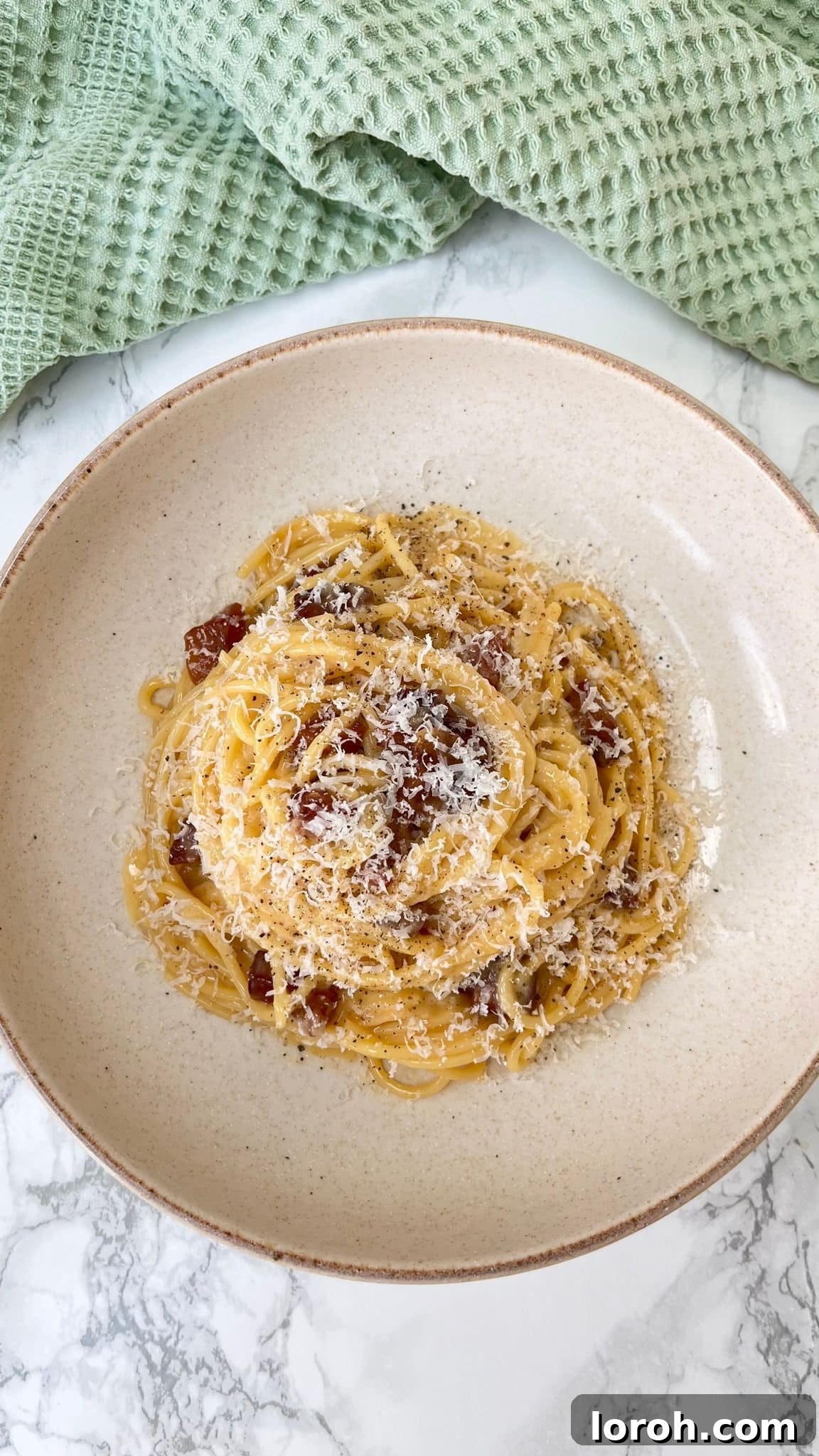
Mastering Authentic Roman Carbonara with Guanciale: A Culinary Journey to Rome
Embark on a culinary adventure to the heart of Rome with this guide to crafting the most exquisite Carbonara in the world. This isn’t just any recipe; it’s a deep dive into the philosophy and technique championed by Luciano Monosilio, famously known as “The King of Carbonara.” His approach, revered for its simplicity and profound flavor, guarantees a truly authentic experience that transports your taste buds straight to Italy.
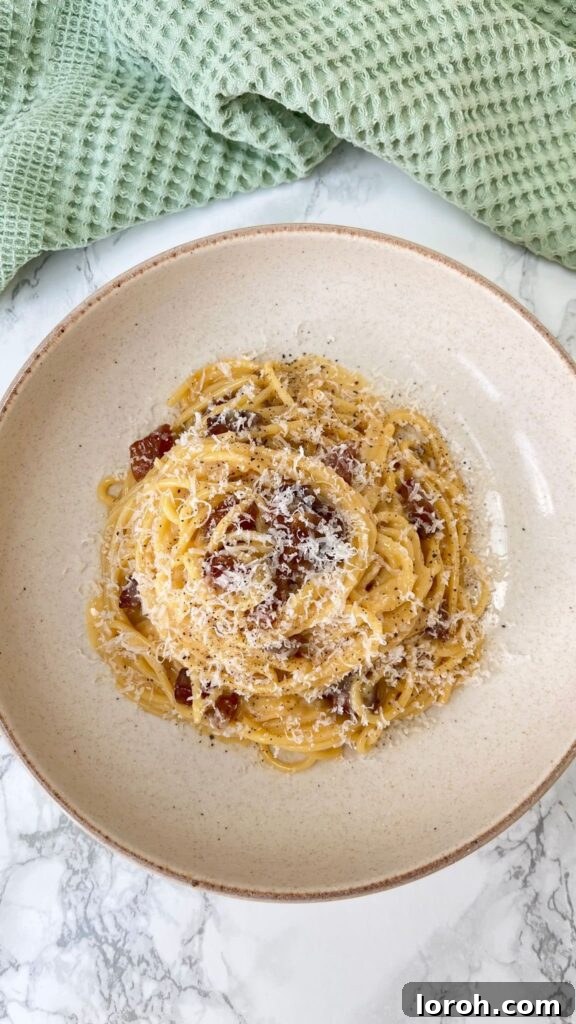
At its core, a truly great Carbonara is a symphony of just a few, high-quality ingredients: spaghetti, rich egg yolks, a blend of Grana Padano and Pecorino Romano cheeses, freshly ground black pepper, and the star ingredient, guanciale. The magic lies in the precise execution, particularly in creating that irresistibly creamy sauce without a drop of actual cream. The secret, as Monosilio emphasizes, is to meticulously emulsify the sauce off the heat in a separate bowl, far away from the scorching pan used for the guanciale. This crucial step prevents the egg yolks from scrambling, ensuring a velvety, luscious coating for every strand of pasta, rather than a clumpy, textured mess.
The Story of Carbonara: A Roman Legacy
The origins of Carbonara are shrouded in delightful mystery, much like many classic Italian dishes. While often associated with Rome, its exact inception is debated. Some theories suggest it emerged post-World War II, possibly influenced by American soldiers’ rations of bacon and eggs, which then melded with local Italian ingredients and pasta. Others link it to charcoal workers (carbonari in Italian), who might have prepared simple, hearty meals using ingredients easily carried and cooked over a fire. Regardless of its precise birth, Carbonara evolved into an emblem of Roman cuisine, a testament to how humble ingredients, when expertly combined, can create something extraordinary. It’s a dish that celebrates simplicity, richness, and the robust flavors of the Lazio region.
The Sacred Six: Essential Ingredients for Authentic Carbonara with Guanciale
The beauty of Carbonara lies in its minimalist ingredient list. Each component plays a vital role, and choosing the highest quality makes all the difference. Deviating from these core six can lead to a dish that, while perhaps tasty, strays from true Roman authenticity.
- Spaghetti: The Perfect Canvas
Long, sturdy pasta shapes like spaghetti or linguine are ideal for Carbonara. Their surface area allows the rich, creamy sauce to cling beautifully to each strand, delivering a burst of flavor with every bite. Ensure you use high-quality bronze-die pasta for a better texture and sauce adherence. - Egg Yolks: The Heart of the Creaminess
Using only egg yolks is paramount for achieving the characteristic velvety, emulsified sauce. Their higher fat content creates an incredibly rich, tight-textured sauce that coats the pasta flawlessly. Including egg whites can make the sauce too thin or lead to a stringy, scrambled texture. This is where the dish truly differentiates itself from lesser versions that resort to cream. - Guanciale: The Unquestionable Star
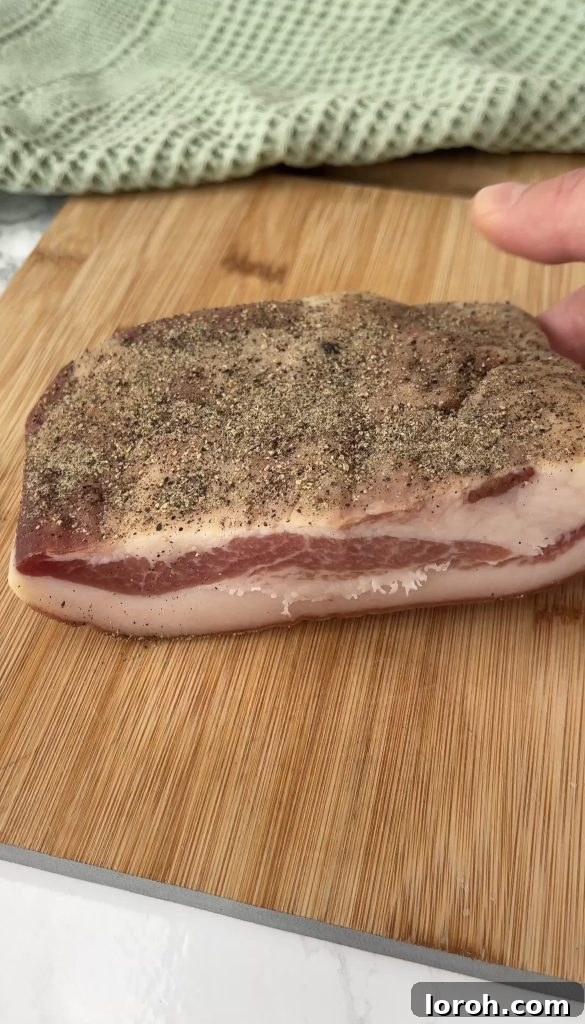
Hailing from the pork jowl or cheek (guancia in Italian), guanciale is a cured meat product that is non-negotiable for an authentic Carbonara. While it shares similarities with pancetta, guanciale is distinctively fattier, richer, and boasts a more intense, savory flavor with less (or no) smoked notes. Its unique fat renders beautifully, creating a silky oil that forms the base of the sauce and crispy, flavorful bits that add texture. Substituting with pancetta or bacon, while common outside Italy, simply won’t yield the same depth of flavor or authentic texture. - Grana Padano: The Salty Foundation
This hard, granular Italian cheese offers a salty, nutty foundation to the sauce. Similar to Parmesan but typically aged for a shorter period, Grana Padano provides a robust flavor that complements the richness of the egg yolks and guanciale. If Grana Padano is unavailable, a good quality Parmesan (Parmigiano Reggiano) can be a suitable substitute, though the flavor profile will differ slightly. - Pecorino Romano: The Pungent Kick
A hard Italian cheese made from sheep’s milk, Pecorino Romano brings a distinctive sharp, tangy, and slightly “funky” note that balances the saltiness of the Grana Padano and the richness of the guanciale. Its pronounced flavor is crucial for adding complexity and depth to the Carbonara, creating a harmonious blend of tastes that truly defines the dish. - Freshly Ground Black Pepper: The Essential Sixth Ingredient
Often overlooked as a mere seasoning, freshly ground black pepper is the unsung hero and the vital sixth ingredient. It’s not just an afterthought; its pungent, aromatic bite cuts through the rich, fatty, and salty sauce, adding a crucial layer of flavor and a delightful sharpness. Use a pepper mill for the freshest flavor, or a mortar and pestle for an even more aromatic grind.
Mastering the Technique: Important Steps for Perfect Carbonara
Crafting the perfect Carbonara is all about precision and understanding the delicate balance of heat and emulsification. These steps are critical to achieving that coveted creamy, non-scrambled sauce.
Rendering the Guanciale to Perfection
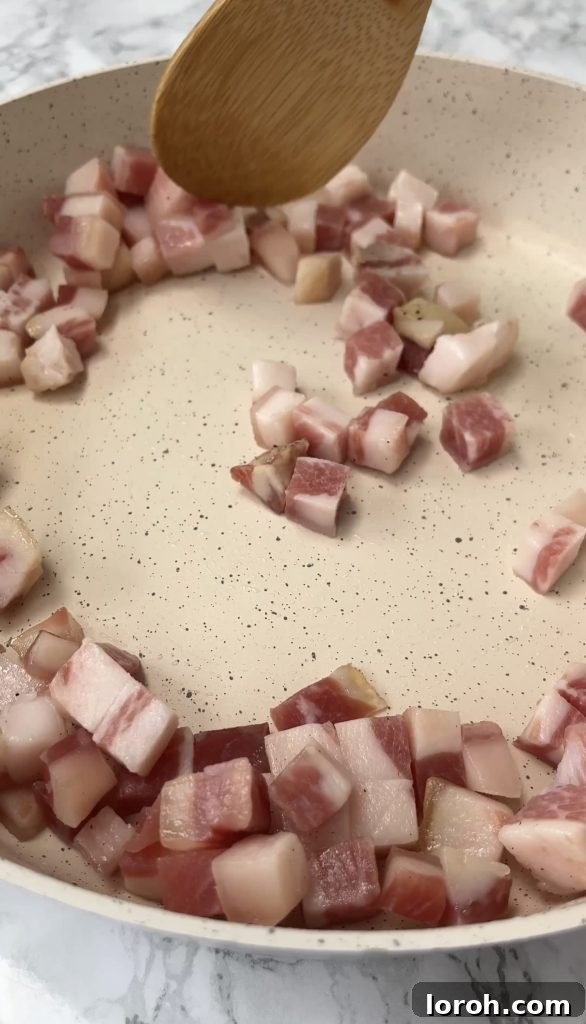
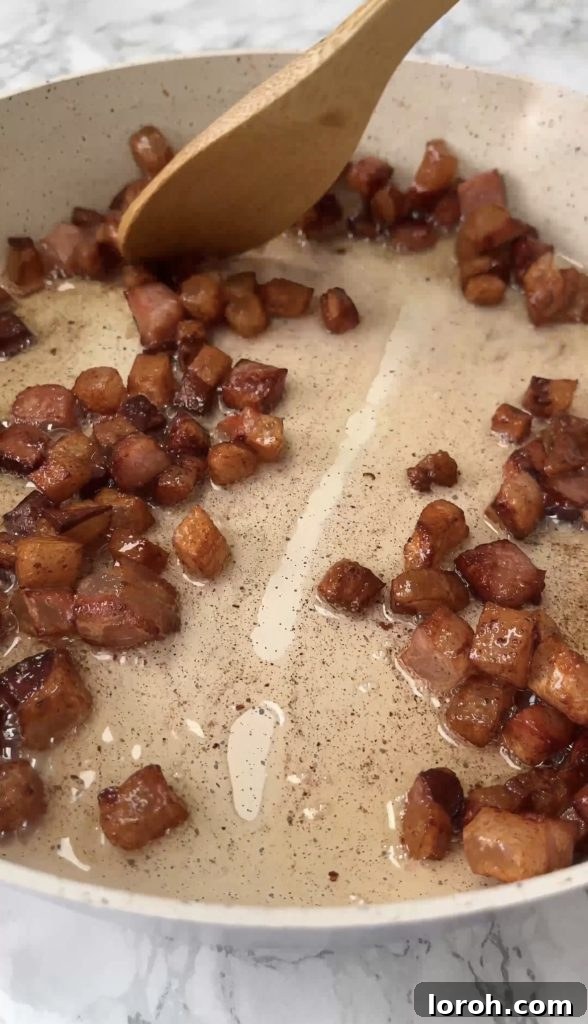
Guanciale, the cured pork jowl, is the backbone of Carbonara’s flavor. Begin by carefully removing the rind and any pepper layer from the guanciale, then cut it into uniform 1 cm (0.4-inch) cubes. This ensures even cooking. Add the cubes to a cold or slightly warm pan – a cast iron pan works wonderfully – and slowly bring up the heat. The key here is patience: allow the fat to gently render out without burning the meat. Once it starts sizzling, reduce the heat to medium-low. You want the guanciale to turn golden and crispy on all sides, releasing all its precious fat. This rendered fat is liquid gold, contributing immensely to the sauce’s richness.
The Art of Emulsification: Building the Creamy Sauce Off Heat
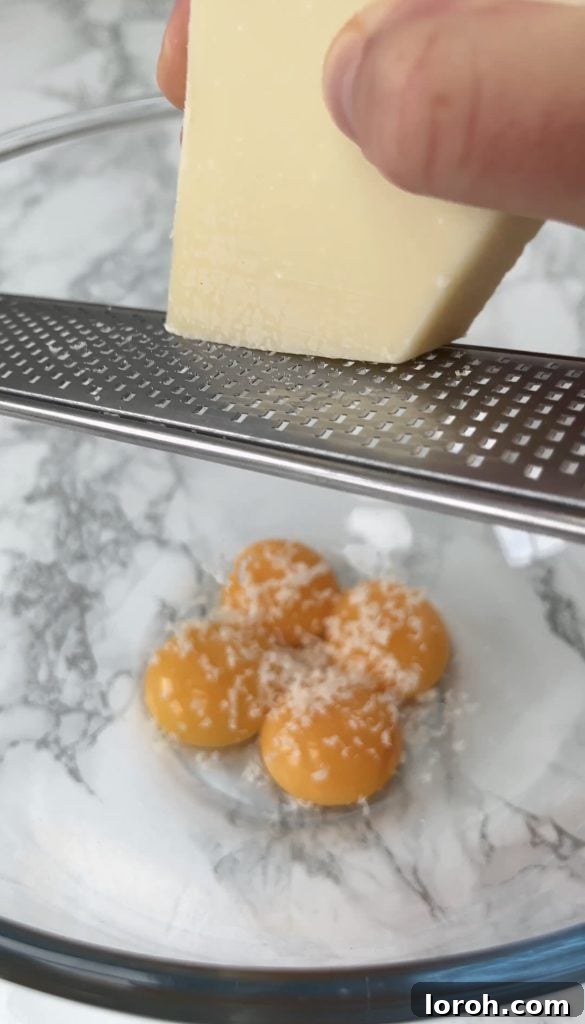
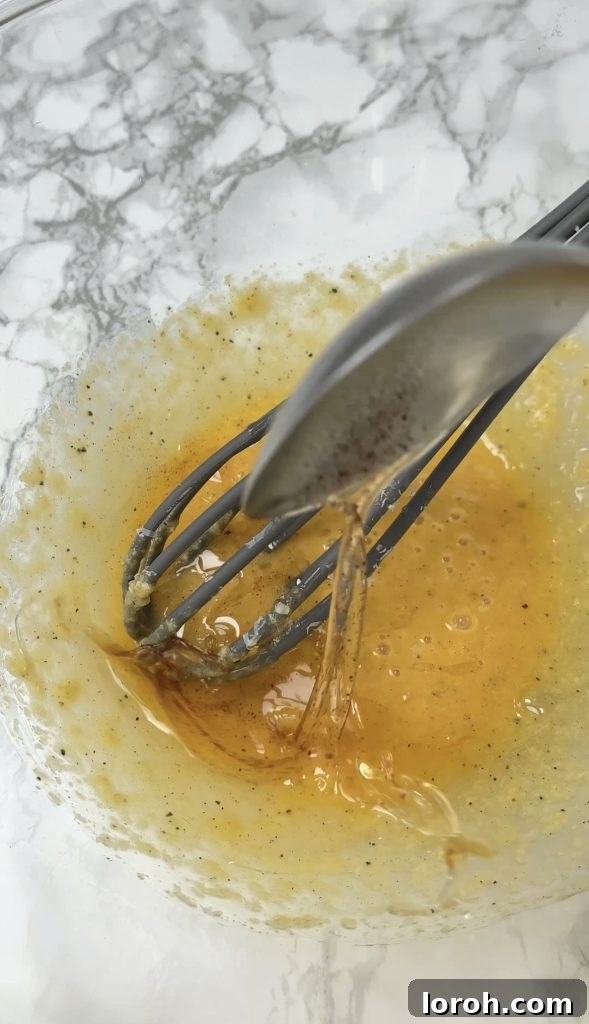
This is where many home cooks falter, leading to scrambled eggs instead of a silky sauce. In a large bowl, combine your egg yolks, grated Grana Padano, Pecorino Romano, and a generous amount of freshly ground black pepper. Whisk this mixture until it’s smooth and well-combined. Crucially, let the rendered guanciale fat cool slightly before adding it to the egg mixture. Blisteringly hot fat will instantly scramble the eggs. Once the fat is warm but not scalding, gradually whisk it into the egg and cheese mixture. This step begins the emulsification process, creating a rich and flavorful base for your sauce.
Combining Pasta and Sauce: The Gentle Toss
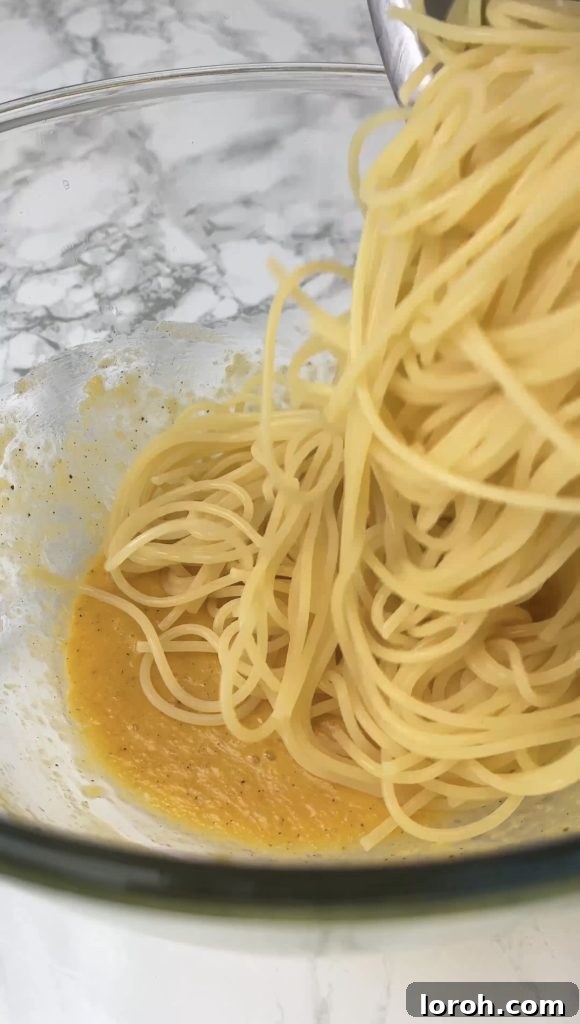
Cook your spaghetti to just shy of al dente; it will continue to cook slightly when combined with the sauce. Transfer the hot pasta directly into the bowl with your egg and cheese mixture, not back into the hot pan. Add a ladleful of starchy pasta water – this is the emulsifier’s best friend, helping to create that smooth, clinging sauce. Place this bowl over a bain-marie (a pot of simmering water) or a very gently warmed surface, and continuously toss and stir the pasta vigorously. The residual heat from the pasta and the gentle warmth from below will slowly cook the eggs to a perfect creamy consistency, thickening the sauce without scrambling. As soon as the sauce reaches your desired creaminess, remove it from the gentle heat. Finally, add the crispy guanciale bits and toss one last time to combine everything beautifully. This method guarantees the silkiest, richest, and most authentic Carbonara imaginable.
Frequently Asked Questions About Carbonara
Can I make Carbonara with Guanciale ahead of time?
Unfortunately, authentic Carbonara is a dish best enjoyed immediately. The sauce relies on the delicate emulsion of egg, cheese, and fat, which will begin to separate and dry out if left to sit. For the truly rich and silky experience, serve it straight from the bowl to your plate.
My Carbonara sauce has scrambled, what can I do?
Once the egg yolks have scrambled, it’s very difficult to salvage the sauce. However, if you catch it just as it begins to clump, quickly stirring in a bit more hot pasta water might help loosen it. To prevent scrambling in the future, always ensure you combine the egg mixture and pasta in a large bowl off the direct heat. Also, ensure the rendered guanciale fat has cooled slightly before incorporating it into the egg yolks; adding scorching hot fat will prematurely cook the eggs.
Why shouldn’t I use cream in Carbonara?
Using cream is a common misconception and a fundamental departure from traditional Roman Carbonara. The authentic creaminess comes solely from the emulsification of egg yolks, rendered guanciale fat, and starchy pasta water. Adding cream dilutes the intense flavors of the guanciale and Pecorino, and fundamentally changes the texture to something heavier and less delicate than the classic.
The Ultimate Carbonara Recipe with Guanciale
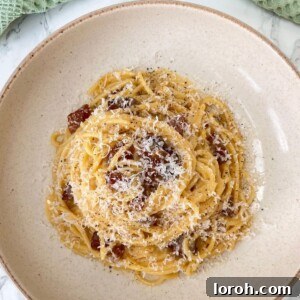
Carbonara with Guanciale
By: margie
Using guanciale in this carbonara really elevates the dish and makes it just like a carbonara you would find in Rome.
Prep time: 15 mins
Cook time: 10 mins
Total time: 25 mins
Servings: 2
Ingredients
- 280 g spaghetti
- 4 egg yolks
- 200 g guanciale
- 30 g (2 tbsp) Grana Padano, grated
- 20 g (4 tsp) Pecorino Romano, grated
- 1/2 tsp freshly ground black pepper, plus more for serving
- Reserved pasta water, as needed
Instructions
- Prepare the Guanciale: Carefully cut off the rind and any pepper layer from the guanciale. Then, slice it into 1 cm (0.4”) thick pieces, stack them, and cut into uniform 1 cm (0.4”) cubes.
- Prepare the Egg Mixture: In a large, heatproof bowl, combine the egg yolks, a generous amount of freshly ground black pepper, the grated Grana Padano, and the grated Pecorino Romano. Whisk until well blended and smooth. Set aside.
- Render the Guanciale: Add the cubed guanciale to a cold or lightly warmed cast iron pan (no additional oil or fat is needed). Sauté over medium-high heat, tossing occasionally, until the guanciale begins to sizzle and brown. Once it starts smoking slightly, lower the heat to medium-low to prevent burning. Continue cooking until the guanciale is crispy golden on the outside and tender on the inside, having rendered out most of its fat.
- Cool the Fat: Carefully drain the rendered guanciale fat into a separate heatproof bowl. Let both the crispy guanciale bits and the rendered fat cool slightly to room temperature for a few minutes. This is crucial to prevent scrambling the eggs later.
- Cook the Spaghetti: While the guanciale cools, cook the spaghetti according to package directions in generously salted water. It should be just shy of al dente, as it will continue to cook slightly when mixed with the sauce. Before draining, reserve about 1-2 cups of the starchy pasta water.
- Create the Sauce Emulsion: Add some of the slightly cooled rendered guanciale fat (about 2-3 tablespoons, or to taste) to the bowl with the egg yolk and cheese mixture. Whisk vigorously to combine.
- Combine Pasta and Sauce: Transfer the hot, just-drained spaghetti directly into the bowl with the egg yolk and cheese mixture. Immediately add one ladleful of the reserved hot pasta water.
- Emulsify and Thicken: Place the bowl over a larger pot with simmering water (creating a bain-marie) or over a very low, indirect heat source. Continuously and vigorously toss and stir the spaghetti with tongs or a large spoon. The residual heat from the pasta and the gentle warmth from the water bath will gradually cook the eggs and emulsify the sauce, making it thick and creamy. Add more pasta water, a tablespoon at a time, if the sauce becomes too thick or sticky. Continue until the sauce reaches a luscious, velvety consistency that coats the pasta beautifully.
- Finish and Serve: Remove the bowl from the heat source. Add the crispy guanciale bits to the pasta and toss one final time to combine.
- Plate and Garnish: Transfer the Carbonara immediately to warmed plates, ensuring each portion has an equal amount of crispy guanciale. Garnish with an extra sprinkle of freshly ground black pepper and a touch more grated Pecorino Romano, if desired. Serve at once, as the sauce will dry out and become sticky if left to sit.
More Authentic Italian Pasta Recipes You Might Enjoy
- Puttanesca Spaghetti with Burrata
- Ricotta Pesto Pasta
- Spicy Tomato & Nduja Pasta
- Creamy Lemon Pasta
- Creamy Weeknight Courgette Pasta
We hope this comprehensive guide inspires you to master the art of authentic Roman Carbonara. The satisfaction of creating this iconic dish with its true flavors and textures is unparalleled. Buon appetito!