
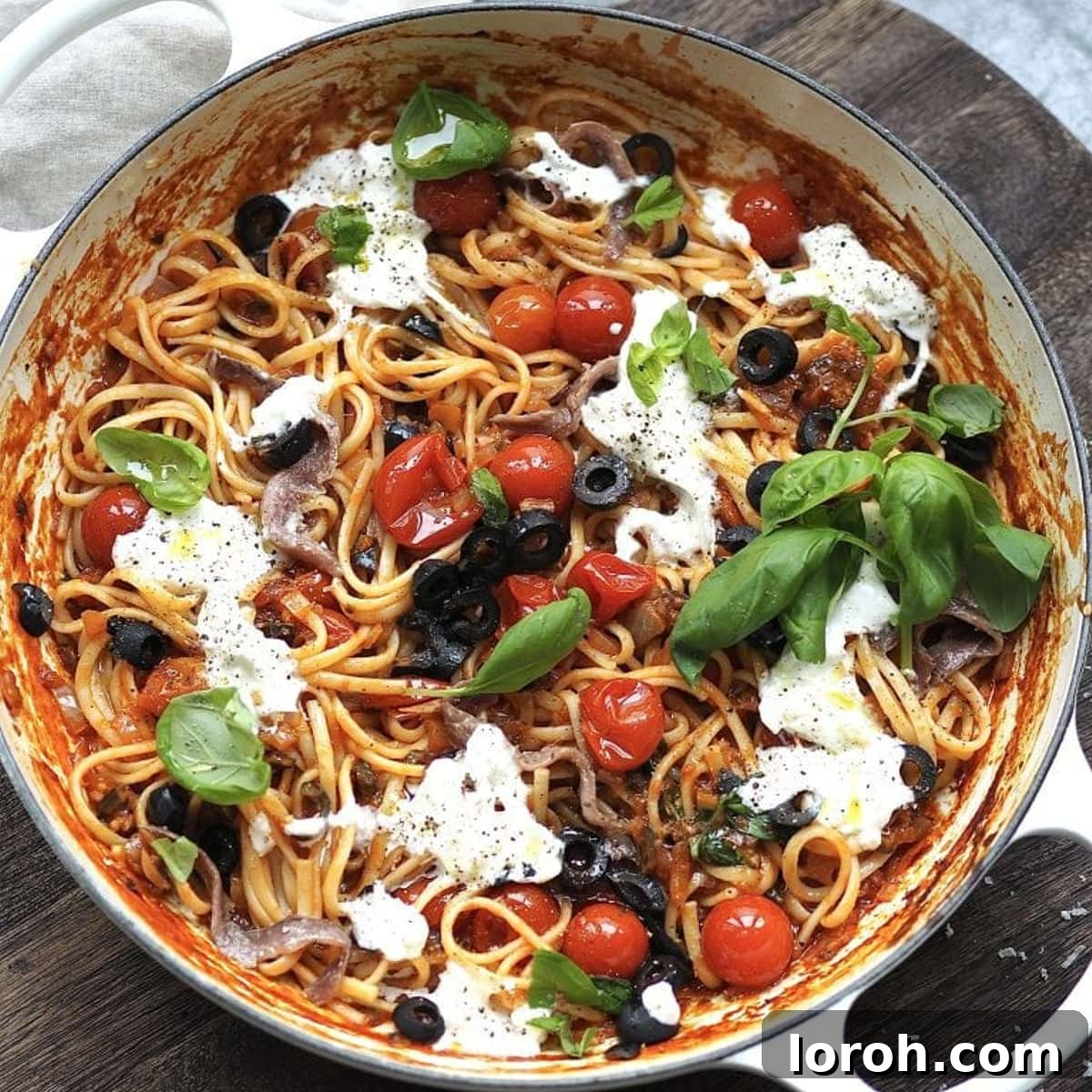
If you’re searching for an incredibly easy pasta recipe that bursts with authentic Italian flavors and can be whipped up on the busiest weeknight, look no further than my Penne Puttanesca with Burrata. This classic Neapolitan dish, traditionally known for its bold and briny profile, gets a luxurious upgrade with the addition of creamy, melt-in-your-mouth burrata. Tinned anchovies, a jar of salty olives, piquant capers, and plenty of aromatic garlic transform simple cherry tomatoes into a rich, savory sauce. Tossed with al dente pasta and finished with fresh basil, it’s a truly unforgettable meal that proves simple ingredients can create extraordinary taste in under 20 minutes.
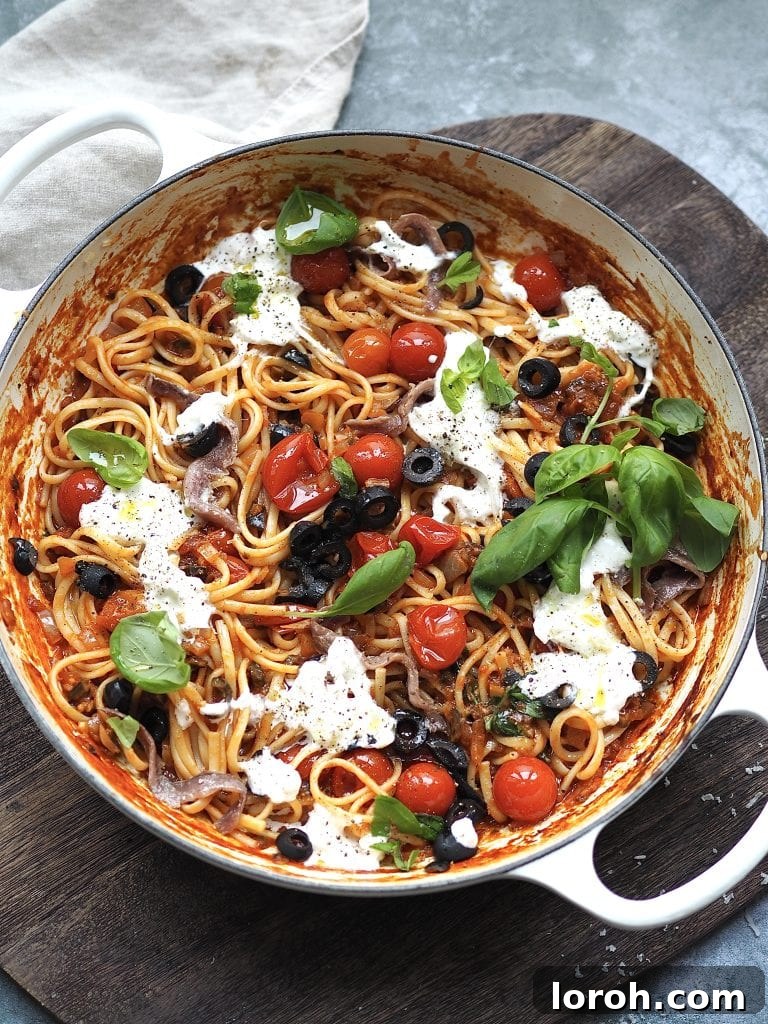
Puttanesca is the quintessential “store cupboard supper,” a testament to the brilliance of Italian cucina povera (peasant cooking). All the foundational ingredients are items most of us already have in our pantries – pasta, canned tomatoes, olive oil, garlic, anchovies, olives, and capers. This makes it an ideal choice for a last-minute meal when you crave something deeply satisfying without a trip to the grocery store. Its ability to come together in just 20 minutes makes it a weeknight hero, delivering maximum flavor with minimal effort.
A Note on Pasta Choice for Puttanesca
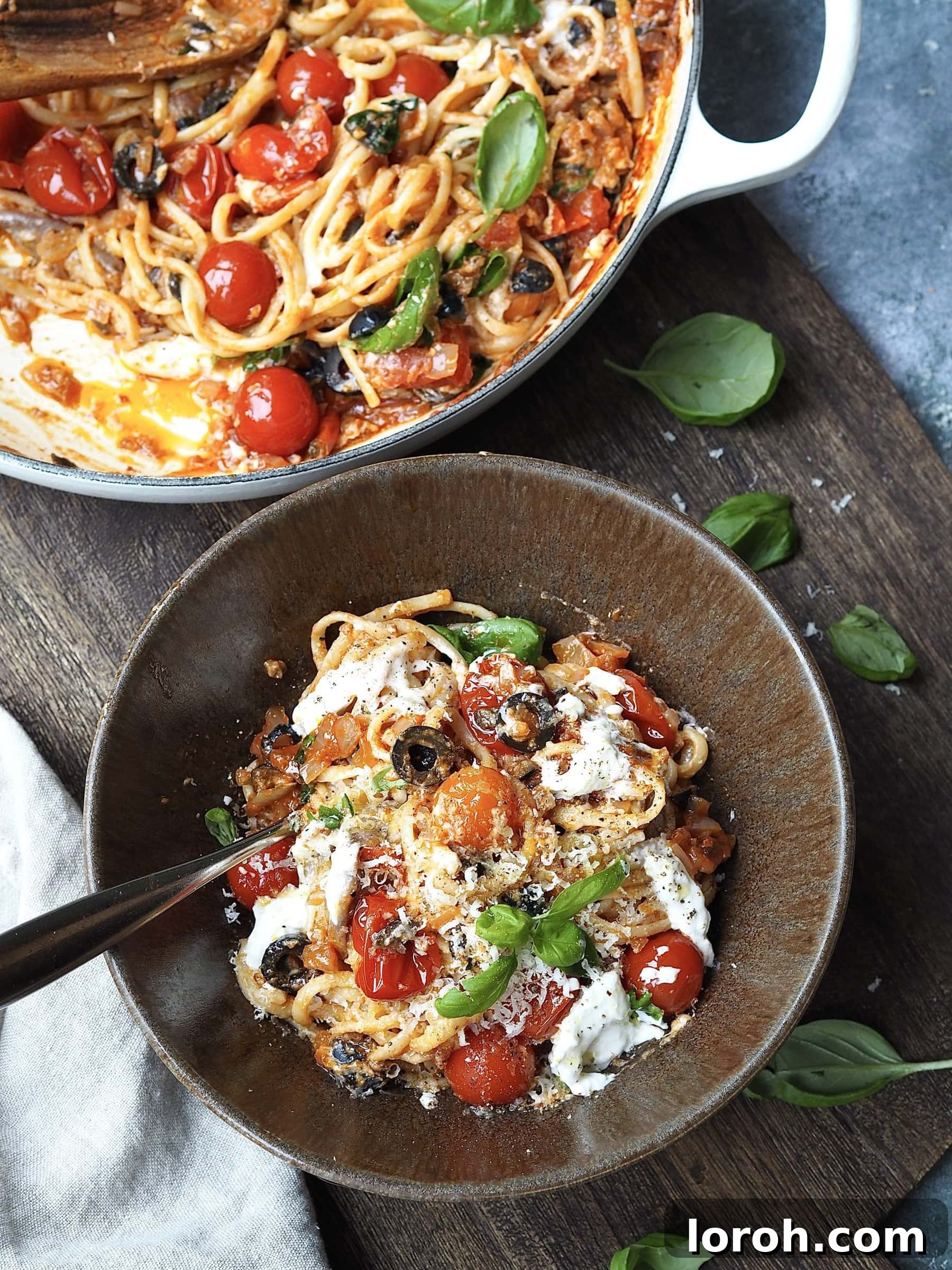
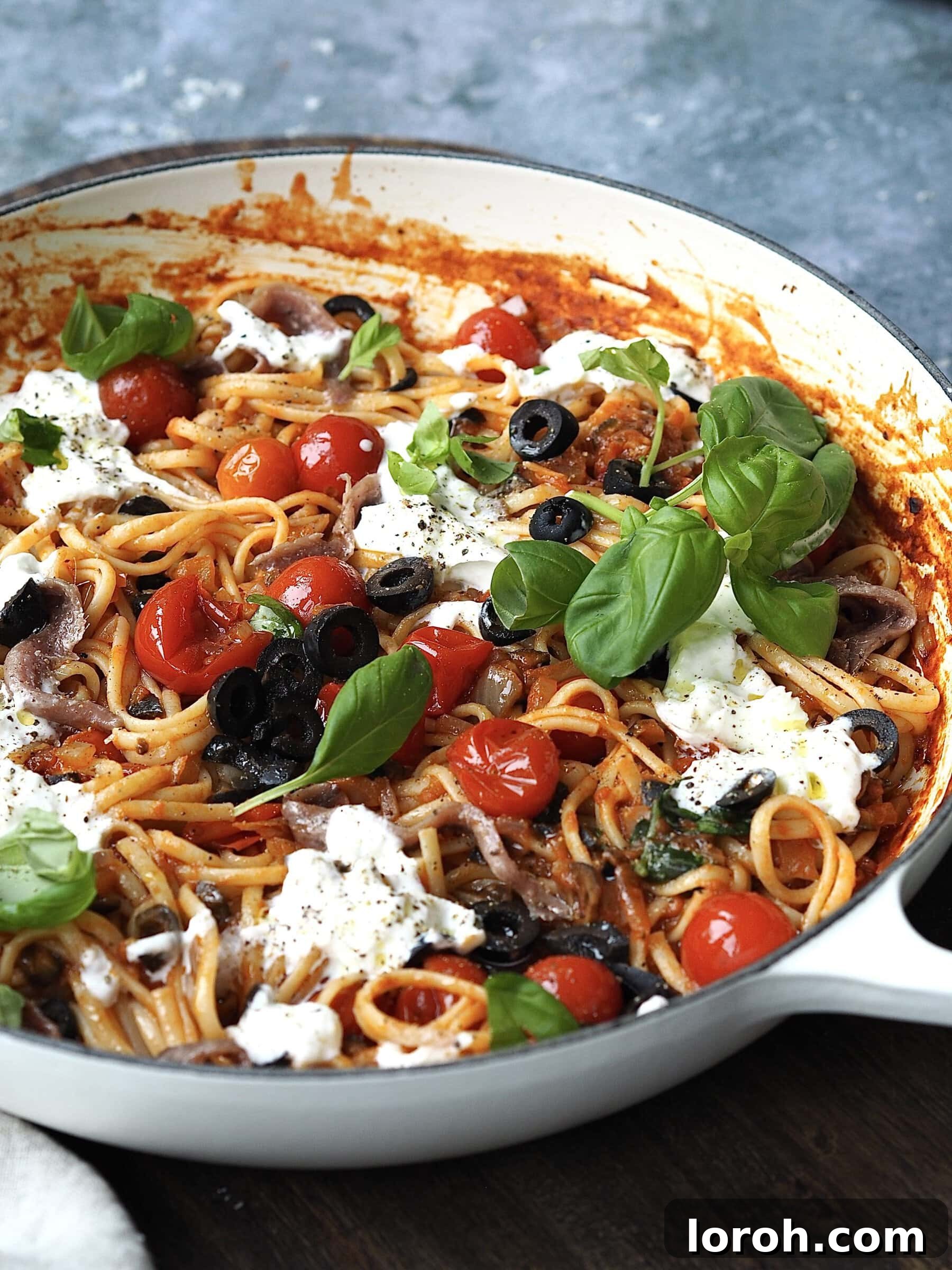
While the recipe title specifies “Penne Puttanesca,” you might notice linguine in some of my photographs. This was simply a matter of what I had on hand when the light was perfect for shooting – linguine or nothing! The beauty of this sauce is its versatility; it pairs beautifully with almost any pasta shape you prefer. Penne, a short, ridged tubular pasta, is an excellent choice as its grooves and hollow interior perfectly capture and hold the rich, chunky sauce. However, feel free to use what you have in your pantry or what you love most. Spaghetti, linguine, bucatini, or even a shorter pasta like rigatoni or fusilli would be equally delicious. For those feeling particularly ambitious, making homemade garganelli or any fresh pasta would elevate this dish to an even more sublime experience, offering a texture that beautifully complements the robust puttanesca flavors. The key is always to cook your pasta perfectly al dente, ensuring it maintains a slight bite and doesn’t become mushy when tossed with the sauce.
Table of Contents
- A Note on Pasta Choice for Puttanesca
- The Intriguing Story of Pasta Puttanesca
- Why You’ll Fall in Love with This Recipe
- Key Ingredients for Authentic Puttanesca
- Easy Substitutions and Exciting Variations
- Step-by-Step Guide to Making Penne Puttanesca
- Expert Cooking Tips for Perfect Puttanesca
- Frequently Asked Questions
- More Delicious Pasta Recipes You Might Like
- Penne Puttanesca Recipe Card
The Intriguing Story of Pasta Puttanesca
Pasta alla Puttanesca, a vibrant and intensely flavorful Italian pasta sauce, hails from the sun-drenched region of Campania, specifically the bustling city of Naples. Its name, which translates somewhat provocatively to ‘prostitute’s pasta’ (puttana meaning prostitute), carries a few intriguing legends that add to its allure. One widely circulated theory suggests that the dish was a quick and easy meal for the working women of Naples, prepared efficiently with readily available pantry staples during short breaks between clients. The convenience of its ingredients and rapid cooking time made it an ideal choice for their demanding schedules.
Another popular tale posits that the incredibly pungent and inviting aroma of the cooking sauce, with its strong notes of garlic, capers, and olives, would waft out into the narrow Neapolitan streets, effectively drawing customers to the establishments. Regardless of its exact, possibly scandalous, origins, what’s unequivocally clear is that puttanesca was born out of culinary ingenuity and a desire to create a deeply satisfying, full-flavored meal using simple, inexpensive ingredients. It perfectly embodies the spirit of “cucina povera,” or “poor kitchen” cooking, where resourcefulness, bold flavors, and minimal waste are paramount. This rich and storied history only adds to the charm and deliciousness of this bold and beloved pasta dish, which continues to be a favorite around the world.
Why You’ll Fall in Love with This Recipe
This Penne Puttanesca with Burrata is more than just a meal; it’s a culinary experience that checks all the boxes for a perfect weeknight dinner, or even a casual weekend feast. Here’s why it’s destined to become a staple in your kitchen and a firm family favorite:
- Accessible and Affordable Ingredients: True to its roots in cucina povera, this recipe relies on pantry staples that are both easy to find in any grocery store and incredibly budget-friendly. You likely have most of the base ingredients – pasta, canned tomatoes, olive oil, garlic, anchovies, olives, and capers – on hand already, making it the perfect spontaneous cooking dream without needing a special shopping trip.
- Incredibly Adaptable: Whether you’re working with what’s specifically in your fridge or cupboards, or tailoring it to suit specific taste preferences or dietary needs, this recipe is remarkably forgiving and versatile. You can effortlessly adjust the spice level from mild to fiery hot, swap out the fresh herbs, or even incorporate extra vegetables for added nutrition and bulk. It’s truly a canvas for your culinary creativity.
- The Ultimate Weeknight Warrior: Forget lengthy prep times, complicated cooking techniques, and stacks of dirty dishes. This dish comes together incredibly fast, often in just 20 minutes from start to finish. It’s absolutely perfect for those demanding evenings when you need a delicious, deeply satisfying, and healthy meal on the table in a flash without sacrificing flavor.
- Explosion of Bold, Authentic Italian Flavor: Despite its simplicity and remarkable speed, this puttanesca does not compromise on taste. The harmonious combination of savory anchovies, intensely briny olives, tangy capers, naturally sweet cherry tomatoes, and aromatic garlic creates a symphony of bold, umami-rich flavors that will tantalize your taste buds and transport you straight to the heart of Naples.
- Gourmet Touch with Creamy Burrata: The final touch of fresh, creamy burrata elevates this rustic and humble dish to an unexpectedly gourmet status. Its luscious, milky texture and mild, rich flavor beautifully contrast the robust, piquant sauce, adding a touch of luxurious indulgence and a delightful creaminess that is simply irresistible, all without any extra effort.
Key Ingredients for Authentic Puttanesca
For precise measurements and the full recipe, please refer to the detailed recipe card at the end of this article.
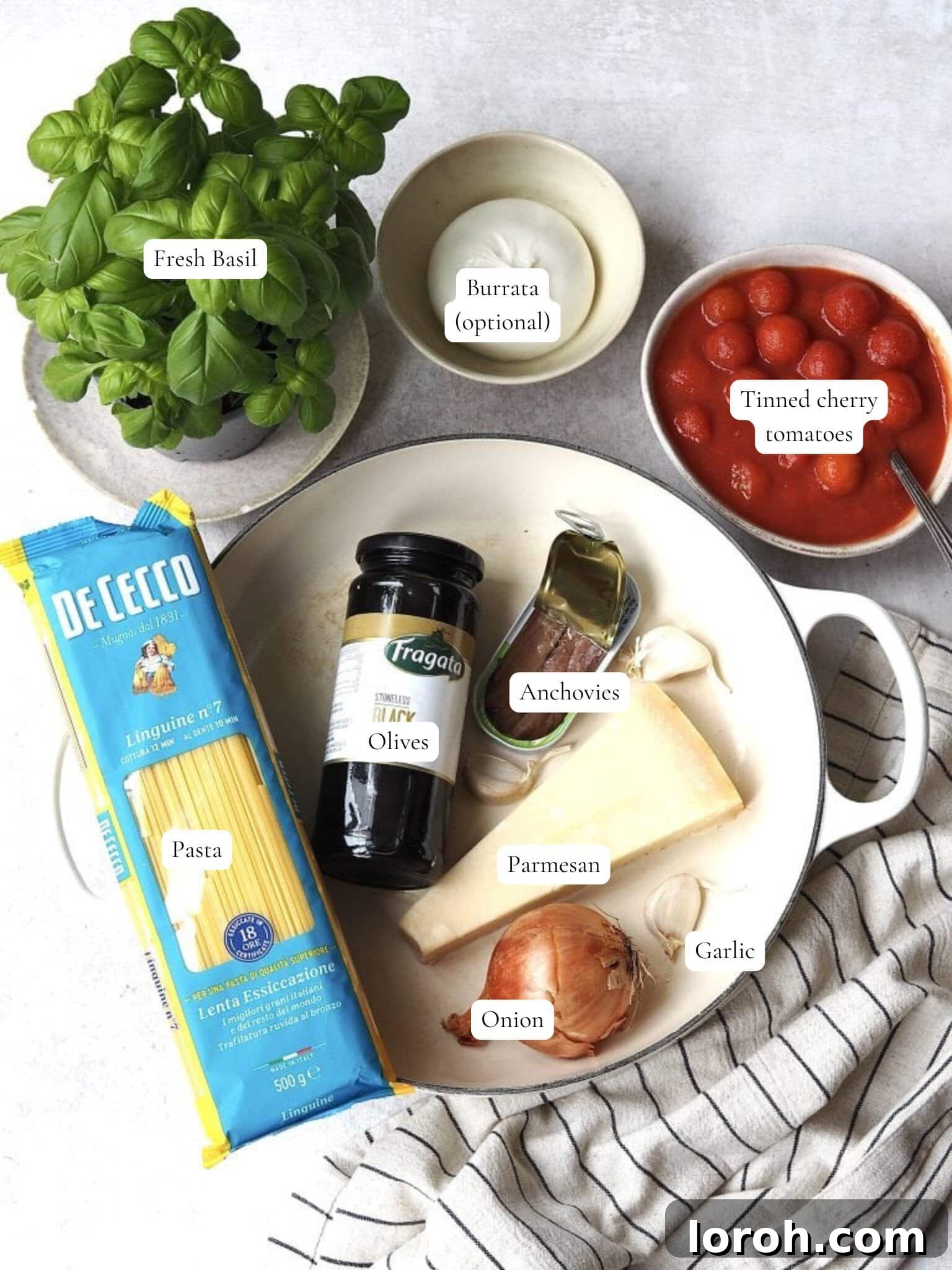
The magic of Penne Puttanesca lies in its simplicity and the bold flavors of its few, high-quality ingredients. Here’s a closer look at what you’ll need and why each element is crucial:
- Penne Pasta: As discussed, penne is an excellent choice due to its ridged, tubular shape that masterfully captures the chunky sauce. However, feel free to use other sturdy shapes like rigatoni, ziti, or even long strands like spaghetti or linguine. The most important thing is to cook it perfectly al dente, offering a pleasant chew that contrasts the rich sauce.
- Tinned Cherry Tomatoes: The quality of your tomatoes dramatically impacts the final dish. Tinned cherry tomatoes are highly recommended over standard chopped tomatoes or passata. They provide a natural sweetness, a brighter flavor, and a delightful texture that elevates the sauce. I particularly love using varieties from premium brands like Mutti or Sainsbury’s Taste the Difference for their consistent quality.
- Anchovy Fillets: Do not skip these! Anchovies, preferably packed in oil, are the umami powerhouse of authentic puttanesca. They don’t make the dish “fishy”; instead, they completely dissolve into the sauce, adding a profound, savory depth and complexity that is incredibly difficult to achieve through other means. They are truly essential for that characteristic, irresistible flavor profile.
- Black Olives: A generous handful of black olives is vital. Kalamata olives are excellent for their rich, fruity, and slightly tangy flavor, but any good quality black olives packed in brine will work. Pitted olives are a fantastic time-saver, allowing you to simply chop them roughly and toss them in. Their salty, briny notes are central to the puttanesca experience.
- Capers: Jarred capers, typically packed in brine, add a bright, tangy, and slightly floral bite that cuts through the richness of the sauce. Their distinctive piquant flavor is non-negotiable for a truly classic puttanesca. Ensure they are drained well before adding.
- Garlic & Onion: These humble aromatics form the essential foundation of the sauce. Freshly minced garlic and finely diced white onion are sautéed to create a fragrant and flavorful base, contributing vital layers of taste to the overall dish.
- Fresh Basil & Burrata: These are the glorious finishing touches that elevate the dish from great to extraordinary. Fresh basil adds a vibrant, herbaceous, and sweet aroma, while burrata introduces a luxurious, creamy, and mildly sweet contrast that beautifully balances the bold, savory, and piquant notes of the sauce. Don’t forget a grating of fresh Parmesan, if desired!
Easy Substitutions and Exciting Variations
One of the many beauties of Pasta Puttanesca is its forgiving nature and incredible adaptability. It’s a dish that encourages creativity and allows you to tailor it perfectly to your personal preferences or what ingredients you happen to have on hand. Don’t be afraid to experiment!
- Capers or Olives Adjustments: If you find yourself not particularly fond of one of these classic ingredients, feel free to reduce its amount or even omit it entirely. While the sauce might lack a touch of its signature tang or brininess, it will still be incredibly flavorful. You can always increase the other briny component to compensate.
- Spicy Kick: For those who adore a bit of heat, incorporating chili is a fantastic idea. You can add a finely diced fresh red chili pepper (such as a bird’s eye chili or a milder Fresno pepper) along with the garlic and onion, which will infuse the oil with its warmth. Alternatively, stir in a generous pinch of red pepper flakes (Calabrian chili flakes are superb if you have them) with the tomatoes; the gentle hum of heat beautifully complements the sauce’s robust flavors.
- Alternative Herbs: While fresh basil is undeniably traditional and highly recommended for its sweet, aromatic notes with tomatoes, fresh parsley or even chives can be used as a worthy substitute if basil isn’t available. Fresh parsley offers a clean, slightly peppery contrast, and honestly, I often make this dish with parsley myself, especially if I’m out of basil!
- Anchovy Alternatives (for Vegan/Vegetarian): I truly implore you not to be put off by anchovies; they truly transform the sauce without making it taste discernibly “fishy.” They dissolve completely, leaving behind an irresistible savory depth. However, for a vegan or vegetarian option, simply omit the anchovies. To compensate for the lost umami, increase the amount of olives and capers, and consider adding a tablespoon of white miso paste or a splash of tamari/soy sauce (ensure it’s gluten-free if needed) for an umami boost.
- Tomato Options: While tinned cherry tomatoes provide the best flavor and texture, you can certainly use good quality chopped tomatoes (diced tomatoes) or even passata (strained tomatoes) if that’s what you have. If fresh, ripe cherry tomatoes are in season, they make an exceptional alternative! Use about 300-400g. Sauté them with the garlic and onion until they begin to soften and burst, then add a splash of water or pasta water and use the back of a spoon to gently encourage them to break down and create a rustic sauce. This method takes a little longer but is incredibly delicious when tomatoes are at their peak.
- Adding Protein: To make this dish even heartier and more substantial, consider stirring in a drained can of tuna (preferably packed in olive oil for superior flavor and texture) or mackerel along with the tomatoes. It adds a wonderful layer of meatiness and richness that pairs perfectly with the capers and olives. Cooked shrimp, flaked salmon, or even crumbled Italian sausage (browned first) would also be fantastic additions, transforming it into a more complete meal.
- Vegetarian Puttanesca (without Anchovies and Burrata): To make this recipe vegetarian-friendly (and naturally vegan if you omit the burrata and Parmesan), simply omit the anchovies. You can compensate for the lost umami by adding extra olives, capers, a pinch of dried oregano, a touch of sun-dried tomato paste, or even some nutritional yeast for a cheesy flavor if you’re skipping Parmesan. Finish with a drizzle of your best quality extra virgin olive oil.
- Add Vegetables: While not traditional, finely diced bell peppers, zucchini, or spinach can be sautéed with the onions and garlic for added nutrients and texture. This makes the dish even more wholesome.
Step-by-Step Guide to Making Penne Puttanesca
This is a simplified step-by-step guide. For complete and detailed instructions, including exact measurements and cooking times, please refer to the full recipe card located at the bottom of this page.
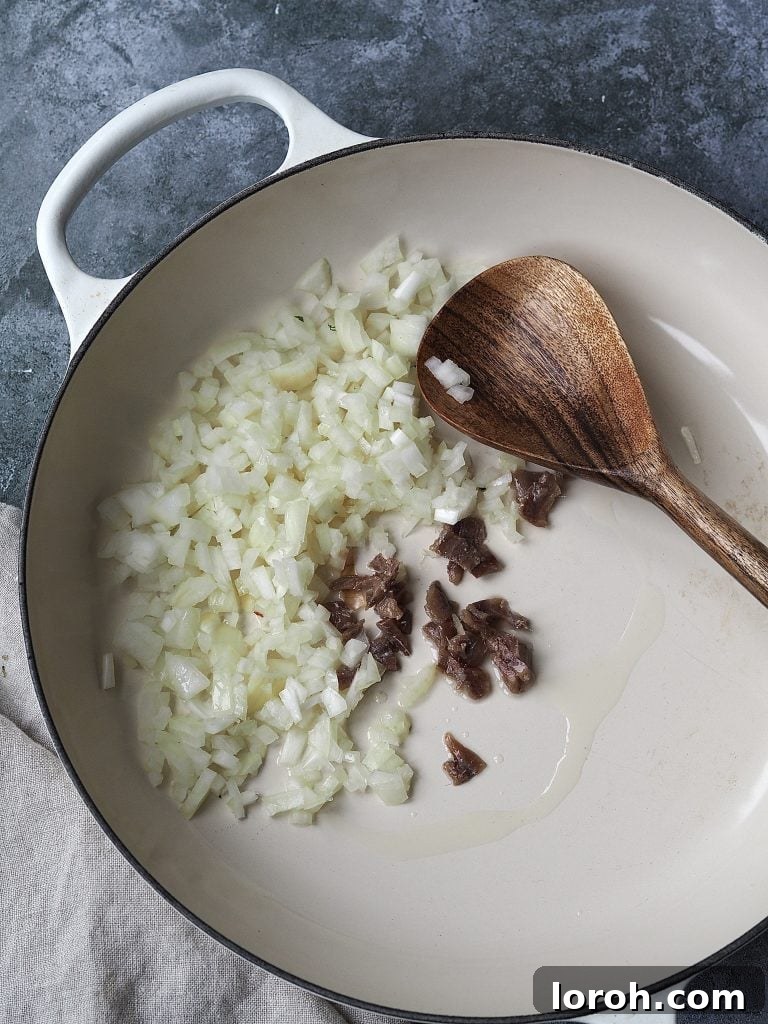
Step One: Build the Flavor Base. Begin by heating the olive oil in a large, deep pan or a shallow casserole dish over medium-high heat. Once shimmering, add the finely diced white onion. Sauté the onion for about 5 minutes, stirring occasionally, until it softens beautifully and becomes translucent. Next, introduce the tinned anchovy fillets to the pan. There’s absolutely no need to chop them finely beforehand; they will quickly and completely melt and dissolve into the hot oil, infusing it with their incredible savory depth and umami essence, which is crucial for authentic puttanesca flavor.
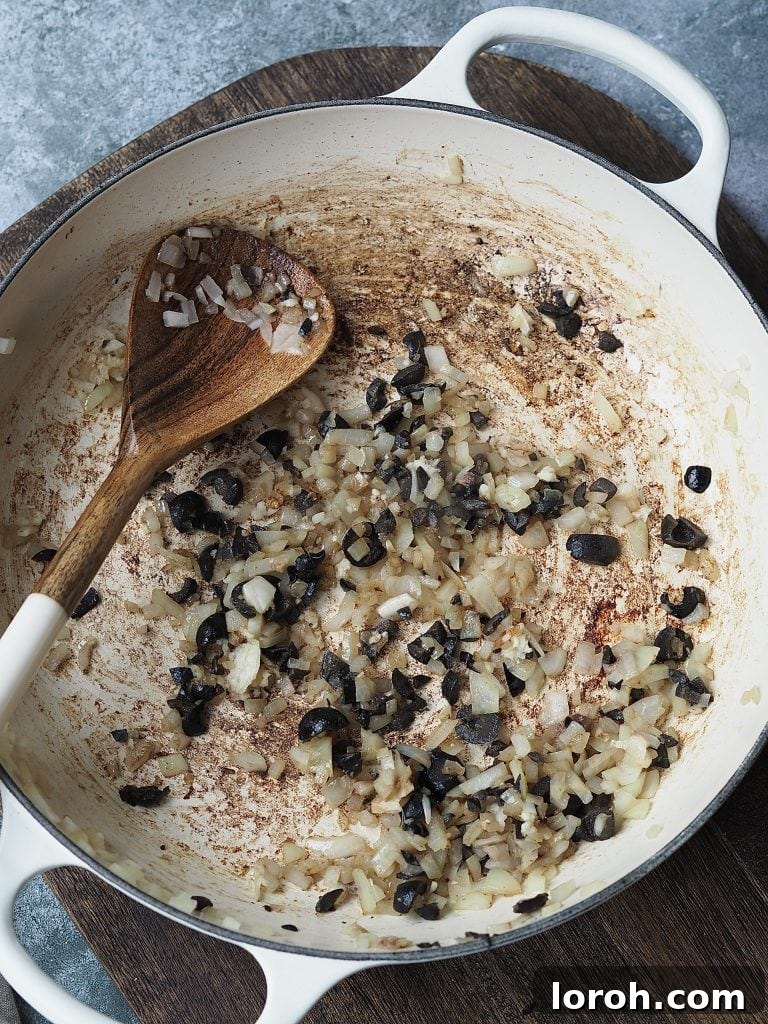
Step Two: Infuse with Aromatics and Briny Goodness. Once the onions are tender and the anchovies have fully melted away, stir in the crushed garlic, the roughly chopped black olives, drained capers, and the finely chopped basil stems (remember to reserve the basil leaves for a fresh garnish at the end). Cook this fragrant mixture for another 2-3 minutes, stirring constantly, until the garlic becomes wonderfully aromatic and all the ingredients are well combined and fragrant. In a separate large pot, bring a generous amount of heavily salted water to a rolling boil and cook your chosen pasta shape according to package directions, ensuring it remains perfectly al dente.
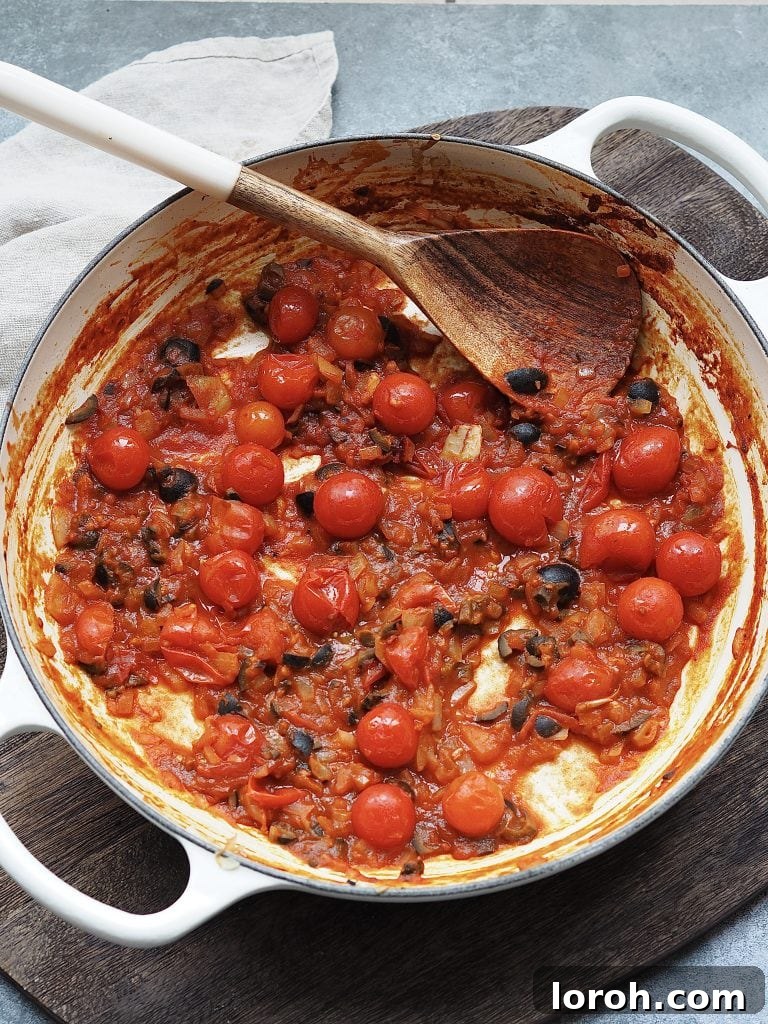
Step Three: Simmer the Sauce. Add the entire tin of high-quality cherry tomatoes to the pan with your aromatic base. If the sauce appears a little too thick or dry, now is the time to add a splash of water (or even better, some of the starchy pasta water once it’s available from your cooking pasta). Bring the entire mixture to a gentle simmer and allow it to cook undisturbed for 5-7 minutes. This simmering time allows the flavors to deeply meld together and the sauce to thicken slightly to a beautiful consistency. Taste the sauce at this stage and adjust the seasoning as needed; remember, there are many salty elements already present, so add any additional salt cautiously. Once your pasta is cooked to al dente, drain it, making sure to reserve at least one mugful of the starchy pasta cooking water – this is crucial!
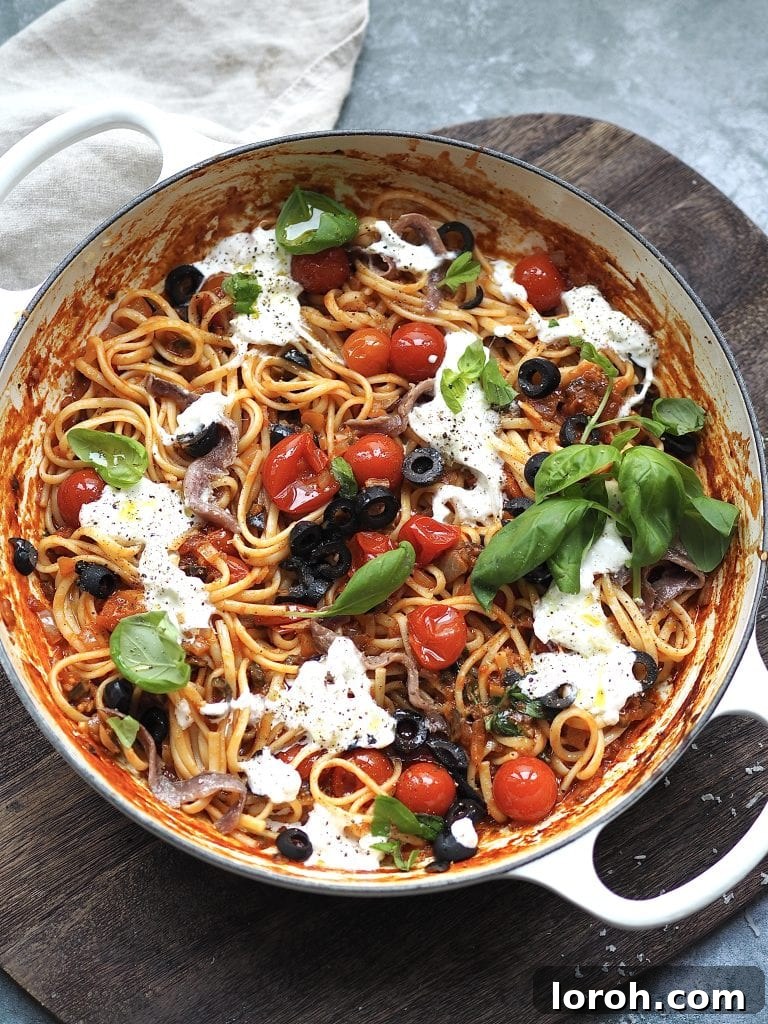
Step Four: Combine and Finish. Transfer the hot, drained pasta directly into the pan with the simmering puttanesca sauce. Toss everything together vigorously, using tongs or a large spoon, ensuring every single strand or piece of pasta is beautifully and evenly coated in the rich, vibrant sauce. Add splashes of the reserved pasta water as needed to achieve your desired consistency – you’re aiming for a nice, silky, and luxuriously saucy finish, not dry or clumpy pasta. Finally, gently tear in the fresh basil leaves and add a good grating of fresh Parmesan cheese (if using) directly into the pan. Toss once more. Serve immediately, topped with extra Parmesan and generous dollops of fresh, creamy burrata, torn over the hot pasta for that ultimate touch of indulgence.
Expert Cooking Tips for Perfect Puttanesca
Achieving a restaurant-quality puttanesca at home is surprisingly simple with just a few key techniques and considerations. These tips will help you master the dish and bring out the best in its bold flavors:
- The Magic of Pasta Water: This is arguably the most important tip for any pasta dish! Never, ever discard all your pasta water. This starchy, salty liquid is truly your secret weapon. When added to the sauce, it helps to emulsify it, creating a glossy, silky texture that beautifully coats the pasta. The starch in the water helps the sauce cling to every piece of penne, ensuring it’s wonderfully saucy and not dry. Always reserve at least a mugful before draining your pasta.
- Seasoning with Care: Puttanesca inherently contains many salty elements – anchovies, capers, and olives are all packed with sodium. For this reason, always taste your sauce before adding any extra salt. It’s incredibly easy to add more salt if needed, but virtually impossible to remove it once it’s in. Season slowly and adjust as you go to hit that perfect savory balance.
- Balancing Acidity with a Touch of Sugar: If, after tasting, you find your tomato sauce a little too acidic or sour (which can happen depending on the tomatoes used), a tiny pinch (about ½ teaspoon) of granulated sugar can work wonders. It doesn’t make the sauce sweet, but rather helps to balance the flavors, bringing out the natural sweetness of the tomatoes and mellowing any sharp acidity.
- Quality Ingredients Matter: While puttanesca is a humble dish made from pantry staples, the quality of its few core ingredients truly shines through in the final taste. Opt for good quality tinned tomatoes (cherry tomatoes are best), oil-packed anchovies (not salt-packed for this quick version), and flavorful olives. These thoughtful choices make a noticeable difference in the depth and authenticity of the final flavor.
- Al Dente Pasta is Key: Always cook your pasta just until it’s perfectly al dente – meaning firm to the bite. It will continue to cook slightly when tossed with the hot sauce in the pan, absorbing flavors and thickening the sauce. Overcooked, mushy pasta is a common pitfall and will detract significantly from the dish’s texture.
- Don’t Overcrowd the Pan: When sautéing the aromatics (onions, garlic, anchovies), ensure your pan is large enough and not too crowded. Overcrowding can lead to steaming rather than sautéing, preventing the ingredients from browning and caramelizing properly, which is essential for developing deep, complex flavors in your sauce.
- Fresh Herbs vs. Dried: While dried herbs can be used in a pinch, fresh basil is truly superior for puttanesca. The vibrant, aromatic quality of fresh basil adds a lightness and freshness that dried herbs simply cannot replicate. Always add fresh herbs at the very end of cooking to preserve their delicate flavors.
Frequently Asked Questions
Absolutely! To make this recipe completely vegan, you’ll need to omit the anchovies, burrata, and any Parmesan cheese. To compensate for the savory depth and umami that the anchovies provide, you can increase the amount of black olives and capers you use. Additionally, consider adding a teaspoon of red miso paste or a splash of tamari/soy sauce to the sautéing aromatics for an extra umami kick. For a delicious texture and savory crunch that replaces the cheese, finish the dish with a handful of crispy Pangrattato (toasted breadcrumbs).
Yes, it’s very easy to adapt this Penne Puttanesca recipe to be naturally gluten-free. The sauce itself is already gluten-free, so the only substitution required is the pasta. Simply swap traditional penne pasta for your favorite brand and shape of gluten-free pasta. Follow the package instructions for cooking time, and you’ll have a delicious, gluten-free meal.
Puttanesca is a traditional Italian pasta sauce originating from the vibrant city of Naples, located in the Campania region. The name “Puttanesca” loosely translates to ‘whores’ pasta,’ and its intriguing etymology comes with several colorful legends. One popular theory suggests it was a quick and aromatic dish that could be prepared rapidly by the ladies of the night between clients, using readily available pantry ingredients. Another tale indicates that its strong, inviting aroma (from garlic, capers, and olives) would waft through the streets, attracting customers. Regardless of its exact origin, the dish is characterized by its bold flavors from anchovies, capers, olives, tomatoes, and garlic, and is renowned for being a highly adaptable and flavorful weeknight pasta dish.
It’s generally not recommended to freeze the pasta and sauce mixed together, as the pasta can often become mushy and lose its texture upon reheating. However, you can absolutely freeze the puttanesca sauce on its own with excellent results. Prepare the sauce as directed, then allow it to cool completely before transferring it to an airtight, freezer-safe container. It can be frozen for up to 3 months. When you’re ready to enjoy it, thaw the sauce in the refrigerator overnight or gently reheat it from frozen on the stove. Once hot, simply toss it with freshly cooked, al dente pasta for the best possible flavor and texture.
Yes, and this is a particularly wonderful option if fresh, ripe cherry tomatoes are in season during the summer months. You’ll need about 300-400g of fresh cherry tomatoes. Add them to the pan with the garlic and onion, and cook until they soften significantly and begin to burst. Add a splash of water or pasta water and use the back of your spoon to help them break down and form a rustic sauce. This method might take a little longer than using tinned tomatoes, but it yields a wonderfully fresh and vibrant flavor profile that is truly seasonal and delicious.
More Delicious Pasta Recipes You Might Like
If you enjoyed the bold flavors and quick preparation of this Penne Puttanesca with Burrata, you’re sure to discover new favorites among these other fantastic pasta recipes. Each offers its unique take on easy, flavorful Italian-inspired cooking:
Easy Pasta Recipes
Creamy Orzo with Tomato and Mascarpone
Easy Pasta Recipes
Prawn and Chorizo Pasta
Easy Pasta Recipes
Chicken and Vodka Pasta
Easy Pasta Recipes
Creamy Chicken Pasta
Beyond these, you might also enjoy my Spicy Nduja Pasta Recipe with Double Cream for a fiery kick, my Easy Creamy Sausage and Fennel Pasta for a comforting meal, or my Creamy Boursin Pasta with Artichokes for a uniquely rich option. For a satisfying baked dish, try my baked bolognese pasta, or for another quick and versatile sauce, my roasted red bell pepper sauce is a fantastic weeknight option.
If you’ve tried this delightful Penne Puttanesca with Burrata recipe or any other recipe from our site, we’d absolutely love to hear from you! Please take a moment to leave a comment below and let us know how it turned out. Your feedback is invaluable and helps other home cooks discover delicious new meals!
Penne Puttanesca with Burrata
By: Margie
This simple recipe for Penne Puttanesca is an easy Italian pasta dish with tomatoes, anchovies, black olives, and garlic, elevated with creamy burrata. It’s ready and on the table in just 20 minutes, making it perfect for a flavorful weeknight meal!
Rate Recipe
Print Recipe
Ingredients
- 250 g penne pasta
- Flaky salt (for pasta water)
- 1 tbsp olive oil
- 4-5 tinned anchovy fillets, chopped (or 1-2 tsp miso paste for vegan option)
- 1 onion, finely diced
- 3 garlic cloves, crushed
- Handful of black olives, roughly chopped (approx. 1/4 cup)
- 1 x 400g tin of cherry tomatoes (or 300-400g fresh cherry tomatoes)
- 2 tbsp capers, drained
- Small bunch of fresh basil, stems chopped finely and leaves torn
- To serve:
- Burrata, optional (highly recommended for creaminess)
- Parmesan, grated (optional, for garnish)
Instructions
- In a large pan or shallow casserole dish, heat the olive oil over medium-high heat. Add the finely diced white onion and cook for 5 minutes until soft and translucent. Add the anchovy fillets (no need to chop finely as they will melt into the sauce) and cook for a further minute until they dissolve.
- Once the anchovies have melted, stir in the crushed garlic, roughly chopped black olives, drained capers, and the finely chopped basil stems. Cook for another 2-3 minutes until fragrant. Meanwhile, bring a large pot of heavily salted water to a rolling boil and cook the penne pasta according to package instructions until al dente.
- Add the entire tin of cherry tomatoes to the pan. Add a splash of water (or pasta water, once available) and bring to a gentle simmer. Let it cook for 5-7 minutes, allowing the sauce to thicken slightly and the flavors to meld.
- Taste the sauce and adjust seasoning as needed. Remember the anchovies, olives, and capers are already salty, so add salt cautiously. Once the pasta is cooked, reserve about a mugful of the starchy pasta water, then drain the remaining pasta and add it directly to the sauce in the pan.
- Toss the pasta and sauce vigorously until the pasta is beautifully coated. Add splashes of the reserved pasta water as needed to create a glossy, luscious sauce that’s not too thick. Tear in the fresh basil leaves and stir in a good grating of Parmesan cheese (if using).
- Scoop the Penne Puttanesca into individual bowls. Top each serving with more grated Parmesan and generous pieces of fresh burrata, torn over the hot pasta. Garnish with additional fresh basil leaves if desired. Serve immediately and enjoy!
Notes
To store: Transfer any leftover Penne Puttanesca to an airtight container and refrigerate for up to 3 days. It’s best enjoyed fresh, but leftovers are still delicious.
To reheat: Reheat in the microwave for 1-2 minutes, covered, until piping hot. Alternatively, warm in a saucepan over medium heat, stirring frequently. A small drizzle of olive oil or a splash of water can help reconstitute the sauce.
To freeze: Do not freeze the pasta and sauce mixed together. However, the puttanesca sauce can be frozen. Prepare the sauce as directed, let it cool completely, then transfer to an airtight container and freeze for up to 3 months. Thaw in the refrigerator, then reheat on the stove and toss with freshly cooked pasta.
Pasta water: This starchy liquid is essential for creating a silky, emulsified sauce. Always reserve a mug before draining your pasta.
Salt: Due to the inherent saltiness of anchovies, capers, and olives, taste the sauce before adding extra salt.
Adding sugar to tomato sauce: If your tomatoes are a bit acidic, a half teaspoon of sugar can balance the flavors without making the sauce sweet.
Tuna/Mackerel variation: For added protein and a richer flavor, stir in a drained jar or tin of tuna or mackerel into the sauce along with the tomatoes.