
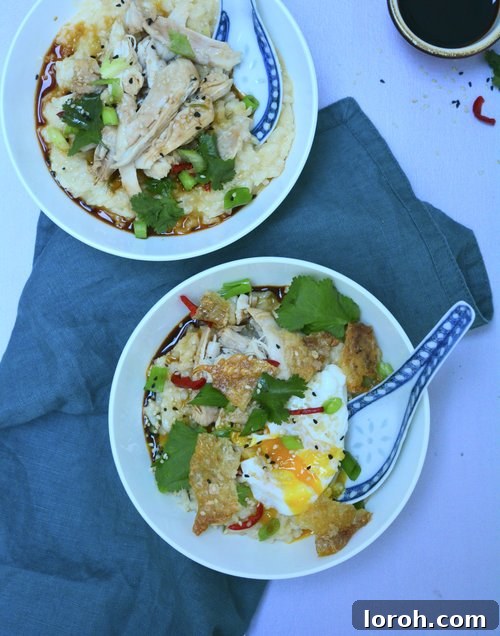
Comforting Chicken & Rice Porridge (Congee): A Wholesome Homage to Rachel Khoo’s Childhood Favorite
By: Margie
Servings: 2 plus some leftovers
The Soulful Story Behind a Simple Bowl
Food often carries the deepest echoes of our past, weaving together memories, comfort, and the wisdom passed down through generations. This chicken and rice porridge, or congee, is no exception. It’s a dish deeply inspired by the acclaimed chef Rachel Khoo, who beautifully shared her childhood memories of her mum’s congee on the “Desert Island Dishes” podcast. She recounted how, as a child, she might have grumbled when her mum creatively transformed the previous day’s Sunday roast chicken into a new, delicious meal. Yet, as time passed, this humble porridge evolved into a powerful symbol of her childhood and the heartwarming essence of her mother’s cooking.
Rachel’s mother instilled in her the invaluable lesson of using leftovers and letting nothing go to waste – a principle that, while perhaps unexciting to a young child, becomes an incredible guide for life. Anyone who embraces sustainable cooking knows the joy of looking into a fridge or cupboard and conjuring something delicious from what’s already on hand. This approach to cooking is not only economical and environmentally friendly but also incredibly fun and creatively liberating. It encourages you to be resourceful, perhaps adding one fresh new ingredient to elevate what you already possess into a truly memorable meal.
This chicken and rice porridge perfectly embodies that spirit. While you might purchase the chicken thighs specifically for this recipe, the rest of the ingredients can often be sourced from your existing pantry. This flexible style of cooking requires a willingness to adapt and not stress over having every single ingredient exactly as prescribed. With a little practice, you’ll find yourself confidently improvising and creating wonderful dishes every time.
At its heart, this congee is a truly comforting, unctuous, and delicious experience. It’s precisely the kind of edible hug I crave when I’m feeling under the weather, run down, or simply in need of a gentle, restorative meal. Its beauty lies in its adaptability, from its consistency to its delightful toppings. You can enjoy it soupy and slurpy, or opt for a thicker, more traditional porridge texture. The power is in your hands; simply adjust the liquid as you cook until it reaches your perfect preference.
Why Congee is the Ultimate Comfort Food
Congee, a staple across many Asian cultures, transcends its simple ingredients to become a universal symbol of warmth, healing, and home. It’s more than just rice and broth; it’s a bowl of pure, gentle nourishment that soothes the body and soul. Its mild flavor profile makes it an ideal canvas for a variety of vibrant toppings, allowing each individual to customize their bowl to perfection. Whether enjoyed for breakfast, as a light lunch, or a restorative dinner, congee holds a special place in the culinary world for its ability to provide solace and strength.
For centuries, congee has been prescribed as a healing food, particularly for those recovering from illness or in need of easily digestible sustenance. The slow cooking process breaks down the rice grains, creating a creamy, velvety texture that is incredibly gentle on the digestive system. When combined with savory chicken stock and tender shredded chicken, it delivers a powerful blend of protein, carbohydrates, and essential nutrients, making it not just comforting but also deeply restorative.
This recipe, echoing Rachel Khoo’s mother’s wisdom, reminds us that the best meals often come from thoughtful utilization of ingredients. It transforms humble components into a dish that is both sophisticated in its depth of flavor and utterly simple in its execution. The act of making congee itself can be a meditative process, a slow unfolding of flavors that culminates in a truly satisfying culinary experience.
Understanding Your Ingredients: The Heart of the Porridge
Each component in this chicken and rice porridge plays a crucial role in building its signature comforting flavor and texture. Choosing your ingredients thoughtfully will elevate your congee from good to truly exceptional.
- White Rice (1 cup): The foundation of our porridge. While many recipes specify short-grain rice for its creaminess, you have the flexibility to choose.
- Short-grain rice: Such as sushi rice or Arborio, will yield a thicker, stickier, and creamier congee due to its higher starch content. This is often preferred for a richer mouthfeel.
- Long-grain rice: Like Basmati or Jasmine, will result in a lighter, more separate grain texture, though it will still break down beautifully over time. Jasmine rice, in particular, will impart a delicate floral aroma.
- Tip: Always rinse your rice thoroughly under cold water until the water runs clear. This removes excess starch, preventing your congee from becoming overly gummy and ensuring a cleaner flavor.
- Chicken Stock (1 1/2 litres / approximately 6-7 cups): The liquid base is paramount. A good quality stock will infuse your congee with a rich, savory depth.
- Fresh homemade stock: Offers the best flavor and nutritional value. If you have leftover chicken carcasses or bones, simmering them into a stock is a fantastic way to enhance flavor and embrace the zero-waste philosophy.
- Store-bought low sodium stock: A convenient option. Opt for a good quality brand.
- Stock cubes or bouillon powder: Can be used in a pinch. Remember to adjust salt levels accordingly, as these can be quite salty.
- Note: The amount of stock is approximate. You may need more boiling water as you cook to achieve your desired consistency.
- Chicken Thighs (3, bone-in, skin removed): Using bone-in chicken thighs is key for maximum flavor. The bones release collagen and gelatin into the stock, adding body and richness to the porridge. Removing the skin beforehand helps to keep the congee lighter and prevents excess fat, though you could crisp the skin separately as a delicious topping. You could also use leftover cooked chicken, just add it towards the end of the cooking process to warm through.
- Aromatics:
- Spring Onions (4, sliced): Provide a delicate oniony flavor and freshness. A portion will be cooked into the porridge, and the rest reserved for topping.
- Ginger (1/2 inch, grated): Adds a warming, slightly pungent note that is classic in congee and helps with digestion.
- Red Chilli (1/2, finely sliced): Offers a gentle kick of heat. Adjust to your preference. For a milder flavor, remove the seeds.
- Olive Oil (1 tbsp): For sautéing the aromatics and releasing their flavors at the start.
- Salt and Pepper: Essential for seasoning the porridge and bringing out all the flavors. Taste and adjust throughout the cooking process.
Crafting Your Congee: Step-by-Step Perfection
Follow these instructions carefully to create a bowl of congee that is both deeply satisfying and incredibly flavorful. Remember, patience is key to achieving that perfect creamy texture.
- Prepare Your Base: Begin by heating the olive oil in a large, heavy-bottomed pan. A Dutch oven or a sturdy pot with a tight-fitting lid works wonderfully here, as it ensures even heat distribution and prevents sticking. Add the sliced spring onions, finely sliced red chilli, and grated ginger to the hot oil. Sauté these aromatics gently for about a minute until fragrant, but not browned. This step is crucial for building a foundational layer of flavor for your congee. Season generously with a pinch of salt and freshly ground black pepper.
- Incorporate Rice and Chicken: Add the rinsed white rice to the pan, stirring it well to ensure each grain is coated in the aromatic oil mixture. This light toasting helps to infuse the rice with flavor. Next, carefully place the bone-in chicken thighs into the pan. Pour in the chicken stock, ensuring the chicken and rice are mostly submerged.
- Simmer to Perfection: Bring the mixture to a rolling boil over medium-high heat. Once boiling, immediately reduce the heat to a low simmer, ensuring the liquid is just gently bubbling. Place the lid securely on the pan. Allow the congee to cook for 45 minutes to 1 hour. During this time, it’s important to check and stir the porridge every 10-15 minutes to prevent the rice from sticking to the bottom of the pan and to ensure even cooking. This regular stirring also aids in breaking down the rice grains, contributing to the creamy texture. Keep an eye on the liquid level; if the porridge becomes too thick before the rice is fully broken down, add more chicken stock or boiling water as necessary, a little at a time, until you reach your desired consistency. The goal is for the rice to expand and soften into a thick, comforting gruel.
- Shred the Chicken: Once the congee has achieved its desired creamy consistency and the chicken is thoroughly cooked and tender, carefully remove the chicken thighs from the pot. Set them aside to cool slightly. Once cool enough to handle, remove the bones and discard them. Shred the succulent chicken meat using two forks or your fingers. Return the shredded chicken to the congee, stirring it through to warm evenly. Taste and adjust the seasoning one final time, adding more salt or pepper if needed.
- Serve and Enjoy: Ladle the hot, comforting chicken and rice porridge into individual bowls. This is where the magic truly happens, as you personalize each serving with your chosen toppings.
- Make Ahead and Reheat: This congee is excellent for making ahead. Allow any leftover porridge to cool completely to room temperature before transferring it to an airtight container and storing it in the refrigerator for up to 3-4 days. When you’re ready to enjoy it again, simply reheat the congee in a saucepan over medium-low heat. You will likely find it has thickened considerably in the fridge; just add a splash of extra chicken stock or boiling water while stirring gently to encourage it back to its luscious, smooth consistency.
Elevate Your Bowl: Creative Topping Ideas
The beauty of congee lies not only in its comforting base but also in the endless possibilities for customization through toppings. These additions provide texture, flavor, and visual appeal, turning a simple porridge into a dynamic and satisfying meal. Don’t be afraid to experiment and discover your favorite combinations!
- Eggs: A classic congee companion.
- Poached Eggs: Offer a silky, runny yolk that enriches the porridge beautifully.
- Fried Eggs: With crispy edges, add a delightful textural contrast.
- Boiled Eggs: Sliced or halved, provide a simpler, protein-packed option.
- Tip: A soft-boiled egg with a jammy yolk is particularly wonderful.
- Soy Sauce: A fundamental seasoning that provides umami depth and a salty kick. Drizzle sparingly and taste before adding more.
- Fresh Herbs:
- Sliced Spring Onions: Add a fresh, pungent crunch and vibrant color. Use the green parts for garnish.
- Coriander (Cilantro): Offers a bright, citrusy, and herbaceous note that complements the chicken and ginger perfectly.
- Sliced Red Chilli: For those who enjoy a bit more heat. A few thin slices can add both spice and a beautiful pop of red. You can also use a dash of chili oil for a different kind of warmth.
- Sesame Seeds: Toasted sesame seeds provide a nutty flavor and a subtle crunch. A drizzle of toasted sesame oil can also enhance the aroma.
- Crispy Elements: These are crucial for textural contrast against the soft porridge.
- Crispy Pancetta or Bacon: Rendered until golden and crisp, these add a salty, savory indulgence.
- Fried Onions or Shallots: Store-bought crispy fried onions are a convenient and delicious topping, adding a sweet, savory crunch.
- Crispy Chicken Skin: If you removed the skin from your chicken thighs, you can render it separately until crispy and use it as a flavorful topping, embracing the zero-waste philosophy.
- Seaweed or Crispy Kale: For an earthy, savory, and slightly salty crunch. Roasted seaweed snacks are an easy addition.
- Other Ideas:
- Roasted Peanuts or Cashews: For extra crunch and nutty flavor.
- Pickled Vegetables: Like pickled ginger or radish, can add a tangy counterpoint.
- A squeeze of Lime or Lemon Juice: Brightens the overall flavor profile.
Congee Variations and Dietary Considerations
One of the many beautiful aspects of congee is its incredible adaptability, allowing it to cater to various tastes and dietary needs. Don’t hesitate to experiment with these suggestions to make this recipe truly your own.
- Vegetarian or Vegan Congee: To make this recipe plant-based, simply substitute chicken thighs with a medley of mushrooms (shiitake, oyster, or cremini work well) and use a high-quality vegetable stock. You can also add cubes of firm tofu, tempeh, or edamame for protein. Ensure your toppings are also plant-based, opting for crispy fried shallots, roasted peanuts, and plenty of fresh herbs.
- Other Protein Options: While chicken is classic, congee can be made with various proteins.
- Pork: Thinly sliced pork tenderloin or ground pork can be added to the congee base.
- Fish: Flaky white fish fillets (like cod or snapper) can be gently poached directly in the congee during the last 10-15 minutes of cooking.
- Beef: Shredded beef from a slow-cooked roast or thinly sliced beef can also be incorporated.
- Spice Level Adjustments: If you prefer more heat, increase the amount of fresh red chili or add a dash of chili oil or Sriracha when serving. For a milder version, omit the fresh chili entirely. White pepper is also a traditional addition for a subtle, peppery warmth.
- Additional Flavor Boosters: Consider adding a splash of fish sauce for extra umami, a few star anise pods or a cinnamon stick to the broth for an aromatic twist (remove before serving), or a tablespoon of fermented black beans for a deeper, savory complexity.
- Texture Preferences: For a completely smooth congee, you can blend a portion of it with an immersion blender before adding the shredded chicken. If you like a more rustic texture, simply let the rice break down naturally during the long simmer.
Embrace the Comfort: Your Culinary Journey Begins
This Comforting Chicken & Rice Porridge is more than just a recipe; it’s an invitation to slow down, savor simple flavors, and embrace the nurturing power of homemade food. It’s a testament to the idea that some of the most profound culinary experiences come from the humblest ingredients and the wisdom of traditions, much like Rachel Khoo’s cherished childhood memories.
Whether you’re recreating a taste of nostalgia, seeking a restorative meal, or simply looking for a delicious and economical way to feed your family, this congee offers endless possibilities. It encourages creativity, reduces waste, and promises a bowl full of warmth and satisfaction every time. So gather your ingredients, take your time with the simmering, and prepare to fall in love with this wholesome, adaptable, and utterly delicious dish.
We hope this recipe brings as much comfort and joy to your table as it does to ours. Happy cooking!
Like this recipe? We’d love to hear from you!
Share your thoughts and feedback by leaving a comment below.