

Mastering Homemade Pasta: An Authentic Recipe Inspired By Isaac Carew
Margie
Embark on a culinary journey into the heart of Italian cooking by crafting your very own fresh pasta at home. Many might find the idea daunting, but this recipe, inspired by the renowned chef Isaac Carew, demystifies the process, proving that making exquisite pasta from scratch is not only achievable but wonderfully simple. Forget complicated ingredient lists; you only need two foundational elements: premium “00” flour and fresh, high-quality eggs. Whether you possess a gleaming pasta machine or just a trusty rolling pin and a bit of determination, the joy of creating tender, flavorsome pasta with your own hands is an experience unlike any other. Join us as we explore the art and science behind perfect homemade pasta, guaranteed to elevate your meals and impress your guests.
4 servings
Rate Recipe
Print Recipe
Save this recipe to your inbox!
Enter your email below to receive this recipe directly, plus get new culinary delights from us every week!
Ingredients
Creating beautiful fresh pasta requires just a few, yet crucial, ingredients. The quality of these components will directly influence the texture and flavor of your final dish. Here’s what you’ll need for approximately 4 servings:
- 400 g “00” flour
- 4 large eggs
Understanding Your Ingredients: The Secret to Superior Pasta
“00” Flour: This isn’t just any flour; “00” flour is finely milled Italian flour with a specific protein content that results in a silky, pliable dough. Its fine texture allows for a smooth, elastic pasta that holds its shape beautifully and cooks evenly. While all-purpose flour can be substituted in a pinch, you’ll notice a significant difference in texture and ease of handling with “00” flour. If you’re serious about authentic pasta, this is a non-negotiable ingredient.
Fresh Eggs: Eggs are the lifeblood of fresh pasta, providing not only moisture but also richness, color, and structure. Using farm-fresh, high-quality eggs with vibrant yolks will impart a deeper yellow hue and a superior flavor to your pasta. The protein in the eggs, combined with the gluten in the flour, creates the characteristic chewiness of fresh pasta. For an even richer dough, some chefs use a combination of whole eggs and extra egg yolks.
Optional Additions: While this recipe is incredibly simple and delicious with just flour and eggs, some variations exist. A pinch of salt is often added for flavor, though many traditionalists argue that the salt should only go into the boiling water. A splash of olive oil can also be incorporated to make the dough slightly more pliable and less prone to drying out, especially if you’re working in a dry environment. However, for a true purist approach, sticking to just flour and eggs, as inspired by Isaac Carew, is the way to go.
Essential Equipment for Homemade Pasta
The beauty of homemade pasta lies in its accessibility. You don’t need a professional kitchen setup to achieve fantastic results. Here’s a look at the tools that will aid your pasta-making journey:
- Clean Work Surface: A large, clean countertop or wooden board is ideal for mixing and kneading your dough.
- Fork: For initially whisking the eggs and gradually incorporating the flour.
- Dough Scraper (Optional but Recommended): Useful for gathering stray flour and dough, keeping your work surface tidy.
- Cling Film or Plastic Wrap: Essential for resting the dough and preventing it from drying out.
- Pasta Machine (Manual or Electric): While not strictly necessary, a pasta machine simplifies the rolling process, ensuring consistent thickness and making the job much faster. It typically comes with adjustable settings for thickness and attachments for cutting various pasta shapes like spaghetti and tagliatelle.
- Rolling Pin: If you don’t have a pasta machine, a sturdy rolling pin is your best friend. Be prepared for a good workout! Italian “pasta grannies” are masters of the rolling pin, creating incredibly thin sheets with just their strength and skill.
- Sharp Knife or Pasta Cutter: For shaping your pasta once it’s rolled out.
- Damp Tea Towel: Crucial for keeping your rolled pasta sheets and finished pasta shapes from drying out before cooking.
Whether you opt for the convenience of a pasta machine or the traditional artistry of a rolling pin, the key is patience and enjoying the process. Both methods yield wonderfully delicious results.
Instructions: Crafting Your Perfect Pasta Dough
Follow these steps closely to transform simple ingredients into sublime fresh pasta. Remember, pasta making is an art form that improves with practice, so don’t be discouraged if your first attempt isn’t perfect.
-
Prepare Your Workspace: Start by tipping the 400g of “00” flour directly onto a large, clean work surface. Create a generous well in the center of the flour, much like a volcano, ensuring the walls are high enough to contain the liquid.
-
Combine Eggs and Flour: Crack all 4 eggs directly into the well. Using a fork, gently whisk the eggs, gradually incorporating small amounts of flour from the inner walls of the well into the liquid. Continue this process slowly until all the flour is mixed in and you have a shaggy, cohesive mass. Avoid breaking the walls too quickly, or the eggs might escape!
-
Knead the Dough: Once the flour and eggs are fully combined into a rough dough, it’s time for the most crucial step: kneading. Vigorously knead the dough for approximately 10 minutes. Use the heel of your hand to push the dough away from you, fold it over, and repeat. This process is vital for developing the gluten, which gives pasta its characteristic elasticity and chewiness. If you don’t knead it enough, your pasta will be “flabby” and lack the desired bite. The dough should become smooth, soft, and elastic to the touch.
-
Rest the Dough: Once your dough feels beautifully soft and smooth, wrap it tightly in cling film (plastic wrap) and place it in the fridge. Allow it to rest for at least 30 minutes. This resting period allows the gluten to relax, making the dough much easier to roll out thinly without shrinking back.
-
Prepare for Rolling (Pasta Machine Method): Take the dough out of the fridge and divide it into two or three manageable portions. Keep any dough you’re not immediately working with covered under a damp tea towel to prevent it from drying out. If using a pasta machine, ensure it’s securely clamped to your worktop. Lightly flour one piece of dough and flatten it slightly with your fingers. Feed it through the pasta machine on its widest setting. Fold the dough in half or in thirds, flour it again lightly, and pass it through the widest setting once more. Repeat this folding and rolling process 2-3 times until the dough strip is smooth and uniform.
-
Rolling with a Pasta Machine: Begin progressively narrowing the settings on your pasta machine. Pass the dough through each setting, from widest down to the desired thickness. Lightly dust the dough with flour each time you pass it through a new setting to prevent sticking. For spaghetti or tagliatelle, you’ll typically want to go down to the second or third thinnest setting. For ravioli, where you’ll be layering two sheets, aim for the very thinnest setting to ensure a delicate final product. Always handle the thin sheets of dough with extreme care to avoid tearing.
-
Rolling with a Rolling Pin (Manual Method): Lightly flour your work surface and one piece of dough. Start by gently flattening the dough with your hands, then use your rolling pin, working from the center outwards. Roll the dough thinly, constantly rotating it and flipping it over to ensure even thickness. Keep dusting with flour as needed to prevent sticking. Aim for a thickness similar to a pasta machine, transparent enough to see your hand through for delicate shapes, or slightly thicker for heartier noodles. This method requires more effort but yields incredibly satisfying results, embodying the spirit of traditional pasta making.
-
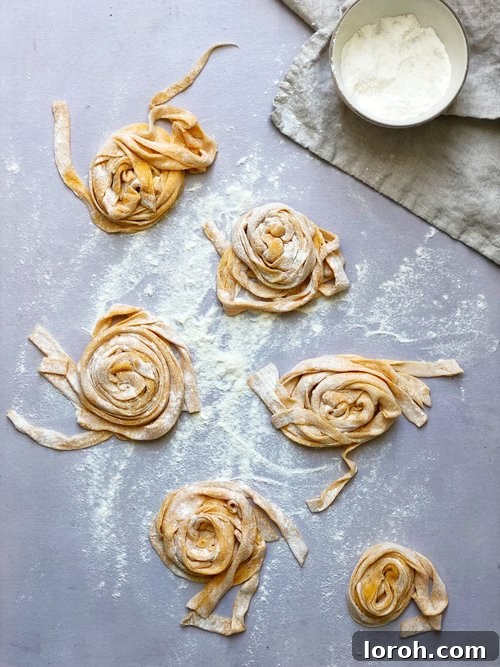
Shape Your Pasta: Immediately after rolling, cut and shape your pasta. Fresh pasta dries out incredibly quickly, so speed is key. Use the cutting attachments on your pasta machine for uniform spaghetti or tagliatelle. Alternatively, use a sharp knife or a fluted pasta wheel to cut your desired shapes, such as fettuccine, pappardelle, or squares for ravioli. Once cut, transfer the pasta to a lightly floured baking sheet or hang it on a pasta drying rack. Keep any finished pasta covered under a damp tea towel until you are ready to cook it to prevent it from becoming brittle.
-
Cooking Your Fresh Pasta: Bring a large pot of generously salted water to a rolling boil. Fresh pasta cooks much faster than dried pasta, often in just 2-4 minutes. Carefully add your fresh pasta to the boiling water. It will float to the top when it’s perfectly al dente. Taste a piece to ensure it’s cooked to your liking. Drain immediately and toss with your favorite sauce. Enjoy the completely delicious taste and texture of truly homemade pasta!
Troubleshooting Common Pasta Problems
- Dough is too sticky: Gradually add a very small amount of “00” flour, kneading it in until the stickiness subsides.
- Dough is too dry/crumbly: Add a tiny amount of water (a teaspoon at a time) and knead until it comes together and is pliable.
- Dough keeps shrinking when rolling: This usually means the gluten hasn’t relaxed enough. Wrap it tightly and let it rest for another 15-30 minutes.
- Pasta breaks when cooking: The dough might have been too thin, or it might have dried out too much before cooking.
Storing Fresh Pasta
Fresh pasta is best cooked immediately. However, if you have leftovers or want to prepare ahead:
- Short-term (1-2 days): Lightly dust shaped pasta with semolina flour to prevent sticking, then store in an airtight container in the refrigerator.
- Long-term (up to 1 month): Arrange pasta in single layers on a floured baking sheet and freeze until solid. Once frozen, transfer to a freezer-safe bag. Cook directly from frozen, adding an extra minute or two to the cooking time.
Making pasta from scratch is a rewarding experience that connects you to generations of culinary tradition. This simple yet profound recipe, drawing inspiration from Isaac Carew’s approach to fresh ingredients and fundamental techniques, empowers you to create pasta that far surpasses anything you can buy in a packet. The incredible texture and superior flavor of homemade pasta are unmatched, and the process itself is a therapeutic and enjoyable kitchen project. So, roll up your sleeves, embrace the flour, and prepare to delight in the truly authentic taste of pasta made with love and your own hands. Happy cooking!
Enjoyed this recipe? Leave a comment below!
Your feedback helps us create more delicious content for you.