
Authentic Homemade Pistachio Pesto (Pesto Al Pistacchio) Recipe
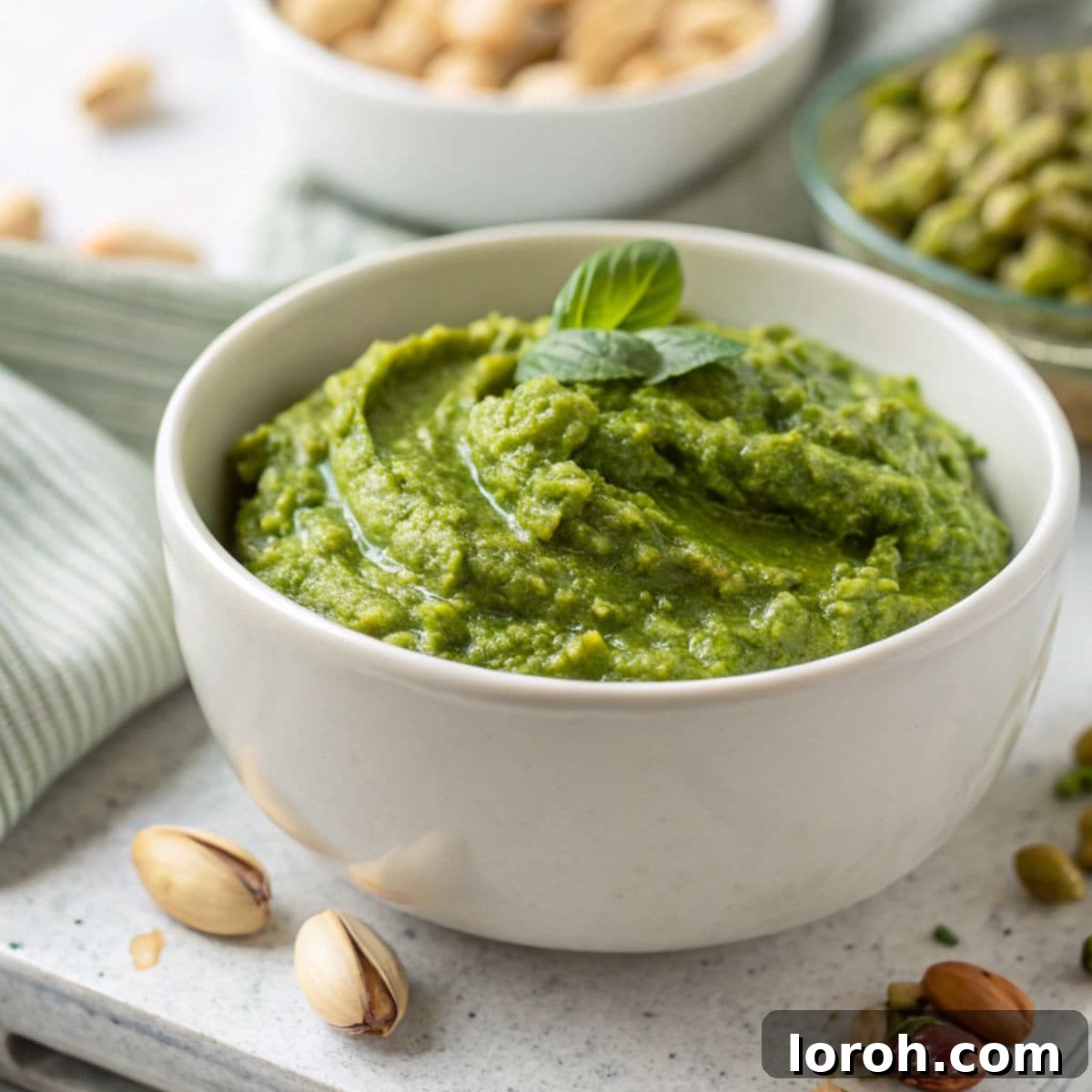
Prepare to transform your weeknight meals with this exquisite **Pistachio Pesto** recipe. Far from your average jarred sauce, this homemade delight, known as *Pesto Al Pistacchio* in its native Sicily, offers a deep, nutty flavor and a beautifully vibrant green hue that will elevate any dish. It’s a speedy, delicious, and incredibly versatile sauce that goes beyond pasta, promising a culinary experience that’s both simple to create and unforgettable to taste. While classic basil pesto typically relies on pine nuts, the mellow, rich pistachios in this recipe introduce a unique creaminess and depth, making it a standout favorite.
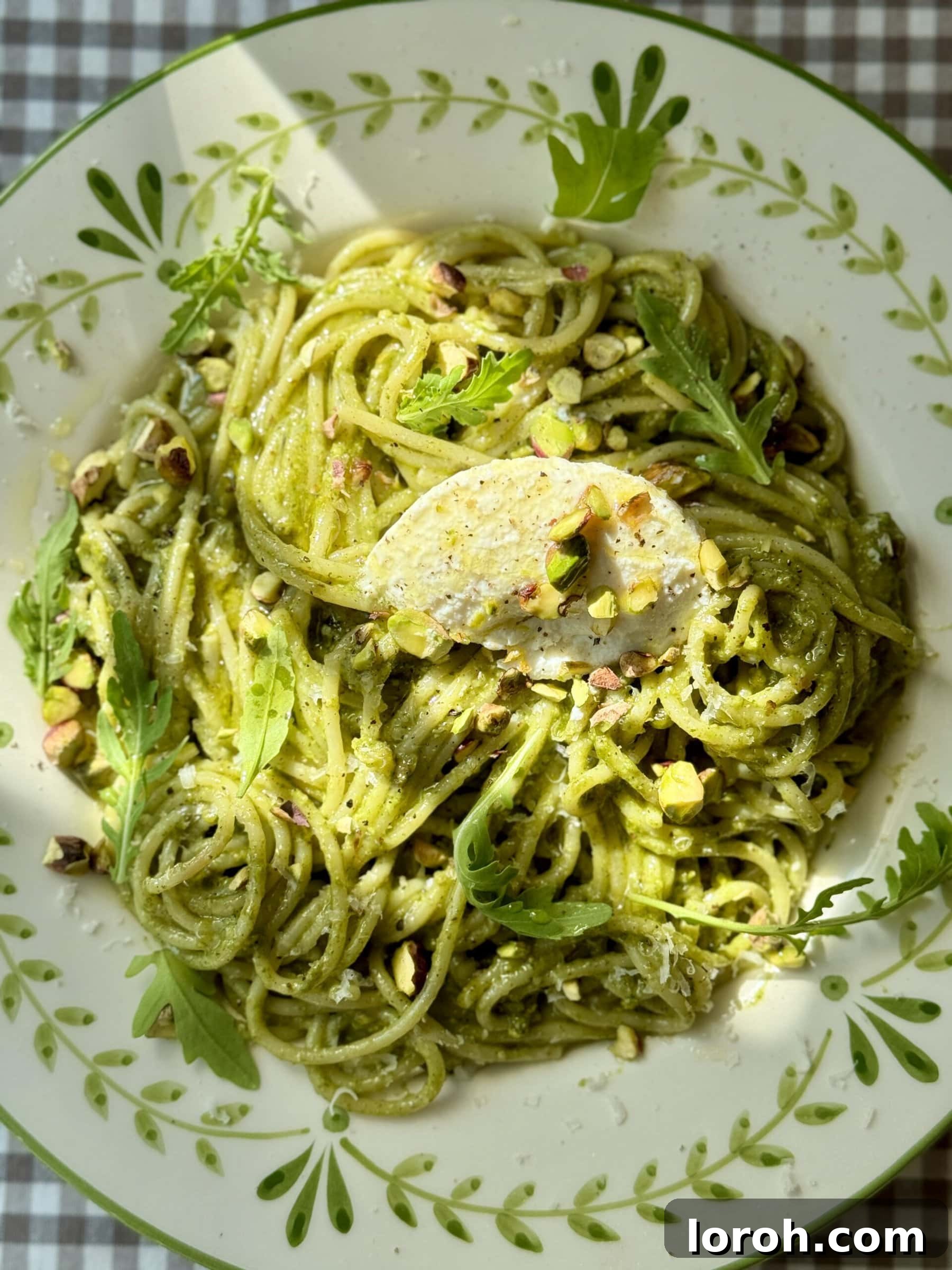
This recipe yields a generous large jar of homemade pesto, ensuring you’ll have plenty to enjoy and experiment with. While the idea of making pesto from scratch might seem daunting, especially if you’re accustomed to store-bought versions, the truth is, with a good blender or food processor, it’s astonishingly simple and remarkably quick. You’ll wonder why you ever bought it pre-made!
Most people are familiar with the classic basil and pine nut pesto, but the world of pesto is vast and exciting. You can craft incredible sauces with countless combinations: imagine peppery rocket and walnuts, fragrant basil and almonds, or even sage, mint, and traditional pine nuts. However, pistachio pesto stands out as one of the most uniquely delicious and straightforward variations to master. We highly recommend first trying it with a classic Pasta Al Pesto Pistacchio to truly appreciate its rich flavor profile. But don’t stop there! This versatile pesto shines in many other applications, from a savory Salmon with a Pesto Crust baked to flaky perfection, to a delightful Chicken Flatbread featuring a creamy yogurt base and a drizzle of vibrant pesto. It truly proves that pesto doesn’t always have to be basil-centric! For those with a sweet tooth looking to explore pistachios further, consider indulging in this Easy Homemade Pistachio Cream, a luscious treat perfect for filling Pistachio Cream Croissants or creating a decadent Pistachio Tiramisu.
Table of Contents
- Why You Will Love This Pistachio Pesto Recipe
- Key Ingredients for the Perfect Pistachio Pesto
- Substitutions and Creative Variations
- How to Make Simple Pistachio Pesto: Step-by-Step
- Expert Cooking Tips for Homemade Pesto
- Frequently Asked Questions (FAQ)
- Other Delicious Recipes You Might Like
- Pistachio Pesto Recipe Card
Why You Will Love This Pistachio Pesto Recipe
- Unmatched Flavor and Texture: This isn’t just a sauce; it’s a creamy, nutty, and aromatic experience. The pistachios lend a sophisticated richness that makes it truly stand apart from traditional basil pesto, adding a delightful depth you won’t find in store-bought versions.
- Effortlessly Quick and Easy: Forget lengthy prep times. With a blender or food processor, this pesto comes together in just 5 minutes from start to finish. It’s the ideal solution for a flavorful meal when time is of the essence, proving that gourmet taste doesn’t require gourmet effort.
- A Generous Batch for Endless Possibilities: This recipe yields a whole jar of vibrant pesto, perfect for enjoying immediately and saving for later. It’s fantastic for meal prepping, ensuring you have a flavorful base ready to elevate numerous dishes throughout the week, minimizing waste and maximizing flavor.
- Elevates Everyday Meals: Transform ordinary pesto pasta into an extraordinary culinary delight. The distinct, creamy nuttiness of pistachios turns a simple dish into something special. It’s an instant upgrade for any meal, promising a restaurant-quality taste in your own kitchen.
- Incredibly Versatile Beyond Pasta: While it’s sensational with pasta, the versatility of pistachio pesto is truly its superpower. Spread it on a grilled cheese sandwich, dollop it over scrambled eggs, mix it into creamy yogurt for a quick dip with fresh vegetables, or use it to crust a fillet of salmon baked to perfection. It’s also fantastic stirred into soups, spread on bruschetta, or used as a marinade for chicken or vegetables. Its potential uses are only limited by your imagination!
Key Ingredients for the Perfect Pistachio Pesto
For a complete list of ingredients and precise measurements, please refer to the recipe card located at the bottom of this page.
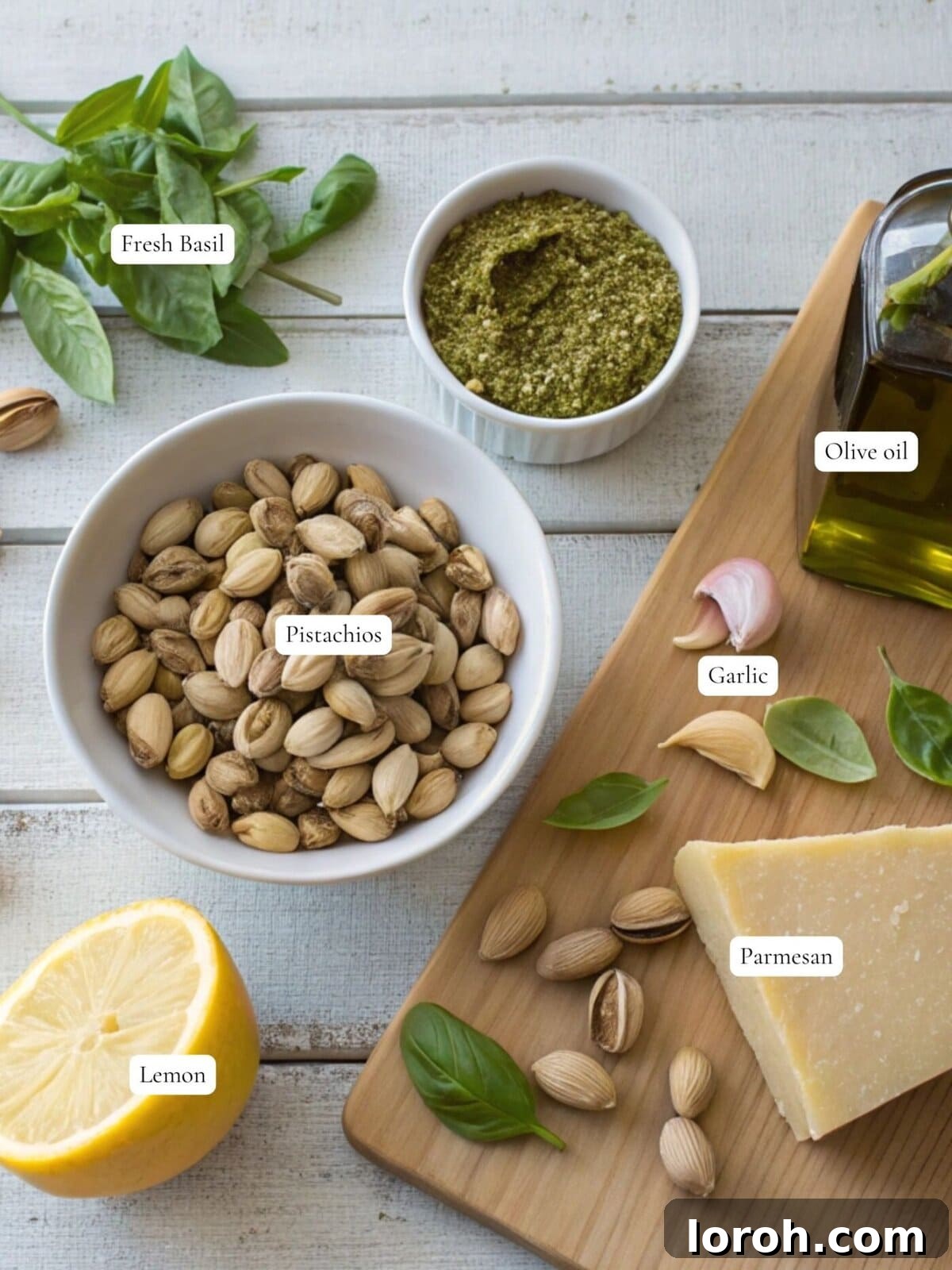
Every ingredient plays a crucial role in building the layered flavors of this exquisite pesto. Here’s a closer look:
- Pistachios: These are the star of our pesto, replacing the traditional pine nuts. Their mellow, buttery flavor and beautiful green hue are what make this pesto so unique. Ideally, use shelled and roasted pistachios for convenience and enhanced flavor. If you purchase raw shelled pistachios, we highly recommend toasting them gently before blending to unlock their full aromatic potential (see our tips below). It’s best to avoid heavily salted pistachios, as the Parmesan cheese will contribute enough salinity, preventing your pesto from becoming overly salty.
- Fresh Basil: The aromatic backbone of any great pesto. Opt for a big, vibrant bunch with bright green leaves for the freshest flavor. However, pesto is also a fantastic way to utilize any slightly older herbs that might be lingering in your fridge, giving them a new lease on life.
- Parmesan Cheese: This hard, salty Italian cheese adds a crucial umami depth and savory kick to the pesto. If Parmesan isn’t available, Pecorino Romano or Grana Padano make excellent substitutes, offering similar salty, sharp notes. Remember to check if the cheese you’re using is vegetarian-friendly if that’s a dietary consideration for you, as not all Parmesan is.
- High-Quality Extra Virgin Olive Oil: The solvent that brings all the flavors together, providing richness and creating that luxurious, emulsified texture. Choose a good quality extra virgin olive oil for the best taste, as its flavor will shine through.
- Fresh Garlic: While optional, a single clove of garlic adds a wonderful punch and depth. Adjust the amount to your preference; some like a stronger garlic presence, others prefer a subtle hint.
- Lemon Zest and Juice: The zest adds bright, aromatic citrus notes that cut through the richness of the nuts and oil, while the juice provides a tangy lift and helps to keep the basil a vibrant green, preventing oxidation.
- Freshly Ground Black Pepper: A dash of black pepper adds a subtle warmth and complements the other flavors beautifully.
- Salt: Added to taste. Always start with a small amount and adjust after blending, as the Parmesan cheese already contributes significant saltiness.
Substitutions and Creative Variations
This pistachio pesto recipe is wonderfully adaptable, allowing you to tailor it to your taste or what you have on hand. Don’t hesitate to get creative!
- Herbs: While basil is the classic choice and yields the most authentic *Pesto Al Pistacchio* flavor, you can certainly experiment. A mix of basil and fresh parsley can offer a slightly peppery, vibrant twist. A few sprigs of fresh chives or even a handful of baby spinach can also be incorporated for a subtle change in flavor and an even greener hue.
- Nuts: Of course, this recipe celebrates pistachios for their unique flavor, and we highly encourage you to try it as written. However, if you’re exploring other basic pesto recipes or don’t have pistachios, this method works beautifully with other nuts. Traditional pine nuts are always an option, but almonds or walnuts can also create a delicious and distinct pesto. Toasting any nut you choose will significantly enhance its flavor.
- Cheese: Parmesan is key for its salty, umami kick. As mentioned, Pecorino Romano, with its sharper, saltier profile, or the milder Grana Padano, are excellent alternatives. For a vegetarian version, simply choose a vegetarian hard cheese, widely available in most supermarkets. For a completely **vegan pistachio pesto**, omit the Parmesan and add 2-3 tablespoons of nutritional yeast. This will impart a cheesy, savory flavor without any dairy.
- Spice It Up: For those who appreciate a little heat, a tiny pinch of red pepper flakes blended in can add a wonderful kick.
- Different Citrus Notes: While lemon is standard, a touch of orange zest can introduce a surprisingly fragrant and slightly sweeter citrus note, pairing beautifully with the pistachios.
- Adding Greens: For an extra nutritional boost and a brighter green color, a handful of baby spinach or arugula can be blended in with the basil.
How to Make Simple Pistachio Pesto: Step-by-Step
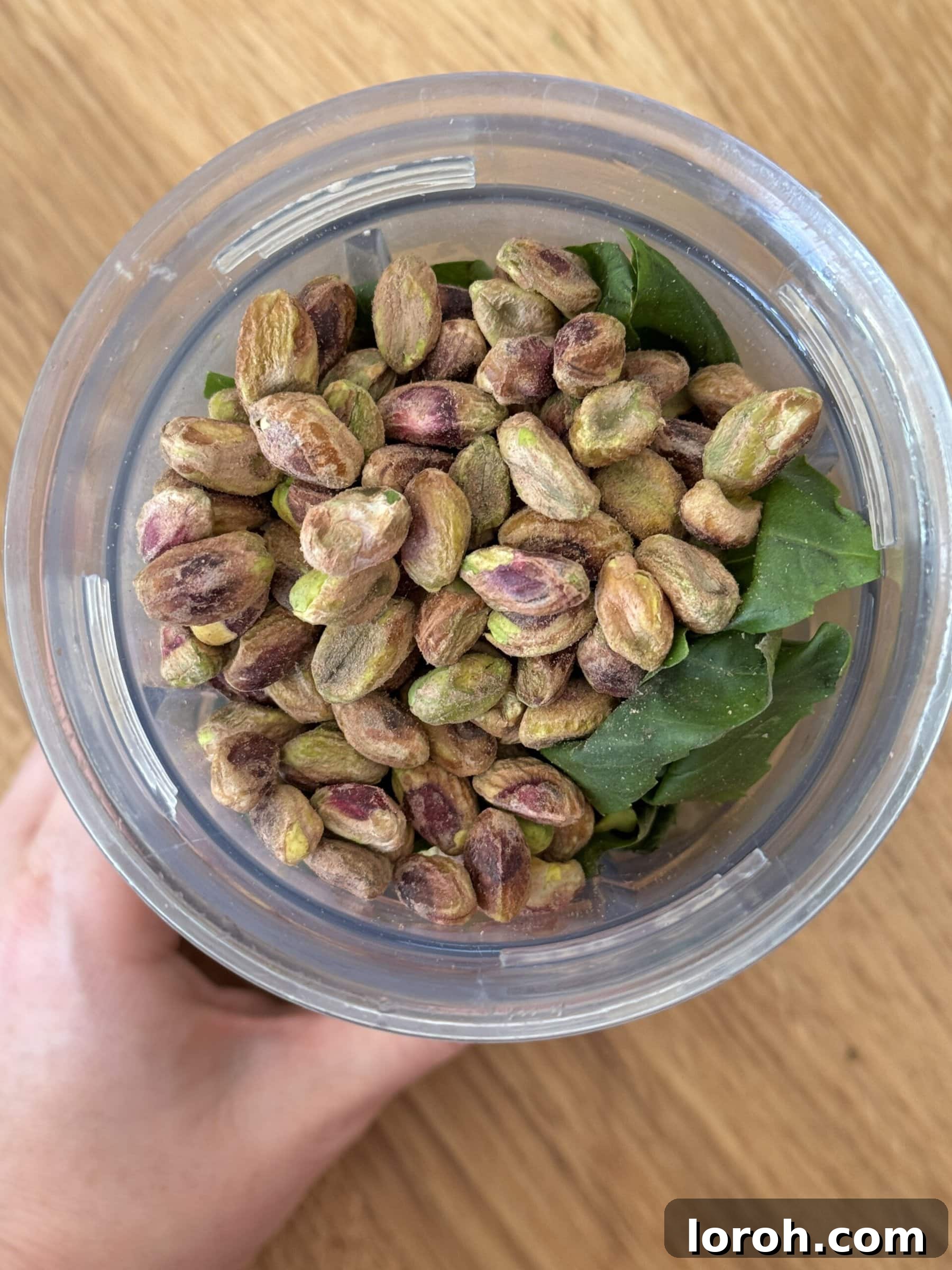
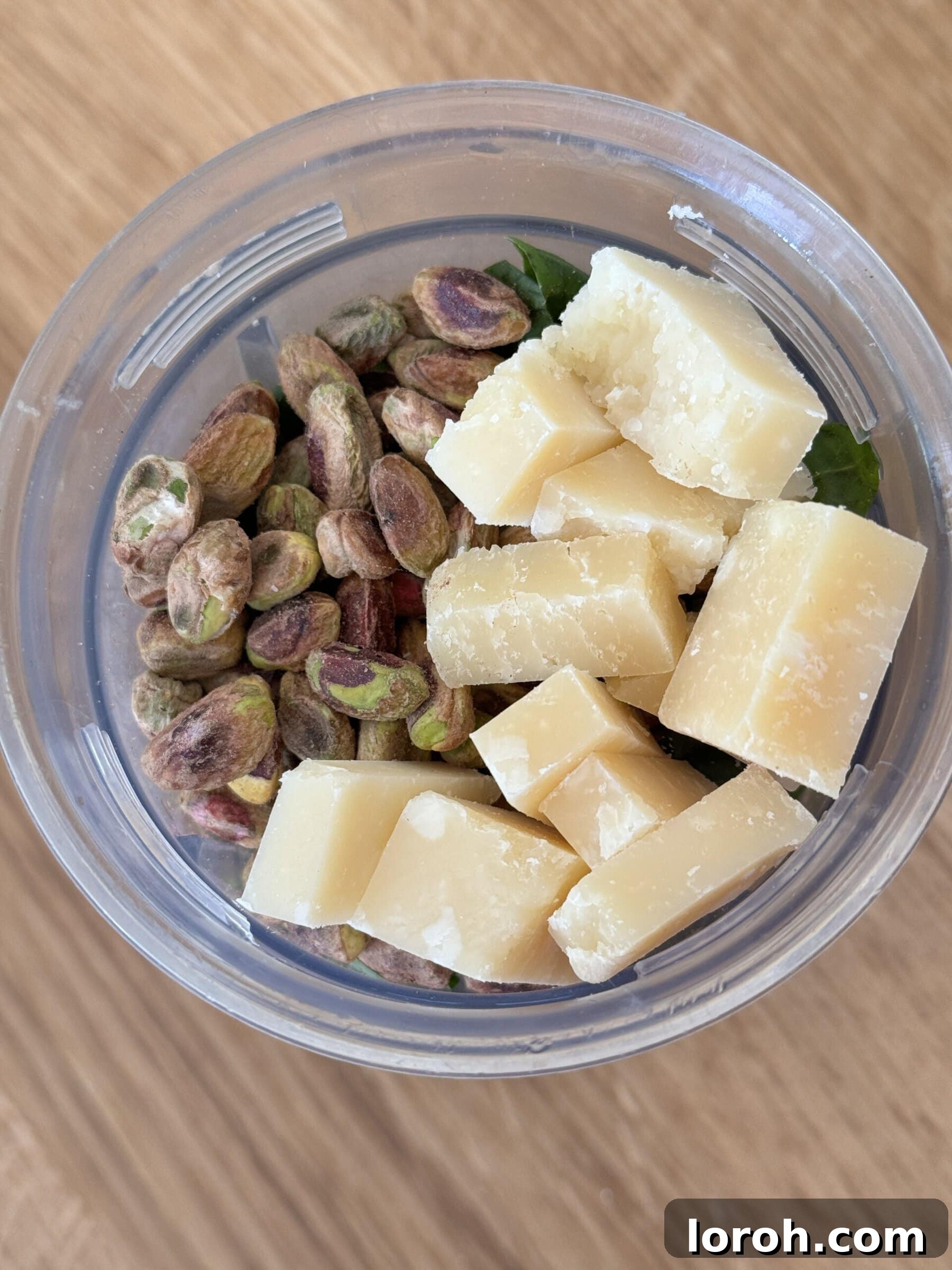
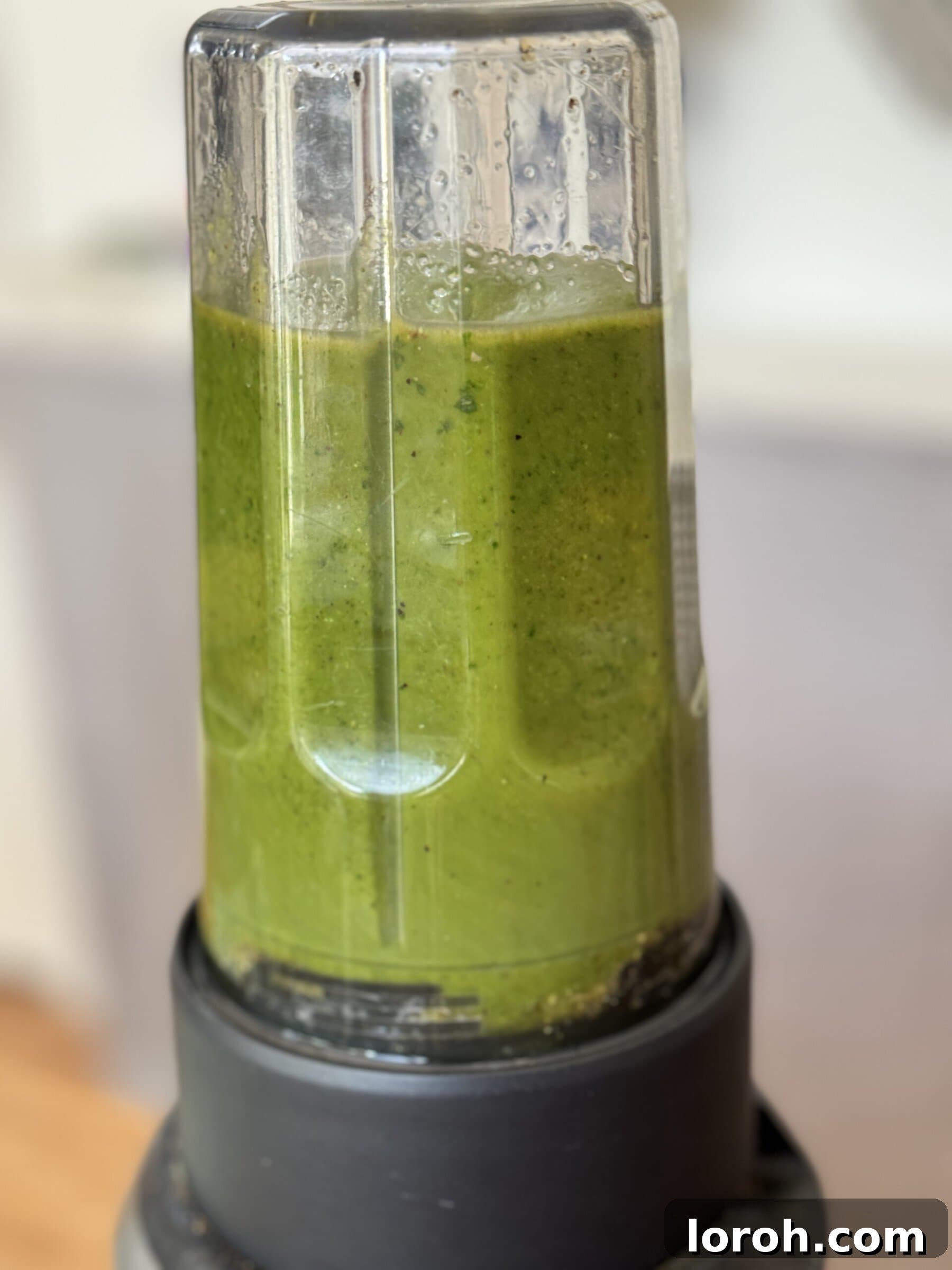
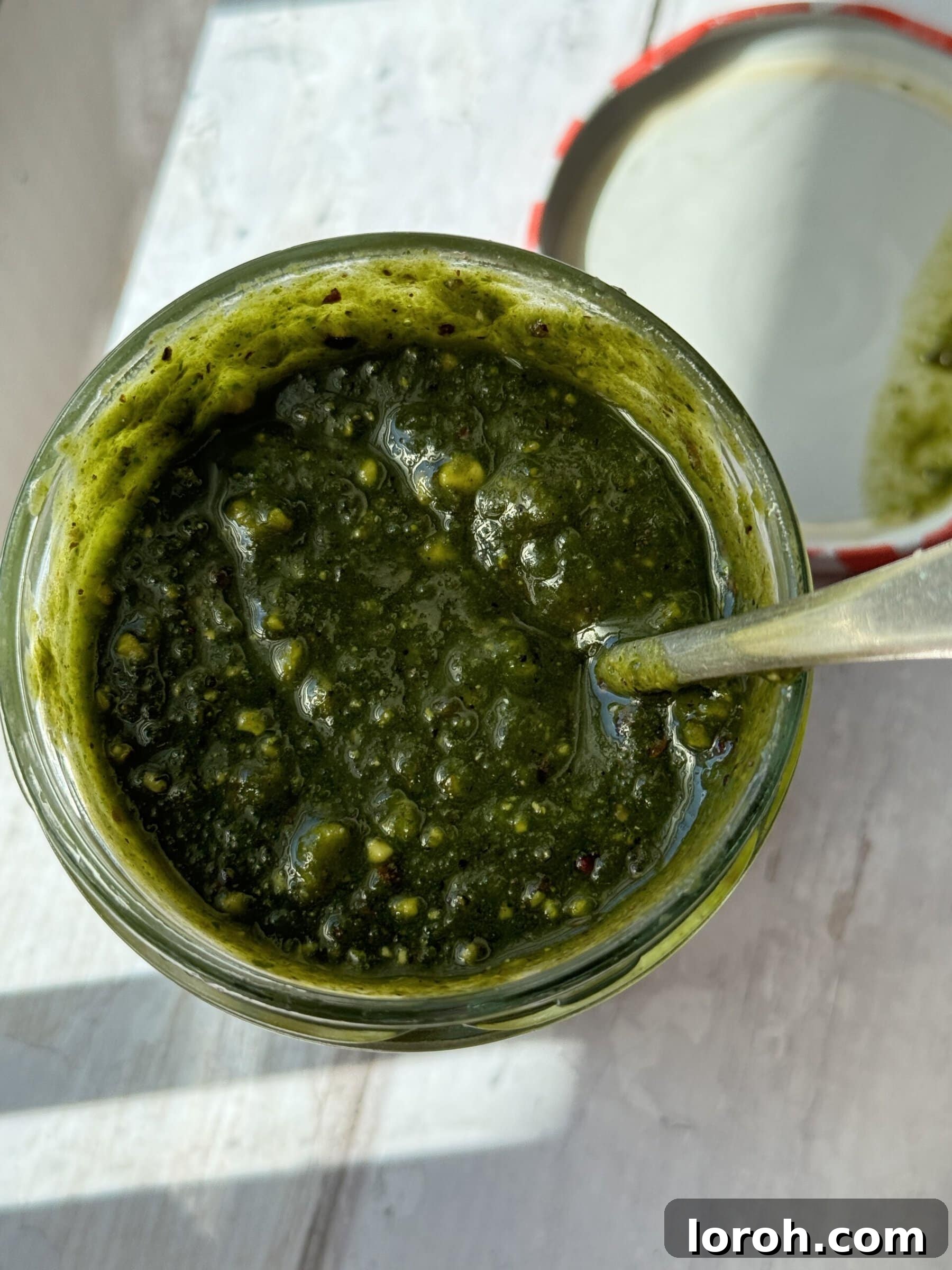
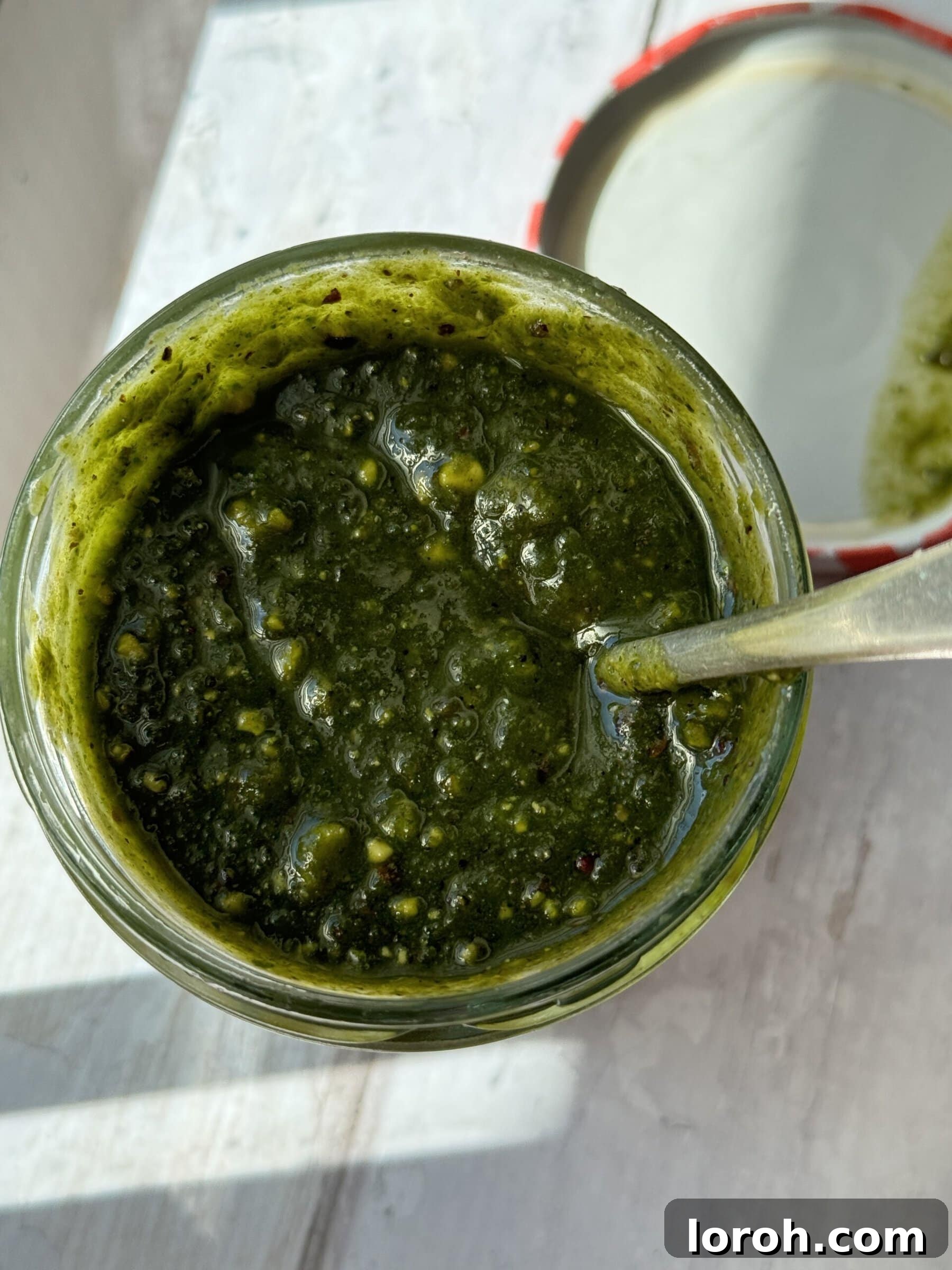
This recipe is incredibly straightforward, but we’ve included a few step-by-step images to guide you. The full recipe with precise measurements can be found in the comprehensive recipe card at the very bottom of this page.
Expert Cooking Tips for Homemade Pesto
Achieving the best homemade pistachio pesto is simple with a few insider tips:
- How to Toast Pistachios for Optimal Flavor: Toasting pistachios unlocks their rich, nutty flavor, making a significant difference to your pesto.
- Pan Toasting (Recommended): I prefer to toast pistachios in a dry pan over medium-high heat. This method allows for better control, reducing the risk of burning. Keep the pan moving constantly and stir the nuts frequently to ensure even toasting. They should become fragrant and lightly golden. This usually takes about 5-7 minutes. Once toasted, let them cool slightly before adding them to your blender.
- Oven Toasting: You can also toast pistachios on a baking sheet in a preheated oven at 350°F (175°C) for about 8-10 minutes, stirring halfway through. Keep a close eye on them, as nuts can burn quickly in the oven.
While you can make delicious pesto without toasting, this step truly elevates the flavor.
- Achieving the Perfect Pesto Texture: The beauty of homemade pesto is customizing its texture. For a chunkier pesto with more bite, pulse the ingredients a few times until roughly chopped. For a smoother, more emulsified sauce, blend continuously until it reaches your desired creamy consistency. If your pesto seems too thick, add a tablespoon or two of cold water or a little extra olive oil to thin it out to your preference.
- Preventing Oxidation for Vibrant Green Pesto: Lemon juice helps prevent the basil from turning brown too quickly. For stored pesto, creating an airtight seal is crucial. After transferring your pesto to a jar, level the surface, then pour a thin layer of olive oil over the top. This acts as a barrier, protecting the pesto from air and oxidation, keeping it fresh and vibrant for longer.
- How to Store Your Homemade Pesto:
- In the Fridge: Leftover pesto can be stored in an airtight container or jar in the refrigerator for up to 1-2 weeks. Ensure that layer of olive oil on top to seal it. Don’t be alarmed if the olive oil solidifies slightly in the fridge; it will melt back to liquid once stirred into hot pasta or brought to room temperature.
- In the Freezer: Pistachio pesto freezes beautifully for longer storage, up to 3 months. You can freeze it in small airtight containers, ice cube trays (perfect for single servings!), or freezer bags. While freezing might slightly darken the pesto’s color, its delicious flavor will remain intact. Simply defrost at room temperature or gently warm before using.
- How to Store Leftover Fresh Basil: To keep any remaining fresh basil vibrant, trim the ends of the stalks and place them in a small glass or mug with about 1 cm of water, similar to a bouquet of flowers. Cover the basil loosely with a clean plastic bag (like a sandwich bag) and secure it around the glass. Store at room temperature away from direct sunlight; it should stay fresh for up to a week.
Frequently Asked Questions (FAQ)
Absolutely! While a blender offers convenience and a smoother texture, traditional pesto is made with a mortar and pestle. The process is more labor-intensive but results in a rustic texture with a unique depth of flavor as the ingredients are crushed rather than cut. Start by pounding the garlic (if using) with a pinch of salt until a paste forms. Gradually add the chopped basil, working it into a paste. Then add the pistachios, pounding until they break down. Finally, slowly incorporate the finely grated Parmesan, black pepper, lemon juice, and zest, followed by the olive oil, pounding steadily to emulsify the sauce. This traditional method ensures a deeply flavorful, albeit chunkier, pesto.
Ideally, yes, toasting the pistachios before blending is highly recommended. It significantly deepens their nutty flavor, adding a richer dimension to your pesto. Many shelled pistachios bought in stores are raw, so a quick toast is a beneficial step. As detailed in our cooking tips, you can pan-toast them for 5-7 minutes over medium-high heat, constantly moving them to prevent burning. While your pesto will still be delicious without this step, toasting truly enhances the overall taste profile and is worth the minimal effort.
When stored correctly in the refrigerator, homemade pistachio pesto will last at least one week, often up to two weeks. The key is to keep it in an airtight container or jar and always cover the surface with a thin layer of olive oil to prevent air exposure, which causes oxidation and spoilage. Always trust your senses: if it looks or smells off, it’s best to discard it. For longer storage, freezing is an excellent option.
Yes, absolutely! Pistachio pesto freezes wonderfully. You can freeze it in small airtight containers, ice cube trays (a great way to portion it out for individual servings!), or heavy-duty freezer bags. Don’t be alarmed if the pesto’s color darkens slightly after freezing; this is a natural occurrence and doesn’t affect the flavor. It will retain its quality in the freezer for up to 3 months. When you’re ready to use it, simply defrost at room temperature or gently warm it before stirring into your favorite dishes.
This recipe is designed to yield a generous quantity, typically filling one large jam jar, which is approximately 300-350ml. This amount is perfect for serving with a large pasta dish for a family, or for enjoying over several smaller meals throughout the week.
Pistachio pesto is incredibly versatile! Beyond its classic pairing with pasta, try it spread on toast or bruschetta, dolloped over scrambled or fried eggs, as a flavorful crust for baked salmon or chicken, stirred into creamy soups, or mixed into mashed potatoes. It also makes an incredible sandwich spread, especially with mozzarella and prosciutto, or a vibrant base for homemade pizza. For a quick appetizer, swirl it into plain yogurt for a delicious dip with vegetables or crackers, or drizzle it over roasted vegetables like asparagus or bell peppers.
Yes, pistachio pesto can be quite healthy! Pistachios are packed with healthy fats, protein, fiber, and various vitamins and minerals. Fresh basil is rich in antioxidants, and olive oil is a source of monounsaturated fats. While Parmesan cheese contributes some saturated fat and sodium, it’s used in moderation. Overall, this pesto is a flavorful way to add beneficial nutrients and healthy fats to your diet, especially when paired with whole grains or fresh vegetables. For a lighter or vegan option, consider reducing the cheese or using a nutritional yeast substitute.
Other Delicious Recipes You Might Like
If you’ve fallen in love with homemade pesto and are looking for more ways to incorporate it into your cooking, or simply seeking new culinary inspirations, here are some fantastic recipes. Many of these allow you to swap in your fresh pistachio pesto for an exciting twist!
- For a hearty and flavorful meal, try using your leftover pesto in my Crispy Chicken with White Beans and Pistachio Pesto.
- Elevate your burger night with my Greek Lamb Burgers with Pesto, where a dollop of this vibrant sauce adds an unexpected burst of flavor.
- For a quick and satisfying snack or light lunch, this recipe for Pesto, Goats Cheese and Parma Ham on Toast is absolutely delicious and highlights the pesto beautifully.
- A simple drizzle of pistachio pesto over my Tomato Puff Pastry Tart adds an incredible layer of herbaceous and nutty flavor.
Explore More Recipes
Under 30 Minutes
Prawn and Tomato Linguine
Recipes
Homemade Basil Pesto
Easy Pasta Recipes
Chicken Macaroni Pasta Salad
Easy Dinner Recipes
Spaghetti Alla Nerano: Stanley Tucci’s Favourite Courgette Pasta
If you tried this homemade **Pistachio Pesto** or any other delicious recipe on our site, please don’t hesitate to leave a comment below and let us know how it turned out!
Pistachio Pesto
A perfect **pistachio pesto**, made with gorgeous green pistachios that give it the most amazing texture and nutty flavor. It’s a level up from jarred pesto pasta, offering an authentic, rich taste experience!
Rate Recipe
Print Recipe
Ingredients
For the pesto:
- 100 g shelled pistachios, ideally roasted (see cooking tips above for instructions)
- 100 g fresh basil leaves
- 200 ml extra virgin olive oil
- 1 garlic clove, optional
- 1 lemon, zest and juice
- ½ tsp freshly ground black pepper
- 70 g Parmesan cheese (or vegetarian alternative), cut into chunks
- Salt, to taste
Instructions
- Combine all pesto ingredients (pistachios, basil, olive oil, garlic, lemon zest/juice, pepper, and Parmesan cheese) in a blender or food processor. Blitz until smooth, or to your desired consistency (you can blend less for a chunkier texture or more for very smooth). There’s no need to grate the Parmesan beforehand, as it will blend perfectly in chunks.
- Taste the pesto and adjust seasoning as needed with salt, keeping in mind that Parmesan cheese already contributes a salty flavor.
- Serve immediately with your favorite pasta, or explore its versatility by spreading it in sandwiches, dolloping on fried eggs, over baked salmon, or mixing into salads.
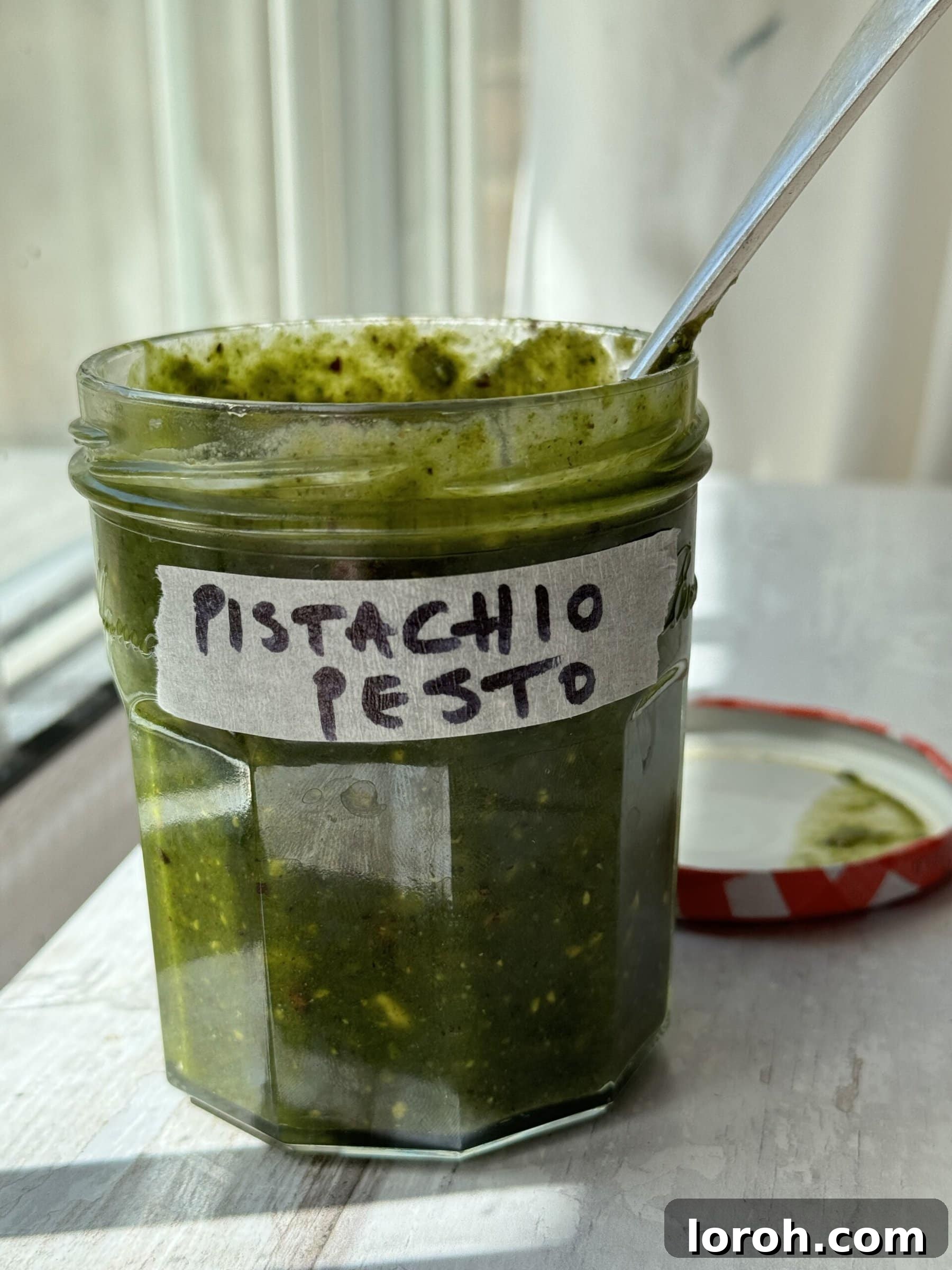
- To store any leftover pesto, transfer it to an airtight jar and place it in the refrigerator. For extended freshness, pour a thin layer of olive oil over the surface to create a seal and prevent oxidation.
Notes
Scroll up in the article for a helpful **step-by-step guide** with images on how to make this pistachio pesto, along with expert cooking tips.
To store: Store in the fridge in an airtight container or jar for 1-2 weeks. Ensure a thin layer of olive oil covers the surface to prevent it from going bad quickly. The oil may solidify in the fridge but will melt when brought to room temperature or mixed with hot food.
To freeze: Freeze in an airtight container, ice cube trays, or a freezer bag for up to 3 months. The color might darken, but the flavor will remain delicious. Defrost at room temperature before using.
Making pesto by hand: If you don’t have a blender, you can use a pestle and mortar for a traditional, chunkier pesto. Start by pounding garlic and salt, then gradually add basil, pistachios, cheese, pepper, lemon, and finally, slowly drizzle in the olive oil while pounding to emulsify.
Toasting pistachios: For the best flavor, toast your shelled pistachios before blending. If they are raw, pan-toast them over medium-high heat for 5-7 minutes, stirring constantly, until fragrant. Let them cool slightly before adding to the pesto.
Like this? Leave a comment below!
We’d love to hear your thoughts and see your creations.