
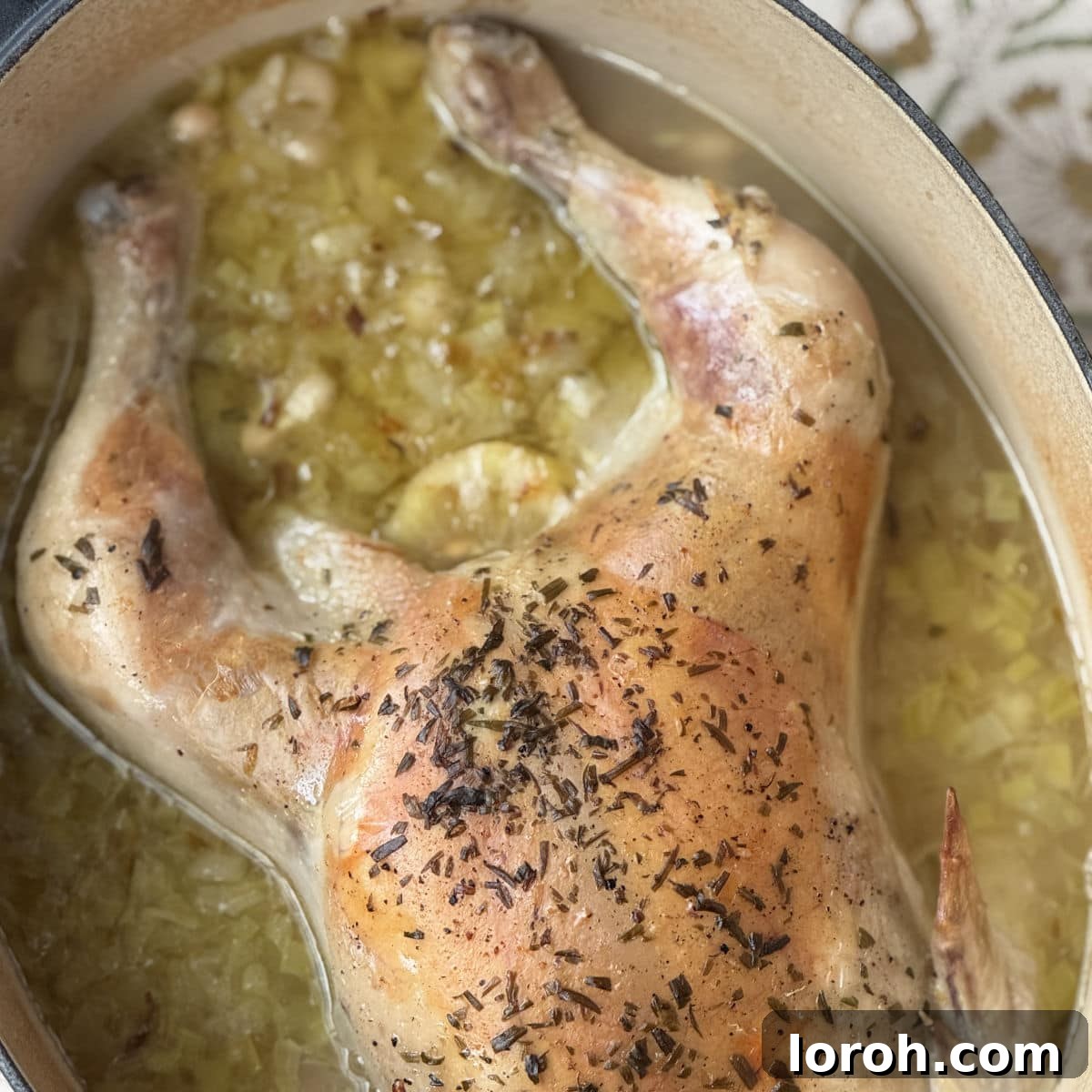
Poule au Pot: The Quintessential French One-Pot Chicken Masterpiece
Discover the delightful world of Poule au Pot, a truly comforting and profoundly flavorful classic from French culinary traditions. This iconic dish, literally translating to “chicken in a pot,” embodies rustic elegance and heartwarming nourishment. At its core, it features a tender whole chicken simmered gently with aromatic, caramelized leeks and onions, immersed in a rich, savory chicken broth. Our contemporary take introduces creamy cannellini beans and delicate orzo pasta, transforming it into a complete, incredibly satisfying one-pot meal. A final flourish of fresh cream, a hint of Dijon mustard, and fragrant tarragon elevates the dish, making it an irresistible choice for any occasion.
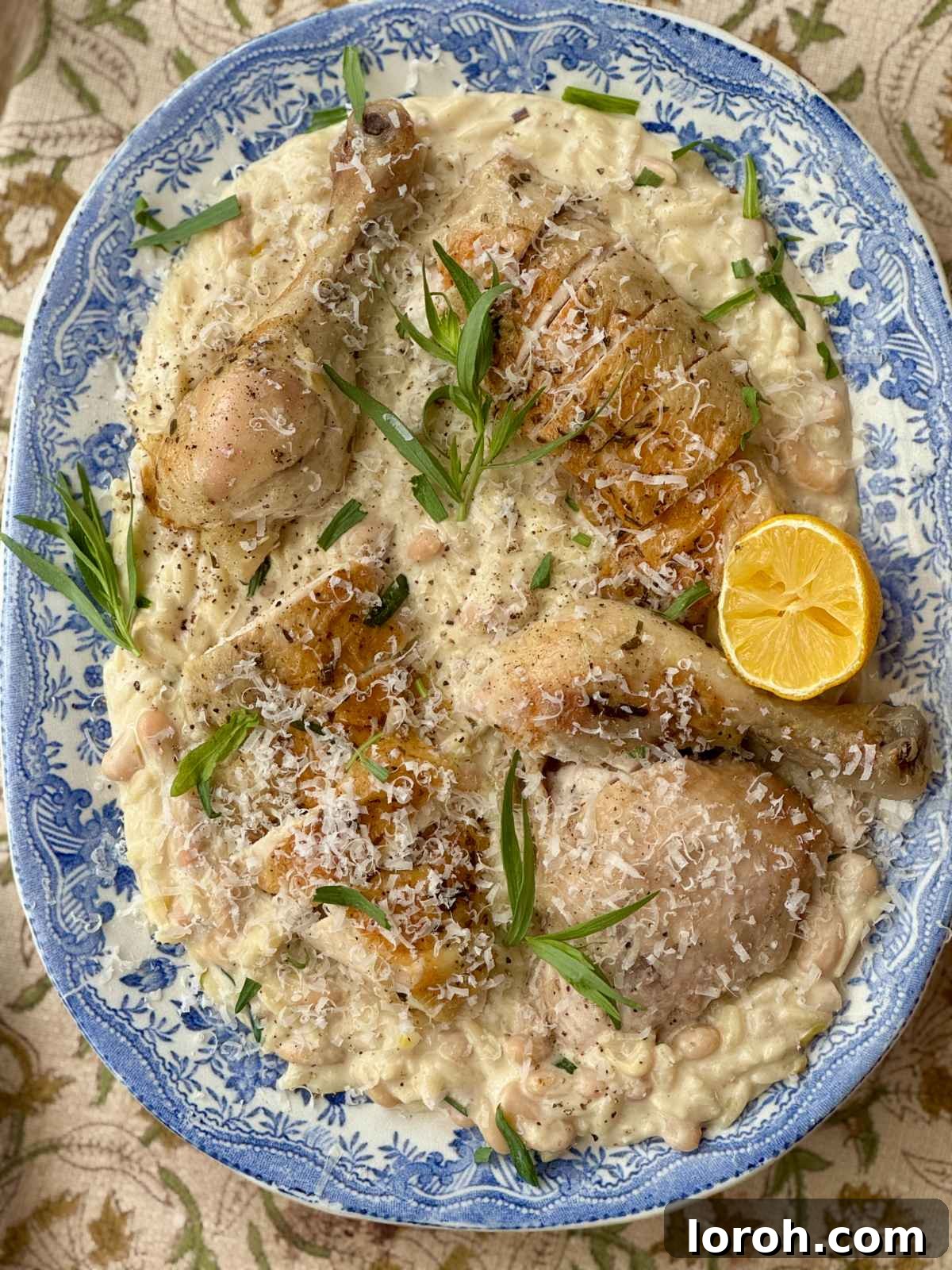
While honoring the timeless rustic charm of the traditional French recipe, this modern interpretation incorporates thoughtful additions like velvety cannellini beans and tender orzo. These elements not only add delightful texture but also create a more robust and complete meal, ensuring every spoonful is packed with flavor and substance. The subtle anise notes of tarragon brighten the rich broth, tying all the components together harmoniously. Though it diverges slightly from the strictest definition of tradition, the result is undeniably exquisite – a dish so supremely satisfying it’s perfect for a leisurely Sunday lunch or a cozy, hearty midweek supper. If you appreciate the simplicity and depth of flavor found in classic chicken dishes, you might also enjoy exploring other recipes like a creamy leek, mushroom & chicken pie, a savory garlic butter turkey and ham pie, or the effortless one-pan Greek chicken with lemon potatoes.
Table of Contents
- Why You Will Love This Poule au Pot Recipe
- What Exactly is Poule au Pot?
- Poule au Pot vs. Pot-au-Feu: Understanding the Difference
- Essential Ingredients for the Perfect Poule au Pot
- Substitutions and Creative Variations
- Step-by-Step: Crafting Your Poule au Pot
- Expert Cooking Tips for Success
- Frequently Asked Questions About Poule au Pot
- Other French-Inspired Recipes You’ll Adore
- Poule au Pot (Classic French Chicken in a Pot) Recipe Card
Why You Will Love This Poule au Pot Recipe
There are countless reasons why this Poule au Pot will become a cherished recipe in your kitchen. It’s more than just a meal; it’s an experience – offering comfort, ease, and exceptional flavor.
- The Ultimate One-Pot Wonder: Say goodbye to stacks of dirty dishes! This entire dish, from sautéing the aromatics to simmering the chicken and pasta, cooks in a single pot. This not only simplifies the cooking process but also makes for incredibly easy cleanup, leaving you more time to savor your delicious creation.
- Wholesome, Nourishing & Hearty: Packed with protein from the succulent chicken and an array of fresh vegetables like leeks and onions, alongside fiber-rich cannellini beans and satisfying orzo, this Poule au Pot is a complete and balanced meal. It’s designed to warm you from the inside out, providing sustained energy and comforting goodness.
- Rich, Yet Wonderfully Balanced Flavors: The dish boasts a luxurious richness, derived from the slow-cooked chicken and creamy beans. However, the brightness of fresh tarragon and the subtle tang of Dijon mustard expertly cut through this richness, creating a beautifully balanced flavor profile that is both decadent and refreshing. It’s a symphony of tastes that keeps you coming back for more.
- Incredibly Versatile and Adaptable: This Poule au Pot recipe is remarkably flexible, easily fitting into your cooking style. While designed for oven roasting in a Dutch oven, it can also be adapted for a slow cooker for hands-off preparation, or even made on the stovetop. Furthermore, the ingredients are forgiving, allowing for creative substitutions and additions to suit your pantry or dietary preferences.
What Exactly is Poule au Pot?
Literally translating to “hen in the pot,” Poule au Pot is far more than just its simple name suggests; it’s a cornerstone of traditional French cuisine, steeped in history and national pride. This rustic yet refined dish is a true testament to the French philosophy of transforming humble ingredients into something extraordinary.
The story of Poule au Pot is famously linked to King Henry IV of France. Legend has it that in the early 17th century, King Henry IV expressed a wish that every French peasant should have “a chicken in their pot every Sunday.” This sentiment encapsulated his vision of a prosperous nation where even the poorest could enjoy a nourishing, celebratory meal. This desire cemented Poule au Pot’s status not just as a dish, but as a symbol of well-being and national identity.
In its original form, the dish typically featured a older, tougher hen (a “poule,” hence the name) slowly simmered for hours with garden vegetables to create an exceptionally rich and flavorful broth. Over centuries, this classic has evolved. Modern versions, including this recipe, often use a younger, more tender chicken, resulting in a gentler, yet equally hearty and aromatic dish that masterfully bridges the gap between a comforting soup and a substantial stew.
Poule au Pot vs. Pot-au-Feu: Understanding the Difference
These two iconic French “boiled dinners” are often mentioned in the same breath, leading to understandable confusion. While both involve gently poaching meat and vegetables to extract maximum flavor, their fundamental difference lies in the star protein.
- Poule au Pot: As its name suggests, this dish is all about the bird. It centers around a whole chicken, slowly cooked to tender perfection, infusing the broth with delicate poultry flavors. The resulting dish is typically lighter, more fragrant, and often highlights the nuanced notes of herbs like tarragon.
- Pot-au-Feu: In contrast, Pot-au-Feu traditionally features beef as its main ingredient. Various cuts of beef are simmered with root vegetables for an extended period, yielding a much richer, heartier, and more robust broth. Pot-au-feu is known for its deep, meaty flavors, often accompanied by strong mustards and cornichons.
Both dishes are comforting classics, but Poule au Pot offers a distinct, elegant chicken-based experience, while Pot-au-Feu delivers a more profoundly beefy, rustic stew.
Essential Ingredients for the Perfect Poule au Pot
Crafting an authentic and delicious Poule au Pot begins with selecting high-quality ingredients. Each component plays a crucial role in building the layers of flavor that define this French classic.
Whole Chicken: The star of the show! Aim for a whole chicken weighing around 1.2-1.5kg (approximately 2.5-3.3 pounds). Ensure the giblets are removed from the cavity before cooking. While this recipe is optimized for this size, a slightly larger or smaller bird can be used; just adjust the roasting time accordingly until it’s fully cooked with no pink remaining. A good quality, free-range chicken will provide the best flavor and texture.
Orzo: This small, rice-shaped pasta is essential for thickening the broth and adding a wonderful, silky texture to the Poule au Pot. As it cooks, orzo absorbs the flavorful stock, creating a more substantial and satisfying consistency. If orzo isn’t available, other small pasta shapes like ditalini, fregola, or even pastina can be excellent substitutes.
Cannellini Beans: These white kidney beans are prized for their incredibly creamy texture and mild, earthy flavor. While canned beans work perfectly well and are convenient, sourcing jarred cannellini beans can elevate the dish further, offering an even creamier, softer consistency. They contribute significant body and richness to the broth, with one tin left whole for texture and the other blended to create a velvety base.
Double Cream (Heavy Cream): A splash of double cream, also known as heavy cream, at the end of cooking adds a luxurious richness and a silky finish to the broth. It’s an optional but highly recommended addition for those who enjoy an extra layer of indulgence. However, the blended cannellini beans already provide a significant amount of natural creaminess, so you can omit the double cream if you prefer a lighter version or are mindful of calories.
Aromatic Vegetables: Finely sliced red onion and a large leek form the flavorful foundation of this dish. Sautéing them until softened and lightly caramelized releases their natural sweetness, creating a complex base for the broth. Freshly crushed garlic adds an indispensable aromatic depth.
Herbs and Seasoning: A generous seasoning of salt, freshly ground black pepper, and mixed herbs (such as a blend of thyme, rosemary, and marjoram) coats the chicken, infusing it with flavor from the inside out. Fresh tarragon, with its distinct subtle licorice-like notes, is a quintessential French herb that brightens the final dish and ties all the flavors together beautifully.
Dijon Mustard: A spoonful of classic Dijon mustard is stirred into the finished broth. Its tangy, slightly pungent flavor provides a perfect counterpoint to the richness of the chicken and cream, adding a sophisticated zest that truly elevates the dish.
Chicken Stock: The quality of your chicken stock will significantly impact the depth of flavor in your Poule au Pot. A good quality store-bought chicken stock (carton or concentrated bouillon) is perfectly acceptable, but if you have homemade stock, it will undoubtedly take this dish to an unparalleled level of deliciousness.
Lemon: Half a lemon tucked into the chicken cavity during roasting adds a subtle citrusy aroma and helps to keep the chicken moist, contributing to a fresher overall flavor.
Olive Oil: Used for sautéing the vegetables and drizzling over the chicken for browning, a good quality olive oil enhances the flavors and aids in achieving a golden finish.
Substitutions and Creative Variations
Poule au Pot, while a classic, is also incredibly forgiving and adaptable. Don’t hesitate to experiment with these substitutions and variations to tailor the dish to your taste or what you have on hand.
- Cream Alternatives: If double cream isn’t available or preferred, a dollop of crème fraîche offers a lovely tangy richness. Single cream can also be used for a lighter finish, or you can omit it entirely and rely on the blended beans for creaminess. For a dairy-free option, a swirl of full-fat coconut milk (though less traditional) can provide a similar luxurious texture.
- Bean Swaps: While cannellini beans offer the best creaminess, butter beans (lima beans) are an excellent alternative, providing a similarly soft texture and mild flavor. Great Northern beans or even chickpeas could also work in a pinch, though they might yield a slightly firmer texture.
- Herb Choices: Tarragon is classic, but if its unique flavor isn’t to your liking, fresh thyme or rosemary sprigs cooked with the chicken will infuse a beautiful earthy aroma. Fresh parsley or chives, stirred in at the end, offer a brighter, fresher note. For a different twist, a bay leaf or two added to the stock during cooking can deepen the savory profile.
- Added Vegetables: To boost the nutritional content or simply add more color and flavor, consider incorporating other vegetables. Diced carrots, celery, parsnips, or even small chunks of turnips can be added alongside the leeks and onions. Sliced mushrooms could also be a delicious addition, lending an umami depth to the broth. Add root vegetables at the beginning to allow them enough time to soften.
- Spice and Flavor Boosts: For an extra layer of complexity, a pinch of nutmeg or a few whole peppercorns can be added to the stock. A splash of dry white wine (like Sauvignon Blanc or Pinot Grigio) deglazed after sautéing the vegetables can add a delightful acidity and depth to the broth before the stock is poured in.
- Make it Spicy: For those who enjoy a little heat, a pinch of red pepper flakes or a dash of cayenne pepper can be added to the broth, providing a gentle warmth that complements the rich flavors.
- Garnish Options: Beyond fresh tarragon, consider a sprinkle of finely chopped chives, a squeeze of fresh lemon juice, or even a few crusty croutons for added texture just before serving.
Step-by-Step: Crafting Your Poule au Pot
Follow these detailed steps to create a show-stopping Poule au Pot that will impress and delight. The full recipe with precise measurements can be found in the recipe card below.
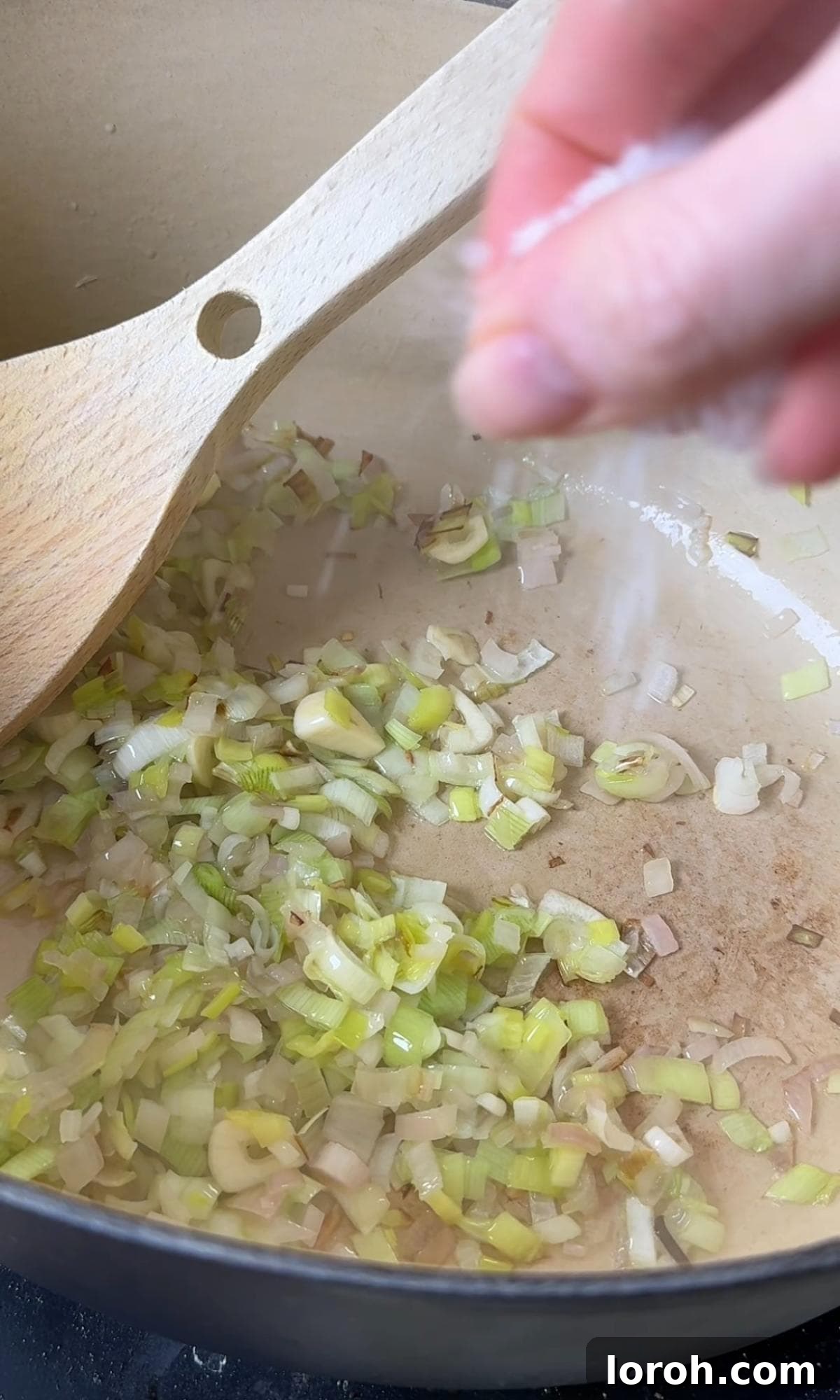
ONE: Prepare the Aromatics. Begin by preheating your oven to 180°C (160°C fan). In a large, ovenproof casserole dish (like a Dutch oven), heat a generous drizzle of olive oil over medium heat on your stovetop. Add the finely sliced red onion and leek, cooking them gently for 5–6 minutes until they are beautifully softened and slightly caramelized. Stir in the crushed garlic and cook for just one more minute until fragrant, being careful not to burn it.
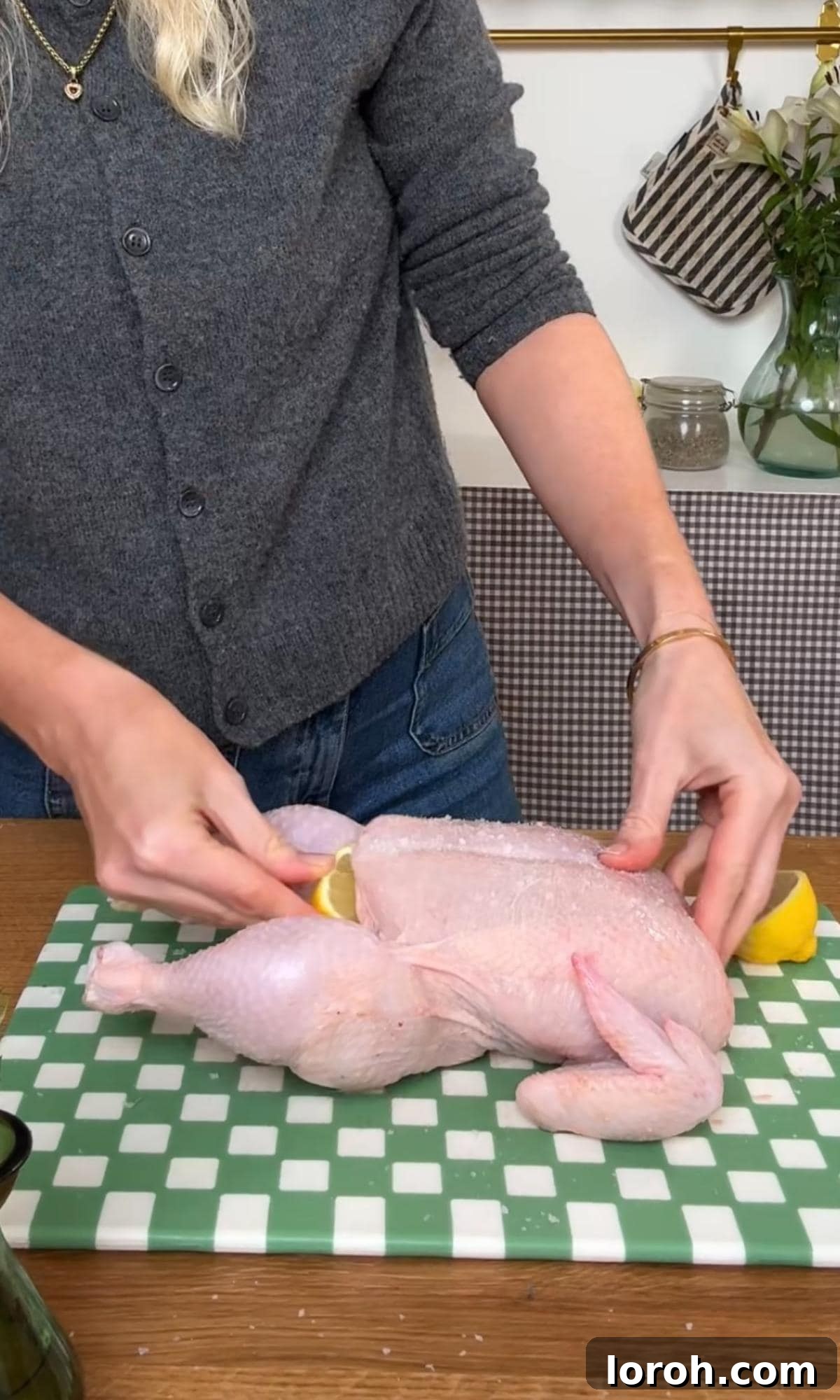
TWO: Season the Chicken. Pat the whole chicken thoroughly dry with paper towels – this helps achieve a crispier skin. Generously season the chicken all over with salt, freshly ground black pepper, and the mixed herbs, ensuring an even coating. Cut a lemon in half and place it inside the chicken’s cavity; this will infuse the chicken with a wonderful citrus aroma as it cooks.
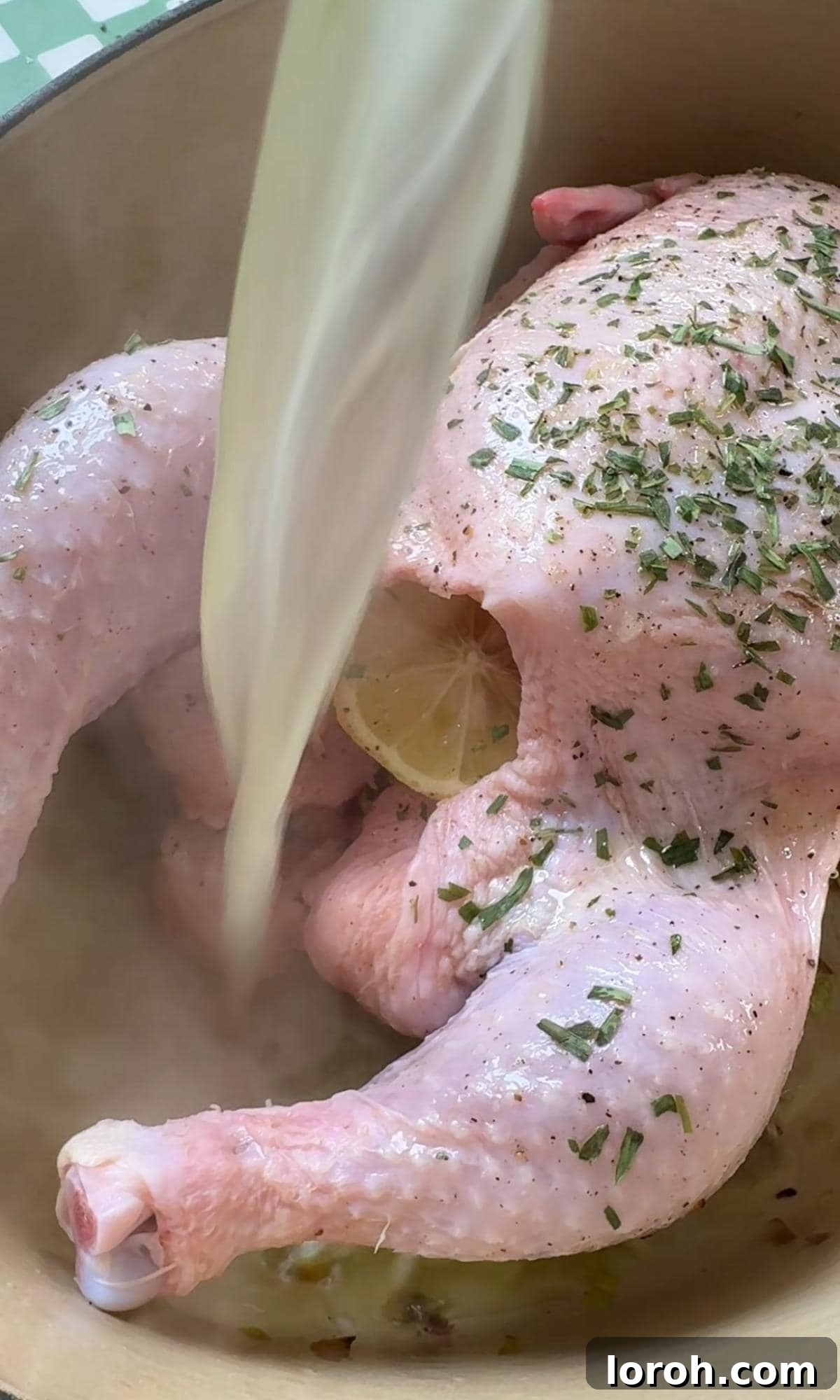
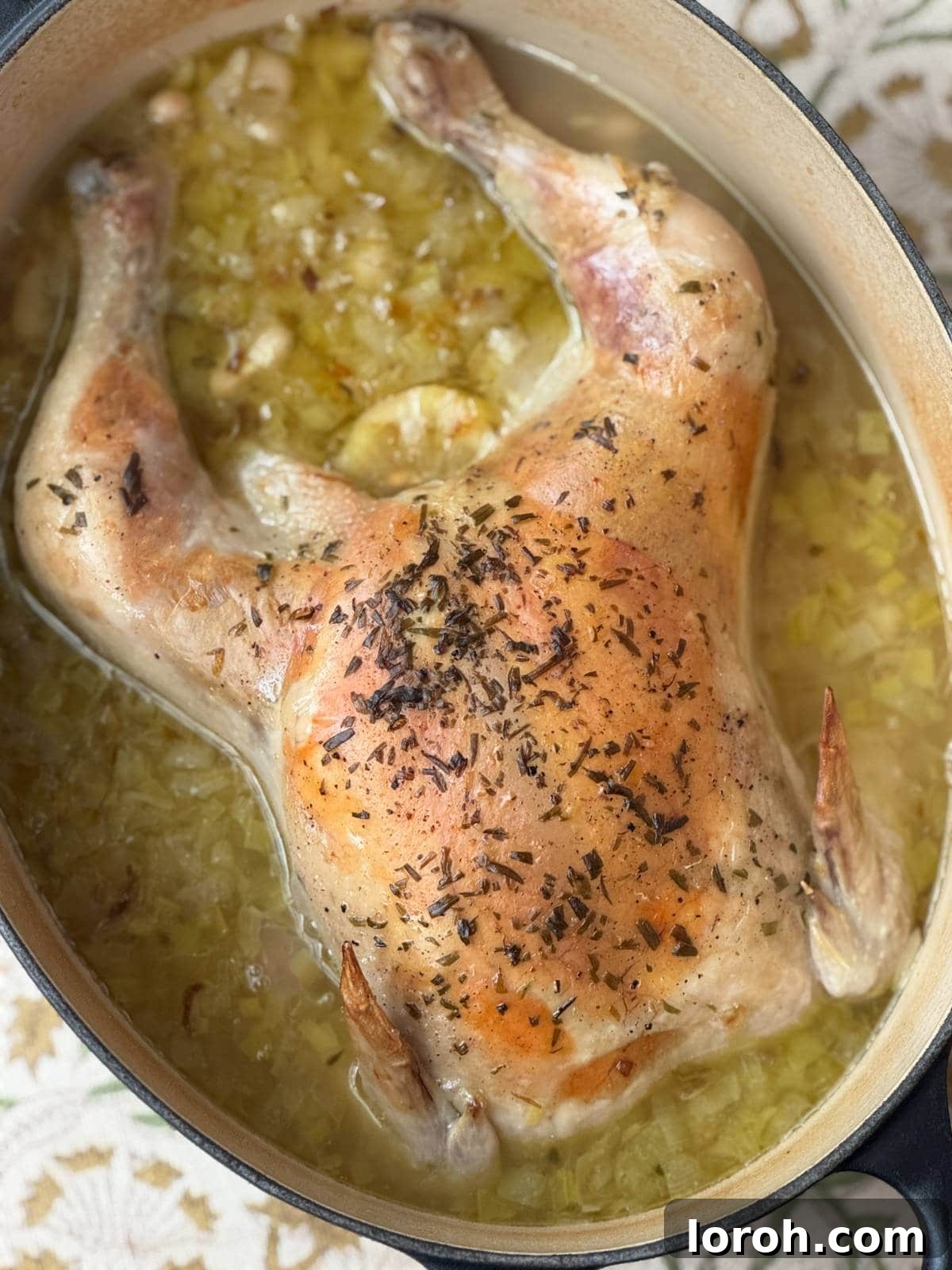
THREE: Initial Roast. Carefully nestle the seasoned chicken into the casserole dish, resting it on top of the softened vegetables. Pour in the chicken stock, ensuring it surrounds the chicken without fully submerging it. Cover the dish tightly with its lid or aluminum foil. Transfer to the preheated oven and roast for 1 hour to 1 hour 15 minutes, or until the chicken is nearly cooked through and the juices run mostly clear.
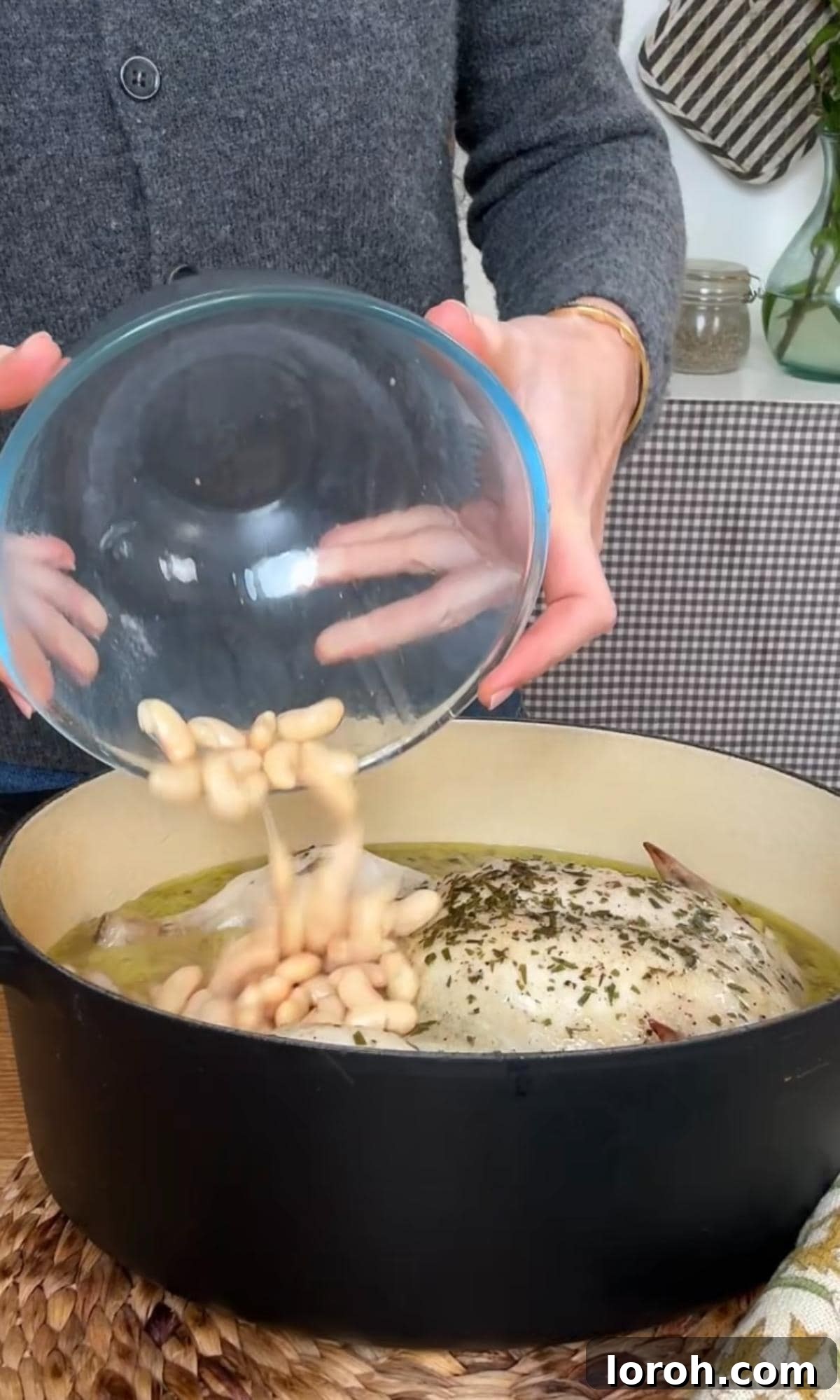
FOUR: Add Orzo and Beans. Remove the pot from the oven. Carefully stir in one tin of cannellini beans (keeping them whole for texture) and the orzo pasta around the base of the chicken. Drizzle a little extra olive oil over the top of the chicken to encourage beautiful browning. Return the dish to the oven, this time uncovered, and cook for an additional 15-20 minutes. Continue until the orzo is tender and al dente, and the chicken is fully cooked through with a golden-brown skin.
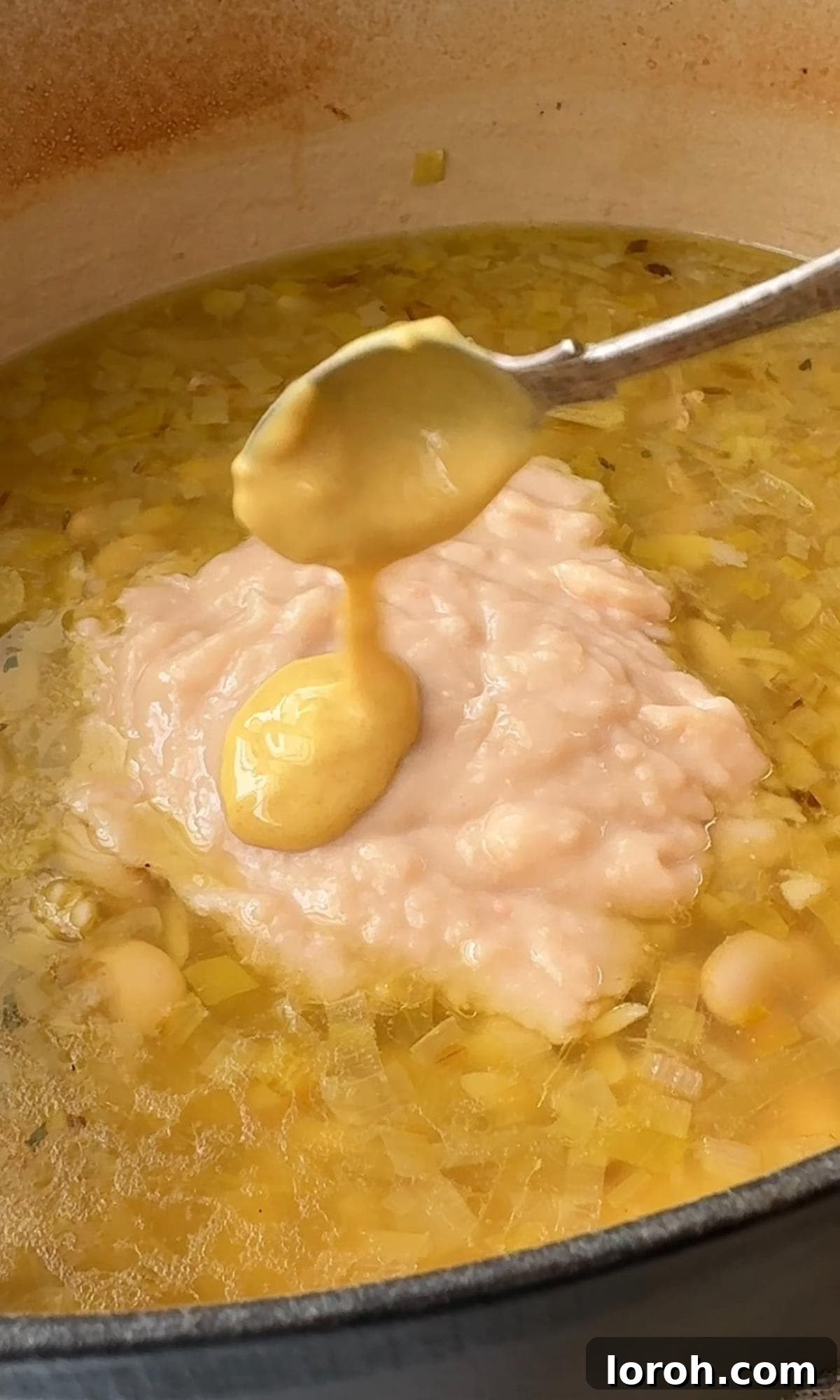
FIVE: Finish the Broth. Carefully remove the chicken from the pot and transfer it to a cutting board to rest for a few minutes; this allows the juices to redistribute, ensuring a more tender bird. While the chicken rests, blitz or thoroughly mash the second tin of cannellini beans until smooth – a blender or immersion blender works best for a silky texture, or simply use a fork for a more rustic mash. Stir these creamy mashed beans into the broth in the pot, along with the Dijon mustard, chopped fresh tarragon, and the double cream (if using). Taste and season generously with salt and black pepper as needed.
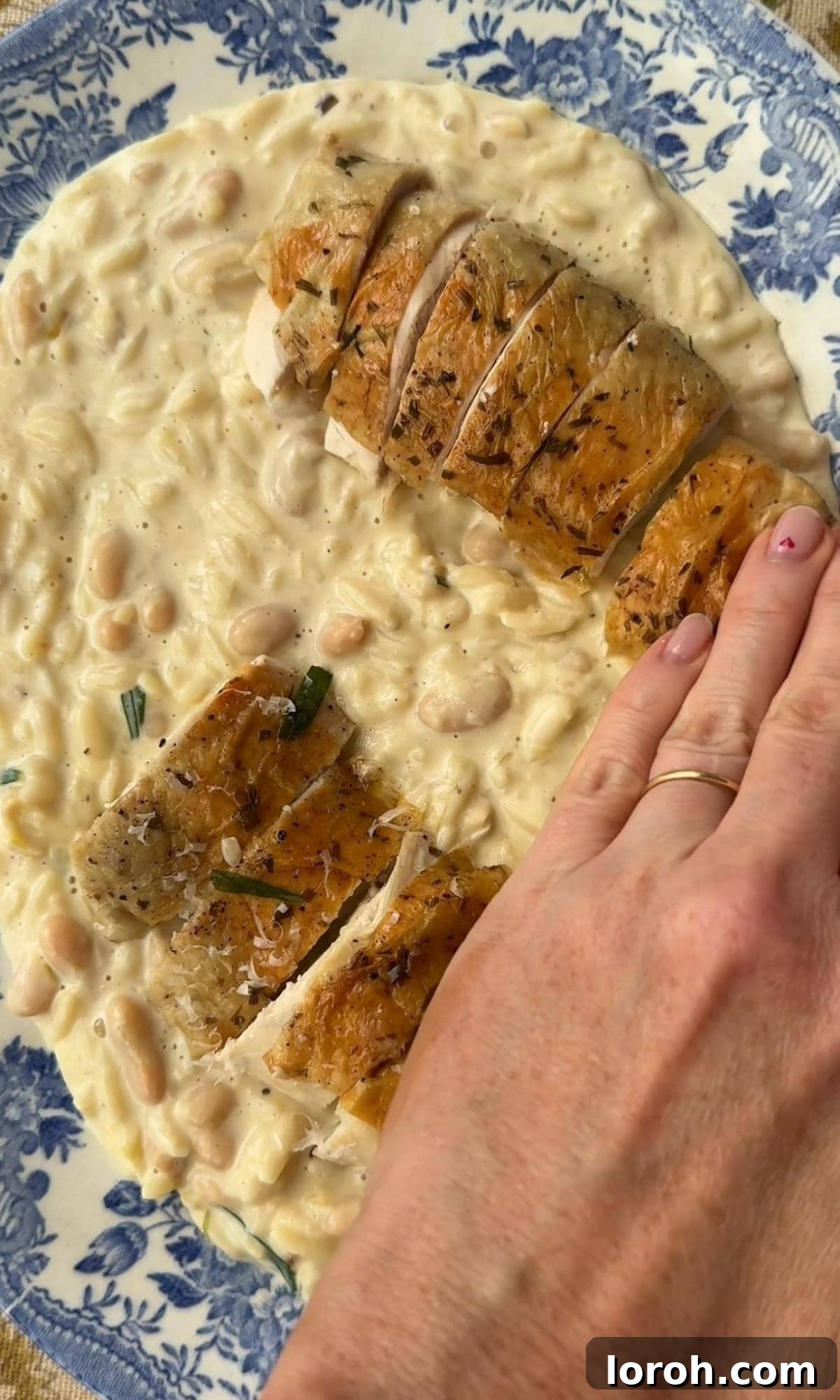
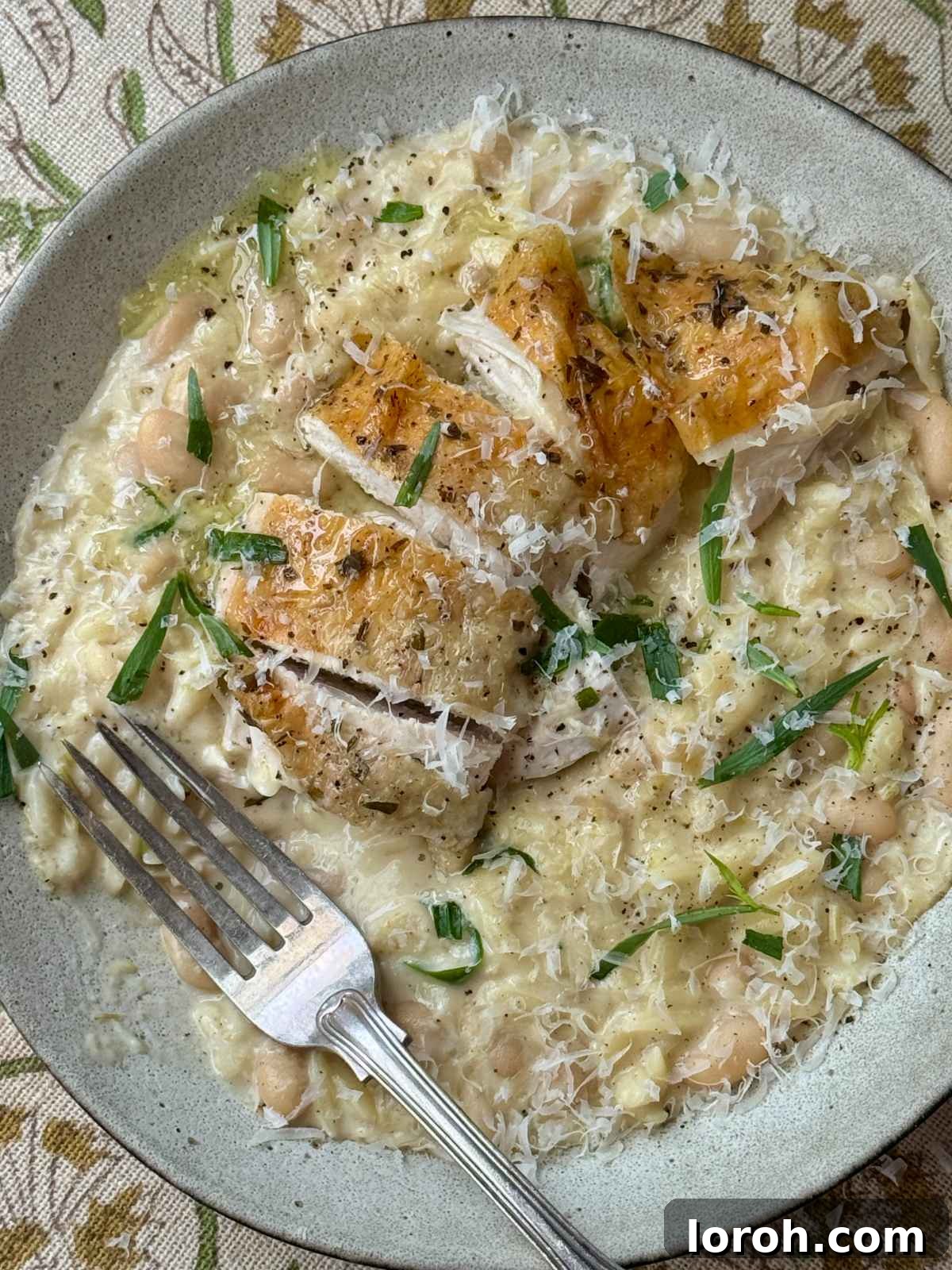
SIX: Carve and Serve. Carve the rested chicken into individual portions. Serve the succulent carved chicken on top of a generous bed of the creamy bean and orzo mixture. Finish each serving with a sprinkle of flaky sea salt, a crack of fresh black pepper, and extra fresh tarragon leaves for garnish. For a more rustic, stew-like presentation, you can also shred the cooked chicken and stir it back into the pot with the creamy bean mixture before serving.
Expert Cooking Tips for Success
Achieving the perfect Poule au Pot involves a few key techniques. These tips will help you maximize flavor and ensure a delicious, comforting meal every time.
- Start with Excellent Stock: The quality of your chicken stock is paramount, as it forms the very soul of your Poule au Pot. While a rich homemade chicken stock delivers unparalleled depth, it’s not always practical. Fortunately, many high-quality store-bought options are now available, from liquid cartons to concentrated gelatinous stock pots that dissolve in boiling water. Choose the best stock you can find; it will make a noticeable difference in the final flavor.
- Achieve Golden-Brown Chicken: For a more visually appealing dish, and to add a subtle depth of flavor, aim to brown the chicken during the final stage of cooking. When you add the orzo and beans, lightly drizzle the top of the chicken with a little olive oil or butter before returning it to the oven uncovered. This helps the skin crisp up and turn a beautiful golden color. While pale chicken is still delicious, we often “eat with our eyes” first, and a golden bird makes the dish even more inviting.
- Ensure Chicken Doneness: The chicken should be cooked through, with no pink remaining. The safest way to ensure this is to use a meat thermometer; the internal temperature should reach 74°C (165°F) in the thickest part of the thigh, away from the bone. If you don’t have a thermometer, pierce the thigh with a knife; the juices should run clear.
- Layer Your Flavors: Don’t just season the chicken at the start. Taste the broth after adding the beans, mustard, and cream. Adjust salt and pepper as needed. A squeeze of fresh lemon juice at the end can also brighten the flavors.
- Rest the Chicken: Allowing the chicken to rest for 5-10 minutes after roasting (before carving) is crucial. This helps the juices redistribute throughout the meat, resulting in a more tender, moist, and flavorful chicken.
Frequently Asked Questions About Poule au Pot
Absolutely! Poule au Pot adapts beautifully to a slow cooker for a more hands-off approach. After sautéing your aromatics (onion, leek, garlic) on the stovetop, transfer them to your slow cooker. Place the seasoned chicken on top, add the chicken stock, cover, and cook on low for 7–8 hours or on high for 4–5 hours. During the final 30-45 minutes of cooking, stir in the whole cannellini beans and the orzo. Continue cooking until the orzo is tender. Once cooked, remove the chicken to rest, blend one tin of beans into the broth, and stir in the Dijon mustard and cream as described in the main recipe. Carve and serve!
While both are quintessential French “boiled dinners” involving simmering meat and vegetables, their primary distinction lies in the protein used. Poule au Pot exclusively features a whole chicken, resulting in a broth that is lighter, more fragrant, and delicately flavored with poultry and herbs. Pot-au-Feu, on the other hand, is traditionally made with beef, often using various cuts, which yields a much richer, heartier, and more robust broth with deep, meaty flavors. The textures and typical accompaniments also differ, with Poule au Pot often being served with its flavorful broth, and Pot-au-Feu frequently accompanied by strong mustards and pickles.
Poule au Pot makes fantastic leftovers! It will keep well for up to 3 days when stored in an airtight container in the refrigerator. When reheating, be aware that the orzo will absorb a lot of the broth, causing the dish to thicken considerably. To restore its original consistency, gently reheat it on the hob (stovetop) over medium-low heat, adding a splash of extra chicken stock or water as needed to loosen the sauce and bring it back to a desirable consistency. Stir occasionally to prevent sticking. The beans and shredded chicken can also be frozen separately for up to three months; simply thaw overnight in the fridge before reheating.
Other French-Inspired Recipes You’ll Adore
If you fell in love with the comforting flavors of this Poule au Pot recipe, you’re in for a treat! French cuisine offers a vast array of delightful dishes that combine elegance with satisfying simplicity. I have many other French recipes that I think you will absolutely adore:
- For a wonderful side dish or a light vegetarian meal, you should definitely try my Gratin de Courgettes. It’s a deliciously creamy and cheesy courgette bake that pairs beautifully with any main course.
- If you’re looking for another savory pastry, my Ham and Cheese Pithivier is a fantastic option. This impressive-looking, flaky puff pastry pie is filled with a rich ham and cheese mixture, perfect for a special lunch or a sophisticated starter.
- And to finish off your French-inspired meal, I highly recommend my Clafoutis aux Cerises. This traditional French dessert features a crisp, custard-like batter baked with juicy cherries (though other fruits can easily be swapped in!), creating a delightful and not-too-sweet pudding.
Sandwiches
The Best Coronation Chicken Sandwiches
Christmas Recipes
Leftover Garlic Butter Turkey and Ham Pie
Chicken Recipes
Chicken & Mushroom Vol Au Vents
Chicken Recipes
One-Pan Greek Chicken with Lemon Potatoes
If you tried this Poule au Pot or any other recipe on the site, please do leave a rating or comment below and let us know how it went! Your feedback is always appreciated.
Poule au Pot (Classic French Chicken in a Pot)
Poule au Pot is one of those one-pot wonders that feels both wholesome and indulgent: tender chicken, silky orzo with creamy beans, fragrant tarragon, and a touch of Dijon mustard. The ingenious addition of blended beans gives it a velvety texture, transforming it into something truly special and deeply satisfying.
Ingredients
- 1.2-1.5 kg whole chicken
- 1 lemon
- 2 garlic cloves, crushed
- 1 red onion, finely sliced
- 1 large leek, sliced
- Salt and freshly ground black pepper
- 2 tsp mixed herbs
- 1 litre chicken stock
- Olive oil
- 300 g orzo
- 2 × 400g tins cannellini beans, about 500g drained weight
- 1 small bunch tarragon, about 20g, leaves stripped and chopped
- 1 heaped tsp Dijon mustard
- 80 ml double cream, optional
Instructions
- Preheat the oven to 180°C (160°C fan).
- Heat a good drizzle of olive oil in a large ovenproof casserole dish over medium heat. Add the onion and leek and cook for 5–6 minutes until softened. Stir in the garlic and cook for a further minute until fragrant.
- Pat the chicken dry and season all over with salt, pepper, and the mixed herbs. Cut the lemon in half and place it inside the cavity.
- Nestle the chicken into the pot with the vegetables and pour in the chicken stock. Cover (with a lid or foil) and roast for 1 hour to 1 hour 15 minutes, until the chicken is pretty much cooked through.
- Remove the pot from the oven and stir in one tin of cannellini beans (left whole) and the orzo around the chicken. Drizzle a little olive oil on the chicken to encourage it to turn golden brown and return to the oven, uncovered. Cook for 15-20 minutes until the orzo is tender and the chicken is gorgeously golden.
- Remove the chicken from the pot and set aside to rest. Blend up the second tin of beans until smooth (or roughly mash with a fork as well as you can). Stir the creamy beans into the broth along with the Dijon mustard and double cream (if using). Add the chopped tarragon, season generously with salt and pepper to taste.
- Carve the chicken and serve on top of a bed of creamy beans and orzo. Top with flaky salt, black pepper, and more fresh tarragon leaves. Alternatively, you could shred the chicken and stir it back into the pot for a more rustic, stew-like version.
Notes
Scroll up for a step-by-step guide on how to make Poule au Pot, including detailed visual references.
To store: Store any leftovers in an airtight container in the fridge for up to 3 days. Note that the orzo will absorb more broth over time, so the dish will thicken.
To reheat: Gently warm the Poule au Pot on the stovetop over medium heat. You may need to add a splash of extra chicken stock or water to loosen the sauce and restore its original consistency.
To freeze: If you shred the chicken and mix it into the broth with the beans and orzo, the mixture will freeze well for up to 3 months in an airtight container. Thaw overnight in the refrigerator before reheating.
Serving size: This recipe generously serves 4 adults. It can easily feed up to 6 people, especially if served with crusty bread or a side salad.
Nutrition
Nutrition information is automatically calculated and should only be used as an approximation. Per serving:
Calories: 867 kcal, Carbohydrates: 90g, Protein: 51g, Fat: 36g, Saturated Fat: 12g, Polyunsaturated Fat: 6g, Monounsaturated Fat: 14g, Trans Fat: 0.1g, Cholesterol: 131mg, Sodium: 478mg, Potassium: 950mg, Fiber: 10g, Sugar: 6g, Vitamin A: 1090IU, Vitamin C: 24mg, Calcium: 217mg, Iron: 8mg