
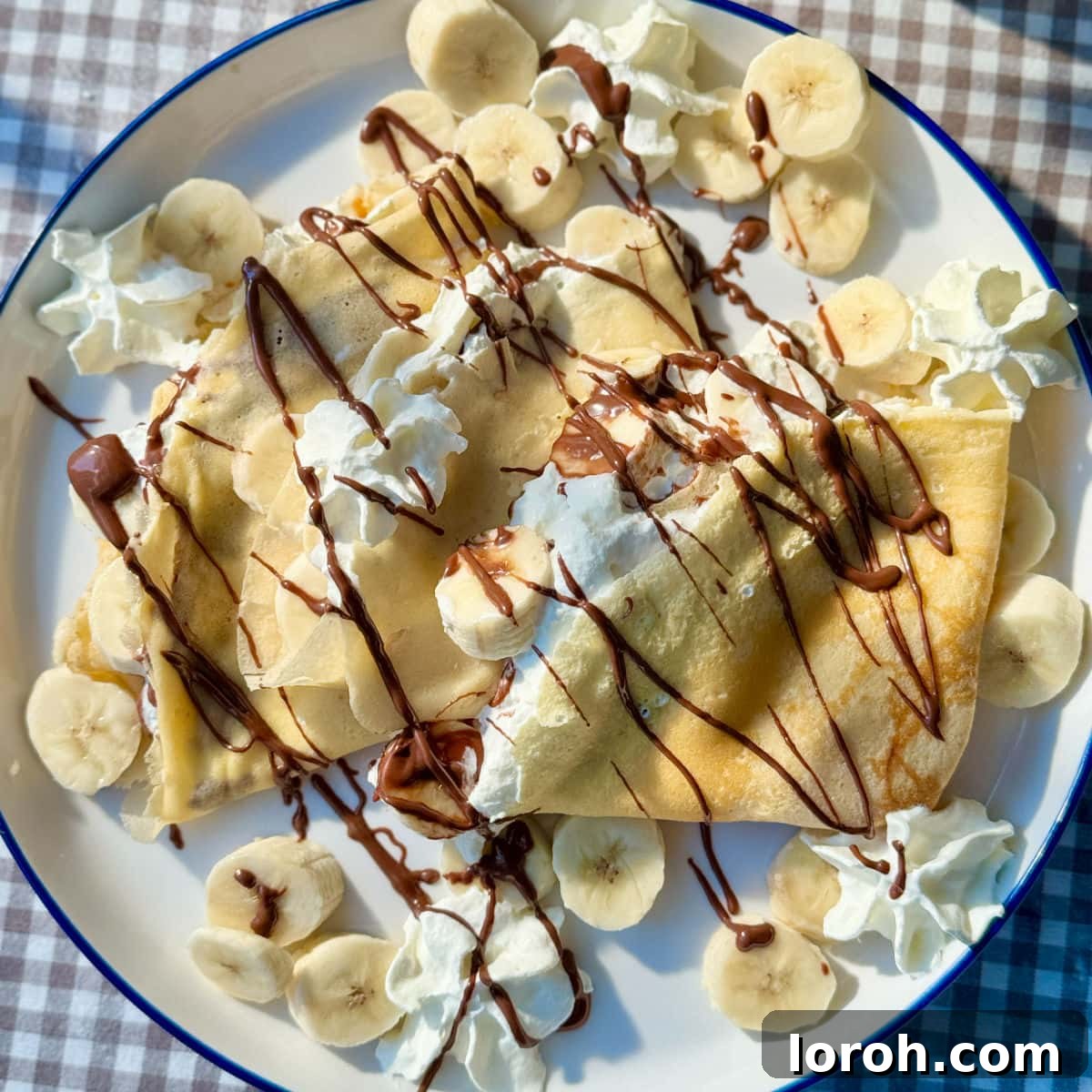
There’s a special joy that comes with making and eating pancakes, or more specifically, crêpes. It’s a culinary experience that often throws all caution to the wind, allowing for the sheer indulgence of sweet, delicate treats at any time of day. For me, these **Banana Crêpes** are a true revelation – not just for a dedicated pancake day, but for any morning or afternoon that calls for something truly special. Imagine thin, incredibly soft crêpes, generously topped with slices of ripe banana, dollops of ethereal whipped cream, and a luxurious drizzle of rich, melted Nutella. It’s a combination that promises pure bliss with every single bite.
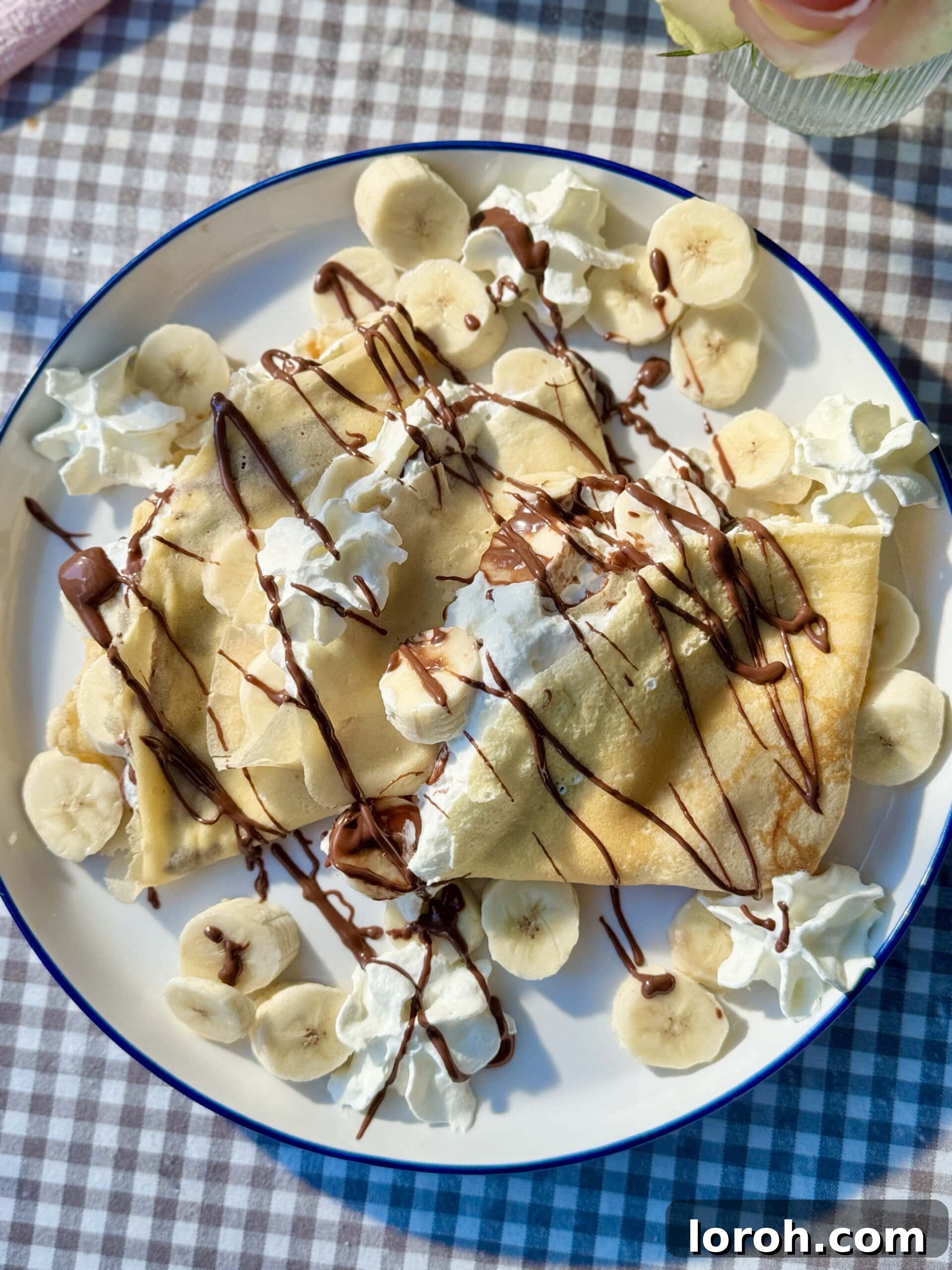
The beauty of this banana crêpe recipe lies in its utter simplicity. Forget complicated techniques or lengthy prep times; these delicate treats are designed for maximum ease and enjoyment. The batter itself is effortlessly prepared, ideally in a blender, which ensures a silky-smooth consistency without any pesky lumps. Once mixed, it’s a quick trip to a buttery, non-stick pan, where the crêpes fry up to a beautiful golden hue in mere moments. The final flourish is just as straightforward: layer with freshly sliced bananas, a lavish spread of melted Nutella, and a cloud of whipped cream. From start to finish, you’ll be enjoying these delightful crêpes in under 20 minutes, making them a perfect choice for a spontaneous breakfast, a leisurely brunch, or even a quick yet elegant dessert.
The pairing of Nutella and banana is undeniably a classic, a harmonious blend of creamy chocolate-hazelnut and sweet, fruity goodness that never fails to satisfy. However, the versatility of crêpes means the topping possibilities are virtually endless. Feel free to explore other exciting flavor combinations such as Tiramisu-inspired toppings, luscious Berry Cheesecake, or exotic Mango creations. And of course, you can always revert to the timeless favorites: a simple squeeze of lemon and a sprinkle of sugar, or a dusting of delicate icing sugar. The choice is yours, allowing you to customize each crêpe to your heart’s content.
To Rest Or Not To Rest: The Crêpe Batter Conundrum
The question of whether to rest crêpe batter is a culinary debate as old as the crêpe itself. Traditionally, many recipes advocate for resting the batter for at least 30 minutes, or even overnight, claiming it allows the flour to fully hydrate and the gluten to relax, resulting in a more tender and pliable crêpe. While I was certainly taught this principle, my extensive experience in the kitchen has led me to a different conclusion. I’ve experimented with both rested and immediately-cooked batter, and I genuinely find very little discernible difference in the final product’s texture or taste. So, if you’re pressed for time or simply eager to enjoy your crêpes, feel free to skip the resting period!
That said, if you prefer to get ahead, preparing the batter the night before can be a fantastic time-saver. Simply blend all the ingredients until smooth, then transfer the sealed blender container directly to the fridge. The next morning, give it a quick shake – a little separation is perfectly normal – and your batter will be ready to pour. This make-ahead strategy ensures a fuss-free breakfast, allowing you to enjoy freshly cooked crêpes with minimal effort when hunger strikes.
Table of Contents
- To Rest Or Not To Rest (that is the question)
- Why You Will Love This Banana Crêpe Recipe
- Ingredients for Perfect Banana Crêpes
- Substitutions and Variations for Your Crêpes
- Step-by-Step Guide: How to Make Banana Crêpes
- Expert Cooking Tips for Flawless Crêpes
- Frequently Asked Questions About Crêpes
- Storage & Make Ahead Instructions
- Explore More Pancake and Crêpe Recipes
- Share Your Banana Crêpe Creations!
- Banana Crêpes Recipe Card
Why You Will Love This Banana Crêpe Recipe
Beyond their irresistible taste, these Banana Crêpes offer a multitude of reasons to become your new favorite treat:
- Effortlessly Simple: This recipe is designed for ease, making it accessible even for novice cooks. The straightforward steps and minimal ingredients mean you can whip up a batch without any stress or culinary fuss.
- Blender-Friendly Batter: Say goodbye to arm fatigue from whisking and frustrating lumps! The option to prepare the crêpe batter in a blender streamlines the process, ensuring a perfectly smooth consistency every time with virtually no effort.
- Classic Flavor Harmony: The combination of sweet banana and rich, chocolate-hazelnut Nutella is a match made in heaven. These are classic flavors that are universally loved, and you’ll likely have both ingredients already stocked in your pantry, ready for action.
- Perfect for Any Occasion: Whether it’s a quick weekday breakfast, a luxurious weekend brunch, or a delightful dessert, these crêpes fit every bill. They’re light enough not to feel heavy but satisfying enough to curb any sweet cravings.
- Easily Scalable: Planning a cozy breakfast for two or hosting a lively brunch crowd? This recipe is incredibly versatile and can be scaled up or down with ease, ensuring everyone gets to enjoy a stack of freshly made crêpes.
- Customizable Toppings: While the banana and Nutella pairing is stellar, the crêpes serve as a fantastic canvas for various toppings. Explore different fruits, sauces, or even savory options to truly make them your own.
Ingredients for Perfect Banana Crêpes
Crafting these delectable banana crêpes requires a few simple, everyday ingredients. The full, detailed recipe can be found in the printable recipe card at the very bottom of this post, but here’s a closer look at what you’ll need and why each component is key:
- Eggs: Large eggs are highly recommended for this recipe. They provide essential structure and richness to the crêpes, contributing to their delicate texture and golden color. Opt for free-range eggs if possible for superior flavor and quality.
- Whole Milk: While whole milk is ideal for achieving the richest flavor and most tender crêpe, don’t hesitate to use semi-skimmed or even skimmed milk if that’s what you have on hand. Whole milk simply offers a slightly more luxurious and well-rounded pancake experience.
- Plain Flour: Also known as all-purpose flour, this is crucial for creating thin, pliable crêpes that don’t rise excessively. Unlike fluffy American-style pancakes, crêpes are meant to be delicate, and plain flour helps maintain that desired characteristic.
- Butter: Frying crêpes in butter is a game-changer. Whether salted or unsalted, butter imparts a beautiful golden hue and an incomparable depth of flavor that complements the sweetness of the crêpes perfectly. It also helps achieve those coveted crispy edges.
- Caster Sugar: A touch of caster sugar in the batter enhances the overall sweetness of the crêpes, making them even more delightful, especially when paired with the fruit and Nutella. It’s an optional addition, particularly if you’re serving them to very young children or prefer a less sweet base.
- Bananas: For the best flavor, choose bananas with a few brown speckles on their skins rather than entirely green ones. These slightly riper bananas offer a richer, sweeter taste. However, any banana you have will still make for a delicious topping.
- Whipped Cream: An optional yet highly recommended topping! I often use whipped cream from a can for its nostalgic charm and sheer convenience. For a more gourmet touch, you could whip up fresh double cream to soft peaks.
- Nutella: The star of the toppings, this creamy chocolate-hazelnut spread is simply divine. For that perfect drizzling consistency, gently melt the Nutella in the microwave for a few seconds. If Nutella isn’t your preference, other chocolate or hazelnut spreads work beautifully too.
Substitutions and Variations for Your Crêpes
One of the joys of making crêpes is their adaptability. Feel free to get creative with these suggestions, tailoring the recipe to your dietary needs or flavor preferences:
- Sugar Alternatives: If you’re mindful of sugar intake or preparing these for very young children, you can omit the caster sugar from the batter entirely. The sweetness from the toppings will still provide plenty of flavor. Alternatively, granulated sugar, soft light brown sugar, or even dark brown sugar can be used for a slightly different caramel note.
- Milk Options: While whole milk provides the richest base, feel free to substitute with semi-skimmed or skimmed milk without significantly altering the outcome. For a dairy-free version, almond milk, soy milk, or oat milk all work wonderfully.
- Dairy-Free Adaptation: To make these crêpes completely dairy-free, swap out the traditional milk for your favorite plant-based milk and use a plant-based butter alternative in the batter. When frying, continue to use plant-based butter or a neutral-flavored vegetable oil like canola or sunflower oil.
- Explore New Toppings: The classic Nutella and banana combo is fantastic, but don’t stop there!
- Nutty Spreads: Hazelnut cream, almond butter, or peanut butter offer delightful alternatives to Nutella.
- Chocolate Galore: Melted dark, milk, or white chocolate drizzled over the top adds a touch of elegance and extra indulgence.
- Classic Syrups: Revisit traditional favorites with honey, maple syrup, or golden syrup. A simple sprinkle of granulated sugar can also be surprisingly satisfying.
- Creamy Delights: For a richer experience, consider whipped mascarpone cream or a luscious whipped honey butter.
- Add a Crunch with Nuts: For textural contrast and added flavor, sprinkle flaked almonds or coconut flakes over your banana crêpes. If you’re using Nutella, peanuts or hazelnuts would complement the spread perfectly. For the best flavor, always toast your nuts beforehand in a dry frying pan over medium heat, shaking frequently until fragrant, then let them cool before sprinkling.
- Caramelized Bananas: Elevate your crêpes by making caramelized bananas. Slice your bananas and add them to a frying pan with a generous knob of butter and a tablespoon of caster sugar. Cook over medium heat, stirring gently, until the sugar melts, bubbles, and turns golden. These sweet, tender bananas can replace or accompany fresh ones and are so flavorful that you might even opt to forego the Nutella for a slightly less sweet experience.
Step-by-Step Guide: How to Make Banana Crêpes
Making these delightful banana crêpes is incredibly straightforward. Here’s a detailed, step-by-step guide to ensure perfect results every time. Remember, the full recipe card with precise measurements is located at the bottom of this page.
Step One: Prepare the Batter (Traditional Method)
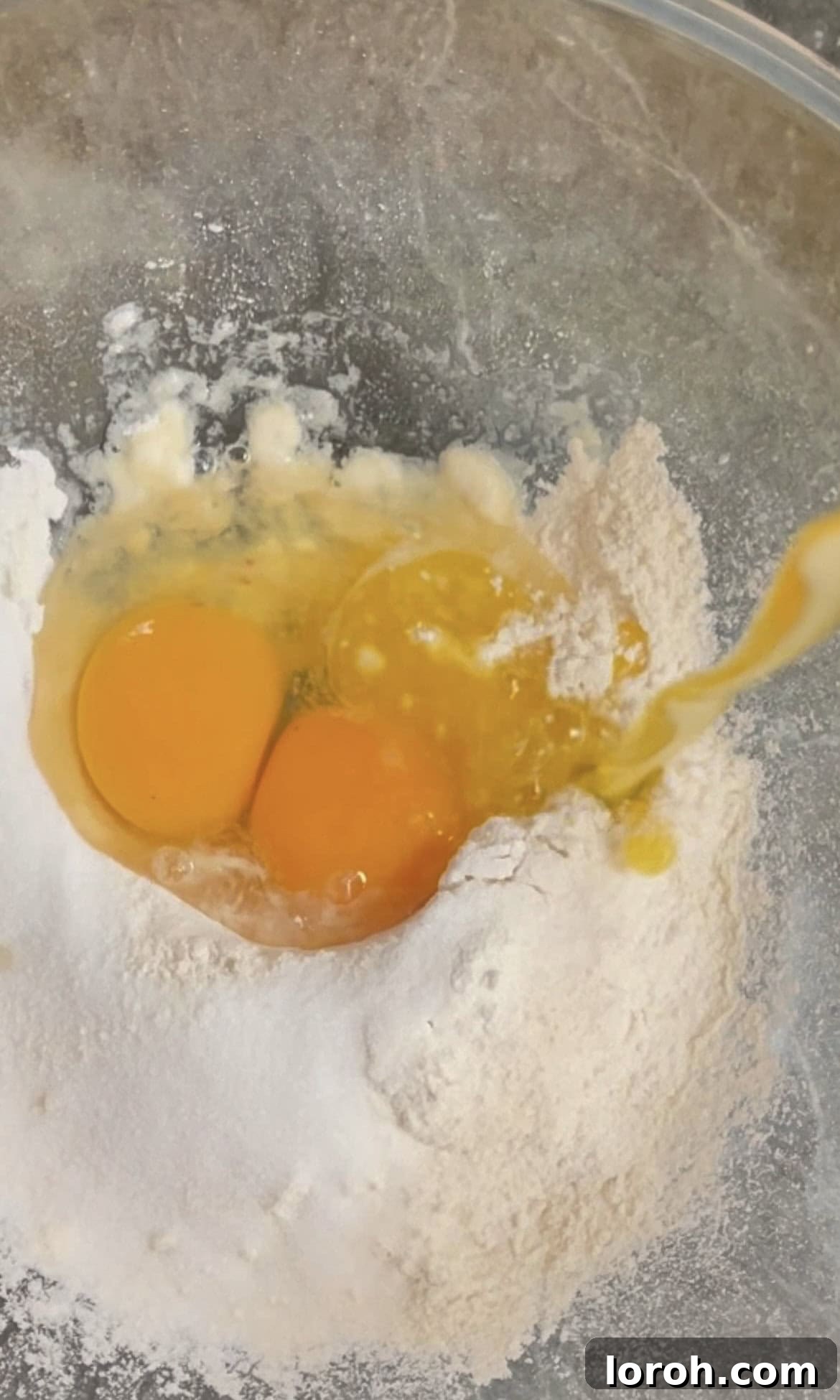
In a large mixing bowl, combine the plain flour, caster sugar, and a pinch of salt. Create a well in the center of the dry ingredients. Crack your eggs directly into the well, then add the melted butter. Begin whisking from the center outwards, gradually incorporating the dry ingredients. Once partially mixed, slowly pour in the milk, whisking continuously until the batter is smooth and free of lumps. Ensure all ingredients are thoroughly combined.
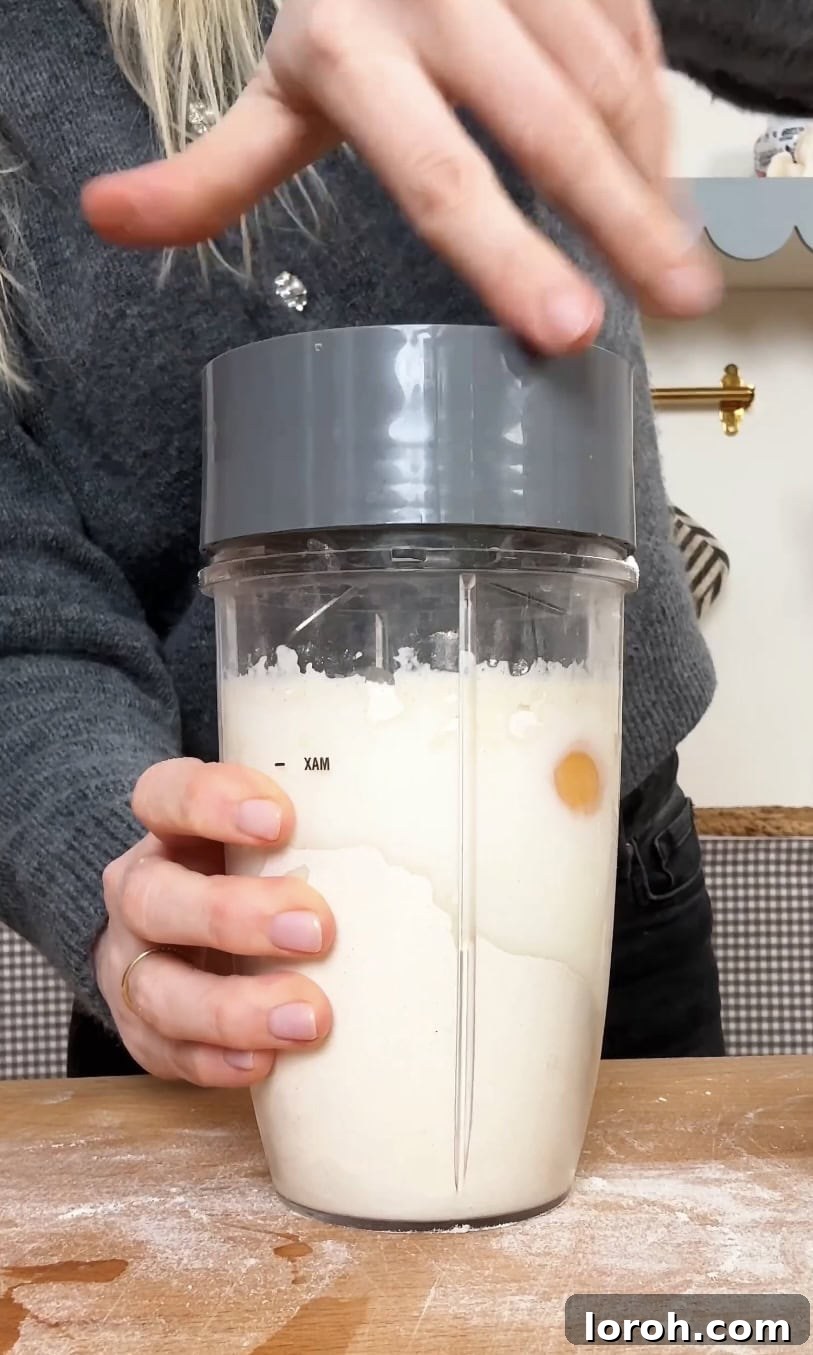
Step Two: Prepare the Batter (Blender Method)
For ultimate ease and a guaranteed lump-free batter, I highly recommend using a blender. Simply add all your ingredients – flour, sugar, salt, eggs, melted butter, and milk – into the blender jug. Secure the lid and blitz on a medium-high setting until the mixture is perfectly smooth and homogenous. This method is incredibly efficient and delivers the best consistency.
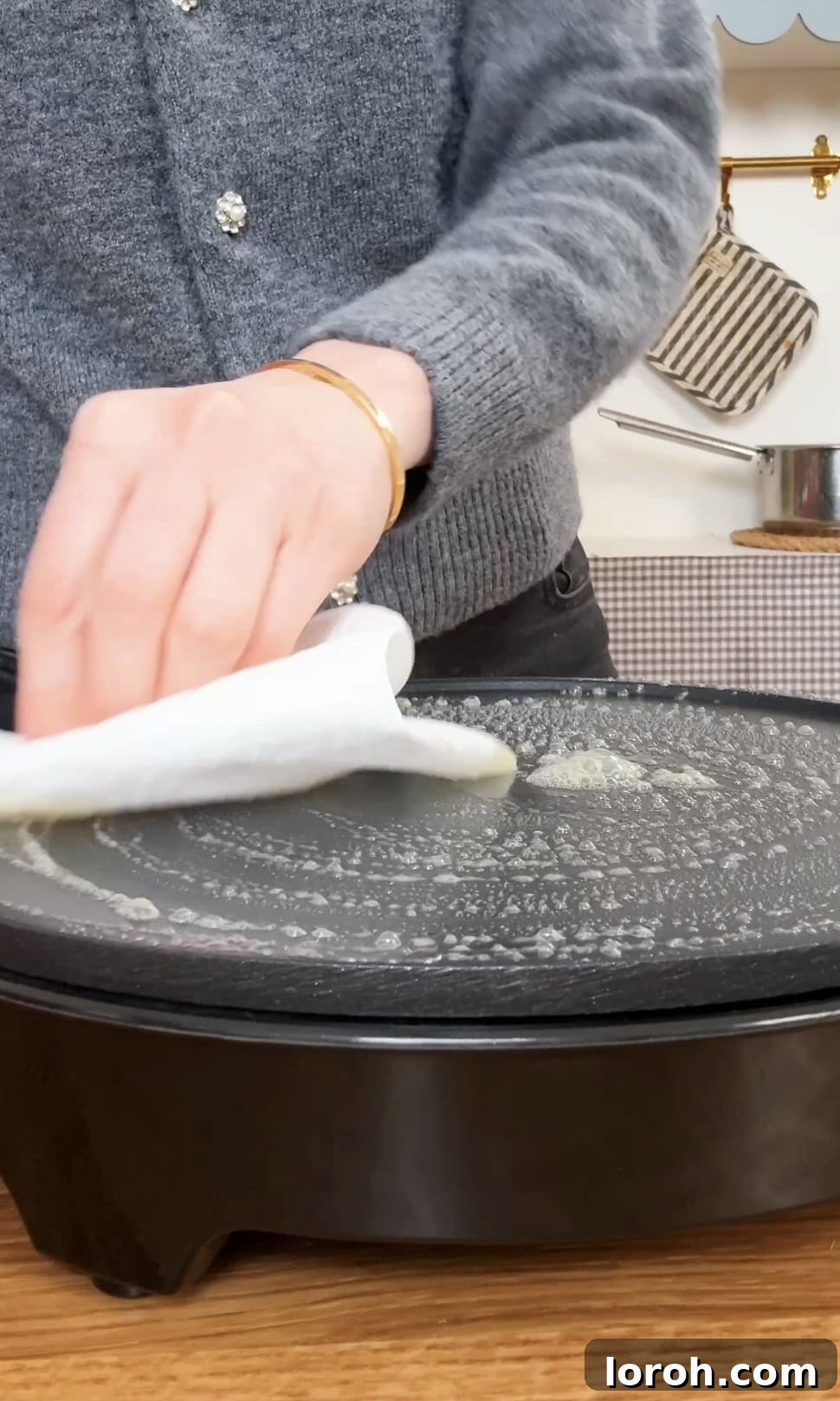
Step Three: Prepare the Pan
Place a non-stick frying pan (a dedicated crêpe pan is fantastic, but any good quality non-stick pan will work) over medium-high heat. Allow it to heat up sufficiently. Once warm, lightly grease the pan. A great technique is to melt a small knob of butter, then use a scrunched-up piece of kitchen paper to evenly spread the butter across the entire base of the pan, ensuring a thin, even coating. This prevents sticking and promotes beautiful browning.
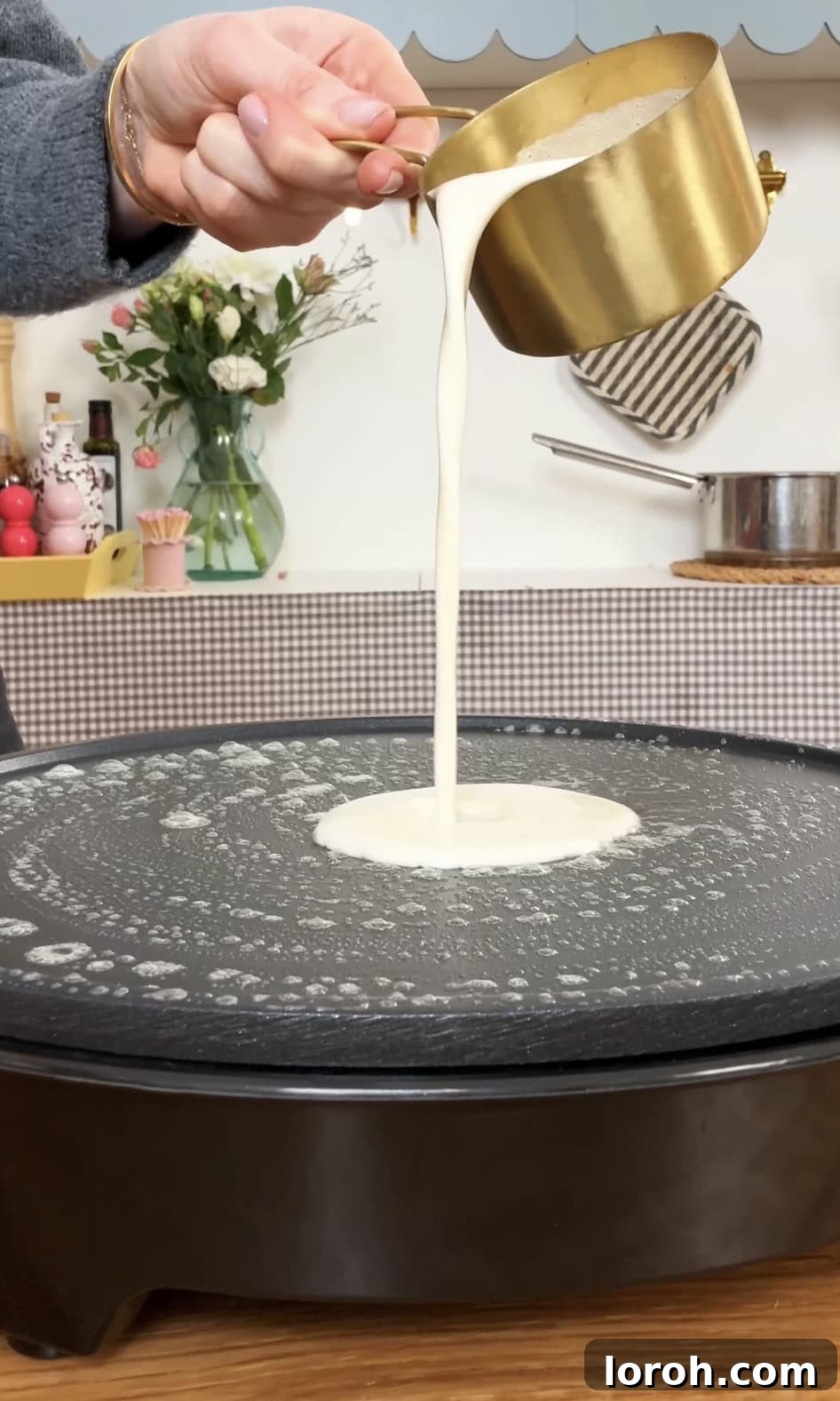
Step Four: Pour the Batter
Using a ladle, pour a small amount of batter into the center of the heated and greased pan. Determining the exact right amount of batter takes a little practice and is often a matter of trial and error for the first crêpe or two. Don’t worry if the first one isn’t perfect – it’s a well-known culinary adage that the first pancake or crêpe rarely turns out flawlessly. Consider it the “chef’s perk” and enjoy it as your reward!
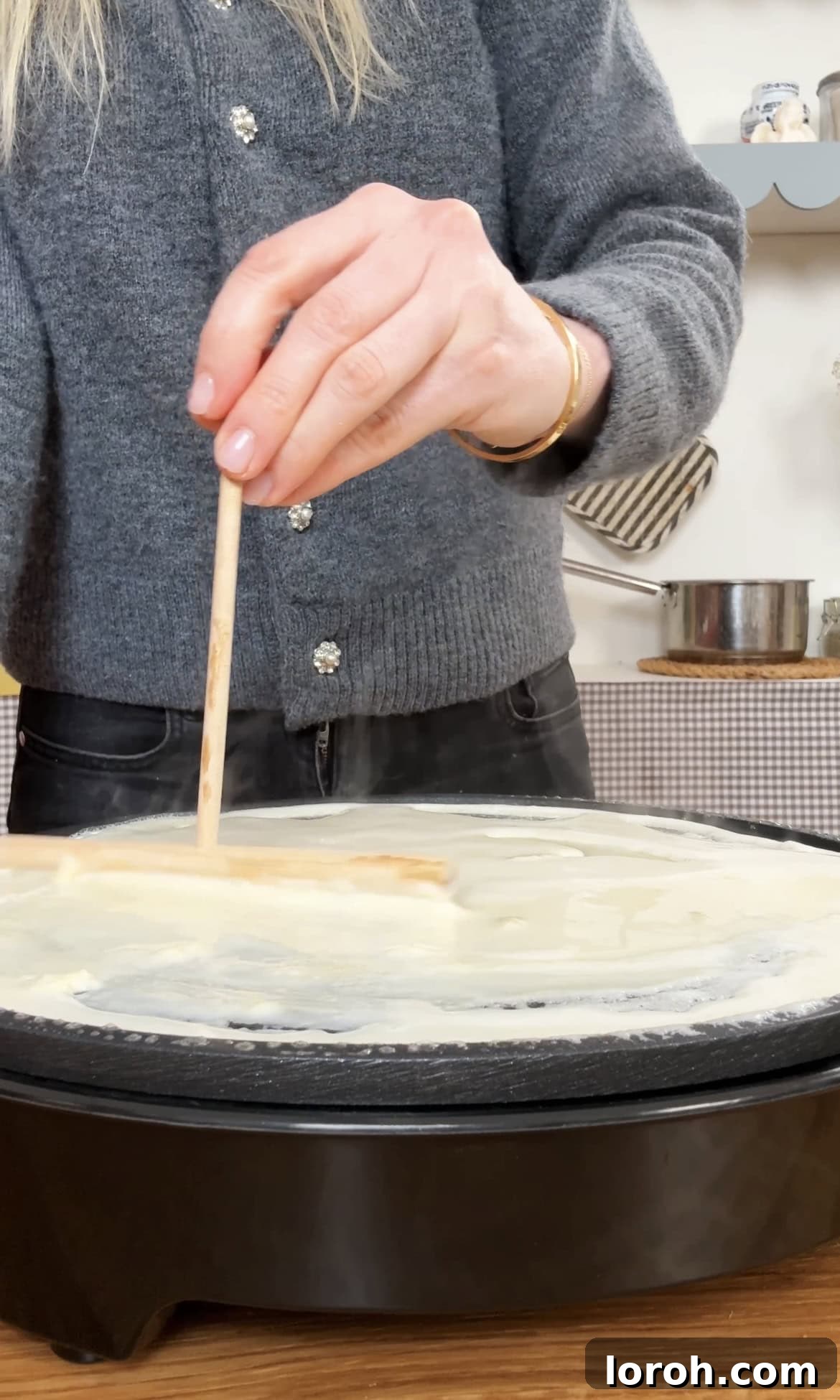
Step Five: Spread the Batter Evenly
Immediately after pouring the batter, swiftly spread it across the entire base of the pan. You can achieve this by gently tilting and swirling the pan in a circular motion, allowing the batter to thin out and coat the surface evenly. Alternatively, use a wooden crêpe spreader for a more professional finish, quickly guiding the batter into a uniform, thin layer. Speed is key here to prevent the crêpe from setting too thick in one spot.
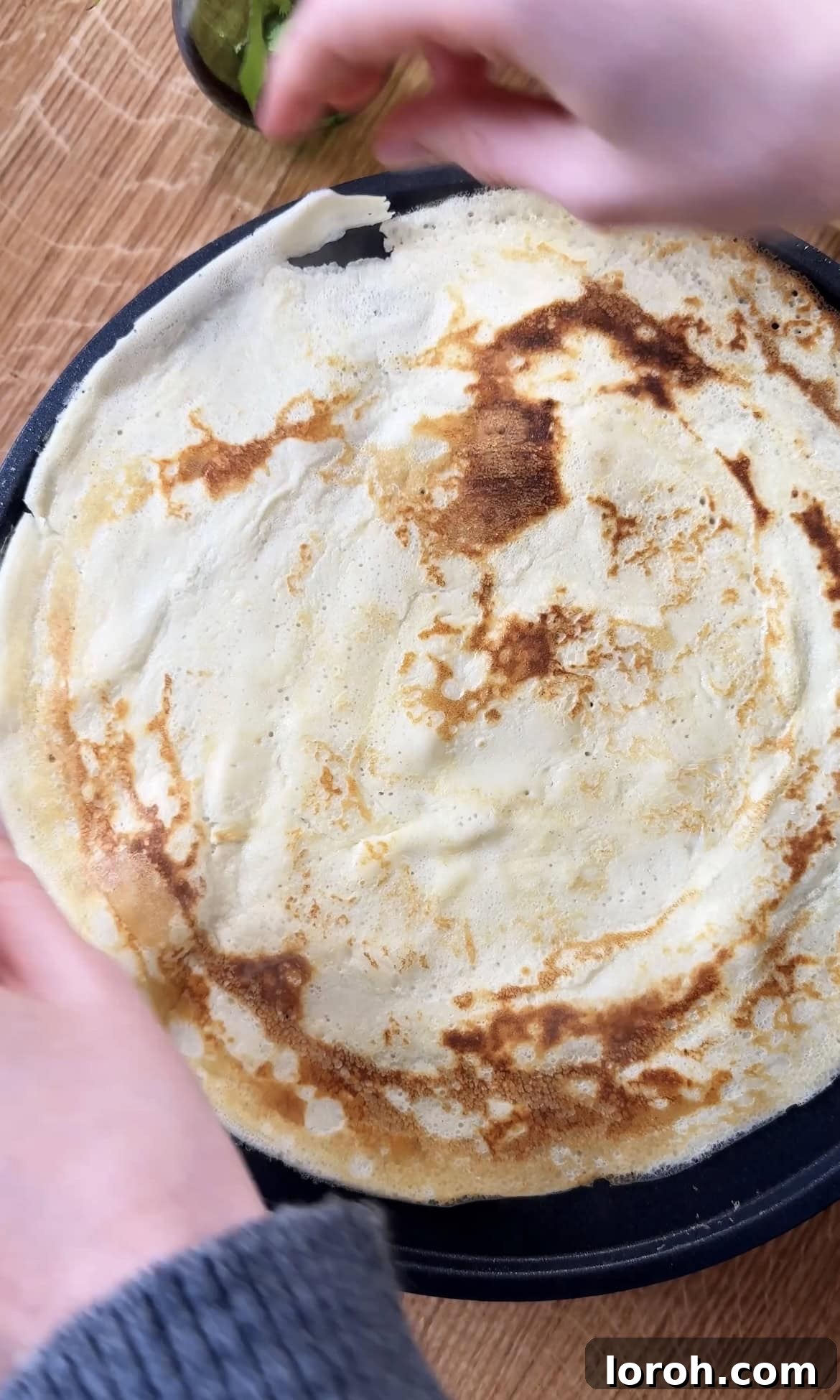
Step Six: Cook and Flip
Allow the crêpe to cook undisturbed for approximately 30-60 seconds on the first side. You’ll know it’s ready to flip when the edges start to look golden, slightly crisp, and begin to curl away from the pan. Gently loosen the edges with a spatula, then confidently flip the crêpe over. Cook for another 30 seconds or so on the second side until it achieves a lovely golden-brown color. Once cooked, slide it onto a plate and repeat the process with the remaining batter, stacking the finished crêpes.
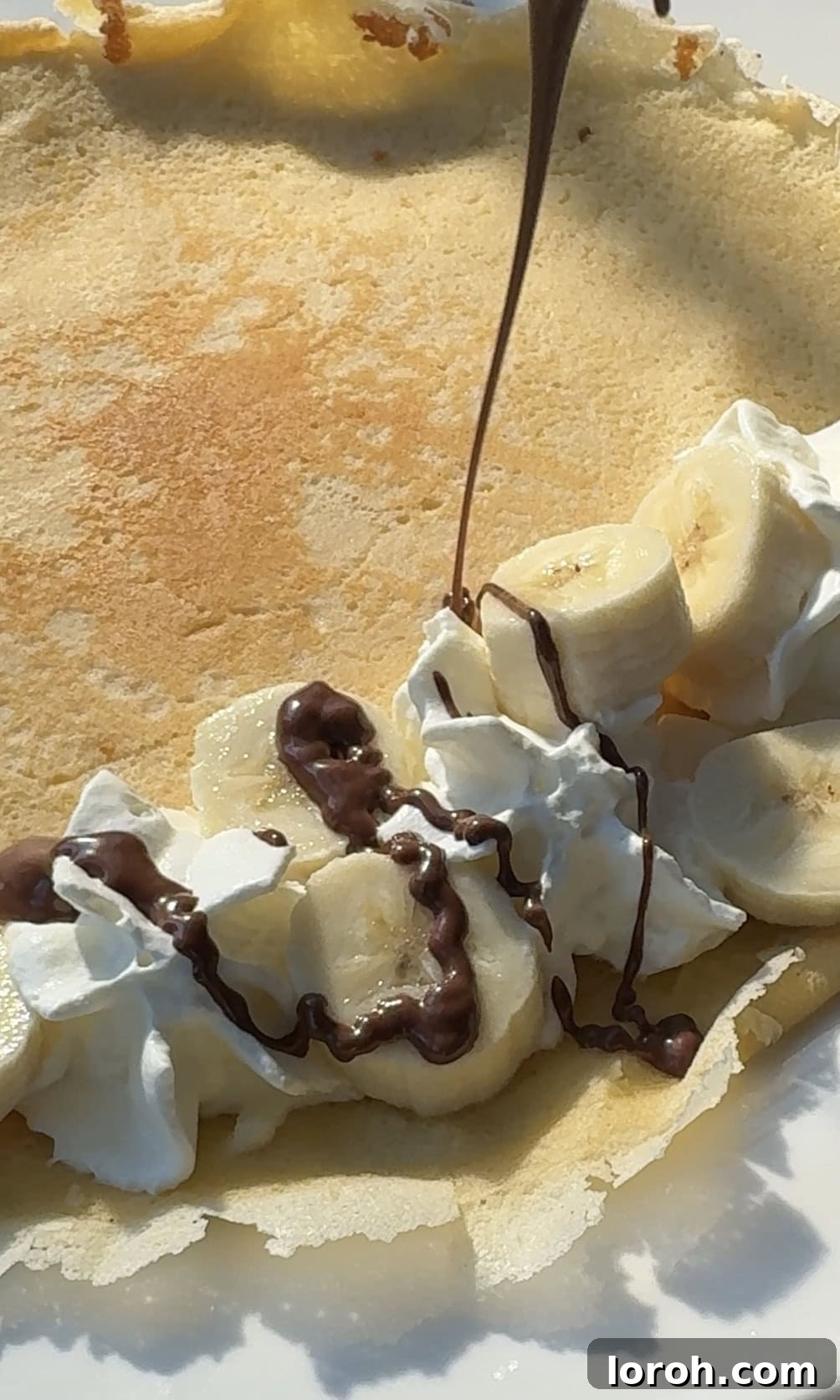
Step Seven: Add Your Toppings
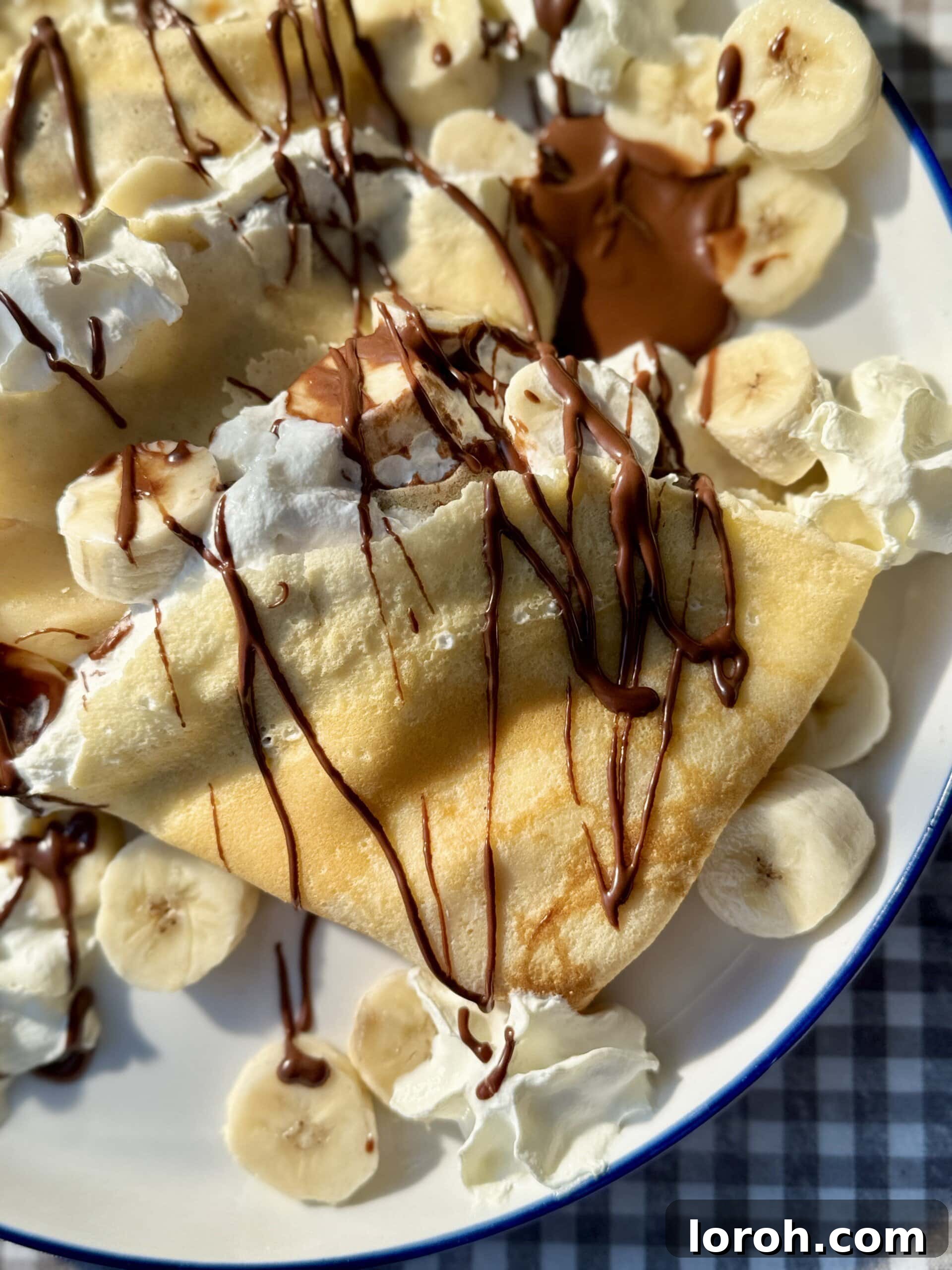
Once your crêpes are cooked and still warm, it’s time for the fun part: adding the toppings! Lay a single crêpe flat. Pipe or spoon a line of whipped cream along one edge – avoid placing it directly in the center, as this will make folding more challenging. Arrange a generous layer of freshly sliced bananas over the cream, then drizzle liberally with your slightly melted Nutella. Feel free to be generous with the Nutella; it’s a key part of the magic!
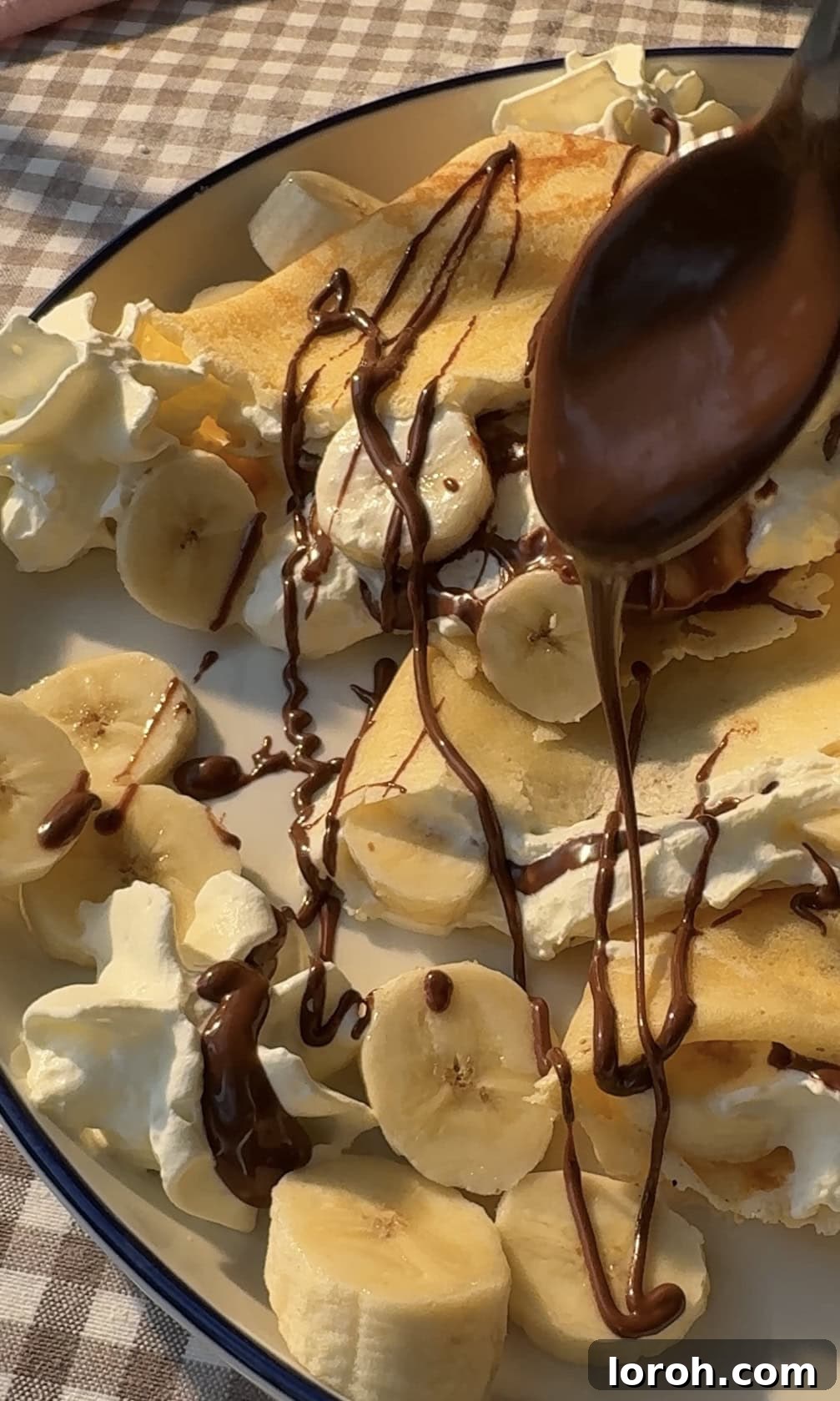
Step Eight: Fold and Serve
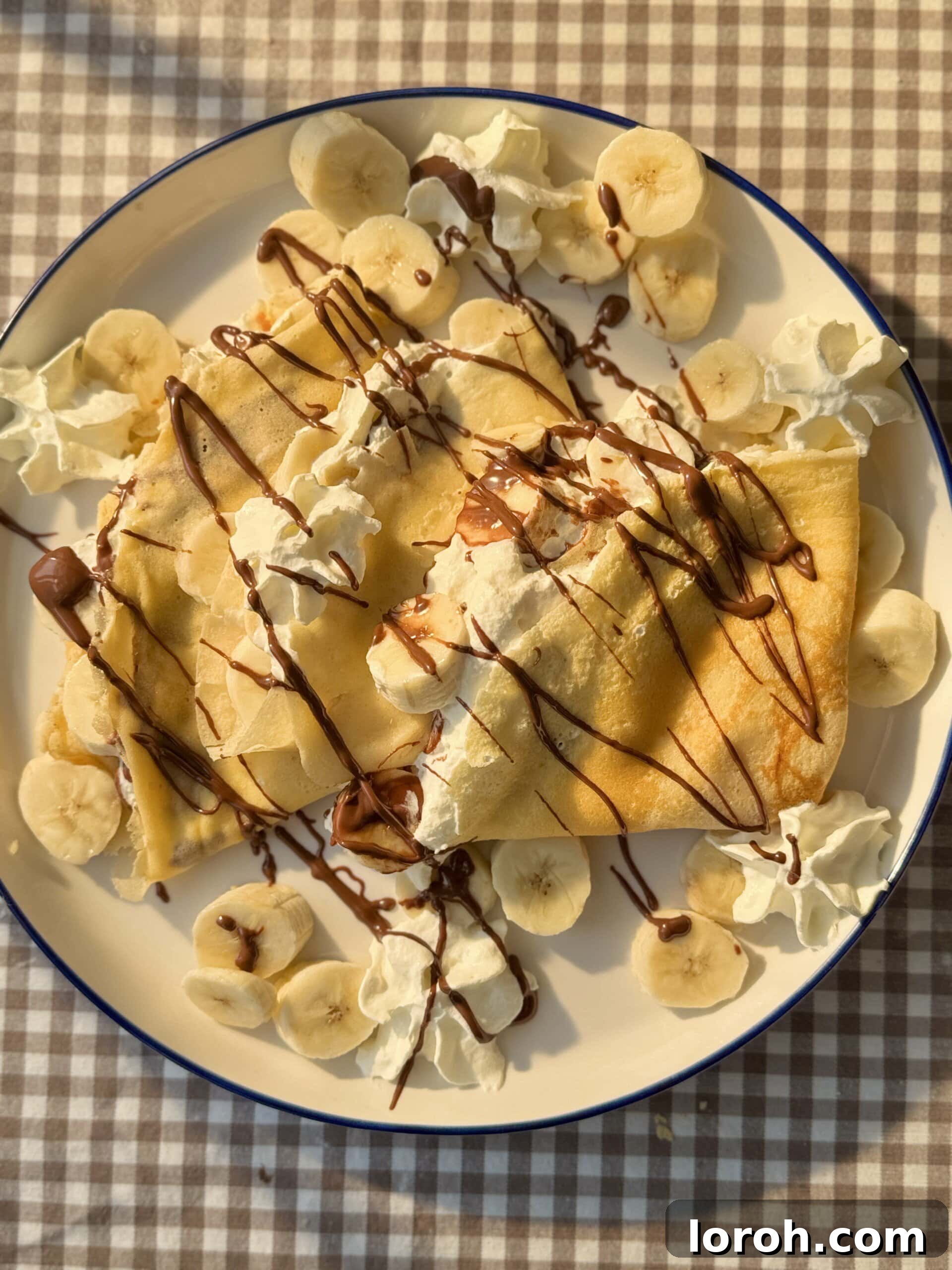
Carefully fold the crêpe into quarters, creating an elegant, fan-like shape. Arrange the folded crêpes beautifully on a serving plate. For an extra touch of indulgence and visual appeal, I love to add a few more fresh banana slices and another decadent drizzle of melted Nutella right on top of the folded crêpes. Serve immediately and savor every delicious moment!
Expert Cooking Tips for Flawless Crêpes
Achieving perfectly thin and tender crêpes every time is easier than you think with these simple tips:
- Blender vs. Whisk: Whether you’re team blender or team “elbow grease” with a whisk, both methods can yield excellent results. However, a blender is my secret weapon for consistently achieving a perfectly smooth, lump-free batter with minimal effort. If you opt for a whisk, the trick is to first thoroughly combine the dry ingredients with the eggs and melted butter until as smooth as possible, creating a thick paste. Only then gradually whisk in the milk, ensuring no lumps remain as you go. This sequential addition significantly reduces the chances of a lumpy batter.
- Invest in a Quality Non-Stick Pan: This is arguably the most crucial tip for crêpe success. A good quality non-stick pan will prevent sticking mishaps, allowing your crêpes to slide off effortlessly and ensuring a beautiful, even cook. While a dedicated crêpe pan (thin and wide) is ideal, any reliable non-stick frying pan will do the job perfectly. Ensure you grease the pan lightly between each crêpe for optimal results.
- Knowing When to Flip: Timing is everything when it comes to flipping crêpes. After approximately 30-60 seconds of cooking on the first side, keep a close eye on the edges. When they start to look slightly darker, appear set, and begin to gently curl up and loosen from the pan, your crêpe is ready to be flipped. Don’t rush this step, but don’t wait too long, or it may become too crisp.
- The Art of Spreading the Batter: As soon as the batter hits the hot pan, you need to act quickly. Immediately tilt and swirl the pan in a circular motion to spread the batter thinly and evenly across the entire surface. If you delay, the batter will begin to set in place, resulting in a crêpe that is thick in some areas and potentially irregularly shaped. A wooden crêpe spreader can also be used for precise, even distribution.
- Maintain Consistent Heat: Keep your pan at a steady medium-high heat. Too low, and the crêpes will take too long to cook and become tough; too high, and they’ll burn before cooking through. Adjust the heat as needed to maintain a consistent sizzle without excessive smoking.
- Grease Between Each Crêpe: Even with a non-stick pan, a tiny bit of butter or oil between each crêpe is a good practice. Use a scrunched-up piece of kitchen paper to lightly wipe the pan, ensuring a thin, even layer of fat. This prevents sticking and contributes to the golden color.
Frequently Asked Questions About Crêpes
For the best results, a good quality non-stick pan is absolutely essential. While I often use a dedicated non-stick crêpe pan because of its thin, wide design which facilitates even cooking and easy flipping, any reliable non-stick frying pan will work beautifully. The key is the non-stick surface, which ensures your delicate crêpes don’t tear or stick.
No, it’s not strictly necessary to rest the batter for this recipe. While some traditional recipes recommend resting to allow the flour to hydrate and gluten to relax, in my experience, I’ve found that these crêpes turn out perfectly tender and delicious even when cooked immediately. I’m often not organized enough to rest the batter, and they are always fantastic!
If your crêpes are sticking, there are a few common culprits. First, ensure you are using a genuinely non-stick pan. Second, it’s crucial to grease the pan well with butter or oil before cooking each crêpe. I find it helpful to use a scrunched-up piece of kitchen roll to wipe a thin, even layer of butter across the pan’s surface between every crêpe. This consistent greasing maintains the non-stick barrier and ensures easy release.
Lumpy batter is a common issue, and it’s precisely why I love using a blender – it’s the easiest way to achieve a perfectly smooth consistency. If you’re mixing by hand, here’s my best tip: start by thoroughly whisking the dry ingredients (flour, sugar, salt) with just the egg and melted butter to form a thick, smooth paste. Work out all the lumps at this stage. Once completely smooth, gradually add the milk in small splashes, whisking continuously and vigorously, ensuring each addition is fully incorporated before adding more. This gradual process helps to prevent lumps from forming in the final batter.
The main difference lies in their thickness and leavening. Crêpes are typically much thinner and more delicate, usually made without a leavening agent (like baking powder). They have a soft, pliable texture, making them ideal for rolling or folding with various fillings. Pancakes, especially American-style pancakes, are thicker, fluffier, and contain leavening agents which give them their signature rise and airy texture.
Storage & Make Ahead Instructions
These banana crêpes are delicious fresh, but it’s handy to know how to store them for later enjoyment.
To store cooked crêpes, allow them to cool completely. Stack them with sheets of greaseproof paper or parchment paper in between each one to prevent sticking. Then, wrap the entire stack tightly in clingfilm (plastic wrap) and place them in the fridge. They will keep well for up to 2 days. It’s important not to store crêpes with their banana, whipped cream, or Nutella fillings already added, as this will make them soggy and affect their texture.
Any leftover, plain crêpes can be easily reheated. The best method is in a pan over medium-low heat. Place a single crêpe in the pan and cook for about 30 seconds to a minute on each side, just until it’s heated through and pliable again. Alternatively, you can reheat them in the microwave in 10-20 second bursts until warm. Again, avoid reheating crêpes that already have cream and banana fillings, as the cream will melt and turn liquid.
Yes, crêpes freeze exceptionally well! Allow them to cool completely after cooking. Stack them up with sheets of greaseproof paper between each crêpe. Wrap the entire stack tightly in clingfilm, and then add a final layer of aluminum foil or place them in a freezer-safe bag. They can be stored in the freezer for up to 3 months. As with refrigeration, do not freeze crêpes with fillings already inside, as the textures will suffer upon thawing.
Absolutely! Crêpe batter can be prepared in advance and stored in the fridge for up to 2 days in an airtight container. For optimal freshness and performance, I recommend using it within the first 24 hours. You can also freeze crêpe batter for up to 2 months. To use, simply defrost it overnight in the fridge until it’s liquid, then give it a good whisk to recombine any separated ingredients before cooking.
Explore More Pancake and Crêpe Recipes
If you’ve enjoyed making these delightful banana crêpes, you’ll be thrilled to discover a world of other delicious pancake and crêpe recipes! Expand your breakfast and dessert repertoire with some of my other favorites:
- For a luxurious treat, try my Tiramisu Pancakes, a rich and indulgent twist on a classic dessert.
- If you’re looking for a plant-based option, my Vegan Banana Pancakes are wonderfully fluffy and satisfying.
- Experience a taste of the Netherlands with Poffertjes (Dutch Mini Pancakes), perfect for bite-sized enjoyment.
- For something truly unique, bake up a Pannukakku (Finnish Oven Pancake), a giant, custardy delight.
- And don’t miss out on Pannekaker (Norwegian Crêpes), another delicate European take on this beloved dish.
You Might Also Love These
Easy Dessert Recipes
Easy Lemon Curd
Easy Baking Recipes
British Pancakes (perfect for pancake day…and beyond!)
Easy Dessert Recipes
Mango Pancakes
Pancake Recipes
Poffertjes (Dutch Mini Pancakes)
Share Your Banana Crêpe Creations!
If you’ve tried this delightful recipe and loved it, I would be absolutely thrilled if you could take a moment to leave a review in the comments section below! Your feedback, any modifications you made, and the stories behind your culinary adventures truly make my day. I love hearing from you and seeing how these recipes bring joy to your kitchen. And if you happen to share a photo of your beautiful banana crêpes on Instagram, please remember to tag me @desertislanddishes. It’s incredibly rewarding to see my creations come to life through your cooking!

5 from 1 vote
Banana Crêpes
Margie Nomura
5 mins
15 mins
20 mins
6 pancakes
Rate Recipe
Print Recipe
Ingredients
- 110 g plain flour
- 1 tsp caster sugar
- 1 egg + 1 egg yolk
- 2 tbsp melted butter
- 280 ml milk
- extra butter for greasing the pan
To serve:
- Whipped cream – I like using it from a can here as I find it looks so cute with the piped nozzle. You could also whip up double cream for this.
- 2-3 bananas, peeled and sliced
- 4-8 tbsp Nutella, softened in the microwave until drizzling consistency (this is a large difference in how much Nutella to use, it really will depend on personal preference. Use as much or as little as you’d like!)
Instructions
-
Simply mix together the flour, sugar and salt. Make a well in the centre and crack in your eggs. Add the melted butter. Add the milk and whisk well to bring it all together. Alternatively, add all ingredients to a blender and blitz until smooth. I always use a blender as it’s the only way to get it really smooth.
-
Heat a nonstick frying pan over medium-high heat and then grease with butter using a scrunched-up bit of kitchen paper. Use a ladle to add batter to the pan. Getting the right amount of batter in the pan is a bit of trial and error. Remember that the first pancake never turns out right – it’s a scientific fact, so don’t stress and then just enjoy it as a chef’s perk.
-
Cook for 30 seconds or so without touching it, then loosen the edges and flip! Cook for another 30 seconds or so until it’s a lovely colour and then slide onto a plate.
-
If you want to prepare these ahead of time, simply stack the cooked crêpes using a little greaseproof paper between each to prevent sticking. They can then be reheated gently in a low oven (around 90-100°C / 200-225°F).
-
When ready to eat, take a warm crêpe and add whipped cream to one of the edges – avoid piling it in the middle, as this will make folding difficult. Top with sliced banana and a drizzle of melted Nutella. Fold into quarters and enjoy immediately. I often top the folded quarters with more banana and Nutella for extra indulgence.
Notes
To store: Cool cooked crêpes completely. Transfer to a plate with sheets of greaseproof paper in between each one. Then, wrap tightly in clingfilm and place in the fridge for up to 2 days. Do not store crêpes with filling and cream already added, as this makes them soggy.
To reheat: Any leftover plain crêpes can be reheated in a pan over medium-low heat. Flip once until heated through (should take no more than a minute). Alternatively, heat in the microwave in 20-second bursts until hot. Do not reheat crêpes that have cream and banana already in them as the cream will melt and turn liquid.
To freeze: Cool then stack with sheets of greaseproof paper between each crêpe. Wrap the entire stack tightly in clingfilm, then place in a freezer bag or wrap with foil. Freeze for up to 3 months. Do not freeze crêpes with filling and cream already added, as it won’t freeze well.
Make ahead: Crêpe batter can be stored in the fridge for up to 2 days in an airtight container, though it’s best used within 24 hours. You can also freeze crêpe batter for up to 2 months. Defrost overnight until liquid, then whisk well before using.
Using a blender: Both blender and whisk methods work! A blender ensures a super smooth, easy batter. If whisking by hand, combine dry ingredients with eggs until very smooth, then gradually add milk to avoid lumps.
Non-stick pan: Highly recommended to avoid sticking and ensures easy cooking.
When to flip: After 30-60 seconds, crêpe edges will slightly curl and loosen, indicating it’s ready to flip.
Toppings: Beyond Nutella, try hazelnut cream, peanut butter, melted dark/milk/white chocolate, honey, maple syrup, golden syrup, or a sprinkle of sugar!
Nutritional info: The calories listed are an approximation for one crêpe with banana, whipped cream, and Nutella.
Nutrition
Carbohydrates: 34g,
Protein: 6g,
Fat: 11g,
Saturated Fat: 8g,
Polyunsaturated Fat: 1g,
Monounsaturated Fat: 2g,
Trans Fat: 0.2g,
Cholesterol: 61mg,
Sodium: 70mg,
Potassium: 306mg,
Fiber: 2g,
Sugar: 15g,
Vitamin A: 314IU,
Vitamin C: 3mg,
Calcium: 90mg,
Iron: 2mg
Nutrition information is automatically calculated, so should only be used as an approximation.
Like this? Leave a comment below!