
The Ultimate Guide to Crafting an Exquisite Cheeseboard: Ideas and Accompaniments
Elevating a simple gathering into a truly memorable feast doesn’t require hours in the kitchen. With the timeless appeal of a beautifully curated cheeseboard, you can effortlessly impress your guests, whether you’re hosting an elegant dinner party, celebrating a special milestone, or simply indulging in a cozy night at home. Crafting the perfect cheese board is an art form that’s far easier than you might imagine, requiring no cooking whatsoever but promising maximum impact.
Forget complex analogies or intricate rules. This comprehensive guide simplifies the process, breaking down everything you need to know about assembling a gourmet cheeseboard that delights both the eyes and the palate. We’ll explore how to select a harmonious variety of cheeses, pair them with complementary accompaniments, master the art of presentation, and ensure everything is served at its peak for an unforgettable culinary journey.
Pin This Guide
Leave a Comment
Print Guide
1. Selecting the Perfect Cheeses: The Irresistible Core of Your Board
The foundation of any truly exceptional cheeseboard begins with a thoughtful selection of cheeses. The goal is to create a dynamic assortment that offers a spectrum of flavors, textures, and even milk types, ensuring there’s something delightful for every guest. Aim for 3-5 distinct cheeses to provide ample variety without overwhelming the palate. Here’s how to build a diverse and captivating collection:
Soft & Creamy Cheeses: Luxurious and Mellow
These cheeses often boast a smooth, spreadable texture and mild, approachable flavors, making them universal crowd-pleasers. They are fantastic canvases for sweet accompaniments like honey or fruit spreads.
- Brie: A classic French delight, Brie is renowned for its buttery, often earthy notes and its wonderfully smooth, yielding interior. Its bloomy rind is edible and contributes to its unique character.
- Camembert: Similar to Brie but typically with a more robust, mushroomy flavor profile and a slightly denser, creamier texture. It offers a deeper, more pungent experience.
- Triple Crème: Indulgently rich, cheeses like Brillat-Savarin or Délice de Bourgogne are enriched with cream, resulting in an exceptionally buttery, decadent texture that melts in your mouth. Their mild flavor makes them excellent for beginners.
- Goat Cheese (Chèvre): Available in various forms, from fresh, tangy logs to aged and crumbly rounds, goat cheese provides a bright, often citrusy tang and a unique earthy quality. Its distinct flavor can be a refreshing contrast.
Hard & Semi-Hard Cheeses: Robust and Flavorful
These cheeses bring structure, nutty undertones, and often a pleasant sharpness to the board. Their firm textures allow for easy slicing or breaking into rustic chunks, perfect for pairing with savory crackers or crusty bread.
- Aged Cheddar: A perennial favorite, aged cheddar offers a range of flavors from sharp and tangy to rich and nutty, often with a crumbly, crystalline texture. Look for artisanal varieties for superior depth.
- Gouda: Hailing from the Netherlands, Gouda can be young and mild with caramel sweetness or aged, developing intense butterscotch notes and a firm, crystalline structure.
- Manchego: This firm Spanish cheese, made from sheep’s milk, features a distinctive basket-weave rind and a buttery, slightly salty, nutty flavor profile. It’s wonderfully versatile.
- Gruyère: A Swiss treasure, Gruyère is celebrated for its complex, nutty, and slightly sweet flavor, often with fruity undertones. It has a dense, firm texture that grates beautifully but shines in chunks.
- Parmigiano-Reggiano: While often used for grating, high-quality chunks of Parmesan are a revelation on a cheeseboard. Its salty, umami-rich, and granular texture offers a powerful flavor experience.
Blue Cheeses: Bold and Pungent
For those who appreciate intensity, blue cheeses add a captivating layer of complexity with their distinctive pungent aromas and creamy, sometimes crumbly, textures. They are often best enjoyed with a drizzle of honey or a sweet fruit.
- Roquefort: A legendary French blue made from sheep’s milk, known for its intense saltiness, tang, and creamy, crumbly texture. It’s a truly bold experience.
- Stilton: This celebrated English blue cheese offers a rich, creamy texture and a more mellow yet still complex flavor than Roquefort, often with nutty and spicy notes.
- Gorgonzola: An Italian classic, Gorgonzola comes in two main styles: Dolce (sweet and creamy) and Piccante (firmer and sharper). Both offer a delightful blue cheese experience.
When curating your selection, aim for a balanced journey from mild to robust. Consider offering one soft, one semi-hard, one hard, and one blue cheese for an ideal spread. Also, consider the milk type – cow, goat, and sheep’s milk cheeses each offer unique characteristics.
2. Complementing Your Cheeses: The Essential Accompaniments
While the cheeses are undoubtedly the stars of the show, a thoughtfully chosen array of accompaniments transforms a good cheeseboard into a great one. These additions provide crucial contrast in flavor and texture, cleanse the palate between bites, and enhance the overall gastronomic experience. Think about balancing sweet, savory, crunchy, and refreshing elements.
Fresh & Dried Fruits: Sweetness and Juiciness
Fruits offer a refreshing counterpoint to the richness of cheese and introduce vibrant colors to your board.
- Fresh Grapes: Both red and green varieties provide bursts of sweetness and juiciness that beautifully cut through rich, creamy cheeses.
- Sliced Apples or Pears: Crisp and subtly sweet, varieties like Honeycrisp apples or Bosc pears offer a delightful crunch and a clean finish, pairing wonderfully with sharp cheddars or creamy bries.
- Figs: Luxurious fresh figs are visually stunning and offer a honeyed sweetness. Dried figs, with their concentrated flavor and chewy texture, are excellent all year round.
- Berries: Raspberries, blueberries, and blackberries add a touch of tartness and a splash of vibrant color, offering a fresh palate cleanser.
- Dried Apricots or Cherries: These provide intense, concentrated sweetness and a satisfying chewiness that pairs particularly well with firmer, saltier cheeses.
Nuts: Earthy Crunch and Flavor Depth
Nuts offer a delightful textural contrast and introduce earthy, sometimes sweet, undertones.
- Almonds: A versatile choice, providing a mild, buttery crunch that complements almost any cheese.
- Walnuts: Their earthy, slightly bitter notes are a classic pairing with robust blue cheeses and aged Goudas.
- Pecans: Sweet and rich, pecans are wonderful with softer, milder cheeses like Brie.
- Pistachios: Add a unique flavor and a pop of green color to your spread.
- Candied Nuts: For an extra layer of indulgence, sweet and crunchy candied pecans or walnuts create a harmonious balance with savory cheeses.
Crackers and Artisan Breads: The Perfect Vehicle
Offer a diverse selection of vehicles to carry your cheese and accompaniments, ensuring a variety of textures and flavors without overpowering the cheese itself.
- Neutral Crackers: Water crackers, simple whole wheat crackers, or rice crackers provide a delicate, crisp base that allows the cheese flavors to shine.
- Artisan Breads: Thinly sliced baguette, crusty sourdough, or fruit-and-nut bread offer more substance and a rustic appeal. Fruit-and-nut bread is particularly good with blue or goat cheeses.
- Crispbreads or Lavash: These offer a very delicate, airy crunch, adding another textural dimension.
- Seed Crackers: Infused with various seeds (flax, sesame, chia), these add an extra layer of nutty flavor and a satisfying texture.
Spreads & Drizzles: Sweet and Savory Enhancements
These elements are designed to enhance and marry the flavors of your cheese and other accompaniments.
- Honey or Honeycomb: A drizzle of raw honey or a beautiful piece of honeycomb is a match made in heaven for blue cheeses, sharp cheddars, and creamy bries. Its sweetness beautifully balances the saltiness and pungency.
- Fruit Jams or Preserves: Fig jam, apricot preserves, or quince paste (membrillo) are traditional companions, offering concentrated fruitiness that complements a wide range of cheeses.
- Mustard: A grainy or whole-grain mustard can add a sharp, piquant kick that pairs wonderfully with firmer cheeses and any cured meats.
Olives and Pickles: Briny Palate Cleansers
These savory, tangy additions provide a refreshing contrast and cleanse the palate, preparing it for the next delicious bite.
- Assorted Olives: A mix of green, black, or Kalamata olives brings a briny, salty punch. Marinated olives with herbs and citrus zest can add an extra layer of flavor.
- Cornichons or Pickled Onions: Their sharp, vinegary taste offers an excellent acidic counterpoint to rich cheeses and meats, acting as a superb palate cleanser.
Optional: Cured Meats (Charcuterie Elements)
To transform your cheeseboard into a full charcuterie and cheese experience, consider incorporating a selection of high-quality cured meats.
- Prosciutto: Thinly sliced, delicate, and salty, it melts in your mouth.
- Salami: Offer a variety of types, such as spicy Calabrese or mild Genoa, for different textures and spice levels.
- Sopressata: A firmer, often spicier Italian dry salami that provides a robust flavor.
- Pâté or Rillettes: For a richer, spreadable option, these can add a touch of French elegance.
For high-quality gourmet additions, explore brands that focus on ethical sourcing and quality ingredients. The Odysea x Kew Gardens collaboration, for instance, offers a delightful range of condiments, honeys, sauces, and olives, with a portion of profits supporting Kew’s vital mission to protect biodiversity.
3. The Art of Presentation: Making Your Cheeseboard a Visual Masterpiece
A stunning cheeseboard is not just about taste; it’s a visual delight. Thoughtful arrangement and presentation elevate the entire experience, making your board an irresistible centerpiece that invites guests to explore.
Choosing the Right Board
The canvas for your culinary creation sets the tone.
- Material: Wooden boards (bamboo, acacia, or oak) offer a warm, rustic charm. Slate platters provide a modern, elegant contrast that makes vibrant colors pop. Ceramic trays are also excellent for a sleek finish.
- Size: Select a board large enough to comfortably accommodate all your chosen items without looking sparse or overly crowded. An abundant yet organized look is key.
Arrangement Techniques for Impact
Think about balance, color, texture, and accessibility.
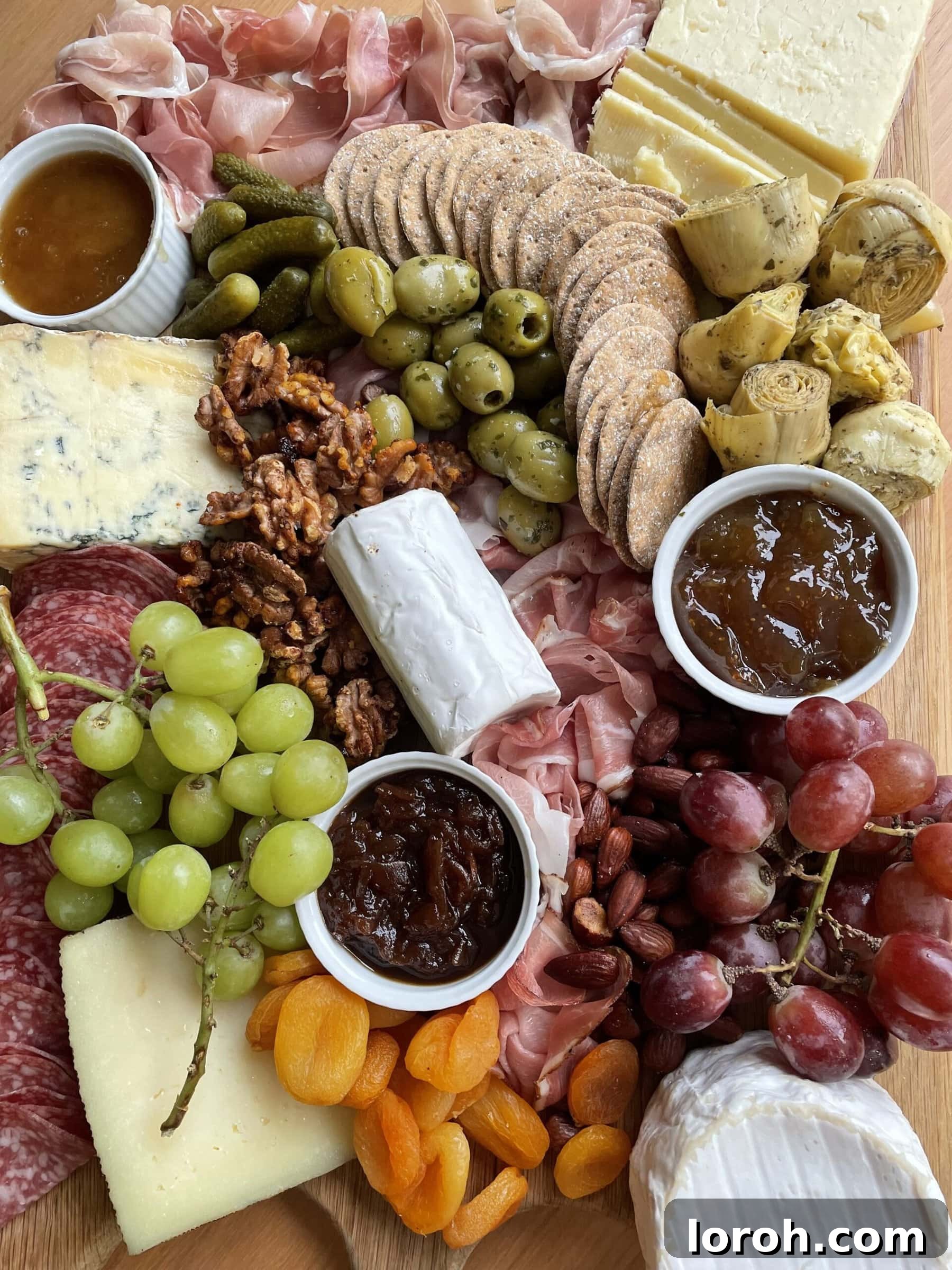
- Anchor with Cheese: Begin by placing your cheeses first, spacing them out strategically across the board. You can leave some cheeses whole, cut some into wedges, and cube others for textural variety and ease of access.
- Incorporate Small Bowls: Use mini bowls for olives, jams, honey, or smaller nuts. This keeps the board tidy, prevents flavors from mingling, and adds visual height.
- Fill with Accompaniments: Arrange crackers and bread slices around the cheeses, fanning them out or stacking neatly. Then, artfully scatter fruits, nuts, and meats in the remaining empty spaces. Think about creating natural clusters and flows.
- Add Height and Texture: Elevate certain elements using small risers or by folding cured meats into appealing shapes (e.g., salami roses) to add dimension.
- Garnish with Greenery: A few sprigs of fresh herbs like rosemary, thyme, or basil can add a touch of natural beauty and an aromatic flourish. Edible flowers can also provide an elegant, sophisticated touch.
Essential Tools
- Cheese Knives: Provide a dedicated knife for each cheese type to prevent flavor transfer. A spade knife for hard cheeses, a fork-tipped knife for semi-hard, and a spreader for soft cheeses are ideal.
- Small Spoons: For jams, honey, and other soft spreads.
4. Serving Your Cheeseboard: Optimal Temperature and Drink Pairings
Ensuring your cheeseboard is served correctly is crucial for maximizing flavor and enjoyment. The right temperature and complementary beverages can truly elevate the tasting experience.
The Golden Rule: Bring Cheeses to Room Temperature
Cold cheeses are often flavorless and firm. Allowing them to warm up unlocks their full aromatic profile, softens their texture, and enhances their nuances. This step is non-negotiable for the best experience.
- Soft & Blue Cheeses (Brie, Camembert, Chèvre, Roquefort, Stilton): Remove these from the refrigerator 30-60 minutes before serving. Their creamy, luscious textures and pungent aromas are best appreciated at room temperature.
- Hard & Semi-Hard Cheeses (Cheddar, Gouda, Manchego): These benefit from a slightly shorter warming period, around 10-20 minutes out of the fridge. This allows them to soften just enough to release their complex flavors and become more palatable.
Thoughtful Drink Pairings
The right beverage can beautifully complement the cheeses and cleanse the palate, making each bite even more enjoyable.
- Wine Pairings:
- White Wines: Crisp Sauvignon Blanc or a creamy Chardonnay pair wonderfully with soft and goat cheeses.
- Red Wines: Lighter reds like Pinot Noir complement many cheeses, while bolder reds like Cabernet Sauvignon or Merlot stand up well to aged, harder cheeses.
- Sweet Wines: Dessert wines such as Port, Sauternes, or Ice Wine are exquisite with pungent blue cheeses, creating a delightful sweet and savory harmony.
- Beer Pairings:
- Lagers & Pilsners: Light and crisp, they refresh the palate, great with milder cheeses.
- IPAs: Their hoppy bitterness can create an interesting contrast with creamy cheeses.
- Stouts & Porters: Rich and malty, these are fantastic with robust, aged, or blue cheeses.
- Non-Alcoholic Options: Sparkling water with a hint of citrus, artisanal non-alcoholic ciders, or a delicate sparkling tea can be equally refreshing and palate-cleansing.
5. Expert Tips for a Flawless Cheeseboard Experience
A few insider tips can elevate your cheeseboard from good to truly extraordinary, ensuring a seamless and enjoyable experience for you and your guests.
- Don’t Overcrowd: While abundance is appealing, ensure there’s enough space for guests to comfortably access items and for the cheeses to breathe. An artfully abundant board looks inviting, not messy.
- Label Your Cheeses: Small flags or chalk markers are incredibly helpful. They allow guests to identify what they’re trying, cater to dietary restrictions, and spark conversation about the different varieties.
- Replenish Smartly: If your event is long, avoid putting out all the cheese at once. Keep extra cheese and perishables refrigerated and replenish the board as needed to maintain freshness and appeal.
- Consider Dietary Needs: Be mindful of your guests’ requirements. Offer gluten-free crackers, clearly label nut-containing items, or consider including a small plant-based cheese alternative if you know guests have specific dietary preferences.
- Embrace the Seasons: Incorporate seasonal fruits, local honey, or fresh produce for a board that feels fresh, relevant, and supportive of local producers.
- Pre-Slice Hard Cheeses: For harder cheeses like cheddar or Manchego, pre-slice a few pieces to encourage guests to dive in, while leaving the block mostly intact for presentation.
6. When You’re in a Pinch: Discovering Pre-Curated Cheeseboard Selections
Even with the most detailed guide, there are times when you might be short on time or simply seeking inspiration. Fortunately, many gourmet food retailers offer expertly curated cheeseboard selections that can save the day, allowing you to present an impressive spread with minimal effort.
- Best Value Options: For an excellent introduction to classic flavors without a hefty price tag, look for curated “French Classics” or “Everyday Favorites” boards. Many specialty cheese shops, like La Fromagerie French Classics Board, offer 3-4 quality cheeses for a reasonable price, perfect for smaller gatherings or an intimate evening. These often focus on widely loved and approachable varieties.
- Best for Diverse Selection: Retailers renowned for their extensive and unique cheese collections often provide broader selections. Consider options such as Paxton & Whitfield’s The Heritage Cheeseboard Selection. These typically feature a wider array of cheeses from different regions and milk types, offering an exciting exploration for more adventurous palates. They are ideal for larger gatherings where varied tastes need to be accommodated.
- Best Luxury Experience: For truly special occasions where indulgence is key, high-end department stores and gourmet food purveyors offer exquisitely premium selections. An example might be the Fortnum & Mason Celebration Cheese Selection. These boards often feature rare, perfectly ripened artisanal cheeses, sometimes accompanied by gourmet crackers and bespoke preserves, guaranteeing an unforgettable and sophisticated culinary statement.
Even with a pre-selected board, you can always add your personal touch with a handful of fresh berries, a unique jam, or a sprig of fresh rosemary to make it uniquely yours.
Tuck in!
Crafting the perfect cheeseboard at home is an immensely rewarding and enjoyable experience. It’s a canvas for creativity, offering endless possibilities for customization to suit any occasion, season, taste, or budget. By embracing the principles of diverse cheese selection, thoughtful accompaniment pairings, and artful presentation, you can effortlessly transform any gathering into a truly special and memorable culinary event that will leave a lasting impression on your guests.
So, gather your ingredients, unleash your inner culinary artist, and savor every delicious moment of creating and enjoying your magnificent cheeseboard!
Loved this guide? Share your thoughts!
We’d love to hear about your cheeseboard creations, favorite pairings, and any tips you’ve discovered. Leave a comment below!