
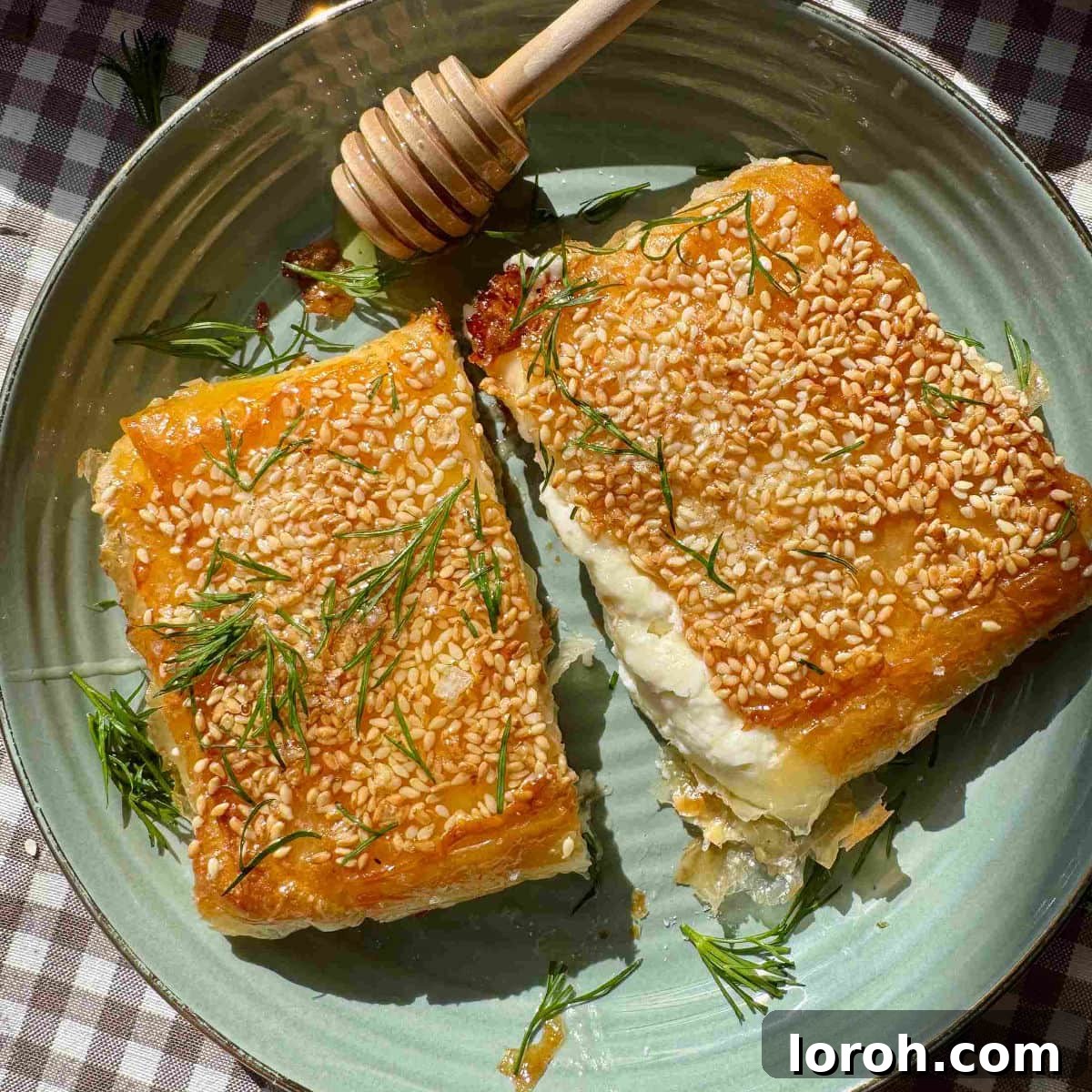
Irresistibly Crispy Feta Saganaki with Honey and Sesame: A Greek Mezze Delight
Embark on a culinary journey to the sun-drenched shores of Greece with this exquisite Crispy Feta Saganaki recipe. It’s my delightful interpretation of a classic Greek mezze, transforming simple ingredients into a dish that’s truly unforgettable. Imagine a generous block of salty, creamy feta cheese, encased in layers of golden, shatteringly crisp filo pastry, then pan-fried to perfection. The finishing touch? A luxurious drizzle of sweet honey, a sprinkle of nutty sesame seeds, and a scattering of vibrant fresh herbs, creating a symphony of flavors and textures that will captivate your palate.
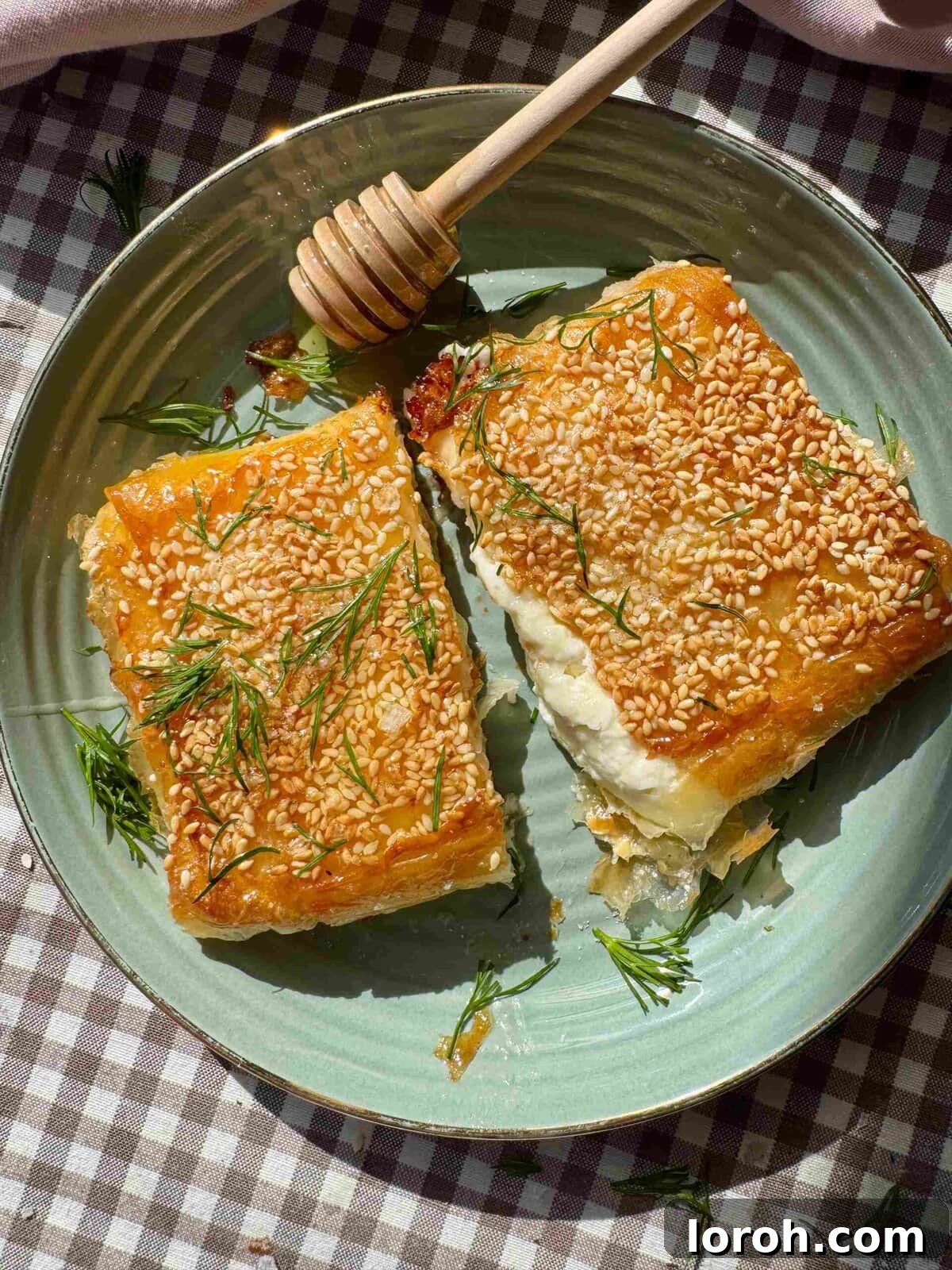
This homemade Feta Saganaki isn’t just a recipe; it’s an experience. It’s incredibly quick and easy to prepare, making it an ideal appetizer for entertaining or a special treat on a weeknight. With just a handful of readily available ingredients and less than 20 minutes from start to finish, you can bring the authentic taste of a Mediterranean holiday right to your table. The contrast between the warm, melting feta, the crunchy filo, and the sweet-savory accents makes this dish an absolute showstopper.
As the days grow longer and the weather warms, our cravings often turn towards lighter, fresher, and more vibrant dishes. This Crispy Feta Saganaki perfectly embodies that seasonal shift. It’s a fantastic addition to any summer menu, whether you’re hosting a garden party, enjoying an al fresco dinner, or simply looking for a refreshing starter. Pair it with other Mediterranean-inspired delights like a zesty roasted aubergine salad or a refreshing Greek pasta salad for a truly complete and satisfying summer spread.
What truly sets this Feta Saganaki apart is its harmonious blend of textures and tastes. The delicate, buttery crunch of the filo pastry gives way to the warm, softened, and intensely salty feta. This rich foundation is beautifully complemented by the earthy aroma of toasted sesame seeds, the golden sweetness of honey, and the bright, citrusy notes of fresh herbs. Every bite is a delightful revelation, showcasing the simple yet profound magic of Greek cuisine.
Table of Contents
- Why You Will Love This Crispy Feta Saganaki
- What Exactly is Saganaki?
- Key Ingredients for Feta Saganaki
- Substitutions and Variations to Customize Your Saganaki
- Step-by-Step: How to Make Easy Feta Saganaki
- Expert Cooking Tips for Perfect Saganaki
- How to Make Feta Saganaki in the Oven
- Frequently Asked Questions About Feta Saganaki
- Other Mediterranean Recipes You Might Enjoy
- Feta Saganaki Recipe Card
Why You Will Love This Crispy Feta Saganaki
Discover why this filo-wrapped feta saganaki will quickly become a cherished favorite in your recipe collection:
- It is **quick** and **easy** to make. You can have it on the table in **under 20 minutes**, perfect for impromptu entertaining or a fast, delicious appetizer.
- It is full of **flavour** and **texture**. Imagine **crispy**, buttery filo wrapped around creamy, salty feta, sprinkled with nutty sesame seeds, and drizzled with sweet honey for an unforgettable sensory experience.
- It uses just a **handful of simple ingredients**. Despite its impressive appearance, this recipe proves that incredible flavor often comes from quality, straightforward components.
- It is the perfect **summer mezze dish**. Transport yourself to a picturesque Greek island with every bite, making it an ideal, light yet satisfying addition to any warm-weather meal or gathering.
What Exactly is Saganaki?
The term ‘Saganaki’ often conjures images of flaming cheese at a Greek restaurant, a theatrical culinary spectacle. But what exactly does ‘saganaki’ mean, and how does this filo-wrapped feta relate to the traditional dish?
At its core, saganaki refers not to a specific dish or ingredient, but to the small, two-handled frying pan (σαγανάκι, ‘saganaki’) in which it is traditionally cooked. This means you can find various ‘saganaki’ dishes, such as ‘prawn saganaki’ or ‘mussel saganaki.’ When people refer to ‘cheese saganaki,’ they typically mean a pan-fried cheese appetizer. Traditionally, these cheese versions are made with firm, salty Greek cheeses like Kefalotyri or Kefalograviera, which soften beautifully and develop a delicious crust when pan-fried.
While traditional saganaki cheeses can be challenging to source outside of specialist Greek delis or during specific cultural weeks at supermarkets, feta cheese offers a fantastic and widely available alternative. Although feta won’t become as ‘stretchy’ or ‘gooey’ as Kefalotyri, it softens wonderfully, retaining its distinctive salty tang and creamy texture when warmed. This adaptation makes the authentic flavors of Greek saganaki accessible to everyone.
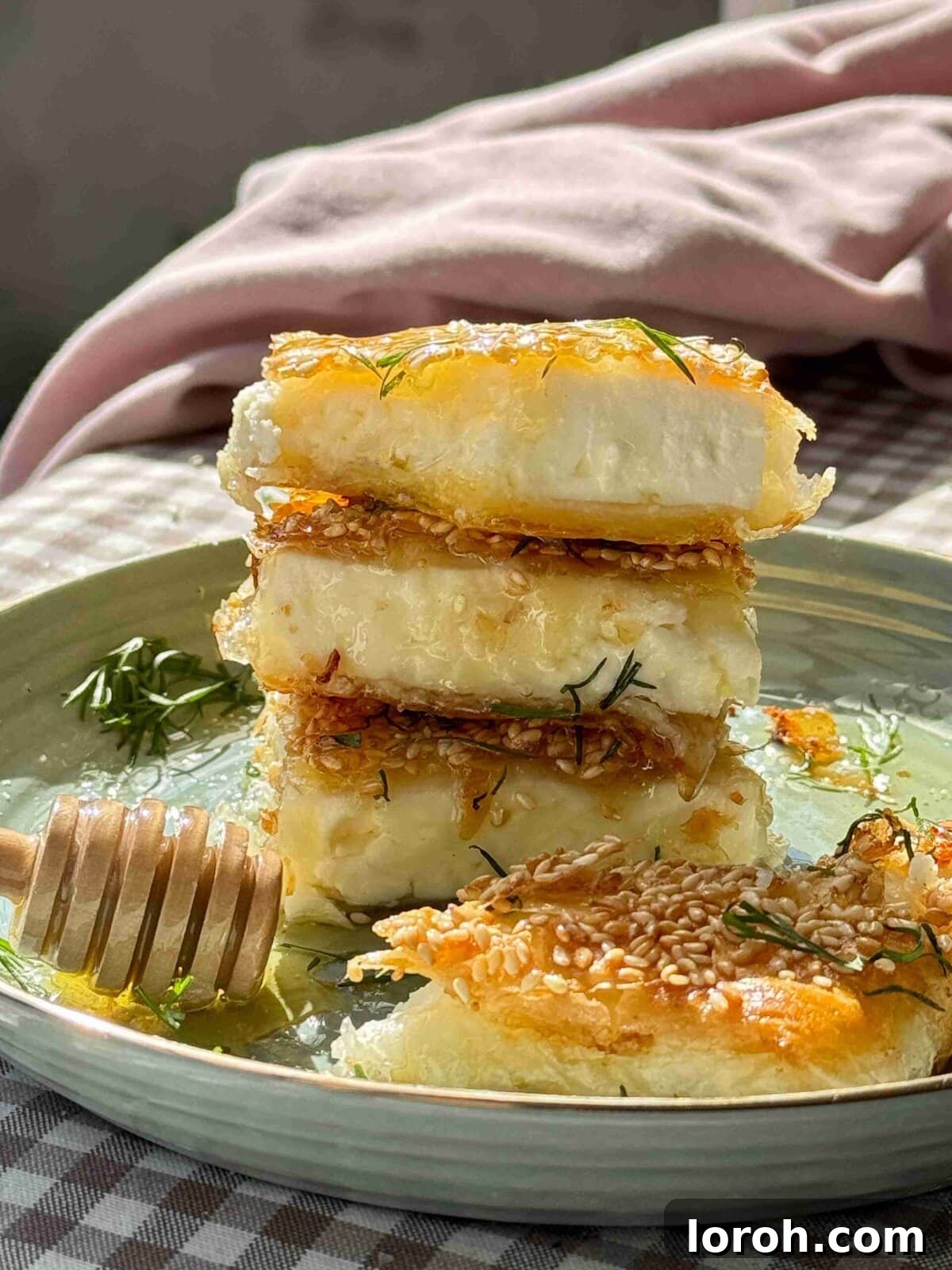
Our recipe takes a delightful detour from the traditional cheese saganaki, which typically involves dredging feta in flour and egg before frying. By wrapping the feta in delicate filo pastry, we introduce an additional layer of incredible crispiness and a beautiful golden-brown exterior. This innovative approach not only adds a wonderful textural contrast but also effectively encases the feta, preventing it from crumbling or spreading as it heats. The filo acts as a protective, flavorful shell, ensuring each bite is perfectly contained and utterly delicious.
Key Ingredients for Feta Saganaki
Crafting this irresistible Feta Saganaki requires just a few high-quality ingredients. The full, detailed recipe card with precise measurements is conveniently located at the bottom of this page, ready for you to print or save. Here’s a closer look at the key components that bring this dish to life:
Filo Pastry (Phyllo Pastry): This is the magic behind the incredible crunch! Filo is an exceptionally thin, unleavened dough that becomes incredibly crisp and flaky when baked or fried. It dries out quickly, so remember to keep it covered with a damp cloth while working. For more filo inspiration, you might enjoy my Spinach Feta Filo Bows.
Feta Cheese: The undisputed star of our saganaki! Choose a good quality, authentic Greek feta, ideally made from sheep’s or a combination of sheep’s and goat’s milk. A quality feta will have a rich, salty, tangy flavor and a creamy yet crumbly texture that softens beautifully when warmed. Avoid ‘feta-style’ cheeses, as they often lack the authentic taste and melt differently.
Unsalted Butter, Melted: Crucial for achieving that coveted golden-brown, crispy filo. Brushing each layer generously with melted butter ensures the pastry cooks evenly and develops its characteristic flaky texture and rich flavor. You can also use olive oil for a dairy-free option or a slightly different taste profile.
Egg Yolk, Beaten: Used as an egg wash, the beaten egg yolk helps bind the sesame seeds to the filo pastry and contributes to the beautiful golden hue of the finished dish. It creates a glossy, appealing finish.
White Sesame Seeds: These tiny seeds add a wonderful nutty flavor and an appealing texture to the exterior of the filo parcel. When toasted during frying, they release a deep, aromatic essence that perfectly complements the feta and honey.
Sunflower Oil (for shallow frying): A neutral-flavored oil like sunflower oil is ideal for shallow frying, allowing the true flavors of the feta and filo to shine. You need just enough to create a bubbling bath that crisps the filo to perfection without deep-frying.
Runny Honey (for drizzling): The sweet counterpoint to the salty feta! A good quality runny honey, such as thyme honey or a floral variety, elevates the dish, adding a touch of sweetness and a sticky glaze that makes it utterly addictive.
Fresh Dill (for garnish): The vibrant, citrusy notes of fresh dill perfectly cut through the richness of the feta and the sweetness of the honey, adding a burst of freshness. If dill isn’t your preference, other fresh herbs like oregano or lemon thyme are excellent alternatives.
Substitutions and Variations to Customize Your Saganaki
One of the joys of cooking is the ability to customize a recipe to suit your preferences or what you have on hand. Here are some fantastic substitutions and variations to make this Feta Saganaki uniquely yours:
Cheese: While feta is superb, don’t hesitate to experiment. If you live near a Greek deli, traditional saganaki cheeses like Kefalotyri or Kefalograviera are excellent. For a sophisticated French twist, consider using a generous triangular slice of creamy Brie or a round of Camembert. This offers a milder, buttery flavor and a wonderfully gooey center, akin to a lighter, crispier version of my Baked Camembert en Croûte.
Lemon: Brighten up your saganaki with lemon. Grate some fresh lemon zest directly onto the feta block before wrapping it in filo for an aromatic, subtle citrus infusion. Alternatively, a squeeze of fresh lemon juice over the finished, warm saganaki just before serving adds a refreshing tang that cuts through the richness.
Herbs: Dill offers a unique, slightly anisy freshness, but feel free to swap it. Fresh thyme, particularly lemon thyme, or pungent oregano would beautifully complement the Greek flavors. A mix of finely chopped parsley and mint could also add an interesting dimension.
Texture: While sesame seeds are traditional and delightful, you can easily switch up the textural element. After plating, sprinkle your Feta Saganaki with finely chopped toasted pistachios, pine nuts, or even crushed walnuts for a different kind of nutty crunch and rich flavor.
Hot Honey: If you enjoy a touch of spice, elevate your saganaki with hot honey instead of regular honey. The sweet heat creates an exciting contrast. Alternatively, sprinkle a pinch of dried chili flakes or a tiny dash of cayenne pepper over the feta before wrapping it in filo for an internal warmth.
Spices: A light dusting of smoked paprika, a pinch of cumin, or even a subtle hint of garlic powder mixed with the egg yolk could introduce fascinating new flavor profiles to the filo crust.
Step-by-Step: How to Make Easy Feta Saganaki
Creating this stunning Feta Saganaki is simpler than you might imagine. Follow these detailed steps for a perfect, crispy result every time. For comprehensive instructions and exact quantities, please refer to the full recipe card at the very end of this post.
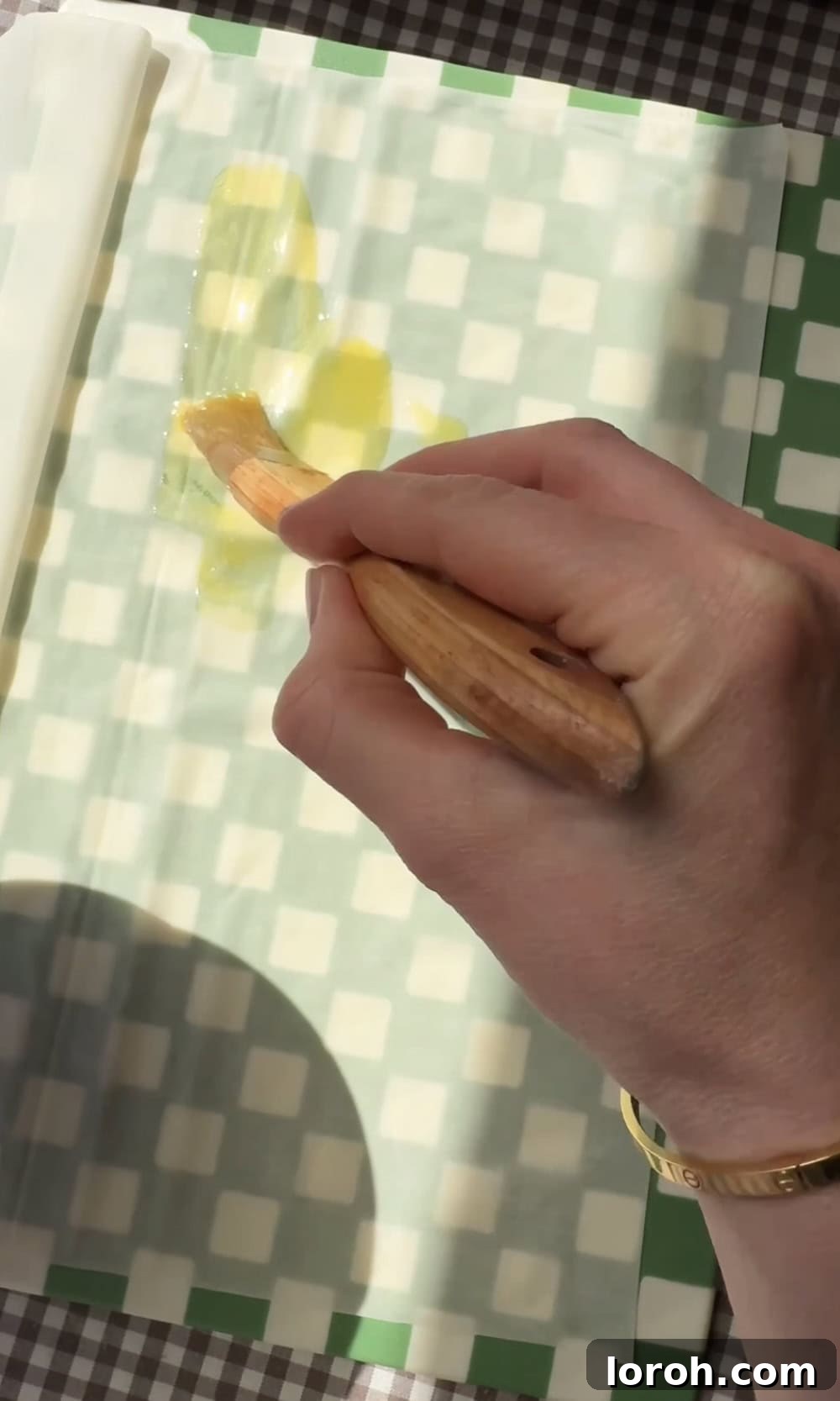
ONE: Prepare Your Filo Sheets. Carefully lay one sheet of delicate filo pastry onto a clean chopping board. Using a pastry brush, generously coat the entire surface of the filo with melted unsalted butter. Ensure every part is lightly brushed, as this is key to achieving that desirable golden crispiness.
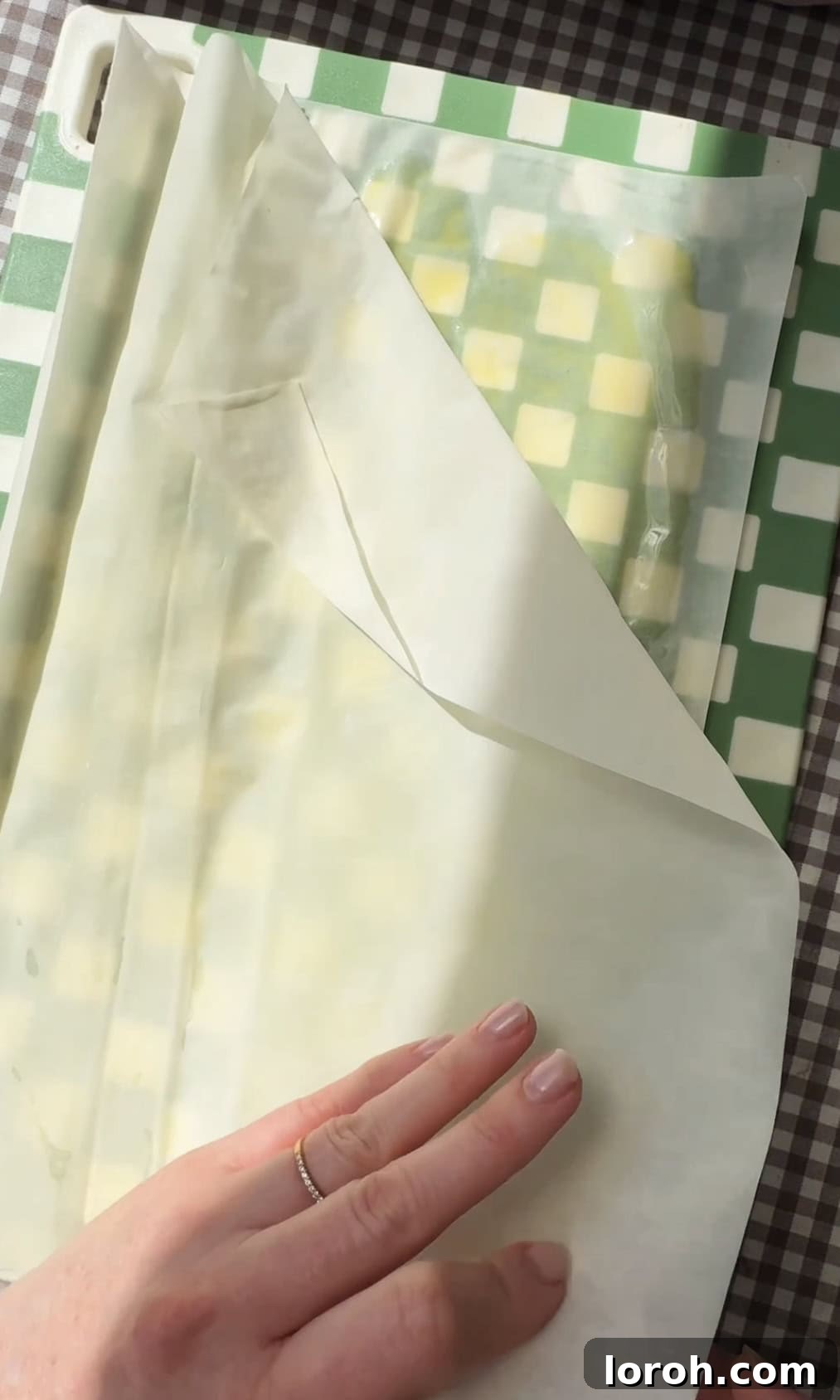
TWO: Layer the Filo. Gently place a second sheet of filo pastry directly on top of the first buttered sheet. Smooth it out carefully to avoid wrinkles or tears. This layering technique provides extra strength and ensures a satisfyingly crunchy exterior.
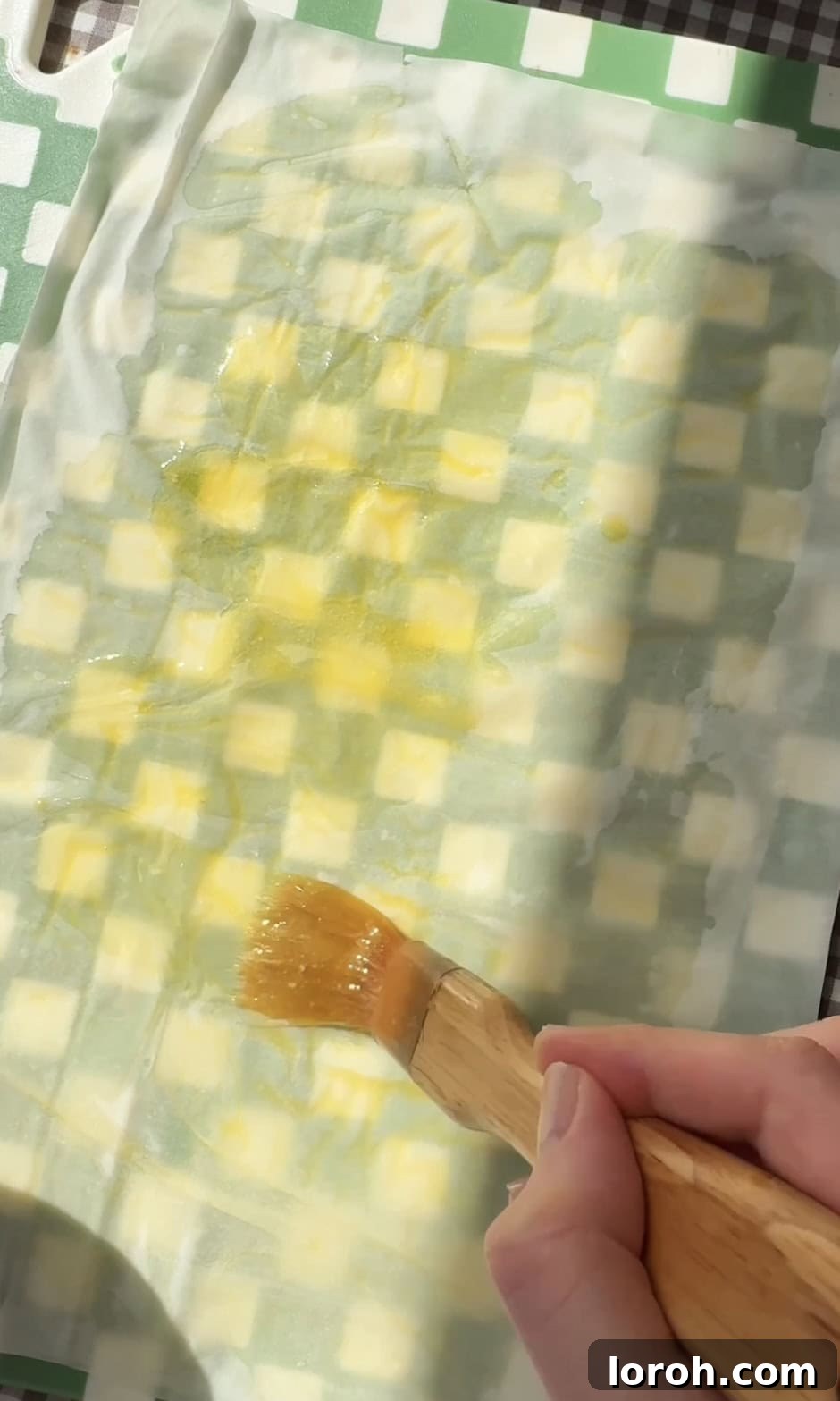
THREE: Second Butter Layer. Brush this second sheet of filo with another generous layer of melted butter. Don’t be shy with the butter; it helps create distinct, flaky layers and rich flavor. Keep any remaining filo sheets covered with a damp cloth to prevent them from drying out while you work.
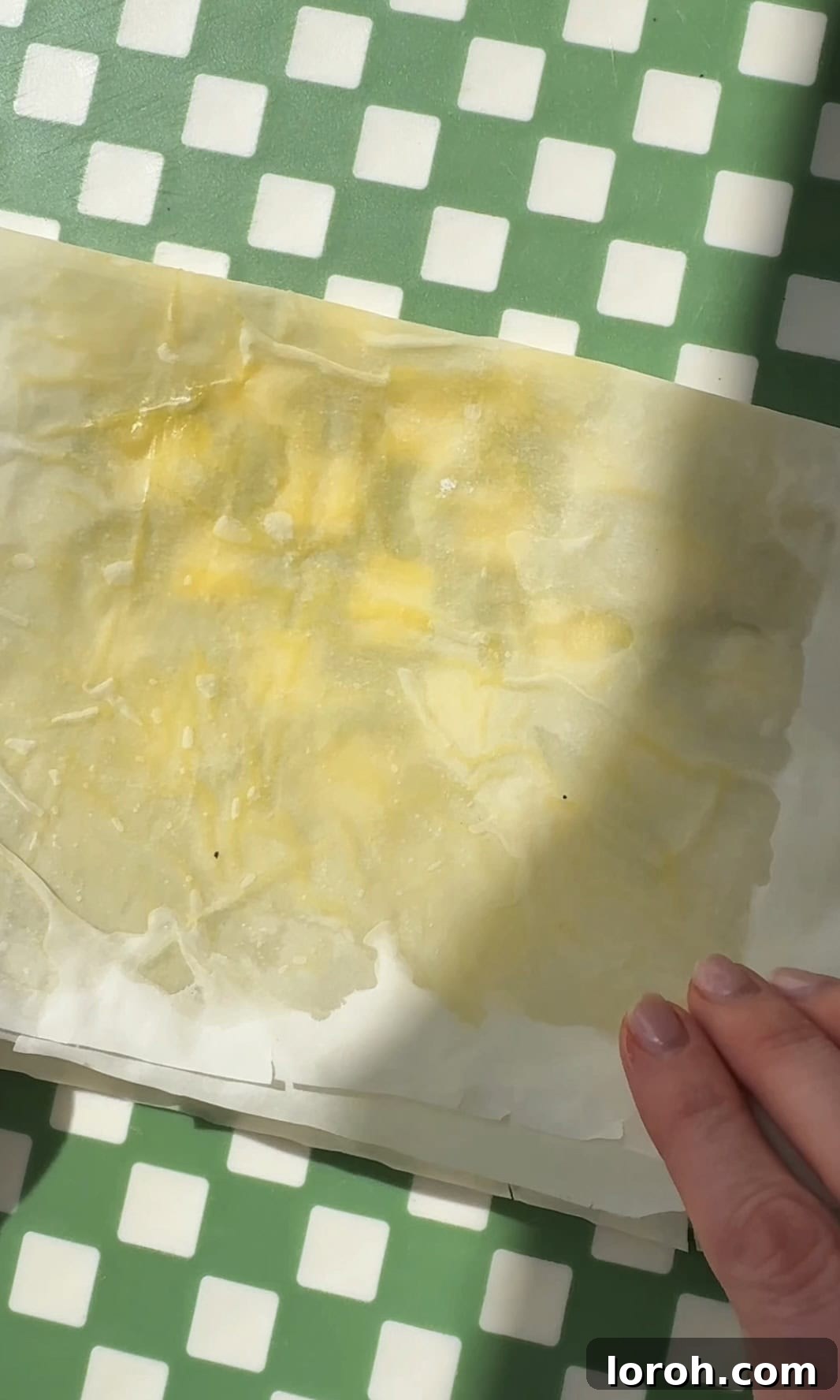
FOUR: Adjust Filo Size (Optional). If your filo sheets are exceptionally large, consider folding the buttered stack in half along its shortest side. This prevents the filo from becoming overly thick around your feta block. You can hold the block of feta against the filo to gauge if a reduction in size is necessary to achieve the ideal filo-to-feta ratio.
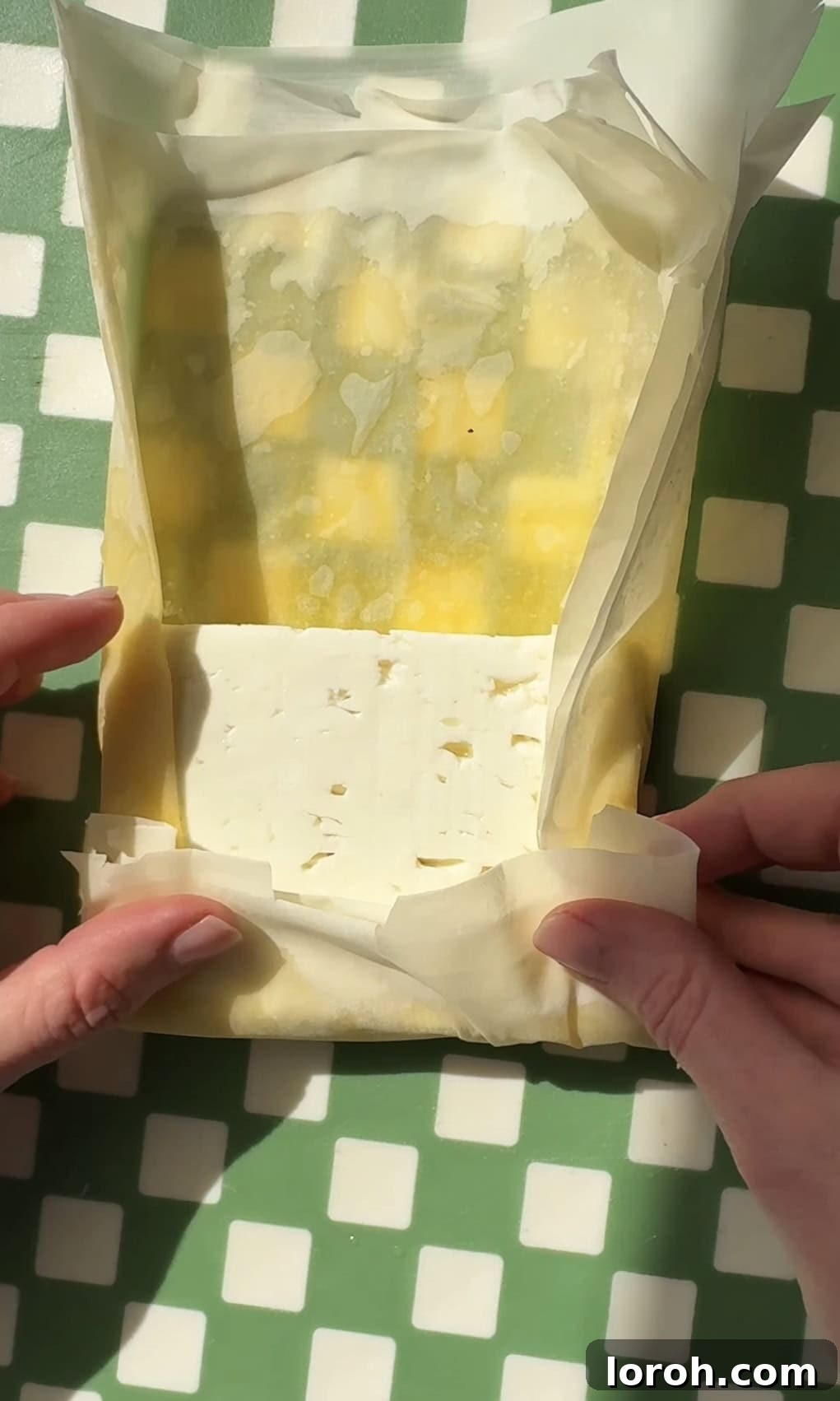
FIVE: Wrap the Feta Parcel. Place your solid block of good quality feta cheese squarely in the center of the buttered filo pastry stack. Now, carefully and neatly fold the filo pastry up and around the feta, much like you would wrap a present. Aim for a snug, secure parcel that fully encases the cheese.
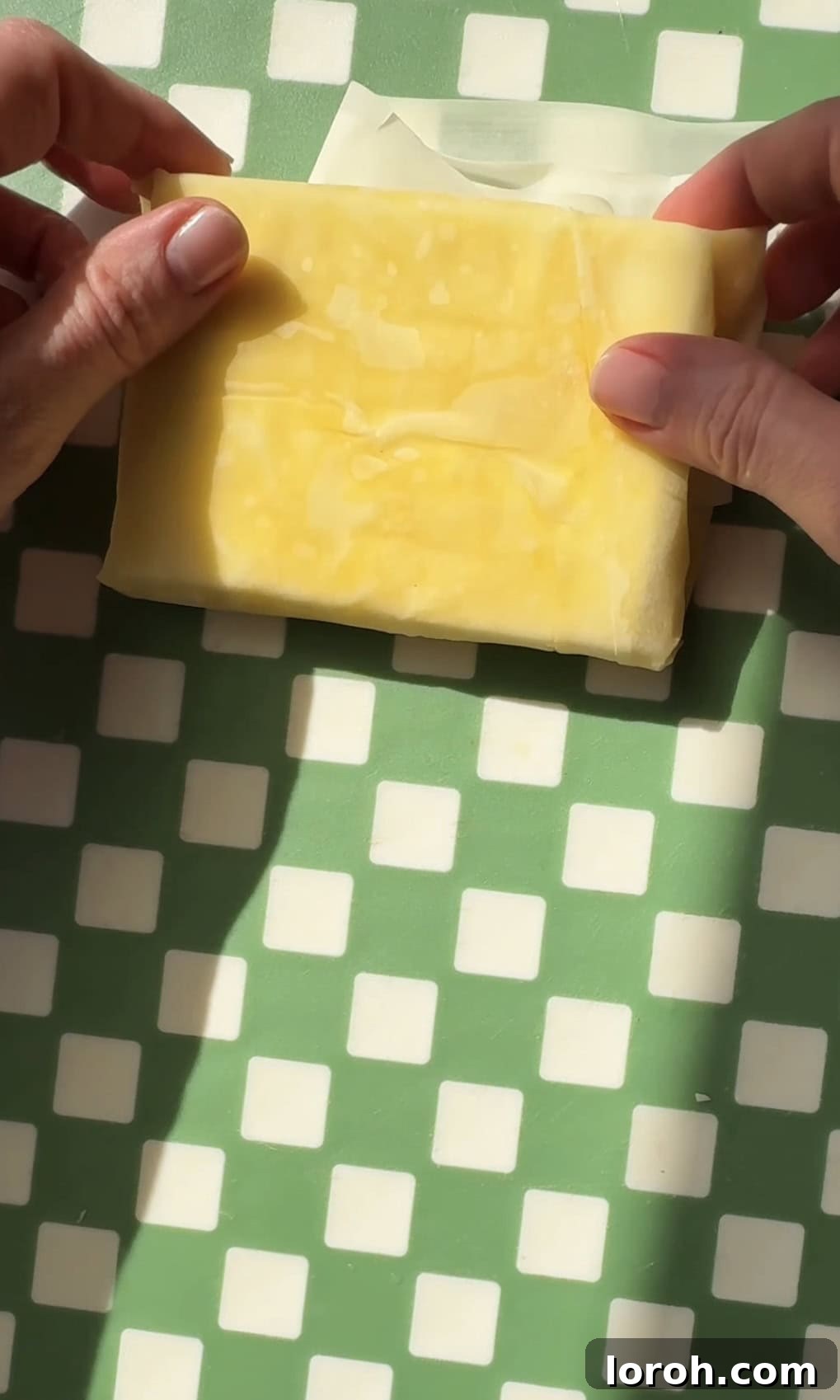
SIX: Seal the Parcel. Once wrapped, gently fold any excess filo ends underneath the parcel. Press down lightly to seal the edges. Thanks to the melted butter, the pastry layers should adhere easily, creating a tight, secure package that will hold its shape beautifully during cooking.
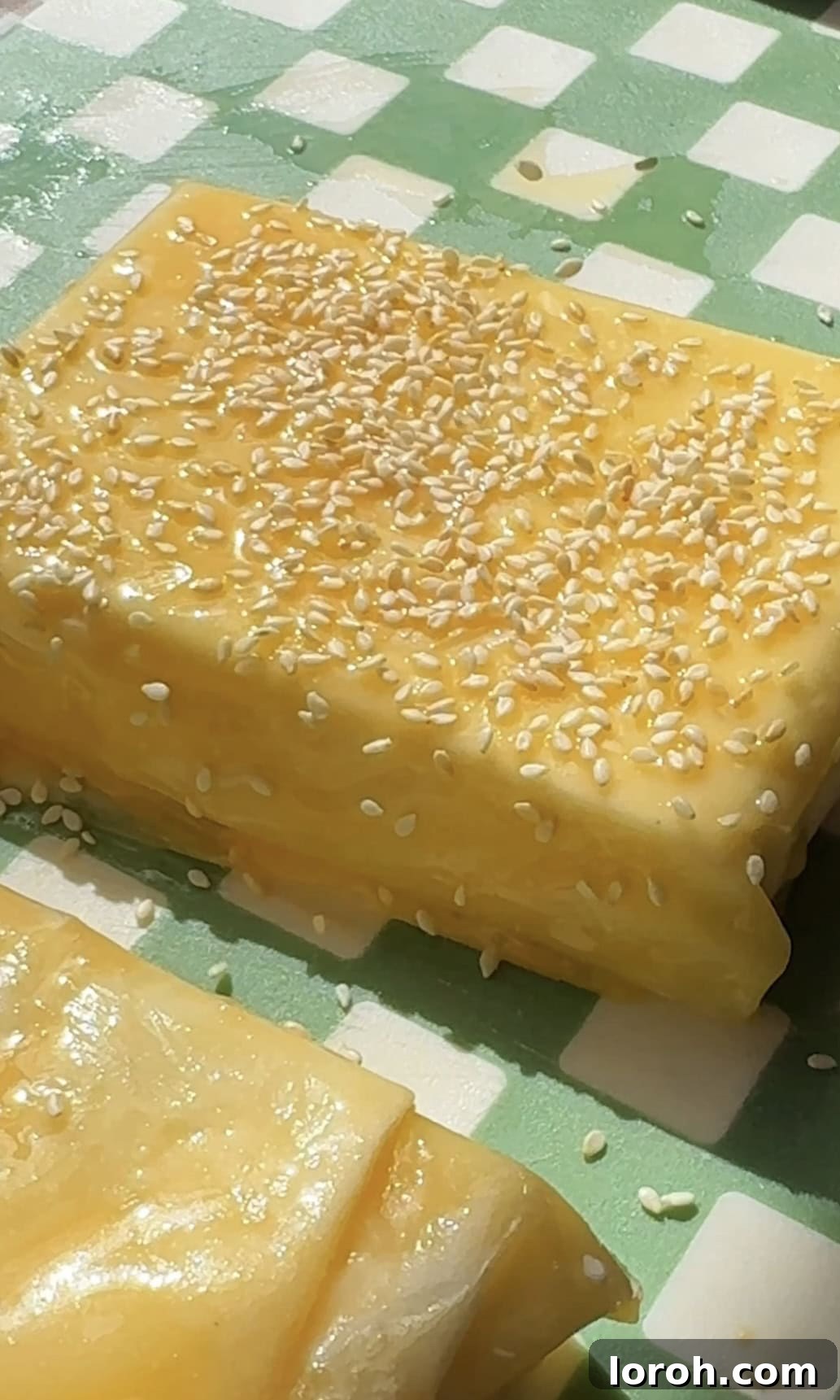
SEVEN: Egg Wash and Sesame Seeds. In a small bowl, lightly beat an egg yolk. Using your pastry brush, generously coat the entire exterior of the filo-wrapped feta parcel with the beaten egg yolk. This acts as a ‘glue’ for the sesame seeds and helps create a beautiful golden crust. Immediately sprinkle a generous amount of white sesame seeds evenly over all sides of the parcel, gently pressing them to adhere.
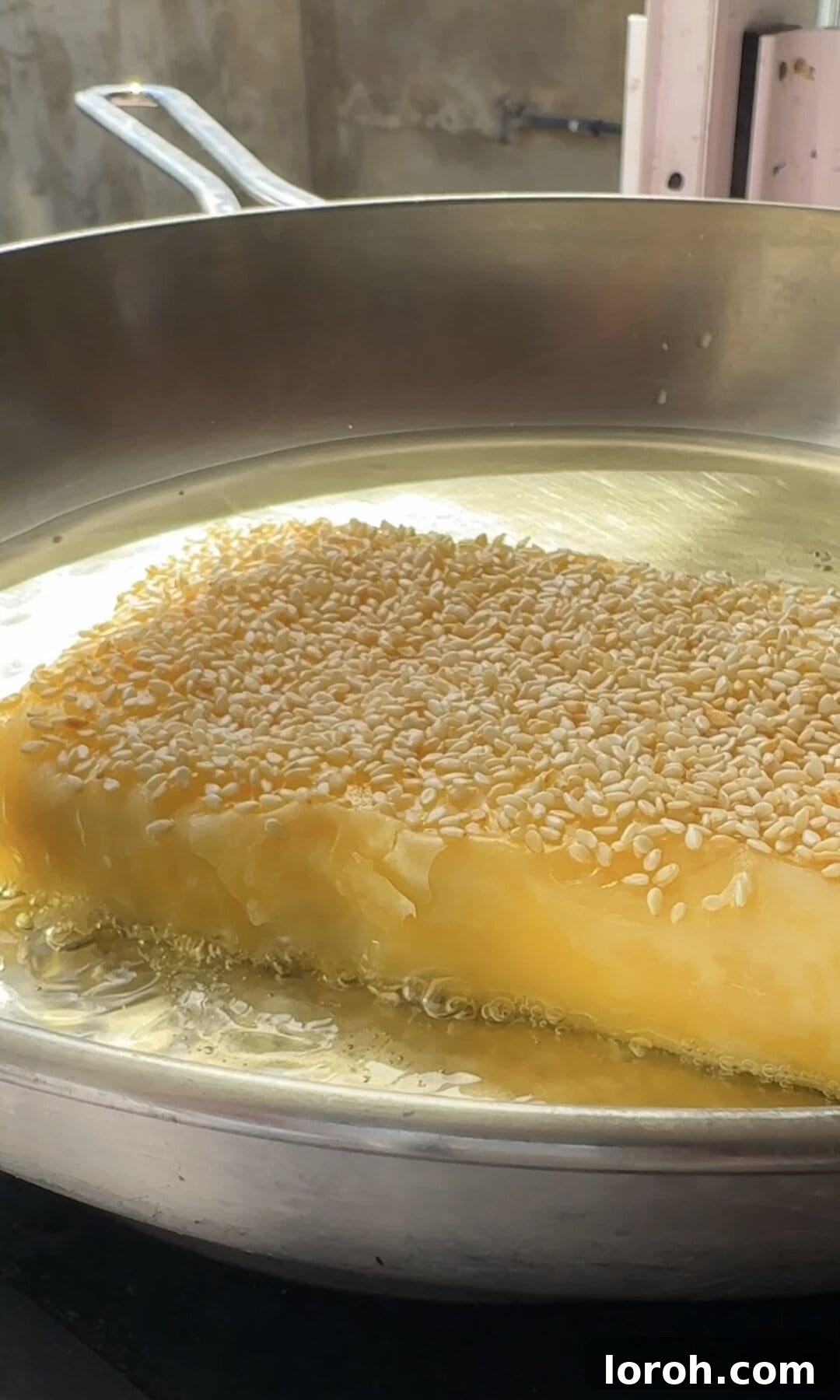
EIGHT: Shallow Fry to Golden Perfection. In a frying pan with fairly deep sides, heat about 1-2 cm of sunflower oil over a gentle to medium heat. The oil should be gently bubbling, indicating it’s ready. Carefully place the filo-wrapped feta parcel into the hot oil. Fry for approximately 3-5 minutes on each side, or until the filo pastry is gloriously golden brown and wonderfully crispy. Be sure to turn the parcel gently to ensure even browning. Crucially, monitor the heat closely; you want the filo to crisp without burning the sesame seeds, which can turn bitter if overcooked.
NINE: Drain Excess Oil. Once perfectly golden and crispy on all sides, carefully remove the Feta Saganaki from the pan using a slotted spoon or spatula. Transfer it to a plate lined with kitchen paper to absorb any excess oil, ensuring your saganaki remains deliciously crisp and not greasy.
TEN: Garnish and Serve Immediately. Carefully transfer the drained Feta Saganaki to your serving plate. Drizzle generously with good quality runny honey, allowing it to cascade over the golden crust. Finally, scatter with fresh sprigs of dill or your preferred fresh herbs. Serve immediately to enjoy the ultimate combination of warm, melting feta, crispy filo, and sweet-savory garnishes.
Expert Cooking Tips for Perfect Saganaki
Handling Filo Pastry: Filo is notoriously delicate and dries out quickly. Always keep unused sheets covered with a clean, slightly damp cloth while you’re working. If you have any leftover filo, wrap it tightly in plastic wrap and store it in the refrigerator or freezer. It’s excellent for lighter pie toppings; simply scrunch up sheets, brush with butter, and bake over your favorite pie filling for a crispy, beautiful crust (my chicken pie is a great candidate!).
Mastering Oil Temperature: Achieving the perfect golden-brown crisp without burning is all about temperature control. Don’t let the oil get too hot, as it will brown the filo too quickly before the feta has had a chance to soften and warm through. Start with a gentle heat and gradually increase if the filo isn’t browning. Conversely, if it’s browning too fast, reduce the heat immediately. Keep a close eye on the sesame seeds; they toast quickly and can turn bitter if scorched.
Creating Individual Feta Saganaki Portions: If you’re catering for a crowd or wish to create elegant appetizers, transform this recipe into single-serve canapés. Simply slice the block of feta into smaller rectangular pieces, slightly larger than a chunky chip. Then, cut your filo pastry into appropriately sized squares or rectangles to wrap each smaller feta cuboid individually. Follow the remaining steps, frying each mini-parcel until golden. Arrange them artfully on a platter and drizzle with honey, or offer the honey on the side for guests to customize.
The Ideal Frying Pan: A heavy-bottomed frying pan with moderately deep sides is best for even heat distribution and containing the oil. Cast iron or stainless steel pans work wonderfully. Ensure the pan is large enough to comfortably accommodate your feta parcel without crowding.
Avoid Overcrowding the Pan: If making multiple individual saganaki portions, fry them in batches. Overcrowding the pan can lower the oil temperature, leading to soggy filo rather than crispy. Give each parcel enough space to cook evenly.
How to Make Feta Saganaki in the Oven
While traditionally pan-fried, this delightful Feta Saganaki can also be baked in the oven, offering a slightly less hands-on approach and a potentially healthier alternative without compromising on flavor or crispiness. Here’s how to achieve a delicious oven-baked version:
Preheat your oven to 200°C (180°C Fan / 400°F). Line a baking sheet with non-stick baking paper to prevent sticking. Prepare your feta parcel exactly as described in the pan-frying method, up until the point where you would brush it with the egg yolk and sesame seeds. Instead of egg yolk, give the entire filo parcel another generous brush with melted butter. This ensures a golden, crispy finish in the oven. Bake the parcel for approximately 20-25 minutes, or until the filo pastry is beautifully golden brown and visibly crisp on both sides. If you notice one side browning faster, or if the top isn’t quite golden, simply flip the parcel gently with a spatula halfway through baking. Once baked, transfer it to a serving plate, drizzle with runny honey, and scatter with fresh toasted sesame seeds (if not already added) and freshly plucked herbs like dill or oregano. Serve immediately for a wonderful baked appetizer.
Frequently Asked Questions About Feta Saganaki
This Crispy Feta Saganaki is incredibly versatile. It shines as a standalone starter, simply garnished with honey and fresh herbs. For a true Mediterranean feast, incorporate it into a mezze spread alongside other Greek favorites. Imagine serving it with succulent Chicken Souvlaki in warm pita, rich and Creamy Hummus with Roasted Vegetables, sizzling Buttered Garlic Prawns, and flavorful Baked Herby Falafel with Tzatziki. It also pairs wonderfully with a simple green salad or a light tomato salad.
This recipe typically leaves you with just one egg white. The simplest solution is to whisk it with a couple of whole eggs to make fluffy scrambled eggs. However, if you’re feeling ambitious, egg whites are the foundation for many delicious desserts! Consider making delicate Lemon Meringues, a classic Pavlova, intricate Macarons, or a decadent Classic French Chocolate Mousse. For future use, egg whites freeze exceptionally well in an airtight container for up to three months; simply defrost in the refrigerator when you’re ready to use them.
The word ‘saganaki’ (σαγανάκι) in Greek literally refers to the small, two-handled frying pan used for cooking. So, when you hear ‘feta saganaki’ or ‘prawn saganaki,’ it denotes a dish prepared in this particular type of pan. It’s a culinary term for a method of cooking, rather than a specific ingredient.
For the absolute best results, with maximum crispiness and warm, soft feta, this dish is ideally assembled, fried, and enjoyed immediately. However, you can certainly prepare the feta parcel up to a few hours in advance. After wrapping the feta in filo and brushing it with butter (but *before* applying the egg yolk and sesame seeds), cover the parcel carefully with a clean, slightly damp cloth or plastic wrap. Refrigerate until you’re ready to fry, then proceed with the egg wash, sesame seeds, and cooking steps. This keeps the filo from drying out and allows for quick frying just before serving.
Storing leftovers of this Feta Saganaki isn’t recommended for optimal enjoyment. Once it has been chilled overnight, the filo pastry will lose its crispness, and the feta won’t have the same delightful warm, soft texture. This dish truly shines when served fresh from the pan.
While best enjoyed fresh, if you find your Feta Saganaki has cooled down or become a bit firm when enjoying it as part of a larger meal, you can gently reheat it. Pop it into a preheated oven at 200°C (180°C Fan / 400°F) for about 5-7 minutes. The filo won’t regain its original crispness, but the feta will warm through and soften again, making it more palatable. Avoid reheating in a microwave, as this will make the filo soggy.
Yes, this Feta Saganaki recipe is naturally vegetarian, making it a wonderful appetizer or side dish for those following a meat-free diet. Feta cheese is a dairy product, so it’s not suitable for vegans unless you use a plant-based feta alternative.
Absolutely! To make this delicious dish vegan-friendly, simply make a few key substitutions. Brush the filo pastry with olive oil or a plant-based butter alternative instead of traditional unsalted butter. Replace the dairy feta with a high-quality plant-based feta cheese. Finally, instead of honey, drizzle with maple syrup or agave nectar for that touch of sweetness. The result will be a delightful vegan appetizer with all the crispy, savory, and sweet appeal.
Other Mediterranean Recipes You Might Enjoy:
If this delightful Feta Saganaki has captured your taste buds, you’re sure to discover new favorites among these related recipes:
- **Brie and Cranberry Filo Parcels:** Another exquisite filo-wrapped appetizer, perfect for festive occasions or elegant entertaining.
- **Herby Roasted Potatoes with Chimichurri:** A vibrant and flavorful side dish that pairs beautifully with any Mediterranean spread.
- **Whole Roasted Cauliflower with Tahini:** An impressive and healthy centerpiece, offering rich flavors and a satisfying texture.
More Delicious Recipes
Salad Recipes
Easy Beetroot Salad with Feta and Rocket
Easy Healthy Recipes
Thai Peanut Salad with Chicken
Salad Recipes
Brussels Sprout Salad with Bacon
Christmas Recipes
Brie Puff Pastry Bites
We love hearing from you! If you’ve tried this delightful Crispy Feta Saganaki with Honey and Sesame or any other recipe from our collection, please take a moment to leave a rating and share your thoughts in the comments below. Your feedback truly helps us and our community!

Feta Saganaki Recipe
This is my twist on the classic Greek feta saganaki. Imagine crispy, crunchy filo pastry wrapped around a deliciously creamy, salty block of feta. All finished off with a sprinkling of nutty sesame seeds, a drizzle of honey and a scattering of fresh herbs. So good.
Prep: 10 mins
Cook: 10 mins
Total: 20 mins
Servings: 4 servings as a side
Ingredients
- 2 large sheets filo pastry
- Unsalted butter, melted, for brushing
- 200 g good quality feta, or just one large block
- 1 egg yolk, beaten
- 1 tbsp white sesame seeds, (approx)
- Sunflower oil, for shallow frying
To serve:
- Good quality runny honey, for drizzling
- Sprigs of fresh dill
Instructions
- Place one sheet of filo pastry on a chopping board. Brush generously with melted butter.
- Top with the second sheet of filo and brush with another generous layer of melted butter. If it’s a very large piece of filo, here you can fold it in half on the shortest side to make it smaller. Otherwise, you end up with very thick filo around the feta. You can use the block of feta to measure it against the filo and decide if it needs to be smaller or not.
- Place the block of feta in the centre of the filo and carefully wrap the filo up around it as if you were wrapping a present. Fold the ends under and press down to seal (it should seal easily due to the melted butter).
- Brush all over with the beaten egg yolk, then sprinkle with sesame seeds.
- Next, in a frying pan, heat about 1-2 cm of sunflower oil (you aren’t deep-frying, but you do need a generous amount) over a gentle heat.
- Once gently bubbling, add the filo parcel and fry for a few minutes on each side – or until gloriously golden and crispy on the outside (giving enough time for the feta to go all melty and gooey on the inside too). Take care to moderate the heat so the sesame seeds don’t burn.
- Carefully remove from the oil using a slotted spoon or spatula and pop on a plate lined with kitchen paper to absorb any excess oil.
- Place onto a serving plate, drizzle with runny honey and sprinkle with sprigs of fresh dill. Enjoy straight away!
Notes
Scroll up for a step-by-step guide on how to make feta saganaki, including images on folding the filo pastry.
To store: This is best made, fried, and eaten straight away.
To reheat: This is one of those dishes that is best served straight away so the filo stays crisp and the feta is soft. But if you are eating the feta saganaki slowly with lots of other bits and you find it gets a bit too hard for your tastes, I would pop it in the oven at 200c for 5 minutes or so, just to warm it through. The filo won’t remain as crisp but it will warm it again if you need.
Make ahead: You can prep the parcel up until brushing with beaten egg yolk. Cover with a clean damp cloth and pop in the fridge for up to a few hours before serving.
Make it vegan: Brush the filo with olive oil instead of butter, use a plant-based feta and drizzle with maple syrup instead of honey.
Cheese: The feta is the star of the show in this feta saganaki so opt for the best quality you can find. For a French twist, why not try a large triangular slice of Brie or Camembert round?
Herbs: If you aren’t a fan of dill, sprigs of thyme, lemon thyme or oregano work really well too.
Serving suggestions: This is delicious as a starter or served alongside a selection of Mediterranean mezze dishes.
Nutrition
Calories: 362kcal, Carbohydrates: 29g, Protein: 12g, Fat: 22g, Saturated Fat: 12g, Polyunsaturated Fat: 2g, Monounsaturated Fat: 6g, Trans Fat: 0.2g, Cholesterol: 109mg, Sodium: 815mg, Potassium: 84mg, Fiber: 1g, Sugar: 0.1g, Vitamin A: 463IU, Calcium: 279mg, Iron: 2mg
Nutrition information is automatically calculated, so should only be used as an approximation.