
The Ultimate Scones with Clotted Cream and Jam: An Ed Kimber Inspired Recipe
By: Margie
The Quintessential British Treat: Scones, Cream & Jam
There are few culinary delights as deeply woven into the fabric of British culture as the humble scone. Its mention instantly evokes images of quaint tearooms, delicate china, and the leisurely pleasure of afternoon tea. I was absolutely delighted when Ed Kimber, a celebrated baker, chose scones as one of his ‘Desert Island Dishes’. It’s a testament to their enduring appeal and undeniable charm. Scones are, without a doubt, the quintessential British tea time treat – light, exquisitely fluffy, and possessing that magical melt-in-the-mouth quality that makes them dangerously irresistible. They carry an air of “oh, go on, just one more,” a gentle yet persuasive nudge towards indulgence at the tea table. And truthfully, if one cannot indulge at tea time, then when can one?
My affection for a full afternoon cream tea knows no bounds. I adore every element, from the delicate finger sandwiches filled with thinly sliced cucumber – always on buttered white bread, crusts meticulously removed – to the savory egg mayonnaise, perfectly paired with brown bread, equally crust-free. These little masterpieces set the stage, offering a refreshing counterpoint before the sweet symphony begins. Then come the cakes, in all their glorious shapes and sizes: a rich, cream cheese-frosted carrot cake, a simpler yet comforting coffee and walnut loaf, or perhaps mini cupcakes piled high with luscious buttercream or glazed with a sugary drizzle. Each component plays its part in crafting an unforgettable experience.
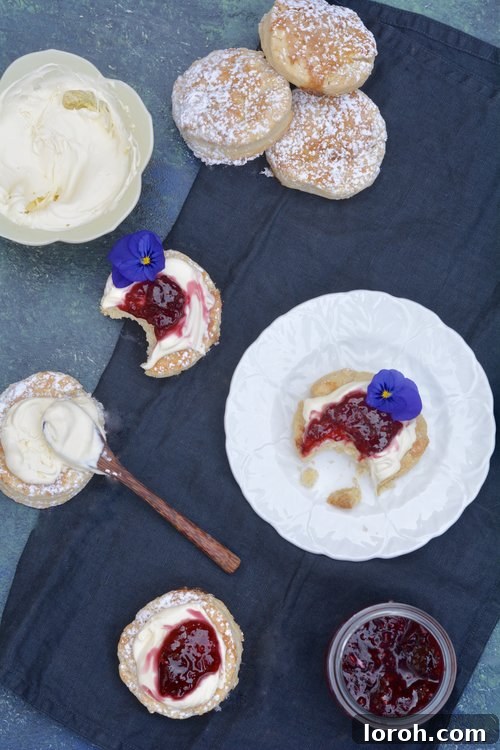
However, no spread at tea time is truly complete without a generous offering of freshly baked scones. They are the heart and soul of the cream tea, surprisingly quick and simple to prepare, transforming humble ingredients into something truly special. Piled high with dollops of luxurious clotted cream and generous lashings of vibrant jam, they are simplicity and perfection combined.
The Great Scone Debate: Devon vs. Cornwall
Ah, but this seemingly simple delight comes with a rather passionate, and often humorous, controversy – the order of assembly. Venture to Devon, and you’ll find locals staunchly advocating for jam first, then cream. Cross the border into Cornwall, and prepare for raised eyebrows if you dare to spread clotted cream before the jam. This culinary etiquette can divide even the closest of friends and ignite spirited debates across the counties. Personally, I find myself deftly navigating this age-old conundrum, attempting to avoid siding unequivocally with either county. My primary objective? To ensure each scone receives the maximum possible amount of rich, velvety clotted cream. For me, this usually means the cream takes precedence. However, I wholeheartedly encourage you to forge your own path on this delightful matter; the choice, as always, is entirely yours.
A Scone Recipe Like No Other: The Power of Cream
Many scone recipes exist, most adhering to the classic method of rubbing butter into flour, often with a touch of sugar, before binding the dough with milk or sometimes egg. But this recipe, dear reader, takes a delightfully unconventional turn. I am a firm believer that one can never, ever have too much cream. And so, in pursuit of the ultimate scone, I’ve eliminated both butter and milk from the equation, going full steam ahead with double cream as the sole enriching liquid.
The outcome is nothing short of counter-intuitive and truly astonishing. One might expect a dense, heavy scone, but quite the opposite is achieved. These are, remarkably, the lightest scones I have ever encountered. While they may not boast an impressive rise, and thus won’t necessarily win awards for their towering stature, what they may lack in the looks department, they more than compensate for with an unparalleled taste and delicate texture. Rest assured, I have perfected this recipe through countless batches and can personally vouch for their utterly delicious nature. They are incredibly easy to make, delivering a profound sense of satisfaction with minimal effort. Why not seize the opportunity this weekend to treat yourself and your loved ones to these extraordinary cream-infused scones?
Yields: 12 servings
View Instructions |
Print Recipe
Ingredients for the Perfect Cream Scones
Crafting these delicate scones requires just a handful of simple ingredients, proving that extraordinary results often stem from humble beginnings. Each component plays a crucial role in achieving the desired light texture and rich flavor. Ensure your ingredients are fresh and measured accurately for the best outcome.
- 200 g self-raising flour: The backbone of our scones, self-raising flour ensures a good lift without the need for additional leavening agents.
- 50 g caster sugar, plus 15g extra for sprinkling on top: Caster sugar dissolves easily, providing a fine sweetness within the scone. The extra sprinkle adds a delightful crispness and sparkle to the crust.
- Pinch salt: A small touch of salt enhances the overall flavor and balances the sweetness.
- 200 – 250 ml double cream: This is the star ingredient, replacing traditional butter and milk. It contributes unparalleled richness and, surprisingly, contributes to a very light texture.
- 1 egg yolk: Used solely for an egg wash, it gives the scones a beautiful golden-brown sheen and a slightly crisp finish.
Step-by-Step Guide to Baking Irresistible Scones
Making these cream scones is a wonderfully rewarding process, designed for simplicity and maximum flavor. Follow these steps carefully, paying particular attention to handling the dough lightly, and you’ll be enjoying warm, homemade scones in no time.
-
Prepare Your Oven and Baking Tray
Preheat your oven to a hot 220°C (425°F or Gas Mark 7). This high initial temperature is crucial for encouraging a rapid rise, resulting in light and airy scones. While the oven heats, line a baking tray with greaseproof paper or parchment paper. This prevents sticking and ensures easy removal of your freshly baked goods.
-
Sift the Dry Ingredients
Into a large mixing bowl, carefully sift the self-raising flour. This step, while seemingly minor, is incredibly important. Sifting aerates the flour, preventing lumps and contributing significantly to the lightness and delicate texture of the finished scones. Once sifted, add the pinch of salt and the 50g of caster sugar to the bowl. Give everything a quick whisk or stir to combine evenly.
-
Incorporate the Double Cream
Pour approximately 200ml of the double cream into the dry ingredients. Using a knife or a firm spatula, gently stir the mixture. The goal here is to bring the dough together until it just forms a soft, shaggy mass. Avoid overmixing. The unique quality of this recipe comes from the high cream content, which yields a remarkably tender scone. If the dough still appears too dry or isn’t binding, add the remaining cream gradually, a tablespoon at a time, until it comes together. The consistency should be soft and slightly sticky, but manageable.
-
Lightly Knead and Cut the Scones
Lightly flour your work surface and carefully turn out the scone dough. This is the most crucial stage for scone texture: knead very, very lightly. Overworking or over-kneading the dough can develop the gluten too much, resulting in tough, boot-like scones – something we absolutely want to avoid! Just a few gentle folds (2-3 times) are enough to bring it together. Then, gently pat or roll out the dough until it is about 1 cm (approximately ½ inch) thick. Use a 2-inch (5 cm) round cutter to stamp out your scones. For the best rise, try to press straight down without twisting the cutter. Gather any off-cuts or trimmings, gently press them back together (again, very lightly, don’t knead them much!), and stamp out more scones until all the dough is used.
-
Prepare for Baking
Carefully transfer the cut scones to your prepared baking sheet, leaving a little space between each one. In a small bowl, lightly beat the egg yolk with a tiny splash of water or milk to create an egg wash. Gently brush the tops of each scone with this egg wash. This will give them a beautiful golden sheen once baked. Finally, sprinkle the remaining 15g of caster sugar over the tops of the egg-washed scones. This adds a lovely, slightly caramelized crunch to the crust.
-
Bake to Golden Perfection
Place the baking tray into your preheated oven. Bake for approximately 6-8 minutes. Keep a close eye on them; the exact time may vary slightly depending on your oven. The scones are ready when they have risen noticeably and have achieved a gorgeous, inviting golden-brown colour on top and bottom. They should feel light when lifted.
-
Serve and Enjoy!
As soon as they emerge from the oven, these scones are at their absolute best. Enjoy them piping hot, split open and generously adorned with copious amounts of luxurious clotted cream and your favourite jam – strawberry or raspberry are classic choices. They are also perfectly delicious served at room temperature, making them ideal for preparing slightly in advance for your afternoon tea gathering. Pair them with a steaming pot of Earl Grey or English Breakfast tea for the ultimate British experience.
Experience the Joy of Homemade Scones
There’s something uniquely comforting and utterly satisfying about a freshly baked scone. This recipe, with its simple ingredients and cream-centric approach, promises an extraordinary result that defies conventional wisdom. Whether you’re hosting a sophisticated afternoon tea, enjoying a quiet moment of indulgence, or simply craving a taste of British tradition, these scones are sure to impress. Their delicate texture and rich flavor, perfectly complemented by clotted cream and a fruity jam, make for an unforgettable treat.
Don’t let the simplicity fool you; the magic is in the method and the quality of the ingredients. Give this Ed Kimber-inspired scone recipe a try, and I guarantee you’ll discover a new favorite. Share the joy, savor every bite, and revel in the delightful experience of homemade perfection. We’d love to hear your thoughts and see your creations!