
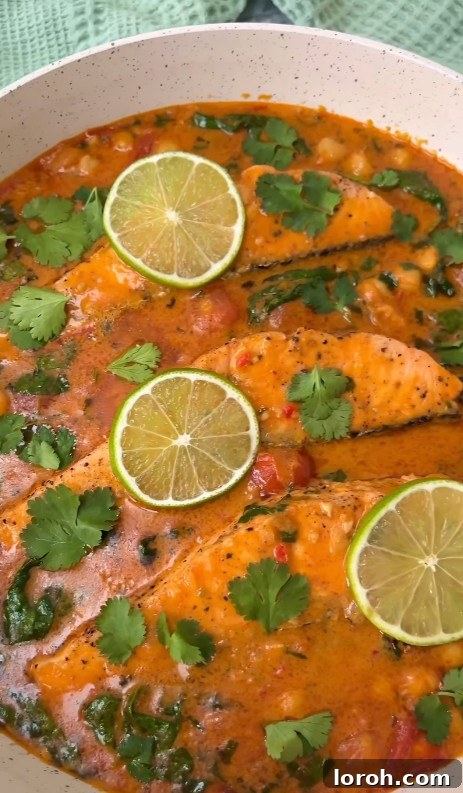
Transform your weeknights with this incredibly simple yet profoundly flavorful **One-Pan Thai Salmon Curry**. This recipe elevates the humble salmon fillet into a vibrant, aromatic dish that promises a delightful culinary experience without the hassle of extensive cleanup. Built upon a luscious base of creamy coconut milk and infused with the exotic notes of red Thai curry paste, this meal is generously bulked out with protein-rich chickpeas and nutrient-dense spinach. It’s a testament to how quick, healthy, and utterly delicious a family dinner can be. Serve it alongside fluffy rice or warm naan bread for a complete, satisfying meal that will quickly become a cherished staple in your home.
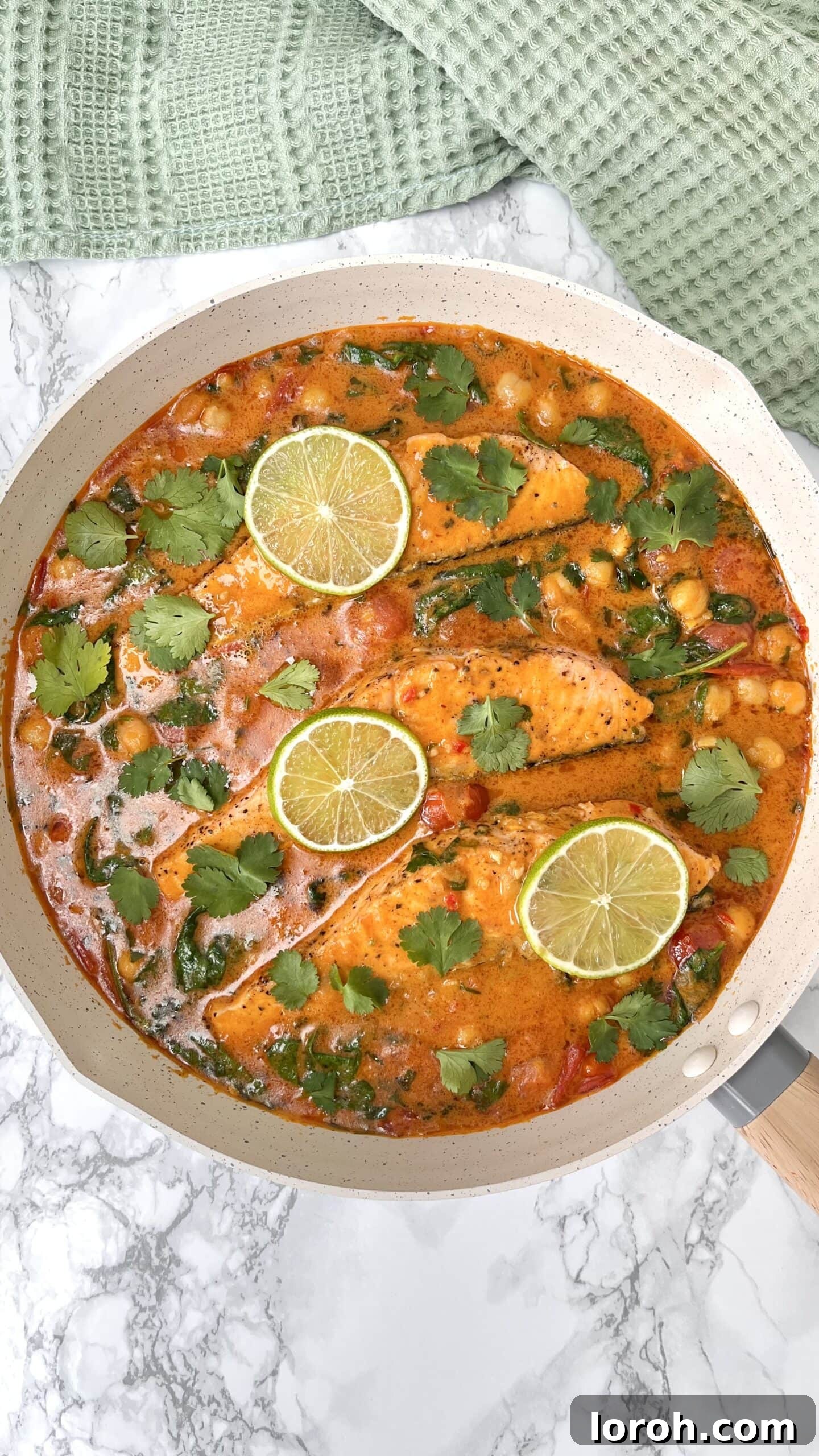
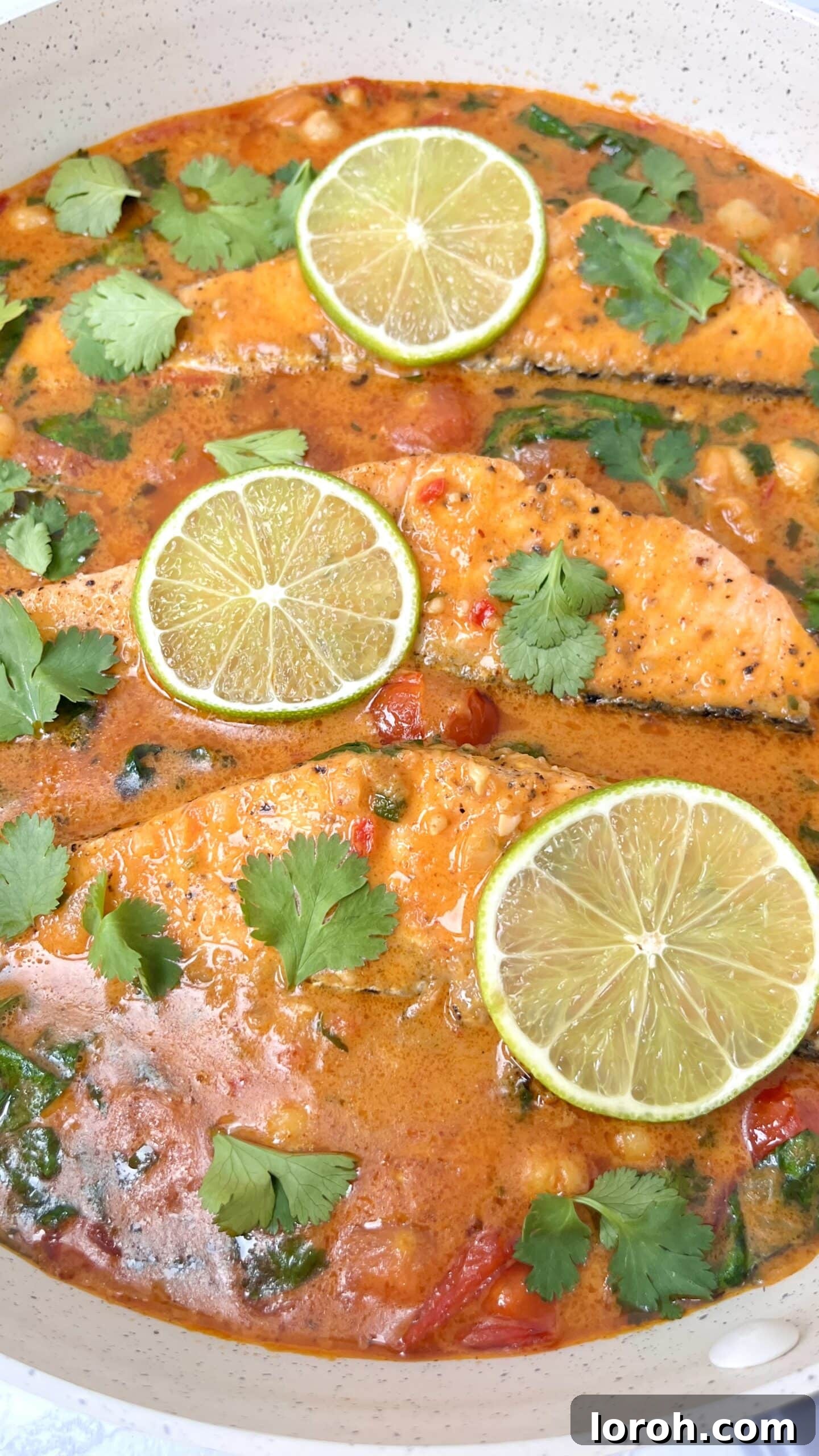
Beyond the classic pan-fried salmon with lemon, this recipe unlocks new dimensions of flavor for this delicate yet surprisingly robust fish. Salmon, with its rich texture, holds beautifully within the fragrant curry sauce, absorbing all the aromatic spices without flaking apart. Keeping the skin on during the initial sear can further aid in maintaining its integrity and adds a lovely crisp texture. The harmonious blend of coconut milk, tangy lime, and fresh coriander creates a symphony of flavors that perfectly complements the rich salmon. A final squeeze of fresh lime juice and a generous scattering of chopped coriander are non-negotiable – they provide that essential brightness and freshness that truly rounds out the entire dish.
Table of Contents
- Why You’ll Love This Easy Salmon Curry
- Key Ingredients for Your Thai Salmon Curry
- Substitutions and Variations to Customize Your Meal
- Step-by-Step: How to Make One-Pan Thai Salmon Curry
- Expert Cooking Tips for Perfect Salmon Curry
- Frequently Asked Questions About This Recipe
- Other Quick & Healthy Recipes You Might Enjoy
- Made This Recipe and Loved It?
- Printable Thai Salmon Curry Recipe Card
Why You’ll Love This Easy Salmon Curry
- It’s Quick and Uncomplicated: In a world of busy schedules, finding a meal that comes together quickly in a single pan is a true game-changer. This Thai salmon curry is designed for efficiency, minimizing both cooking time and cleanup. It’s the ultimate solution for those hectic weeknights when you crave a homemade, flavorful dinner without spending hours in the kitchen. Every ingredient is added thoughtfully, building layers of taste without unnecessary steps, making it perfect for novice cooks and seasoned chefs alike.
- It’s Bursting with Wholesome Goodness: Prioritizing health doesn’t mean sacrificing flavor. This curry is a powerhouse of nutrition, crafted with ingredients known for their incredible benefits. Salmon is celebrated for its abundant omega-3 fatty acids, crucial for heart health and brain function, alongside being an excellent source of lean protein. Spinach and coriander load the dish with essential vitamins and antioxidants, while chickpeas contribute valuable fiber and plant-based protein, promoting gut health and sustained energy. You can truly feel good about every spoonful.
- The Dish Offers a Comforting Yet Light Experience: Experience the best of both worlds with a meal that feels deeply comforting and indulgent, yet leaves you feeling energized, not weighed down. The rich, creamy texture derived from full-fat coconut milk creates a luxurious mouthfeel that soothes and satisfies, making it a perfect antidote to a long day. Despite its comforting nature, this salmon curry remains a healthy choice, avoiding the heavy, “stodgy” feeling often associated with comfort foods. It’s a delightful balance of creamy richness and vibrant freshness.
Key Ingredients for Your Thai Salmon Curry
A successful curry starts with fresh, quality ingredients. Here’s a deeper look into what makes this Thai Salmon Curry so special. For exact measurements and a complete list, please refer to the detailed recipe card at the bottom of the page.
Salmon: This star ingredient is not only incredibly versatile and quick to cook, making it ideal for fast dinners, but it’s also a nutritional powerhouse. Rich in essential omega-3 fatty acids, salmon supports heart health, brain function, and reduces inflammation. Its firm yet flaky texture holds up wonderfully in the curry sauce, especially if you opt for skin-on fillets, which also crisp up beautifully during searing, adding another textural dimension.
Cherry Tomatoes: These little gems bring a burst of natural sweetness and a delicate tang to the curry. As they cook, they soften and gently burst, releasing their juices and infusing the sauce with bright, fruity notes. While larger chopped tomatoes can be used in a pinch, cherry tomatoes are highly recommended for their concentrated flavor and perfect size within the dish.
Shallot: Offering a milder, more sophisticated flavor profile than white or red onions, shallots provide a subtle aromatic base that doesn’t overpower the delicate notes of the Thai paste and coconut milk. When slowly sweated, they contribute a gentle sweetness and depth to the sauce.
Garlic: A fundamental aromatic in most savory dishes, garlic adds a pungent warmth. One clove is typically sufficient to enhance the overall flavor without dominating, but feel free to add an extra one if you prefer a more pronounced garlic kick.
Chickpeas: These legumes are an excellent source of plant-based protein and dietary fiber, adding wonderful texture and substance to the curry. They soak up the flavors of the sauce beautifully. While canned chickpeas work perfectly well, especially since they cook down in the sauce, many find jarred chickpeas to have a slightly softer texture and superior quality.
Coconut Milk: The backbone of our creamy curry sauce, full-fat coconut milk is essential for achieving the rich, velvety texture and authentic flavor. Don’t be tempted to use light versions, as they often lack the depth and creaminess required to truly make this dish shine. Its natural sweetness and richness perfectly balance the spices.
Red Thai Curry Paste: The heart of this Thai-inspired dish. The quality of your curry paste truly makes a difference. Seek out a reputable brand, ideally from an Asian supermarket, as these often offer more authentic and potent flavors compared to generic supermarket varieties. Always check the spice level on the packaging and adjust to your preference – some pastes are significantly hotter than others.
Lime: Fresh lime juice is crucial for adding a vibrant zing and cutting through the richness of the coconut milk. It brightens the entire dish, providing a necessary acidic balance that elevates all the other flavors. If fresh lime isn’t available, lemon juice can be used as a suitable substitute, though lime offers a more characteristic Thai profile.
Fish Sauce: Don’t let the name deter you! This fermented fish sauce is a secret weapon in Southeast Asian cuisine, providing an unparalleled depth of salty, savory umami flavor. It integrates seamlessly into the background, enhancing the overall complexity without tasting overtly “fishy.” It’s an indispensable ingredient for authentic Thai flavor.
Ginger: Along with garlic, shallot, and chili, fresh grated ginger adds a wonderfully bright, peppery, and slightly sweet warmth. It contributes to the aromatic foundation of the curry, providing a refreshing counterpoint to the richness of the coconut milk.
Chilli: Fresh red chili adds a gentle heat that awakens the palate. The amount can be adjusted entirely to your preference. Large red chilies tend to be milder, but all chilies vary. A small taste test before adding can help you gauge its spice level and ensure your curry is perfectly suited to your taste buds.
Olive Oil: Used for searing the salmon and sweating the aromatics, a good quality olive oil or coconut oil helps prevent sticking and aids in developing initial flavors.
Spinach: A fantastic way to incorporate more greens into your diet, a generous handful of fresh spinach wilts quickly into the warm curry, adding nutrients, color, and a delicate texture. It’s also great for using up any spinach lingering in your fridge.
Coriander (Cilantro): This fresh, herbaceous leaf is the quintessential garnish for Thai cuisine. Its bright, citrusy notes perfectly complement the spices in the curry paste and the richness of the coconut milk, providing a refreshing finish. It’s best added at the very end to preserve its vibrant flavor and aroma.
Substitutions and Variations to Customize Your Meal
This One-Pan Thai Salmon Curry is wonderfully adaptable. Don’t hesitate to experiment with these suggestions to suit your pantry or dietary preferences:
Salmon Alternatives: If salmon isn’t available or you’d prefer another fish, trout makes an excellent substitution, offering a similar texture and richness. White fish like cod, haddock, pollock, or even sea bass also work beautifully. Just be mindful not to overcook them during the initial searing stage, as they are often more delicate than salmon. For a non-fish option, cooked chicken breast or firm tofu could be added at the end to warm through, ensuring they are cut into bite-sized pieces.
Curry Paste Swaps: While red Thai curry paste offers a classic flavor, green Thai curry paste can be used for a different aromatic profile. Green paste is typically more fragrant and often heavier on coriander and lime, providing a fresher, sometimes spicier, alternative that would still blend wonderfully with the coconut base. You could also explore Massaman curry paste for a milder, richer, and slightly sweeter curry with notes of cardamom and cinnamon.
Acidity Boost: Lime provides a distinct zesty freshness that is quintessential in Thai cooking. However, if limes are hard to find, fresh lemon juice can be substituted. It offers a similar acidic lift to brighten the dish and cut through the richness, even if its flavor profile is slightly different.
Fish Sauce Alternatives: The unique salty, funky umami punch of fish sauce can be challenging to replicate exactly. However, if you don’t have it or prefer a vegetarian option, a splash of soy sauce (or tamari for gluten-free) can provide a good savory depth. Alternatively, a teaspoon of white or yellow miso paste dissolved in a little hot water offers a complex umami and saltiness that serves as an excellent stand-in.
Herb Variations: For those who aren’t fans of coriander (cilantro), fresh basil or Thai basil are fantastic aromatic alternatives. Thai basil, with its slightly peppery and anise-like flavor, would be particularly authentic and delicious, offering a fresh counterpoint to the curry’s richness.
Add More Vegetables: Boost the nutritional content and volume by adding extra vegetables. Sliced bell peppers (red or yellow), snap peas, green beans, or broccoli florets can be added along with the cherry tomatoes or during the simmering stage, allowing them to soften slightly while retaining a pleasant bite.
Step-by-Step: How to Make One-Pan Thai Salmon Curry
This incredibly straightforward recipe is designed for ease and efficiency. Follow these visual steps to guide you through creating this delicious Thai salmon curry. The full, detailed recipe card is available at the bottom of the page.
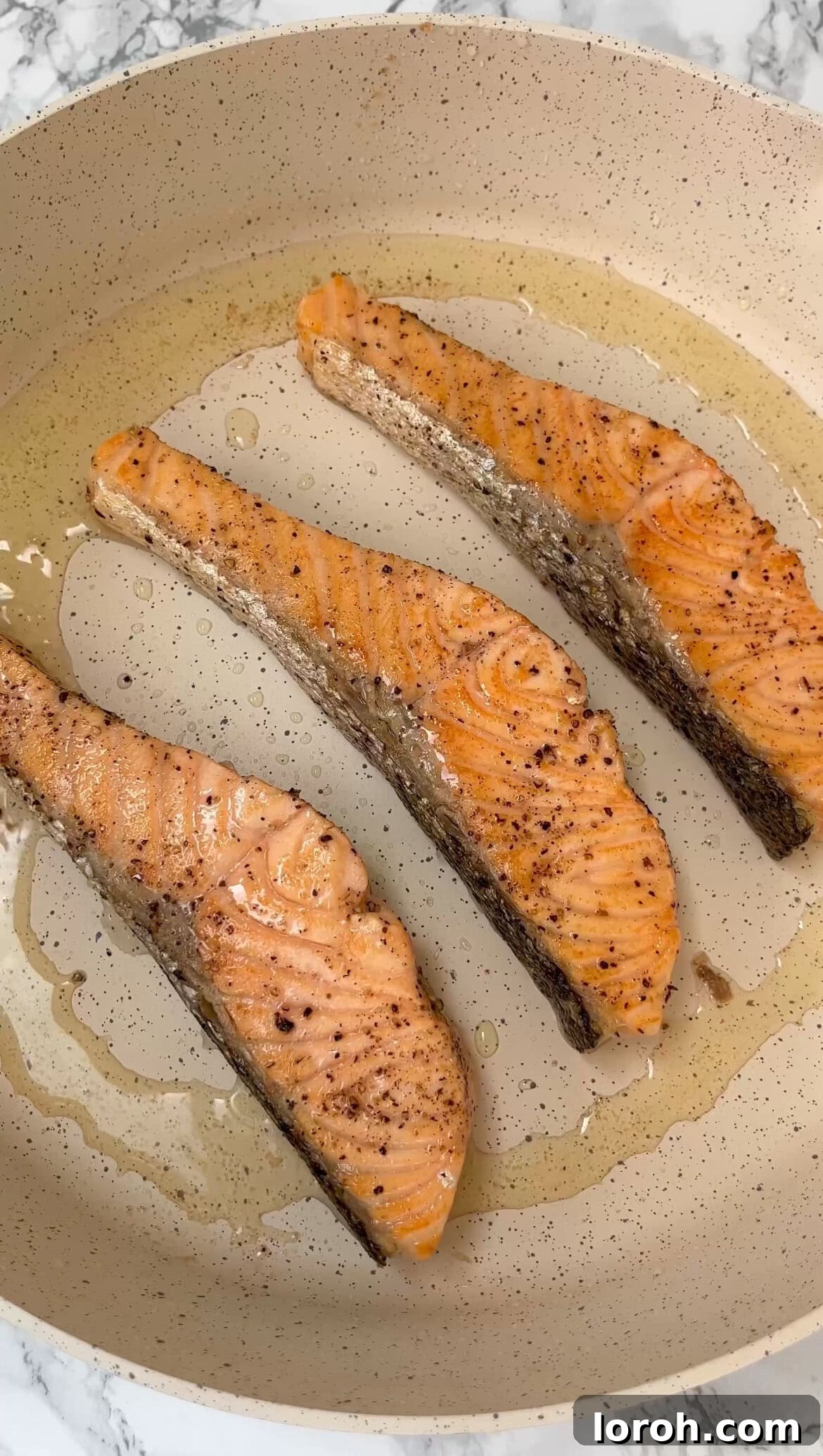
ONE: Sear the Salmon. Begin by seasoning your salmon fillets generously with salt and freshly ground black pepper. Heat a large pan over medium-high heat with a drizzle of olive oil. Once hot, place the salmon fillets skin-side down (if applicable) and sear for 2-3 minutes per side, just until they develop a beautiful golden-brown color and a slight crispness. The goal here is to sear, not to cook through completely. Remove the seared salmon from the pan and set it aside on a plate; it will finish cooking in the curry later.
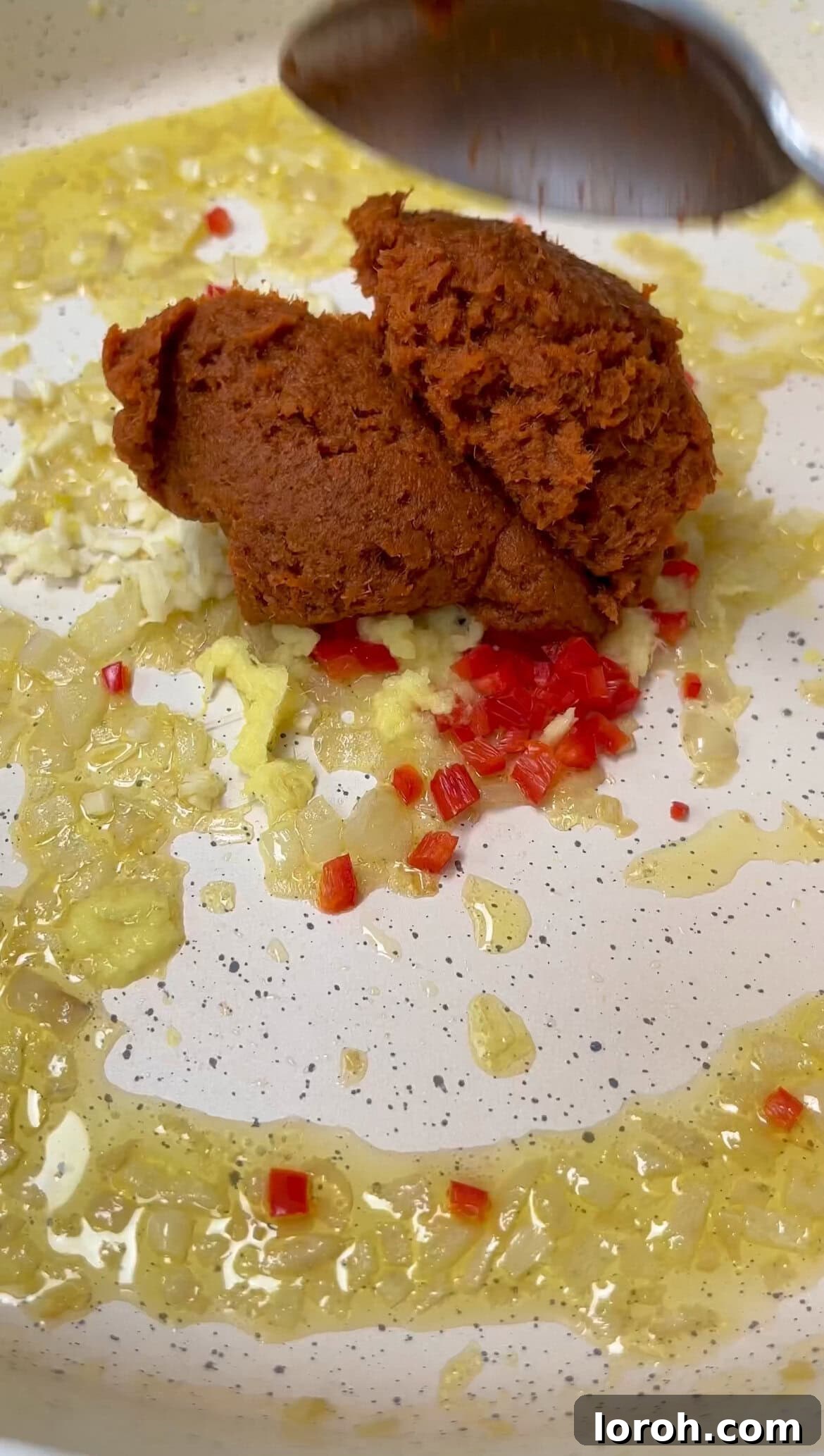
TWO: Build the Flavor Base. In the same pan, reduce the heat to medium and add a little more oil if needed. Add the finely chopped shallot and sweat it gently for about 7 minutes, stirring occasionally, until it becomes wonderfully soft and translucent. Next, stir in the crushed garlic, grated ginger, finely chopped red chili, and the red Thai curry paste. Cook this aromatic mixture for 1 minute, stirring constantly until fragrant. Then, add the cherry tomatoes. Continue to cook for a couple of minutes, stirring and gently pressing the tomatoes to encourage them to burst and release their sweet juices into the developing sauce.
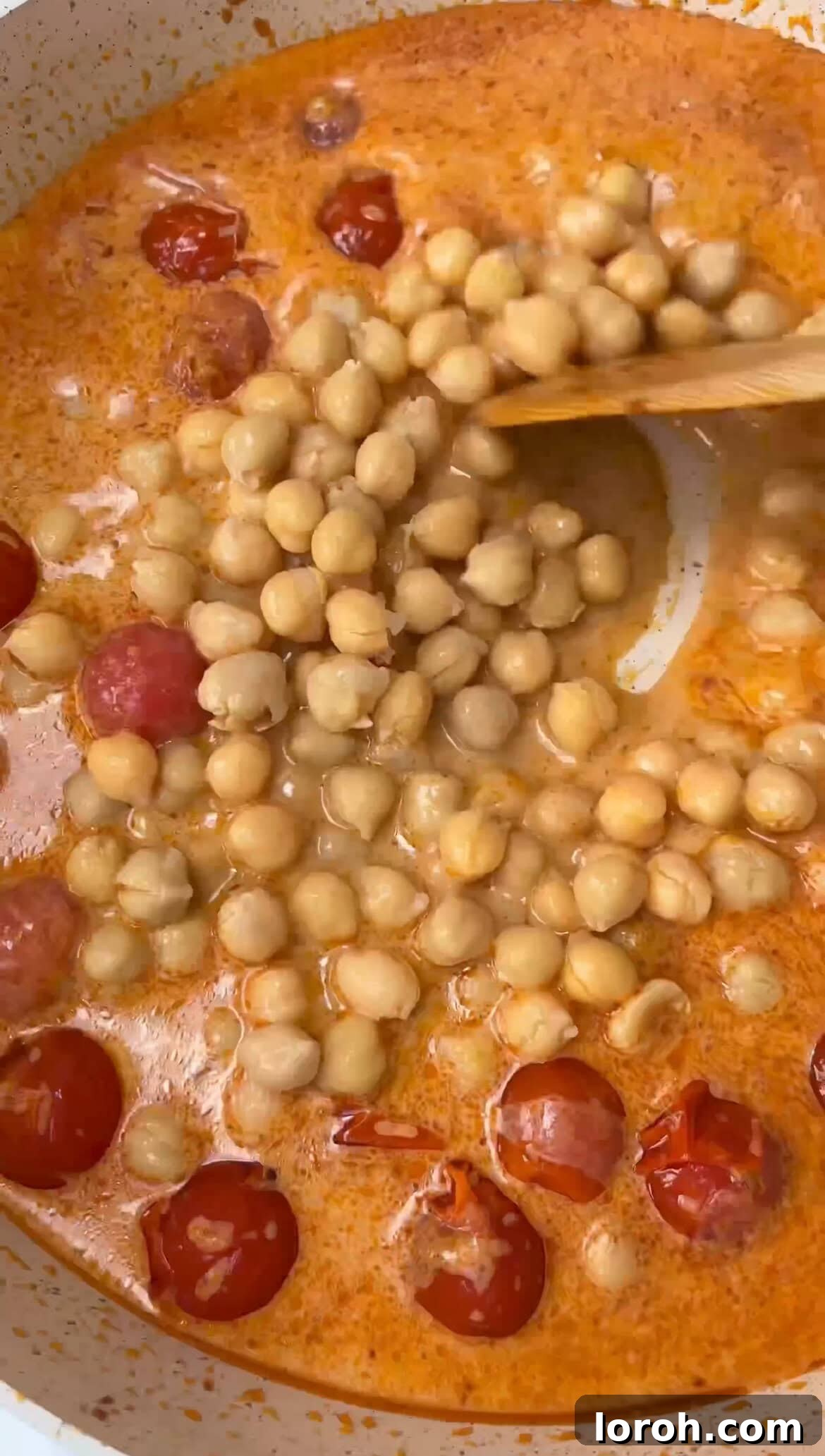
THREE: Simmer the Curry. Pour in the full-fat coconut milk, fresh lime juice, and fish sauce. Stir everything together well, ensuring the curry paste is fully incorporated into the liquid. Add the drained chickpeas to the pan. Bring the sauce to a gentle simmer, then reduce the heat to low and let it cook uncovered for about 10 minutes, allowing the flavors to meld and deepen beautifully. The sauce should thicken slightly, and the chickpeas will absorb the wonderful aromas.
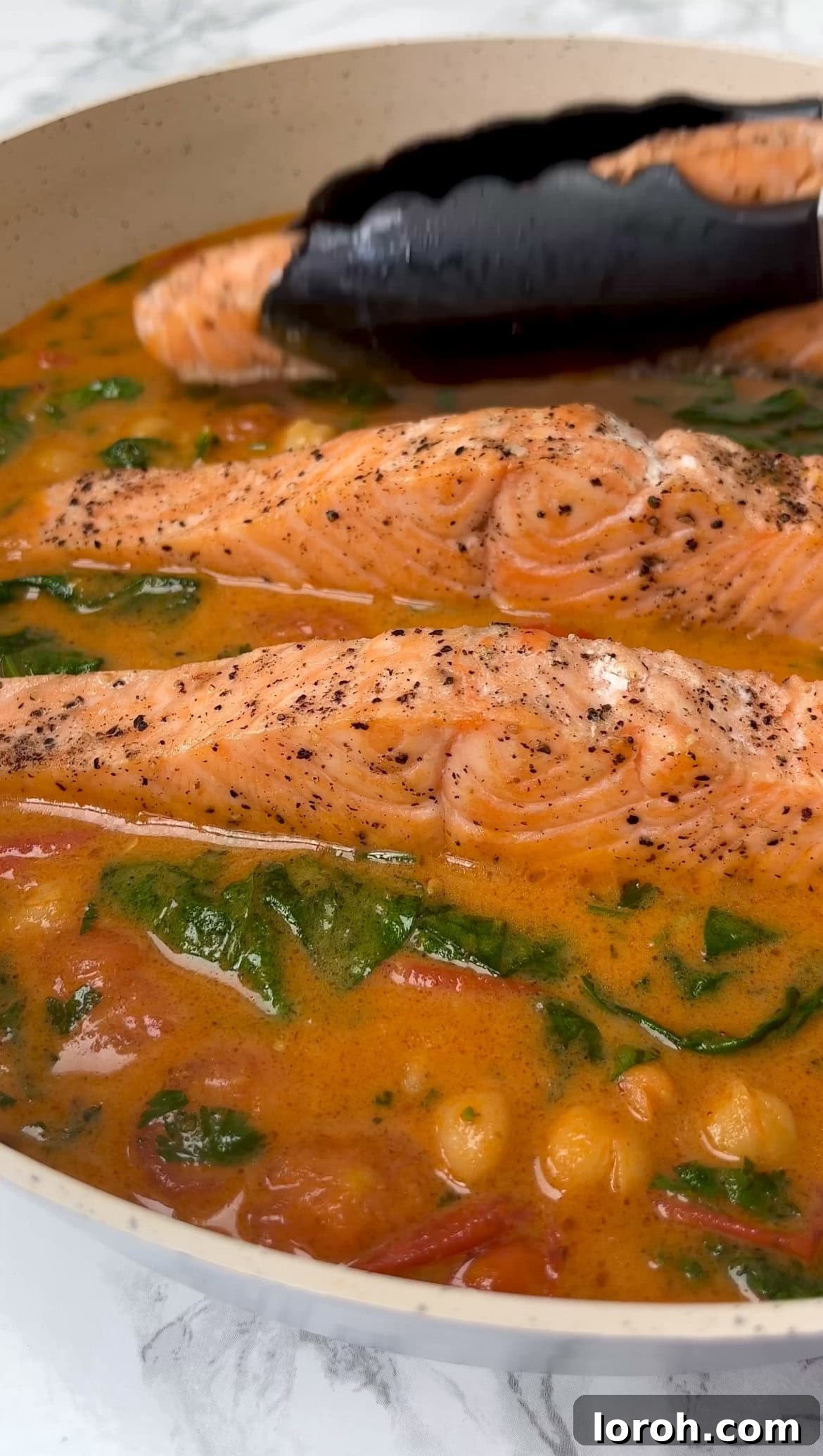
FOUR: Finish and Serve. Once the curry has simmered, turn the heat down to its lowest setting. Stir in a large handful of fresh spinach and a small handful of chopped coriander. Allow the greens to wilt into the warm sauce for just a minute or two. Gently nestle the seared salmon fillets back into the curry. Cover the pan (if you have a lid) or simply let the residual heat warm the salmon through for 3-5 minutes, until it’s cooked to your desired doneness and easily flakes with a fork. Garnish with additional fresh coriander before serving immediately.
Expert Cooking Tips for Perfect Salmon Curry
Achieving a truly outstanding One-Pan Thai Salmon Curry involves a few key considerations that can elevate your dish from good to exceptional:
Mastering Salmon Doneness: The most crucial tip for this recipe is to avoid overcooking the salmon. Remember, you initially sear the salmon simply to develop a golden crust and lock in flavor, not to cook it through entirely. Salmon cooks quickly, and it will continue to cook as it rests off the heat, and then again when it’s returned to the hot curry sauce in the final step. Overcooked salmon can become dry and tough, losing its delicate texture. Aim for it to be just cooked through and flaky when you serve, leaving it slightly undercooked when searing is a good strategy to ensure perfection.
Quality of Curry Paste: As mentioned in the ingredients, the quality of your red Thai curry paste dramatically impacts the final flavor. Investing in an authentic Thai brand, often found in Asian specialty stores, will provide a more complex and vibrant taste compared to some mainstream supermarket options. Taste the paste raw (a tiny bit!) if you’re unsure about its spice level, so you can adjust the amount of fresh chili accordingly.
Full-Fat Coconut Milk is Key: For that rich, creamy, and satisfying curry texture, always opt for full-fat coconut milk. Light coconut milk is often watered down and will result in a thinner, less flavorful sauce. The fat content contributes significantly to the body and mouthfeel of the curry.
Don’t Skip the Fresh Finishers: Lime juice and fresh coriander are more than just garnishes; they are integral flavor components that provide balance and brightness. Adding them right at the end ensures their vibrant flavors are fresh and potent, cutting through the richness of the curry and adding a refreshing lift. A final drizzle of fish sauce can also amplify the umami if desired.
Pan Size Matters: Use a pan that’s large enough to comfortably sear the salmon fillets without overcrowding them, and then to contain all the curry ingredients. A wide, shallow pan or a Dutch oven is ideal, as it allows for better evaporation and prevents the curry from simmering too slowly, which can dull the flavors.
Frequently Asked Questions About This Recipe
This curry is designed to be mildly spicy, offering a pleasant warmth rather than an overpowering burn. However, the heat level is highly customizable! You can easily adjust it by testing your red curry paste (some brands are hotter than others) and by controlling the amount of fresh red chili you add. For a milder curry, choose a mild curry paste and consider omitting the fresh chili entirely. For more heat, add an extra chili or a pinch of red pepper flakes along with the curry paste.
Yes, absolutely! This recipe is naturally both gluten-free and dairy-free, making it suitable for various dietary needs. The base ingredients like coconut milk, fish sauce, and curry paste are typically free from gluten and dairy. However, it’s always a good practice to double-check the label of your specific red Thai curry paste and fish sauce, as formulations can vary between brands, especially for hidden allergens. This dish is also pescatarian-friendly, offering a wonderful alternative to meat-based curries.
Yes, this Thai Salmon Curry makes for fantastic leftovers! To store, transfer any remaining curry to an airtight container (such as a glass or plastic food storage container) and allow it to cool completely to room temperature before refrigerating. It will keep well in the fridge for approximately 3 days. When reheating, gently warm the curry on the stovetop over low heat until heated through, or microwave in short bursts, stirring occasionally. Be careful not to aggressively boil the salmon to prevent it from becoming tough. Adding a splash of water or coconut milk can help loosen the sauce if it has thickened too much.
This versatile Thai Salmon Curry pairs wonderfully with a variety of sides. Steamed jasmine rice is a classic choice, perfect for soaking up every drop of the delicious sauce. For a lower-carb option, serve it with cauliflower rice. Warm naan bread or chapati are also excellent for scooping up the creamy curry. For added freshness and crunch, a simple side salad or a sprinkle of toasted cashews can elevate the meal.
Other Quick & Healthy Recipes You Might Enjoy
If you loved the ease and flavor of this One-Pan Thai Salmon Curry, you’re sure to find more weeknight inspiration here! Explore our collection of simple, delicious, and satisfying meals:
Try this Chicken Satay Rice Bowl for a nutty and savory delight, or my Easy Chicken Curry with Chickpeas for another comforting option. For more seafood adventures, don’t miss my Quick Fish Curry with Lemongrass and Coconut. If you’re in the mood for vibrant Asian flavors, check out Soy and Garlic Chicken or a homemade Pad Thai with Beansprouts and Chilli. And for a delightful snack or appetizer alongside your curry, whip up some Sesame Prawn Toast.
Sandwiches
The Best Coronation Chicken Sandwiches
Christmas Recipes
The Best Chocolate Salami
Easy Dessert Recipes
Chocolate Budino (Creamy Italian Pudding)
Drinks and Cocktails
Homemade Hot Chocolate Bombs
Made This Recipe and Loved It?
There’s nothing more rewarding than hearing from you! If you’ve tried this Thai Salmon Curry recipe and enjoyed it, I would truly love it if you could leave a review in the comments section below. Your feedback, any creative modifications you made, and the stories behind how this recipe fit into your life are incredibly valuable and inspiring. Also, if you decide to share a photo of your culinary creation on Instagram, please remember to tag me @desertislanddishes. It absolutely makes my day to see your beautiful renditions of my recipes!

One-Pan Thai Salmon Curry with Chickpeas and Coconut Milk
10 minutes
20 minutes
30 minutes
2
servings
Ingredients
- 2 salmon fillets
- 250 g cherry tomatoes
- 1 shallot, finely chopped
- 1 garlic clove , crushed
- 1 400g tin chickpeas, drained
- 1 x 400ml tin of full-fat coconut milk
- 2 heaped tbsp red Thai curry paste
- 1 lime, juiced
- 1 tsp fish sauce
- 2 cm piece of ginger, grated
- 1 small red chilli, finely chopped (adjust to taste)
- Olive oil
- Large handful of fresh spinach
- Small handful of fresh coriander, chopped for garnish
Instructions
-
Season the salmon fillets with salt and pepper. Sear in a hot pan with olive oil on all sides until nicely colored (do not cook through). Remove and set aside.
-
In the same pan, sweat the finely chopped shallot over medium heat for about 7 minutes until soft. Add the garlic, grated ginger, finely chopped chili, and red Thai curry paste. Stir well for 1 minute until fragrant. Add the cherry tomatoes and cook for a couple of minutes, stirring to encourage them to burst.
-
Pour in the coconut milk, lime juice, and fish sauce. Add the drained chickpeas. Bring to a gentle simmer, then reduce heat to low and let it gently cook for 10 minutes, allowing the flavors to deepen.
-
Turn the heat right down to its lowest setting. Stir in the fresh spinach and some chopped coriander until the spinach wilts.
-
Gently place the seared salmon fillets into the curry sauce. Allow them to warm through and finish cooking for 3-5 minutes, until the salmon is tender and flakes easily. Serve immediately, garnished with extra fresh coriander.
Notes
For a change, you can swap the spinach for other quick-cooking greens like pak choi or thinly sliced kale.