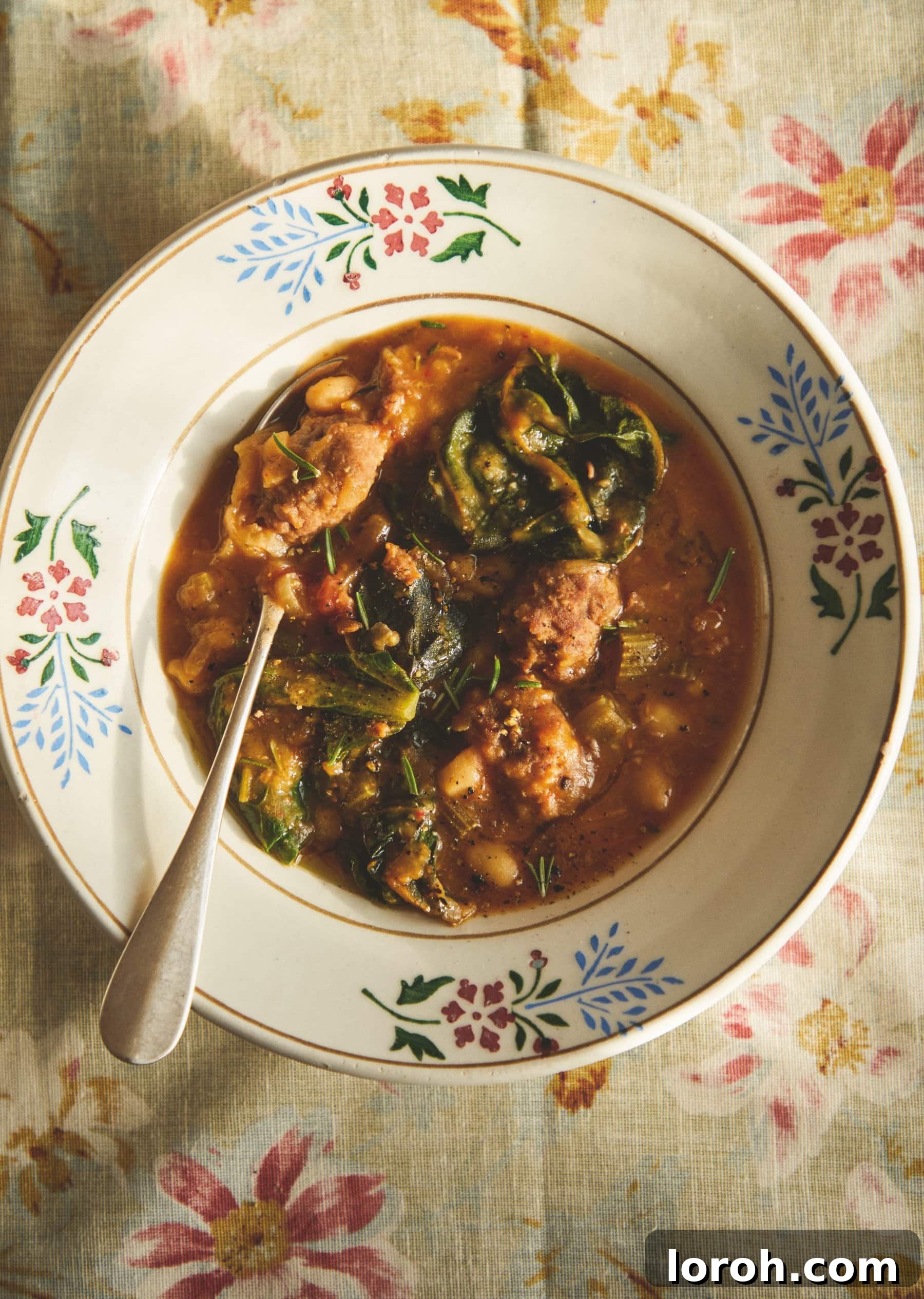
Hearty Sausage and White Bean Stew with Swiss Chard and Cinnamon: A Cozy Recipe by Julius Roberts
Few dishes offer the soul-soothing comfort of a truly great stew, especially when the weather turns cold. This recipe for a warming Sausage and White Bean Stew with Swiss Chard and Cinnamon is a perfect embodiment of that feeling – as simple to prepare as it is profoundly delicious. It transforms humble ingredients into a rich, aromatic masterpiece, making it an ideal choice for a satisfying supper or a comforting lunch on a chilly weekend. What makes this bean and sausage stew stand out is its incredible adaptability, allowing you to easily use whatever fresh ingredients you have on hand, embracing the true spirit of resourceful cooking.
This exquisite recipe comes from the celebrated chef and farmer Julius Roberts, known for his rustic, produce-forward approach to cooking. He masterfully blends the lines between a soup and a stew, creating a dish that is both substantial and elegantly refined. Roberts himself eloquently describes the allure of this stew, writing, “This is a dish I often find myself yearning for on a long, dark evening… As the beans cook they relax into the unctuous broth, studded with rosemary, chilli and cinnamon for a soothing warmth… We eat this on our knees by the fire with rain lashing against the windows. All it needs is a hunk of bread with butter thick enough to leave teeth marks.” His words perfectly capture the essence of this dish: pure, unadulterated comfort designed for sharing and savoring.
Unlocking Flavor: Essential Ingredients for Your Perfect Stew
The foundation of any exceptional dish lies in its ingredients, and this sausage stew is no exception. While the recipe is wonderfully adaptable, prioritizing quality for a few key components will elevate your culinary experience significantly. Foremost among these is the sausage itself.
If your budget allows, we strongly recommend investing in the highest quality sausages available. The recipe specifically calls for Italian sausages, which often boast a rich, savory flavor profile and a satisfying texture. You can typically find these in the chilled sections of reputable delis or specialty food stores. Alternatively, traditional British bangers, particularly those from a local butcher, make an excellent substitute. Buying from a butcher often guarantees a wide selection, including unique specialty flavors, and, crucially, a high meat content. Many supermarket sausages, upon closer inspection of their ingredient lists, contain as little as 50% pork meat. For truly robust flavor and a superior eating experience, a high meat content is absolutely key. Even if a good butcher isn’t conveniently located, or online ordering isn’t an option, always choose the best quality pork sausages you can find with minimal fillers.
Beyond the sausages, the beauty of this stew lies in the versatility of its other components, allowing for creative substitutions without compromising on taste:
- High-Quality Italian Sausages: Or a premium pork sausage with good meat content.
- Fresh Garlic: Essential for aromatic depth.
- Celery: Adds a subtle, earthy undertone to the base.
- Brown Onions: Sweeten and deepen the stew’s flavor as they slowly caramelize.
- Olive Oil: The cooking medium, use a good quality extra virgin for flavor.
- Chilli Flakes: A generous pinch for warmth, not overpowering heat, to complement the other spices.
- Fresh Rosemary: Julius suggests rosemary, and we agree it brings a delightful piney aroma. Thyme or sage are also viable alternatives, though rosemary’s robust fragrance truly shines here.
- Bay Leaves: Fresh or dried, these infuse a subtle, herbaceous note into the broth.
- Cinnamon Stick: The unexpected star! It provides a soothing, warming depth that beautifully marries with the savory elements.
- Madeira, Sweet Sherry, Beer, or White Wine: This ingredient is crucial for deglazing the pan and adding a complex layer of flavor. We found Madeira imparted a wonderfully rich, slightly sweet note, enhancing the stew’s overall depth.
- Tinned Plum Tomatoes: Whole plum tomatoes are preferred as they break down beautifully, melting into the stew to create a rich, smooth base. If only chopped tomatoes are available, use about half a tin, or consider high-quality finely chopped varieties like Mutti for a similar effect. Any unused portion freezes well for future culinary adventures.
- White Beans (Jarred or Tinned): A 700g jar or two 400g tins. Any mix of butter beans or cannellini beans works wonderfully. We achieved excellent results using premium jarred white beans from Bold Bean Co., which maintain a lovely texture.
- Chicken Stock: Freshly made chicken stock is always best for an unparalleled richness, but a good quality store-bought stock will also work.
- Swiss Chard or Cavolo Nero: These leafy greens add color, nutrition, and a slight bitterness that balances the richness of the stew. Spinach or even lemon chard could also be fantastic alternatives.
Why This Recipe Shines: Our Experience with Julius Roberts’ Stew
Cooking Julius Roberts’ Sausage Stew was an incredibly rewarding experience, and we discovered several aspects that truly made it stand out. It’s not just a recipe; it’s an invitation to a warm, sensory kitchen adventure.
Firstly, the recipe is remarkably easy to follow. The steps are intuitive, allowing even less experienced cooks to create a sophisticated dish with confidence. From the moment the ingredients hit the pan, the kitchen becomes enveloped in the most fantastic aromas – a testament to the beautiful blend of rosemary, garlic, and that intriguing hint of cinnamon. This aromatic experience alone is enough to lift spirits on a gloomy day.
We particularly appreciated Julius’s thoughtful inclusion of ingredient options, such as various wines or greens. This flexibility is a game-changer, fostering confidence in adapting the recipe based on what’s already in the fridge or pantry, minimizing food waste and encouraging creative cooking. The fact that this stew cooks entirely on the hob is another significant advantage. It frees up the oven, leaving it perfectly available and at the right temperature to bake a rustic loaf of bread to serve alongside the stew – an absolute must for soaking up every last drop of the rich, savory broth.
One aspect to consider, especially if you’re not growing your own produce, is the suggested quantity of greens. The recipe calls for a substantial amount, which is fantastic if you have a bountiful harvest. However, if you’re purchasing greens from a farm shop or supermarket, or if your cooking pot isn’t exceptionally large, you might find the volume a little overwhelming. We used cavolo nero and opted to halve the amount, which felt just right in the finished dish, ensuring the greens integrated beautifully without dominating. For an easier wilt, you can also add them in batches.
Regarding the sausages, as mentioned, the recipe specifies Italian sausages, which typically have a firmer texture and longer fridge life. They can sometimes be a bit challenging to source depending on your local deli options. In our testing, we experimented with alternatives. We tried a mixture of Field & Flower Pork and Fennel Sausages and South Devon Chilli Sausages. The pork and fennel variety delivered a perfect flavor complement to the stew, though they tended to break apart a little during cooking. The pork and chilli sausages held their form wonderfully, creating delightful little “sausage meatballs,” but their flavor profile, while good, wasn’t quite the ideal match for the stew’s overall character. Our recommendation remains: seek out the best quality pork sausages you can find, with as few added ingredients as possible, if authentic Italian sausages are unavailable. The integrity of the meat and its natural flavor will make all the difference.
Frequently Asked Questions About This Hearty Stew
Here are some common questions about this comforting Sausage and White Bean Stew:
Is this sausage stew recipe gluten-free?
Yes, generally this dish is gluten-free. However, it’s crucial to check the ingredients list of the sausages you choose, as some brands may contain fillers or binders that include gluten. Always double-check if gluten-free is a dietary requirement for you or your guests.
Can I freeze this stew?
Absolutely! This recipe freezes exceptionally well, making it perfect for meal prepping or having a quick, wholesome meal on standby. Allow the stew to cool completely before portioning it into airtight containers or freezer bags. When reheating, ensure it is thoroughly defrosted in the refrigerator overnight and then heated until piping hot all the way through before serving.
How long will any leftovers keep?
Leftovers of this delicious stew will keep beautifully in an airtight container in the refrigerator for up to 3 days. We found that even a small amount can be transformed into another meal; a leftover half-portion topped with a jammy fried egg and a handful of fresh spinach wilted into it makes for a fantastic and fulfilling lunch.
Can I make this stew vegetarian?
While the original recipe centers around sausage, you can certainly adapt it for a vegetarian diet. Replace the sausages with vegetarian sausages or hearty mushrooms (like cremini or portobello) for umami. Use vegetable stock instead of chicken stock. You might also add smoked paprika for a hint of smoky flavor that sausage typically provides.
What can I serve with this stew?
Julius Roberts’ suggestion of a “hunk of bread with butter thick enough to leave teeth marks” is truly the best accompaniment! Crusty bread, sourdough, or even a simple baguette is perfect for soaking up the rich broth. A fresh green salad with a light vinaigrette would also offer a lovely contrast and cut through the richness of the stew.
Meet the Chef: Julius Roberts and “The Farm Table”

The Farm Table by chef and farmer Julius Roberts is more than just a cookbook; it’s a captivating journey into the heart of seasonal cooking and sustainable living. This isn’t a book you merely glance at for recipes; it’s one to be read cover-to-cover, absorbing Julius’s beautiful stories of seasonality and farm life before you even step into the kitchen. Roberts began his culinary career as a chef, working for a year at London’s renowned Noble Rot. During this demanding yet immensely rewarding period, he quickly realized that the fast-paced city life was unsustainable for him in the long term.
Driven by a profound connection to nature and a desire for a more grounded existence, Julius made the significant move out of London. What started as a modest smallholding with just four pigs has blossomed into a thriving farm, now home to over 40 goats and more than 100 ewes. This hands-on experience, nurturing animals and working with the land, deeply informs his cooking philosophy, emphasizing respect for ingredients and the rhythm of the seasons.
His debut cookbook, The Farm Table, published in 2023, is a true reflection of his journey and ethos. It’s packed with gorgeous recipes that are classic yet innovative, always putting fresh, high-quality produce at the forefront. Julius has a unique way of re-imagining even familiar recipes, presenting them with a modern twist that makes you eager to try them. The recipes themselves are written in an accessible, friendly style, which genuinely makes the act of cooking them feel wonderfully relaxing and enjoyable. His personal anecdotes woven throughout the book further enrich the experience, inviting readers into his world.
Beyond this fantastic Sausage and White Bean Stew, we’ve had the pleasure of trying and falling in love with several other recipes from The Farm Table. The Braised Short Ribs (pg 77) are an absolute triumph of slow-cooked perfection, and the Epic Tarragon Roast Chicken (pg 275) is a testament to how simple ingredients can create extraordinary flavor. We are also eagerly anticipating trying the vibrant Egg Curry with Coconut Sambol (pg 62), the comforting Spinach, Crème Fraîche and Smoked Trout Pasta (pg 122), and the incredibly fresh Wild Garlic and Asparagus Carbonara (pg 123). Each recipe promises a delicious exploration of seasonal ingredients and a taste of Julius Roberts’ authentic farm-to-table approach.
You can order your copy of The Farm Table here (Ebury Press, £27).
The Recipe: Hearty Sausage Stew with Beans, Swiss Chard and Cinnamon
Hearty Sausage Stew with Beans, Swiss Chard and Cinnamon
By: Julius Roberts
A warming sausage stew by Julius Roberts, featuring rich beans, earthy Swiss chard, and a unique hint of cinnamon. Simple to prepare, yet allows flavors to slowly meld into a wonderfully comforting dish. Easily adaptable to your pantry.
- Prep Time:
- 10 mins
- Cook Time:
- 45 mins
- Total Time:
- 55 mins
- Servings:
- 4 servings
Ingredients
- 500 g Italian sausages (or best quality pork sausages)
- 3 garlic cloves, finely sliced
- 2 celery sticks, finely sliced
- 2 brown onions, finely sliced
- 3 tbsp olive oil
- 1 generous pinch of chilli flakes (for warmth, not prickly heat)
- 3 sprigs of fresh rosemary (sage or thyme also work well)
- 2 bay leaves (fresh or dried)
- 1 stick of cinnamon
- 120 ml Madeira, sweetish sherry, beer, or white wine
- 2 plum tomatoes from a tin (or 1/2 tin finely chopped tomatoes)
- 1 x 700g jar white beans, or 2 x 400g tins (cannellini or butter beans recommended)
- 750 ml chicken stock (fresh is best)
- 250 g Swiss chard or cavolo nero (can substitute spinach or lemon chard; adjust quantity if desired)
Instructions
- Prepare the Sausages: Begin by carefully slicing open the skin of the sausages along their length. Remove the meat from the casings and roughly break it into small, meatball-sized pieces. This allows the sausage to brown nicely and release its delicious fats into the stew.
- Chop Aromatics: Finely slice the garlic cloves, celery sticks, and brown onions. Uniform slices ensure even cooking and flavor distribution.
- Brown Sausage and Infuse Flavors: Heat a large, heavy-based pan or Dutch oven over medium-high heat. Drizzle in the olive oil. Once the oil is shimmering, add the broken-up sausage pieces. Fry for several minutes, stirring occasionally, until the sausage is nicely browned and has released some of its fat. This step builds the first layer of flavor.
- Slow Aromatic Infusion: Reduce the heat to very low. Add the finely sliced garlic, chilli flakes, rosemary sprigs, bay leaves, and the cinnamon stick to the pan with the sausage. Stir gently. The goal here is to slowly infuse the oil with these incredible aromatics, so maintain a low heat and a gentle sizzle, ensuring the garlic doesn’t burn or take on too much color.
- Deglaze and Build Base: When the aromatics have softened and released their fragrance, pour in the Madeira (or chosen wine/sherry/beer). If your garlic started to color quickly, you can add the liquid a little earlier to cool down the pan. With a wooden spoon, vigorously scrape up all the delicious browned bits (fond) from the bottom of the pan – this is where so much flavor resides!
- Soften Vegetables and Tomatoes: Add the sliced onions and celery to the pan. Crush the tinned plum tomatoes directly into the stew using your hands or the back of a spoon. Season generously with salt and pepper. Mix everything well and continue to cook on a gentle heat for 10–12 minutes. During this time, the onions will become wonderfully sweet and softened, and the tomatoes will begin to break down, forming a rich base.
- Simmer with Beans and Stock: Stir in the white beans and pour in the chicken stock. Bring the stew to a gentle simmer. Reduce the heat slightly and let it cook for approximately 20–30 minutes, uncovered. This simmering time allows the broth to thicken slightly and all the individual flavors to meld together into a harmonious, comforting whole.
- Incorporate the Greens: While the stew simmers, prepare your Swiss chard or cavolo nero. Strip the tough stalks from the leaves and chop the stalks into 2cm pieces. Add these chopped stalks to the simmering broth and cook for a few minutes until they begin to soften. Then, add the chard leaves (or cavolo nero) and stir them through. Place a lid on the pan, turn off the heat, and let the residual warmth wilt the greens for about 5 minutes.
- Final Seasoning and Serve: Remove the lid and give the stew a final taste. This is your chance to adjust the seasoning: you might want to add a touch more chilli flakes for extra warmth, or more salt if the broth needs richer depth.
- Enjoy: Ladle the hearty stew generously into warm bowls. Serve immediately with thick, lavishly buttered slices of crusty bread, perfect for dunking and savoring every last spoonful.
Notes
This recipe has been extracted from The Farm Table by Julius Roberts (Ebury Press, £27). Photography by Elena Heatherwick.
Explore More Delicious Recipes
If you’ve enjoyed the wholesome goodness of this Sausage and White Bean Stew, you’ll surely love exploring these other comforting and flavorful dishes:
- Tomato Butter Beans on Toast with Feta: A quick and satisfying meal, perfect for a hearty breakfast or light lunch.
- Healthy Creamy Tomato and Chickpea Stew: A vibrant, plant-based option that’s packed with flavor and incredibly easy to make in one pot.
- Easy Poached Fish with Brothy Tomato Beans: A light yet deeply flavorful dish, marrying delicate fish with a rich, tomatoey bean broth.
- Simmered White Fish in Spicy Tomato Sauce: A Mediterranean-inspired dish where flaky white fish is gently cooked in a robust and aromatic tomato sauce.
- Dhal with Crispy Sweet Potatoes: A fragrant and warming lentil dish, elevated with crispy sweet potatoes and a hint of coconut, perfect for a comforting vegetarian meal.