
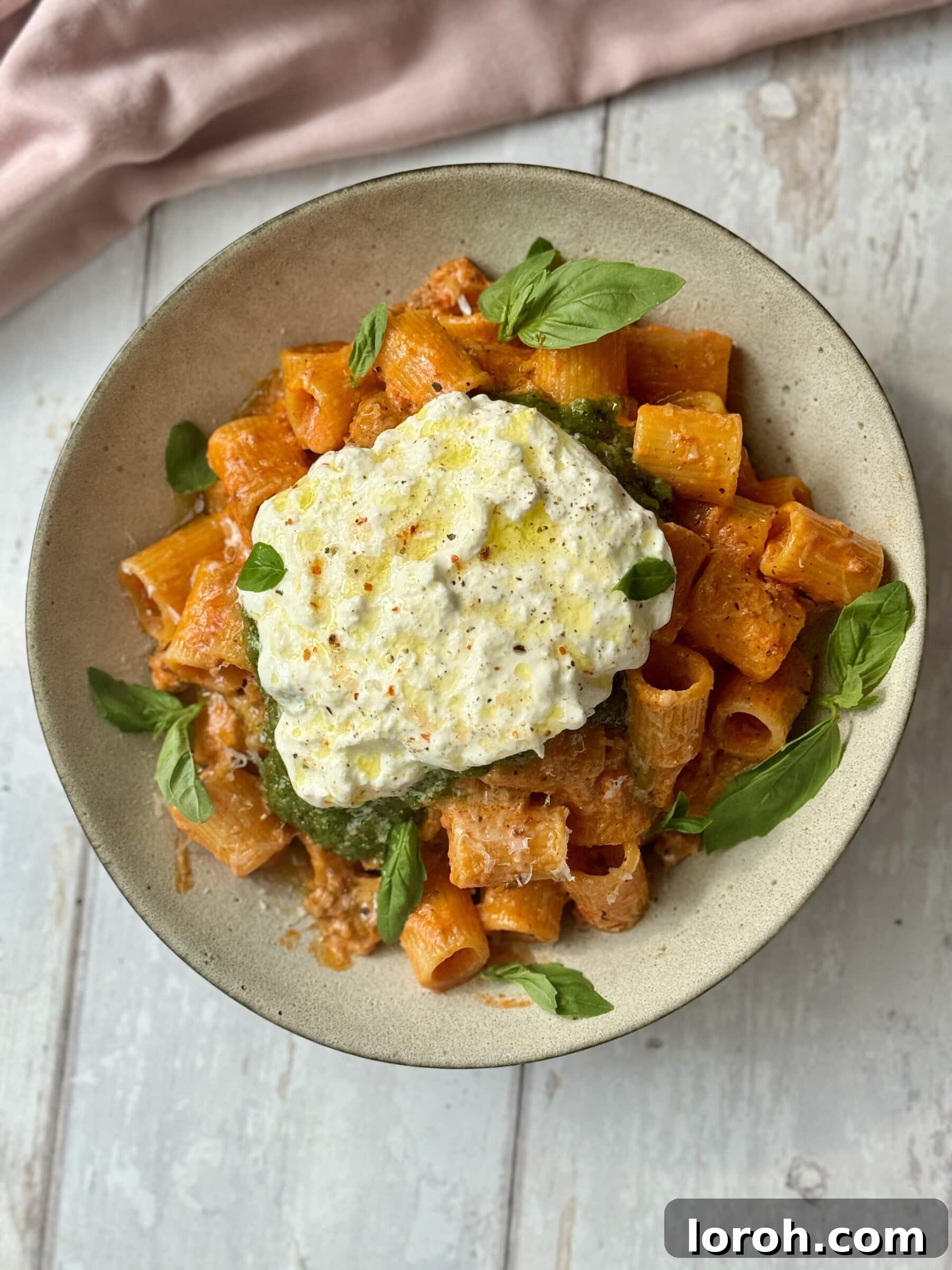
Prepare to elevate your weeknight dinner routine with this sensationally delicious Chicken and Vodka Pasta. Far from your average pasta dish, this recipe is my carefully crafted version of the internet-famous ‘vodka pasta’ or ‘penne alla vodka’, reimagined with an exciting twist. It’s incredibly simple to prepare, yet each bite explodes with layers of rich flavor and delightful textures. Envision perfectly al dente rigatoni pasta, generously coated in a luxurious, subtly spiced tomato sauce. Swirled through this vibrant sauce are delectable pieces of crispy chicken sausage meat, adding a savory depth and satisfying crunch that sets this dish apart.
But the indulgence doesn’t stop there. A bright, zesty drizzle of homemade cheesy, garlicky pistachio pesto cuts through the richness, adding an unexpected refreshing zing. Crowned with creamy, delicate burrata cheese and a scattering of fresh basil leaves, then finished with a sprinkle of freshly grated Parmesan, this dish transforms a casual meal into an elevated dining experience. It’s the kind of pasta that looks sophisticated but comes together with surprising ease, making it perfect for busy weeknights or special occasions alike.
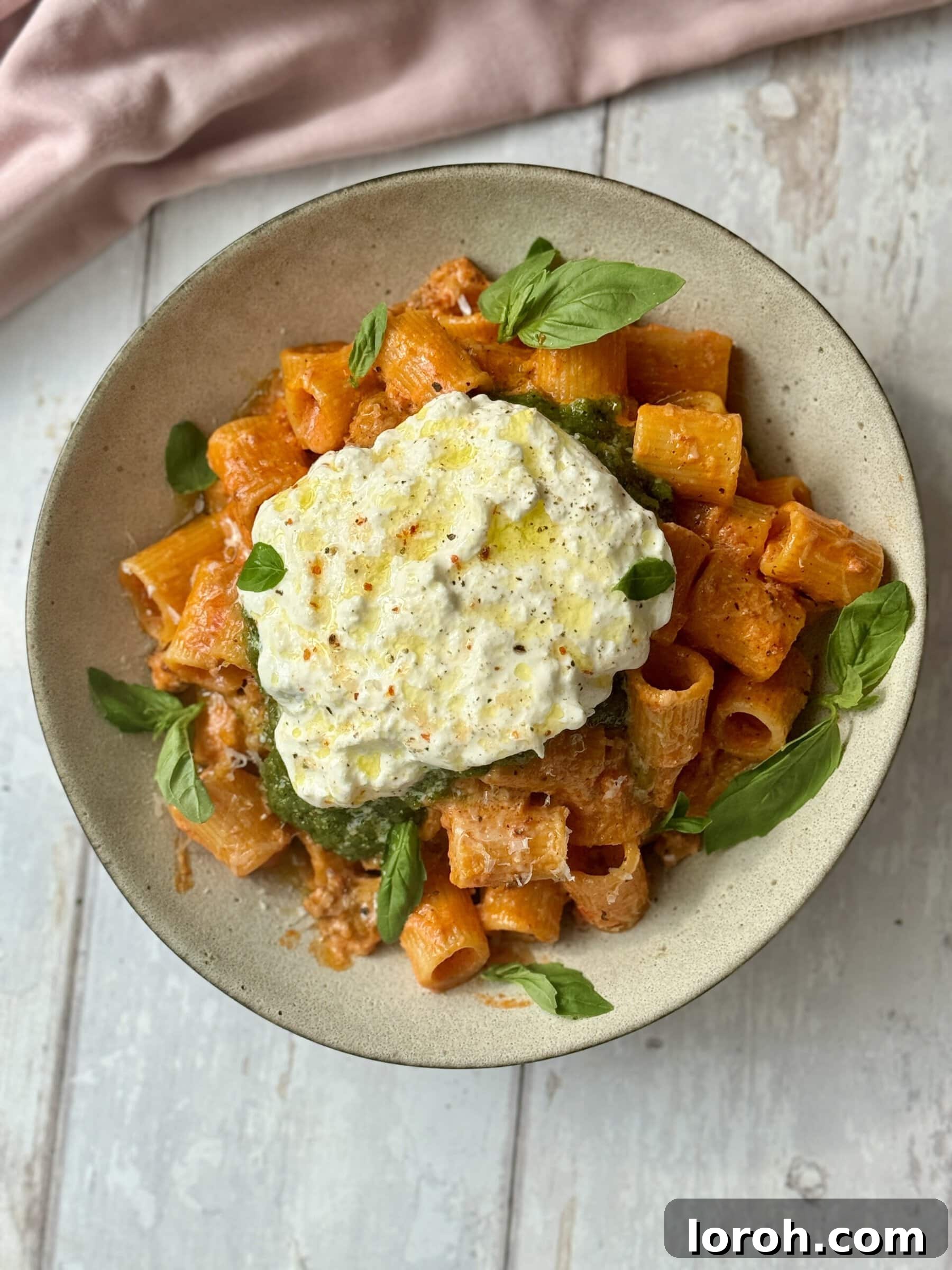
One of the many reasons I adore this chicken and vodka pasta is its incredible ability to look complex and impressive, while actually being remarkably straightforward to execute. The secret lies in a clever interplay of textures and carefully chosen toppings that create a gourmet feel without the fuss. If you’ve ever tried my pistachio pesto pasta, you’ll know just how effortlessly a homemade pesto comes together in a blender – literally in seconds! This simple addition instantly elevates your cooking to expert levels, impressing anyone at your table. Similarly, my creamy sausage pasta showcases the genius of using sausage meat as a shortcut to infuse immense flavor and texture, particularly those irresistibly crispy bits that develop during cooking.
Don’t hesitate to unleash your creativity when preparing this chicken and vodka pasta. While the core flavors echo my popular spicy sausage pasta bake with ‘nduja, the use of chicken sausage meat provides a slightly lighter profile, making it a perfect choice for those seeking a less intense, yet equally satisfying, meal. The bright, lemon-infused pistachio pesto delivers a refreshing counterpoint, adding a vibrant finish that truly wakes up the palate. Of course, if you have a preference for pork, feel free to substitute with high-quality pork sausages – the dish will be just as delicious, offering its own unique richness.
Why You’ll Fall in Love with This Chicken and Vodka Pasta Recipe
- It’s incredibly quick and easy. This recipe is a game-changer for busy weeknights, consistently delivering a deeply satisfying meal in under 40 minutes from start to finish. Say goodbye to lengthy cooking sessions without compromising on taste.
- It offers unparalleled comfort and flavor. Imagine tender rigatoni, perfectly coated in a luscious, creamy, and subtly spicy tomato-vodka sauce. Each forkful is enhanced by irresistible crispy chicken sausage meat, creating a symphony of textures. The dish is then beautifully finished with bright, garlicky pesto, decadent creamy burrata, fresh aromatic basil, and a generous sprinkle of umami-rich Parmesan cheese – pure comfort in a bowl.
- It’s wonderfully versatile and customizable. This recipe serves as an excellent canvas for your culinary imagination. Feel free to experiment with different pasta shapes, integrate additional vegetables into the sauce for extra nutrition and flavor, or swap out the cheeses to suit your preference.
- It’s easily adaptable for vegetarian and vegan diets. With simple ingredient swaps, this sensational pasta can be enjoyed by everyone. Substitute chicken sausages with your favorite plant-based alternative or hearty vegetables, and use vegan cheese and cream to create an equally delicious plant-based version.
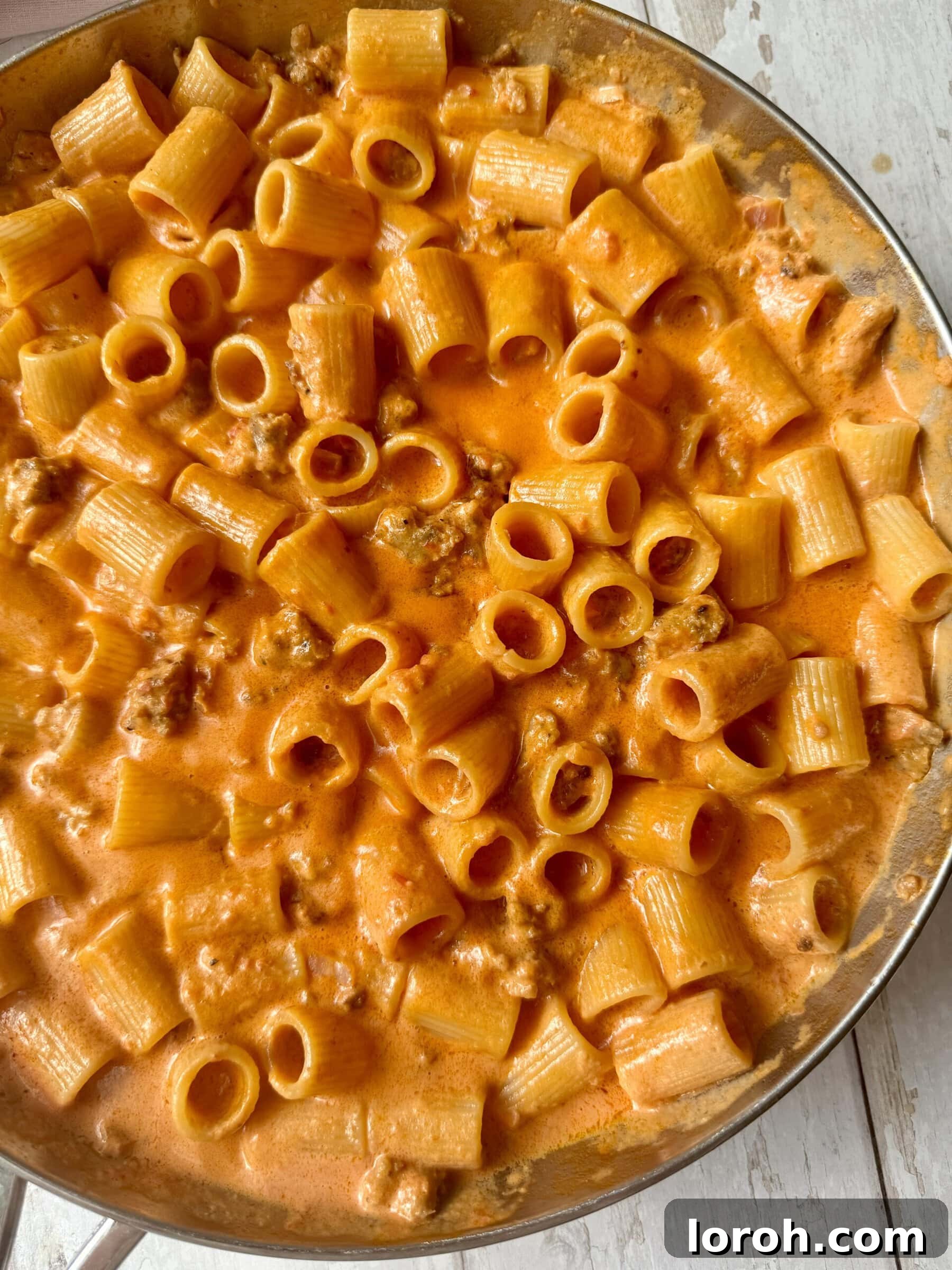
Essential Ingredients for Your Chicken and Vodka Pasta
For the full list of ingredients with precise measurements, please refer to the printable recipe card located at the very bottom of this post!
Chicken Sausages: The quality of your sausages truly matters here. Opt for the finest chicken sausages you can find, as their flavor will significantly impact the overall taste of your pasta. Chicken sausages offer a milder, more delicate flavor profile compared to pork, allowing the other robust flavors of the sauce to shine through. Their lean nature also contributes to a slightly lighter feel, making this dish both satisfying and less heavy. Removing them from their casings allows them to crumble beautifully and crisp up perfectly.
Vodka: This isn’t just a fancy addition; vodka is a pivotal ingredient in this chicken and vodka pasta. It plays a crucial role in unlocking and enhancing the aromatic compounds of the tomatoes, deepening their flavor. Furthermore, vodka aids in emulsifying the sauce, creating that signature silky-smooth and cohesive texture that makes vodka pasta so beloved. Don’t worry about the alcohol content; it cooks off during simmering, leaving behind only its flavor-boosting properties and adding depth to the sauce.
Tomato Purée (or Paste): This concentrated tomato product is a powerhouse of flavor, intensifying the rich, savory essence of the tomato in your pasta sauce. It adds a deep, umami note that canned chopped tomatoes alone can’t achieve, creating a foundational richness. For a slightly different but equally delicious twist, you can substitute tomato purée with high-quality sundried tomato paste, which will impart a more intense, sweet, and tangy sun-dried tomato flavor.
Chilli Paste: For those who appreciate a touch of heat, chili paste adds a wonderful warmth and subtle kick to the sauce. The amount can be adjusted to your personal preference, allowing you to control the spice level from mild to fiery. If you prefer using fresh ingredients, half a red chili, finely chopped, works beautifully. For a less intense heat, remember to deseed the chili. As a garnish, a sprinkle of dried chili flakes at the end allows everyone to customize their spice level at the table.
Chopped Tomatoes (Canned): A staple in any well-stocked pantry, canned chopped tomatoes are incredibly versatile and form the heart of our sauce. They provide the fresh, bright tomato base that defines this dish. While premium brands like Mutti offer exceptional flavor and quality, they can be a bit pricier. Feel free to use your preferred brand; the key is a good quality diced or chopped tomato that provides a fresh, bright tomato base to the sauce.
Rigatoni Pasta: While the recipe suggests rigatoni, this dish is forgiving when it comes to pasta choice. Rigatoni, with its wide, ridged tubes, is excellent for catching and holding the creamy sauce and crispy sausage bits. Its robust shape ensures it stands up well to the rich sauce without getting lost. However, feel free to use your favorite pasta shape like penne, ziti, or giant fusilli. The choice of pasta can significantly influence the eating experience, so pick one that you love and that you feel will best cradle the delectable sauce.
Double Cream: The secret to the sauce’s luxurious, velvety texture. Double cream (known as heavy cream or whipping cream in North America) adds richness and body, transforming the tomato base into a beautifully emulsified, restaurant-quality sauce. It mellows the acidity of the tomatoes and creates that irresistible creaminess that defines a great vodka pasta, making every mouthful an indulgence.
Parmesan Cheese: Freshly grated Parmesan is non-negotiable for its salty, nutty, and umami-rich flavor that adds incredible depth to the finished dish. It’s incorporated into the sauce to enrich it and also served generously as a garnish, providing a final flourish of savory goodness that brings all the flavors together.
Fresh Basil: A burst of freshness and vibrant color. Basil’s sweet, peppery notes complement the tomato and cream sauce beautifully, adding an aromatic lift to the entire dish. Always use fresh basil for the best results, as dried basil won’t offer the same bright, herbaceous flavor or visual appeal.
Pistachio Pesto (Optional, but highly recommended): While optional, the homemade pistachio pesto truly elevates this dish, providing a bright, garlicky, and slightly nutty counterpoint. It’s incredibly easy to make from scratch and adds a refreshing zing and herbaceous aroma that balances the rich pasta. If short on time, a good quality store-bought fresh pesto can be used, but homemade is always superior for vibrant flavor.
Burrata Cheese (Optional, but divine): This creamy Italian cheese adds a luxurious, melt-in-your-mouth quality to the pasta when served on top. Its soft, rich interior contrasts beautifully with the warm pasta, offering a cool, milky burst with every bite. It transforms the dish from great to truly extraordinary, adding a touch of gourmet decadence.
Creative Substitutions and Delicious Variations
This Chicken and Vodka Pasta recipe is incredibly flexible, allowing you to tailor it to your taste preferences or whatever ingredients you have on hand. Don’t be afraid to get creative and make it your own!
Nuts for Pesto: While pistachios offer a unique and delightful flavor profile for the pesto, many other nuts work wonderfully. Consider using toasted almonds, hazelnuts, cashews, or walnuts for different nuances. Each will lend a distinct character to your pesto. Pine nuts are the most traditional choice for classic pesto and deliver a familiar, rich flavor, but they can be quite expensive. Whichever nut you choose, remember that toasting them before blending is a crucial step – it deepens their flavor significantly, adding a nutty complexity and aroma that raw nuts simply can’t provide.
Chilli Paste Alternatives: If you’re looking to explore different layers of spice and flavor, there are fantastic alternatives to standard chili paste. ‘Nduja, a spreadable spicy Italian cured sausage, brings a delicious smoky, rich heat that is truly exceptional and adds a gourmet touch. Chipotle paste offers a distinct Mexican-inspired smokiness, while gochujang, a Korean fermented chili paste, provides a unique sweet, salty, and smoky umami depth. For customizable heat, simply sprinkle dried chili flakes at the end of cooking or at the table, allowing each diner to adjust the spice level to their liking without altering the main sauce.
Vodka Substitutes (or Omission): The vodka contributes to the sauce’s emulsification and flavor enhancement, but it’s not strictly essential if you prefer to omit it. Other spirits like a dry gin, dry vermouth, or even a dry sherry can provide interesting aromatic complexity and subtle flavor nuances. If you’re aiming for a non-alcoholic chicken and tomato pasta, simply leave out the vodka entirely. To ensure the sauce maintains its desired consistency, add a little extra pasta water at the end to loosen it if needed. The dish will still be incredibly flavorful and comforting without the alcohol.
Pasta Choices: This chicken and vodka pasta is highly adaptable to various pasta shapes. Hearty shapes like giant fusilli, conchiglie (shells), or the recommended rigatoni are excellent for capturing the rich, creamy sauce and crispy sausage bits within their nooks and crannies. Their substantial form ensures a satisfying bite. While dried pasta is typically used for its convenience and consistent texture, fresh pasta can also be a delightful alternative, offering a softer, more delicate mouthfeel (if you’re feeling ambitious, try my homemade pasta dough recipe). Just be sure to adjust the cooking time accordingly, as fresh pasta cooks much faster than dried.
Pesto Convenience: Making your own pesto, especially my pistachio version, is a quick and rewarding experience that I truly recommend trying at least once. It takes mere seconds in a blender and offers unparalleled freshness and vibrant flavor. However, when time is a constraint, a good quality store-bought fresh pesto can be a lifesaver. Always opt for fresh pesto found in the chilled section of your supermarket (usually near the fresh pasta), rather than jarred shelf-stable varieties, for a significantly superior taste and texture that complements this dish beautifully as a topping.
Sausage Swap: This is a chicken and vodka pasta recipe, so chicken sausages are the star, chosen for their lighter flavor. Brands like Heck offer excellent quality options. However, if you prefer the classic richness of pork, feel free to use high-quality pork sausages instead. They will lend a different but equally delicious flavor profile to the sauce. For a vegetarian or vegan version, simply swap for plant-based sausages (like mushroom or bean-based varieties) or omit them altogether and add more vegetables such as sautéed mushrooms, bell peppers, or zucchini.
Mastering the Art: Step-by-Step Guide to Chicken and Vodka Pasta
Below is a detailed step-by-step guide with accompanying images to help you master this delicious pasta. For the full, precise recipe details, scroll down to the printable recipe card at the bottom of the page.
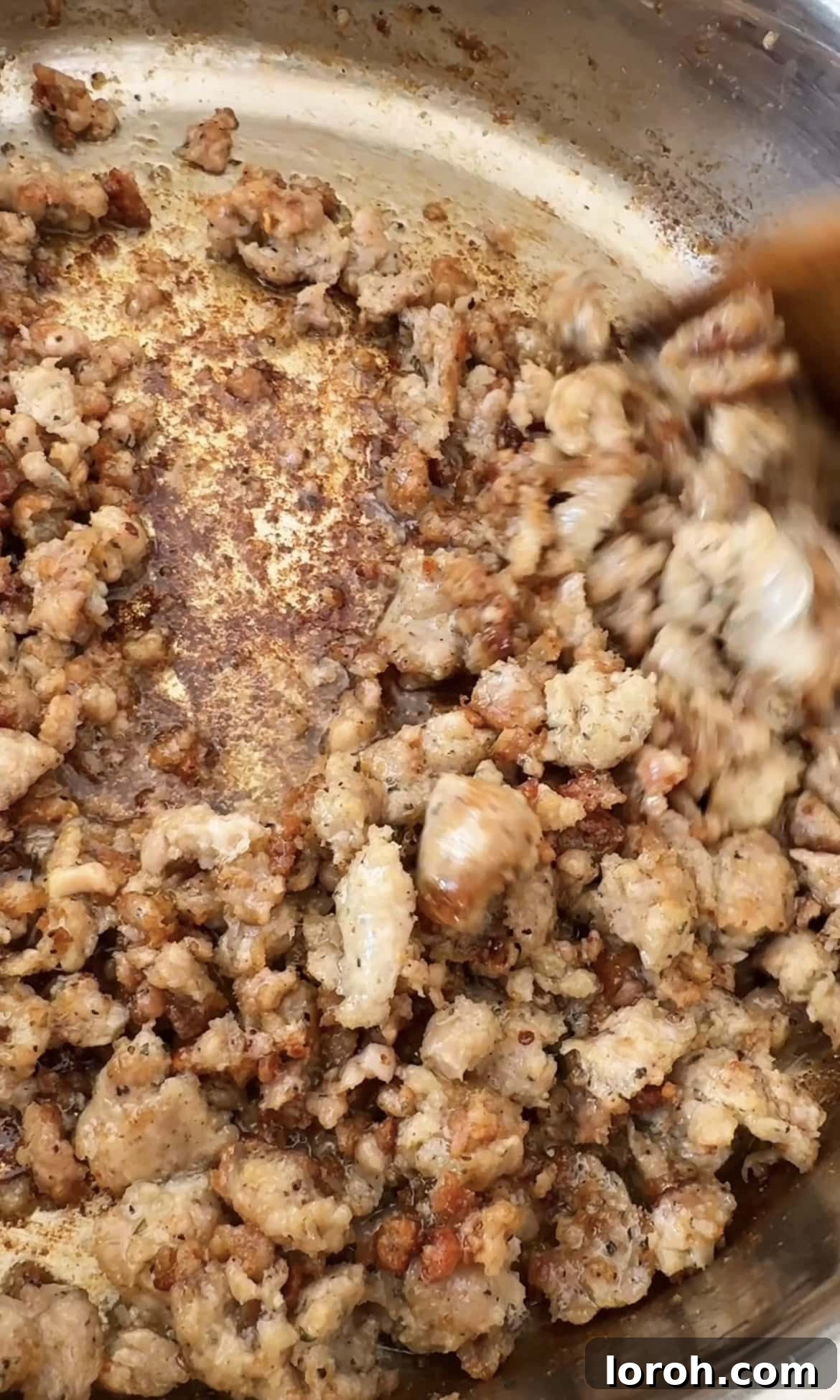
STEP ONE: Begin by heating a generous drizzle of olive oil in a large non-stick frying pan with deep sides over medium-high heat. Carefully remove the chicken sausages from their casings – a quick tip for this is to use fridge-cold sausages as they are firmer and easier to handle (see ‘Cooking Tips’ for more detail). Add the sausage meat to the hot pan and use the back of a wooden spoon to break it apart, aiming for a texture similar to minced meat. Cook for about 5-10 minutes, stirring occasionally, until the sausage meat is beautifully crispy and golden brown on all sides. This caramelization is key for intense flavor and satisfying texture. Once done, transfer the crispy sausage meat to a bowl and set aside, reserving any rendered fat in the pan for the next step.
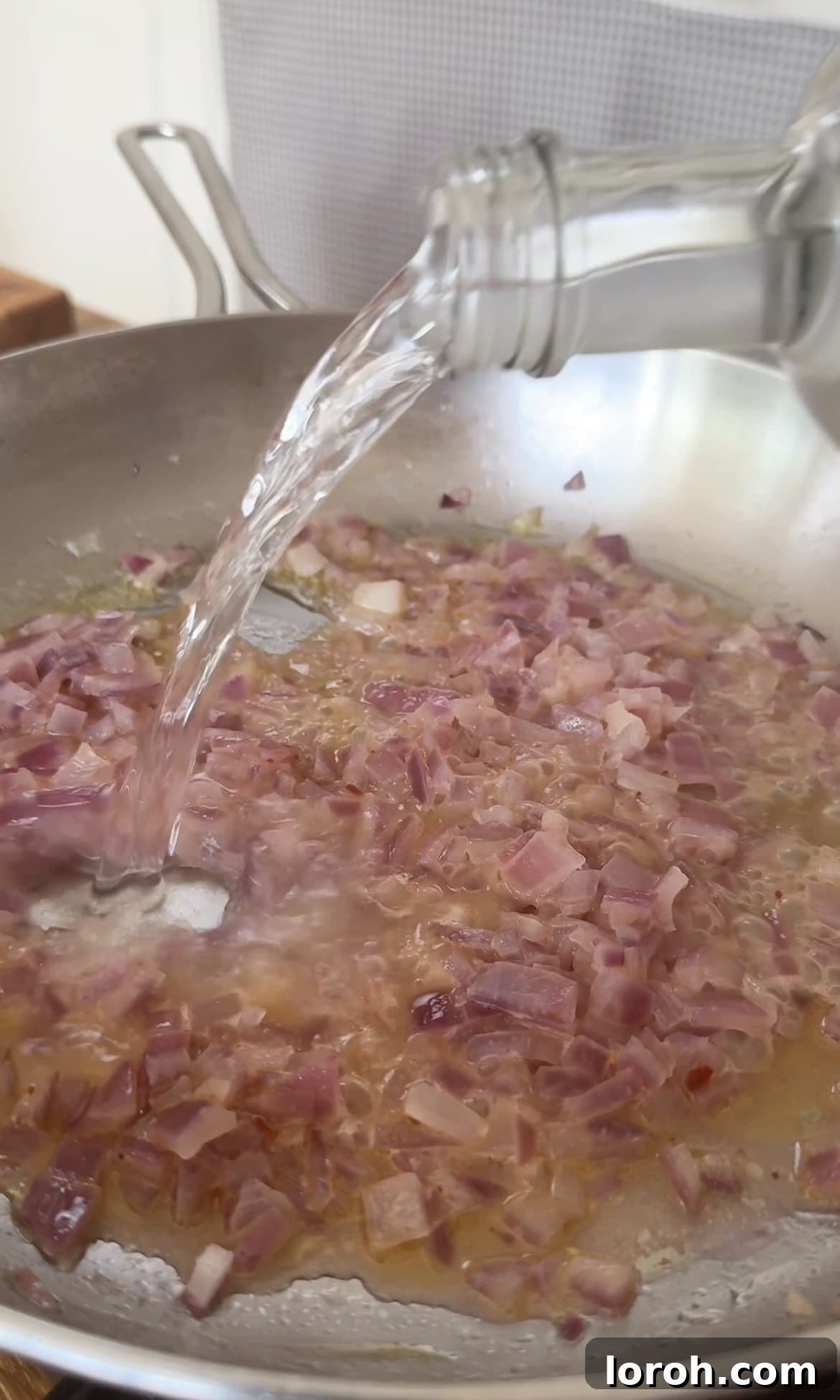
STEP TWO: Reduce the heat to low in the same pan (no need to clean it – those browned bits are flavor!). Add the unsalted butter and swirl until it completely melts. Introduce the finely chopped red onion to the pan and season generously with salt and freshly ground black pepper. Sauté the onions over a low heat for approximately 5-7 minutes, stirring periodically, until they become wonderfully soft, translucent, and slightly sweet. Next, add the crushed garlic and cook for just about one minute more, stirring continuously to prevent it from burning, which can make it bitter. Finally, pour in the vodka and mix everything thoroughly. Allow the vodka to simmer and reduce, bubbling off almost completely, leaving behind only its distinctive aroma and contributing to the sauce’s complex base.
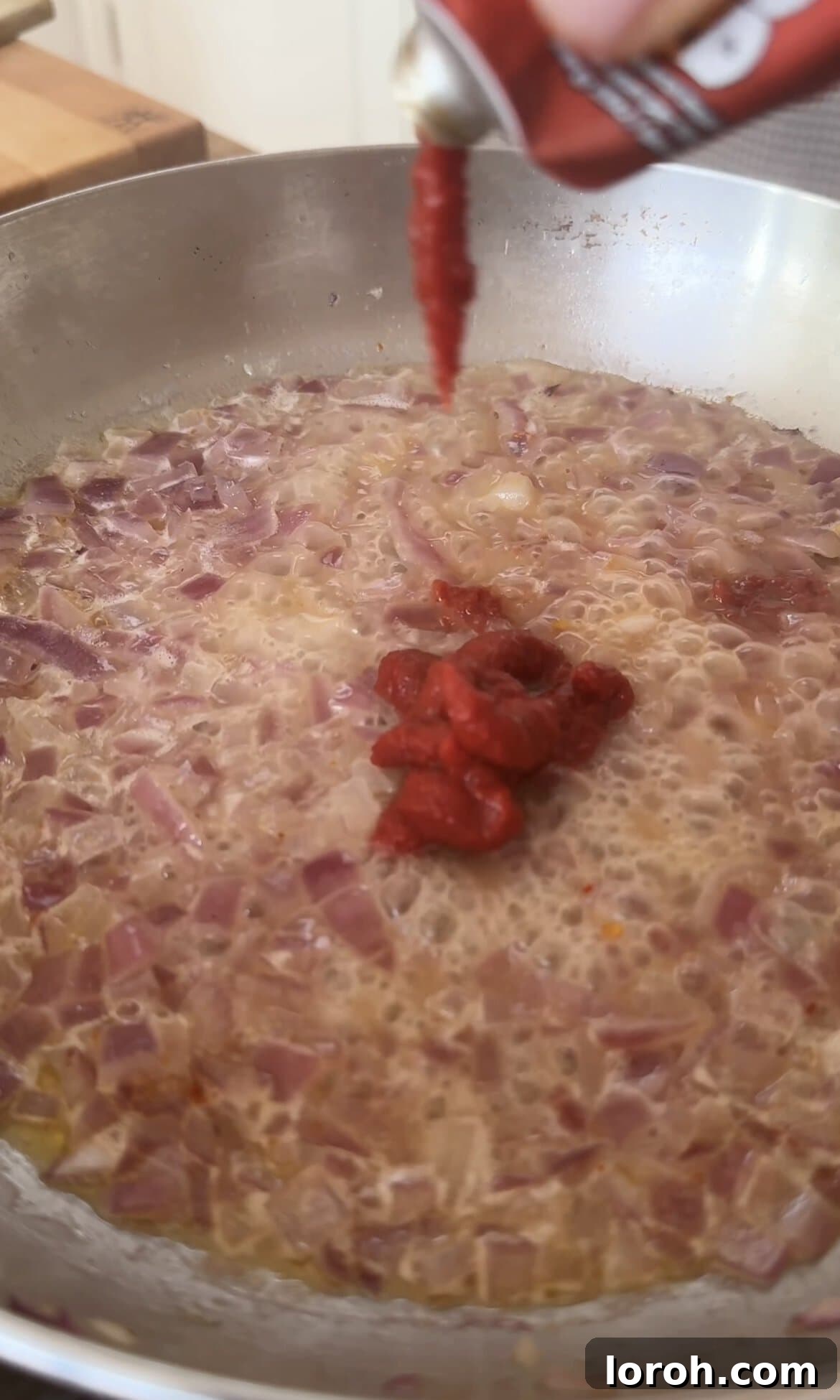
STEP THREE: Once the vodka has nearly evaporated, stir in the concentrated tomato purée and your chosen chilli paste (or finely chopped fresh chili). Stir vigorously, ensuring the onions are thoroughly coated with the rich tomato and chili mixture. Cook for another minute, allowing the tomato purée to deepen in color and flavor slightly – this is a crucial step for building a robust sauce base. The aroma at this stage will be incredible, a testament to the layers of flavor developing.
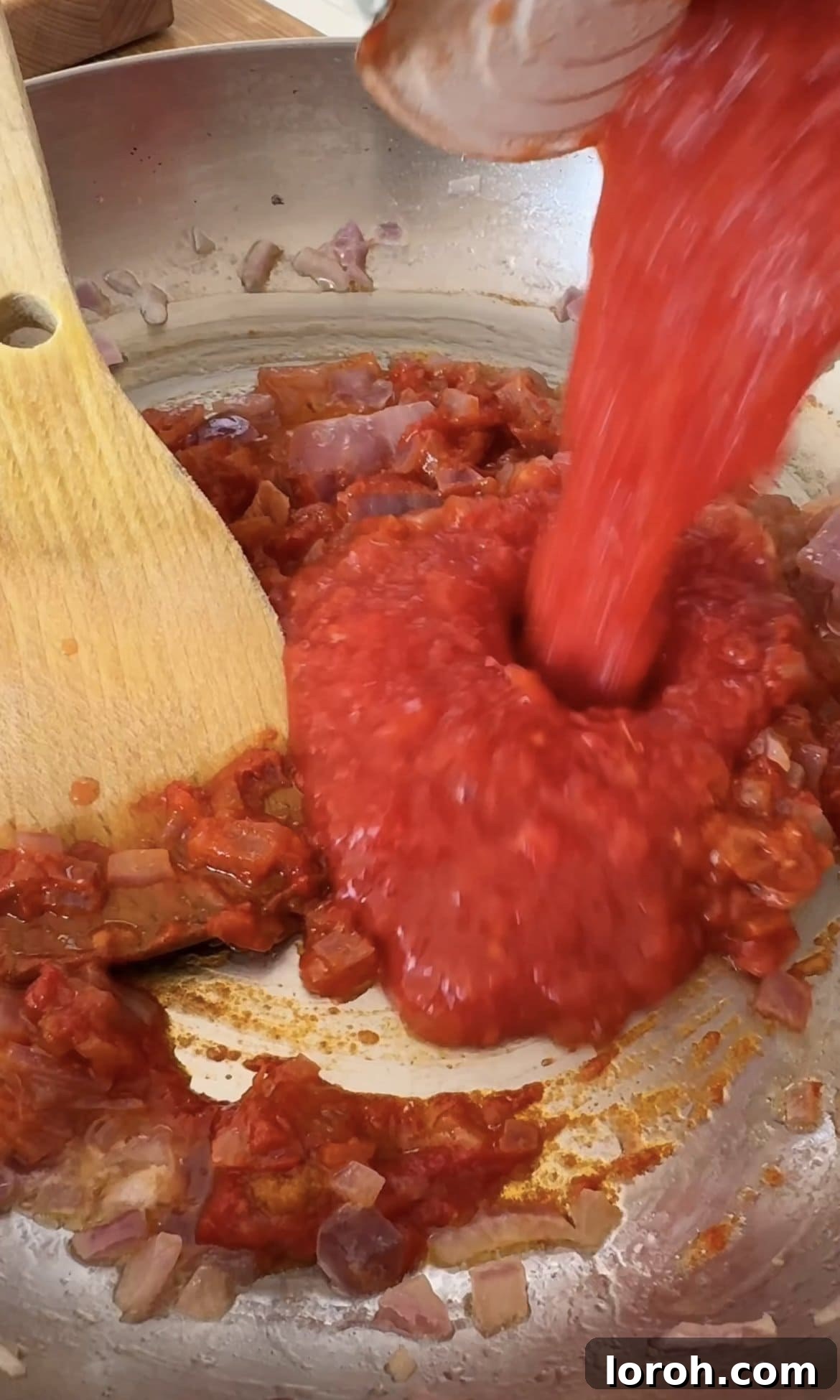
STEP FOUR: Pour in the canned chopped tomatoes, along with the balsamic vinegar. The vinegar adds a subtle tang and brightness that complements the tomatoes perfectly, enhancing their natural sweetness. To ensure no flavor is wasted, rinse out the tomato can with approximately 100 ml of water and add this starchy liquid to the pan. Bring the sauce to a gentle simmer, then reduce the heat and let it cook for about 5-10 minutes. This simmering time allows the flavors to meld beautifully and the sauce to thicken slightly, achieving a rich consistency that will cling perfectly to the pasta.
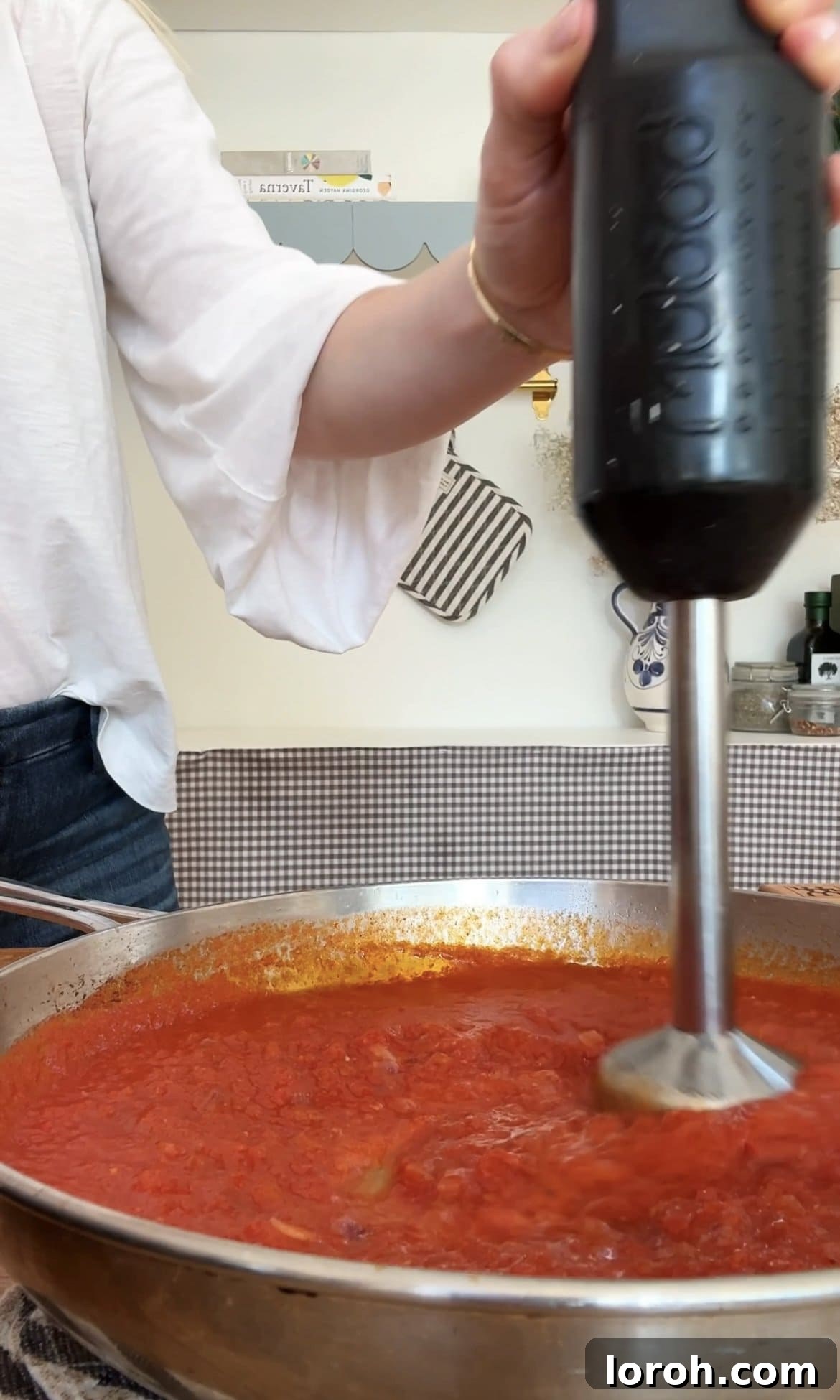
STEP FIVE: While your sauce is simmering, bring a large pot of heavily salted water to a rolling boil. Add the rigatoni pasta and cook according to the package instructions until it reaches a perfect al dente stage – firm to the bite, but not hard. Before draining, remember to reserve about a cup of the starchy pasta water; this liquid is a secret weapon for achieving a glossy, well-emulsified sauce. Drain the pasta thoroughly. Once the sauce has simmered and slightly thickened, remove it from the heat. Carefully transfer the sauce to a food processor or use a handheld stick blender to blend it until it is perfectly smooth and creamy. Be cautious as the sauce will be very hot. Blending creates that restaurant-quality velvety texture that defines a luxurious vodka pasta sauce.
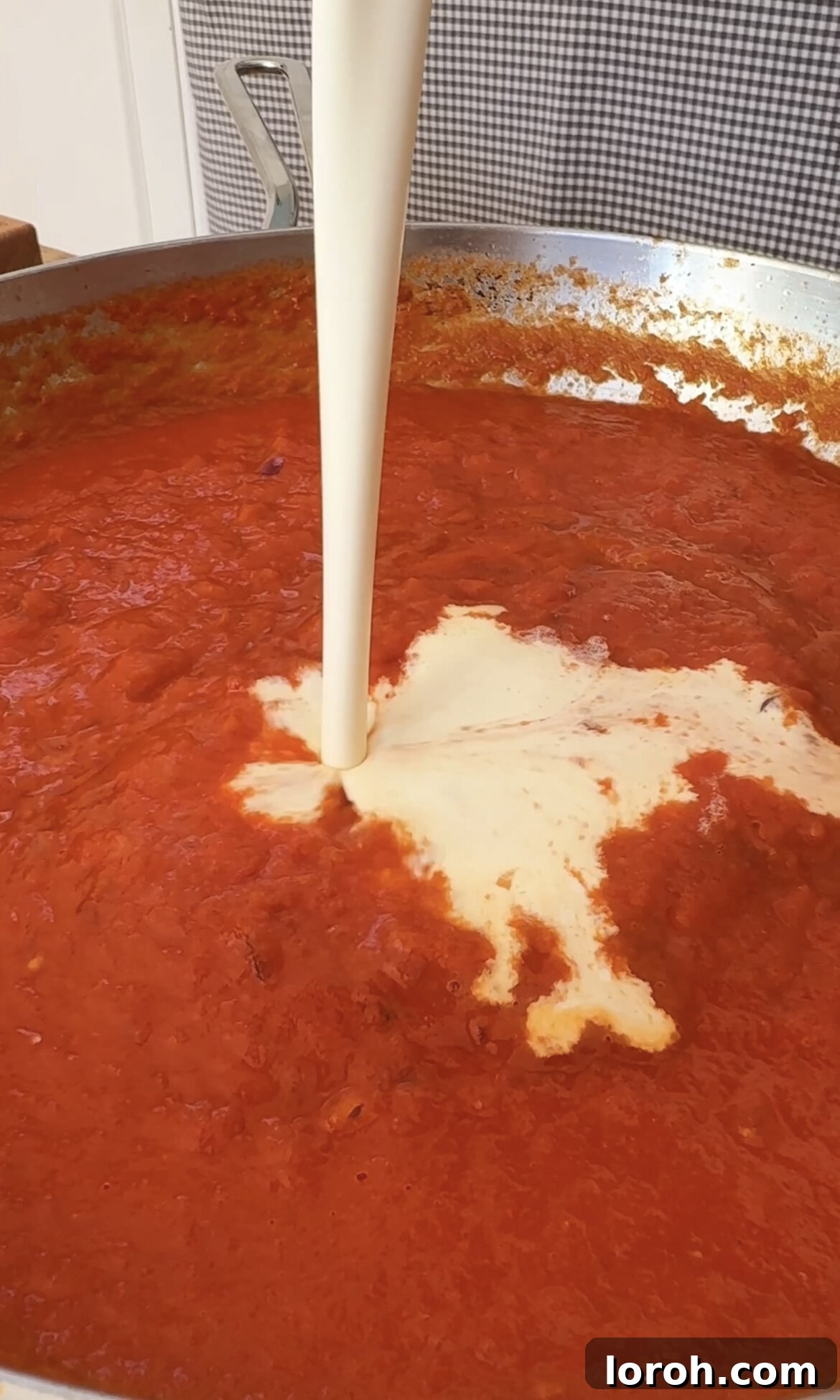
STEP SIX: Once your sauce is beautifully smooth, return the pan to low heat (if you used a food processor, transfer the blended sauce back to the original pan). Stir in the double cream until fully incorporated. Allow the sauce to come back to a gentle simmer, letting the cream infuse and create that signature luscious, creamy consistency. This step is where the magic truly happens, transforming your rich tomato base into a velvety, irresistible sauce that coats the palate beautifully.
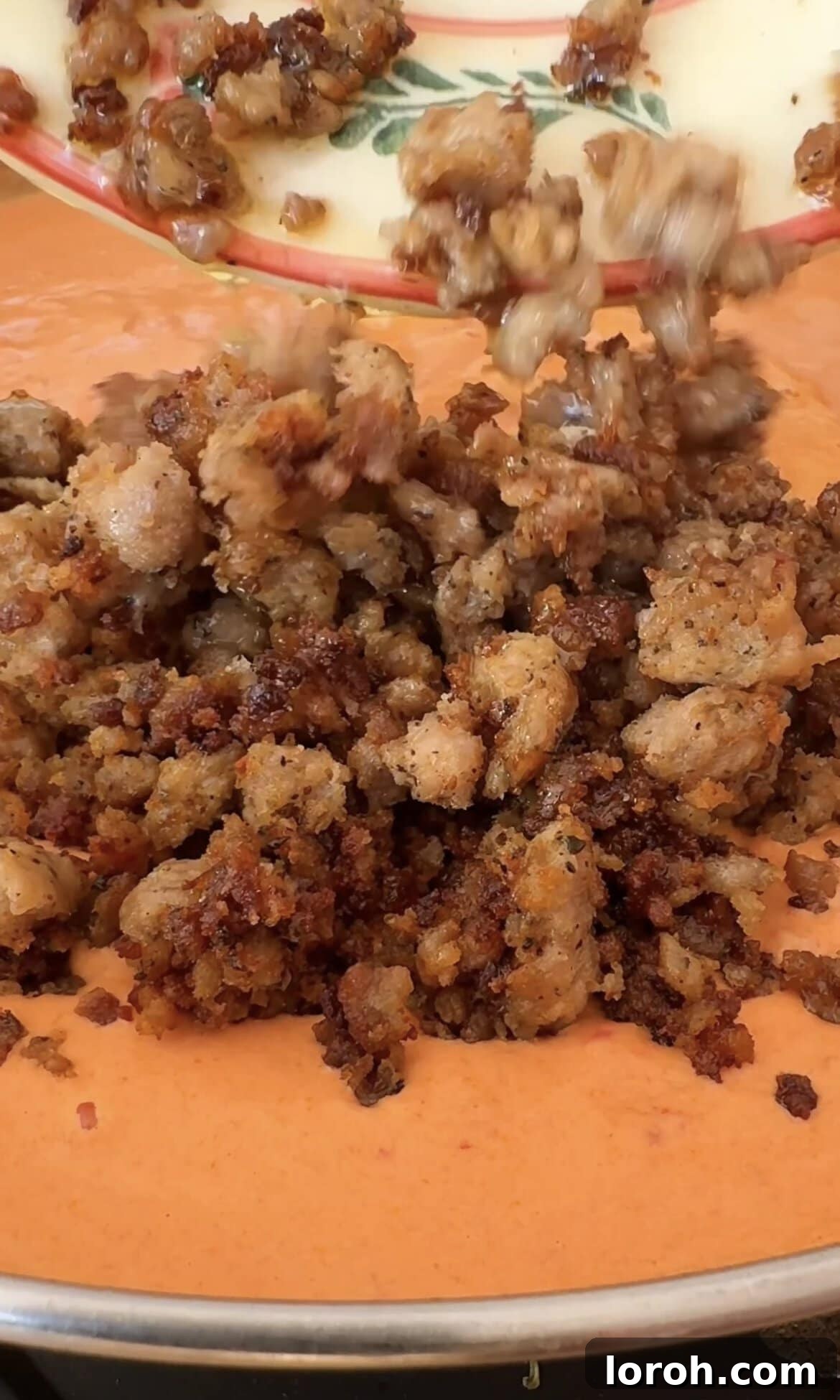
STEP SEVEN: Now, reintroduce the wonderfully crispy chicken sausages to the pan with the simmering creamy vodka sauce. Stir gently to combine, allowing the savory flavors of the sausage to meld perfectly with the creamy sauce. The crispy bits will soften slightly while retaining a delightful textural contrast, ensuring every bite is interesting and delicious.
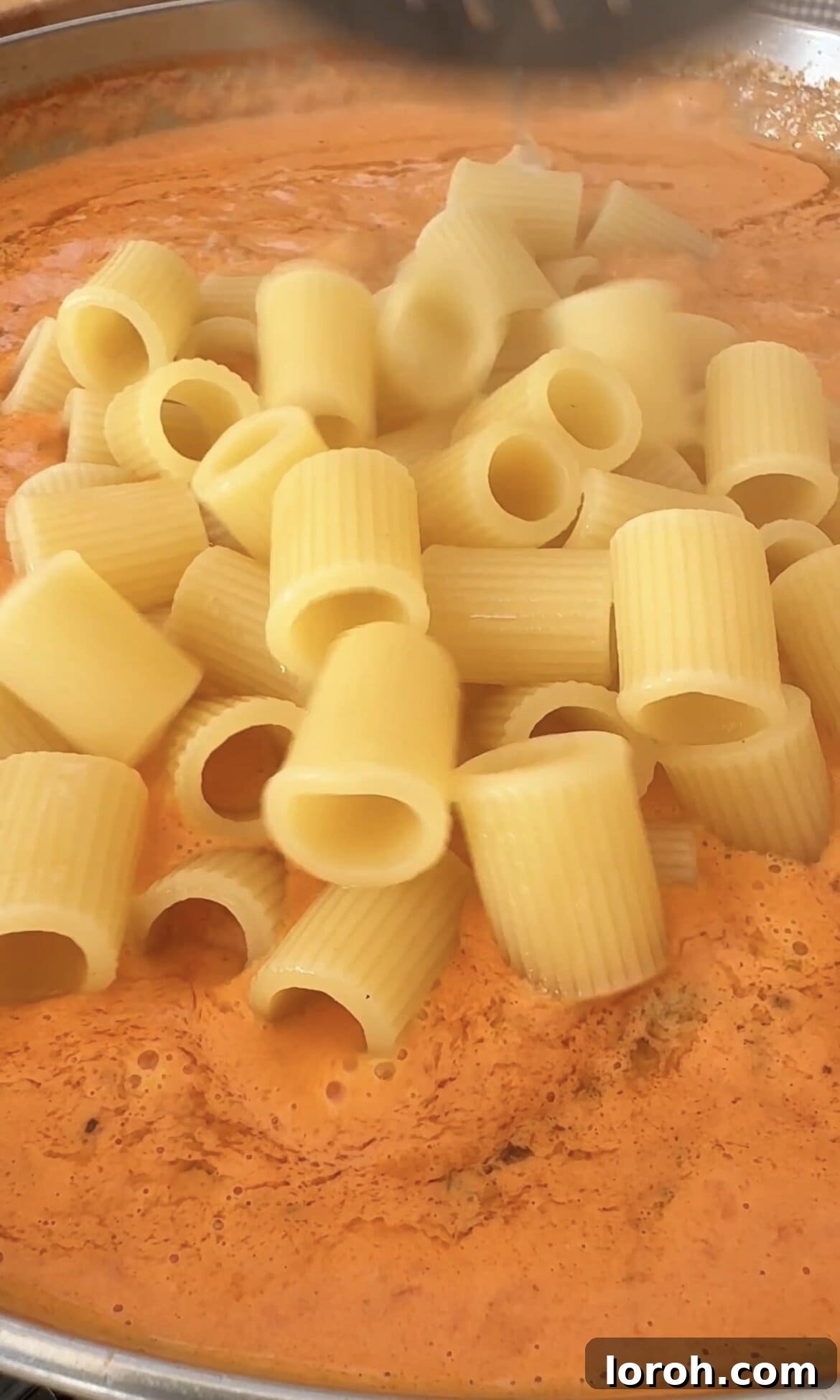
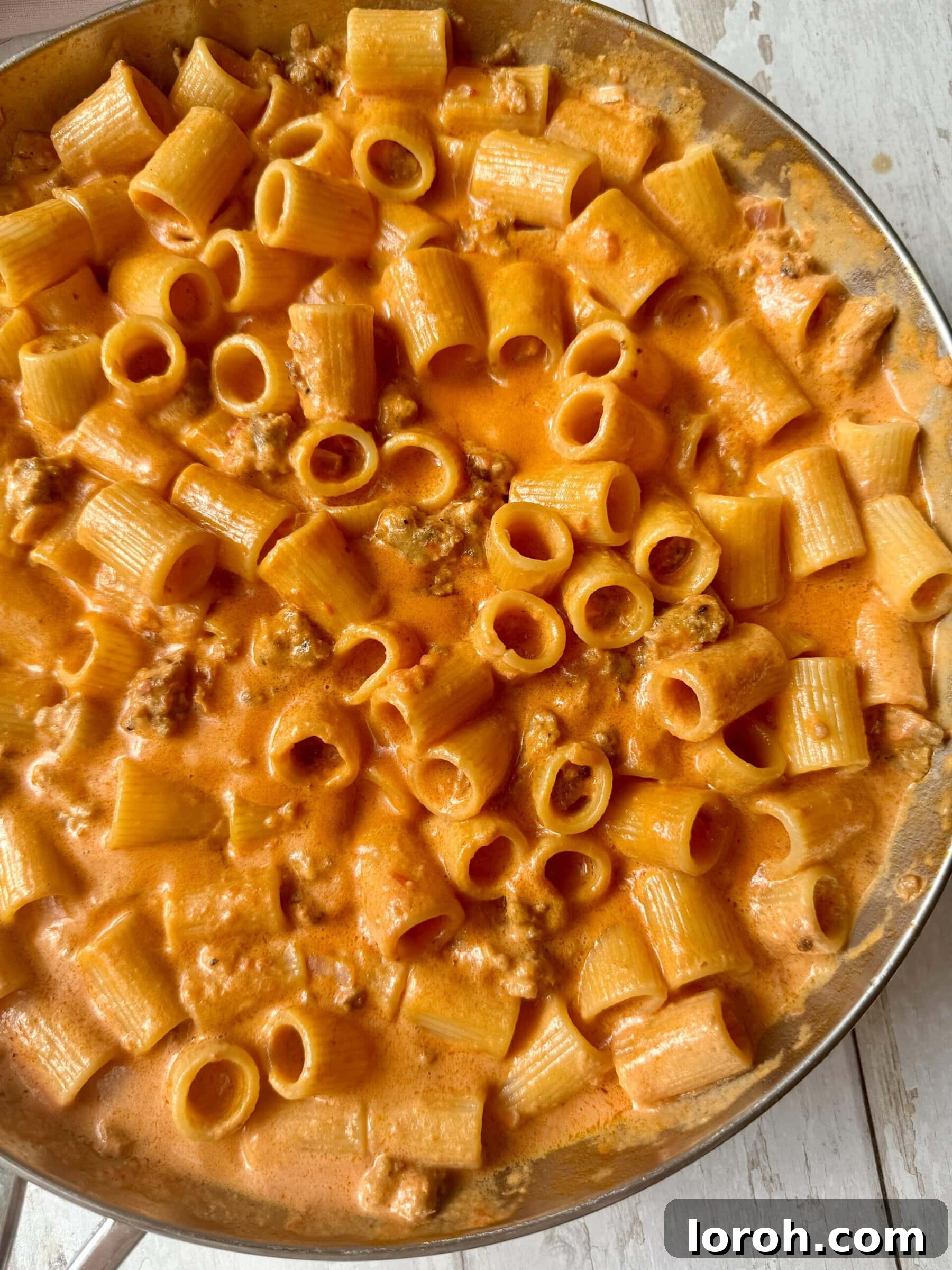
STEP EIGHT: Add the drained rigatoni pasta directly to the pan with the sauce and crispy chicken. Sprinkle in the grated Parmesan cheese. Toss everything together vigorously, ensuring every strand and piece of pasta is thoroughly coated in the deliciously creamy vodka tomato sauce. Taste and adjust seasoning with additional salt and freshly ground black pepper as needed. If the sauce appears a little too thick for your liking, gradually stir in a splash or two of the reserved pasta water until it reaches your desired consistency – this starch-rich water will help emulsify and loosen the sauce without diluting its rich flavor.
Expert Cooking Tips for Perfect Chicken and Vodka Pasta
Achieving restaurant-quality pasta at home is easier than you think with these simple tips:
Pesto Perfection: While making your own pistachio pesto is highly recommended for its fresh, vibrant flavor, sometimes time simply doesn’t allow. If opting for a store-bought version, always choose fresh pesto from the chilled section of your grocery store (typically located near the fresh pasta). These varieties are far superior in taste and texture compared to shelf-stable jarred options and will make a noticeable difference as a topping for your dish, offering bright, herbaceous notes.
Effortless Sausage Skin Removal: This step might seem a little fiddly at first, but it becomes second nature with practice. To easily remove the casings, start with sausages that are straight from the fridge and still cold; their firmness makes them much easier to handle and prevents the meat from squishing. Lay a sausage on a cutting board, make a shallow cut lengthwise down the entire sausage with a sharp knife, then gently peel away the skin, much like unwrapping a small present. The meat will then be ready to crumble into the pan for perfect browning.
Achieving Crispy Sausage Gold: The goal for the sausage meat is to achieve a gorgeous caramelization and crispy, golden-brown exterior. Don’t be shy about letting it cook for a few extra minutes to reach this desired texture. Those beautiful browned bits that form at the bottom of the pan are packed with concentrated flavor; they’ll get naturally deglazed by the sauce in subsequent steps, adding incredible depth and richness to your entire dish.
Al Dente, The Italian Way: Always cook your pasta until it is “al dente,” which literally means “to the bite.” This means the pasta should still offer a slight resistance when you bite into it – firm, but not hard or chalky in the center. Remember that the pasta will continue to cook for another minute or so as it’s tossed and melds with the hot vodka pasta sauce, so slightly undercooking it initially by about a minute is ideal for perfect texture.
The Magic of Pasta Water: Make it a golden habit to always reserve a ladleful or two of your pasta cooking water before draining the pasta. This starchy liquid is a true chef’s secret weapon. Adding a few splashes to your sauces works wonders: it helps bind and thicken them, creates a beautifully glossy finish, and perfectly emulsifies creamy sauces like this vodka pasta. It’s the easiest way to elevate your pasta dishes to the next level of silky perfection and ensures the sauce clings beautifully to every piece of pasta.
Seasoning as You Go: Don’t wait until the very end to season. Taste your sauce at different stages of cooking – after adding the onions, after the tomatoes, and especially before adding the pasta. This allows you to build layers of flavor and adjust salt and pepper precisely, ensuring a perfectly balanced dish. Remember, you can always add more seasoning, but you can’t take it away once added excessively!
The Lowdown on Burrata: A Creamy Italian Delight
What is Burrata?
Burrata is an exquisite Italian cheese, primarily from Puglia, renowned for its luxurious creaminess. It’s essentially a fresh cow’s (or sometimes buffalo’s) milk cheese, characterized by an outer shell of solid mozzarella that encases a rich, soft interior of stracciatella (shredded mozzarella curds mixed with fresh cream). When cut open, the creamy interior spills out, offering an incredibly decadent and milky texture that melts in your mouth. Burrata is truly divine in simple summer salads (imagine it in my peach caprese), draped over pizzas (like my margherita pizza flatbread), or as a luscious topping for pasta dishes (gnocchi alla norma). It’s best enjoyed fresh and at room temperature to appreciate its full texture and flavor, as it has a relatively short shelf life and can turn sour quickly, so plan to use it soon after purchasing.
What Can I Use Instead of Burrata?
If fresh burrata is hard to find or out of your budget, don’t despair! Your best and easiest substitute is fresh mozzarella, as both cheeses share a similar milky base and can often be used interchangeably in terms of flavor profile, though mozzarella lacks burrata’s signature creamy core. However, you can also easily create a “cheat’s burrata” at home using one of these simple hacks to mimic its decadent texture:
- Method One (Double Cream): Tear 250g of fresh mozzarella into small, irregular pieces and place them in a medium bowl. Pour over 100ml of rich double cream (heavy cream) and add about ¼ teaspoon of fine sea salt. Stir everything gently to combine, then cover the bowl and chill in the refrigerator for at least two hours, or until you’re ready to serve. This allows the mozzarella to absorb some of the cream, becoming softer, richer, and more luxurious.
- Method Two (Crème Fraîche): For a slightly tangier and equally creamy alternative, tear 250g of fresh mozzarella into small pieces in a medium bowl. Add 200g of crème fraîche and a generous pinch of salt. Stir well to integrate the ingredients, then cover and chill for a couple of hours until the mozzarella has softened and taken on the rich, spreadable consistency you desire.
Effortless Sausage Skin Removal: A Quick Guide
Removing sausages from their casings might seem like an extra step or a minor inconvenience at first, but it’s a technique that becomes surprisingly easy once you get the hang of it, and it’s essential for achieving that delightful crumbled, crispy sausage texture in this pasta dish. To effectively remove the casings, start with sausages that are fresh from the refrigerator and still cold; their firm texture makes the skin much easier to slice and peel away cleanly without tearing the meat. Simply lay a sausage on a clean cutting board and, using a sharp knife, make a shallow cut along the entire length of the sausage. Be careful not to cut too deeply into the meat itself. Once the cut is made, gently pull the edges of the skin apart and unwrap the meat filling, much like peeling a banana or opening a small gift. The exposed sausage meat is then ready to be crumbled and cooked, ensuring an even browning and ideal texture for your pasta.
Frequently Asked Questions About Chicken and Vodka Pasta
Absolutely! The alcohol in the vodka completely cooks off as the sauce simmers, meaning it evaporates entirely during the cooking process. This leaves behind only the subtle flavor-enhancing properties of the vodka, making this chicken and vodka pasta perfectly safe and delicious for children to eat without any concerns about alcohol content. It’s a culinary technique that adds depth, not intoxication.
Not at all, while this recipe highlights chicken sausages for their lighter flavor profile, feel free to adapt it! High-quality pork sausages are an absolutely delicious alternative and will add a different, richer depth of flavor to the dish. Of course, if you use pork, it technically won’t be “chicken and vodka pasta,” but it will still taste incredible. Alternatively, for a vegetarian option, you can completely omit the sausages or swap them for other proteins that cook quickly and absorb flavors well. Pan-fried thinly sliced chicken breast, succulent prawns, or even cubes of pan-seared halloumi cheese all make excellent and flavorful substitutes.
Using the starchy pasta cooking water in your sauces is one of the oldest and most effective chef’s tricks, and it’s truly transformative. As pasta cooks in boiling water, it releases starches, creating a cloudy, slightly thickened liquid. When you incorporate this starchy pasta water into your pasta sauces, it acts as a natural emulsifier, helping the sauce to bind beautifully to the pasta. It also thickens the sauce without making it heavy, and crucially, for a creamy tomato sauce like this one, it helps to loosen the consistency while making it wonderfully glossy and velvety. Simply put, if you aspire to achieve the most delicious, silky-smooth pasta sauce with perfect cling, a strategic splash of reserved pasta water is your secret ingredient.
The chicken and vodka pasta sauce is an excellent candidate for making ahead. You can prepare the sauce up to the point just before adding the drained pasta. Make the sauce, blend it until smooth, stir in the cream and the crispy sausages, then allow it to cool completely. Transfer the cooled sauce to an airtight container and store it in the refrigerator for up to 3 days. When you’re ready to serve, gently reheat the sauce in a pan, boil your fresh pasta, and add generous amounts of reserved pasta water to the sauce as it reheats to loosen it up and restore its luscious consistency. Then, simply add the drained cooked pasta and continue with the recipe as normal. The pistachio pesto can also be made in advance; store it covered and chilled in the fridge for up to 7 days. Adding a thin layer of olive oil to the surface helps prevent discoloration and keeps it fresh. For longer storage, you can freeze the pesto for up to 3 months; a convenient tip is to decant it into ice cube trays for individual portions, then cover with cling film and freeze. Once frozen, transfer the pesto cubes to small airtight containers and defrost in the fridge as needed before using.
Any leftover chicken and vodka pasta should be allowed to cool completely to room temperature as quickly as possible. Once cooled, transfer it to an airtight container, ensuring it’s sealed properly to maintain freshness and prevent spoilage. It can then be stored safely in the refrigerator for up to 3 days. While delicious fresh, properly stored leftovers make for a fantastic quick meal later in the week.
For reheating, you have a couple of excellent options. You can use a microwave: simply place the pasta in a microwave-safe dish and heat for 1-2 minutes, stirring halfway through, until it is piping hot. However, for the best results and to truly restore its original saucy and luscious texture, I recommend reheating it on the stovetop. Place the leftovers in a pan over medium heat, adding a splash more cream or a small knob of butter. Stir gently and continuously until the pasta is thoroughly heated through and the sauce becomes rich and creamy once again. This method helps prevent the pasta from drying out and enhances the sauce’s texture beautifully.
Other Delightful Pasta Recipes You Might Enjoy
If the rich, creamy flavors and comforting textures of this Chicken and Vodka Pasta have captured your culinary heart, then you’re in for a treat with these other sensational pasta dishes from my collection. Be sure to explore my spicy ‘nduja pasta for another kick of Italian-inspired heat and incredible depth of flavor. Don’t miss out on my incredibly popular marry me chicken pasta, a dish so good it might just get you a proposal with its irresistible creamy sauce. And for a truly comforting and garlicky experience, my chicken parmesan garlic pasta is an absolute must-try, combining classic flavors in a delightful new way. Each recipe offers a unique flavor journey, perfect for expanding your pasta repertoire and finding new family favorites.
Easy Pasta Recipes
Burrata with Pasta (Tomato Burrata Pasta)
Easy Pasta Recipes
Creamy Sausage Pasta (Pasta alla Norcina)
Easy 30 Minute Meals
Baked Boursin Pasta with Lemon & Artichokes
Easy 30 Minute Meals
Lemon Orzo with Feta
If you’ve had the pleasure of trying this wonderful Chicken and Vodka Pasta or any other recipe from the site, I would absolutely love to hear about your experience! Please take a moment to leave a comment below and let us know how it turned out. Your feedback is invaluable and helps other home cooks discover delicious new meals!
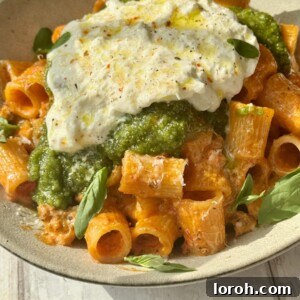
Chicken and Vodka Pasta
Margie Nomura
10
30
40
4 servings
Print Recipe
Ingredients
For the Chicken and Vodka Pasta:
- Drizzle of olive oil
- 6 chicken sausages
- 1 tbsp unsalted butter
- 1 medium red onion, finely chopped
- Salt and freshly ground black pepper, to taste
- 3 cloves garlic, crushed
- 80 ml vodka
- 2 tbsp tomato purée
- 1 tbsp chilli paste or ½ red chilli, finely chopped (deseeded, if desired)
- 1 tsp balsamic vinegar
- 1 x 400g tin chopped tomatoes
- 500 g dried rigatoni
- 250 ml double cream
- 15 g Parmesan, grated
For the Pistachio Pesto: (Optional, but highly recommended)
- 100 g shelled pistachios, toasted
- 100 g fresh basil
- 200 ml olive oil
- 1 garlic clove
- 70 g Parmesan, grated
- 1 lemon, zest and juice
- Salt and freshly ground black pepper, to taste
To Serve:
- Pistachio pesto, homemade (see recipe) or any fresh pesto
- Burrata, torn into pieces
- Freshly grated Parmesan
- Fresh basil, leaves for garnish
Instructions
-
1. Prepare the Crispy Chicken Sausage: Heat a drizzle of olive oil in a large, deep non-stick frying pan over medium-high heat. Carefully remove the chicken sausages from their skins (starting with cold sausages makes this easier). Add the sausage meat to the pan and use the back of a wooden spoon to break it up into small, mince-like pieces. Cook for 5-10 minutes, stirring occasionally, until the sausage meat is beautifully crispy and golden brown. Transfer the cooked sausage to a bowl and set aside, leaving any rendered fat in the pan.
-
2. Sauté Aromatics and Deglaze with Vodka: Reduce the heat to low in the same pan. Add the unsalted butter and swirl until melted. Stir in the finely chopped red onion and season with salt and freshly ground black pepper. Sauté for 5-7 minutes, stirring occasionally, until the onions are soft and translucent. Add the crushed garlic and cook for an additional minute, stirring constantly to prevent burning. Pour in the vodka and mix well, allowing it to simmer and reduce until almost all the alcohol has bubbled off.
-
3. Build the Tomato Base: Once the vodka has nearly evaporated, stir in the tomato purée and chilli paste. Cook for another minute, stirring to coat the onions and deepen the tomato flavor. Pour in the chopped tomatoes and balsamic vinegar. Rinse out the tomato can with about 100 ml of water and add this to the pan. Bring the sauce to a gentle simmer, then reduce the heat and cook for 5-10 minutes, or until the sauce has slightly thickened and reduced.
-
4. Cook the Pasta: While the sauce is simmering, cook the rigatoni pasta in a large pot of boiling, heavily salted water according to package instructions until al dente (firm to the bite). Before draining, reserve about 1 cup of the starchy pasta water. Drain the pasta well.
-
5. Prepare the Pistachio Pesto (if using): In a blender or food processor, combine the toasted pistachios, fresh basil, olive oil, garlic clove, and grated Parmesan. Blitz until smooth. Season to taste with lemon zest and juice, salt, and freshly ground black pepper, adjusting gradually. Spoon into a bowl, cover, and set aside. (Alternatively, a good quality fresh store-bought pesto can be used.)
-
6. Create the Velvety Sauce: Remove the tomato sauce from the heat. Carefully blend the sauce until completely smooth using either a handheld stick blender directly in the pan or by transferring it to a food processor (allowing it to cool slightly first if using a processor). If using a food processor, return the blended sauce to the pan.
-
7. Finish the Sauce with Cream & Combine: Return the pan with the smooth sauce to a low heat. Stir in the double cream until fully incorporated, and bring the sauce back to a gentle simmer. Add the reserved crispy chicken sausages back to the pan. Add the drained pasta and the 15g of grated Parmesan. Toss everything together vigorously until the pasta is thoroughly coated in the deliciously creamy vodka tomato sauce. Taste and season with additional salt and freshly ground black pepper as needed. If the sauce is too thick, stir in a splash or two of the reserved pasta water to reach your desired consistency.
-
8. Serve & Garnish: To serve, spoon the chicken and vodka pasta onto individual plates. Drizzle generously with your homemade pistachio pesto (or fresh store-bought pesto). Top with torn pieces of creamy burrata and a little more freshly grated Parmesan. Finish with a grinding of fresh black pepper and a few fresh basil leaves. Serve immediately and enjoy!
-
A video guide is often helpful for this recipe; you can typically find one on the recipe page to visually assist you through the steps.
Video Guide
Notes & Storage Tips
To Store Leftovers: Any leftover pasta should be allowed to cool completely to room temperature before being transferred to an airtight container. Store chilled in the refrigerator for up to 3 days. For best quality, consume within this timeframe.
To Reheat: Reheat leftovers in the microwave for 1-2 minutes until thoroughly hot, stirring halfway through. Alternatively, for a superior texture, reheat on the hob over medium heat. To restore its creamy, luscious consistency, add a splash more cream or a small knob of butter while reheating.
Freezing Advice: I generally do not recommend freezing this finished pasta dish. The texture of the pasta and especially the creamy sauce can change significantly upon freezing and thawing, often becoming grainy or separating. For best results, enjoy it fresh or store for up to 3 days in the fridge.
Make Ahead Tips: The chicken and vodka pasta sauce is ideal for preparing in advance. Cook the sauce up to the point of adding the drained pasta (steps 1-7, excluding step 8 for pasta). Blend, add cream and crispy sausages, then let it cool. Store in an airtight container in the fridge for up to 3 days. When ready to serve, gently reheat the sauce in a pan, then cook fresh pasta and combine, adding pasta water as needed to loosen the sauce. The pistachio pesto can be made up to 7 days in advance; keep it covered with a thin layer of olive oil in an airtight container in the fridge to maintain its vibrant green color. It also freezes well for up to 3 months; freezing in ice cube trays creates convenient individual portions.
Plant-Based Option: To make this recipe vegetarian, substitute the chicken sausages with plant-based sausages or hearty vegetables like mushrooms or zucchini. Ensure any cheese used is vegetarian-friendly (Parmesan is not, but Gran Moravia or a good quality vegetarian hard cheese are excellent alternatives). For a fully vegan vodka pasta, use vegan sausages or vegetables, along with plant-based cream and cheese alternatives.
Sausage Preference: I opt for chicken sausages in this recipe due to their lighter flavor profile, which pairs beautifully with the creamy sauce and vibrant pesto. However, if you prefer a richer taste, pork sausages are a perfectly delicious substitute. Always choose the highest quality sausages you can find for the best flavor.
The Power of Pasta Water: Always remember to reserve a small amount of the starchy pasta cooking water before draining your cooked pasta. This seemingly simple step is a secret weapon that can transform your sauces, helping them to emulsify, thicken, and achieve a gloriously glossy and creamy consistency. It’s essential for a truly restaurant-quality pasta dish.
Burrata Alternatives: If fresh burrata is unavailable, fresh mozzarella is your best direct substitute. For a homemade “cheat’s burrata” experience, refer to the detailed instructions provided earlier in the post, using mozzarella and cream or crème fraîche to mimic its luxurious texture.
Pistachio Swaps: While pistachios offer a distinct flavor for the pesto, feel free to use other nuts like almonds, cashews, or hazelnuts if you prefer, or if pistachios are not readily available. Pine nuts are the traditional choice for pesto but can be quite expensive. Remember to toast any nuts before making the pesto to enhance their flavor.
Nutrition Facts
Calories: 1061kcal,
Carbohydrates: 111g,
Protein: 41g,
Fat: 47g,
Saturated Fat: 21g,
Polyunsaturated Fat: 2g,
Monounsaturated Fat: 7g,
Trans Fat: 0.1g,
Cholesterol: 171mg,
Sodium: 1602mg,
Potassium: 686mg,
Fiber: 6g,
Sugar: 12g,
Vitamin A: 1788IU,
Vitamin C: 24mg,
Calcium: 159mg,
Iron: 4mg
Nutrition information is automatically calculated, so should only be used as an approximation.
Enjoyed this recipe? Share your thoughts below!