
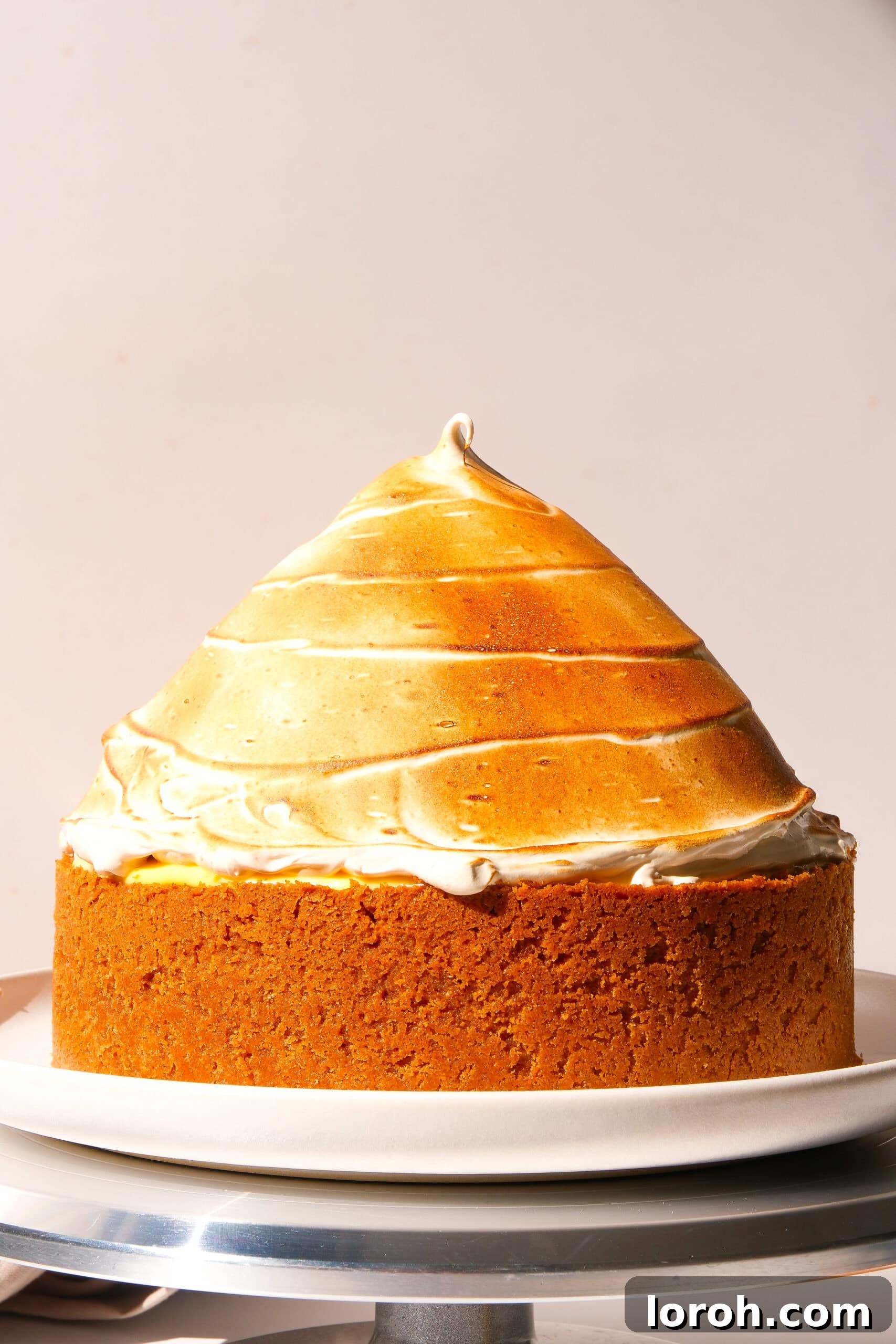
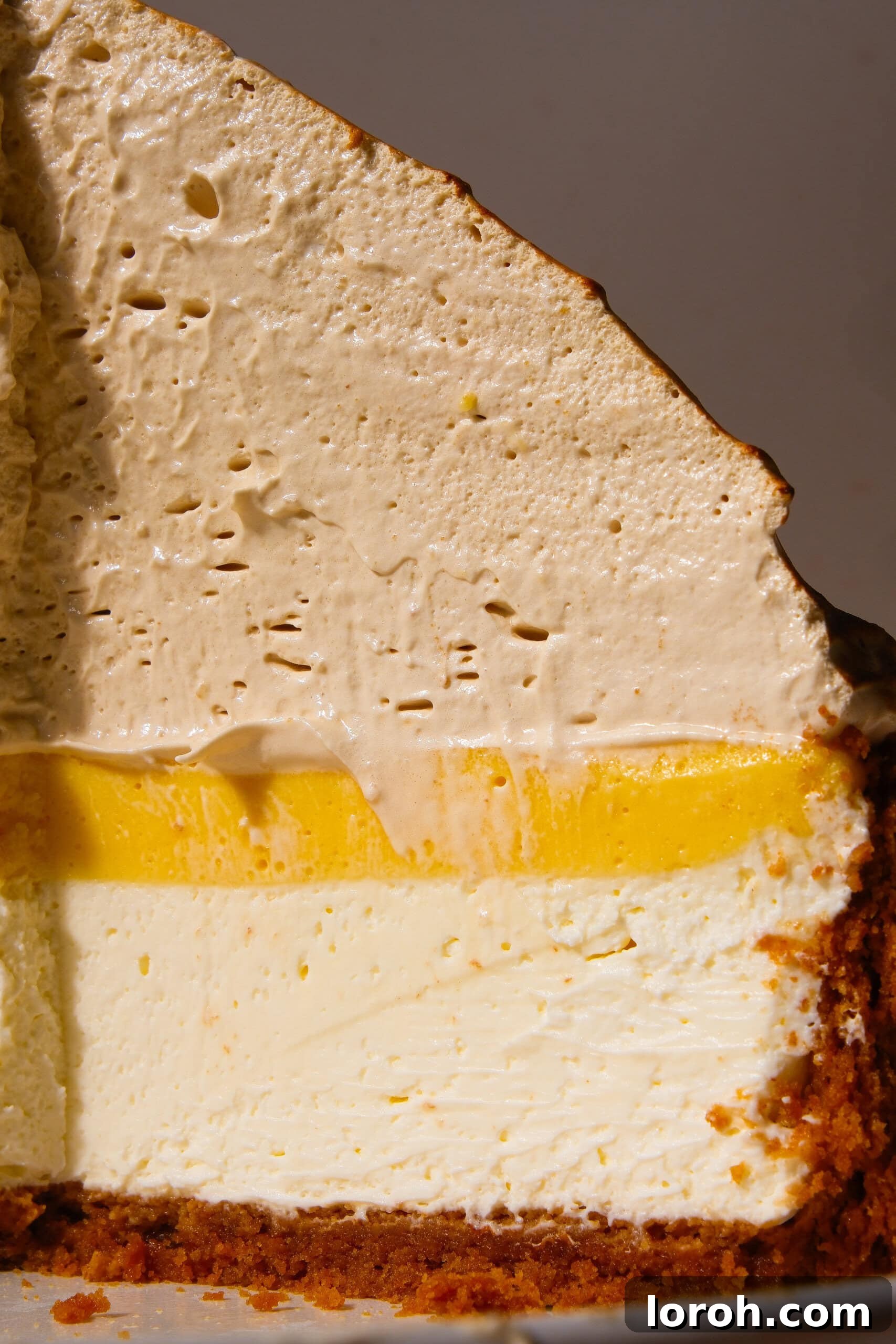
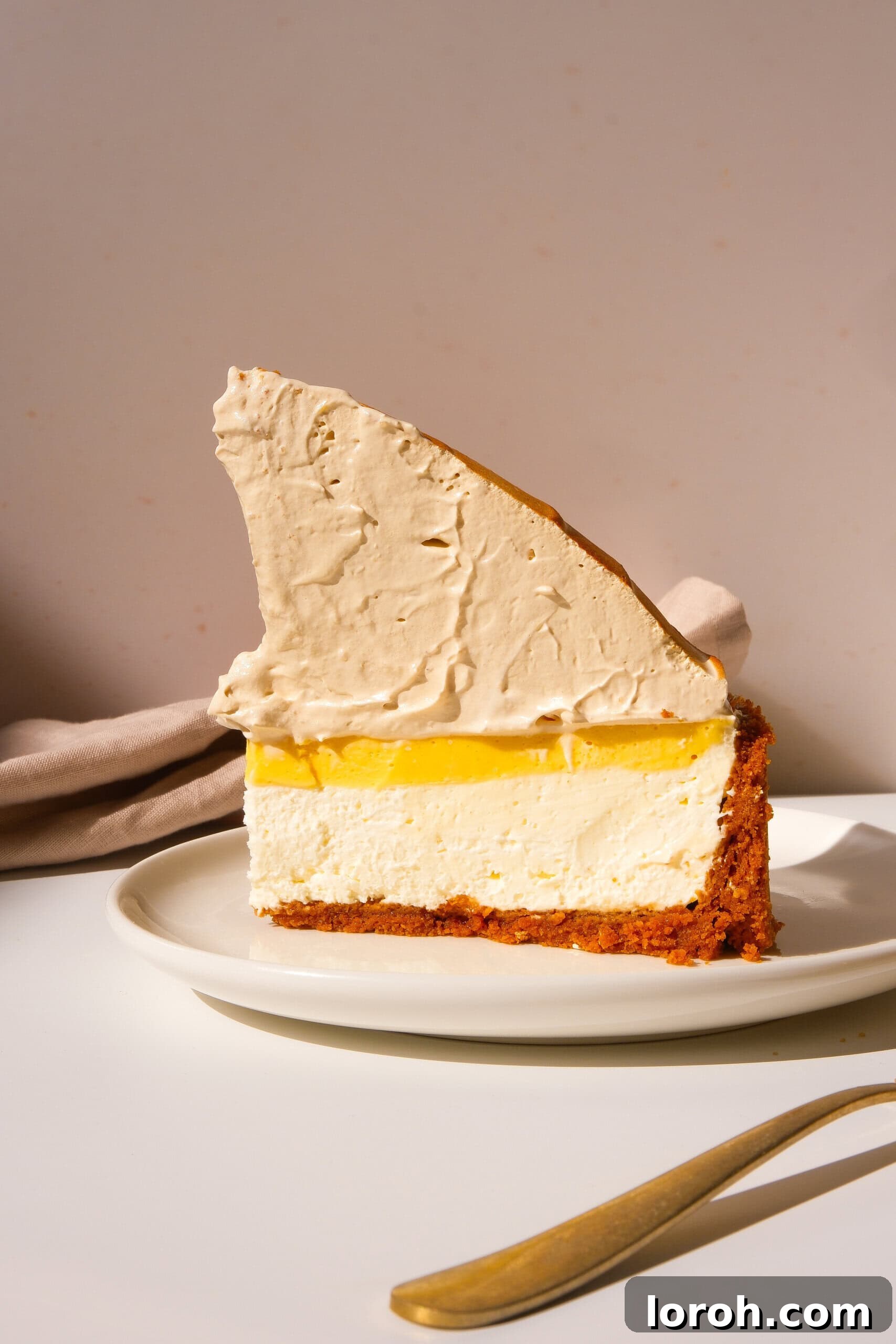
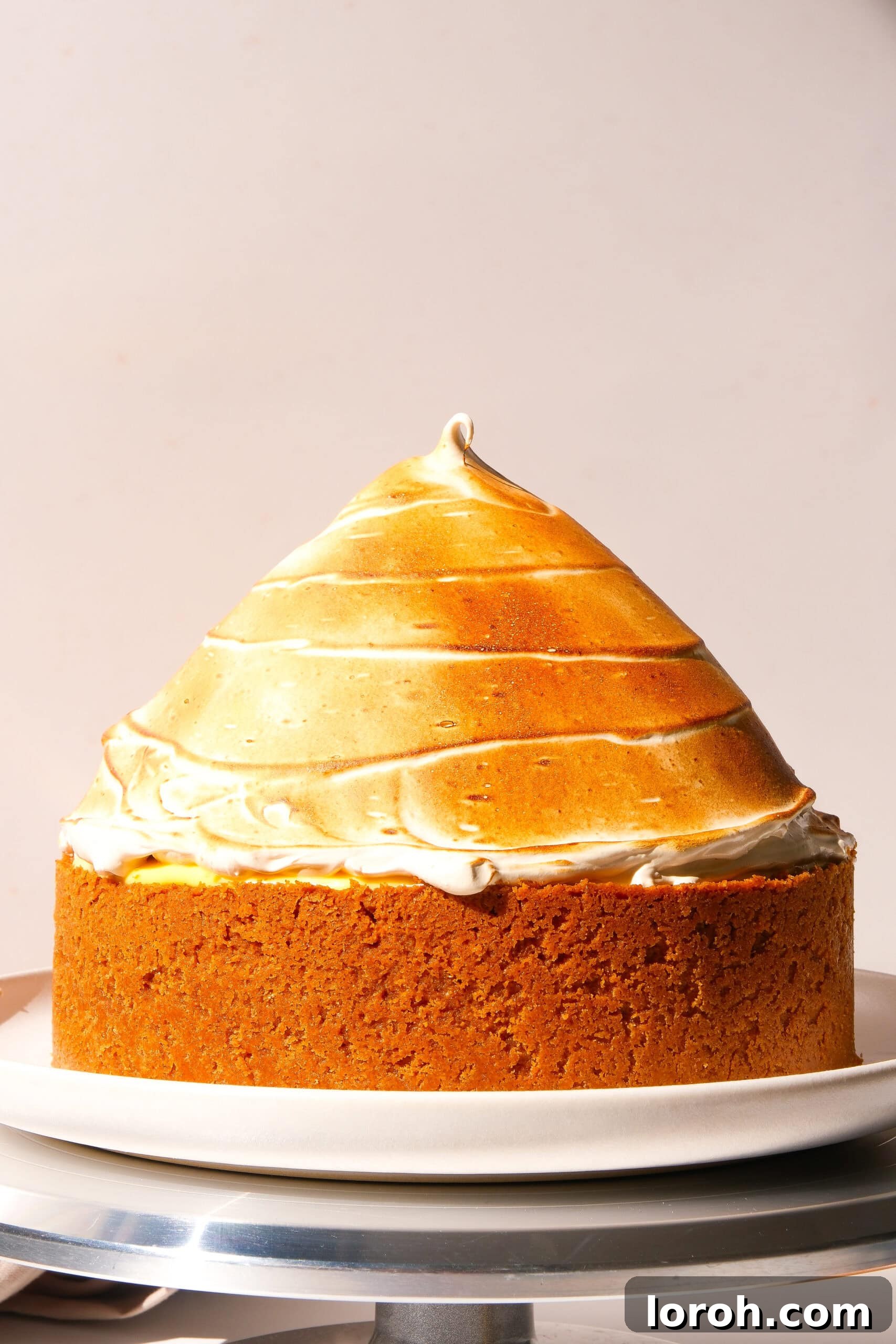
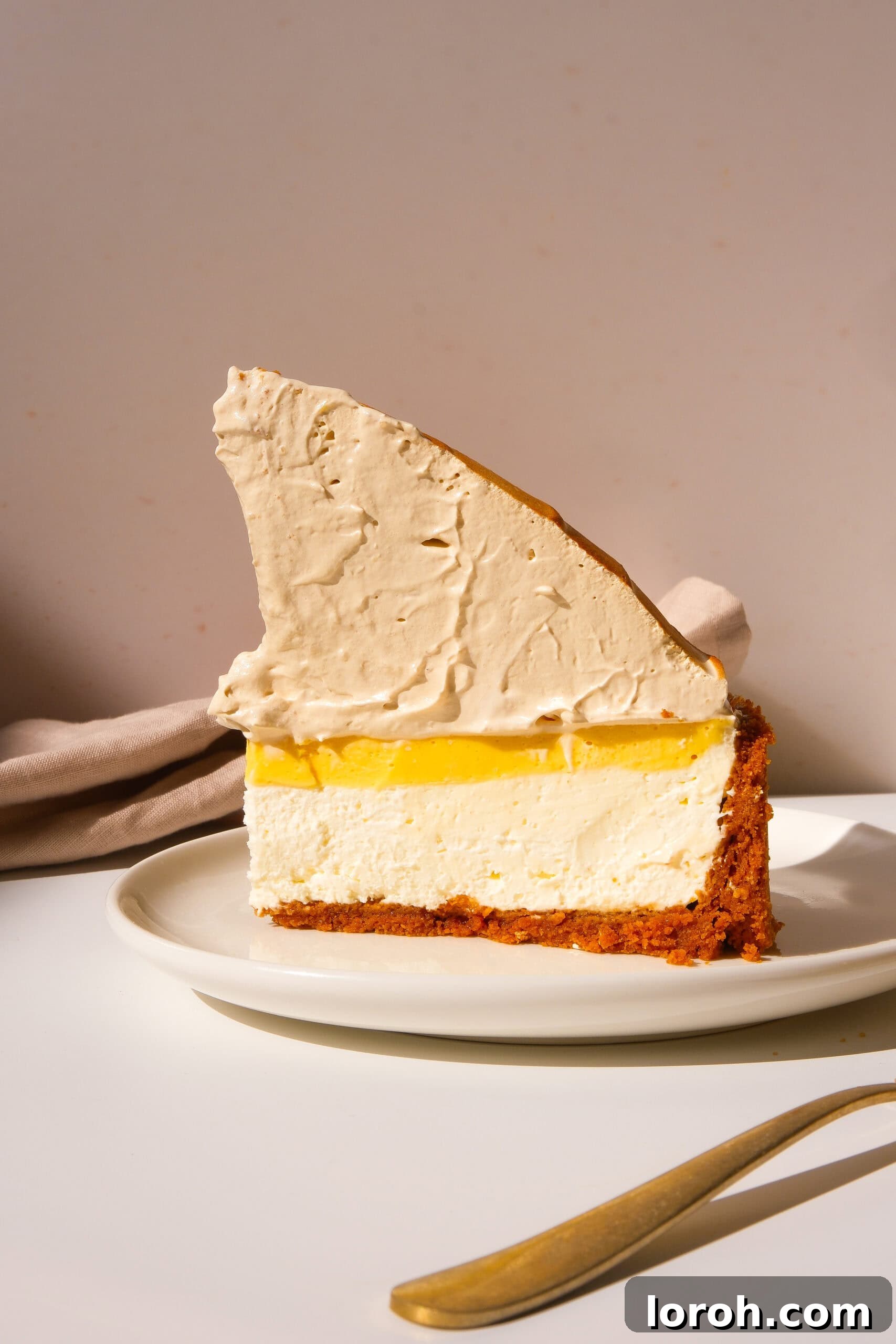
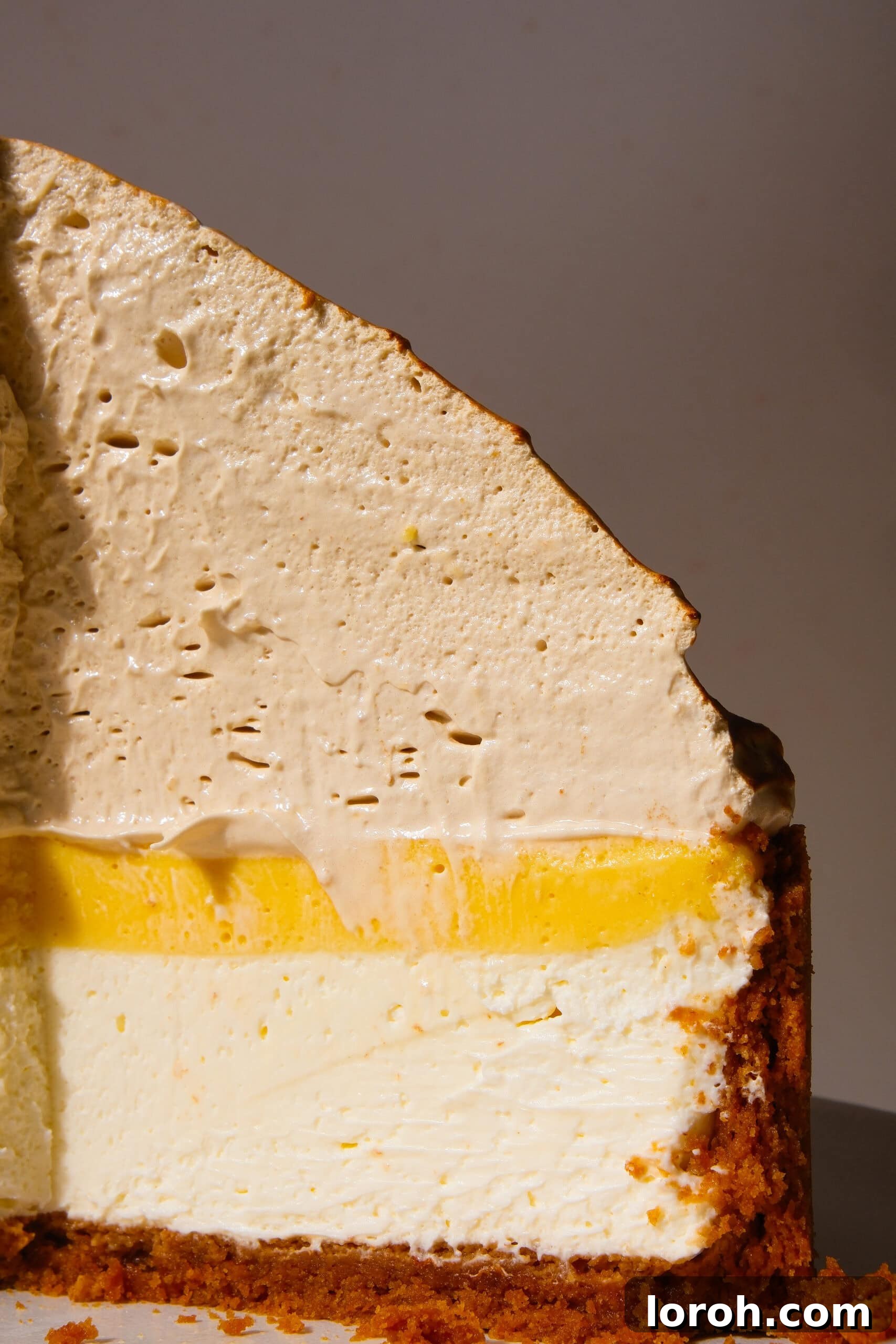
If you’re searching for an extraordinary dessert that truly impresses, your quest ends here. This remarkable Lemon Meringue Cheesecake is designed to delight and will undoubtedly become your go-to recipe for any special occasion. Imagine a perfectly crunchy, buttery biscuit base, generously topped with a velvety layer of lemon-infused cream cheese. But the indulgence doesn’t stop there. Next comes a vibrant, zesty layer of homemade lemon curd, leading to the grand finale: a cloud of glossy, golden-brown Italian meringue. This dessert is a symphony of textures and flavors – sweet, tangy, creamy, and crisp – making it an absolute must-try.
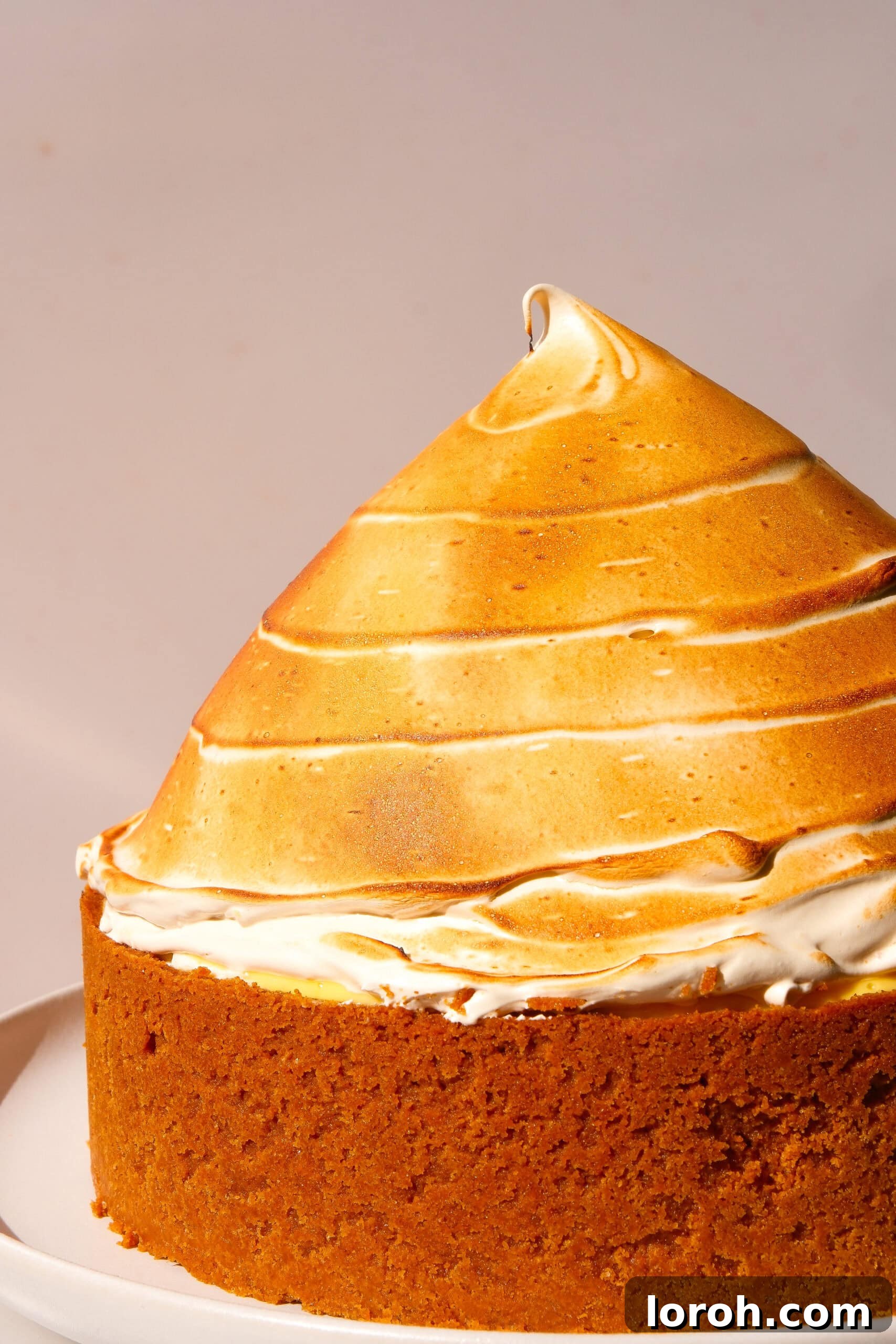
While this Lemon Meringue Cheesecake might appear intricate at first glance, its preparation is surprisingly manageable once you break it down into simple, distinct stages. This makes it an ideal choice for a dinner party dessert, allowing you to create something truly spectacular without feeling overwhelmed. In fact, many find it even simpler than a classic Lemon Meringue Tart, as you eliminate the common worry of a soggy pastry bottom. Plus, several key components – the biscuit base, the creamy cheesecake layer, and the tangy lemon curd – can be prepared in advance. This flexibility means you can avoid last-minute rush and enjoy the process of crafting this magnificent dessert.
Should the idea of making Italian meringue feel a bit daunting, don’t despair! You can absolutely serve this as a delightful lemon curd cheesecake, omitting the meringue entirely. Alternatively, you can opt for a classic French meringue, which is simpler to prepare. For a French meringue, you’d typically use 5 egg whites and 200g of light brown sugar. While French meringue is less stable and won’t hold its height quite as dramatically as its Italian counterpart, it still offers a delicious sweet topping. If you choose this route, it’s best to add the meringue just before serving. A clever trick I often used as a private chef was to slice the lemon curd cheesecake and then pipe or spoon individual portions of meringue onto each slice as they were plated. This method ensures a beautiful presentation with minimal stress.
Regardless of your meringue choice, or even if you skip it, this lemon cheesecake remains a wonderfully delicious crowd-pleaser that promises to impress your guests and satisfy every sweet craving.
Table of Contents
- Why You Will Love This Lemon Meringue Cheesecake
- Let’s Talk About Meringue: French vs. Italian
- No Sugar Thermometer? No Problem!
- Essential Ingredients for Your Cheesecake
- Substitutions and Creative Variations
- How to Make This Showstopping Lemon Meringue Cheesecake
- Expert Baking & Cooking Tips
- Frequently Asked Questions About Lemon Meringue Cheesecake
- Other Delightful Dessert Recipes You Might Enjoy
- Made This Recipe and Loved It?
- Lemon Meringue Cheesecake Recipe Card
Why You Will Love This Lemon Meringue Cheesecake
This Lemon Meringue Cheesecake isn’t just a dessert; it’s an experience. Here’s why it will quickly become one of your favorite baking projects:
- It is a truly show-stopping dessert. With its impressive layers and towering, toasted meringue, it’s guaranteed to be the centerpiece of any table. This makes it the perfect crowd-pleaser for a special occasion, elegant dinner party, or holiday gathering where you want to serve something truly memorable.
- The biscuit base, creamy cheesecake filling, and tangy lemon curd layers can all be prepared ahead of time. This fantastic feature significantly reduces stress on the day of your event, allowing you to assemble and add the meringue closer to serving time for maximum freshness and impact.
- It offers an incredible fusion of flavors and textures. Each bite delivers a delightful contrast: the airy sweetness of the meringue, the bright zestiness of the lemon curd, the smooth richness of the creamy cheesecake, and the satisfying crunch of the buttery biscuit base. This multi-layered experience is what makes this dessert so irresistible.
- This recipe is ideal for learning new skills and mastering the art of Italian meringue. While it might seem advanced, the detailed instructions will guide you through each step, helping you build confidence in your baking abilities and achieve professional-looking results. The sense of accomplishment from creating such a complex-looking dessert from scratch is incredibly rewarding.
Let’s Talk About Meringue: French vs. Italian
When it comes to topping your show-stopping cheesecake, you have a couple of fantastic meringue options. Understanding the differences between French and Italian meringue will help you choose the best one for your needs and skill level.
French Meringue: The Classic & Simple Choice
French meringue is often considered the simplest and most commonly made type of meringue. Its preparation involves gradually adding granulated sugar to whisked egg whites until stiff, glossy peaks form. While wonderfully light and airy, French meringue is generally the least stable of the meringue varieties. This means it’s best prepared just before serving, as it can weep or deflate over time. If you opt for a French meringue for this cheesecake, it’s advisable not to pile it too high and to torch it (if desired) right before presenting the dessert.
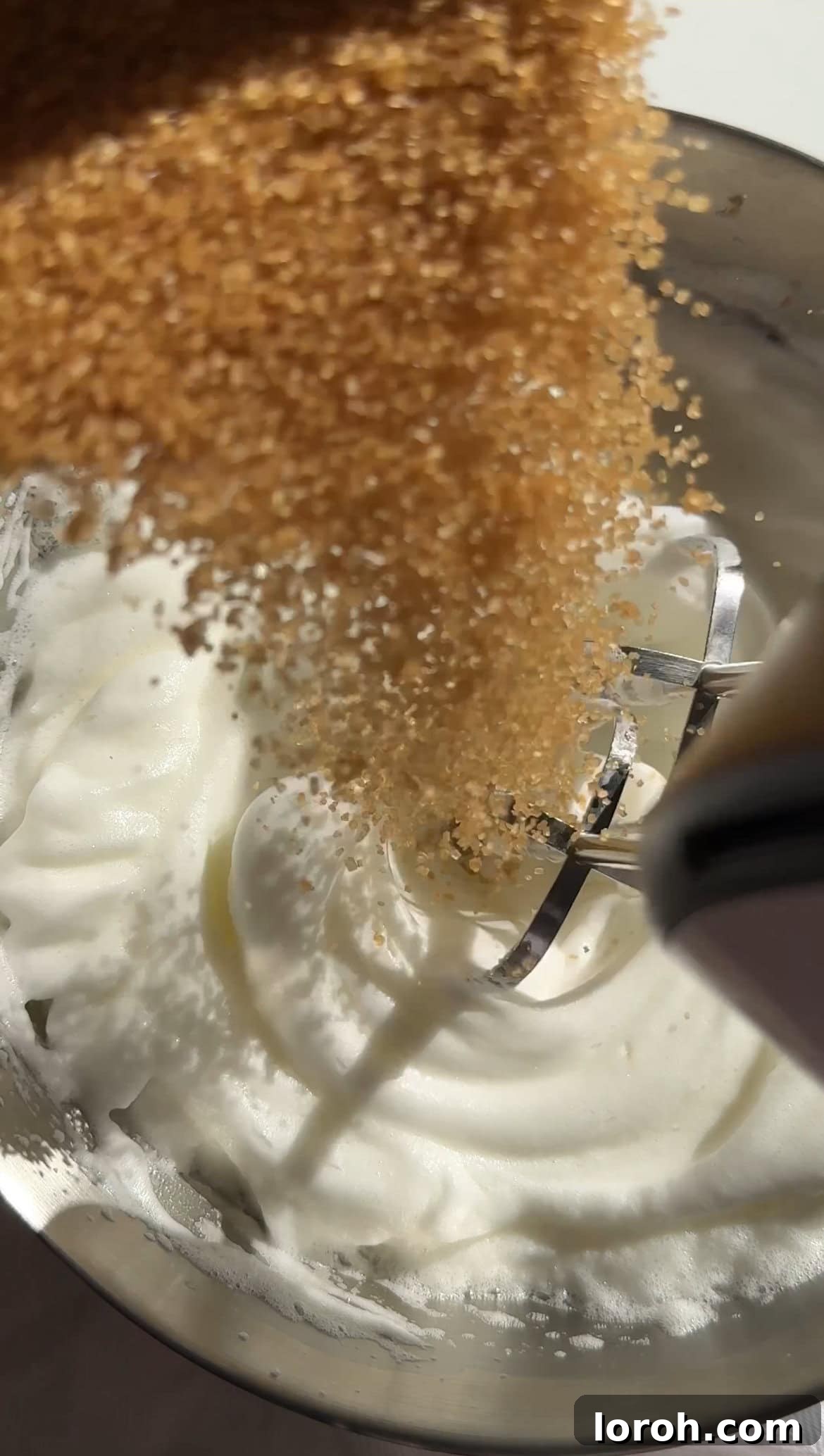
To make a simple French brown sugar meringue: Use 5 egg whites and 200g of light brown sugar (as suggested in the recipe below). In a clean, dry bowl, begin whisking the egg whites until they form soft peaks. Then, gradually add the brown sugar, one spoonful at a time, while continuing to whisk. Keep whisking until the meringue is glossy, holds stiff peaks, and the sugar has fully dissolved. This will give you a beautiful, less intimidating meringue alternative.
Italian Meringue: For Stability and Shine
For a truly professional finish and maximum stability, Italian meringue is highly recommended for this Lemon Meringue Cheesecake. This method involves making a hot sugar syrup, which is then slowly streamed into whisked egg whites while continuously beating them. The heat from the syrup cooks the egg whites, resulting in a smooth, incredibly stable, and beautifully glossy meringue that holds its shape wonderfully. This stability is why Italian meringue is a favorite among professional bakers and patisseries, as it resists weeping and can be prepared slightly ahead of time. Don’t be intimidated by the process – you can absolutely do it! It does require a sugar thermometer, but these are inexpensive and a valuable tool for any baker.
The main recipe for this Lemon Meringue Cheesecake details how to make the robust and impressive Italian meringue. Its caramel-like undertones from the brown sugar truly elevate the dessert.
No Sugar Thermometer? No Problem!
While a sugar thermometer is a fantastic tool for making Italian meringue, you can still achieve success without one by using the traditional “soft ball test.” This method requires a little practice but is perfectly reliable:
To perform the soft ball test: As your sugar syrup heats, observe its texture. Initially, it will boil with small, fast bubbles. As it approaches the correct temperature (around 118°C or 245°F), the bubbles will become noticeably larger, slower, and cover the entire surface of the pan. At this point, carefully drop a small amount of the hot syrup into a glass of very cold water. If the sugar dissolves immediately, it’s not hot enough yet. If it forms a hard, brittle ball, it’s too hot. The ideal stage is when the syrup forms a soft, pliable ball that you can pick up with your fingers, but it melts away or loses its shape when you try to squish it between your thumb and forefinger. At this “soft ball” stage, the syrup will also be completely clear. This tactile test is a time-honored way to gauge sugar syrup temperature.
Essential Ingredients for Your Cheesecake
Crafting this incredible Lemon Meringue Cheesecake relies on a selection of quality ingredients, each playing a crucial role in creating its complex flavor and texture profile. The full, detailed recipe with exact measurements can be found in the printable recipe card at the bottom of this post.
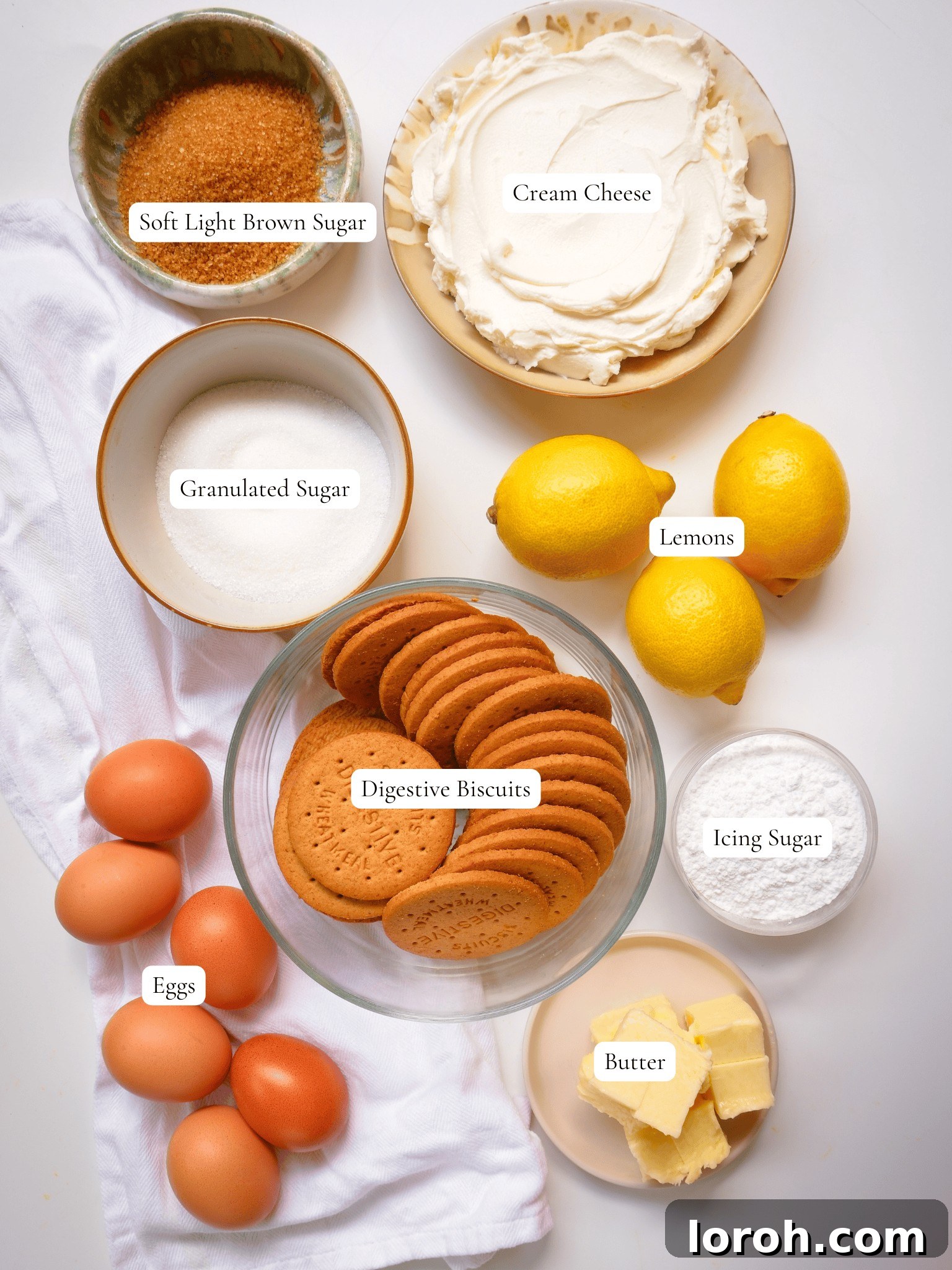
- Digestive biscuits: These humble biscuits are the secret to a perfectly crunchy, buttery base. Their subtle sweetness and crumbly texture create an ideal foundation for the rich layers above. Keeping a packet in your cupboard means you’re always ready for this recipe.
- Granulated sugar: This versatile sugar adds essential sweetness to both the crunchy biscuit base and the bright, zesty lemon curd, balancing the tartness of the lemon.
- Unsalted butter: Using unsalted butter allows you to precisely control the salt content in your Lemon Meringue Cheesecake, ensuring a perfectly balanced flavor in the biscuit base and the lemon curd. Ensure it’s melted for the base.
- Full-fat cream cheese: For the creamiest, most luxurious cheesecake layer, I highly recommend using a premium, full-fat cream cheese like Philadelphia. It is crucial that the cream cheese is at room temperature before mixing to ensure a smooth, lump-free filling. Low-fat varieties simply won’t set correctly.
- Icing sugar (powdered sugar): This finely milled sugar dissolves seamlessly into the lemon cheesecake layer, providing sweetness without any gritty texture.
- Fresh lemons: The star of the show! Both the juice and zest (if you choose to add it to the curd for extra zing) from fresh lemons are key to the refreshing, zesty flavor that defines this Lemon Meringue Cheesecake. A hint of lemon also brightens the creamy cheesecake layer.
- Double cream (heavy cream): This is vital for achieving the correct consistency in your cheesecake filling. You must use double (or heavy) cream as single cream will not whip up or set as effectively, leading to a runny cheesecake.
- Yellow food coloring (optional): A couple of drops of yellow food coloring can enhance the visual appeal, giving your lemon cheesecake a lovely pop of bright, sunny color. This is entirely down to personal preference.
- Large free-range eggs: Eggs are essential for the lemon curd (providing richness and thickening) and, of course, for the beautiful meringue. I recommend using free-range eggs for their superior quality and flavor.
- Soft light brown sugar: This ingredient is a revelation for the Italian meringue. It imparts a deeper, almost caramel-like flavor, adding another layer of complexity and warmth to the topping that truly sets this cheesecake apart.
Substitutions and Creative Variations:
One of the joys of baking is adapting recipes to suit your taste or what you have on hand. Here are some ideas to customize your Lemon Meringue Cheesecake:
- Sugar alternatives: For the biscuit base and lemon curd, if you don’t have granulated sugar, caster sugar or golden caster sugar can be used. Golden caster sugar will lend a slightly deeper, richer hue to your lemon curd. For the meringue, while I adore the deep, caramel notes of soft light brown sugar, you can absolutely use caster sugar or golden caster sugar if that’s what you have. The texture will be similar, but the flavor profile will be slightly different.
- Skip the meringue: If you’re short on time or prefer a simpler dessert, this lemon cheesecake is equally delicious without the meringue. Serve it “naked,” decorated with freshly grated lemon zest for an aromatic touch, a dollop of whipped cream, and/or an assortment of fresh berries. A delicate sprinkling of freeze-dried raspberries or a drizzle of raspberry coulis can also add a beautiful color contrast and extra flavor.
- Biscuit base variations: While digestive biscuits are traditional, feel free to experiment with other crunchy biscuits. Lotus Biscoff biscuits will add a unique spiced caramel flavor, or ginger snaps could introduce a warming, zesty kick that complements the lemon beautifully. Remember that different biscuits absorb butter differently, so you might need to adjust the amount of melted butter slightly until you achieve the desired crumbly-yet-holdable consistency.
- Berry pairings: This Lemon Meringue Cheesecake pairs perfectly with a variety of fresh berries. Juicy raspberries, sweet strawberries, plump blueberries, tart blackberries, or even pitted cherries all make wonderful accompaniments, adding a burst of freshness and color. You can serve them alongside each slice or arrange them artfully on top.
- Add white chocolate: For a decadent twist, consider folding some melted white chocolate into the cheesecake filling (ensure it’s cooled slightly before adding). This will add extra richness and a subtle sweetness that complements the lemon beautifully.
How to Make This Showstopping Lemon Meringue Cheesecake:
Here’s a step-by-step overview of the process to create this magnificent dessert. For full, detailed instructions and precise measurements, please refer to the complete recipe card below.
Expert Baking & Cooking Tips:
Achieving perfection with your Lemon Meringue Cheesecake is all about paying attention to a few key details. These tips will help ensure every layer comes out beautifully:
- Making a biscuit base without a food processor: No food processor? No problem! Place your digestive biscuits into a sturdy sandwich bag and use a rolling pin to crush them into fine crumbs. Once finely crushed, transfer them to a large mixing bowl and thoroughly combine with the melted butter until you achieve a uniform, crumbly consistency. This method works just as effectively and ensures a great base.
- The importance of gentle heat for lemon curd: When making the lemon curd, it is absolutely essential to keep the saucepan over a gentle, low heat and to whisk continuously. High heat or intermittent whisking will cause the eggs to scramble, resulting in an unappealing, lumpy texture. Patience here is key to a smooth, velvety curd.
- Room temperature egg whites for meringue: For the best results with your Italian meringue (or French meringue), use egg whites that are at room temperature. They whip up faster, achieve greater volume, and create a more stable, airy meringue than cold egg whites. Plan ahead and take your eggs out of the fridge about 30 minutes to an hour before you start.
- A perfectly clean, dry bowl for egg whites: This cannot be stressed enough. Any trace of fat (even a tiny speck of egg yolk) or moisture in your mixing bowl will prevent the egg whites from whipping up properly. Always use a scrupulously clean, dry bowl, ideally made of glass or metal, for whisking egg whites.
- Careful pouring of sugar syrup: When adding the hot sugar syrup to the egg whites for Italian meringue, exercise caution. Slowly trickle the syrup down the side of the mixing bowl, rather than directly onto the spinning whisks. This prevents dangerous splattering of hot syrup and ensures it is evenly incorporated into the egg whites, tempering them gradually.
- Chilling is crucial: Resist the temptation to cut into your cheesecake too early. The cheesecake layer needs ample time (at least 5 hours, ideally overnight) in the refrigerator to properly set. This ensures firm, clean slices and prevents the filling from being too soft.
Frequently Asked Questions About Lemon Meringue Cheesecake:
While the term “meringue” often conjures images of delicate, crispy baked kisses, there are actually several distinct types, each with unique preparation techniques and characteristics. The three primary types are:
- French Meringue: This is the most basic and common meringue. It’s made by slowly adding granulated sugar to raw egg whites as they are whisked until stiff peaks form. It’s light and airy but the least stable, prone to weeping if not used quickly, and generally not as sturdy for piping or holding shape.
- Italian Meringue: As featured in this Lemon Meringue Cheesecake recipe, Italian meringue is known for its smooth, glossy appearance and exceptional stability. It’s created by slowly pouring a hot sugar syrup (heated to the soft-ball stage, around 118°C or 245°F) into already whisked egg whites while continuously beating them. The hot syrup cooks the egg whites, making the meringue safe to eat raw and incredibly durable for piping and decorating. It resists weeping much better than French meringue.
- Swiss Meringue: This type offers a wonderfully smooth and silky texture, often used for buttercreams. It’s made by gently heating egg whites and sugar together over a bain-marie (a pan of simmering water) until the mixture reaches about 60°C (140°F), then removing it from the heat and whisking until stiff peaks and a cool temperature are achieved. Its stability falls between French and Italian meringue.
This Lemon Meringue Cheesecake is so rich and flavorful, it truly stands on its own as a complete dessert. However, for those who love to add a little something extra, it pairs beautifully with a few simple accompaniments:
- Fresh Berries: A medley of seasonal berries like raspberries, blueberries, strawberries, or pitted cherries adds a burst of freshness and a touch of tartness that beautifully complements the lemon.
- Whipped Cream: A light, unsweetened whipped cream can provide a lovely contrast to the richness of the cheesecake and meringue.
- Berry Coulis or Compote: For a more intense fruit flavor, whip up a quick berry coulis or compote using fresh or frozen berries. A raspberry coulis, for instance, would add a vibrant color and tangy kick.
- High-Quality Ice Cream: A scoop of vanilla bean ice cream or a complementary sorbet (like raspberry or passion fruit) can make for an extra indulgent experience.
It’s common to have leftover egg yolks after making Italian meringue, but don’t let them go to waste! Egg yolks are incredibly versatile and can be used in a variety of delicious sweet and savory recipes:
- Custards & Creams: One of the most classic uses is making a rich custard. This provides a perfect excuse to bake a fruit crumble, or try my Peach Cobbler with Cake Mix, which would be divine with homemade custard. Crème brûlée, pastry cream, or lemon curd (if you want more!) are also excellent options.
- Creamy Pasta Sauces: On the savory side, egg yolks are the secret to incredibly creamy, luscious pasta sauces. Consider making my Buttery Lemon Pasta or a classic Carbonara with Guanciale. For an interesting fusion, my Udon Carbonara also uses egg yolks to great effect.
- Sauces: Homemade mayonnaise or a rich hollandaise sauce (perfect for Eggs Benedict!) are traditional ways to use up extra yolks.
- Freezing Egg Yolks: You can also freeze egg yolks! To prevent them from becoming too gelatinous or grainy after defrosting, whisk them lightly with a pinch of sugar (about 1/8 teaspoon per yolk for sweet applications) or salt (1/8 teaspoon per 4 yolks for savory applications) before freezing them in an airtight container or ice cube tray. This helps maintain their texture once thawed.
Other Delightful Dessert Recipes You Might Enjoy:
If you loved creating this Lemon Meringue Cheesecake, you might be keen to explore more show-stopping desserts, especially those featuring bright, zesty lemon or decadent chocolate. Here are a few recommendations from my collection:
For more lemon goodness, be sure to try my incredibly simple and elegant Lemon Posset, the delightful Lemon Meringue Tart, or my light and airy Lemon Meringues. And for a perfect afternoon treat, my moist Lemon Loaf Cake is always a hit. If you’re a cheesecake enthusiast and prefer baked varieties, my creamy San Sebastián (Burnt Basque) Cheesecake is an absolute must-try.
If you’re looking for something entirely different but equally satisfying, chocolate is always a safe bet. My 3-Ingredient Chocolate Mousse is surprisingly easy yet incredibly rich. For a melt-in-the-middle indulgence, my Moelleux au Chocolat (Molten Chocolate Cake) is a guaranteed crowd-pleaser. Or, for a fusion of chocolate and coffee, don’t miss my unique Tiramisu Cake, made with Panettone for an Italian twist.
More Dessert Inspiration
Christmas Recipes
The Best Chocolate Salami
Easy Dessert Recipes
Chocolate Budino (Creamy Italian Pudding)
Drinks and Cocktails
Homemade Hot Chocolate Bombs
Christmas Recipes
The Best Shortbread Christmas Tree Cookies
Made This Recipe and Loved It?
Your feedback is invaluable and brings so much joy! If you’ve made this Lemon Meringue Cheesecake and enjoyed the process and the results, I would absolutely love for you to leave a review in the comments section below. Share your thoughts, any adaptations you made, or the stories behind why you chose this recipe. Your insights help other bakers and inspire new creations!
Additionally, if you share a photo of your magnificent cheesecake on Instagram, please remember to tag me @desertislanddishes. It truly makes my day to see your wonderful creations!
Lemon Meringue Cheesecake
Margie Nomura
1 hour
10 minutes
5 hours
6 hours 10 minutes
12 servings
Rate Recipe
Print Recipe
Ingredients
For the biscuit base:
- 300 g digestive biscuits
- 1 tbsp granulated sugar
- 150 g unsalted butter, melted
For the lemon cheesecake filling:
- 500 g full-fat soft cream cheese, at room temperature
- 100 g icing sugar
- Juice of 2 lemons
- 300 ml double cream
- Couple of drops of yellow food colouring, optional
For the lemon curd:
- 80 g lemon juice
- 100 g granulated sugar
- 1 large egg plus 1 egg yolk
- 50 g cold unsalted butter, diced
For the brown sugar meringue:
- 5 large egg whites
- 200 g soft light brown sugar
- 120 ml water
Instructions
-
Preheat the oven to 160ºC (325°F). Line the base of a 23cm (9-inch) springform tin with non-stick baking paper. Set aside.
-
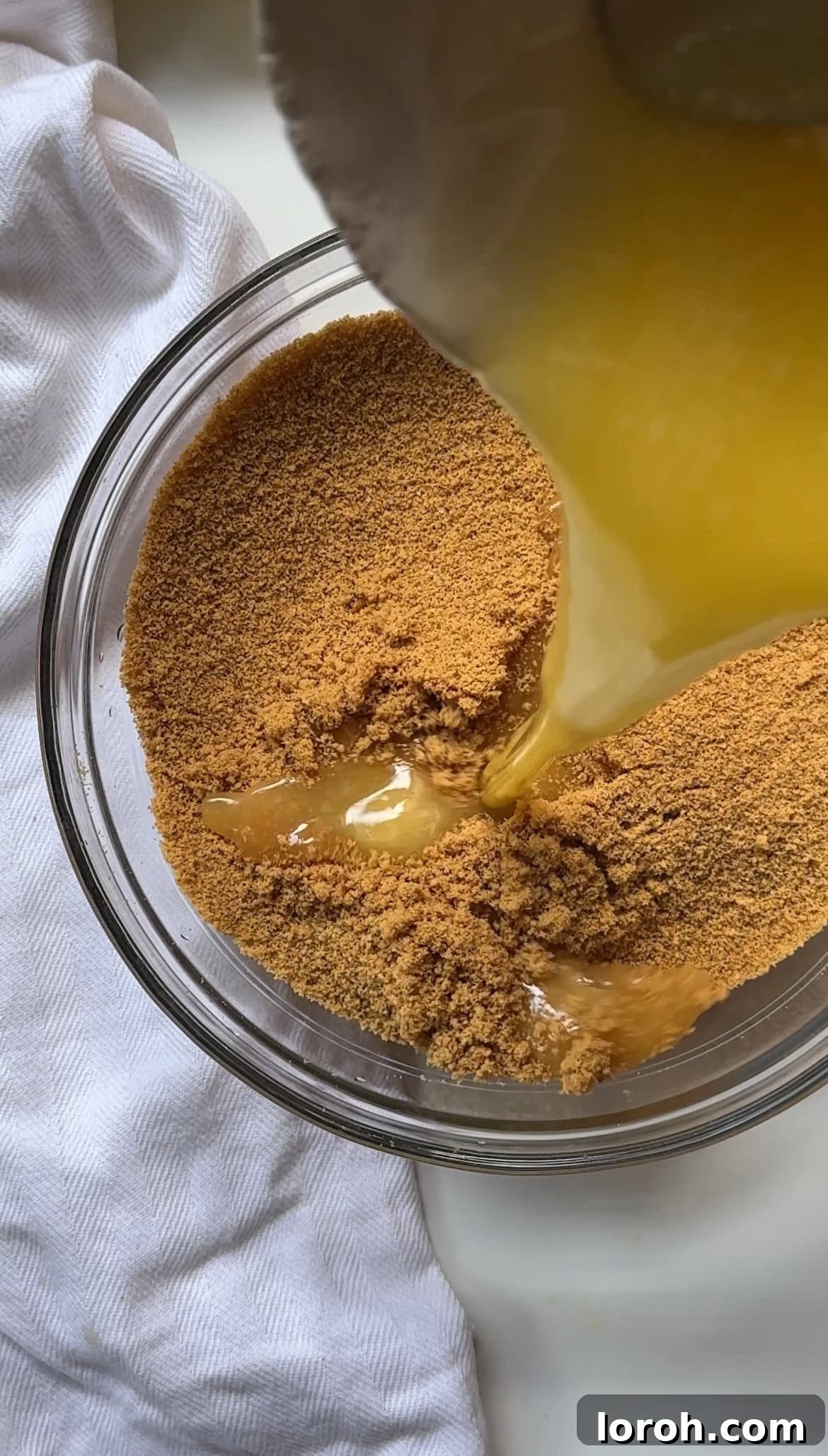
For the biscuit base: Tip the digestive biscuits into a food processor with the granulated sugar and blitz into fine crumbs. Add the melted butter and whizz again until you have the desired crumbly consistency.
-
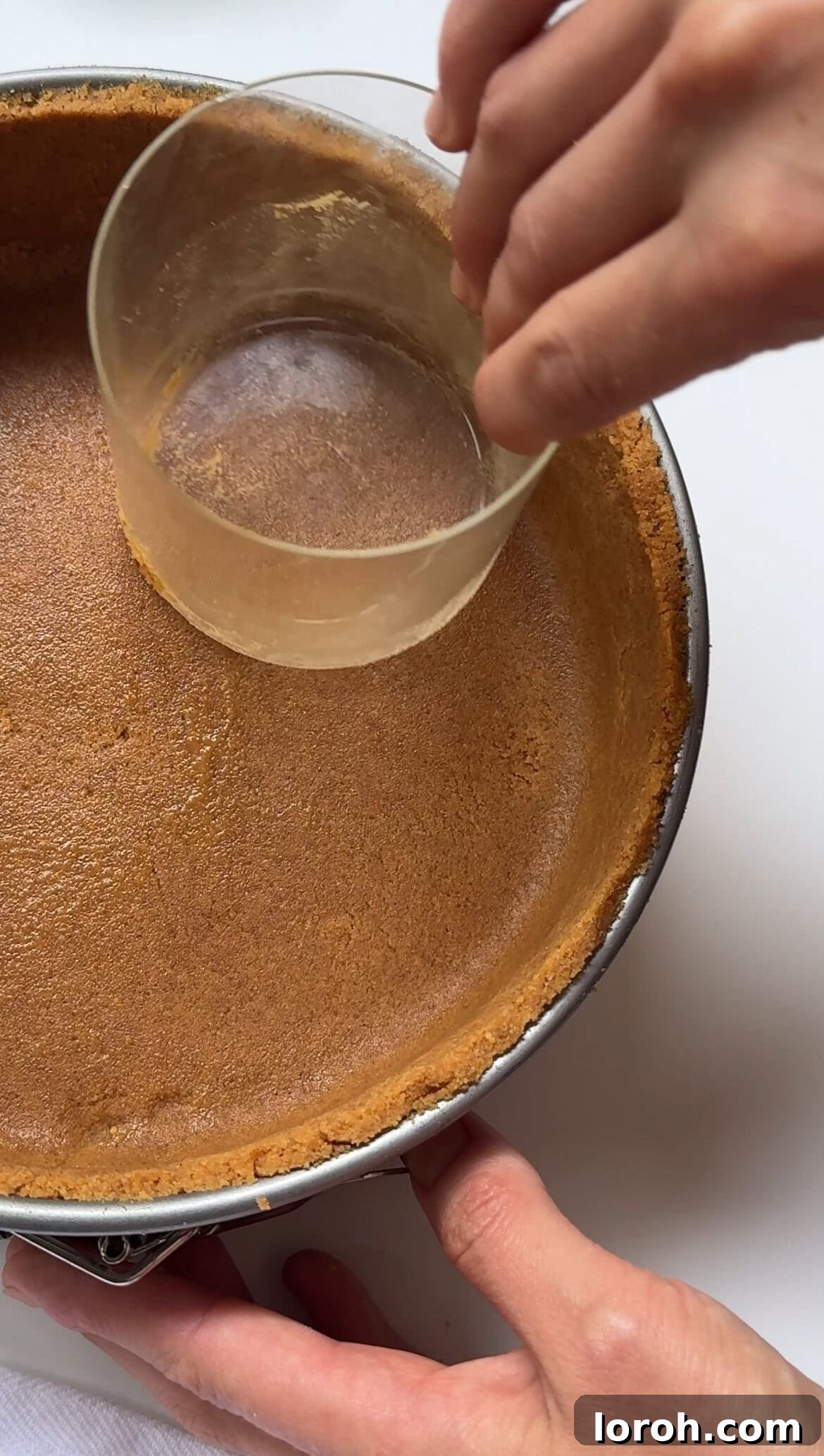
Tip the biscuit mixture into the prepared tin and, using the back of a spoon or the bottom of a glass, pat into a smooth and compact layer on the base and up the sides. Bake for 10 minutes until golden. Set aside until cool enough to touch.
-
For the cheesecake filling: Put the cream cheese into a large bowl. Sieve in the icing sugar and add the lemon juice. Using an electric whisk, whisk until smooth and combined.
-
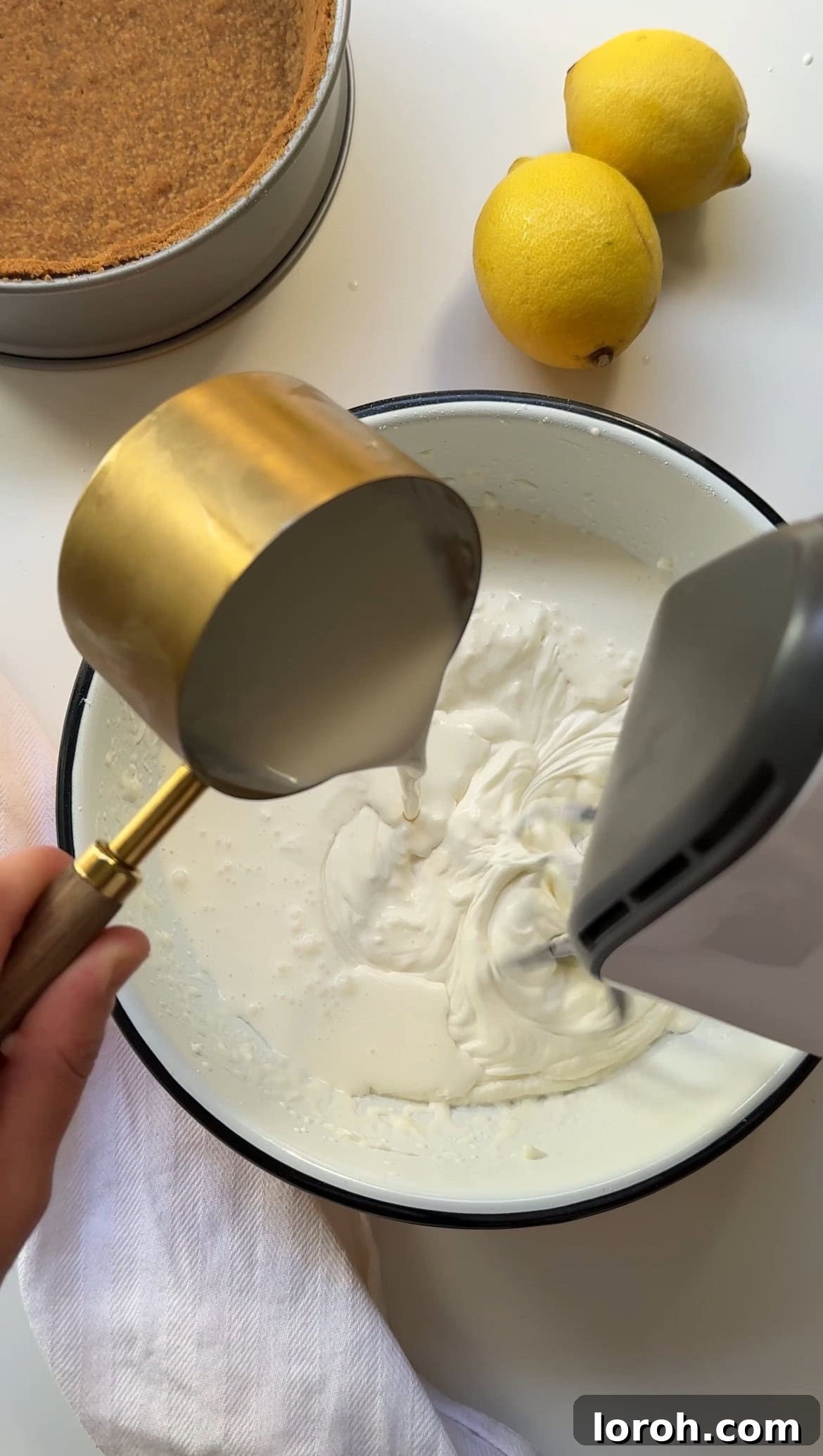
With the whisk still running, gradually pour in the double cream. Continue to whisk on medium-high speed until starting to thicken. Alternatively, you can whip the cream separately until you have soft peaks, then gently fold through until combined.
-
Add a couple of drops of yellow food colouring, if using, and fold through until you have a yellow-coloured mixture.
-
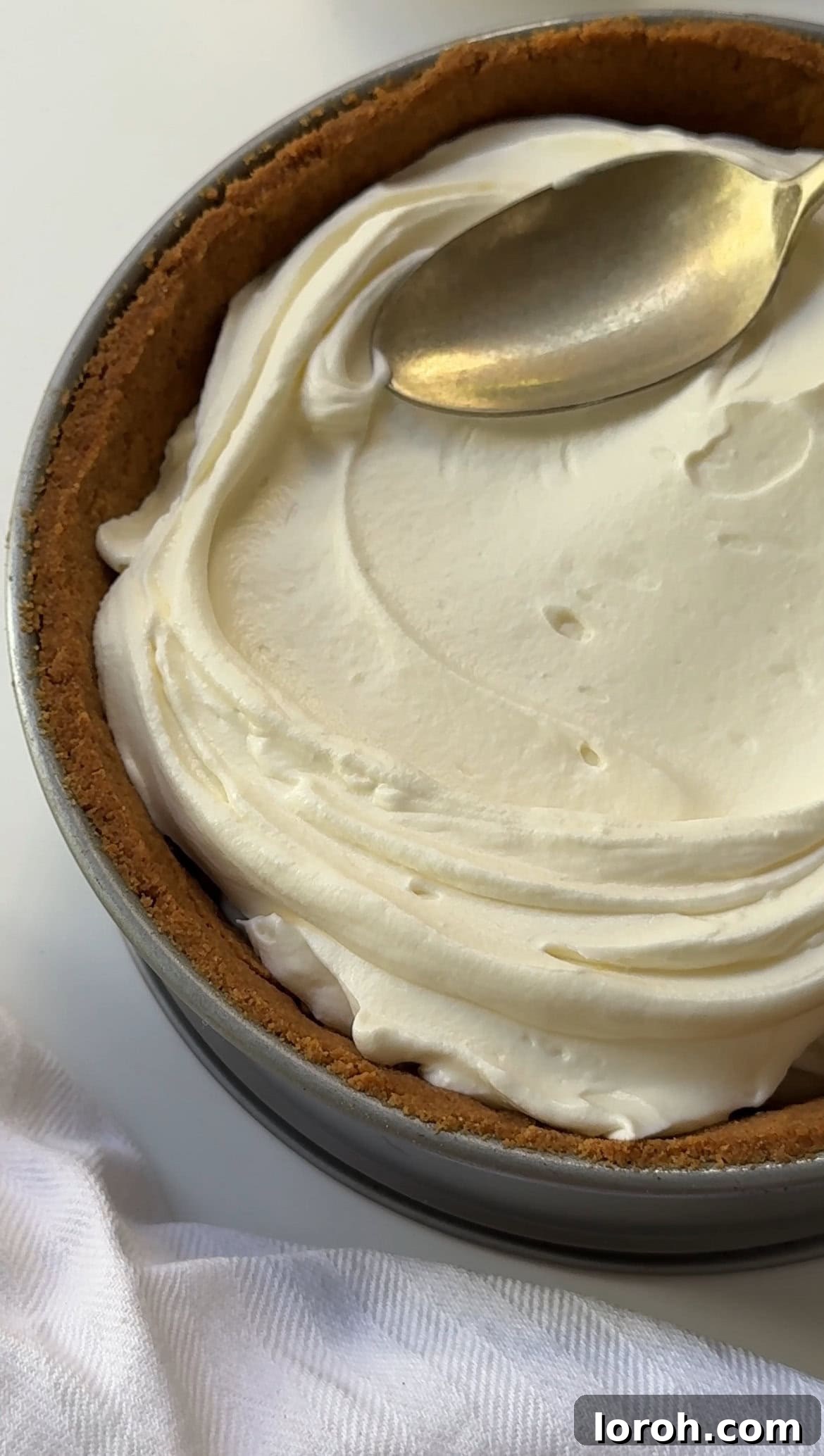
Spoon over the cooled biscuit base and, using a spatula, palette knife or back of a spoon, spread in a smooth and even layer. Cover and chill in the fridge for at least 5 hours – ideally overnight.
-
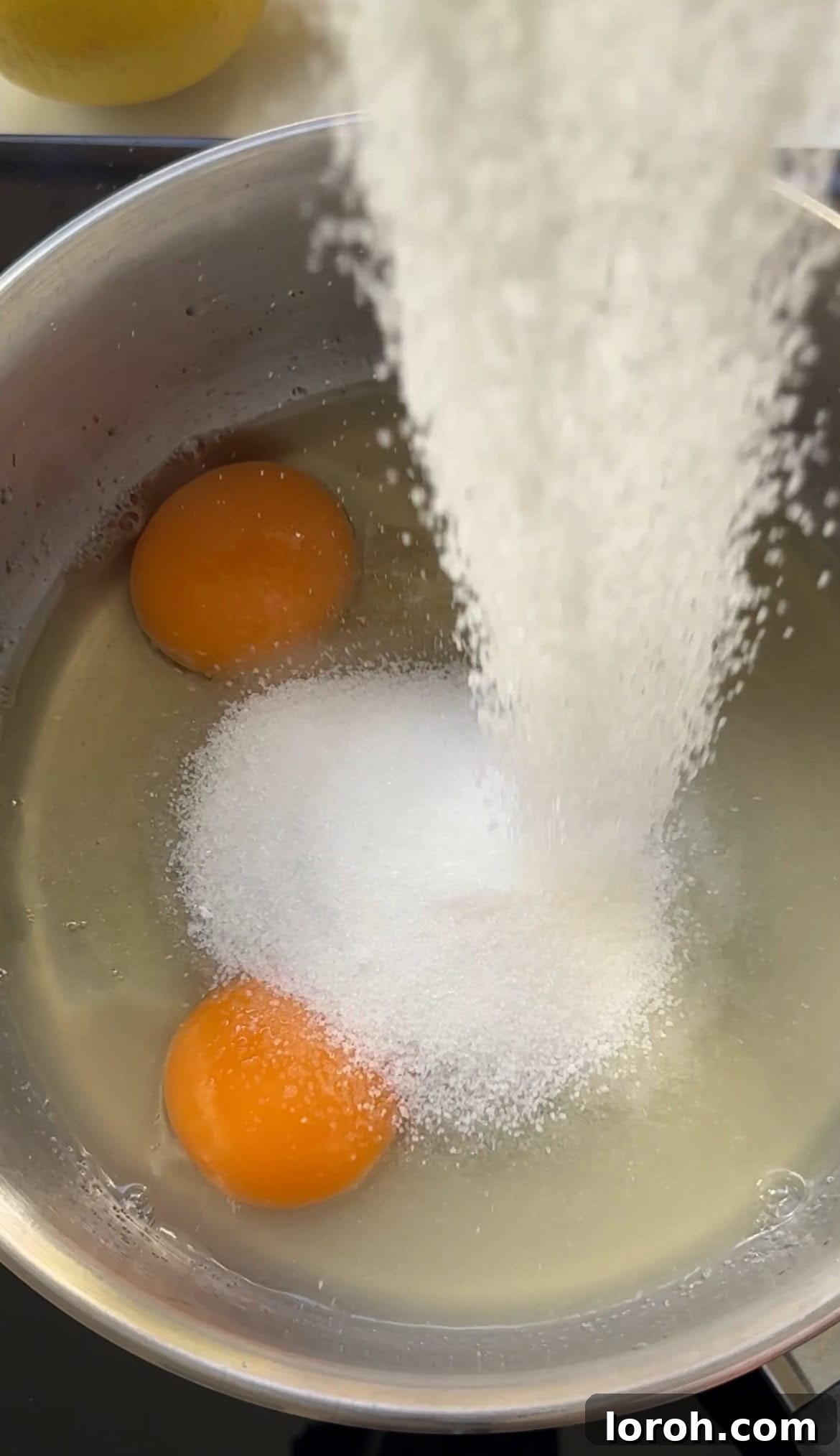
Meanwhile, for the lemon curd: Put the lemon juice, sugar, egg and egg yolk into a small non-stick saucepan and place over a gentle heat. Whisk constantly until starting to thicken.
-
Remove from the heat and pour through a sieve set over a bowl to catch any cooked egg bits. Leave to sit for 2 minutes to cool slightly.
-
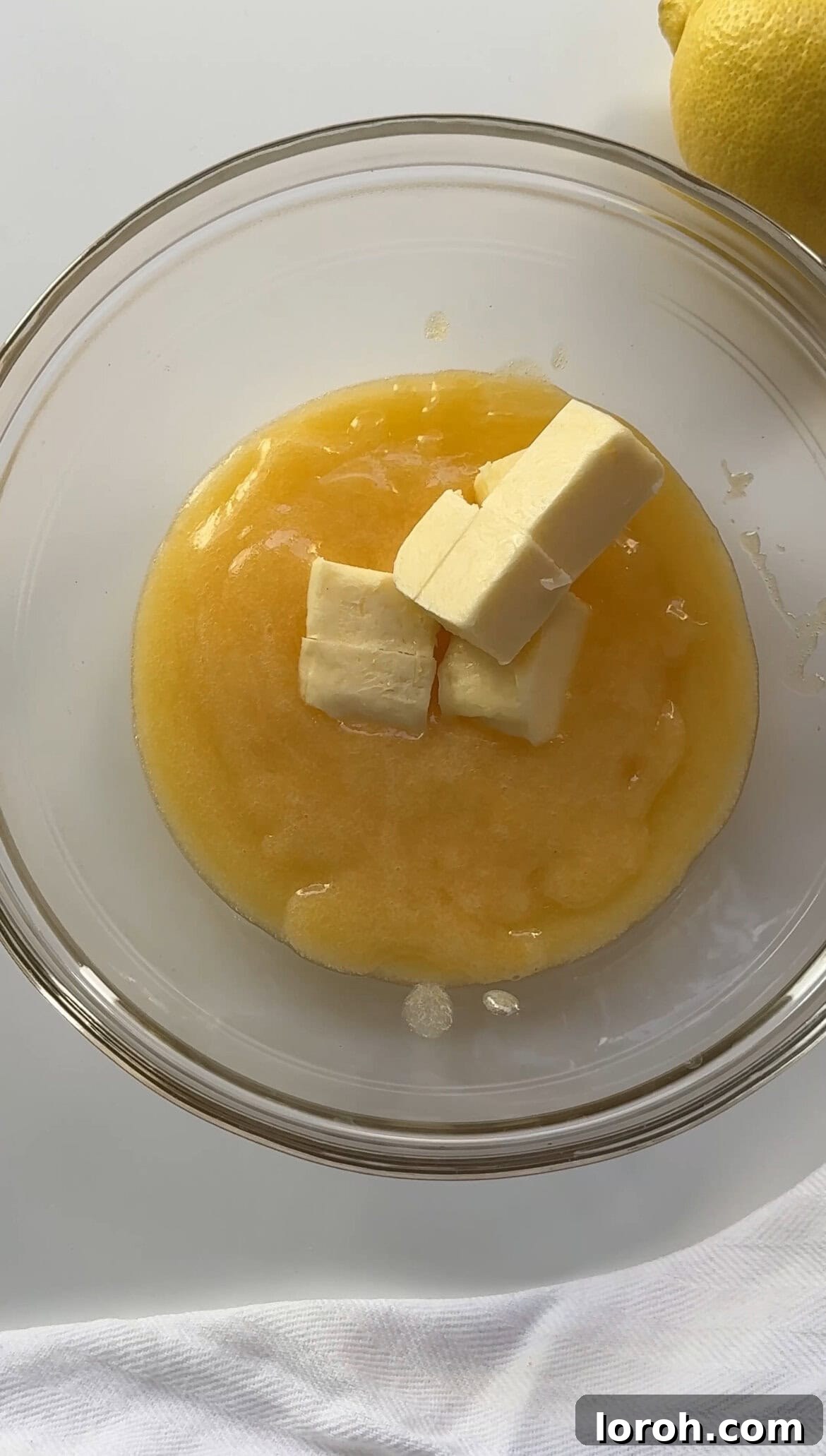
Gradually add the cold cubes of butter, stirring until it melts into the curd. Close-cover with a piece of cling film (so that it touches the surface). Leave to cool completely. If you are waiting for the cheesecake to set, place in the fridge until needed.
-
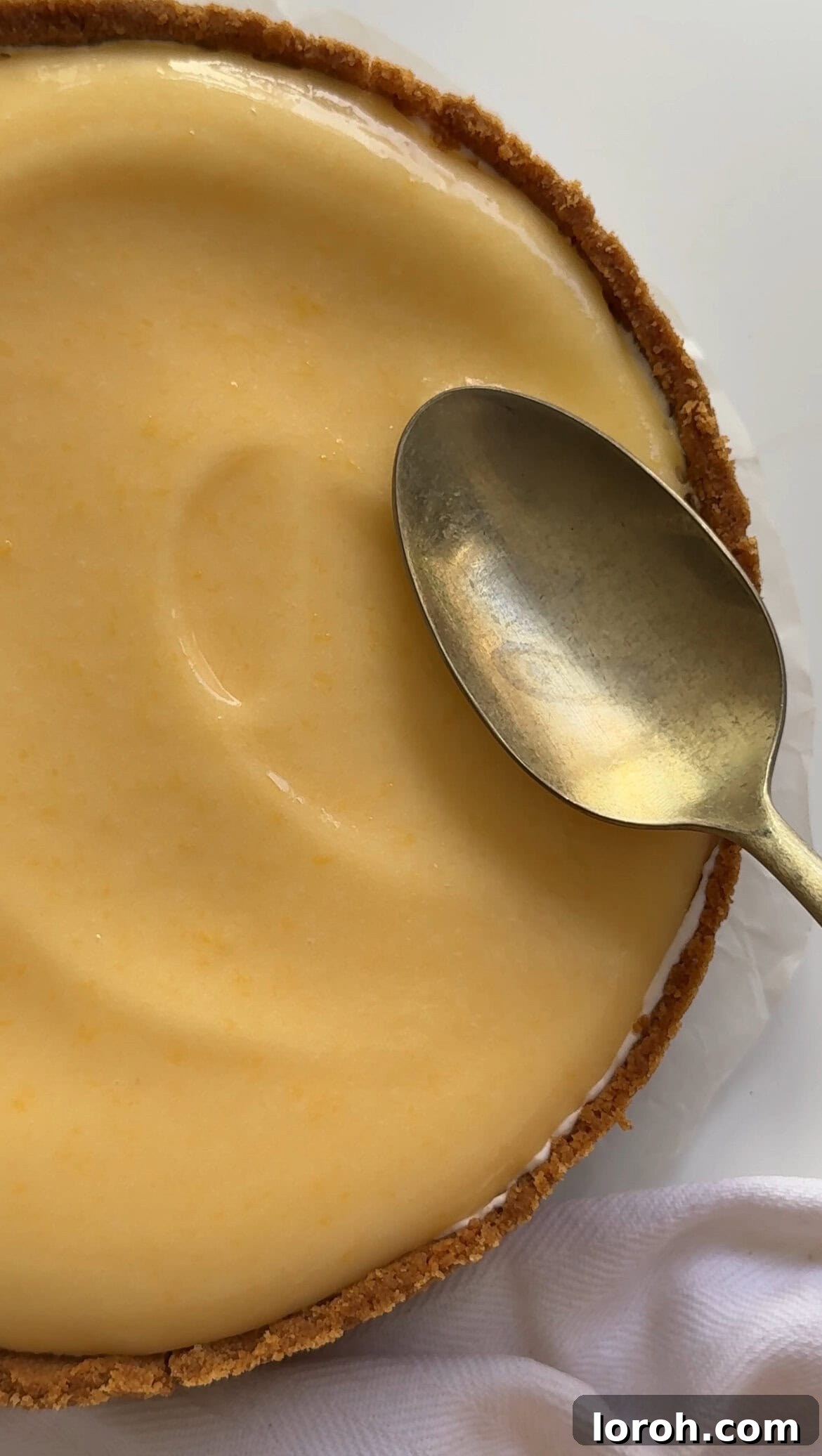
Once the cheesecake has set and the curd is cool, release cheesecake from the tin and place onto a flat plate. Spoon over the lemon curd and spread in an even layer. Place back in the fridge whilst you make meringue.
-
Next, make the Italian meringue: In a small saucepan, combine the sugar and water. Place over a medium heat until the sugar dissolves and the syrup reaches 118°C (245°F) on a sugar thermometer.
-
Meanwhile, in a clean, dry bowl, begin whisking the egg whites until they form soft peaks.
-
Once the sugar syrup has reached the correct temperature, slowly pour it into the egg whites while continuing to whisk – take care to pour the syrup down the side of the bowl (not onto the whisks) to avoid splattering.
-
Continue to whisk the egg whites until the meringue is glossy and forms stiff peaks, and the bowl has cooled to room temperature.
-
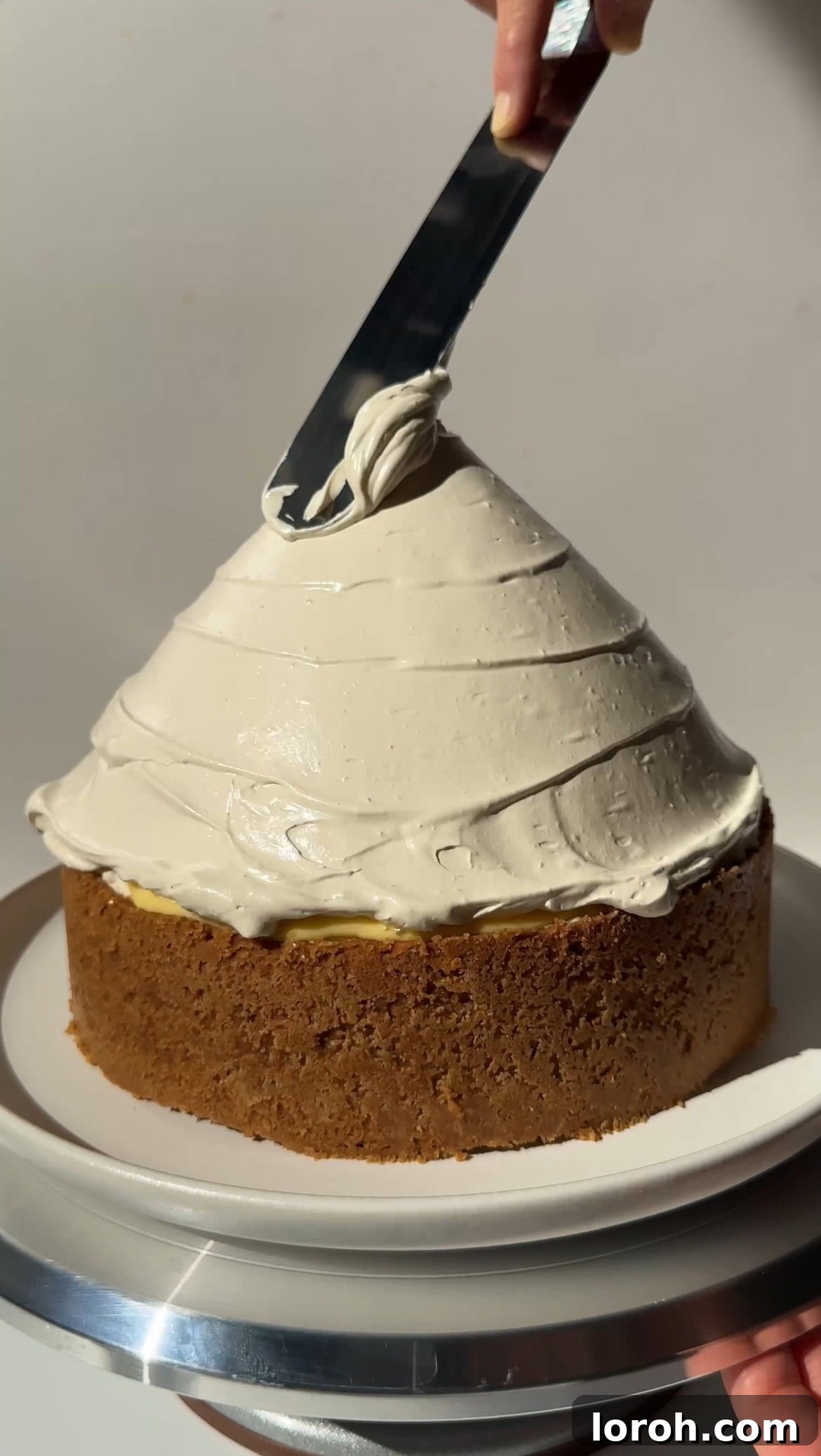
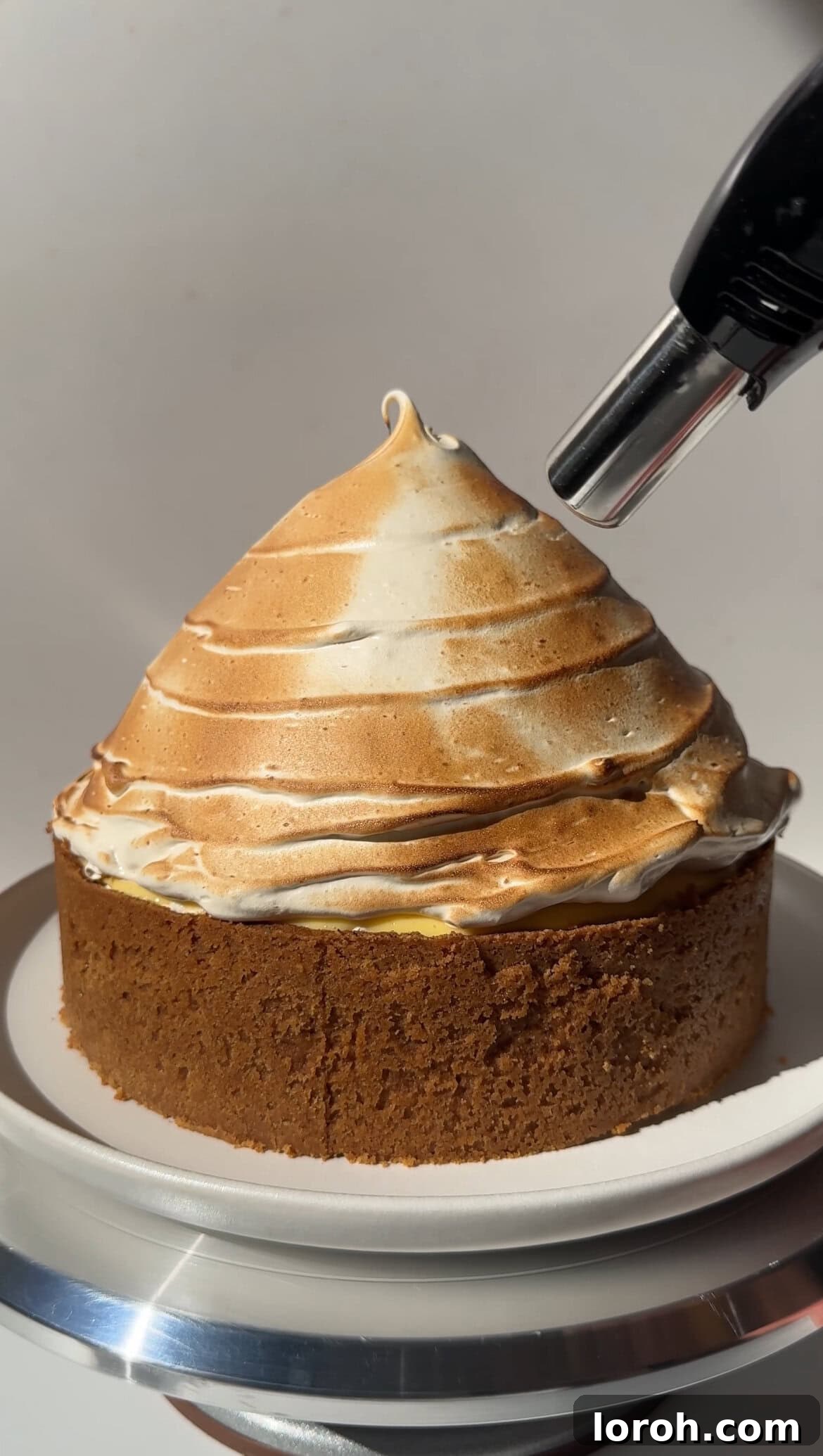
Spread or pipe the Italian meringue over the lemon curd. Use a blowtorch to lightly brown the meringue, or place under a grill for a few seconds – watch closely to prevent burning.
-
Serve chilled or at room temperature.
Notes
Room temperature cream cheese: It is crucial that your cream cheese is at room temperature before mixing. This ensures it combines smoothly with the cream and other ingredients, preventing lumps and ensuring a perfectly set cheesecake.
Gentle heat for curd: When preparing the lemon curd, always maintain a gentle heat and whisk constantly. This vigilance prevents the eggs from scrambling, which would result in a textured rather than smooth curd.
Meringue-Free Option: If you find the idea of making Italian meringue intimidating, you can serve this as a delightful lemon curd cheesecake. It’s still incredibly delicious and visually appealing, especially when topped with fresh berries or lemon zest.
Soft Ball Test for Syrup: If you want to make Italian meringue but don’t have a sugar thermometer, the soft ball test is a reliable alternative. When the sugar syrup’s bubbles become large and slow, drop a little into cold water. It’s ready if it forms a soft ball that squishes when pressed; if it dissolves, it’s too cool; if it’s hard, it’s too hot. The syrup should also be completely clear.
French Meringue Option: For a simpler meringue, you can opt for a French brown sugar meringue using 5 egg whites and 200g light brown sugar (omitting the water). This meringue is less stable and best piled not too high, and added just before serving. A great stress-free serving method, particularly useful when entertaining, is to slice the lemon curd cheesecake first, then pipe or spoon individual meringue portions onto each slice on the plate.
French Brown Sugar Meringue Method: In a clean, dry bowl, begin whisking egg whites until soft peaks form. Gradually add the brown sugar spoonful by spoonful, continuing to whisk until the meringue is glossy and forms stiff peaks.
Serving suggestions: This Lemon Meringue Cheesecake is exquisite on its own but is also delicious when served with seasonal berries (such as raspberries, blueberries, or strawberries), a vibrant berry coulis, and/or a dollop of freshly whipped cream.
Nutrition
Nutrition information is automatically calculated, so should only be used as an approximation.
Like this? Leave a comment below!