
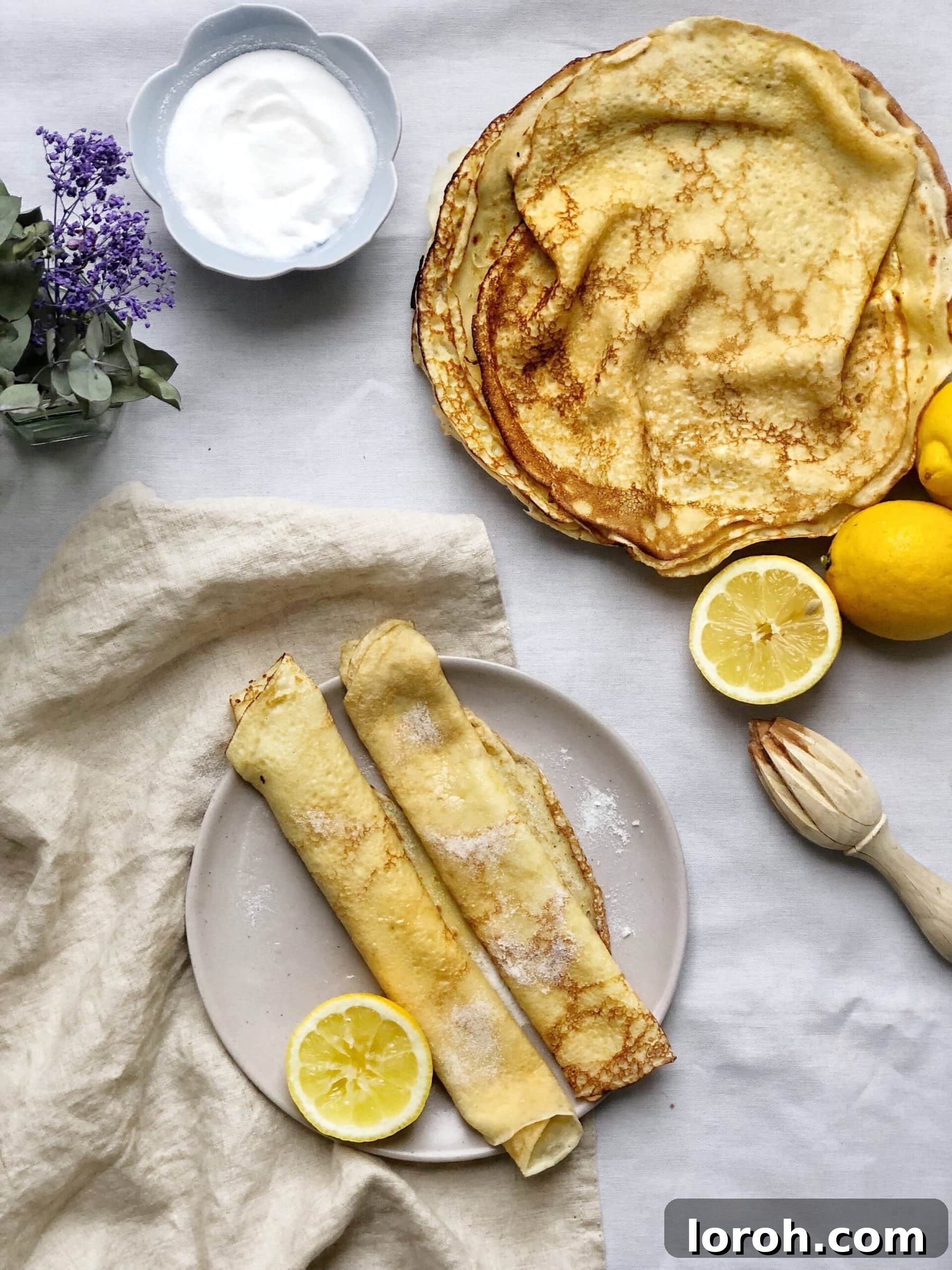
Welcome to the ultimate guide for crafting authentic and incredibly easy British pancakes! This timeless recipe guarantees perfect results every single time, requiring just a handful of staple ingredients you likely already have in your kitchen. Whether it’s for a special Shrove Tuesday celebration, a leisurely weekend breakfast, or simply when a craving strikes, these delicate, thin pancakes are a delightful treat. Unlike their thicker American counterparts, traditional British pancakes forego baking powder, resulting in a beautifully flat, crepe-like texture that’s simply irresistible.
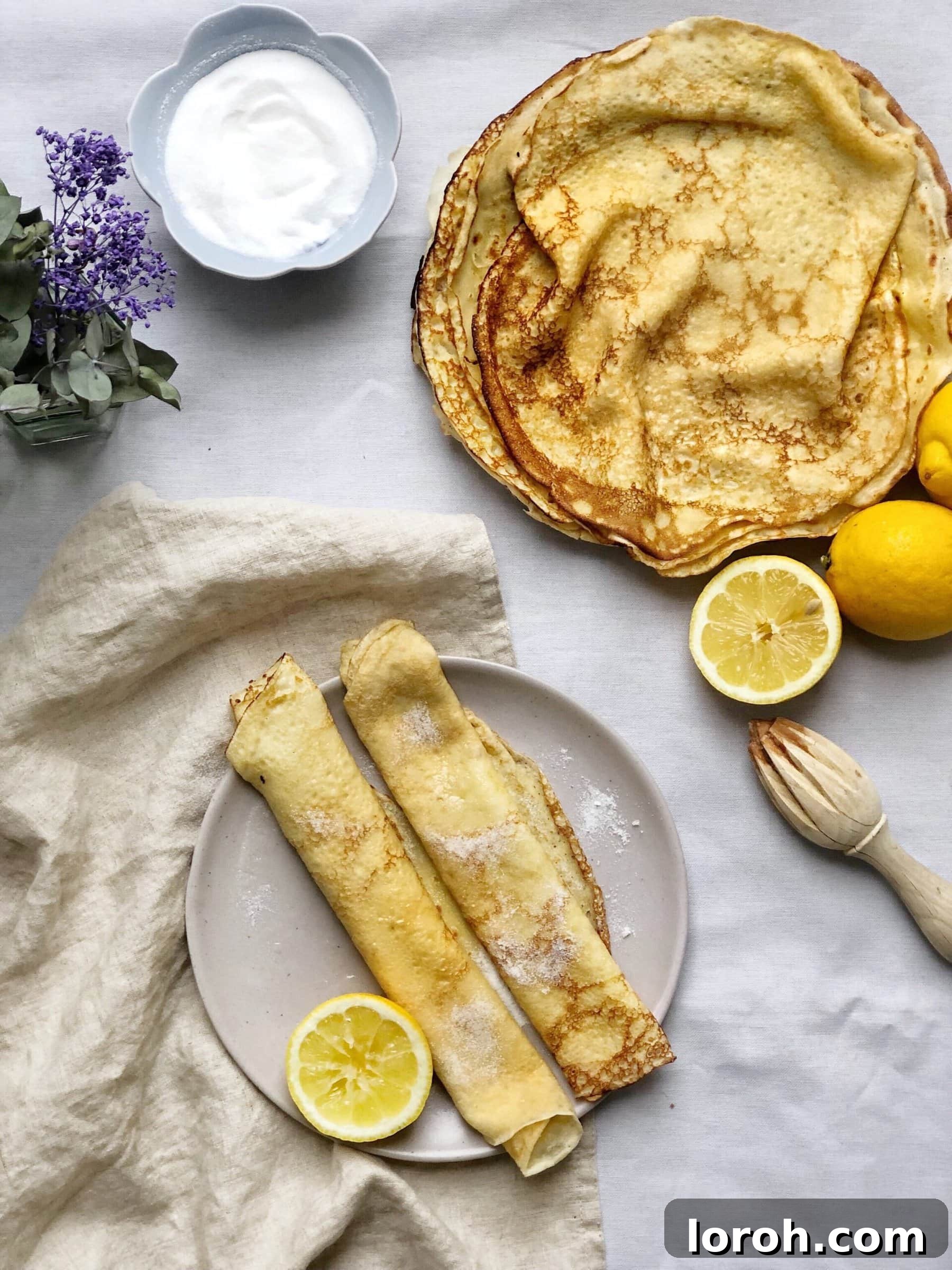
This classic recipe yields thin, elegant pancakes, often described as being midway between a French crêpe and a slightly sturdier pancake. The beauty lies in its simplicity, using fundamental ingredients: plain flour, fresh eggs, a touch of butter, wholesome milk, and a small amount of sugar. The absence of baking powder is key to achieving their signature texture – light, tender, and perfect for both sweet and savory fillings. Forget complicated techniques; this recipe is designed for ease and consistently delicious outcomes.
The Charm of British Pancakes: A Culinary Tradition
British pancakes hold a special place in the hearts of many, particularly around Shrove Tuesday (Pancake Day), where families gather to prepare and enjoy stacks of these delightful treats. But their appeal extends far beyond a single day; they are a versatile option for any meal, from a quick breakfast to a decadent dessert. Their thinness allows them to be rolled, folded, or stacked, making them an excellent canvas for a myriad of toppings and fillings.
What sets British pancakes apart from other varieties? Unlike fluffy American pancakes that rely on leavening agents for their thick, cake-like consistency, British pancakes are intentionally flat and pliable. This characteristic makes them incredibly light and easy to digest, inviting you to enjoy more than just one! They are designed to be enjoyed immediately, hot off the pan, traditionally drizzled with lemon juice and a sprinkle of sugar, or paired with rich savory fillings.
Why This Recipe Will Become Your Go-To
- **Effortlessly Simple:** With minimal ingredients and straightforward steps, this recipe is perfect for beginners and seasoned cooks alike.
- **Consistently Perfect Texture:** Achieve that ideal thin, delicate, yet slightly chewy consistency every time.
- **No Special Equipment Needed:** While a blender makes the batter incredibly smooth, a simple whisk and a bowl are all you truly need.
- **Versatile for Any Occasion:** Ideal for breakfast, brunch, dessert, or a fun Shrove Tuesday feast.
- **Family-Friendly:** A delicious activity to involve the whole family, from mixing the batter to choosing toppings.
Explore More Delicious Pancake Recipes
While these traditional British pancakes are truly special, sometimes you might crave something different! If you’re looking for a delightful vegan option, these Fluffy Banana Pancakes are wonderfully thick and indulgent, proving that egg-free can be absolutely delicious. They’re perfect even if you’re not vegan but happen to be out of eggs. For a truly luxurious and sophisticated dessert, consider making Tiramisu Pancakes – they are an incredible, grown-up twist on a classic. And if you prefer a pancake that’s a bit thicker than the British style but still without baking powder, our Easy Pancakes (No Baking Powder) are a fantastic choice, especially when served with a tangy Homemade Lemon Curd.
Frequently Asked Questions About British Pancakes
The secret to consistently good pancakes lies primarily in your equipment and technique. A high-quality non-stick pan is absolutely crucial to prevent sticking and ensure easy flipping. Alongside a good pan, make sure you grease it generously but evenly with butter. A scrunched-up piece of kitchen roll is perfect for wiping a thin, consistent layer of butter across the pan’s surface, ensuring every part is coated without excess.
Yes, absolutely! Preparing your pancake batter the night before is a fantastic time-saver, especially for busy mornings. Simply whisk all the ingredients together, cover the bowl tightly with cling film or an airtight lid, and refrigerate overnight. Before cooking, give the batter a good stir to reincorporate any settled ingredients. It’s also beneficial to let the batter sit out at room temperature for about 20-30 minutes before cooking; this allows it to loosen up slightly and makes it easier to spread thinly in the pan. Batter straight from the fridge might be too thick.
Yes, this recipe is incredibly adaptable! You can easily swap out dairy milk for any dairy-free milk alternative of your choice. Almond milk, soy milk, oat milk, or cashew milk all work wonderfully and will not significantly alter the texture or taste of the final pancakes. Simply use the same quantity as specified in the recipe and proceed with the rest of the steps as usual.
Lumps in pancake batter are a common frustration, but easily remedied. For the smoothest possible batter, a blender is your best friend. Simply add all the ingredients to a blender and blitz until completely smooth. If you’re mixing by hand with a whisk, the trick is to create a smooth paste first. Combine the dry ingredients (flour, sugar) in a bowl. Make a well in the center, add the eggs and melted butter, and whisk vigorously until this mixture is as smooth as possible before gradually adding the milk, a little at a time. Incorporating the milk slowly after a smooth paste is formed gives you the best chance of eliminating lumps for a perfectly silky batter.
More Delightful Recipes You Might Like
If you’ve enjoyed these British pancakes, we encourage you to explore more of our beloved recipes:
- Thick and Fluffy No Baking Powder Pancakes
- Bailey’s Tiramisu Pancakes
- Fluffy Banana Pancakes
- The Best Double Chocolate Muffins
- Mango Pancakes (Hong Kong Style)
Classic British Pancakes
Rate Recipe
Print Recipe
Ingredients
- 110 g plain flour
- 1 tsp caster sugar
- 1 large egg
- 1 egg yolk (for extra richness and tenderness)
- 2 tbsp melted butter (plus more for greasing)
- 280 ml (approx. 1/2 pint) whole milk
- A pinch of salt
- Extra butter for greasing the pan
Instructions
-
Prepare the Batter: In a large mixing bowl, combine the plain flour, caster sugar, and a pinch of salt. Make a well in the center of the dry ingredients. Crack in the large egg and the extra egg yolk, then pour in the two tablespoons of melted butter. Gradually add the milk, whisking continuously from the center outwards until all the ingredients are thoroughly combined and the batter is smooth. For an ultra-smooth batter with zero lumps, simply add all ingredients to a blender and blitz for about 30-60 seconds until completely uniform.
-
Heat and Grease the Pan: Place a good quality non-stick frying pan over medium-high heat. Once hot, lightly grease the pan with a small amount of butter. The easiest way to do this is to melt a tiny bit of butter and then wipe it evenly over the pan’s surface using a scrunched-up piece of kitchen paper. This ensures a thin, consistent layer of grease. Remember the old adage: the first pancake is rarely perfect – consider it the chef’s tasty test pancake!
-
Cook the Pancakes: Pour a ladleful of batter into the hot, greased pan. Immediately tilt and swirl the pan to spread the batter thinly and evenly across the entire base. Cook for approximately 30-60 seconds on the first side without touching it. You’ll know it’s ready to flip when the edges slightly curl up, appear darker, and begin to pull away from the pan. Using a thin spatula, gently loosen the edges and then confidently flip the pancake. Cook for another 30 seconds or so on the second side until it’s beautifully golden brown.
-
Serve or Keep Warm: Once cooked, slide the pancake onto a plate. Repeat the greasing and cooking process for the remaining batter. If you’re making a larger batch and want to serve them all warm, you can stack the cooked pancakes on a plate, separating them with small sheets of greaseproof paper to prevent sticking. Keep them warm in a very low oven (around 80°C / 175°F) while you finish cooking the rest.